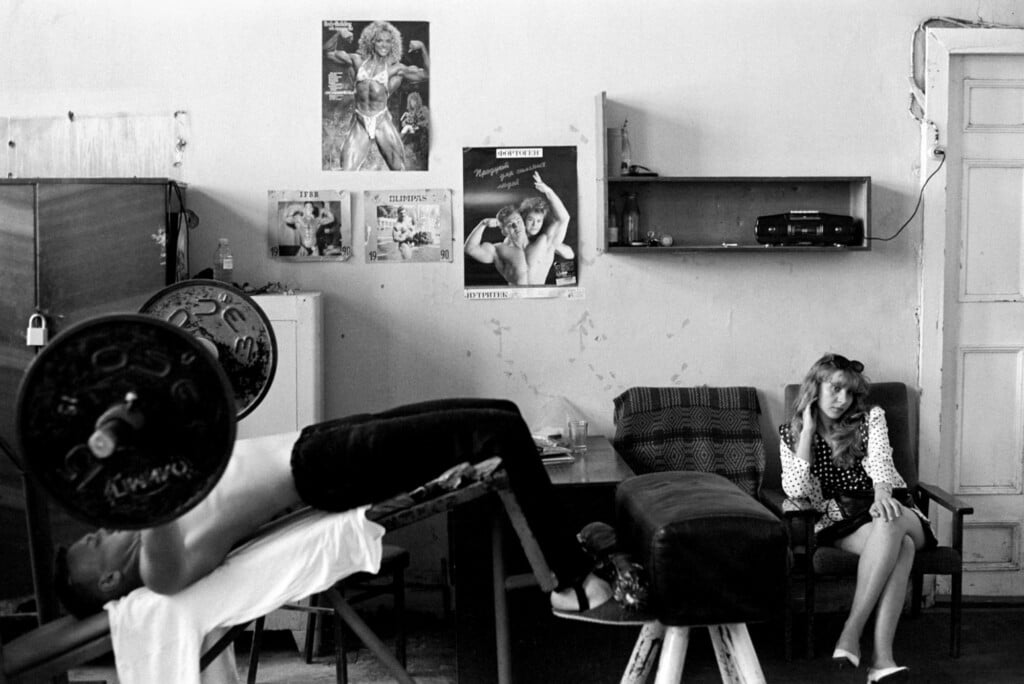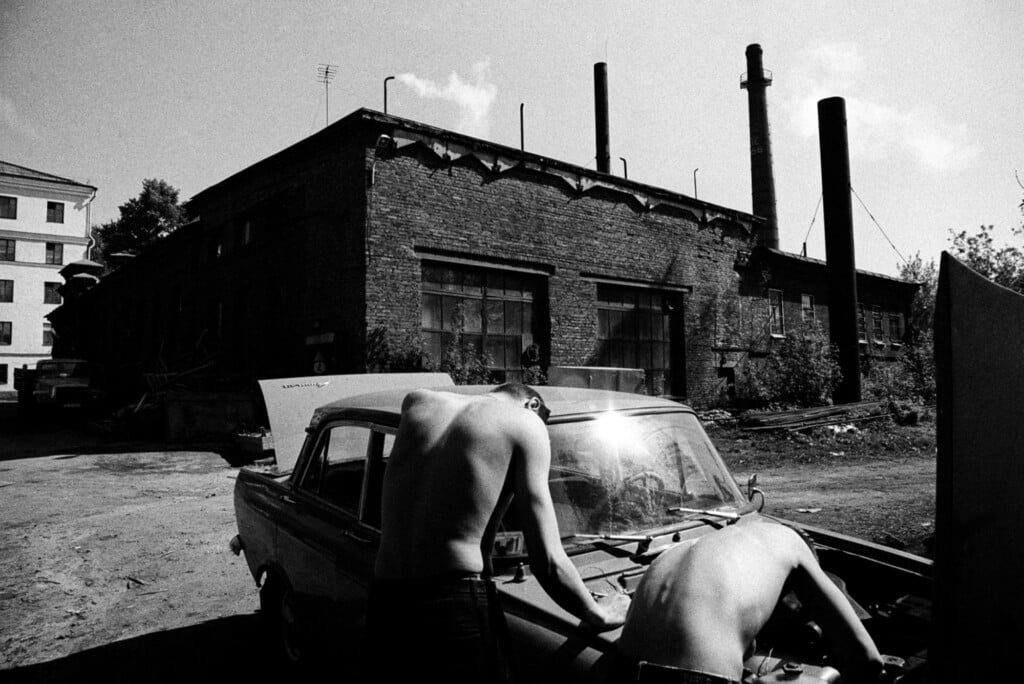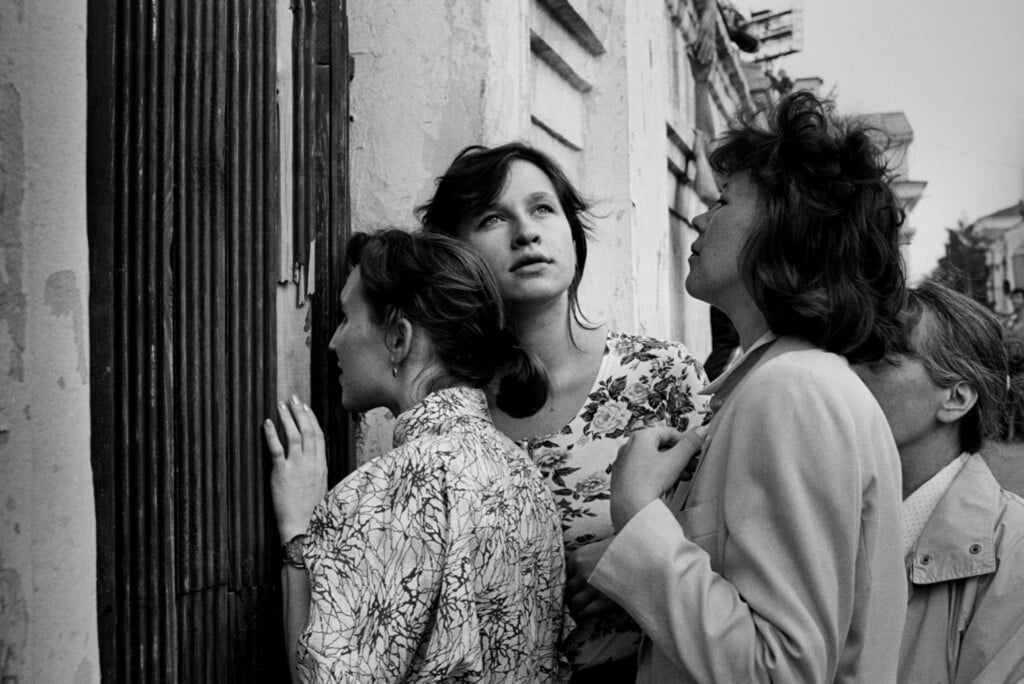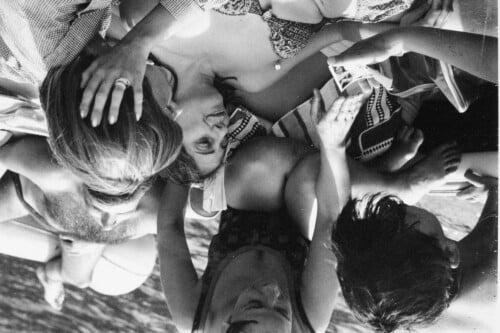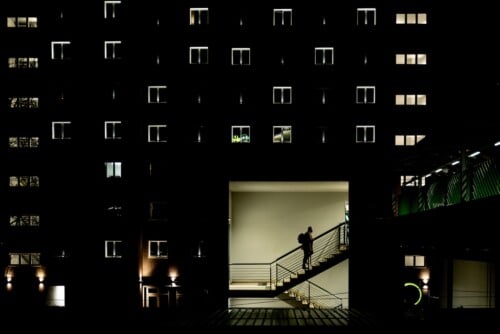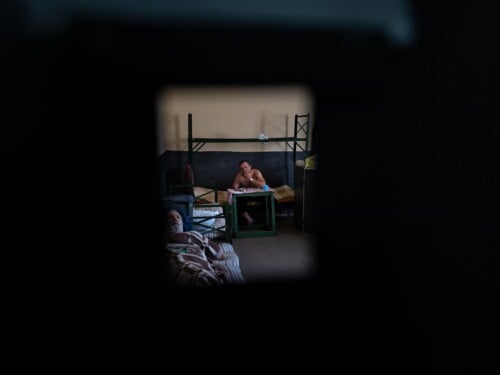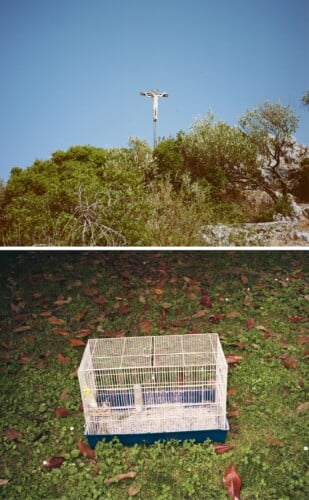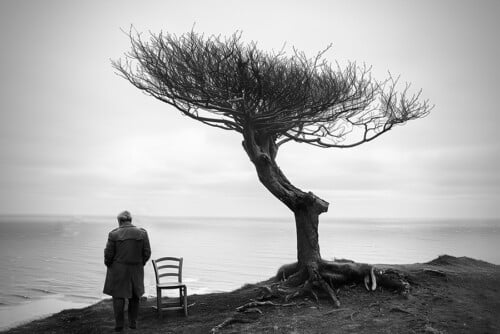
Vyatka begins with a simple, almost unconscious gesture: setting aside the photographs that didn’t make it into the newspapers. Aleksey Myakishev worked as a photojournalist for local dailies in Kirov, in northeastern Russia, in the early 1990s. He did his job, published what was needed, but kept accumulating in a separate folder everything else: images with no news value, but with something harder to define.
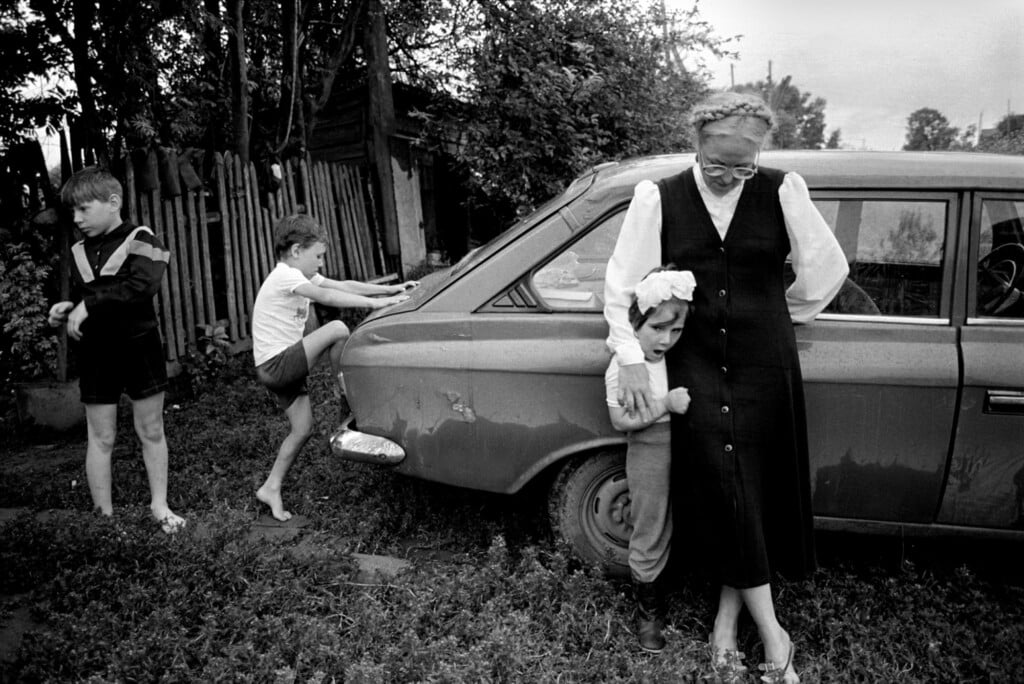
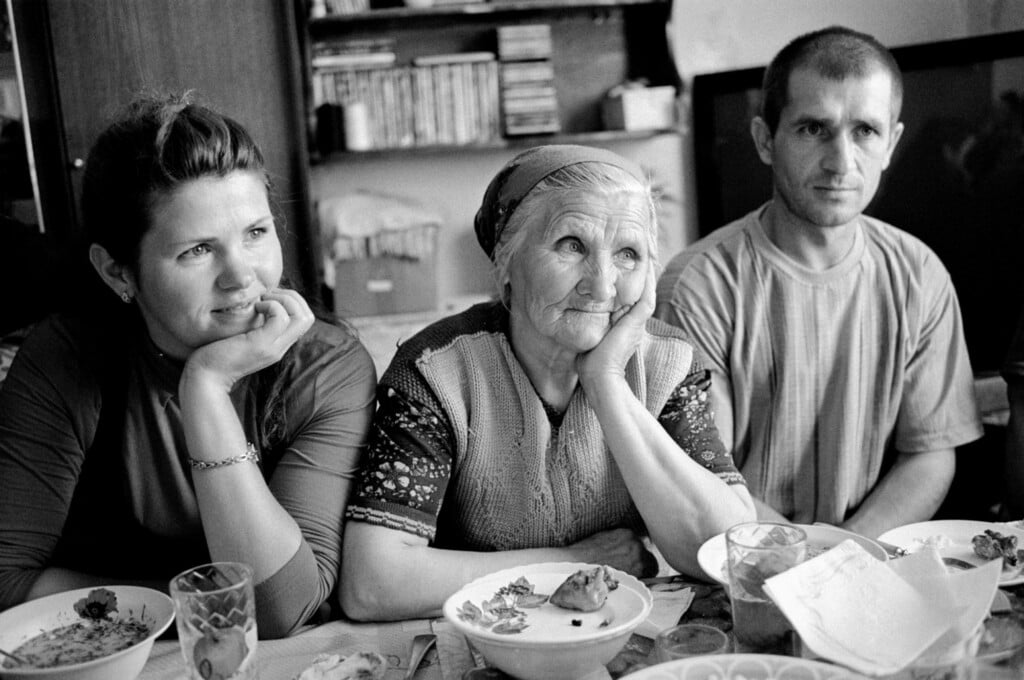
Those were years of profound transformation. The Soviet Union had just collapsed, and provincial Russia found itself suspended between a system that no longer existed and a future that could not yet be read. Myakishev photographed that suspension: elderly women stopping to talk in the street with a dog at their feet, a young man fishing in the middle of a flood with wooden houses in the background, a man hunched over a newspaper in a suburban library. Small, everyday scenes, full of that quiet quality that distinguishes documentary photography from the illustration of an idea.
In 1998 the economic crisis hit hard and Myakishev left Kirov for Moscow, where he would go on to work for Kommersant and Russian Newsweek. But the photographs in the folder kept coming back to him. Ten years after the move, he returned to the negatives shot between 1994 and 1999 and discovered images he had no memory of taking. That return gave birth to the idea of a book, and with it the need to complete the story with a contemporary look at the same land.
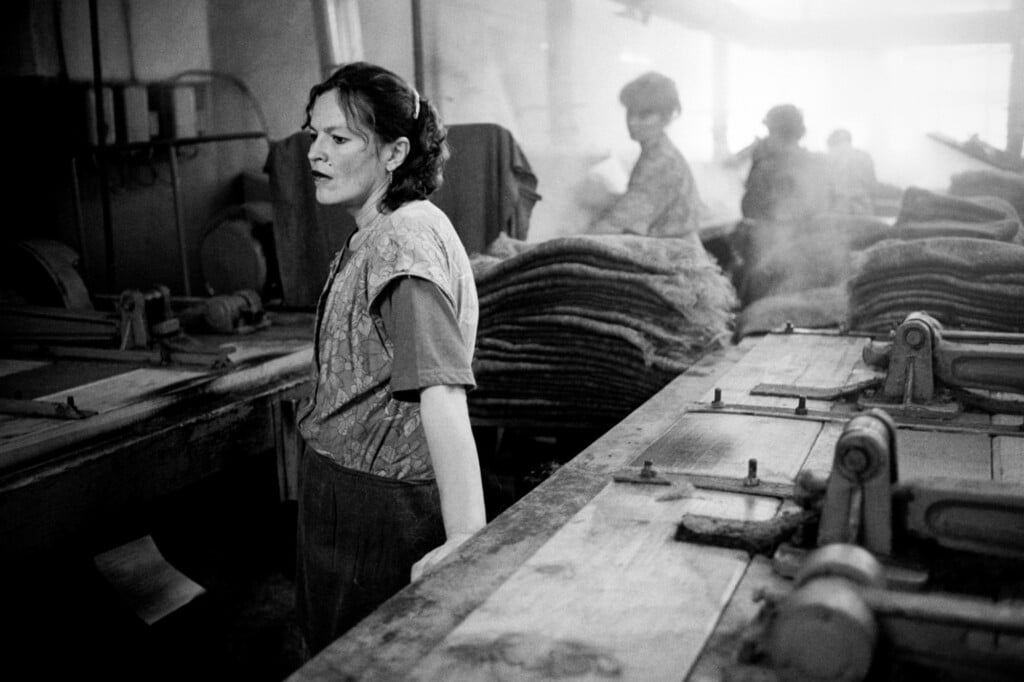
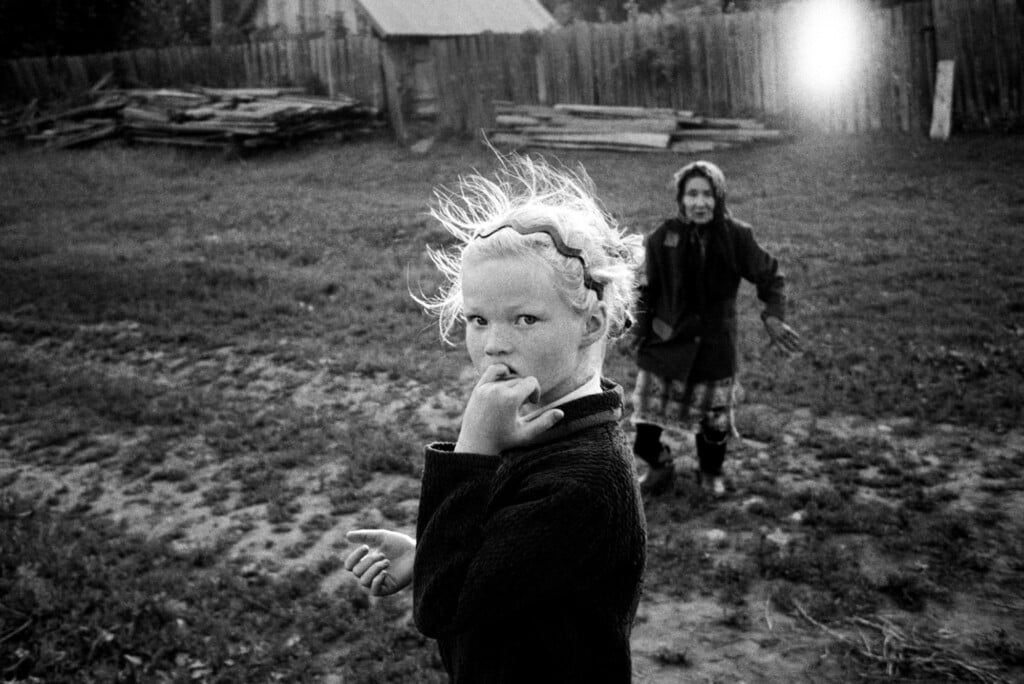
From 2006 onwards Myakishev returned regularly to the Kirov region, Leica with 35mm and black-and-white film, travelling through villages with a friend in an old car. The material accumulated, took shape, and eventually became Vyatka: a small, tactile, intimate book, printed in 300 copies that sold out quickly. A poetic archive of a Russia that official photojournalism has rarely told with this measure and this tenderness.