It was 1948 when one of the largest exoduses in contemporary history took place: the Palestinian Nakba. A forced displacement driven both by a critical political and social situation and by increasingly frequent violence against the Arab population. A crisis that would soon lead to the outbreak of civil war between the Jewish and Palestinian Arab communities. Since that fateful year—and in fact already in the decades before—the Israeli-Palestinian issue has become increasingly well known and, never more than in recent years, brought before everyone’s eyes; just like, unfortunately, countless other tragedies, acts of violence, wars, and disturbing news coming from every corner of the world. All of this risks leading—especially due to our constant hyperconnection and exposure to flash news—to a growing desensitization to violence.

It is precisely this desensitization and alienation of those watching and listening from the outside that one of the photographers currently documenting the hell experienced by Gaza’s inhabitants seeks to challenge: Ali Jadallah. Through his shots, Ali tells the harsh reality lived every day by the victims of this tragedy, using a camera that, as he stated in an interview with Magnum Photos, is not a work tool for him but an opportunity to preserve the memory of his people, with the urgency of capturing both the most painful moments and those of joy and hope of a population crushed by occupation. “It was not just about capturing images, but about saying: we exist, we are here, and our stories matter.”
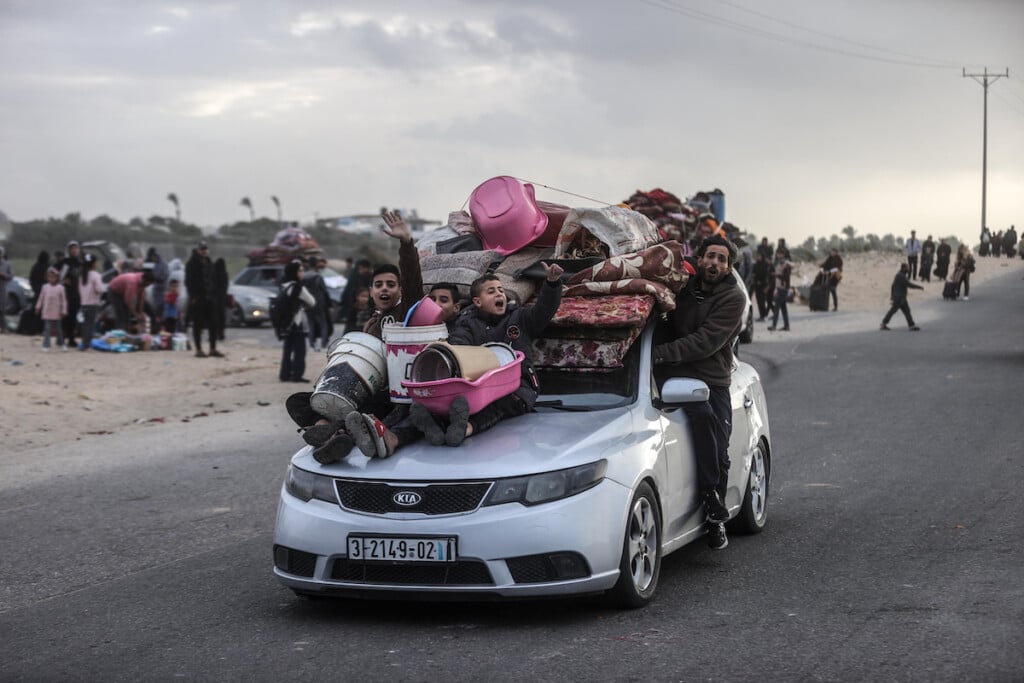
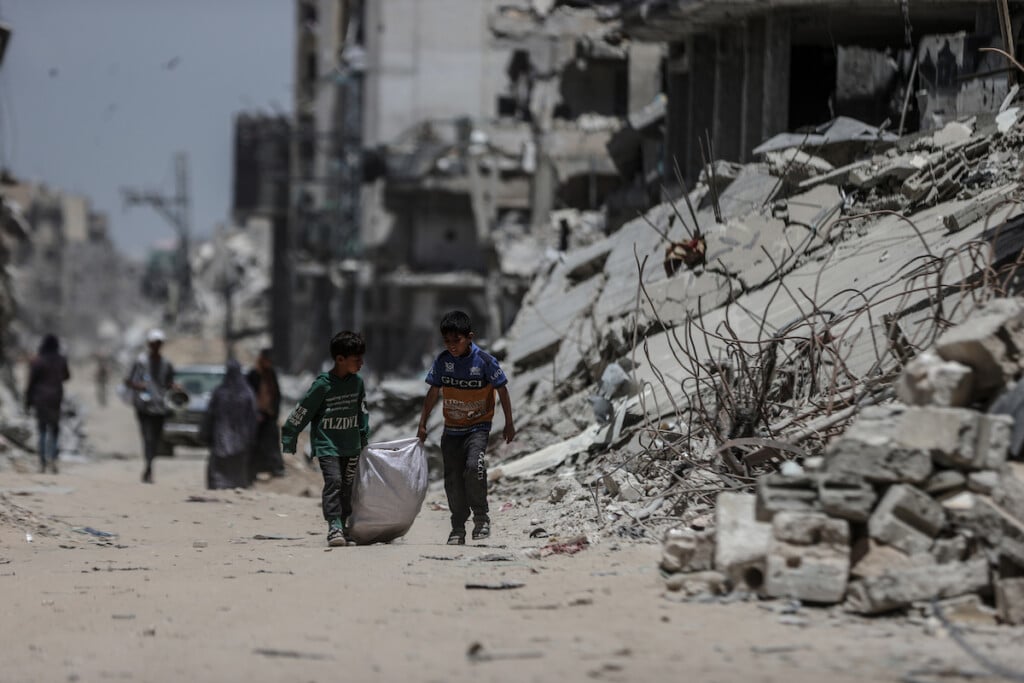
Ali Jadallah’s images feel almost in motion—alive, harrowing, yet deeply human—telling the story of a people’s resilience, who continue to resist and exist despite everything, in the fleeting calm between bombings, in the increasingly rare laughter of children, and in the enduring hope for days of peace in the future.
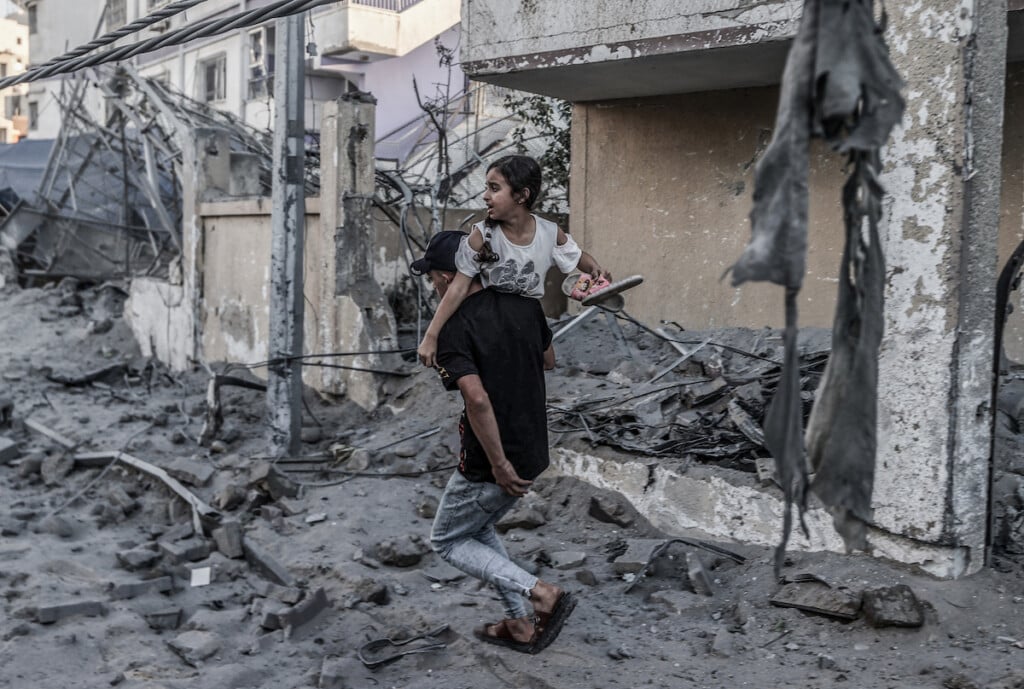

The power of Ali’s photography lies in its sensory impact: his images are not perceived through sight alone—we seem to hear the roar of explosions destroying buildings, the chilling sound of screams and the suffering of those who have lost loved ones—like the photographer himself—and even the deafening silence of those too traumatized to make a sound. This is possible precisely because Ali is not an external observer; he belongs to the community he captures in his images, and together with it he suffers, bends, and each time rises again.
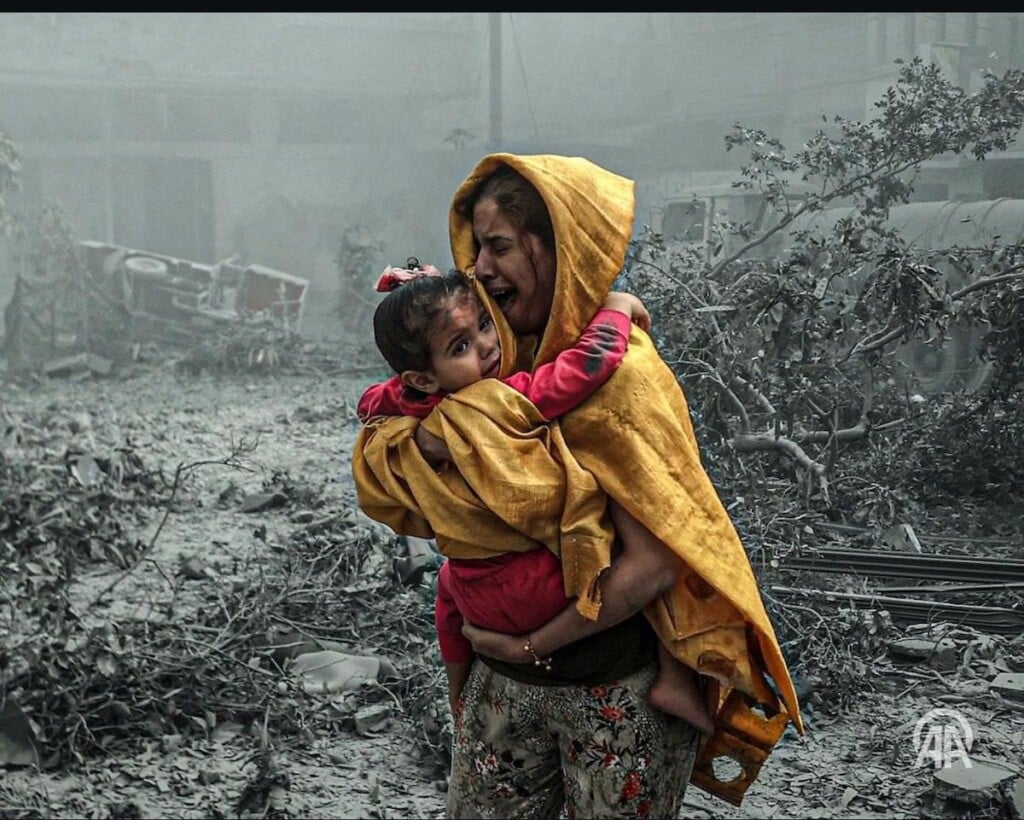
“The smell of dust mixed with blood is still stuck in my heart…”
This is Ali Jadallah’s mission: to take photographs that serve both as testimony to what is happening in the open-air hell of Gaza and as memories for future generations, so they may know that the story of Gaza’s people is not only one of suffering and destruction, but also of the resilience of an extraordinarily strong and dignified population. Too many people, newspapers, and broadcasts speak about this land and its inhabitants as if they were just numbers and victims to list. Ali wants to do more, showing the faces, emotions, and strength of the individuals behind the cold statistics of the news.

This article was created in collaboration with Luigi Falanga and Gaia Forlin aka @super8otto.