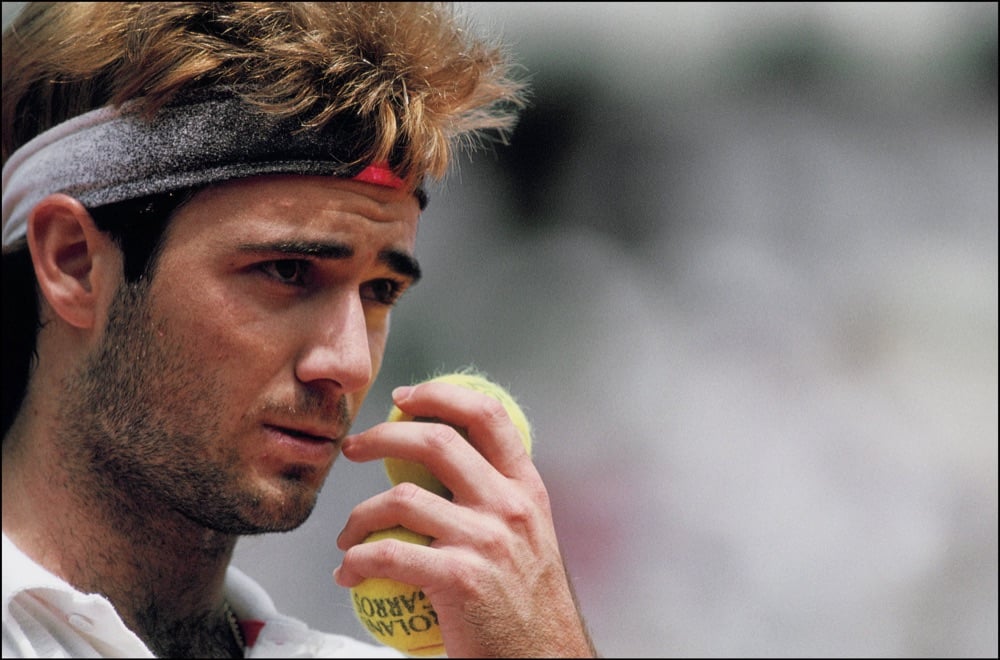
Forget Roger Federer’s composure or Pete Sampras’ minimalism. Andre Agassi is the style icon who – perhaps more than anyone – disrupted the way tennis approached fashion. His career isn’t just a story of sporting success, but an identity journey told in first person in his cult autobiography, Open.
Through rebellious looks (a little bit neon and definitely ‘90s in spirit), sharp cuts – including haircuts – and iconic collaborations, Agassi revolutionized the image of a sport historically tied to sobriety. Here’s how his style evolved, season by season.
Late 1980s (1986–1989)
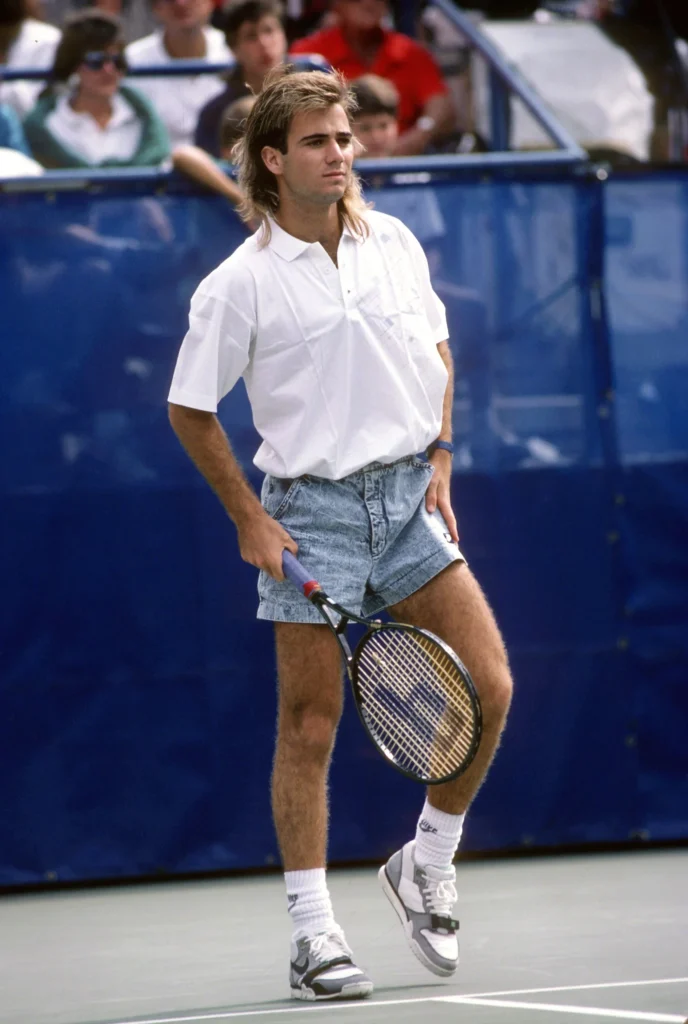
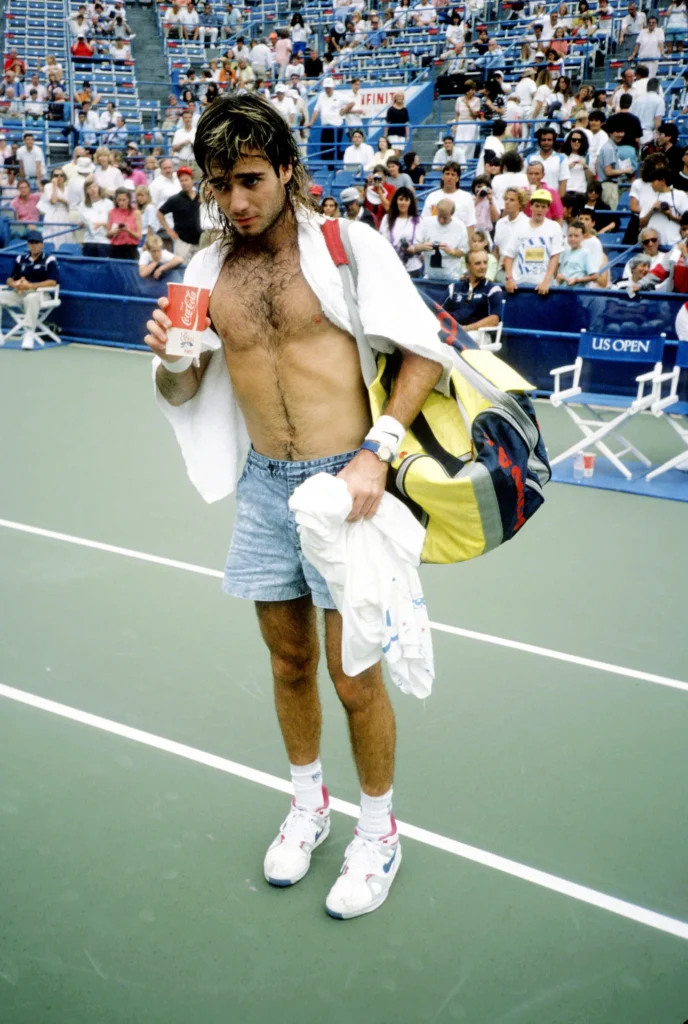
At just eighteen, Andre Agassi enters the ATP tour like an out-of-control comet. He plays with long hair styled into a mullet and wears Nike outfits that openly defy classic tennis dress codes. The denim shorts he wore at the 1988 US Open would become iconic. No one had ever dared so much on a tennis court. Aesthetically, he looked like both a rockstar and a Californian surfer on a tennis court.
Agassi’s Neon Era (1990–1992)
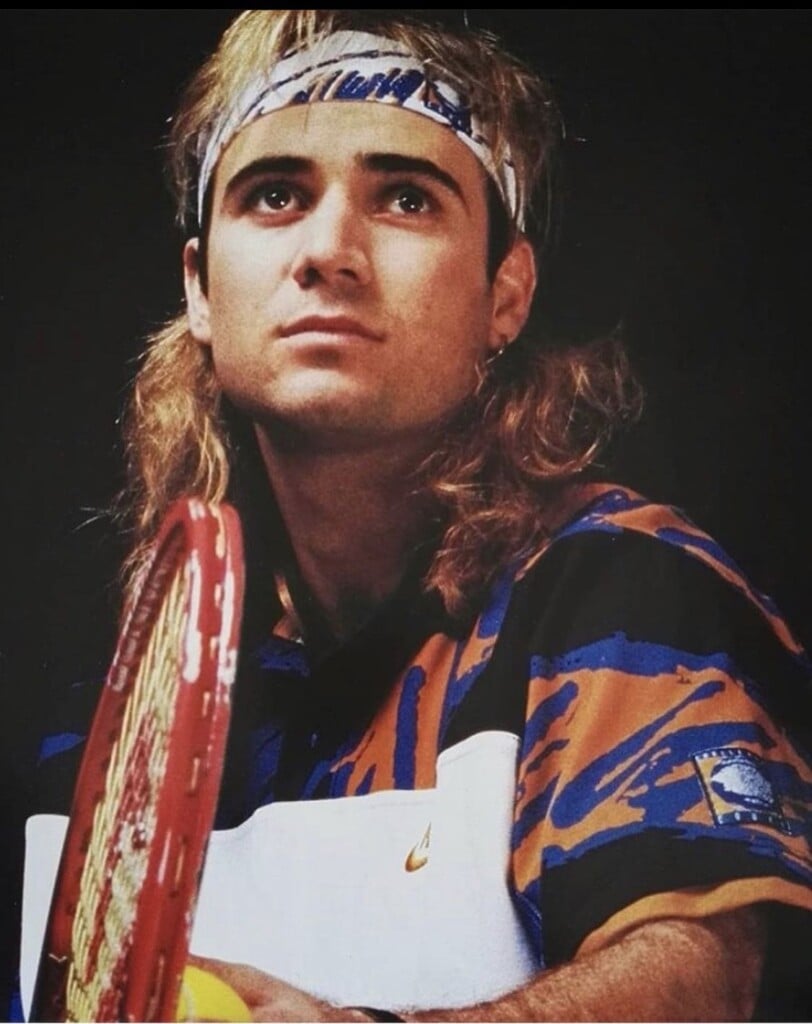
These years mark the beginning of a fruitful collaboration with Nike. Agassi brings to the court a palette of neon colors, geometric prints, and futuristic pieces. Unforgettable is the outfit with fuchsia leggings and a black tank top worn at the 1990 Australian Open.
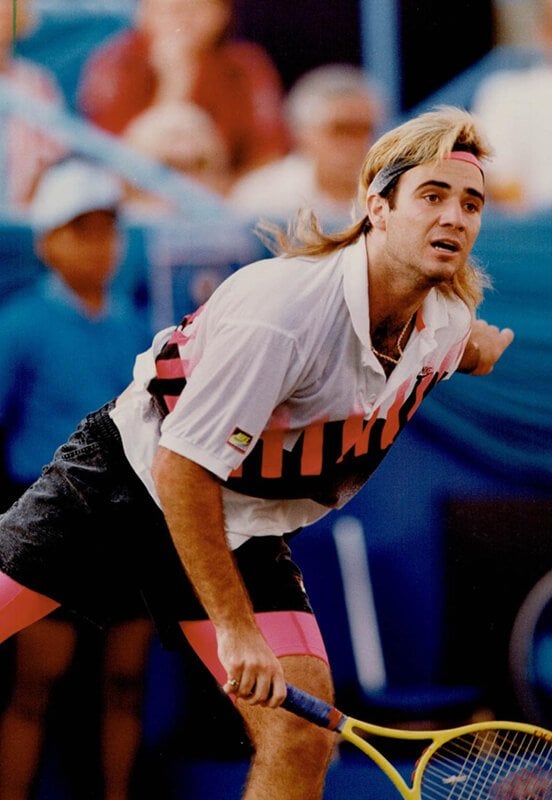

A moment he recently referenced again here. His style is irreverent and deliberately provocative. It’s the era of the slogan “Image is Everything,” taken from the Canon EOS Rebel ad featuring Agassi. Fashion becomes a core part of his persona and, in fact, his image.
1995: The Year Agassi Shaved His Head
Agassi goes fully bald. Literally. Shaving off his hair – later revealed to be partially a wig – also marks a break from the past. His look becomes more subdued, though still distinctly personal: tight-fitting outfits, sporty sunglasses, and darker tones. It’s a moment of new maturity, both on and off the court.

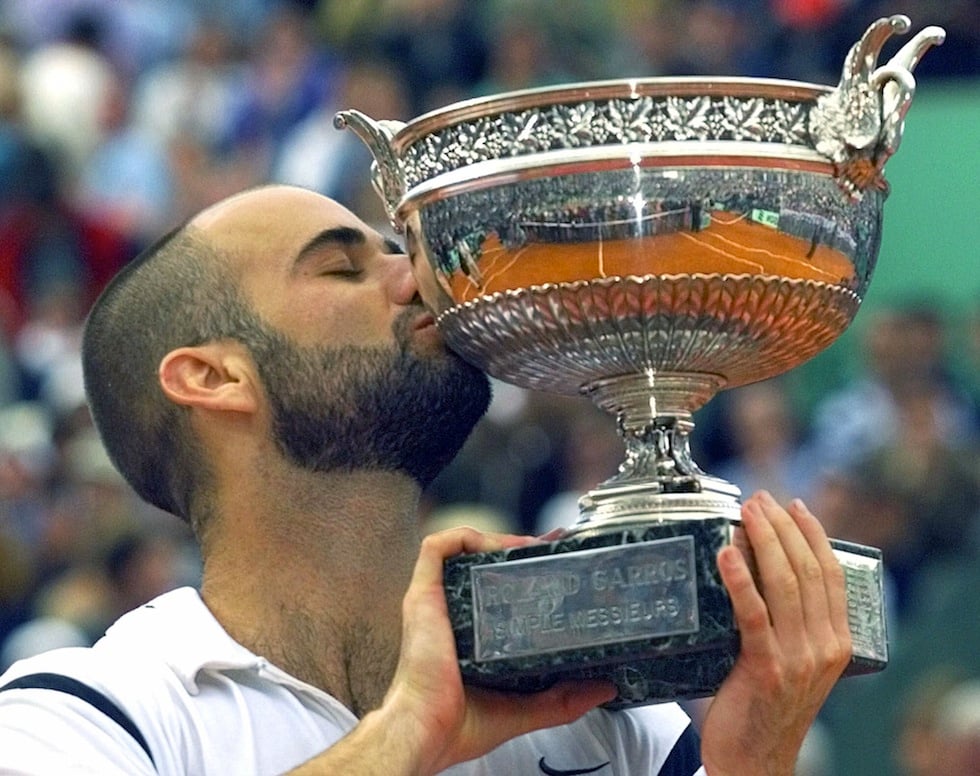
During the peak of his athletic maturity, Agassi continues to work with Nike, but his style evolves. The colors become less eccentric, the cuts cleaner, the outfits more technical. Though the neon excesses are gone, he remains true to a personal aesthetic made of bandanas, customized footwear, and gear that blends performance with identity. On court, he alternates between crisis and an unexpected rebirth, culminating in his 1999 Roland Garros win: a feat that made him one of the few players to achieve a Career Grand Slam. His style now reflects a new awareness – deeper and less loud.

From the Late ‘90s to His Retirement in 2006
In the final eight years of his career, Andre Agassi stops surprising with colors but continues to stand out through substance. His style shifts again, but this time it’s not a rupture – it’s an affirmation. More streamlined, more technical, more authentic. Agassi no longer needs to dress to provoke — now he dresses to affirm who he has become.

On court, Nike designs a series of outfits focused on pure performance: breathable materials, ergonomic cuts, essential lines. The colors tone down, dominated by white, black, and navy blue, occasionally broken up by minimal neon inserts, like subtle callbacks to his fluorescent years, now more whispered than shouted.
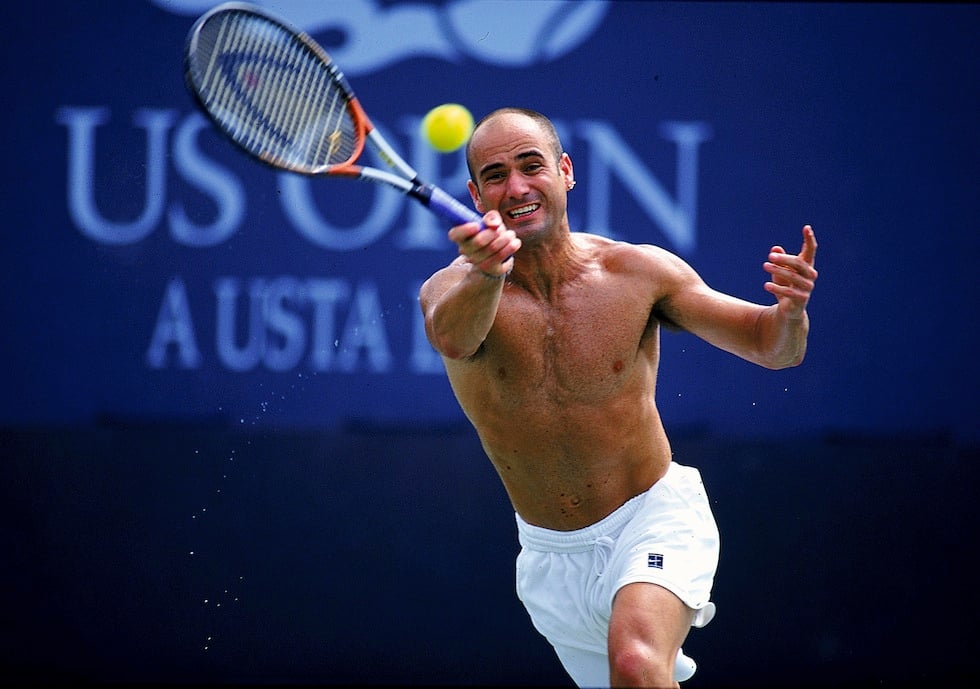
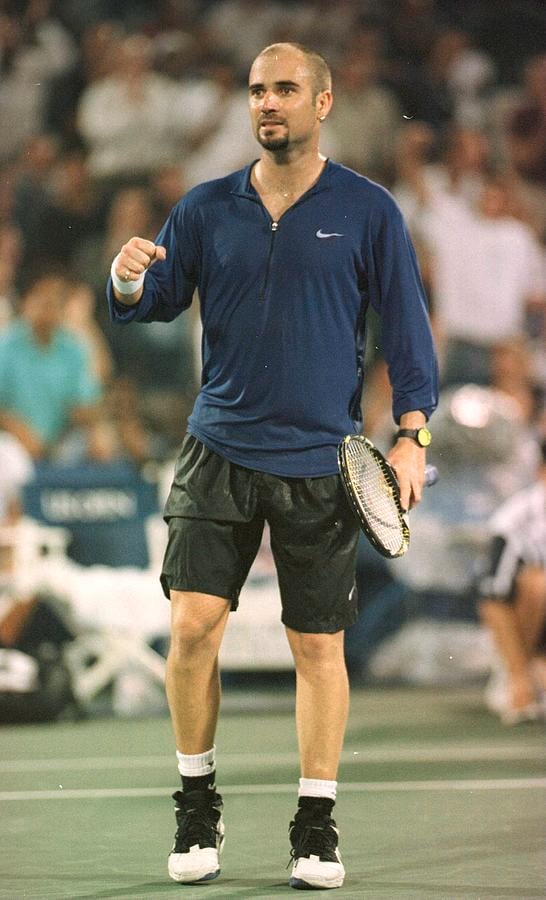
In 1999 he wins the Roland Garros, completing the Career Grand Slam. In 2001 he reaches the Wimbledon quarterfinals. In 2003, at age 33, he returns to world number one. Through all these moments, his visual style reflects his transformation: a legend who no longer needs the theatricality that once defined him.
Bandanas and Shoes
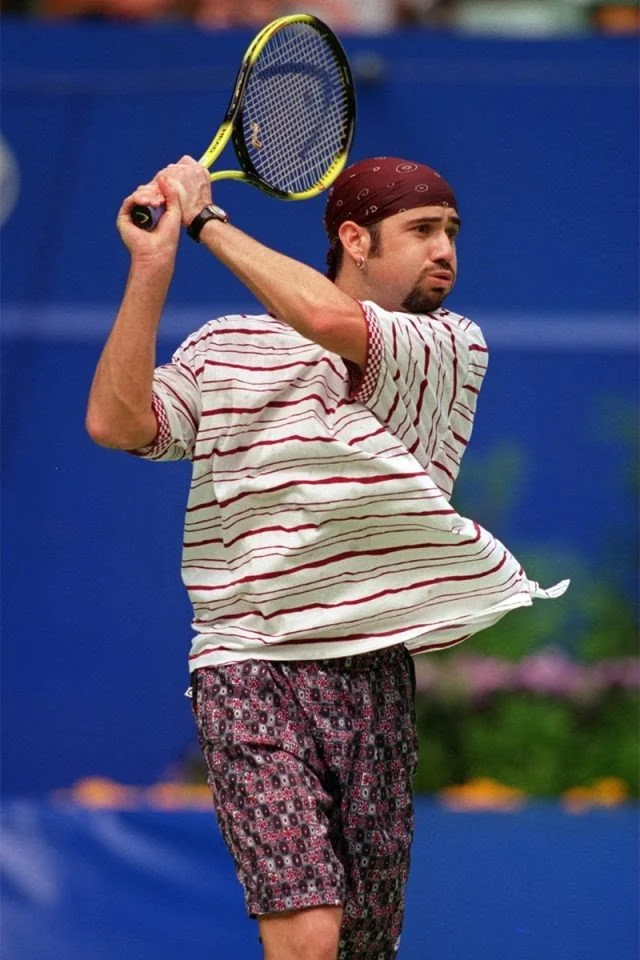
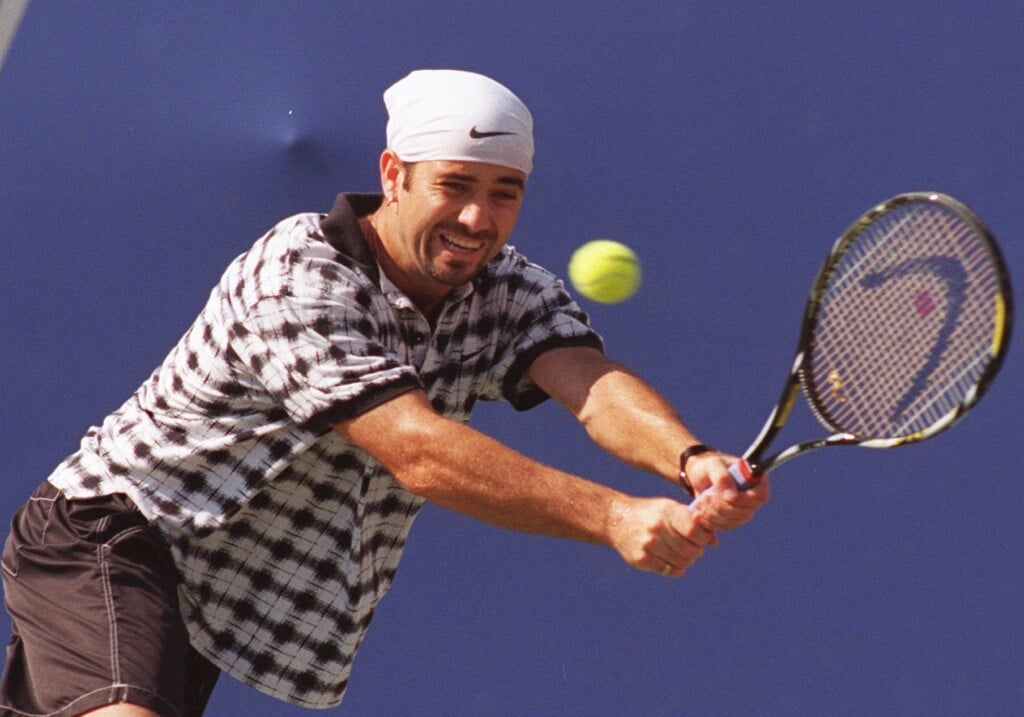
One recurring element is the bandana, no longer a symbol of rebellion but of continuity: a true visual totem that accompanied him to the end. From minimal ones to full-head wraps to creative designs — not to mention the more technical Nike-branded versions.
But we can’t not talk about the shoes. Models like the Air Tech Challenge III (from 1990) and the Air Tech Challenge II “Hot Lava” (from 1991), designed by Nike legends Tinker Hatfield and Wilson Smith, became iconic thanks to their bold design and bright colors — a perfect reflection of Agassi’s style.

Retirement
In 2006, when he announces his retirement at the US Open, his outfit is white with a few black stripes. A farewell consistent with the final stage of his career: sober, powerful, elegant, like a winning shot that kisses the line. Retired since 2006, Andre Agassi continues to inspire for how he turned each phase of his career into a style statement. If today’s athletes mix sportswear and personality so naturally, it’s partly thanks to him. From neon to minimal, Agassi proved that visual identity can evolve without ever betraying oneself.