Among all the professionals involved in the success of an exhibition, the exhibit designer certainly plays a key role. We asked a few questions to Andrea Isola who holds this role and has been collaborating with fairs, museums and festivals for the set up of exhibition projects for many years.

Of all the professions related to the world of art and photography, perhaps the exhibit designer is the least known one. Can you explain exactly what it is about?
The exhibit designer is the professional who plans the preparation of an exhibition, through basic architectural standards and a good dose of creativity. In simpler terms, the exhibit designer has two fundamental tasks: to make sure that the works of art are exhibited in the best possible way within a given exhibition space and to guarantee the best experience for the public.

In the process of conceiving an exhibition, which professionals, among the insiders, are the ones the exhibit designer interfaces the most with?
In the field of contemporary photography, we usually interface with the curator and artists to ensure that the installation project respects the topic of the exhibition and considers the wishes of those who conceived the photographic project. At the same time, essential for the subsequent construction phase, the exhibit designer interfaces both with the managers of the exhibition space, to have a clear idea of what the limits and potential of the location may be, and with the various suppliers who will produce and mount the exhibition. The direct relationship with the operators in these sector allows you to have a clear and overall picture of the situation to ensure that the initial budget imposed by the customer is respected.

Photography follows different rules than the classic sculptural or pictorial work of art, also because, in most cases, it is made up of a simple file. How does the approach to the exhibition space change when photographic exhibitions are set up?
From a creative point of view, starting from a simple file gives free rein to ideas, especially if we think of the numerous supports on which a photograph can be printed, from photographic paper to di-bond, from forex to fabrics, from vynil to wood, etc. .. that allow the creation of exhibition layouts of all kinds. However, this does not mean that there are no limits or foundations to respect. The material and size of the print format must be evaluated and chosen according to the type of photographic project, the exhibition space and the budget available.

Is there a (photographic) work among those you have created to which you are particularly attached and for what reason?
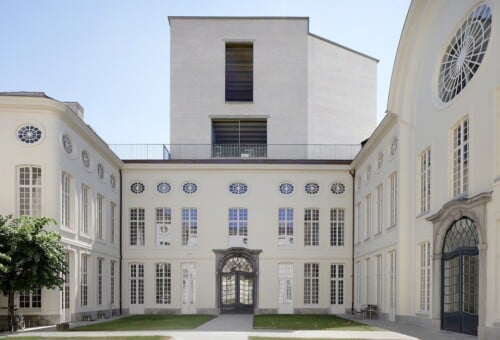
I must say that, for different aspects, I am very attached to each project I have created. The latest, for example, which opened in January 2023 at the MAST Foundation in Bologna, is Death by GPS by Salvatore Vitale and it was a very stimulating set-up project because it had strong attention and coherence between the theme of the exhibition, works and exhibition space. Each element in the exhibition has been conceived ad hoc, designed and made to measure, from the 3D frames to the structure that divides the space and supports the screens. Seeing it done was a great satisfaction.
Ph. credits Crates Design, Ivan Cazzola, MAST.