In cinema, every object in the background is a choice: a choice of character, class, era, and setting. The right sofa reveals who a character is before they even speak. The wrong lamp can destroy the atmosphere of an entire scene. And sometimes a single piece of design carries with it decades of history, a designer’s legacy, and an entire aesthetic manifesto.
Product placement exists, of course, but what we are talking about here is something different: objects carefully selected by set designers—often invisible to the average viewer—that build believable and coherent worlds.
What surprised us while working on this content was discovering how many of these pieces appear across different films, different eras, and different genres. Castiglioni’s Arco Lamp appears in Tony Stark’s home in Iron Man, in Blofeld’s lair in Diamonds Are Forever, and in Sentimental Value. Mies van der Rohe’s Barcelona Chair furnishes Patrick Bateman’s apartment in American Psycho, James Bond’s secret service headquarters in Casino Royale, and Bruce Wayne’s mansion in Batman v Superman. This list is for those who watch movies twice: the first time for the story, the second time for everything else. For those who have ever wondered, “Isn’t that an Eames chair?” or paused the frame to identify a lamp in the background.
Some of these appearances are nearly invisible Easter eggs. Others are silent protagonists that define an entire scene.
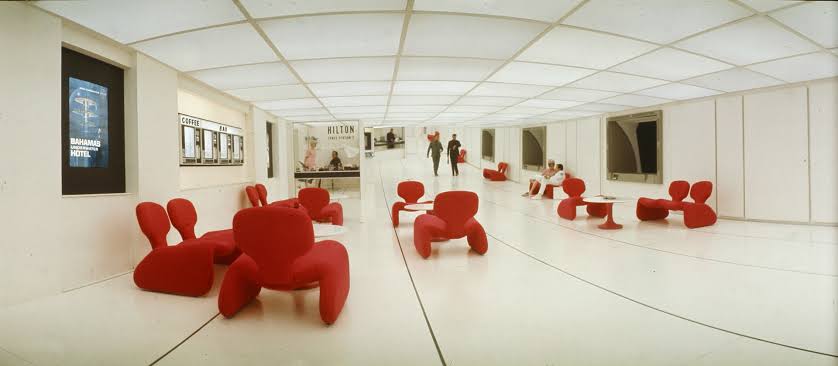
2001: A Space Odyssey, Stanley Kubrick, 1968 – Djinn Armchair by Olivier Mourgue, 1965
The space station’s waiting room, all in red. Kubrick chose this French chair from 1965 because it already looked like it came from the future. It worked so well that Mourgue used it in commercials with the tagline “as seen in 2001.”
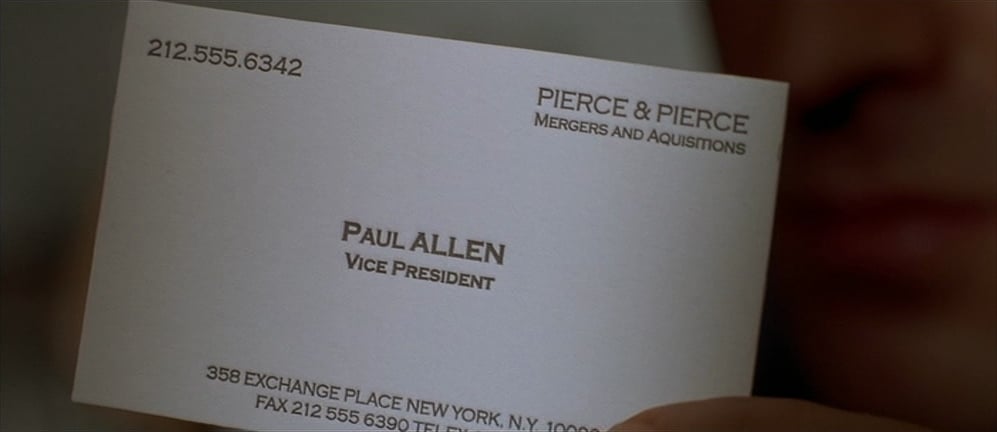
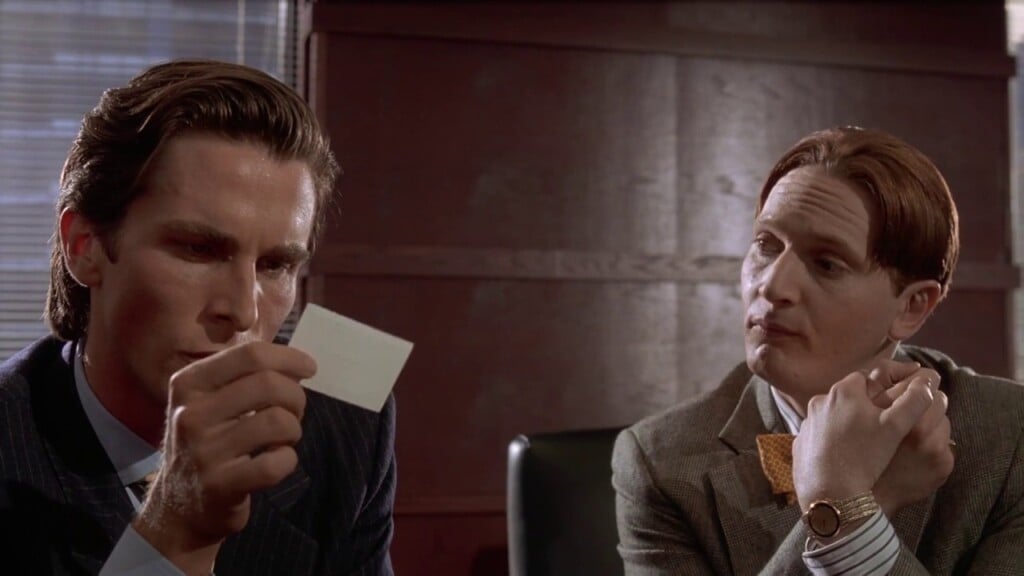
American Psycho, Mary Harron, 2000 – Business Card, Patrick Bateman / Barcelona Chair, Mies van der Rohe, 1929 / Hill House Chair, Charles Rennie Mackintosh for Cassina / Alanda Coffee Table, Paolo Piva for B&B Italia
Patrick Bateman’s murderous madness lurks within an apartment furnished with obsessive precision. Mies van der Rohe’s Barcelona Chair, Mackintosh’s Hill House Chair produced by Cassina, Paolo Piva’s Alanda coffee table for B&B Italia: each piece is chosen to construct the perfect mask for a man who uses design as armor. The sequence where the business cards are compared remains one of the most tension-filled scenes in the history of cinema—the font in question is Silian Rail, of course.
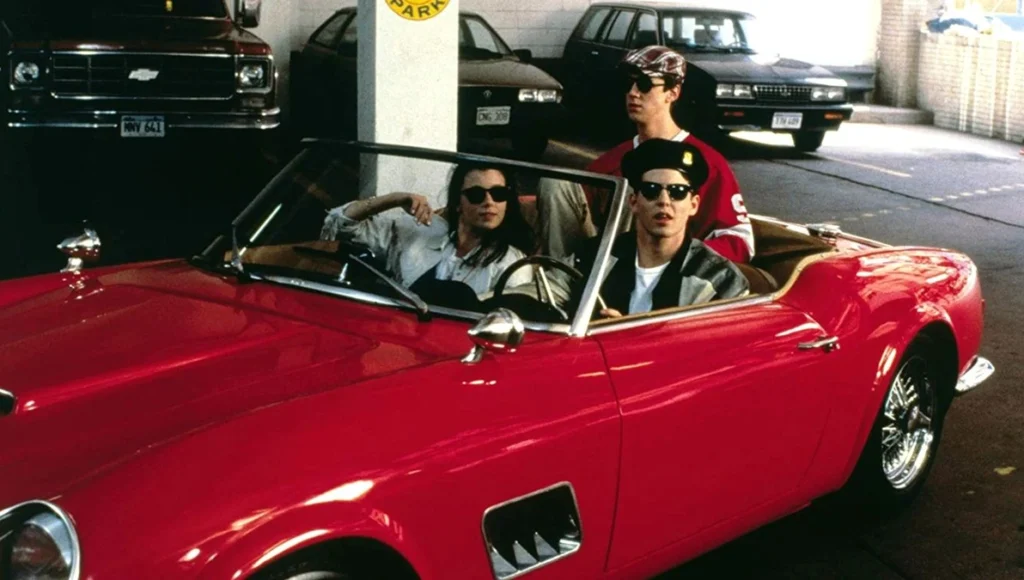
Ferris Bueller’s Day Off, John Hughes, 1986 – Ferrari 250 GT California Spyder, 1961
Hughes didn’t have the budget for a real California Spyder, so he had three replicas built that were so accurate they’re still sought after as collector’s items today. The car isn’t just a means of transportation: it’s the emotional driving force behind the entire film, the symbol of everything Cameron doesn’t allow himself to desire.
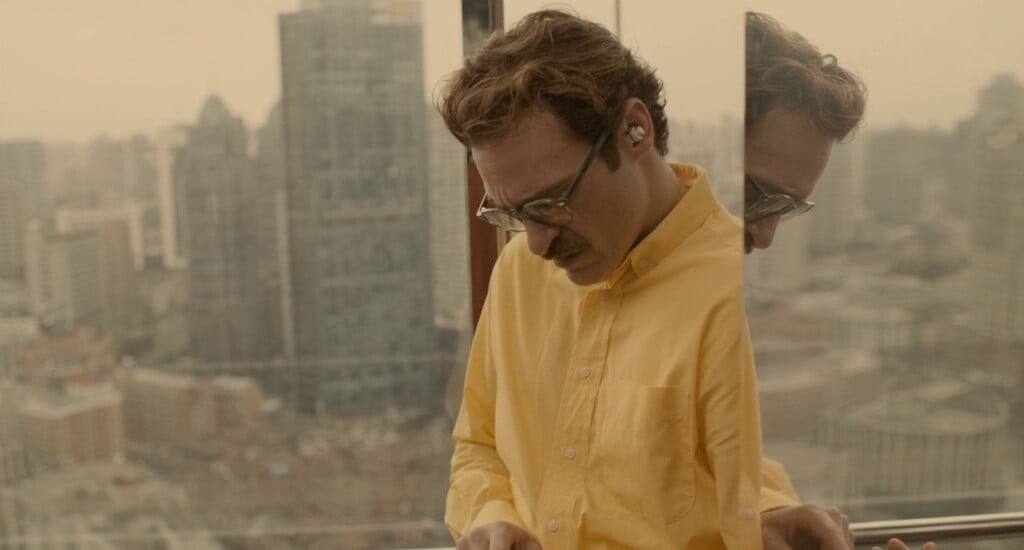
Her, Spike Jonze, 2013 – Earphones and production design
Jonze worked with designers to envision a future without visible screens, dominated by warm surfaces and nearly invisible technology. Theodore’s earbuds—minimalist, almost organic—preceded the AirPods’ aesthetic by five years. The film had already figured it all out—and made it beautiful, too.

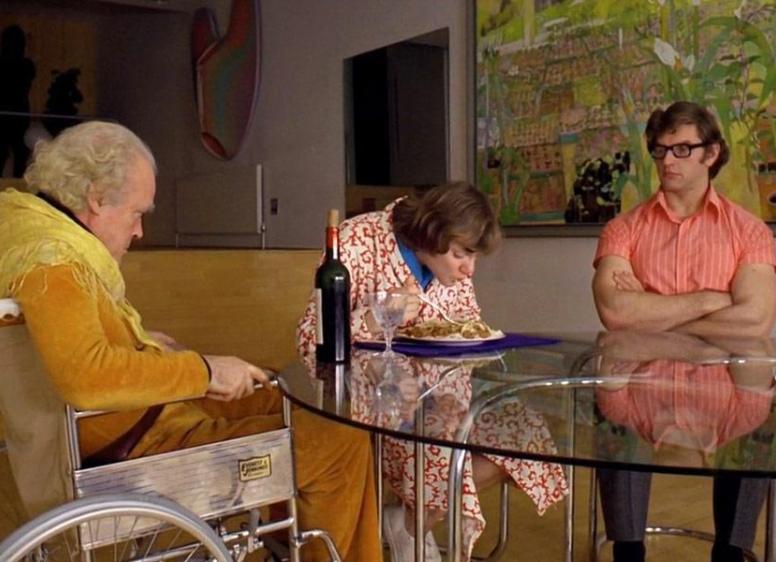
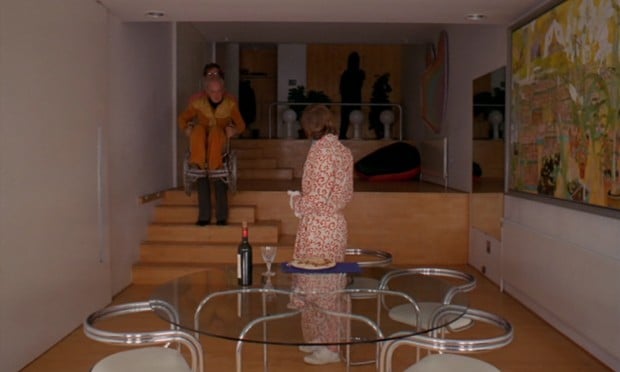
A Clockwork Orange, Stanley Kubrick, 1971 – Glass and chrome table, attributed to Giotto Stoppino, 1970s
In A Clockwork Orange, design objects become direct extensions of the film’s violence and pop aesthetic. Kubrick uses pieces of late-1960s avant-garde design to create a futuristic and alienating atmosphere. One of the most coveted is the glass-and-chrome table, attributed to Giotto Stoppino, which appears in the scene where Alex devours spaghetti and red wine. It’s a piece we’d love to have in our living room today.
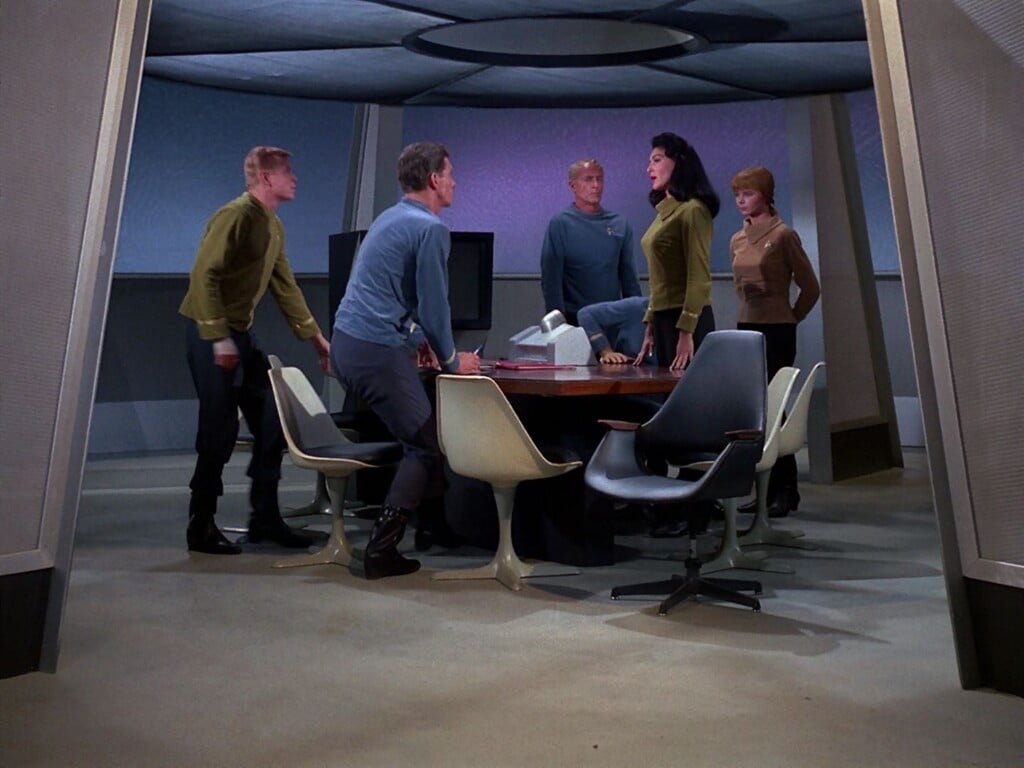
Star Trek, TV series, 1966–1969 – Tulip Chair, Eero Saarinen per Knoll, 1956
The Enterprise’s interiors are furnished with Eero Saarinen’s famous Tulip chairs, manufactured by Knoll. Designed in 1956 with the aim of eliminating the “clutter of legs” under tables, they have become a symbol of a clean and rational future. This design choice was so successful that it influenced decades of subsequent sci-fi imagery.

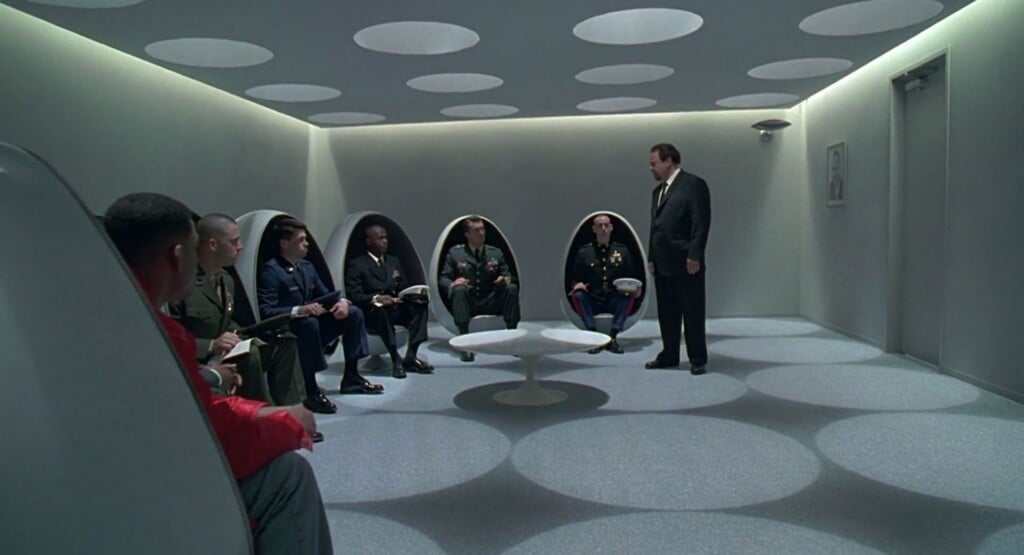
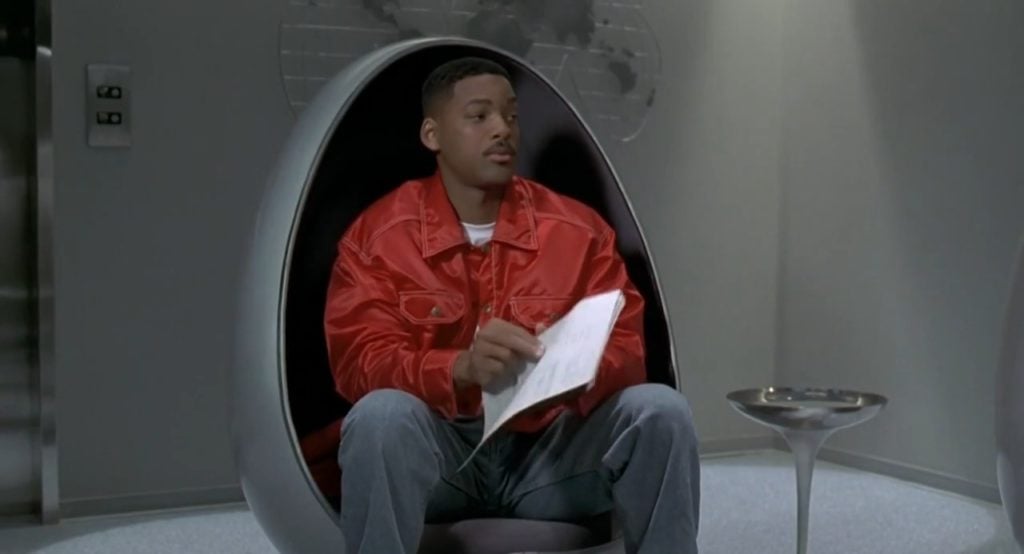
Men in Black, Barry Sonnenfeld, 1997 – Ovalia Armchair, Henrik Thor-Larsen, 1968 / Tulip Table, Eero Saarinen for Knoll, 1956
The MIB offices are furnished with a precise stylistic coherence: Henrik Thor-Larsen’s Ovalia armchair—a sphere that envelops its occupant, almost like a cocoon—and Saarinen’s Tulip table create a futuristic aesthetic that draws directly on 1960s design. In cinema, the future has always had the same aesthetic.
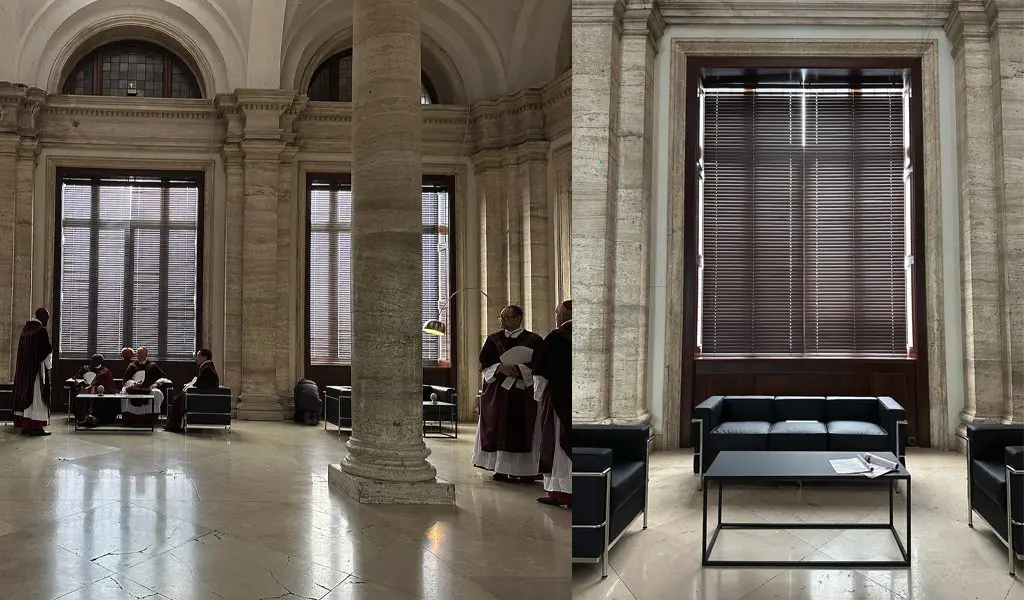
Conclave, Edward Berger, 2024 – LC2 and LC3 Armchairs, Le Corbusier, 1928
Eight Oscar nominations, including Best Production Design for Suzie Davies. The film’s design philosophy is based on contrast: 20th-century Italian Fascist architecture infused with elements of the purest European modernism. Le Corbusier’s LC2 and LC3 armchairs stand out as symbols of the tension between the old and the new, rigor and power, that runs throughout the film.
Sentimental Value, Joachim Trier, 2025 – Arco Lamp, Castiglioni for Flos, 1962 / Pernilla Chaise Longue, Bruno Mathsson, 1942 / PH5 Pendant Lamp, Poul Henningsen for Louis Poulsen, 1958
The most recent film on the list is also the most lavish in terms of design. Production designer Jørgen Stangebye Larsen constructed the interiors using original period pieces, including an Arco lamp lent to him by his father. Each object tells a specific family story: the PH5 hanging above the dining table accompanies dinners with an intimacy as poignant as that of a human presence.

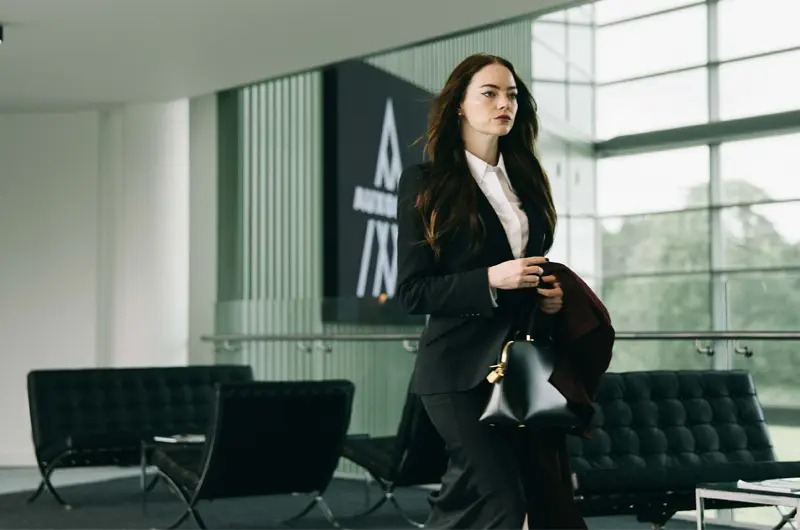
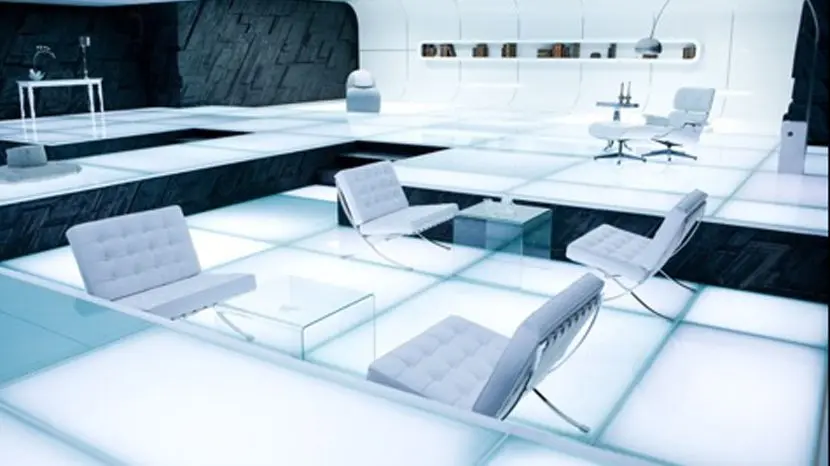
The Barcelona Chair: A Career of Its Own – Barcelona Chair, Ludwig Mies van der Rohe for Knoll, 1929
Designed in 1929 for the German Pavilion at the Barcelona World’s Fair, the Barcelona Chair has become a visual shorthand in cinema for cold power and icy intelligence. It appears in Patrick Bateman’s apartment, in James Bond’s secret service headquarters, at Bruce Wayne’s home, and in the digital worlds of Tron: Legacy. A chair that doesn’t merely furnish a space—it defines it.
Read Also: 5 designer pools and where to find them