To help people living with dementia, sometimes all it takes is a radio. Design for old age has for years circulated a promise that’s as ambitious as it is vague — that technology will “help” people with dementia. In practice, this almost always translates into two equally unsatisfying extremes: surveillance devices (GPS, sensors, alarms) designed to contain risk, or smart gadgets loaded with apps, notifications and touchscreens that ask people who are already struggling cognitively to learn yet another interface. Bruno, the project by designer Karin Pinto, takes a third path, more modest and more intelligent: it doesn’t treat, it doesn’t monitor, it doesn’t prompt memory on command. It simply brings a family member’s voice into a room, in the simplest way possible — a button, a speaker, and that’s it.
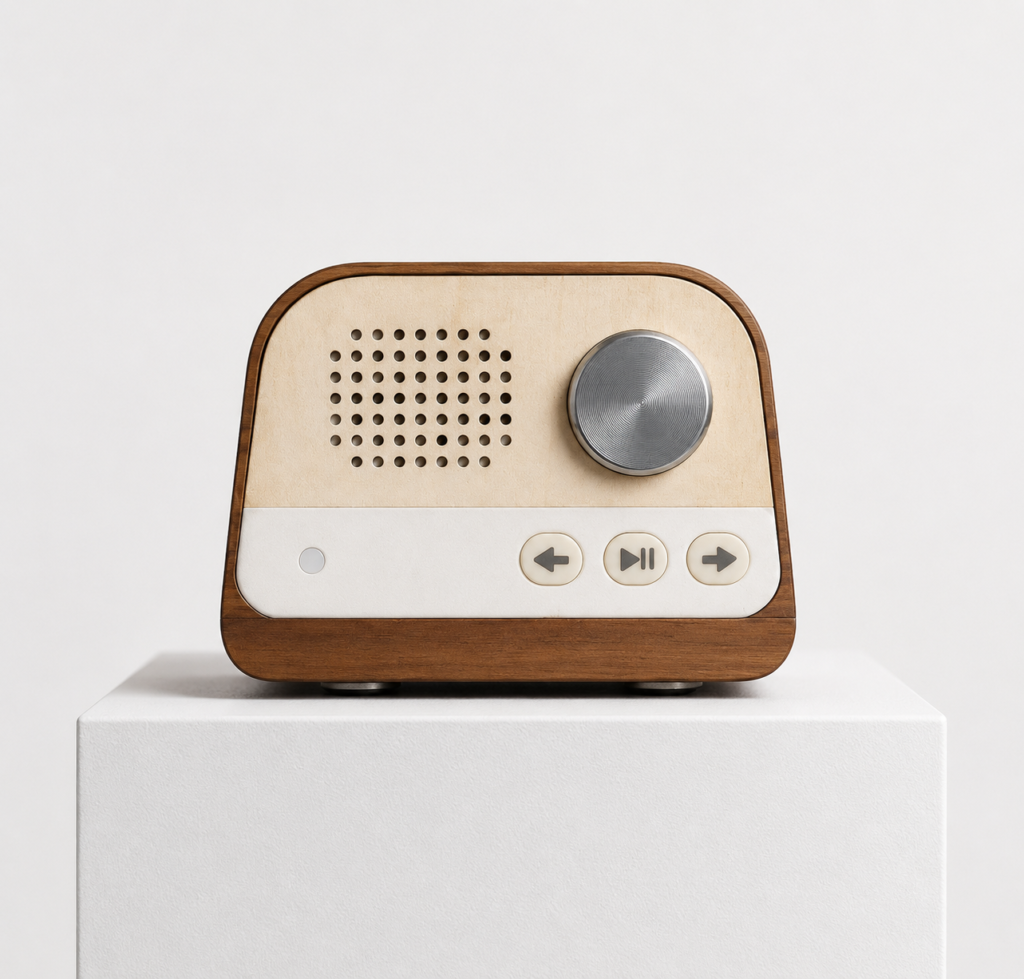
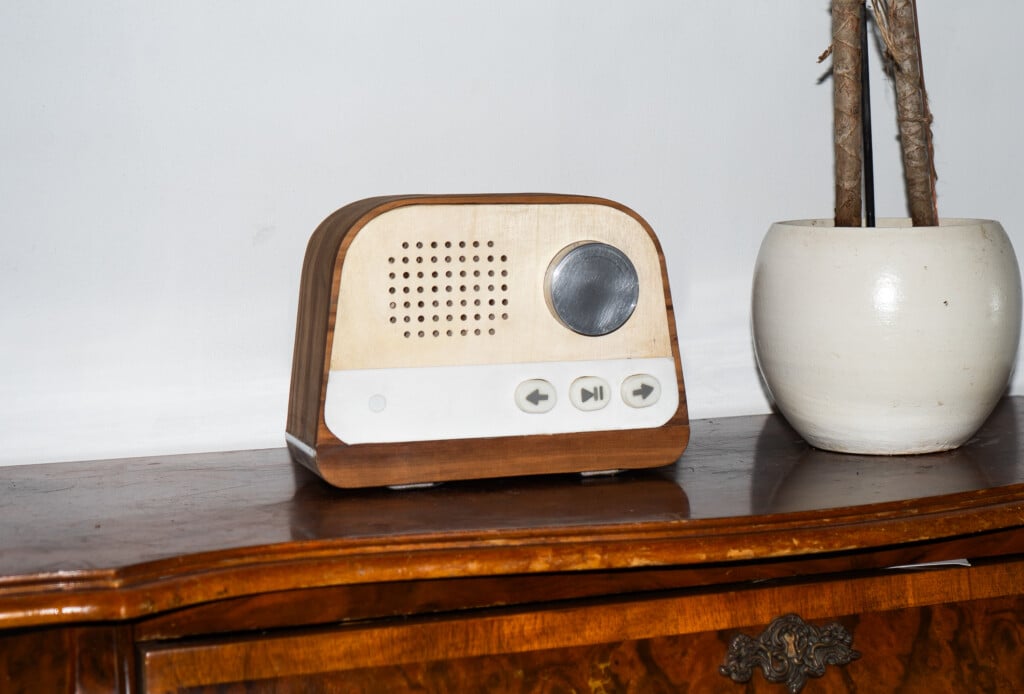
Bruno is, in the designer’s own words, a communication device built around the shape of an old radio, designed for people living with dementia and for the loved ones caring for them from afar. The choice of the radio isn’t nostalgia for its own sake — it’s a precise functional decision, since dementia affects short-term memory above all, and familiar objects from the past often remain more legible than any contemporary interface, a principle at the heart of so-called reminiscence therapy, now recognised as an effective non-pharmacological intervention for reducing stress and depressive symptoms in elderly patients. Bruno applies this principle not to a generic memory, but to the most basic function of all: hearing the voice of someone you love.
The mechanism is disarmingly simple: through a dedicated app, family members record voice messages or upload custom playlists; this content reaches the physical radio at home, playable at the press of a single, large tactile button. There’s no login to remember, no screen to decipher. On the other end, the “remote” family member has a slightly more elaborate interface (multi-user, playlists from Spotify or Apple Music, a message archive), but the cognitive load stays entirely on the side of whoever can bear it.

There’s a detail in the project’s render that says more than any statement of intent: Bruno’s radio is photographed next to a plant in a ceramic pot, on a bare shelf — not in a lab, not in a sterile care home, but in what looks like an ordinary living room. It’s a staging choice that implicitly says where Bruno really wants to be: not in the geriatric ward, but on the dresser at home, next to the objects that have always been there.
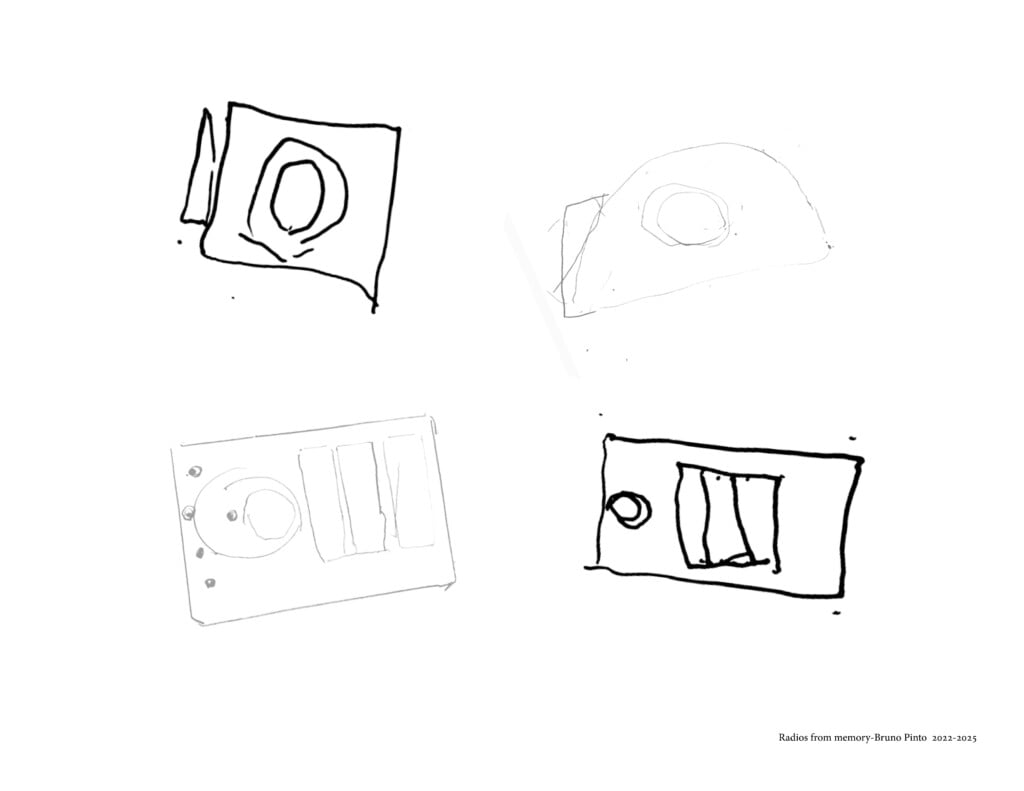
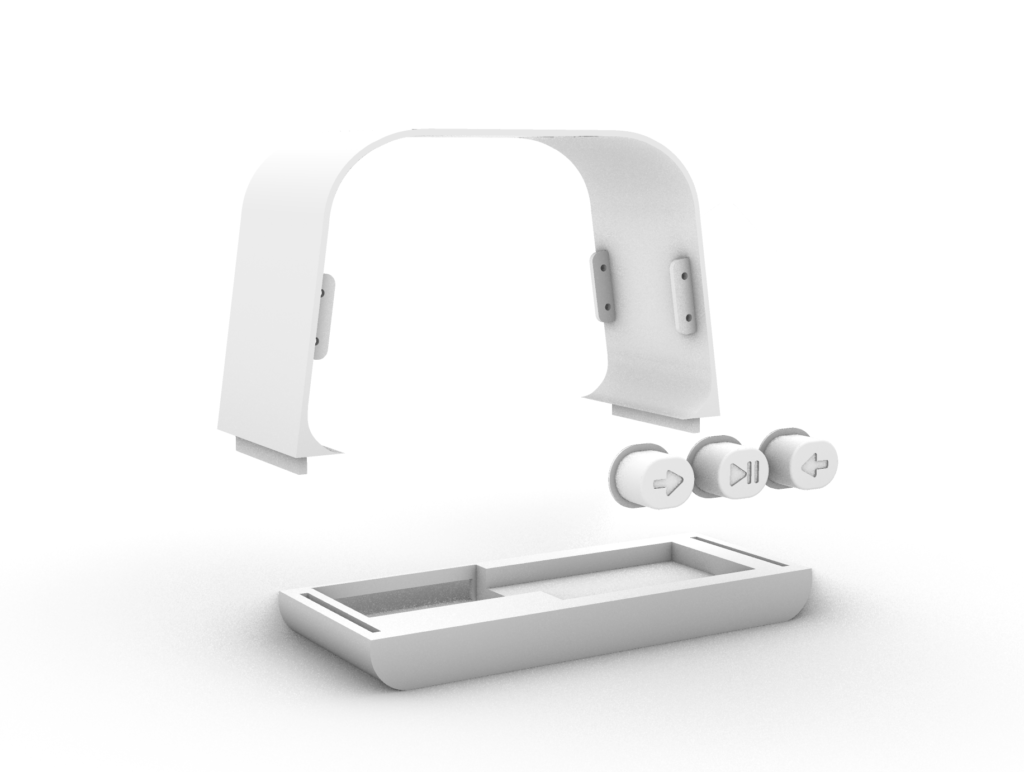
The project fits into a broader strand of research, from the University of Dundee’s Computer Interactive Reminiscence and Conversation Aid to the University of York’s research centres on home technology for older adults, which have spent years working on the idea that technological assistance for dementia should reduce, not increase, the cognitive load on the person using it. Bruno is a minimal, almost artisanal variation on that idea, but a coherent one — it doesn’t promise to change the disease, it only promises that a family member’s voice stays within reach, at the cost of a single gesture.