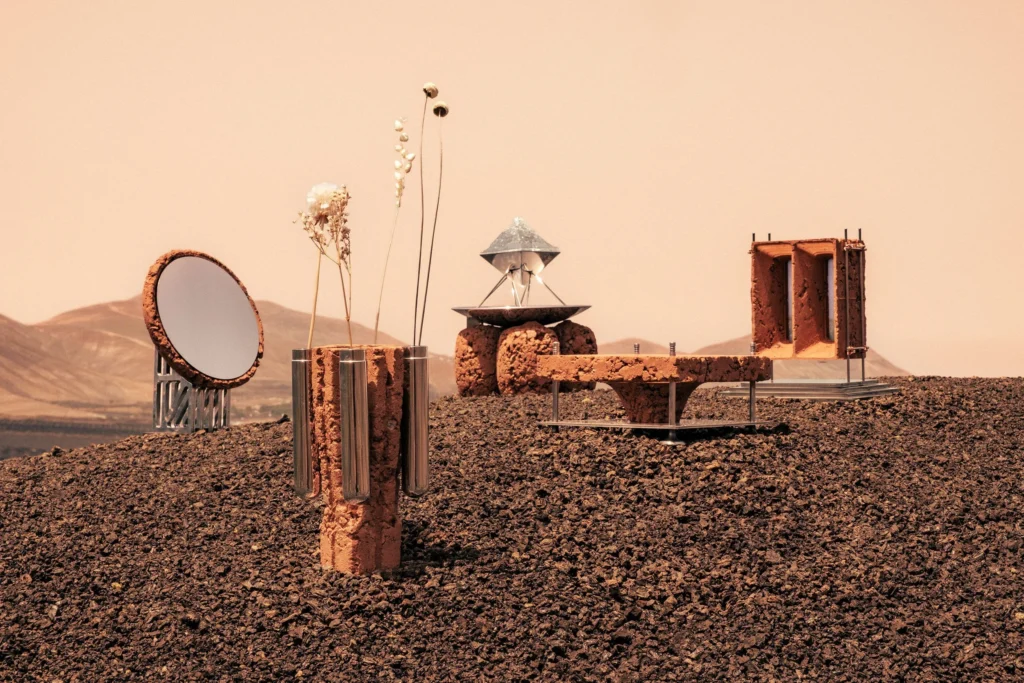
What would our homes look like if we lived on Mars? That’s the question behind Martian Relics, the new collection by artist and designer Roc H Biel, who imagines the furnishings of a home on another planet to talk about what we’re doing to our own.
The space race seems to be back in fashion, no longer as a scientific challenge but as a desperate search for an escape route. It’s hard not to notice that the moment we start talking about “colonising” Mars, we’re also implicitly talking about abandoning Earth, as if it were disposable. Biel flips the perspective, imagining what some everyday objects might look like if the only resources available were those of the Red Planet.
The Martian Relics collection is made up of a vase, a mirror, a window, a plate and a water filter, each one built around one of these facets of being human.
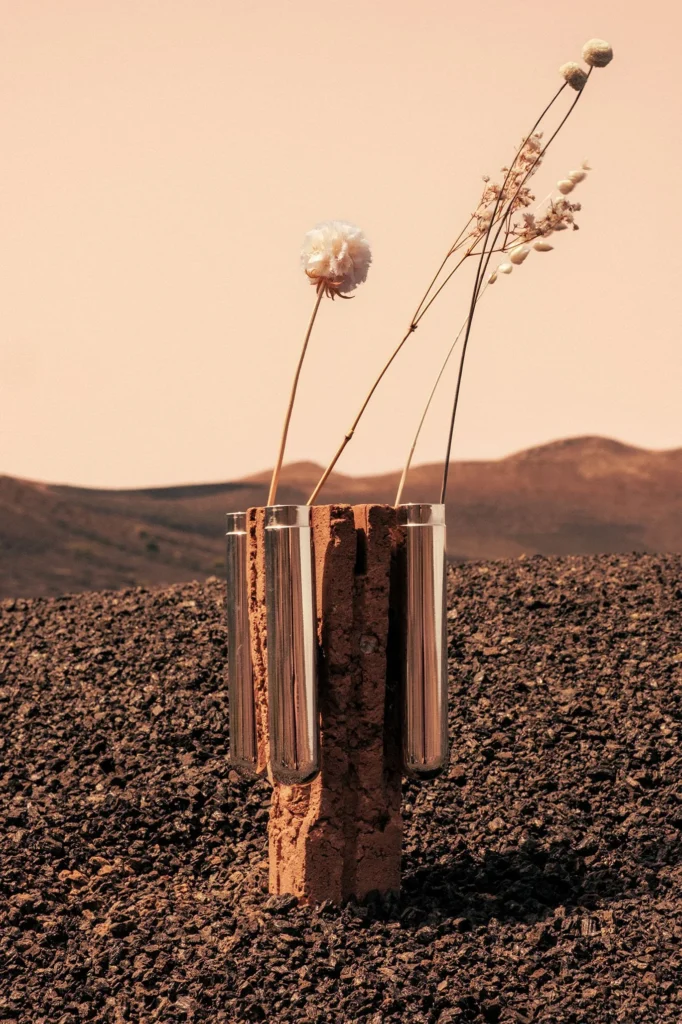
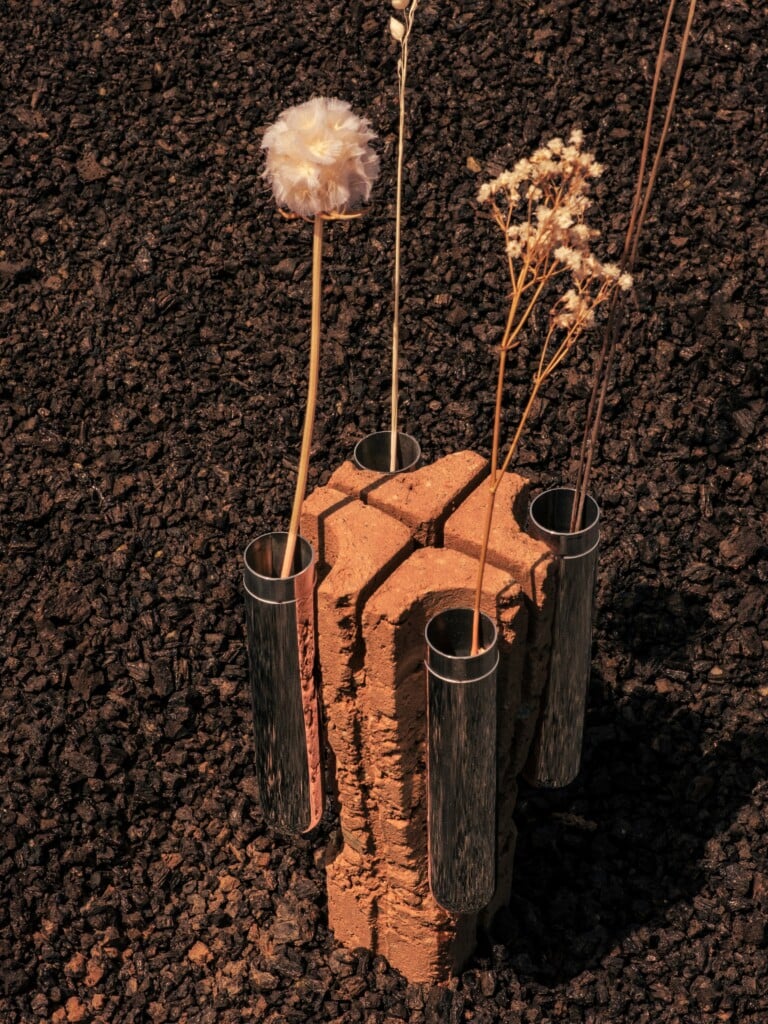
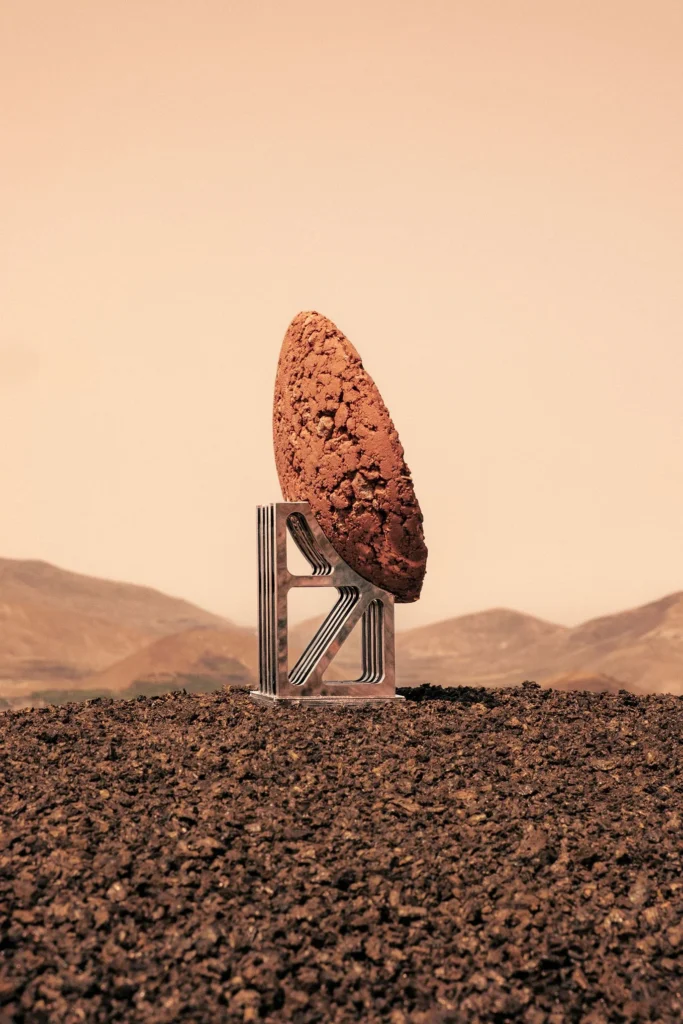
Last Offering is the flower pot, modelled on a headstone with a double cross. In a future where nature is the scarcest resource of all, today’s religions might give way to the return of the old goddesses, first among them Gaia. A central rammed-earth stele, its cross carved in negative space, holds four side capsules made from up-cycled pressurised tanks, designed to hold the last dried flowers left on Earth.
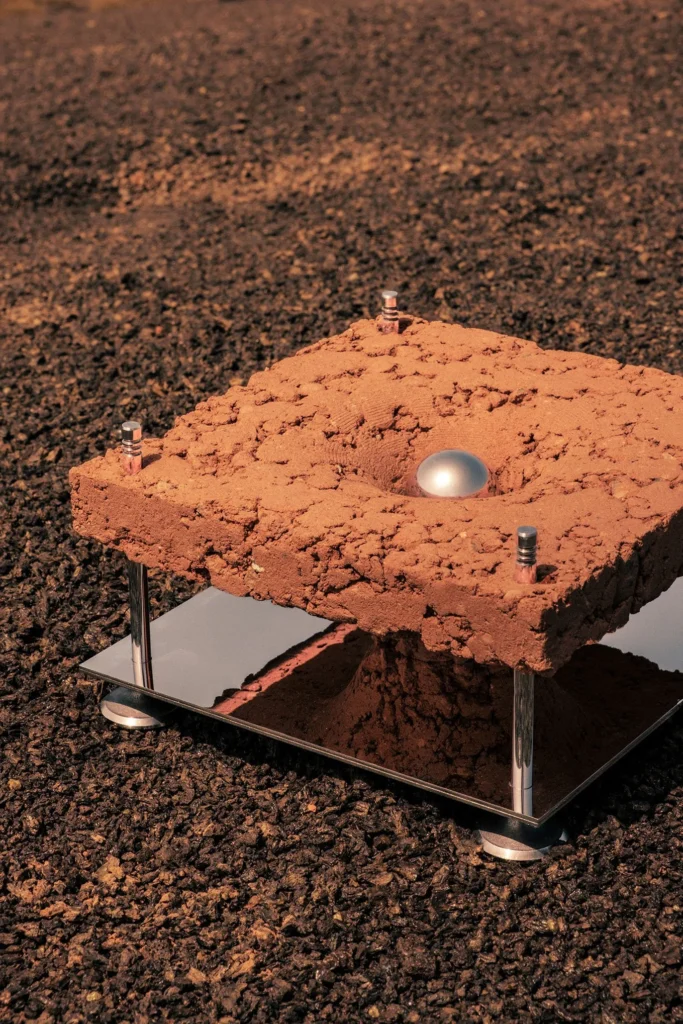
Gravity Well is the plate, a small two-tiered tray for keys and personal items: on top, a representation of a gravitational pull, a concept that feels forbiddingly complex today but would be common knowledge in a Martian future; below, a mirror-polished sheet that doubles the form in reflection, a nod to theories of parallel dimensions.
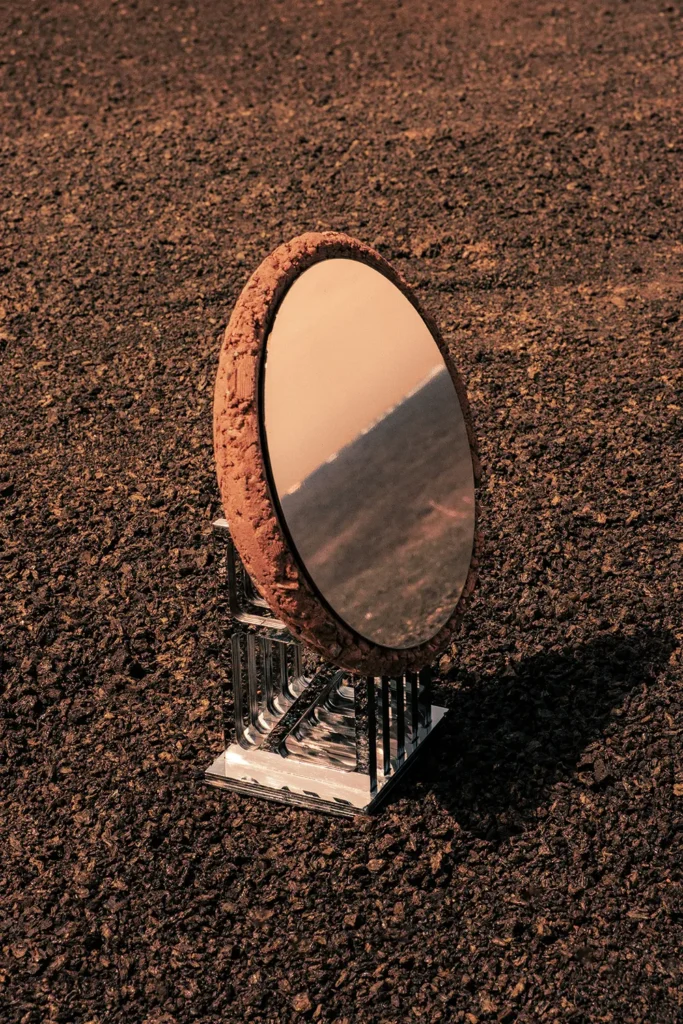
Faded Signal is the table mirror, modelled on the great antennas built to receive signals from space. The concave rammed-earth cavity returns a slightly blurred image: today, beauty is distorted by an industry that thrives on our insecurities; on Mars, that perfectionism would dissolve, making room for a return to introspection.
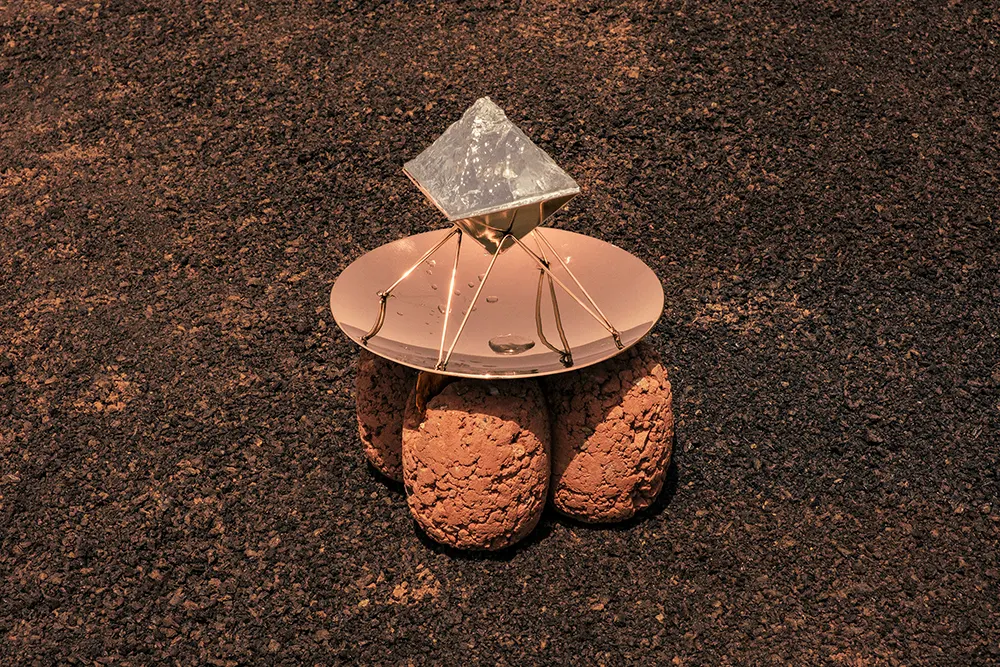
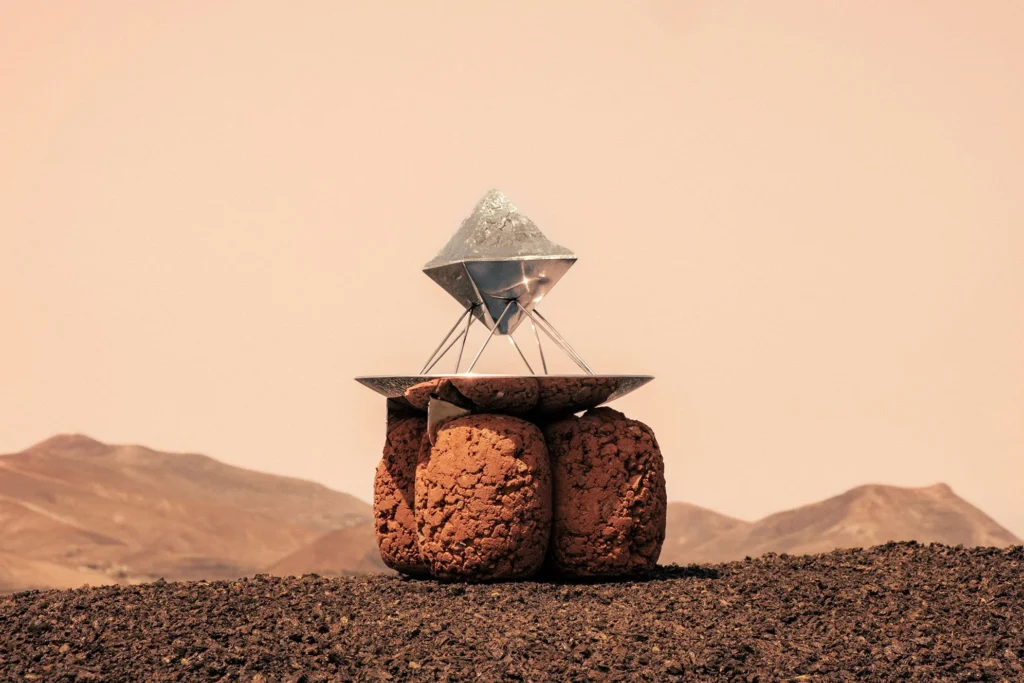
Slow Water is the water filter, inspired by satellite architecture. Water descends from a crystallised ice rhombohedron through a first filtration stage, settles on a concave plate, then pours into a waiting cup through a rudimentary hinge mechanism. A gesture we take for granted today becomes almost ceremonial.
Eroded Horizon is the window, the only piece conceived purely to be looked at. Inspired by the chamfered windows of Jørn Utzon‘s Can Lis, it holds a printed opal panel bearing a single image: the Mediterranean, the blue sky. Light passes through and returns it eroded, desaturated, distant: a monument to the future’s most painful possession, the distorted memory of what we could once simply live.
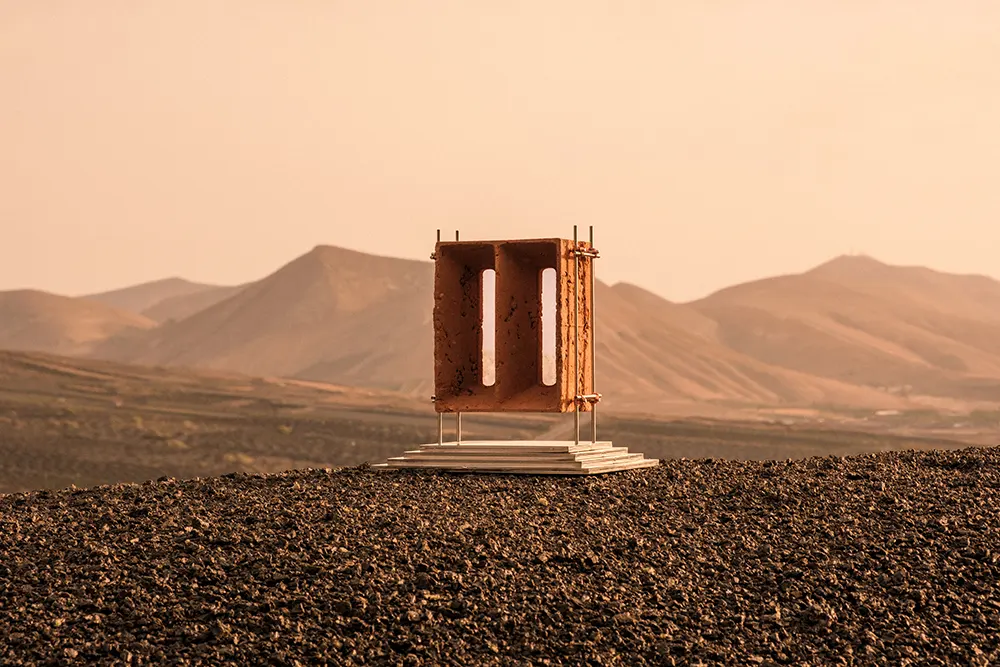
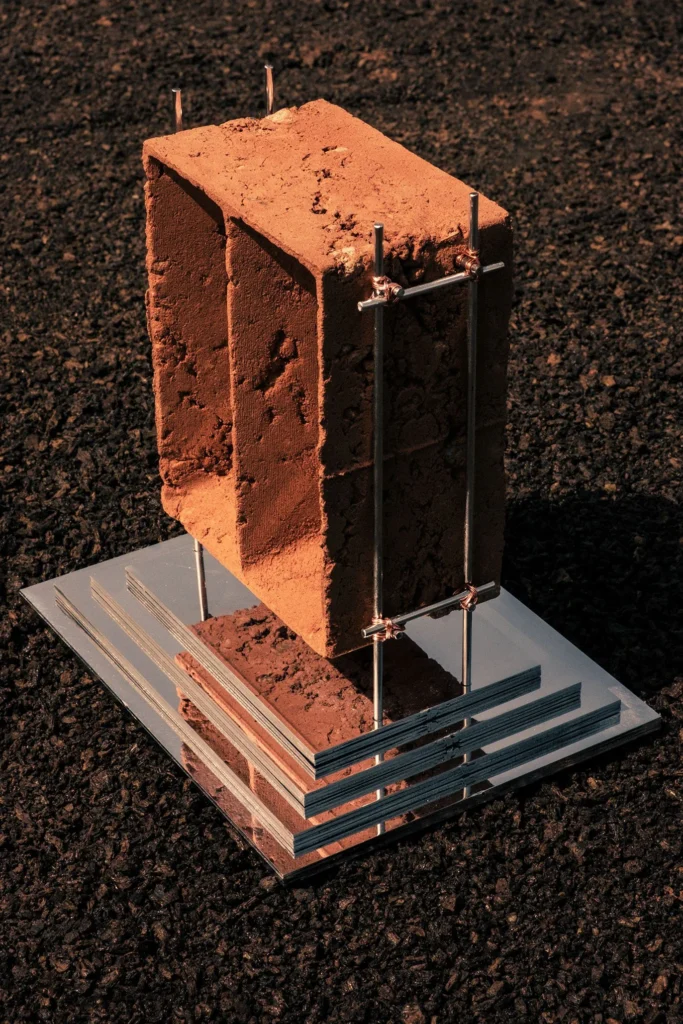
Holding the five pieces together is the pairing of rammed earth and recycled stainless steel, an ancient reference pushed into the future. Rammed earth is one of humanity’s oldest building techniques, rooted in locality and scarcity; on Mars, a planet imagined as the peak of technological futurism, we’d be forced back to exactly that starting point. The collection also marks the first time rammed earth has been shaped with this level of detail, using moulds of up to twelve parts engineered for a single-axis continuous press. The steel, meanwhile, is entirely salvaged from valves, pressurised tanks and panel offcuts: fragments that still carry the memory of rockets and satellites, broken down into everyday objects.
As Biel himself puts it, Martian Relics isn’t a proposal for how to live on Mars, but a warning about how we live on Earth. Quoting Phil Ochs, in ugly times the only true protest is beauty: these objects use it to ask what is genuinely essential in our lives, and what we should protect so Earth remains habitable for those who come after us.