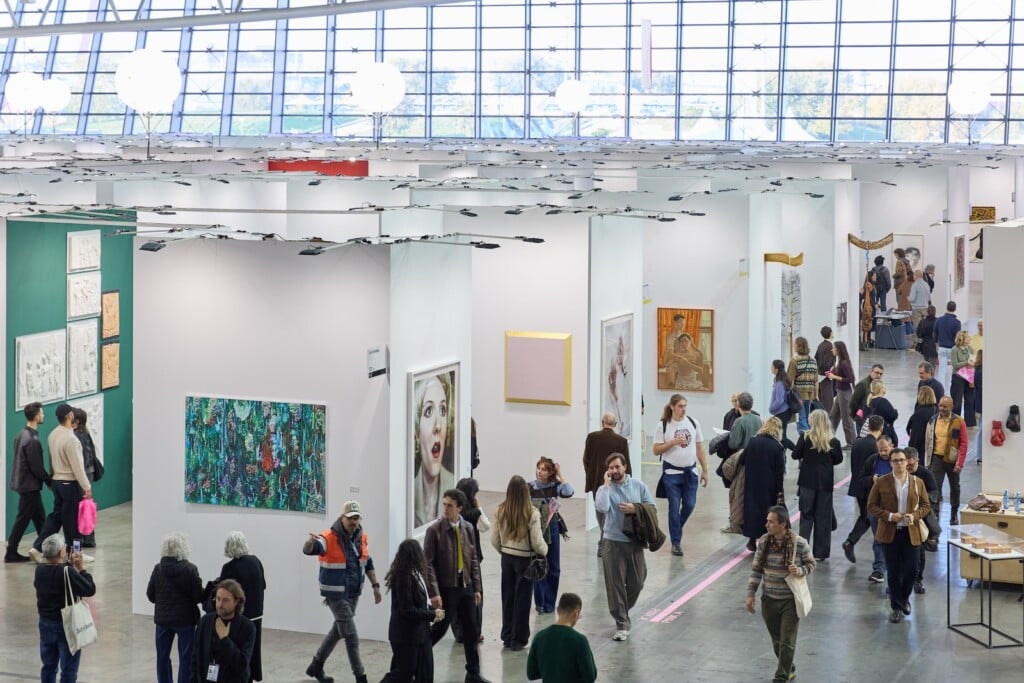
Not all the works that attract attention are the ones that stand out immediately. Sometimes, to discover something interesting, you have to stop in front of a body of work you don’t know, let yourself be intrigued by an unusual language, or try to look at reality from a different perspective. This is also why Artissima continues to be one of the most interesting events for anyone who wants to explore the directions of contemporary art.
The thirty-third edition of the Turin fair came to a close yesterday, November 1, having turned the Oval Lingotto for four days into a meeting point for artists, galleries, curators and collectors from all over the world. With 183 galleries from 35 countries, over 34,000 visitors and 37 first-time participants, Artissima 2026 confirmed its international vocation, keeping a particular focus on experimentation and new artistic research.
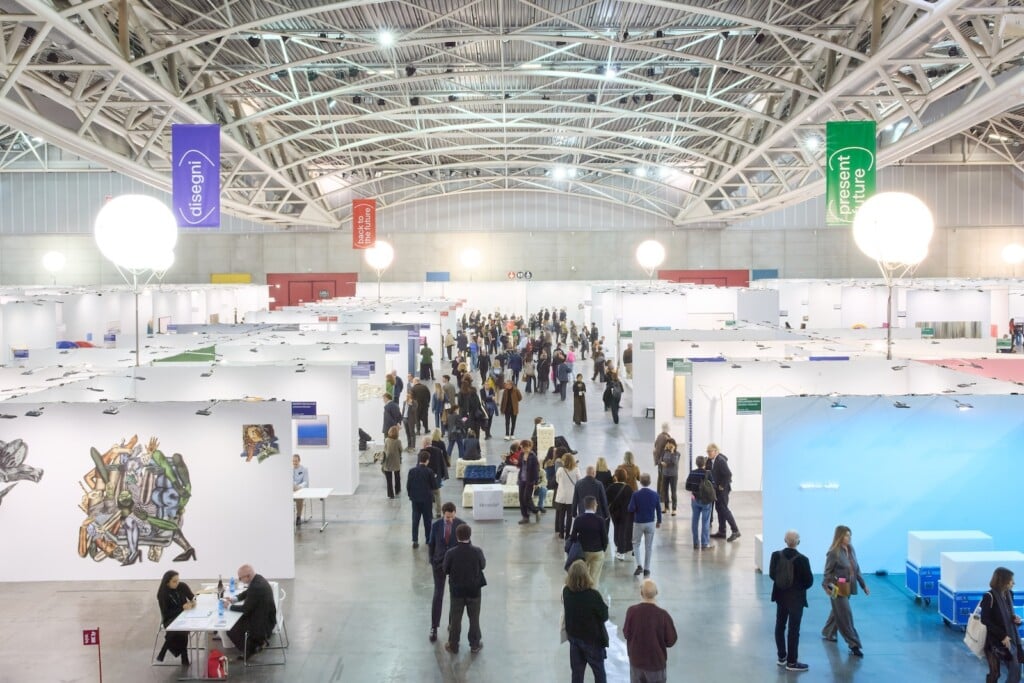
This year’s theme, Fancy: A Flexible, Acrobatic Body, draws inspiration from the thought of philosopher Martha C. Nussbaum and from the capacity of imagination to move beyond its own point of view, cross differences and open up unprecedented possibilities. An invitation reflected in the works and projects presented, in languages, materials and approaches capable of challenging what we consider familiar. But beyond the numbers and the dynamics of the market, a fair like Artissima is above all an opportunity to discover artists and paths worth following. Among the many proposals we encountered at this edition, we have selected five talents who, through their research, say something interesting about the present and the possible evolutions of contemporary art.
Nicolae Romanițan: relics of a world between video games and the Middle Ages
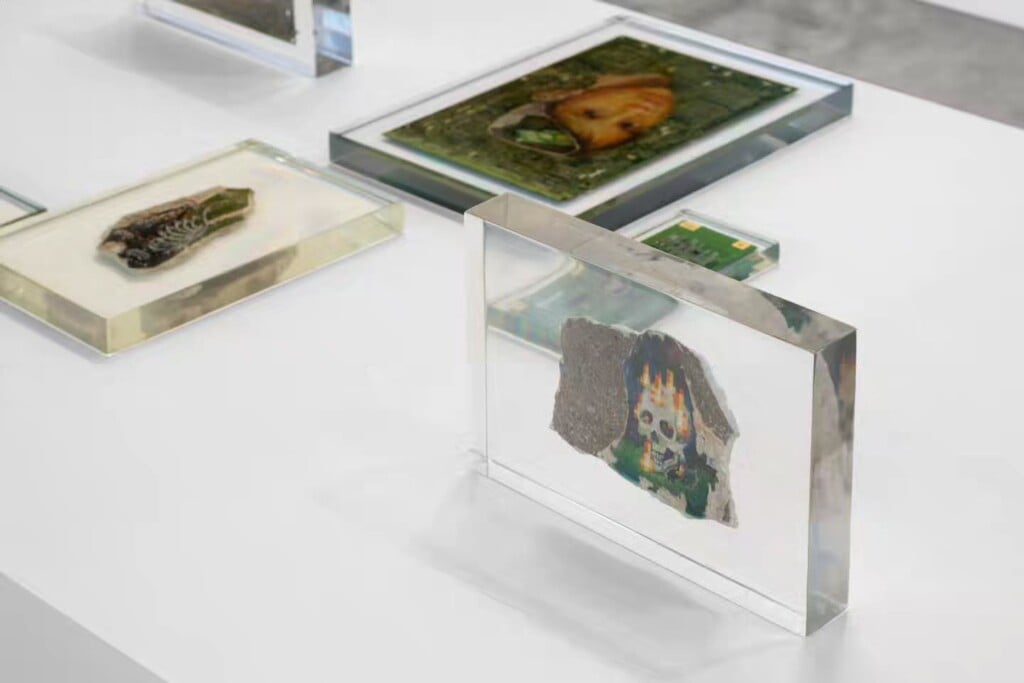
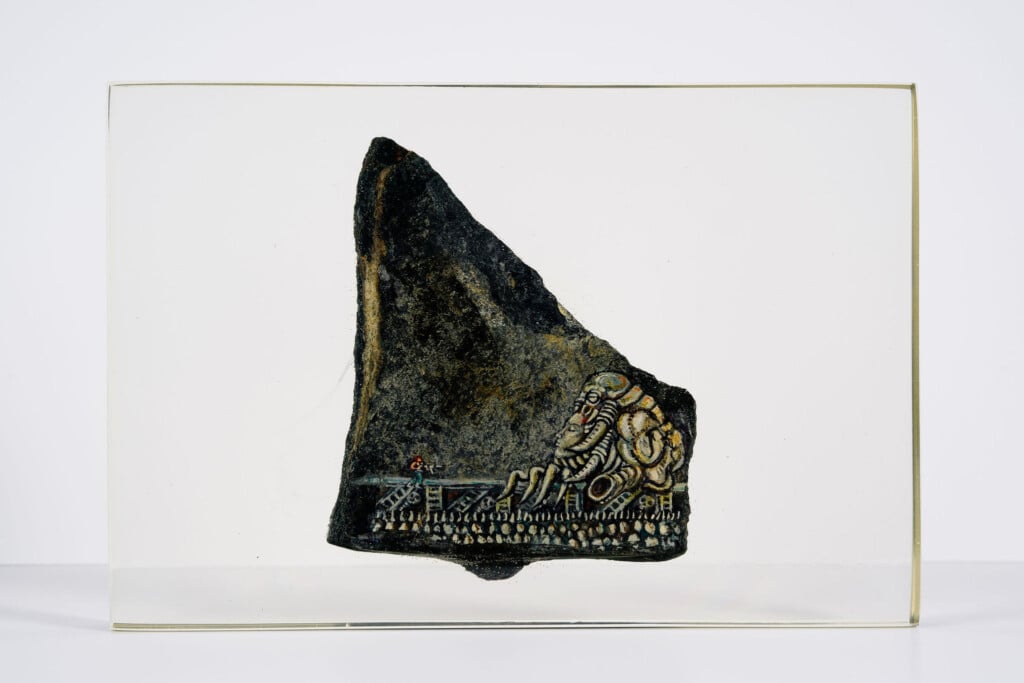
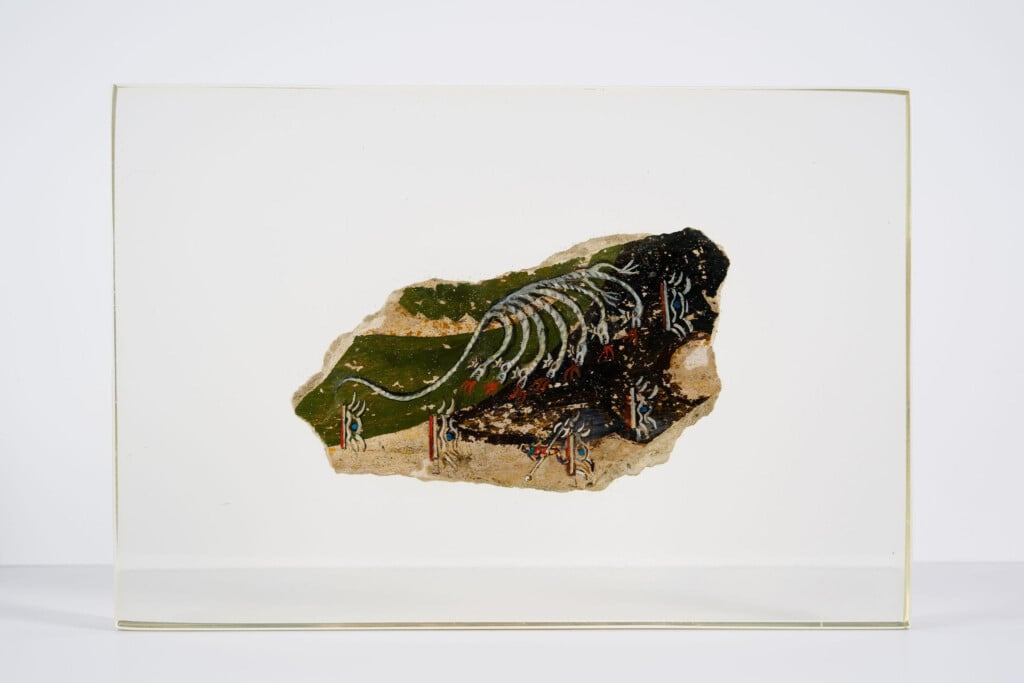
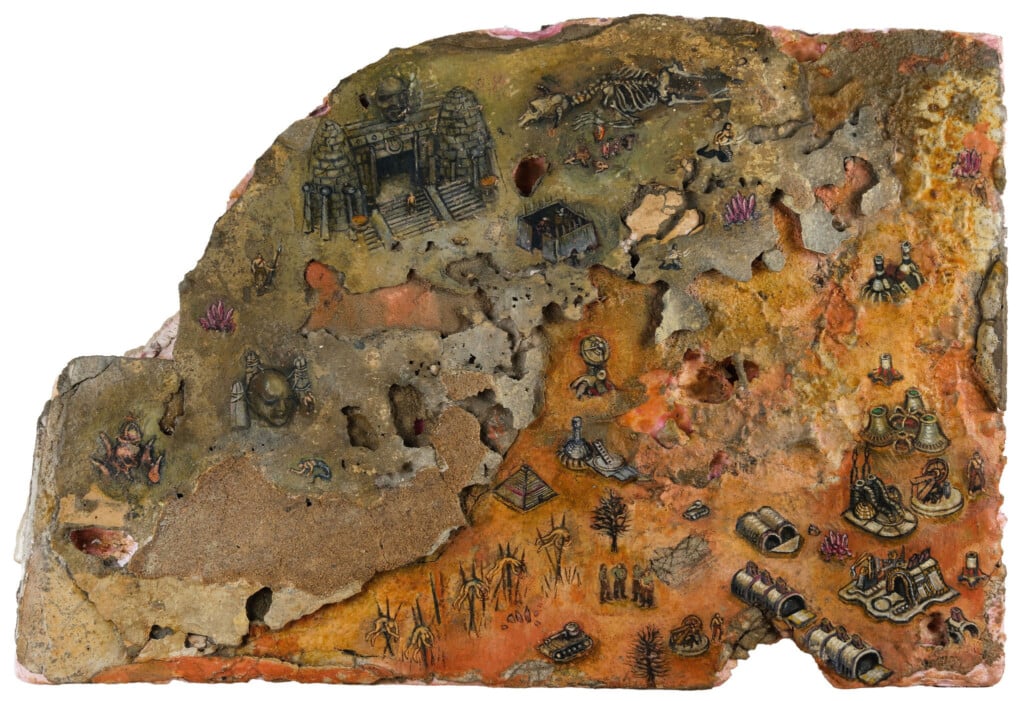
The works of Nicolae Romanițan seem to come from an impossible archive, in which video games, medieval manuscripts, digital images and fragments of salvaged materials coexist without respecting any precise chronology. Presented by Biju in the New Entries section, the Romanian artist builds an imaginary that mixes seemingly distant references, bringing together religious iconography, demonic creatures and languages drawn from pop culture.
The Relic series is particularly representative of this research. Romanițan paints in oil on unconventional surfaces, such as fragments of concrete and construction materials, turning them into objects that look like artifacts of an unknown civilization. Titles such as Castlevania Meets Byzantine Demon Again or Dial-Up connection with God suggest a short circuit between spirituality, technology and gaming culture. The artist does not merely quote these universes: he connects them to address themes such as alienation, violence, death and the absurdity of war, with an imaginary that is often disturbing but shot through with a subtle irony.
Massimiliano Gottardi: when glasses become architectures of memory
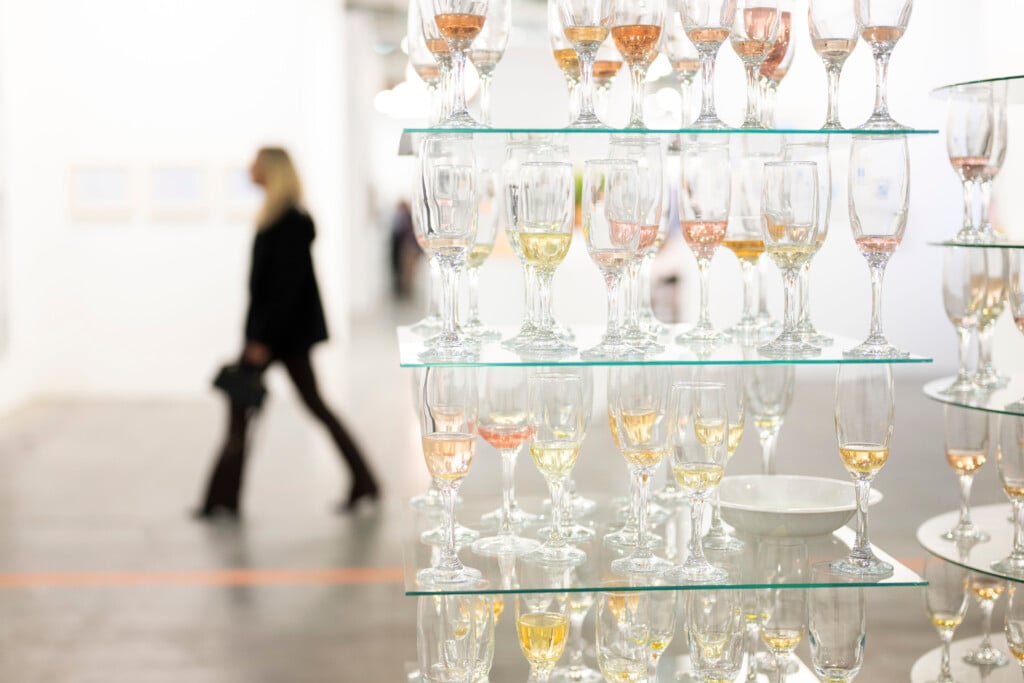
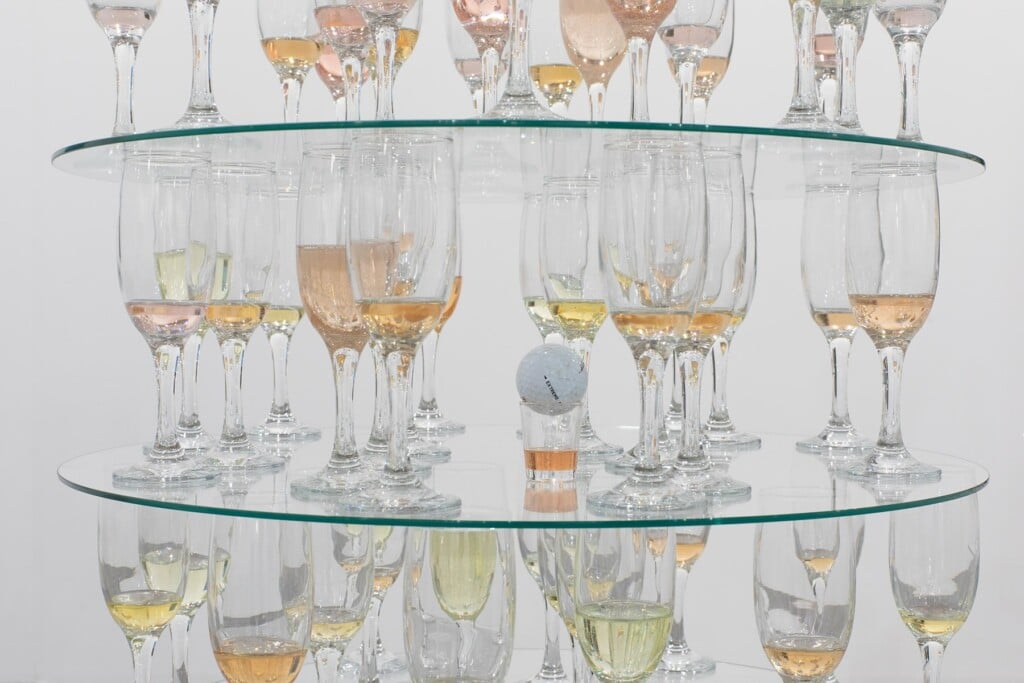
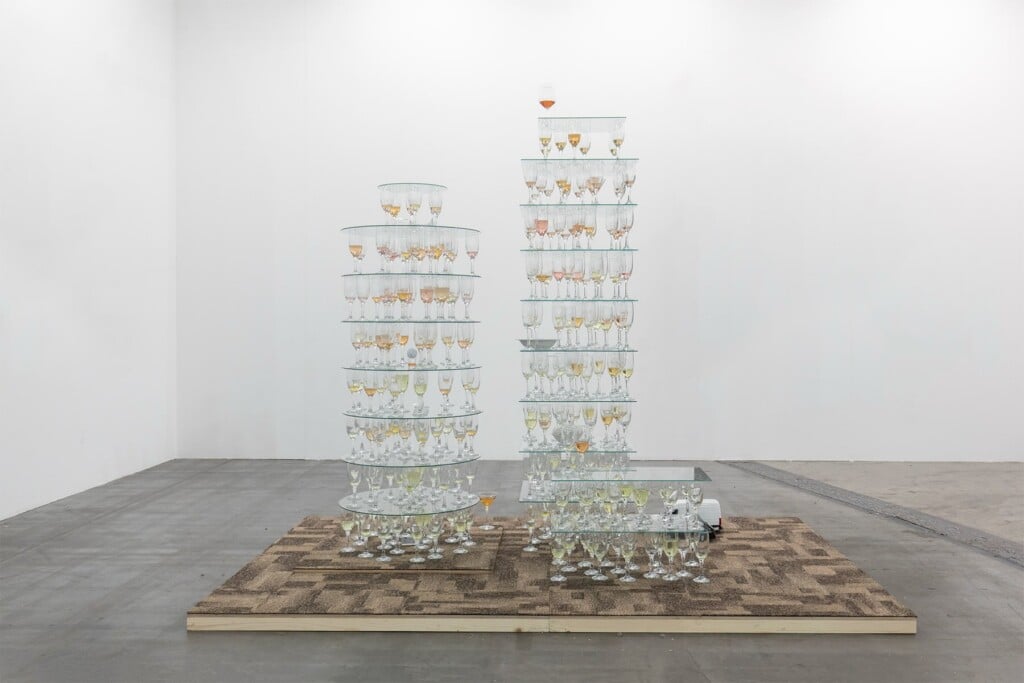
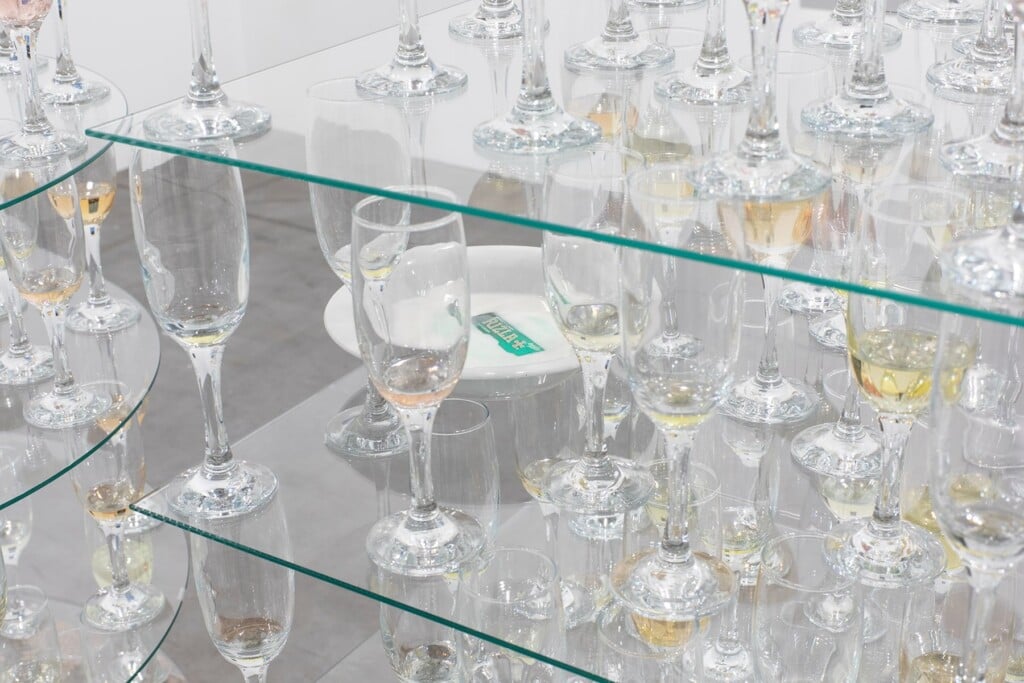
At the booth of Alice Amati, Massimiliano Gottardi transforms an object tied to an everyday gesture, the prosecco or champagne glass, into something that resembles architecture. In Palazzo della memoria (Roman Rooms), a structure made of repeated glasses builds a kind of vertical labyrinth. The reference is to the “memory palace” technique, a mnemonic method that associates memories and information with imaginary places. Here, however, memory seems to lose its function: instead of preserving memories, the structure becomes a space in which they disperse.
The choice of flutes is not random. They are objects that evoke celebrations and rituals, but also what remains when a party is over. Gottardi often works with familiar elements, removing them from their original function and placing them in contexts that change their meaning. The result is a sculpture that oscillates between recognizability and estrangement, bringing out a more fragile and ambiguous dimension of domestic objects
Magdalena Lazar: what we discard keeps on living
There is a life that develops at the edge of our gaze: in abandoned materials, in organic residues, in the slow transformations that accompany decay. It is precisely from what is generally ignored that the research of Magdalena Lazar begins, a Polish artist who investigates what she calls an “archaeology of the present.” Her works observe the traces left by promises of progress and failed utopias, questioning the relationship between human beings and the environment.
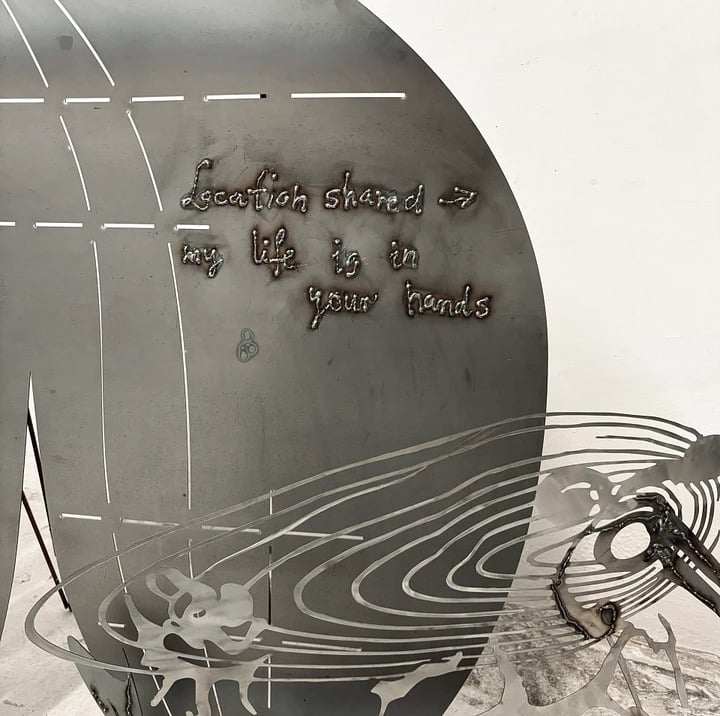
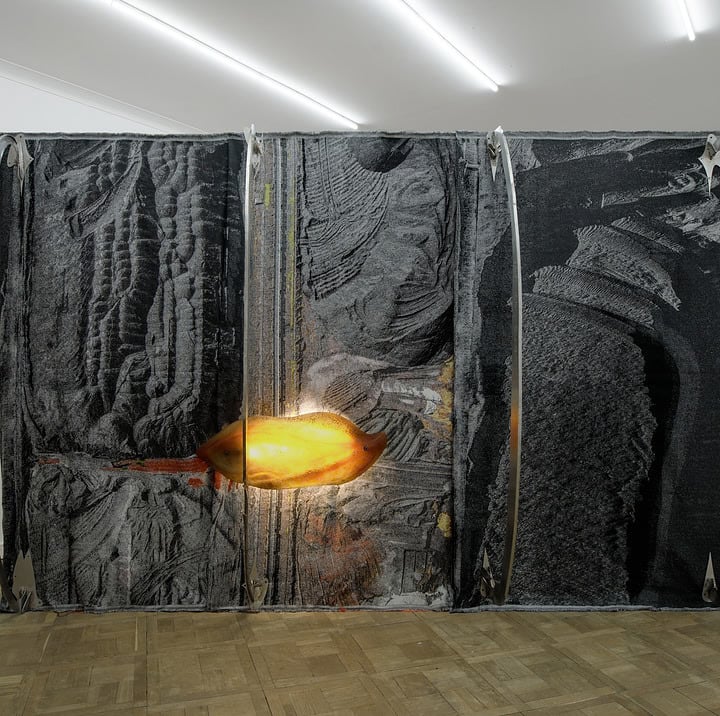
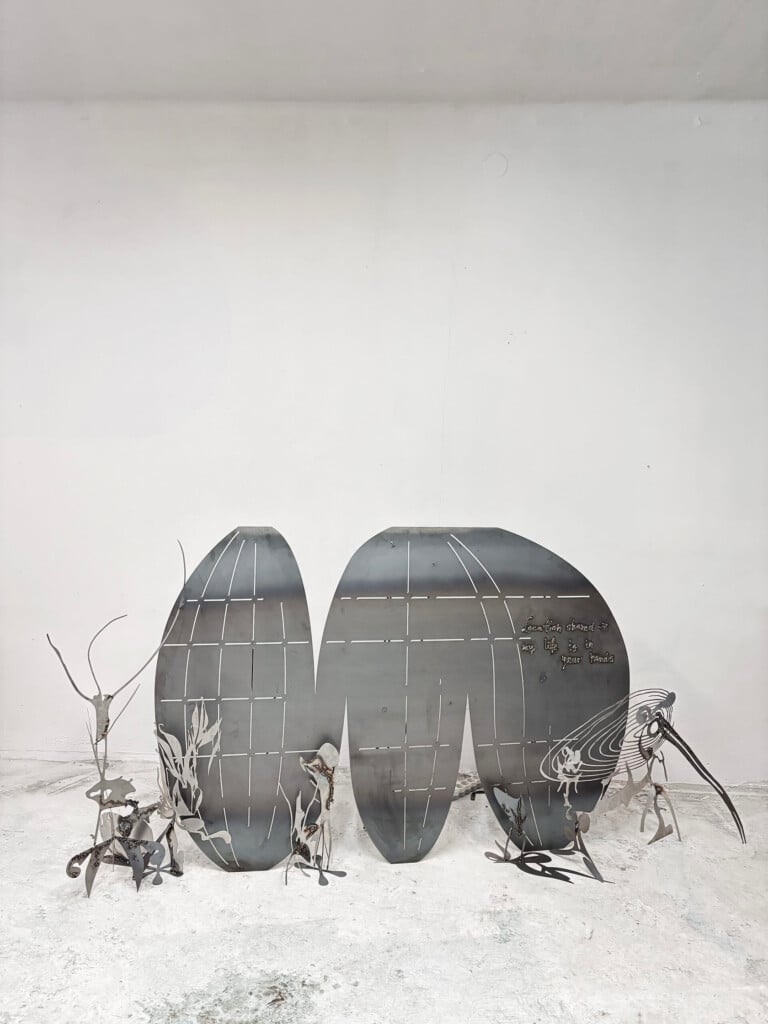
Matter, in her work, is never a neutral element. Metal, glass and fabrics can appear fragile or threatening, clean or contaminated, but above all they keep transforming. In Second Sun (2026), presented by bliss gallery at Artissima, jacquard fabric engages in dialogue with a stainless steel structure and a vintage lamp, creating an assemblage in which objects and materials seem to take on a new function. Location Shared, on the other hand, is a steel sculpture that brings the theme of sharing space to the center.
Lazar does not propose an idealized nature, separate from human intervention: she shows instead a system in which waste, organisms and industrial materials continue to interact. Looking at her works therefore means shifting attention to what remains, to what transforms, and to forms of life that exist even outside our categories.
Cian Dayrit: textiles that tell the structures of power
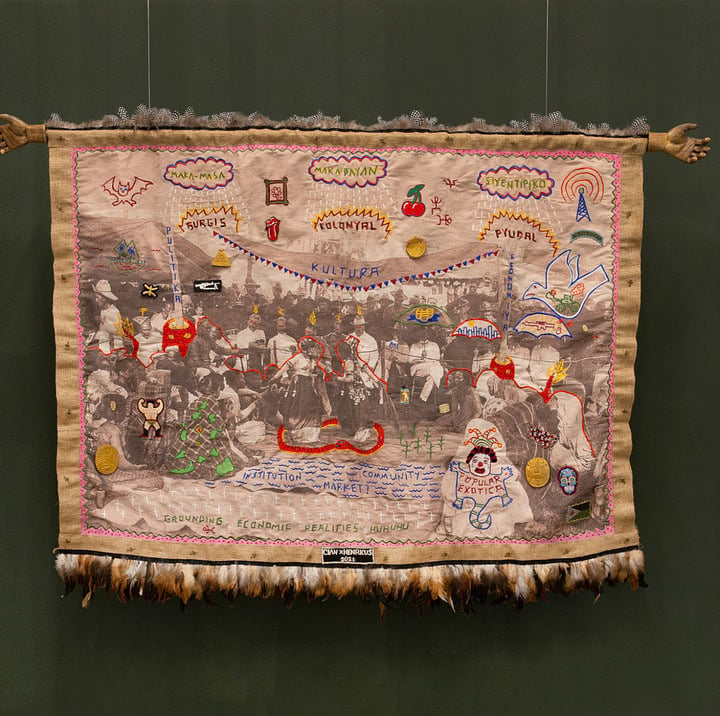
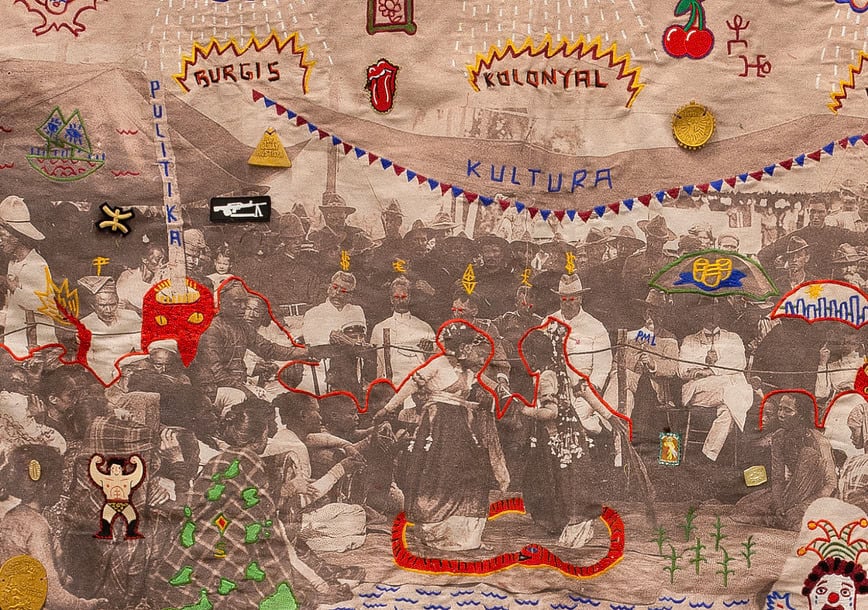
With Natural Histories of Struggle: Cult, presented by NOME, Cian Dayrit uses fabric as a surface on which to rewrite stories of power, colonialism and resistance. The work, created in 2021 in collaboration with RJ Fernandez and Henricus, combines objects, embroidery, images and digital printing on cloth. It is not a simple decorative composition: the layering of materials builds a visual language that evokes the symbols and systems through which institutions have represented and organized the world.
The Filipino artist’s practice moves across cartography, archaeology, history and mythology, questioning dominant narratives and their effects on marginalized communities. Maps, textiles and installations become tools for making visible the consequences of exploitation and colonial hierarchies. In this work, embroidery and printed images are not just techniques, but ways of challenging what is considered official history.
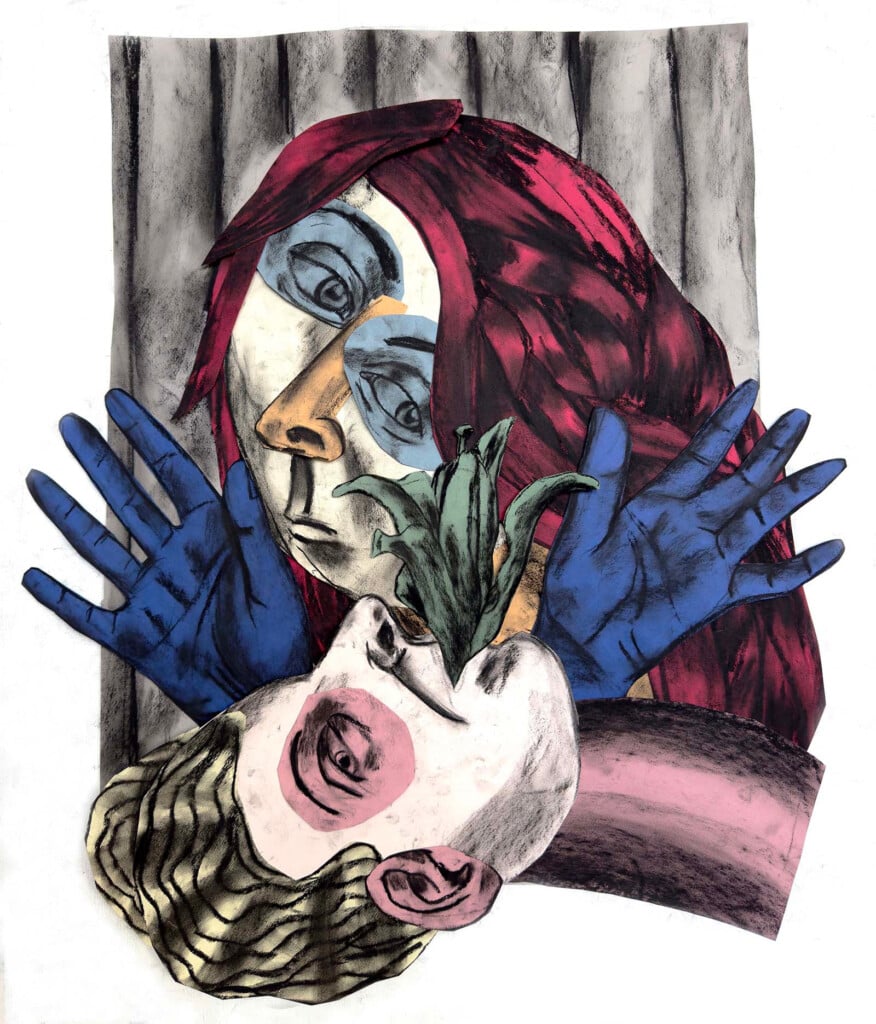
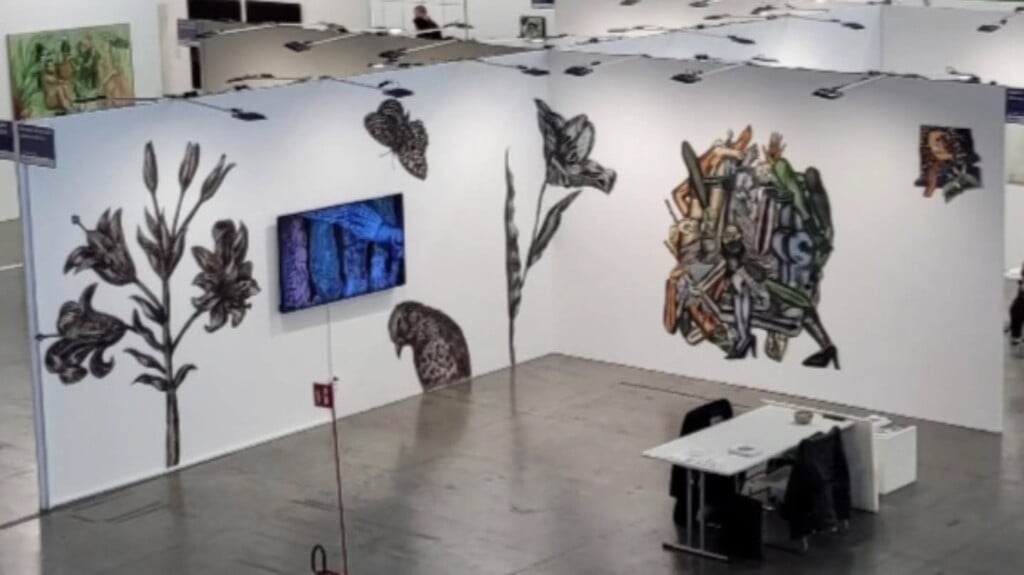
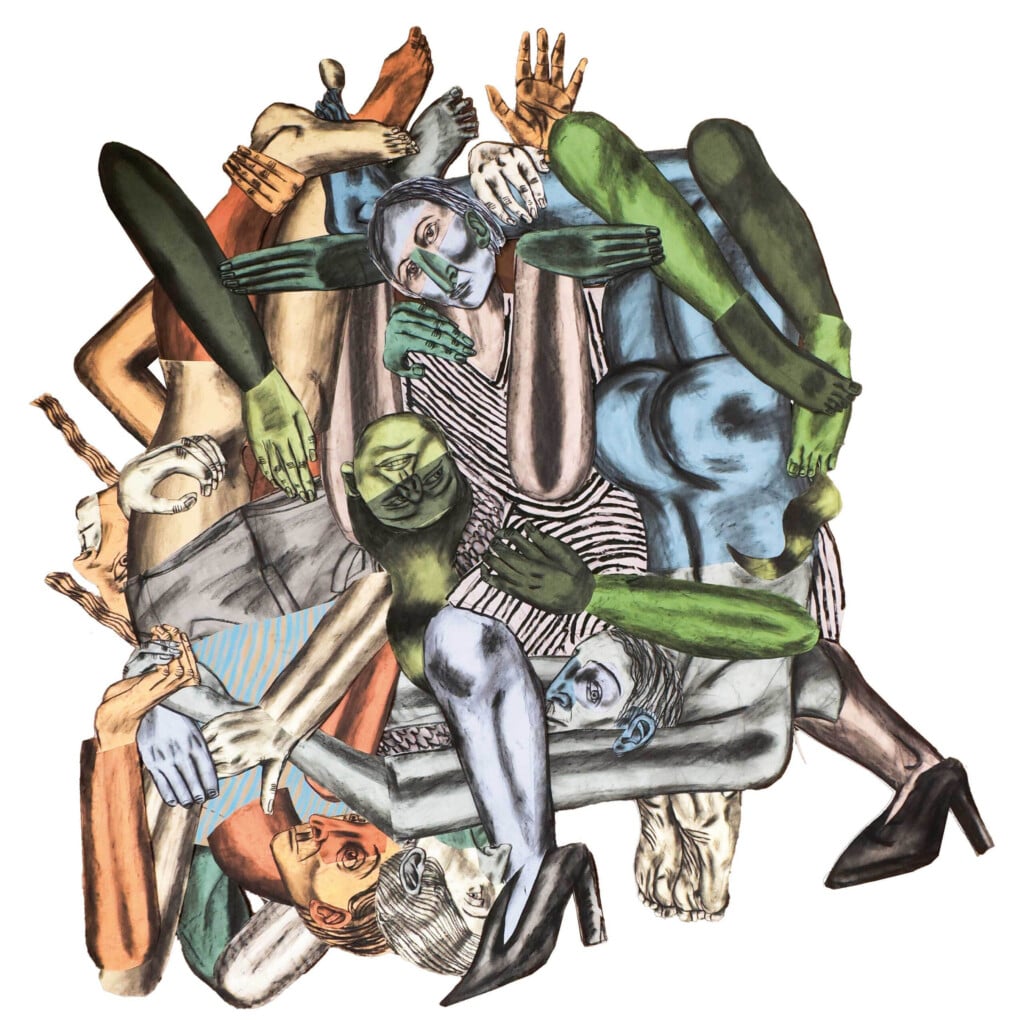
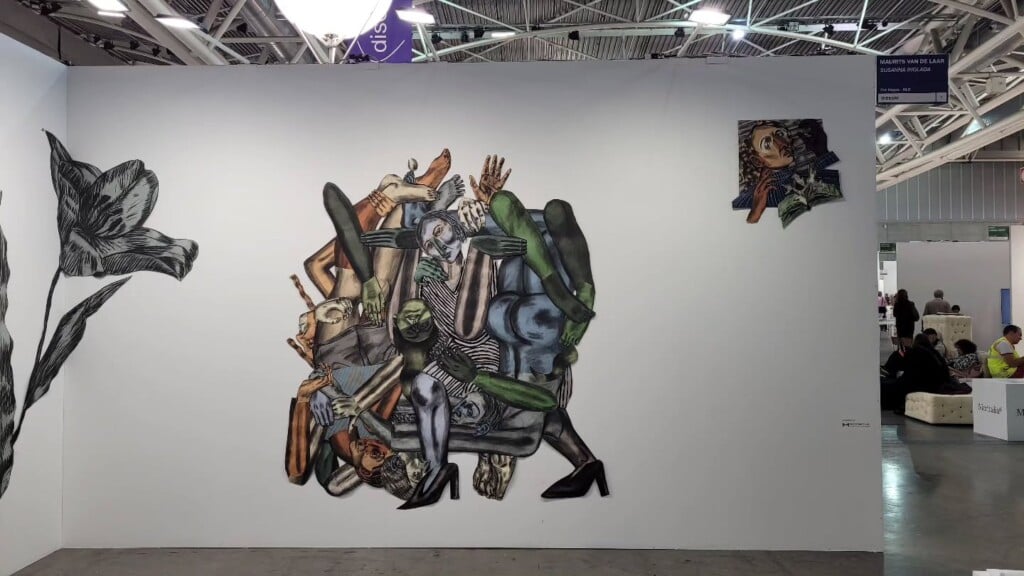
Susanna Inglada: distorted figures and hidden tensions in drawings
The last name in the selection is Susanna Inglada, presented by Galerie Maurits van de Laar in the Drawings section. In her works, drawing goes beyond the two-dimensional to become a theatrical scene, populated by expressive and distorted figures, symbolic gestures and relationships charged with tension. Through charcoal and acrylic on colored paper, the Spanish artist builds images that seem to tell familiar situations, but that gradually reveal more ambiguous dynamics.
Her research addresses themes such as power, authority, corruption and gender inequality. In works like El Pilar, presented at Artissima, the figures and their interactions become part of a visual narrative in which the body is often the place where conflicts and power relations emerge. Inglada, who has a theatrical background, uses drawing as a space of staging: she does not illustrate an already defined story, but builds open images, in which the viewer is called upon to interpret what is happening.
Perhaps this is precisely the value of a fair like Artissima: not to offer definitive answers, but to open new perspectives and let unexpected questions emerge. Between transformed materials, memories to be rebuilt and images that challenge what we know, these five artists remind us that art keeps finding ever different ways to tell the present. And, above all, to make us look at what surrounds us with fresh eyes.