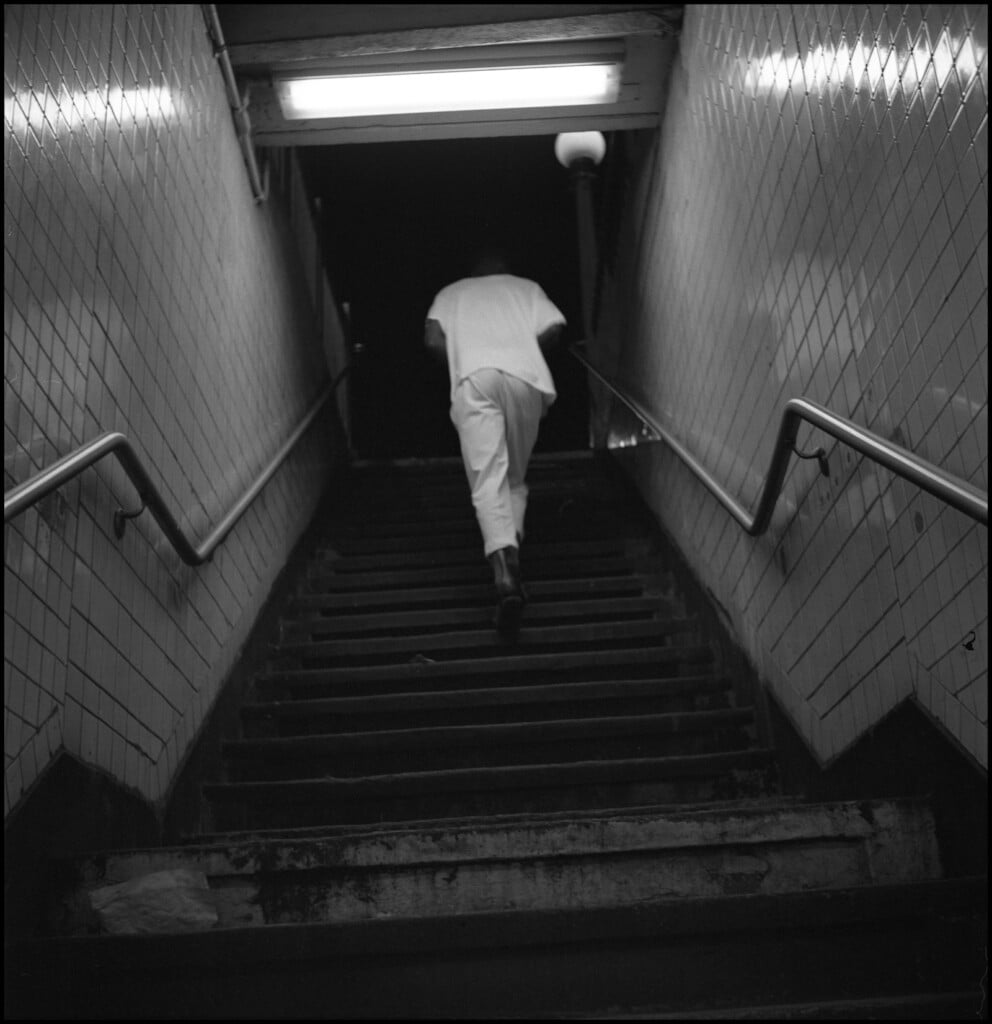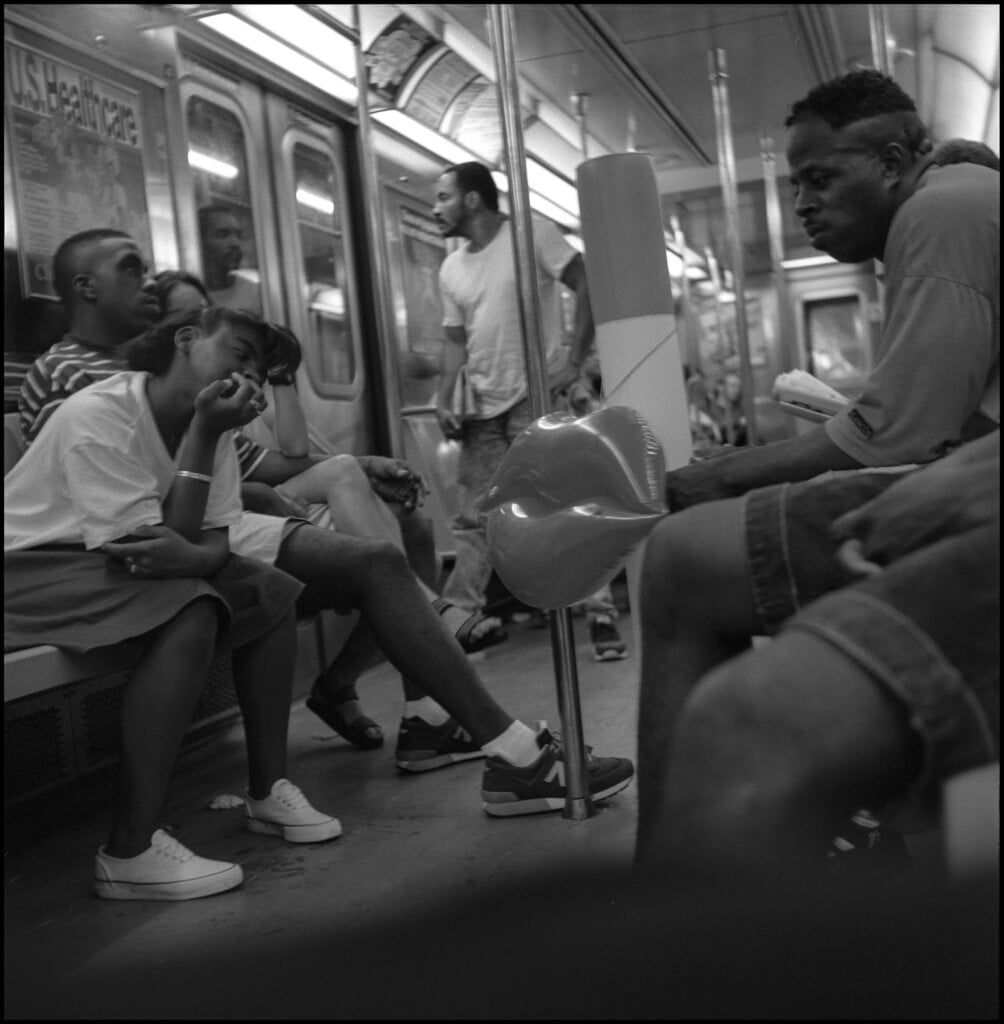
During a subway ride, we sometimes stop paying attention to what surrounds us. The noise of the train becomes a constant background hum, the stops follow one another, and the people sitting next to us seem to belong to a parallel universe. It is precisely in this state of collective isolation that photographer Gerald Cyrus found something to tell. With Subterranean Daydreams, a series of black-and-white photographs taken on the New York subway in the 1990s, the artist observes passengers at the moment when the outside world seems to pause, leaving room for thoughts, tiredness and small involuntary gestures.
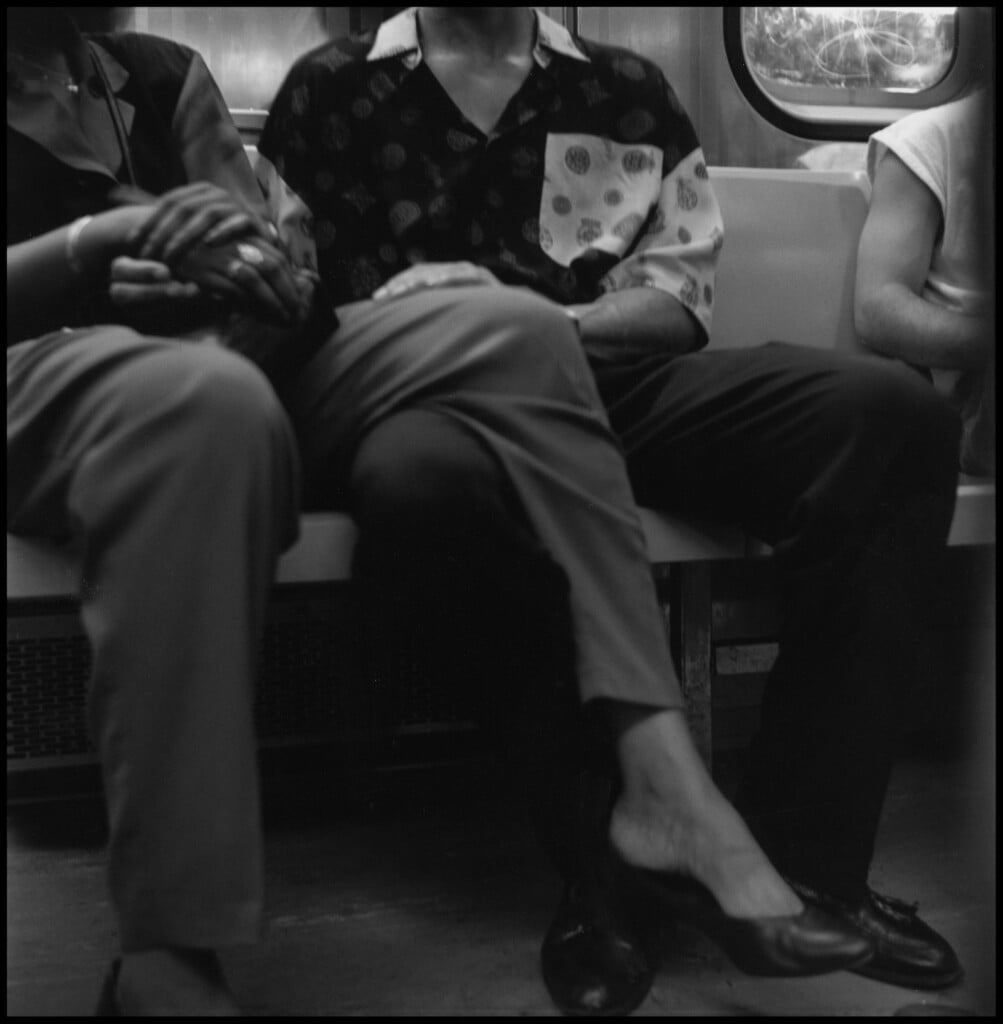
His camera does not look for the exceptional, but rather lingers on an everyday dimension that, precisely because it is familiar, risks going unnoticed. A head resting against a window, a body slumped on a seat, a gaze that no longer seems to belong to the place where it is. In Cyrus’s images, the subway becomes a suspended space, in which the physical closeness between strangers coexists with an almost absolute emotional distance.
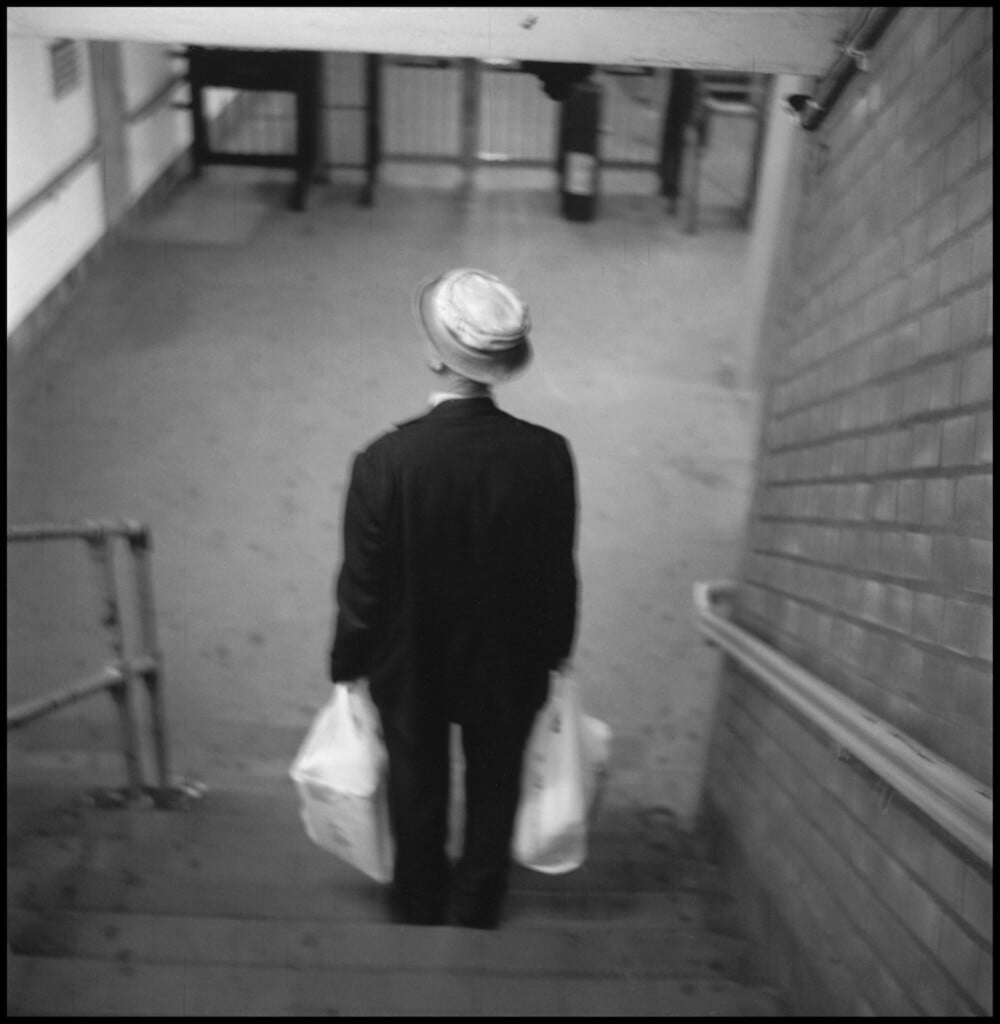
When Gerald Cyrus moved to New York in 1990 from Los Angeles, he found himself living without a car for the first time. It was a conscious choice, driven by the possibility of getting around through a public transport network that the Californian city had never offered him. What initially represented a change in his daily habits soon became an opportunity to observe a very particular reality up close.
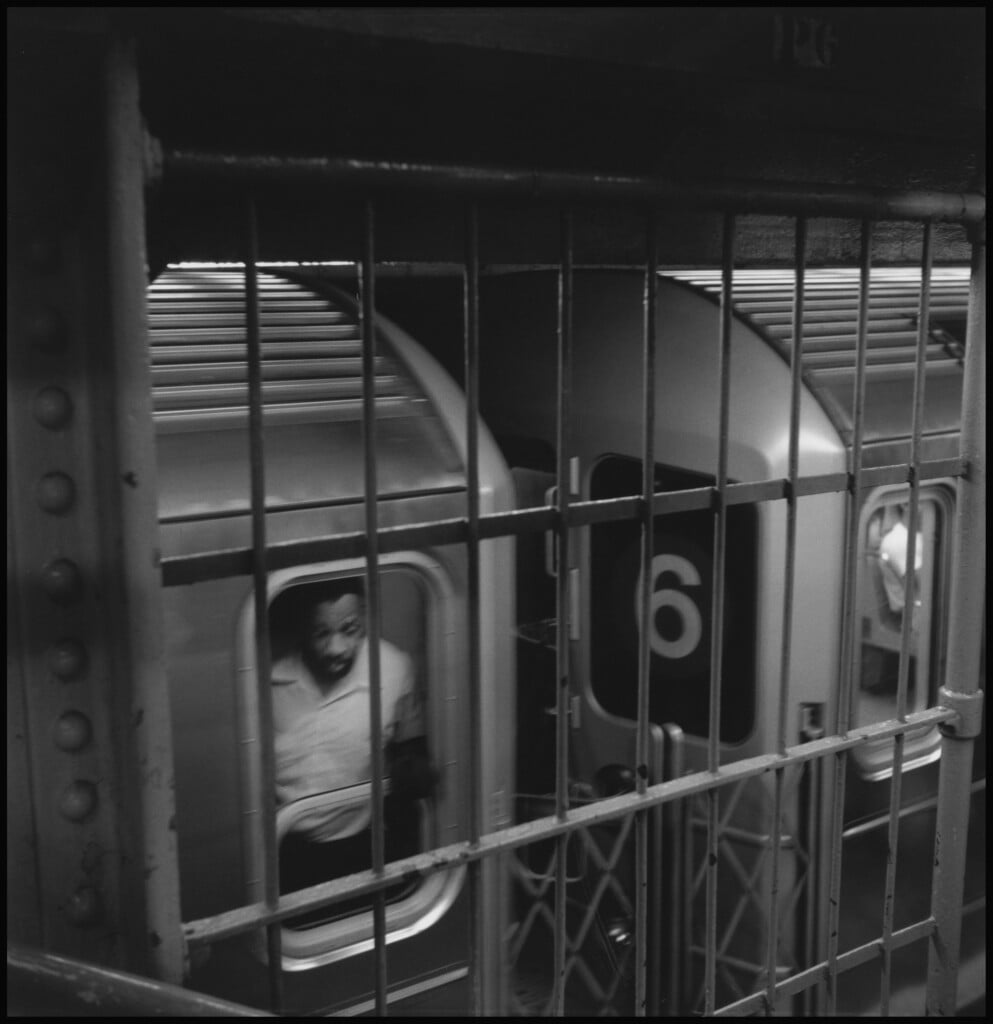
The New York subway is one of the few places where people from different social classes and cultural backgrounds find themselves physically in the same space. A shared environment, but not necessarily one experienced together: proximity can generate a spontaneous form of solidarity, but more often it leads passengers to build an invisible barrier, withdrawing into their own thoughts to cope with the fatigue of the journey.
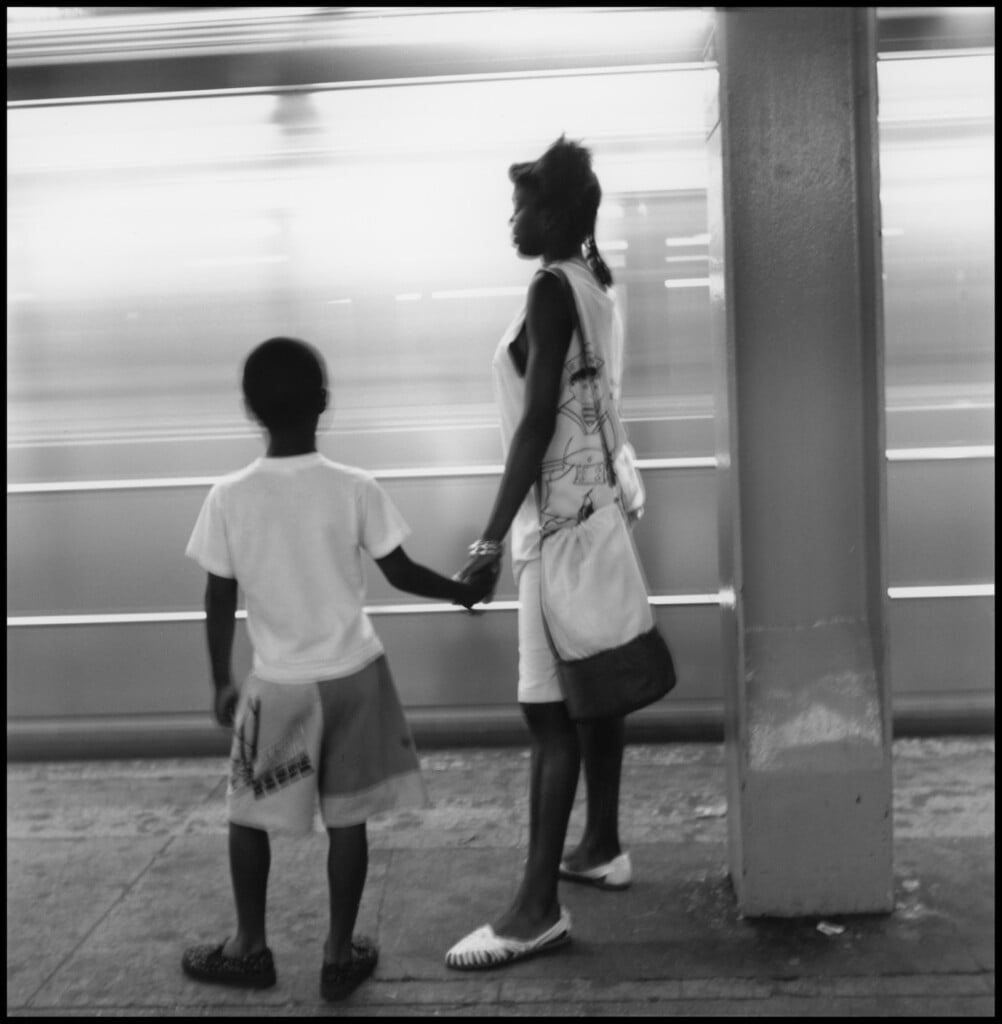
Long before smartphones and social networks radically transformed the way we isolate ourselves in public, subway passengers had already developed their own form of escape. Subterranean Daydreams stems precisely from the observation of this mental state: a sort of daydream in which the body keeps moving while attention drifts elsewhere.
The photographs are less about the subway as infrastructure than about what happens to people when they travel through it. The journey becomes a parenthesis, a moment in which the city keeps flowing by without any need to actively take part in it.
Cyrus’s photographic language develops through a particular attention to human presence. His subjects are not turned into characters or used to build a spectacular narrative. They are people encountered during the day, caught in moments that seem to have nothing extraordinary about them, yet convey a sense of authenticity that is hard to recreate.
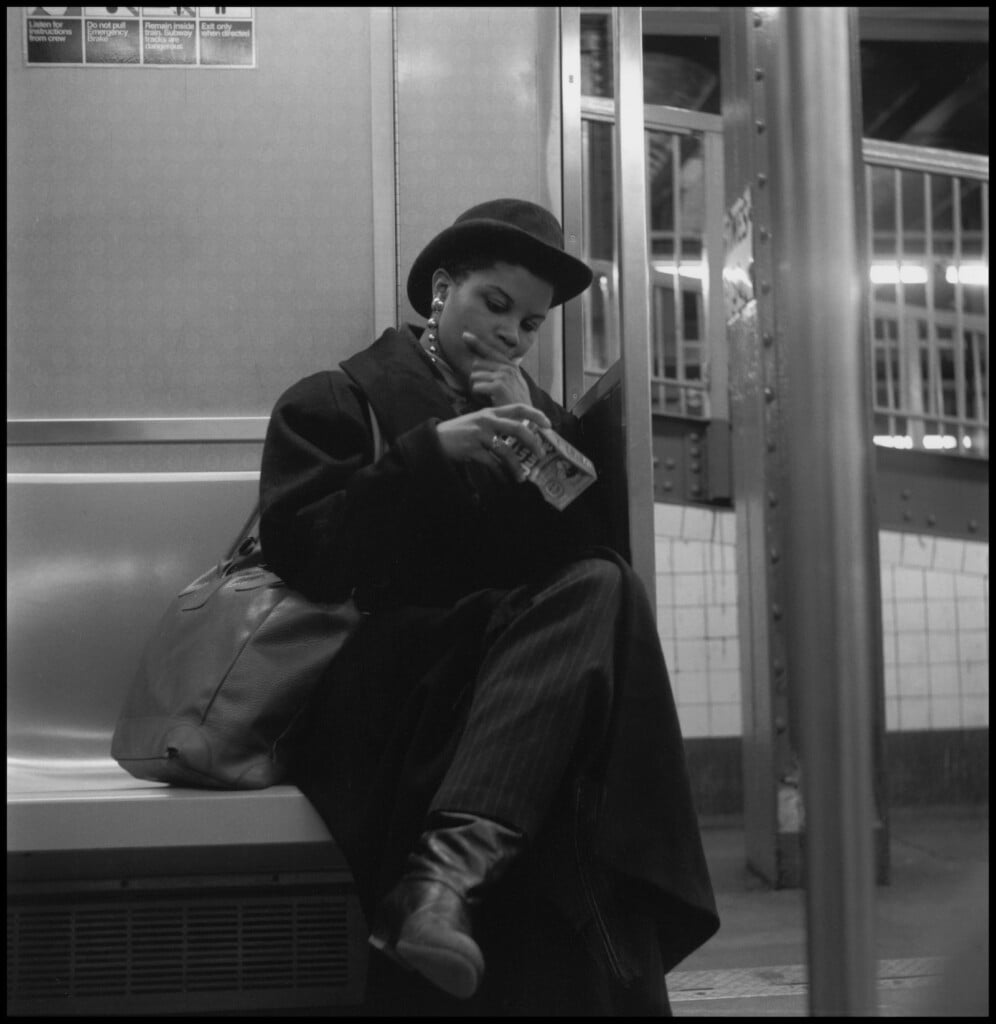
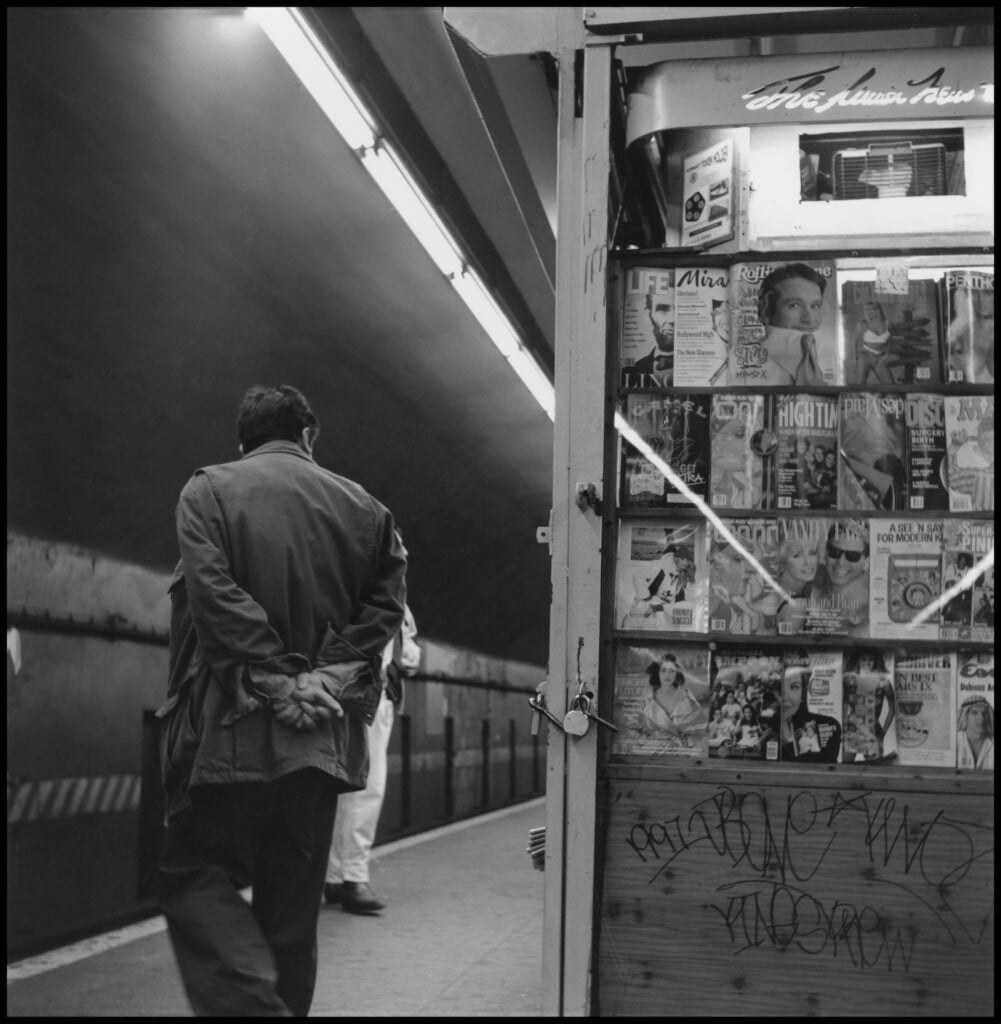
The black and white makes these images even more intimate. The contrasts between the metallic surfaces of the cars, the clothes and the bodies convey a concrete, almost tangible environment, while the composition leaves room for a more enigmatic dimension. It is not always possible to tell what the person photographed is thinking. And it is precisely this impossibility that makes the images interesting: viewers can only imagine what lies behind an expression, a posture or a gesture.
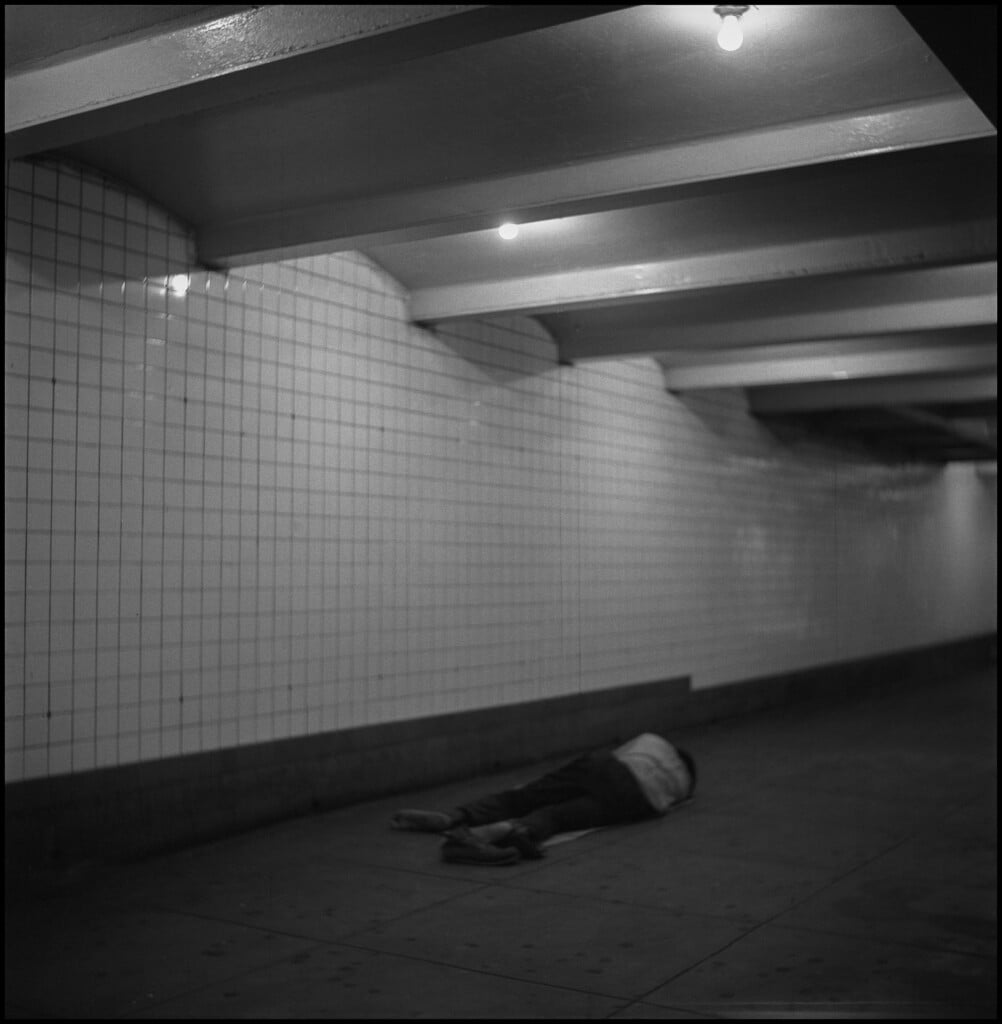
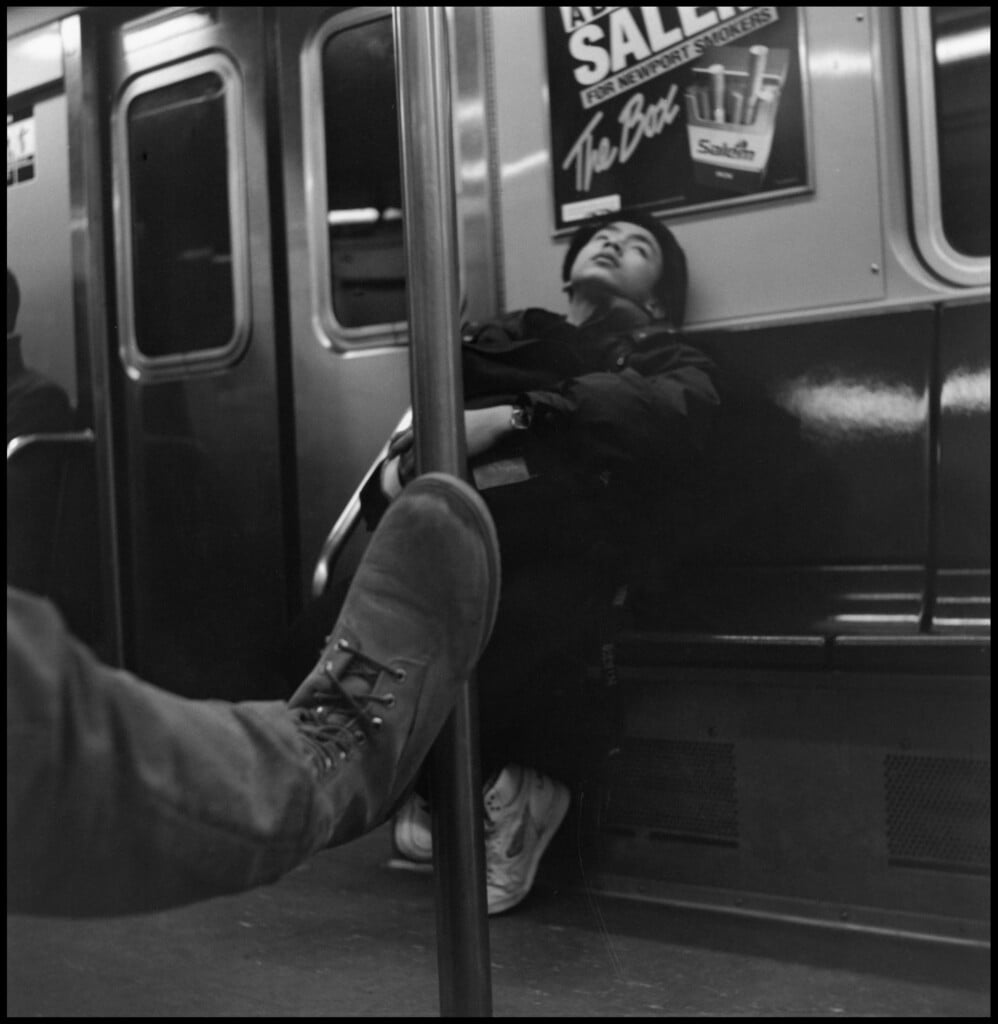
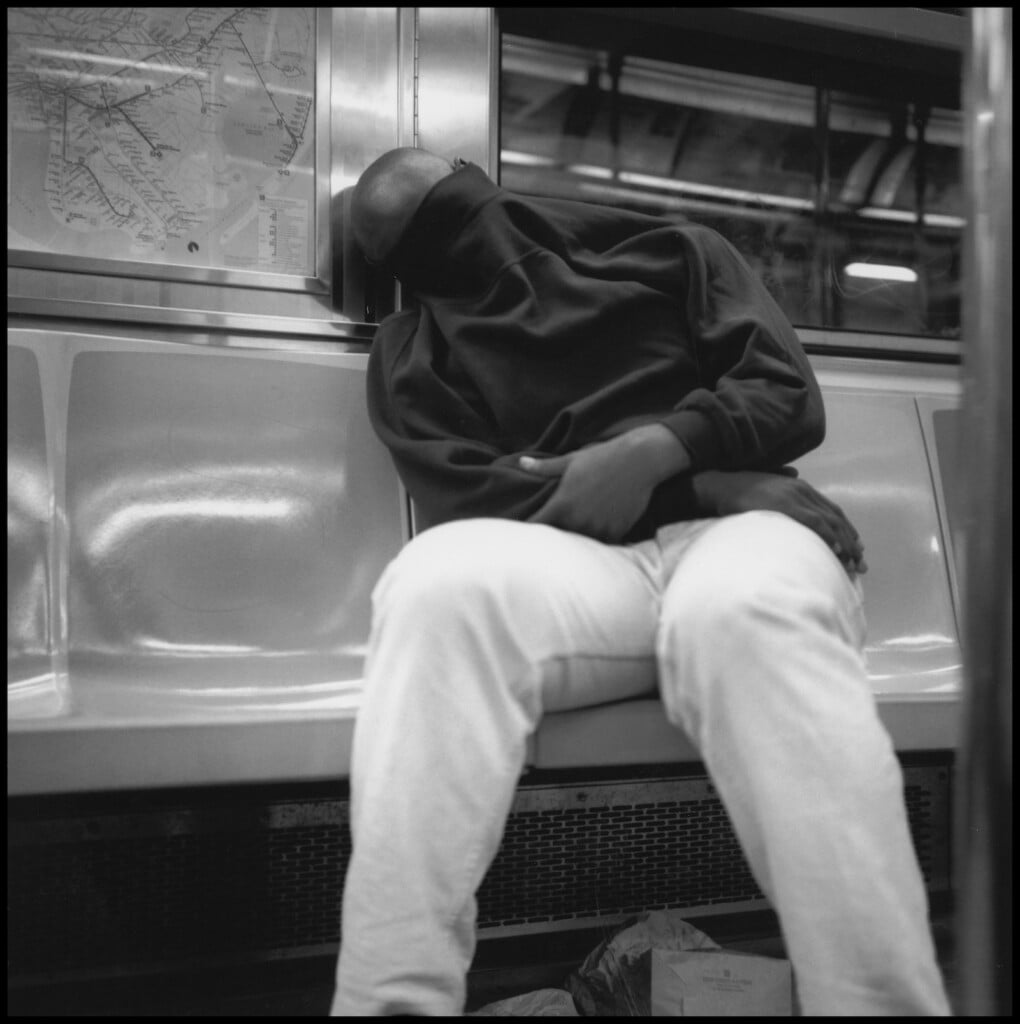
In the photograph of the sleeping passenger, for example, the body seems to have temporarily given up any form of control. The head resting against the wall, the folded arms and the stretched-out legs speak of a tiredness that needs no explanation. Around him, the subway keeps running, indifferent. The contrast between the movement of the city and the stillness of the subject creates a scene that seems to belong more to a dream than to reality.
It is a photograph that does not try to capture an event, but a state of mind. And, precisely for this reason, it manages to turn a common experience into something deeply personal.
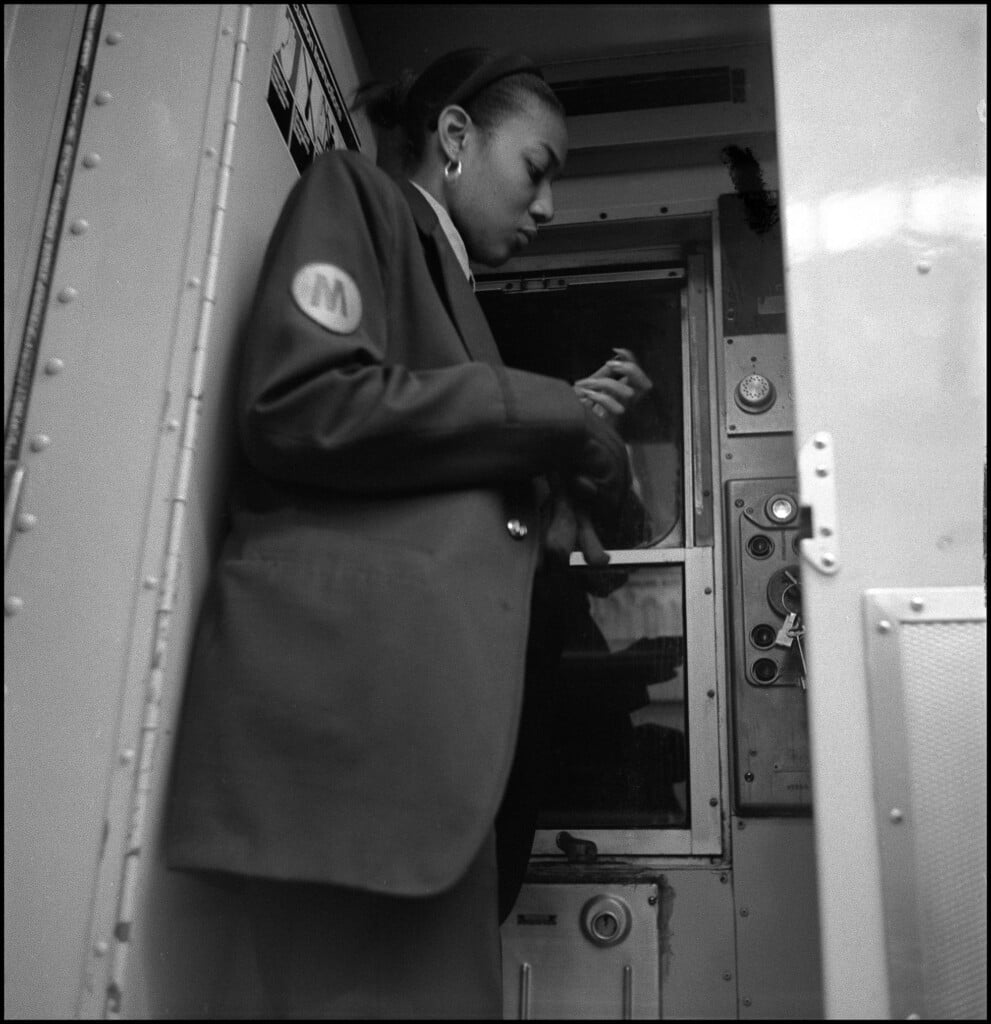
For years, these photographs remained far from the public eye. After printing and showing some of them in the 1990s, Gerald Cyrus put them away in a box in his studio and never exhibited them again. More than thirty years later, the project has been recovered on the occasion of the publication of Uptown Odyssey, the monograph dedicated to his New York work, published by TBW Books, an independent publisher based in Oakland, California.
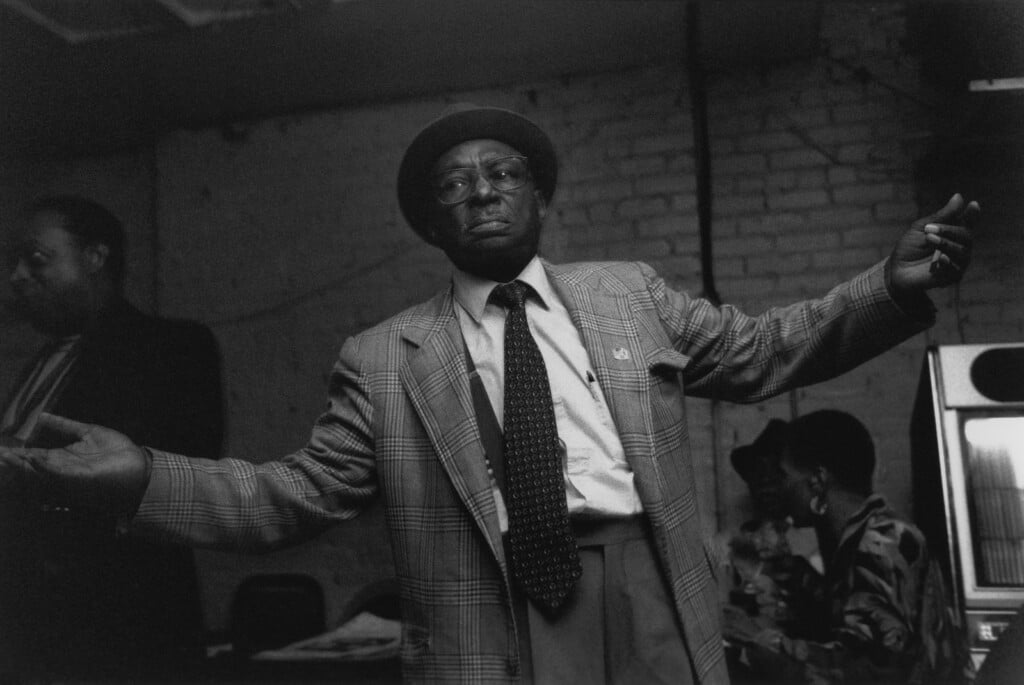
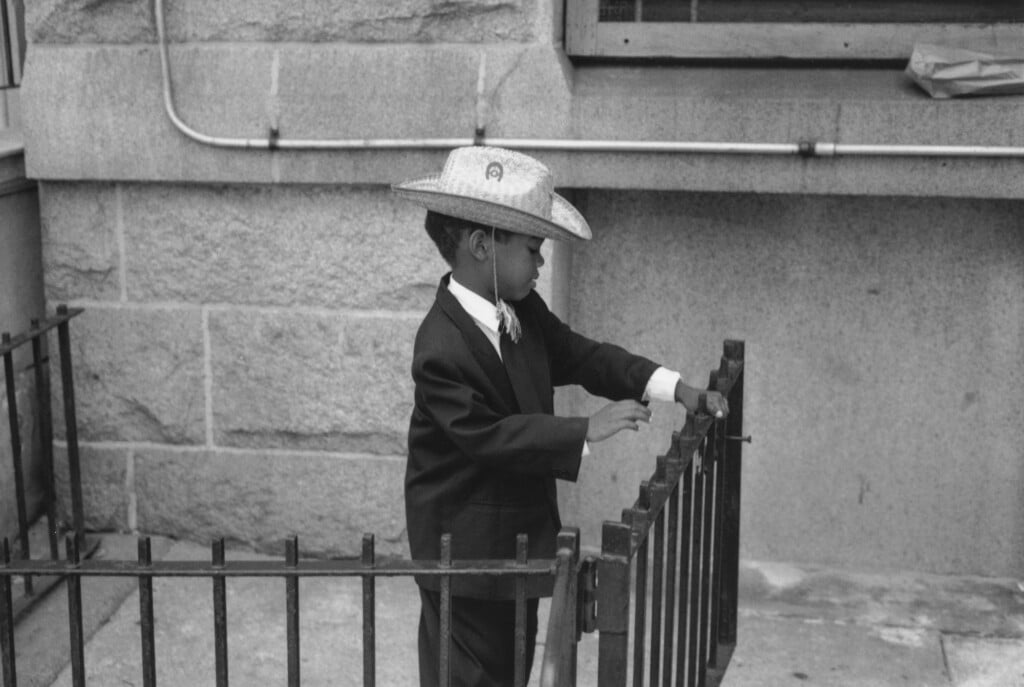
The book, edited by Gioncarlo Valentine, collects 72 photographs across 146 pages and traces a decade of observations along the streets of Harlem, the subway cars and the neighborhood’s jazz clubs. The images from the Subterranean Daydreams series represent an important part of this archive, offering a glimpse of a New York that Cyrus moved through every day, without trying to make it more glamorous or dramatic than it was.
The rediscovery of the project thus takes on a particular significance. Those photographs, initially considered too familiar to be shown, now become a testimony to an urban experience that no longer exists in exactly the same way. It is not just a matter of recovering images from the past, but of recognizing how even seemingly insignificant moments can acquire value with the passing of time.
Gerald Cyrus, a member of the Kamoinge photographic collective and the author of other projects dedicated to African American life and the Harlem jazz scene, has built over the course of his career an archive attentive to people and communities. With Subterranean Daydreams, this sensibility moves underground, into a space where individual stories meet without necessarily intertwining. The subway then becomes something more than a means of reaching a destination. It is a place where the city reveals itself through its presences, its contradictions and its silences. And where, for a few stops, it is possible to get lost in your own thoughts while surrounded by hundreds of other people doing exactly the same thing.