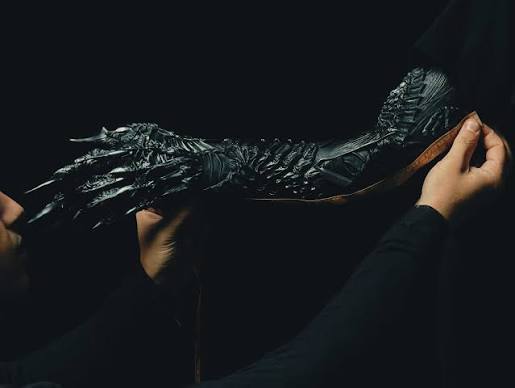
Asher Levine is a young American designer who has spent years working on the boundary between fashion, technology and imagination. His creations don’t simply try to dress the body: they modify it, amplify it, and sometimes make it look like it belongs to a species yet to be catalogued.
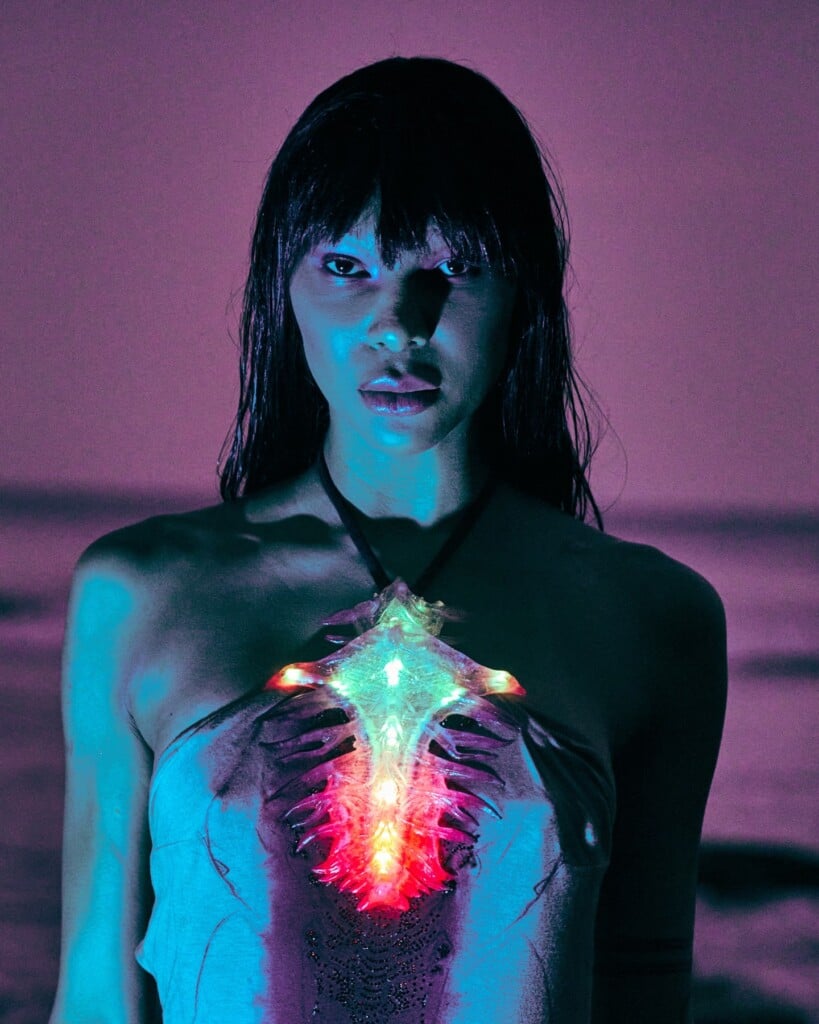
This approach is already evident in the way Levine describes his own work. His universe is populated by biomorphic forms, anatomical references, sculpted materials and technologies integrated into the garments. It is no coincidence that those who have worn his creations include performers used to turning their image into a narrative tool, from Lady Gaga to Doja Cat, as well as Lil Nas X, Lisa and Melanie Martinez.
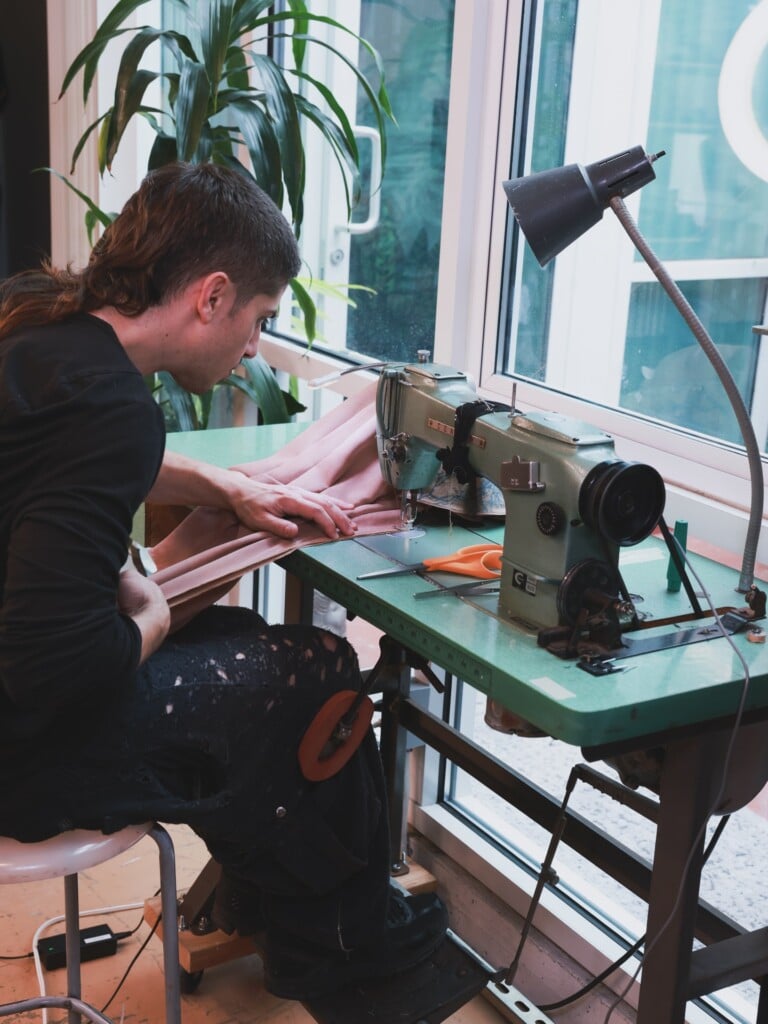
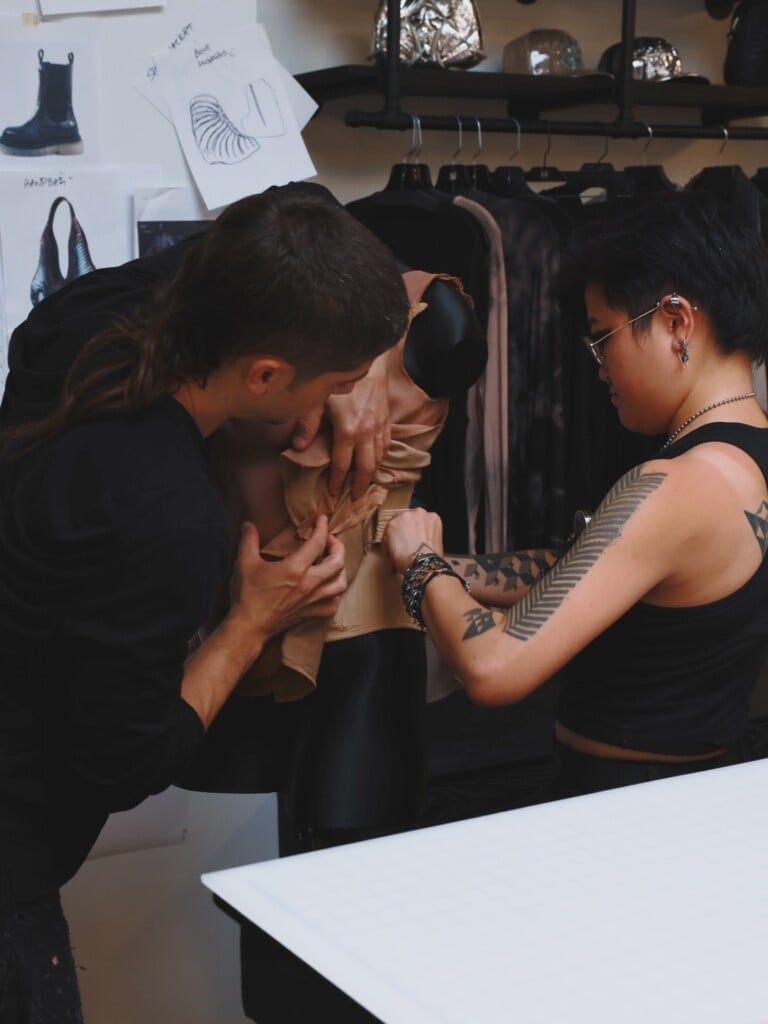
Asher Levine’s story begins far from the big stages: the designer took a sewing class as a child and moved to New York in 2006, where the city’s nightlife and experimental environment helped shape his imagery. From there, fashion gradually became a laboratory in which to test materials, techniques and technologies. His research developed precisely through this overlap. In an interview he explained how the requests of his first clients helped push him toward integrating hardware, software, LEDs and lighting systems into clothing. In this sense, the collection becomes a testing ground: a technology is tried out on a garment, modified and potentially turned into a new production method.
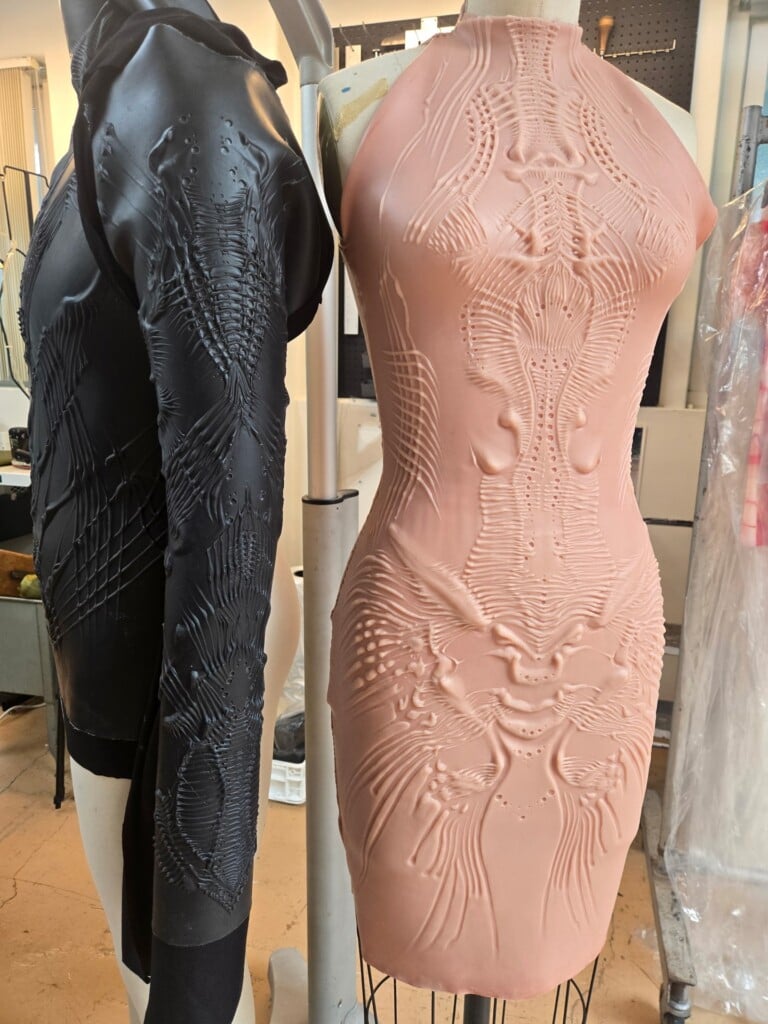
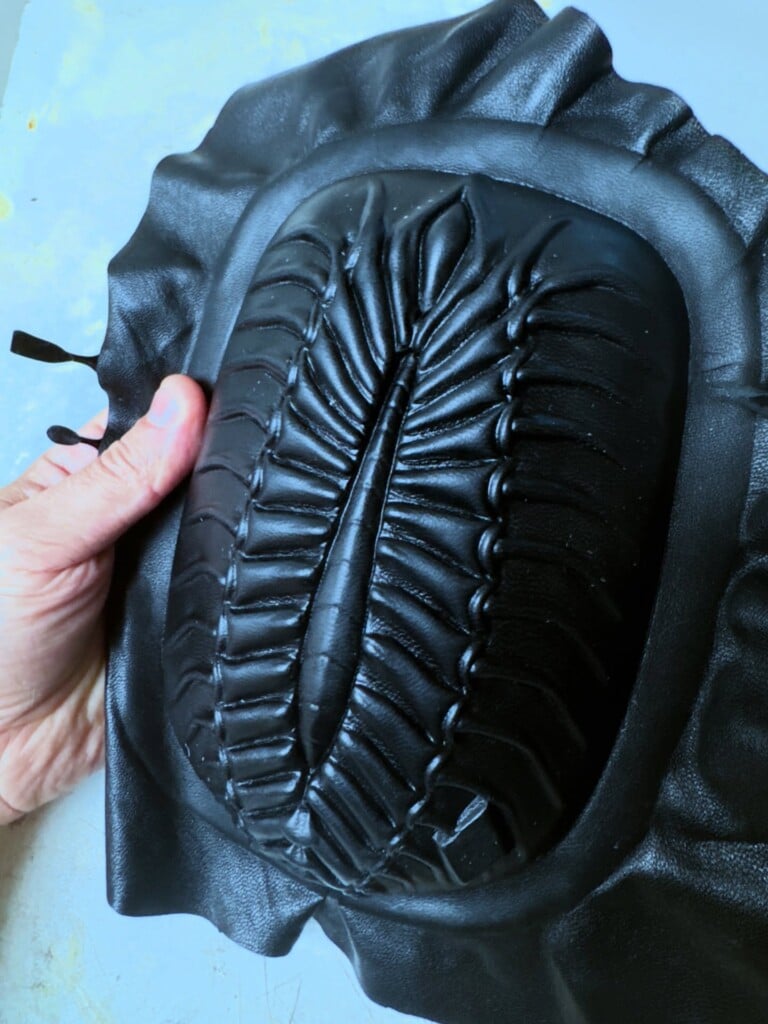
Matter, too, follows this logic. Asher Levine has worked on skin-molding techniques, three-dimensional forms and alternative materials, developing a practice that looks more toward building a new “skin” than toward simply decorating the existing one. His website speaks of patented leather molding techniques and silicone accessories, while his most recent research also includes the Gel Series, made of high-density silicone and characterized by soft, flexible, almost organic forms.

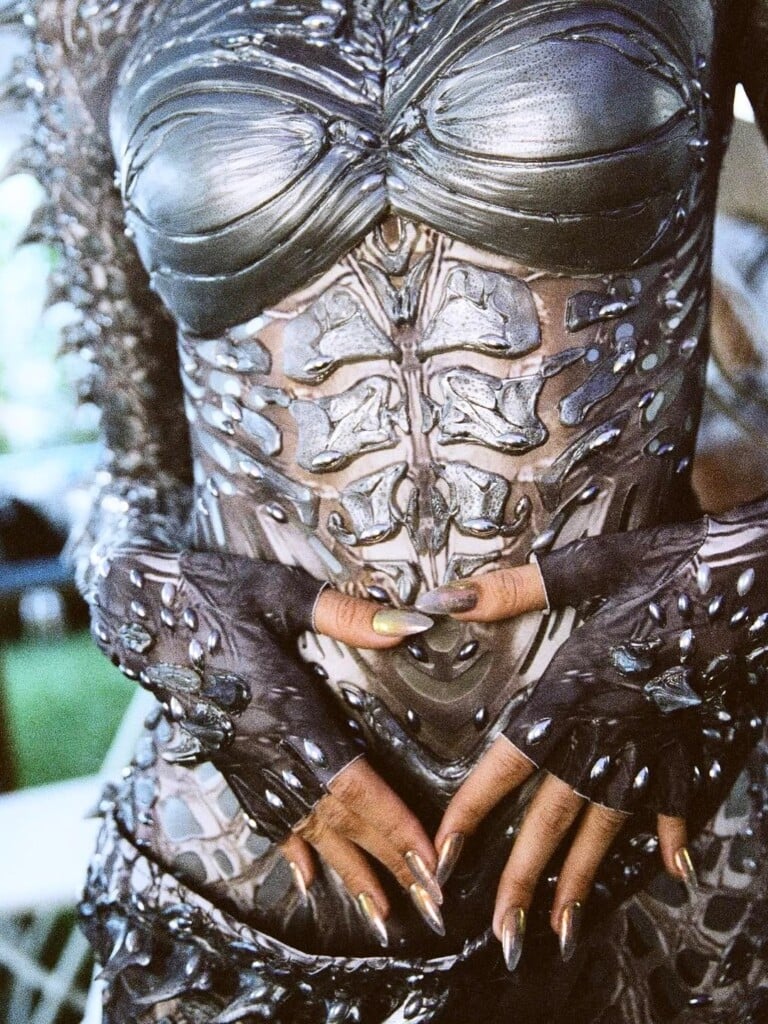

It is on stage, however, that Levine’s language finds one of its most immediate applications. With Lady Gaga, the relationship has lasted over a decade and has produced some of his most recognizable work. For the Enigma residency in Las Vegas, Levine created costumes built around a science-fiction aesthetic, combining three-dimensional scanning techniques, experimental processes and lighting systems. For one of the looks, the production time was particularly tight: the costume was completed in about a month and delivered shortly before the show.
It is not only about making a performer more spectacular, though. In Asher Levine’s work, technology and movement have to coexist. A garment meant for the stage must be able to follow the body, hold batteries and wiring, interact with light and at the same time keep a strong stage presence. It is precisely this requirement that sets his work apart from that of a simple costume designer: the garment becomes almost a small mobile architecture.
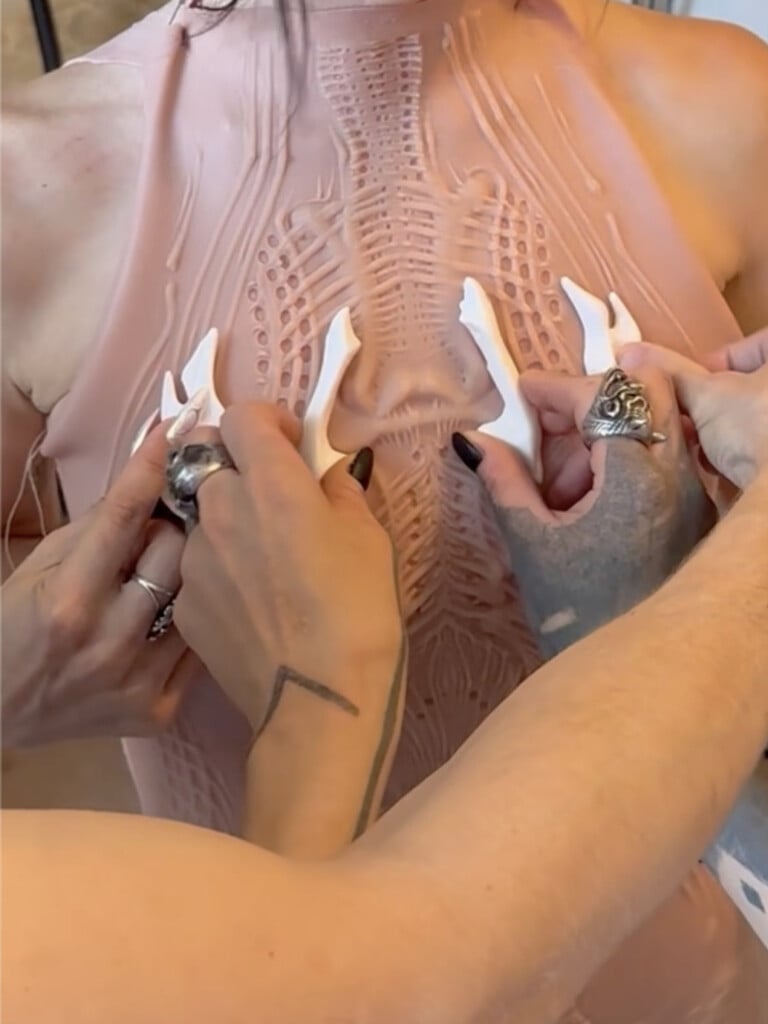
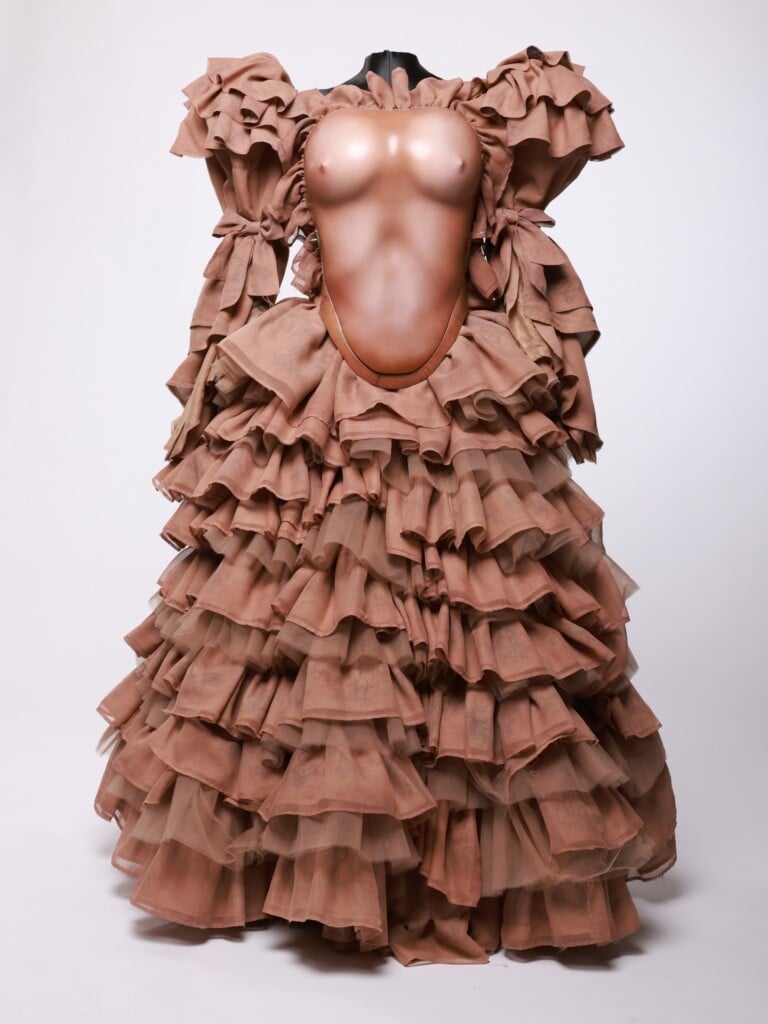
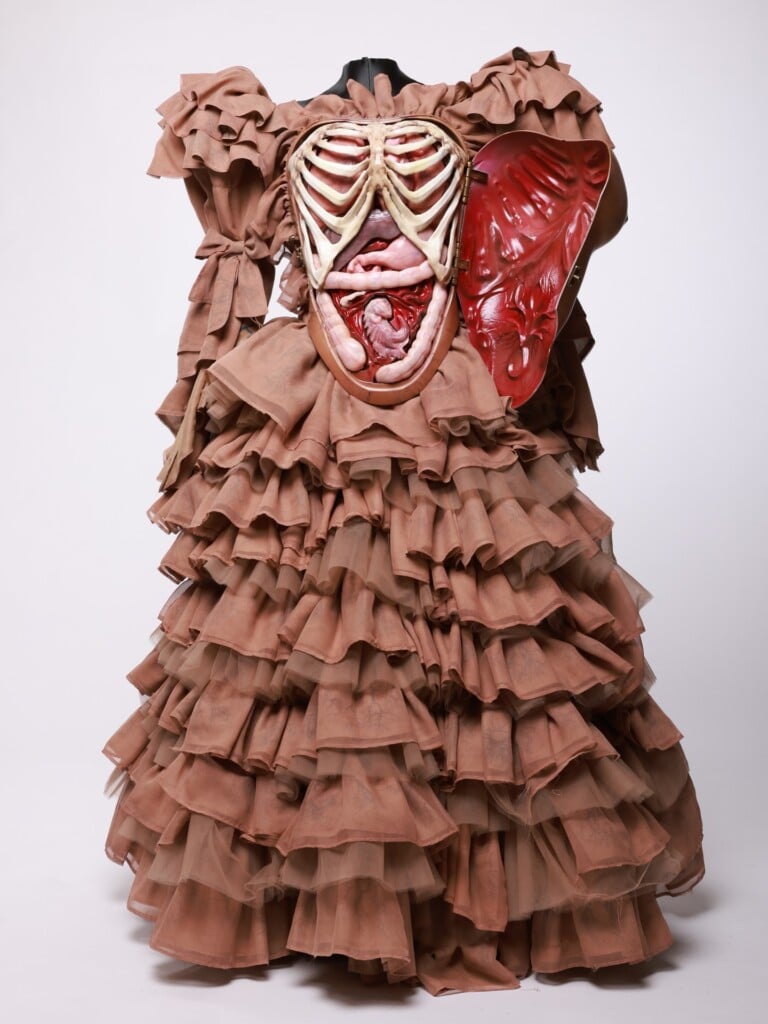
An even more recent example is the work created for Melanie Martinez during the Hades Tour. For the performance of Weight Watchers, Levine turned the body into a kind of exposed anatomy: a flesh-colored chiffon dress, crossed by details reminiscent of veins and skin, opens at the torso to reveal a structure inspired by internal organs. The result combines theatricality, anatomy and a certain grotesque quality, turning the costume into a true visual extension of the performance. The project was developed from a specific vision by Martinez and realized by Levine’s atelier.
In 2017 the Museum of Modern Art in New York included a prototype biker jacket by Levine in the exhibition Items: Is Fashion Modern?, dedicated to 111 objects and garments capable of telling the story of the relationship between fashion and modernity.
The project was anything but a purely aesthetic exercise. The jacket, made with flexible polymers and leather, integrated an LED lighting system that could also work as a signal for those behind the motorcyclist: the lights could indicate braking and direction. In this case technology is not added to make the garment look more futuristic, but concretely changes the very function of the biker jacket.
This is perhaps where Levine’s research is best understood: the future he imagines doesn’t necessarily come from complicated forms, but from the possibility of making things do something they couldn’t do before. This attitude also explains why his work has found fertile ground in pop music. Levine doesn’t simply build a recognizable image: he builds an alternative version of whoever wears it.
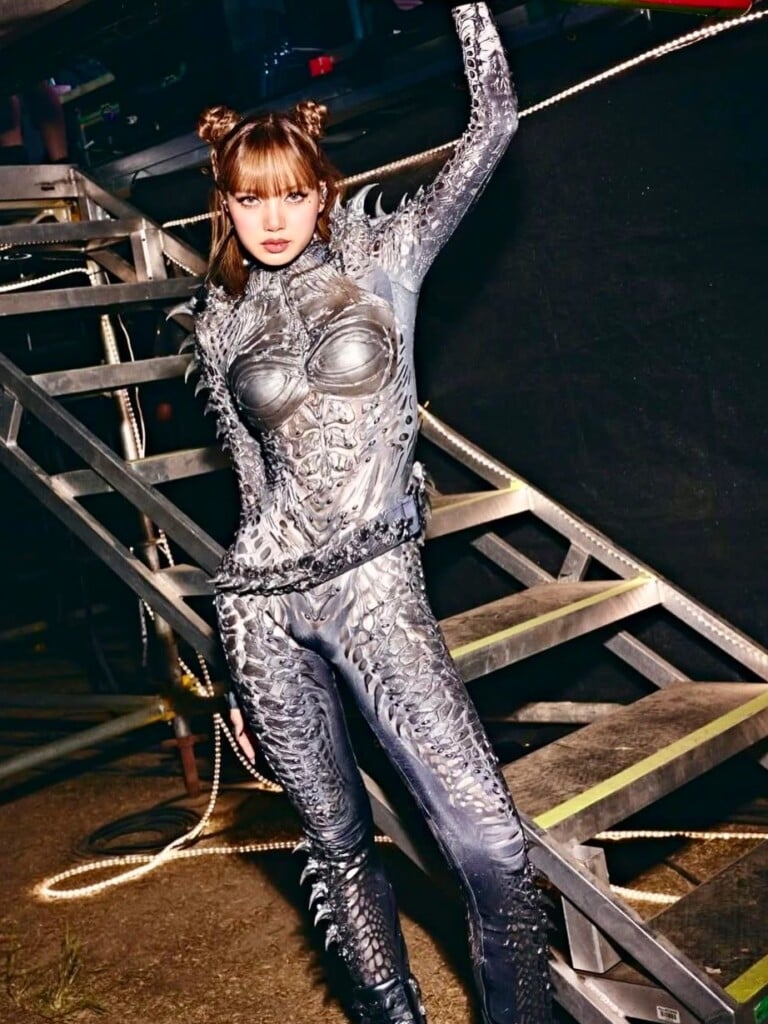
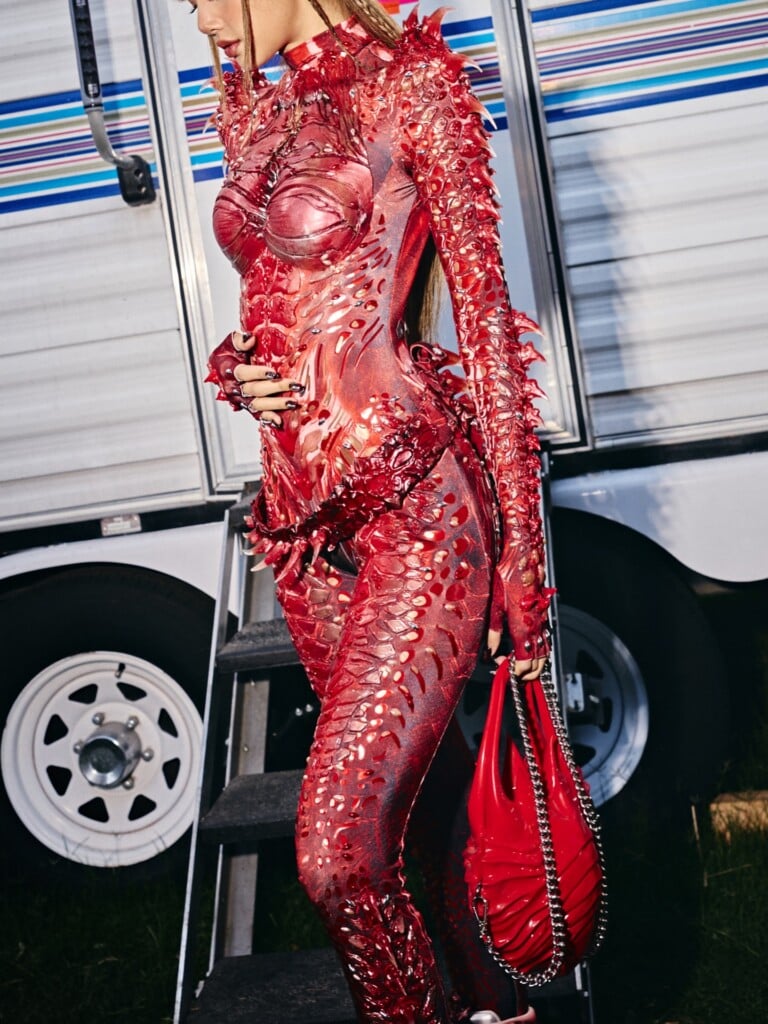
In 2021, for example, the designer worked with Lil Nas X on Montero (Call Me By Your Name) and several performances, while his archive collects collaborations with Doja Cat and Lady Gaga as well as numerous other projects for the entertainment world. More recently, this same language has reached the Coachella stage with Lisa. For her solo debut at the festival in 2025, Levine created two different visual directions: a first look with reptilian, iridescent forms, followed by a second, brighter and more organic costume built around elements inspired by bioluminescence. Two transformations of the same body, designed to accompany two different dimensions of the performance.

It is a constant running through Asher Levine’s work: style becomes a form of metamorphosis. It doesn’t necessarily serve to say who we are, but it can allow us to become, even if only for a few minutes, something different.
Looking at his clothes, it is hard to stop at the word “fashion”. There is silicone, LEDs, molded leather, three-dimensional scans and sculptural structures, but above all there is the idea that a garment can work as an interface between the body and what we don’t yet know. Rather than anticipating a trend, Levine thus tries to build the object that might come next.