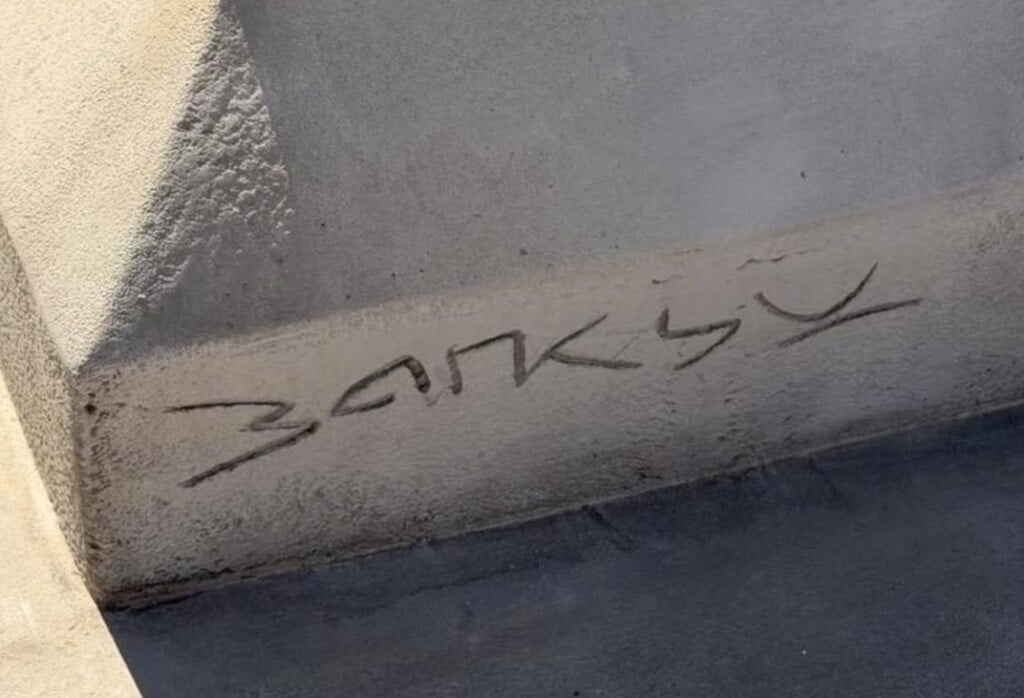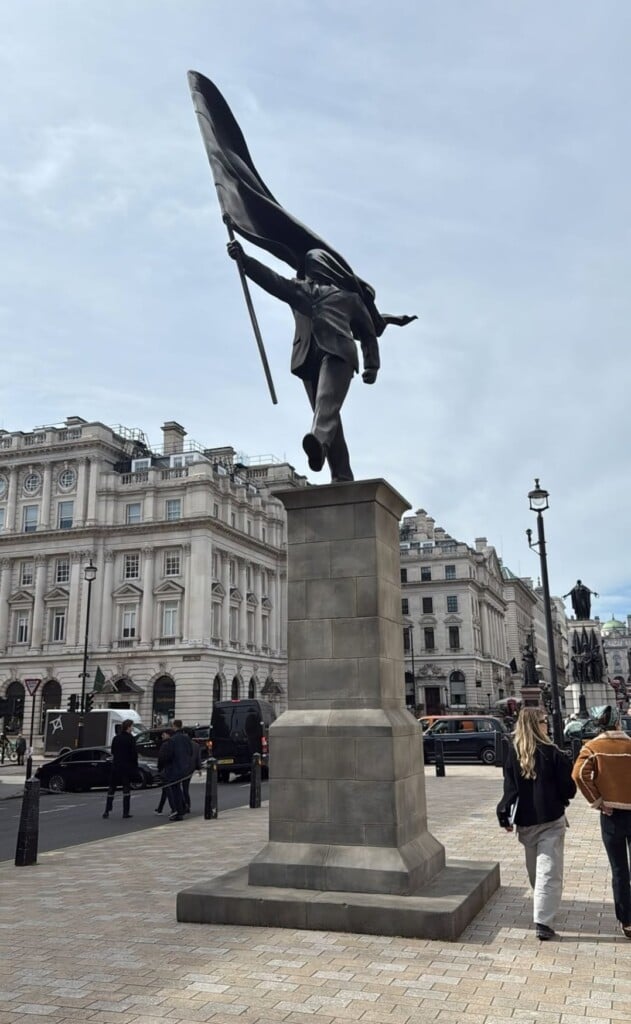
We have already discussed Banksy’s identity and how problematic the entire debate surrounding it can be in recent weeks. But in the last few days, a new appearance in central London has brought attention back to the street artist: at Waterloo Place, in the St James’s district, a large statue has appeared depicting a man in a suit, caught in the act of marching off his plinth. Covering his face is a flag blown backwards by the wind, completely obscuring his vision. The signature “Banksy” appears at the base, but at least for now, the artist has not confirmed anything on his social media channels.
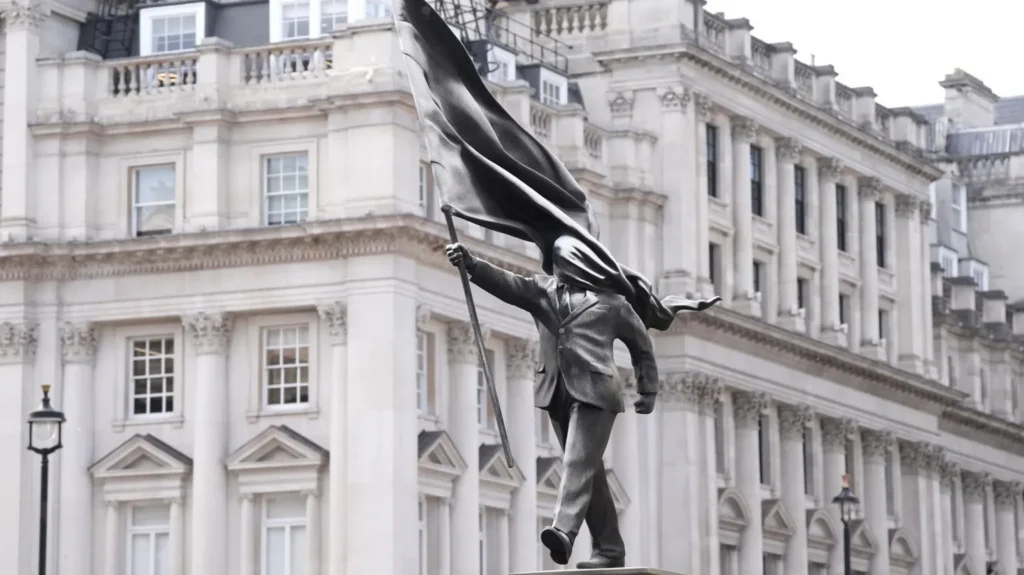
The image has something unsettling about it: the flag, usually a symbol of identity and belonging, becomes an obstacle here, an instrument that blinds rather than guides. The figure advances without seeing, suspended in the moment before a fall, turning the act of marching into something dangerously unaware.
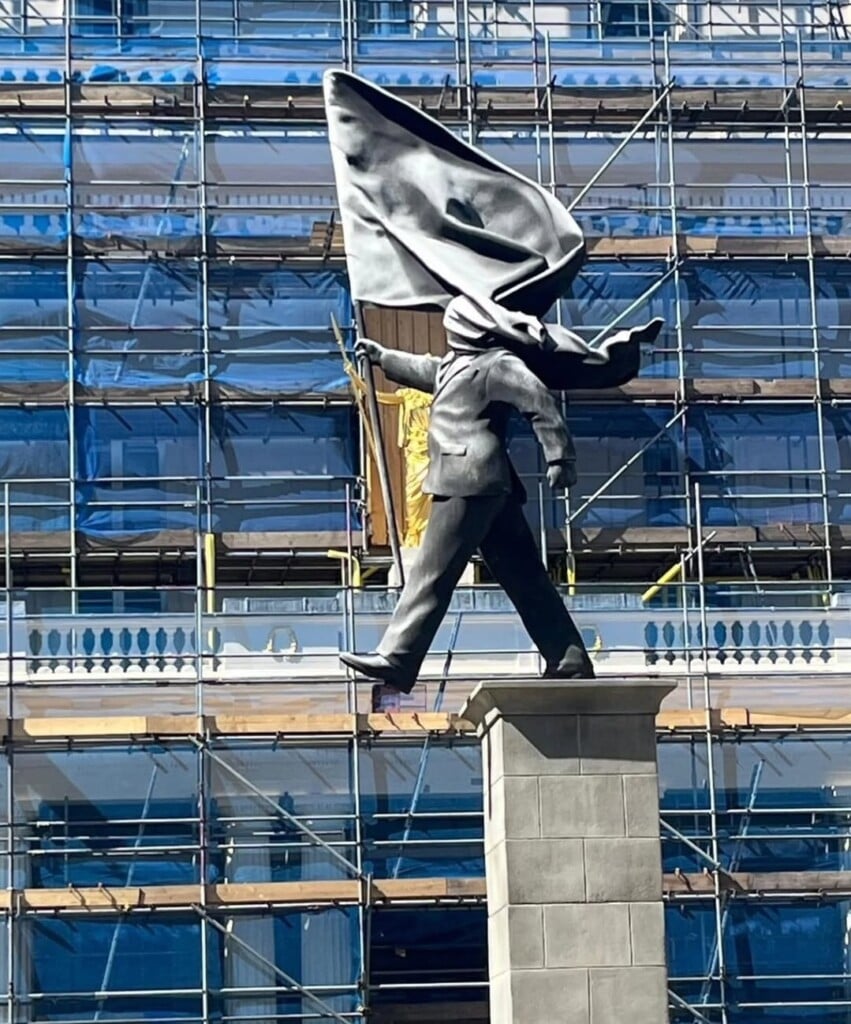
It is hard not to read the work as a comment on the contemporary political climate, amid nationalism and ideological drifts that are becoming increasingly visible in public space. From this perspective, the subject becomes a symbol of blind allegiance, driven more by slogans and symbols than by any real understanding, with consequences that seem inevitable.