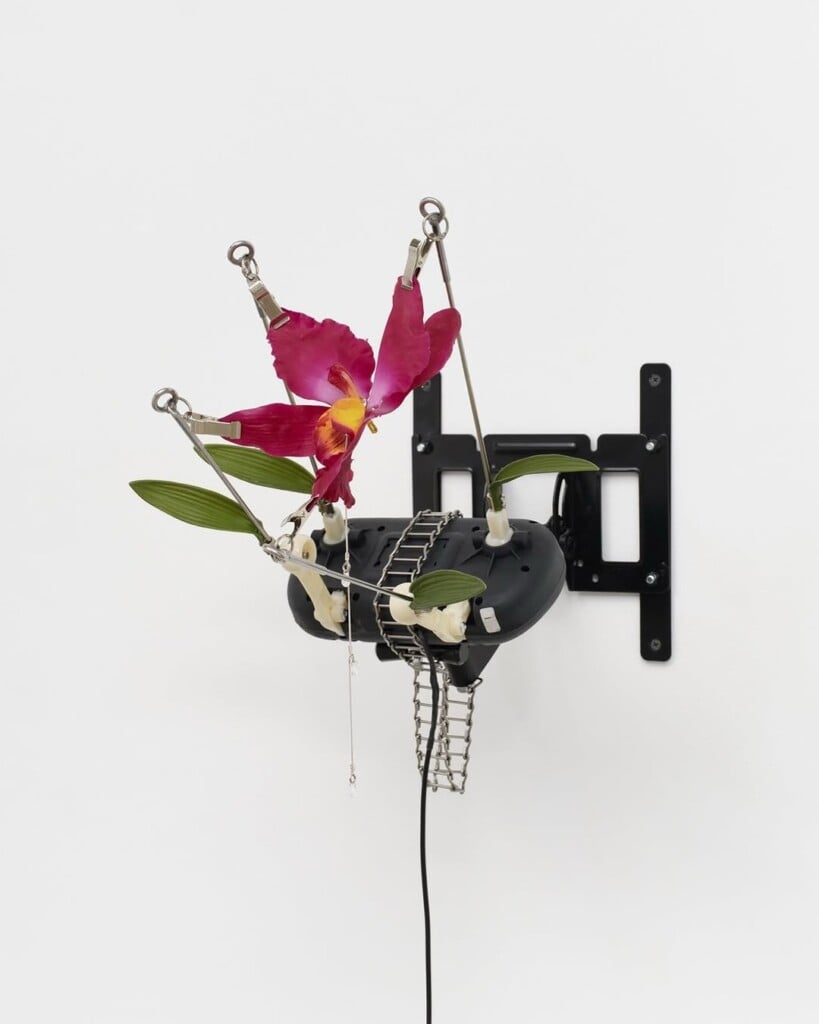
What happens when objects designed to make us feel better keep working even when there’s no one left to help? It’s from this paradox that the research of artist Rachel Youn begins, an artist who salvages wellness-related devices and turns them into mechanical sculptures. Stripped of their original function, motors and mechanisms are combined with artificial flowers, fake plants and found materials, giving rise to repetitive movements, oscillations and vibrations that seem to no longer have a purpose. The gesture remains, while the reason it was created for disappears.
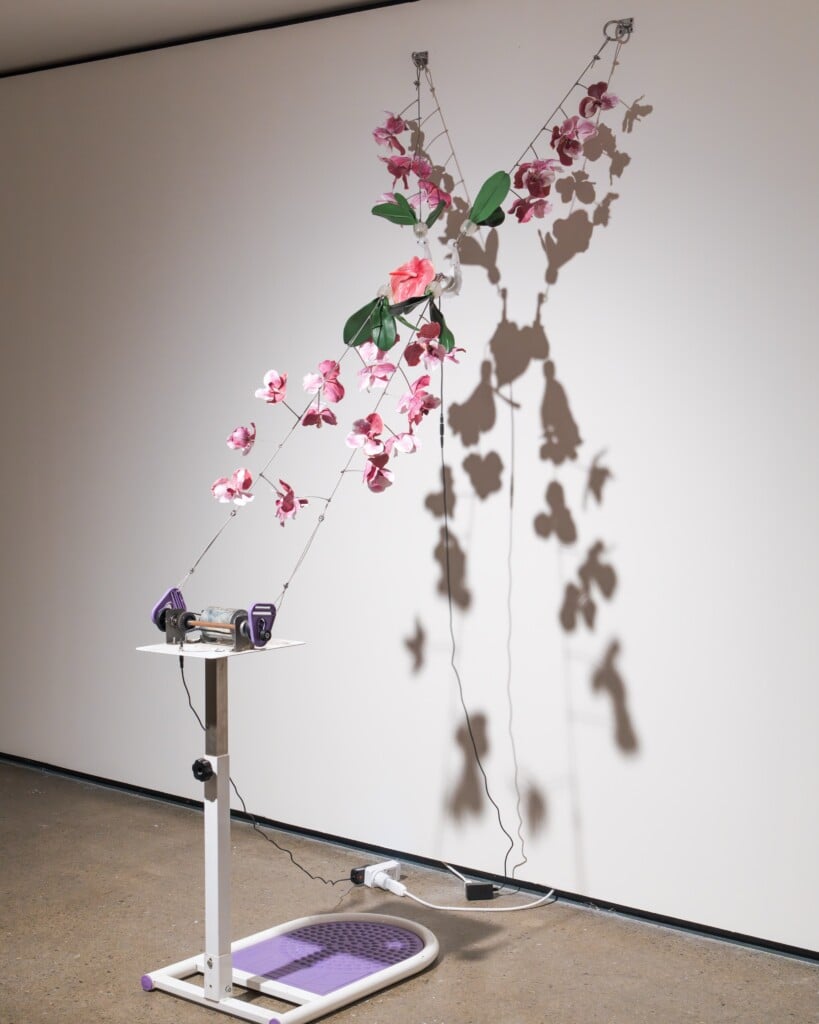
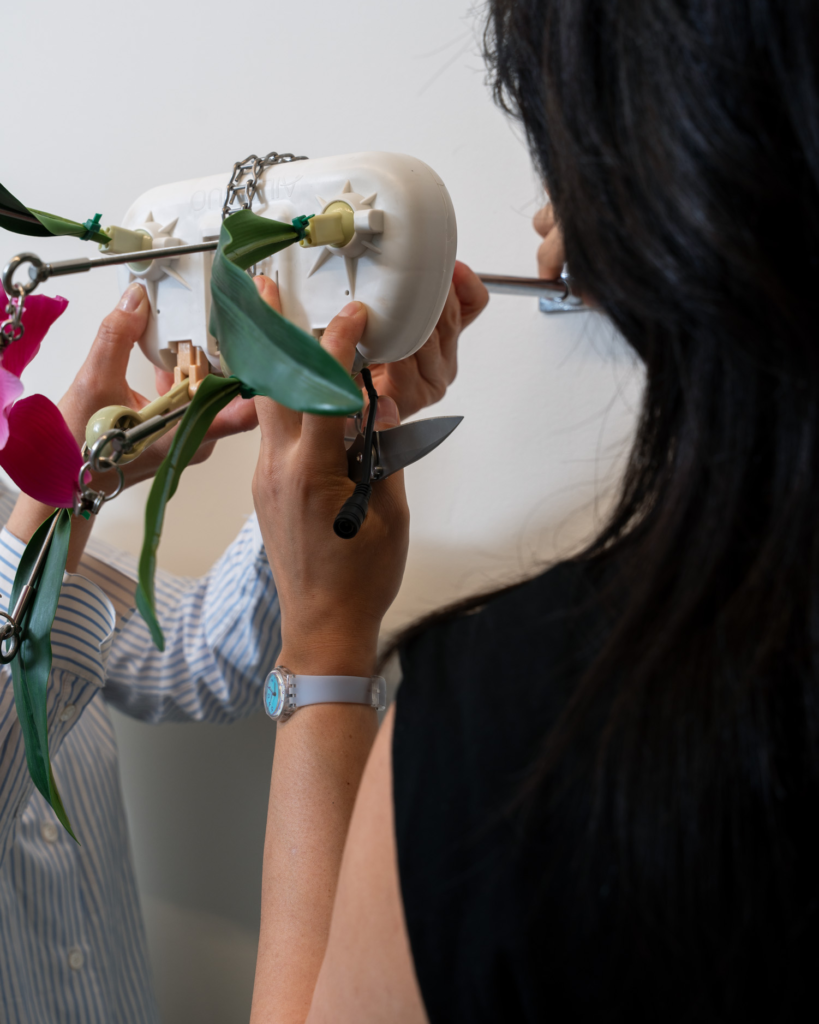
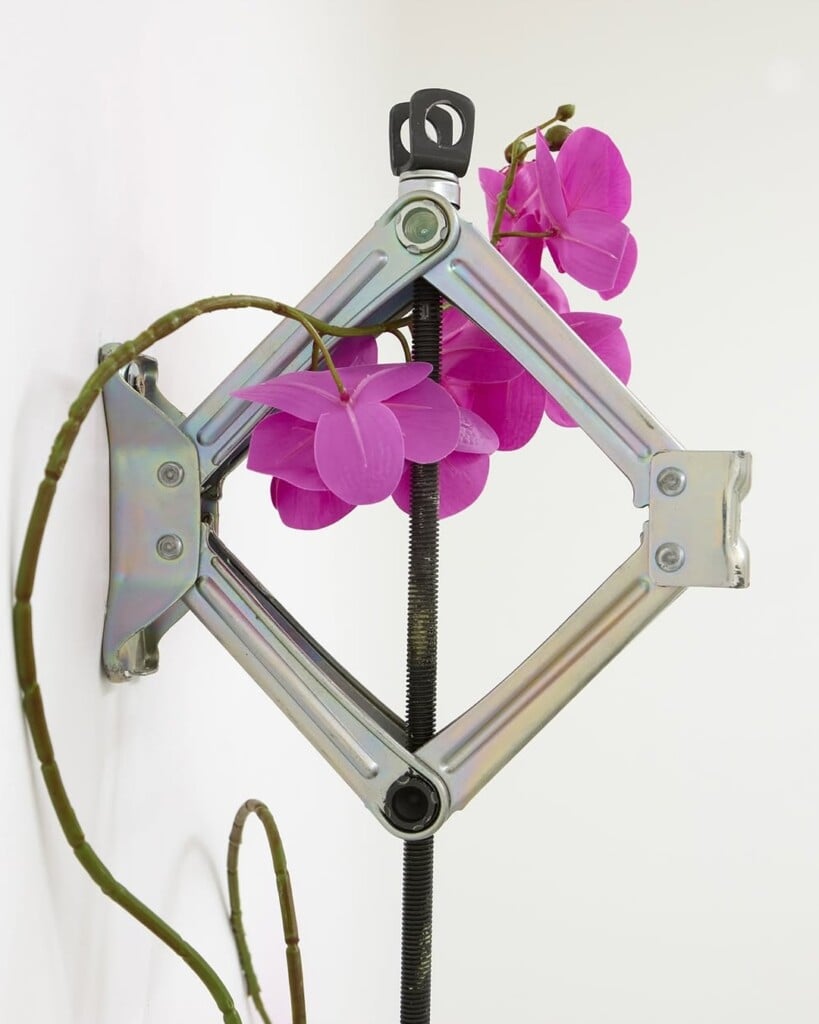
A massager, an exercise machine, a rocking chair for children. Common objects, designed to care for the body, relax it or train it. In the hands of Rachel Youn, however, they stop performing their original function and start moving without any real destination. Attached to artificial flowers, fake plants and other found materials, they become mechanical sculptures that keep swaying, vibrating and turning as if they had to carry out forever a task no one has assigned them anymore.
It’s precisely this short circuit that makes the work of the American artist, born in 1994 and today active between sculpture and installation, so interesting. Youn starts from objects tied to the contemporary culture of wellness and self-improvement to ask what happens when the desire to feel better turns into a continuous activity, almost impossible to stop.
In her works, movement thus becomes a condition rather than an action. The motors salvaged from second-hand devices keep doing what they were designed to do, but outside their original context they produce something absurd. A massager no longer massages anyone, an exercise machine trains no body, a chair no longer rocks a child to sleep. What’s left is only the gesture and its repetition.
This dynamic is particularly evident in Well Adjusted, the 2023 exhibition at Night Gallery in Los Angeles. Here Youn turned motors taken from massagers, baby swings and exercise machines into sculptures that animate artificial plants and found objects. Their relentless movement brings together seemingly opposite concepts: care and strain, pleasure and pain, exercise and overload.
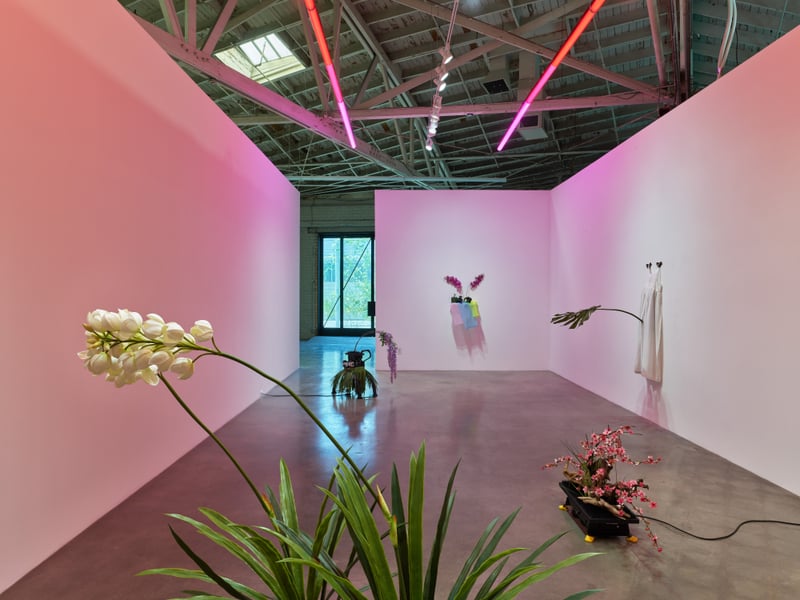
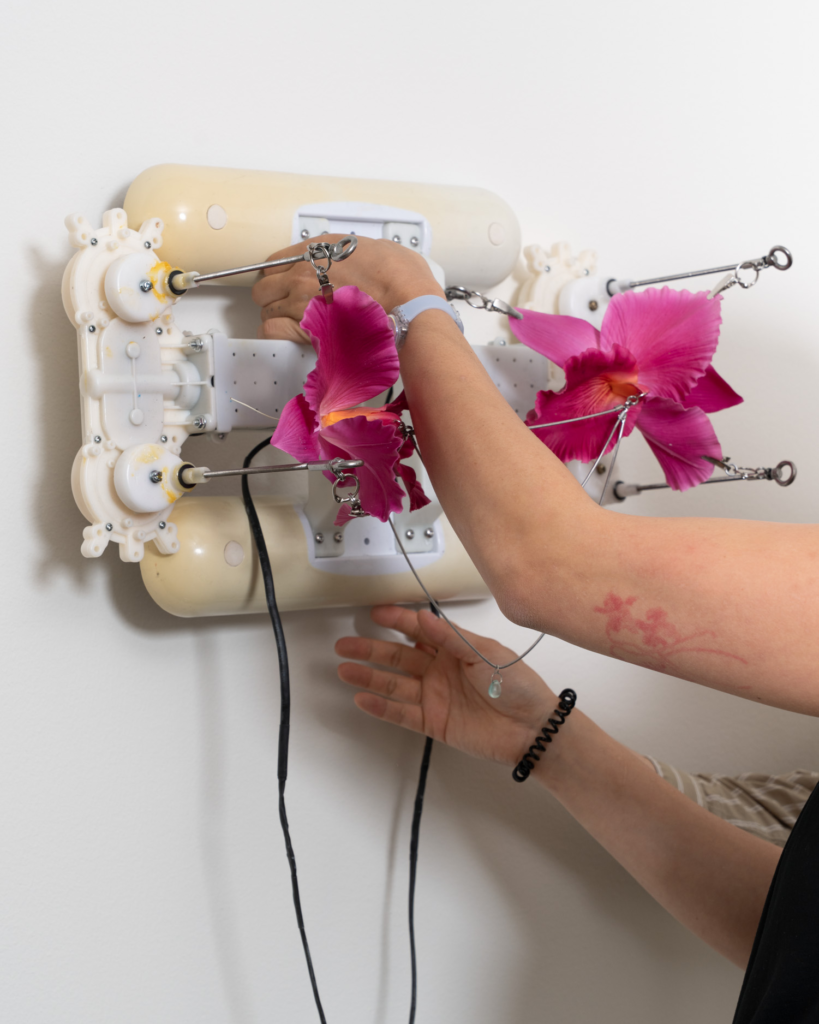
The source material matters for another reason too: Youn often sources these devices through Craigslist and Facebook Marketplace, coming into contact with people who have decided to get rid of them. These are objects that carry a previous history with them: someone bought them to relax, to work out, to look after a child. Once abandoned, that function disappears, but their movement can carry on through the work.
This is where one of the most interesting tensions in her research comes from: how much of our desire to take care of ourselves is really care, and how much, instead, is another form of labor? Youn’s sculptures don’t seem to offer an answer, but they make that exertion visible through machines that know no rest.
This idea also returns in Rachel Youn‘s more recent work: in 2025, for the exhibition NO SWEAT in Seoul, Youn continued using wellness and exercise devices, turning them into mechanical hybrids together with artificial flowers, skates, chains and other elements. The body doesn’t appear directly, but is evoked by the machines that imitate or extend its gestures.
In 2026 this research also reached Venice with Unruly Vessel, the exhibition developed during her residency at the Scuola Piccola Zattere. Here the focus shifted toward the relationship between ritual, bodily discipline and systems of control. Among the new works is a large installation inspired by rowing benches, where mechanical devices move long palm leaves as if they were oars. The image recalls the theme of the ship of fools and connects forced labor, ritual, punishment and care.
The shift from wellness to ritual isn’t as far-fetched as it might seem, then. In both cases the body is subjected to a series of repeated gestures with the idea that they might lead somewhere: toward health, wellbeing, purification, or a better version of ourselves. Youn takes this promise and lets it spin in place, going nowhere.
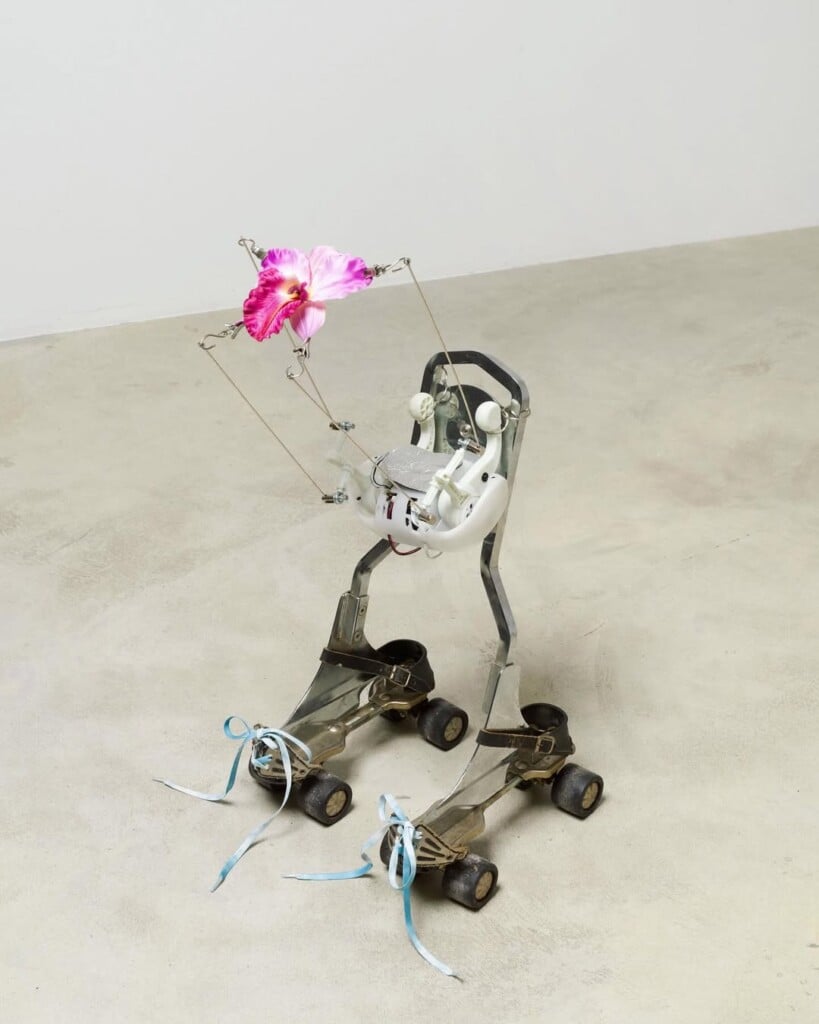
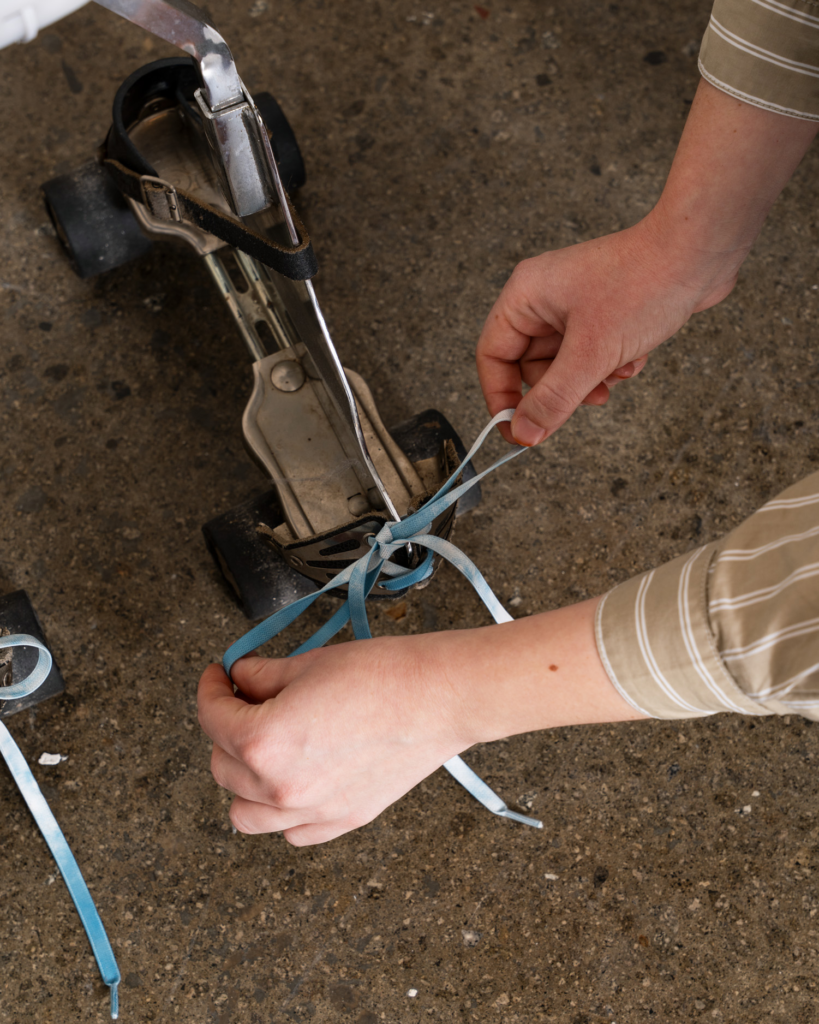
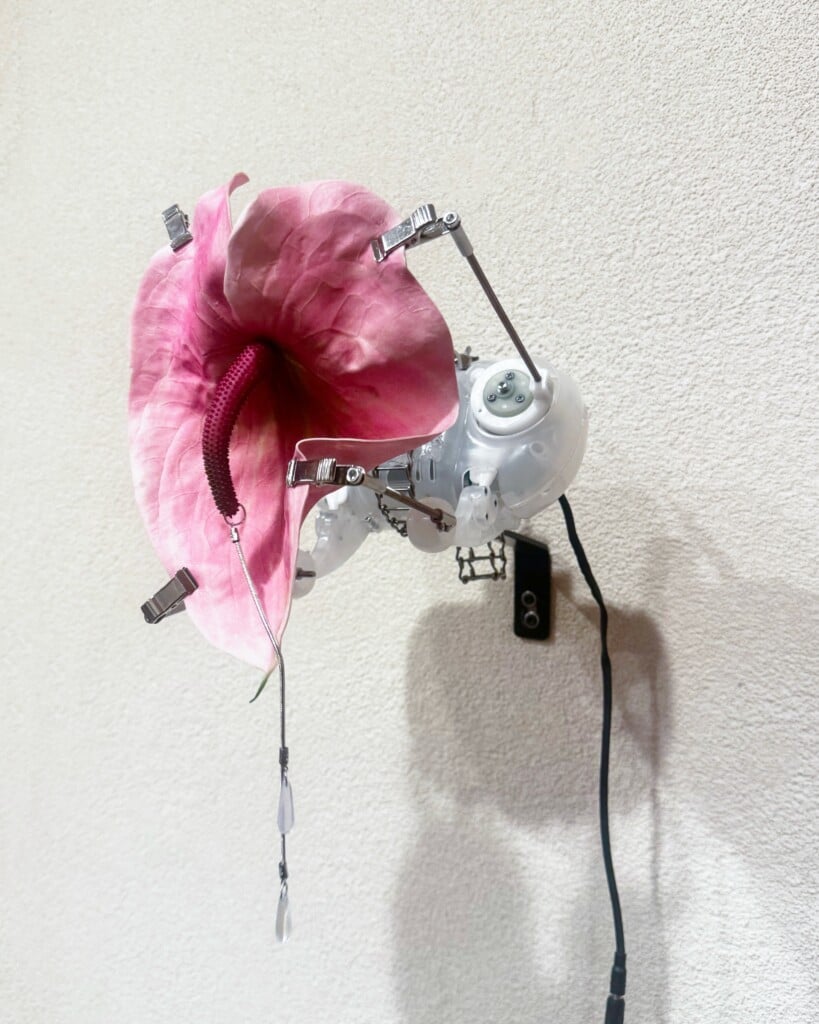
Her sculptures are funny, fragile and at times unsettling precisely because they seem to need to keep going. Even though there’s no one left to massage, train or rock to sleep, the machines insist. They keep doing their job even after the job has lost its purpose. Rachel Youn stops talking only about objects and starts talking about us, about the difficulty of stopping, about the need to be productive even when there’s no longer any need to be, and about a culture that has turned even rest into something to optimize.