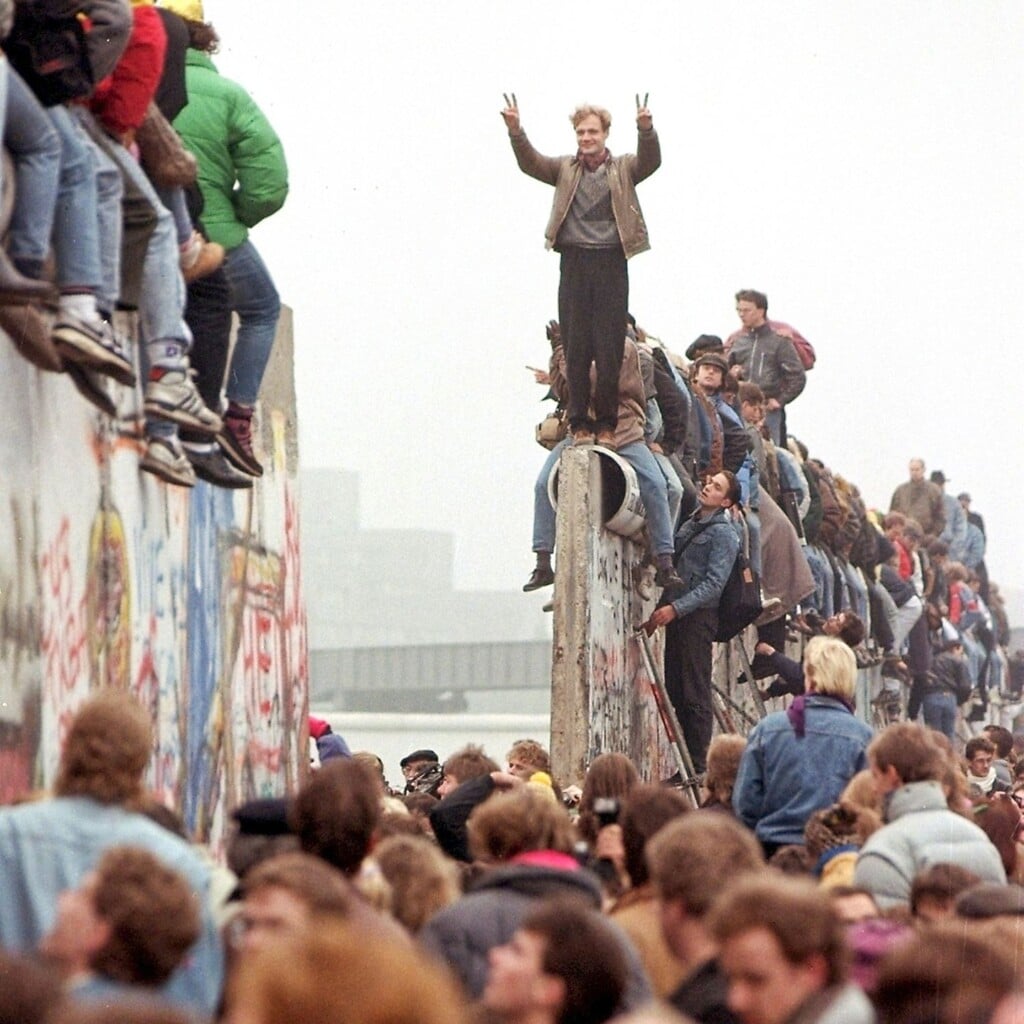
Berlin, 9 November 1989. For twenty-eight years the Wall has divided the city between East and West. It is not just concrete: it is a border system made of checkpoints, guards, controls and rules that prevent East German citizens from crossing freely. By 1989, however, that system is giving way. Thousands of people are leaving the GDR through other Eastern European countries, while protests for freedom of movement and political reform grow in the cities.
On the evening of 9 November, Günter Schabowski announces new rules on travel to the West during a press conference. When asked when they will come into effect, he replies: “immediately”. The news spreads on television and thousands of people head to the checkpoints. The guards have no clear instructions. At Bornholmer Straße the border is opened.
The Wall is still there, but in the photographs it has already stopped functioning as a wall.
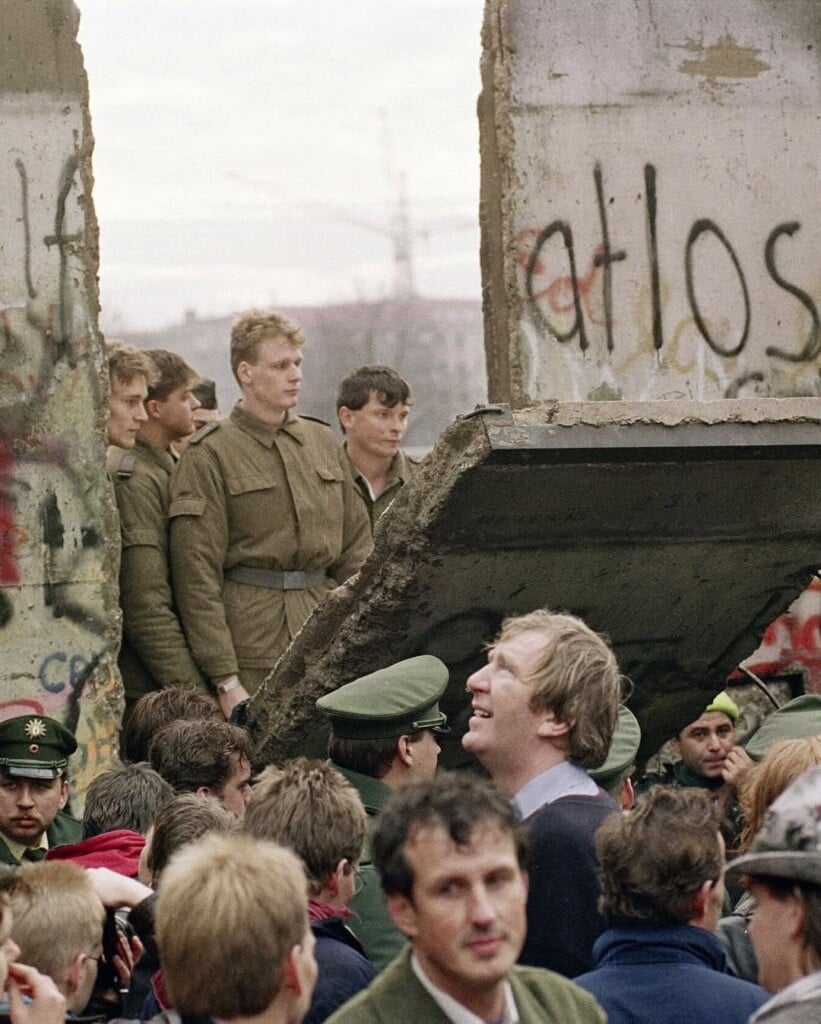
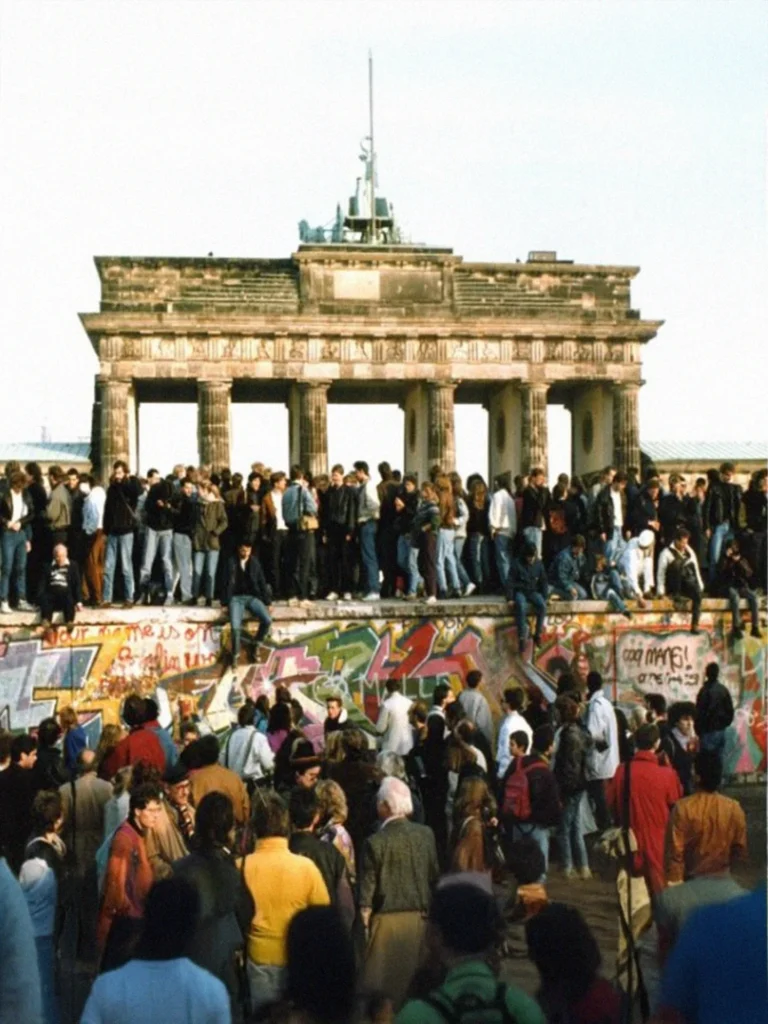
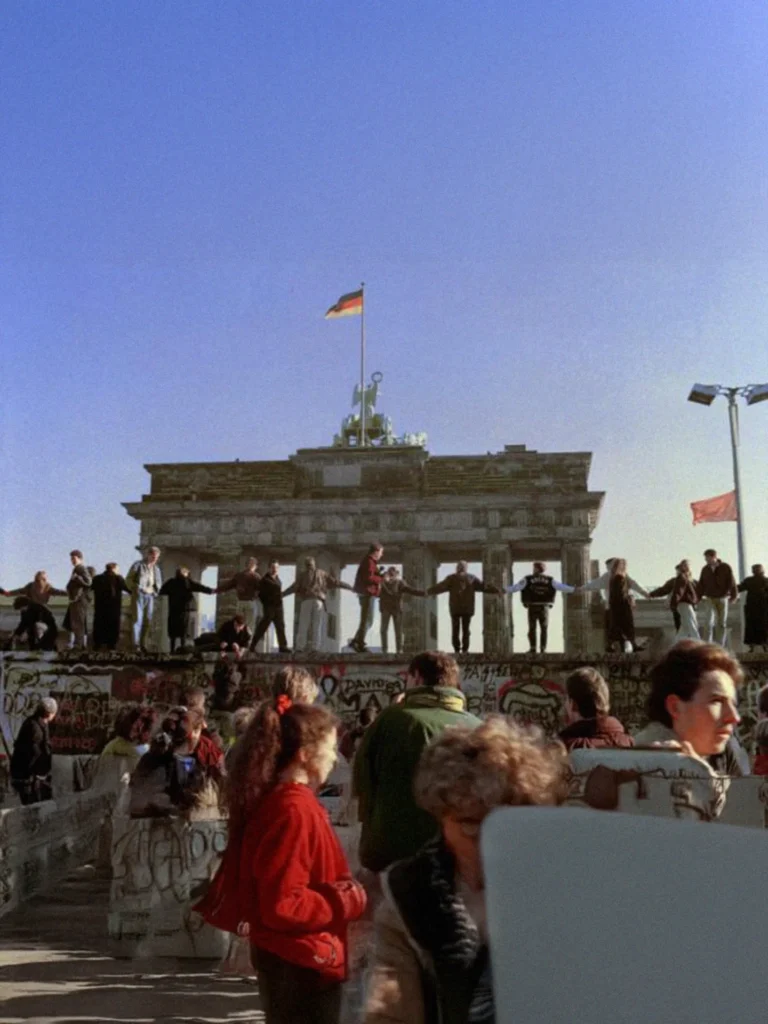
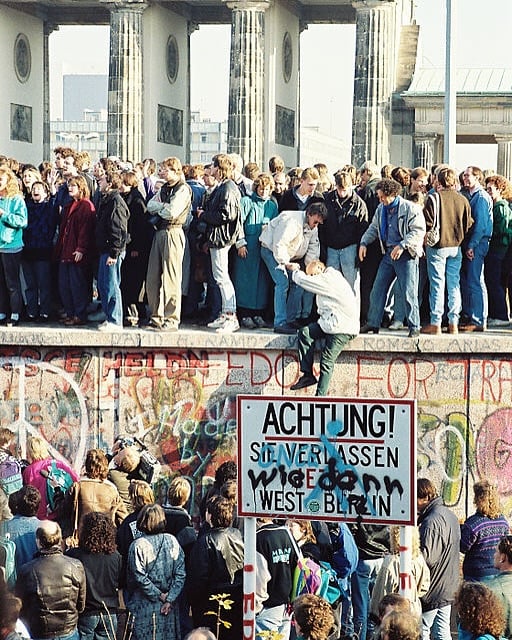
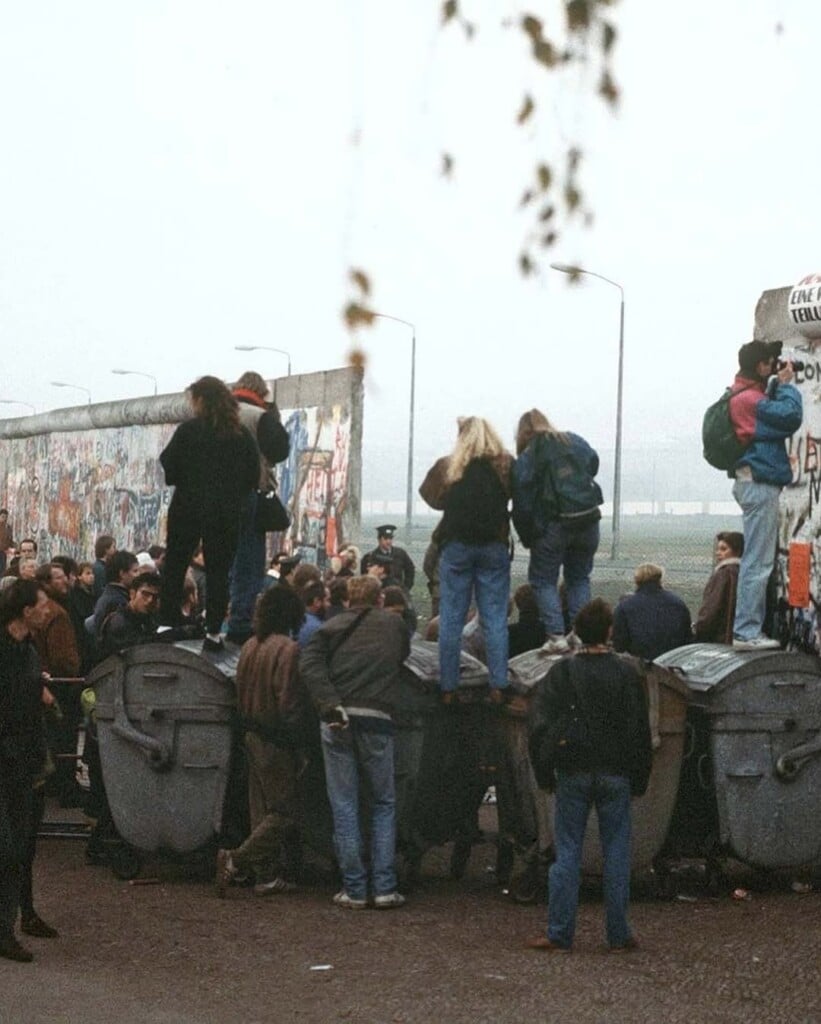
In front of the Brandenburg Gate it still cuts across the frame, but it can no longer truly divide the space. People are on top of the concrete, below it and all around it. There is no clear protagonist: the subject is the crowd. The rigid line of the Wall is occupied by dozens of bodies doing something that was forbidden until the day before. The composition, too, completely changes the meaning of that structure. The Wall should block the gaze and separate two parts of the city; instead it becomes the point on which all the action converges. People climb onto it, sit on it, look to the other side, lean over. The barrier remains physically intact, but the photograph shows that it has already lost its function.
In many images the contrast is precisely between the rigidity of the concrete and the movement of the crowd. The Wall is geometric, continuous, motionless. The people, on the other hand, pile up, climb, touch one another. It is the city beginning to occupy a space built to keep it divided.
On 10 November, near Checkpoint Charlie, another photograph shows instead how present that division still is.
A Berliner holds out his hand to two East German border policemen. They do not reciprocate. It is a photograph built on a gesture that is never completed. The civilian’s arm stretches across almost the entire image, while the soldiers remain still. Nothing happens, and that is precisely the point: the political system has just changed, but the bodies have not yet had time to understand it.
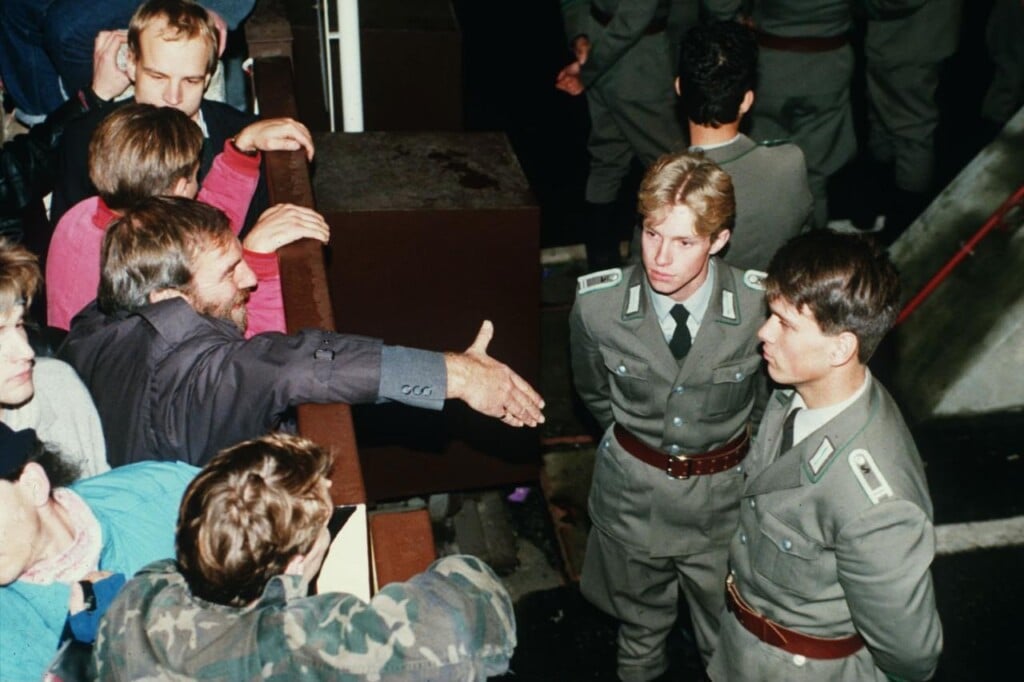
Within that scene, two different times seem to coexist. The civilian already behaves as if the border belonged to the past. The policemen, on the other hand, are still inside the rules of the system they were tasked with defending until just a few hours earlier. The distance between them is minimal, but an unshaken hand is enough to make it enormous. In the following days the change becomes physical. People no longer merely cross the Wall: they strike it, chip pieces off it, climb on top of it. The so-called Mauerspechte, the “Wall woodpeckers”, arrive with hammers, chisels and pickaxes.
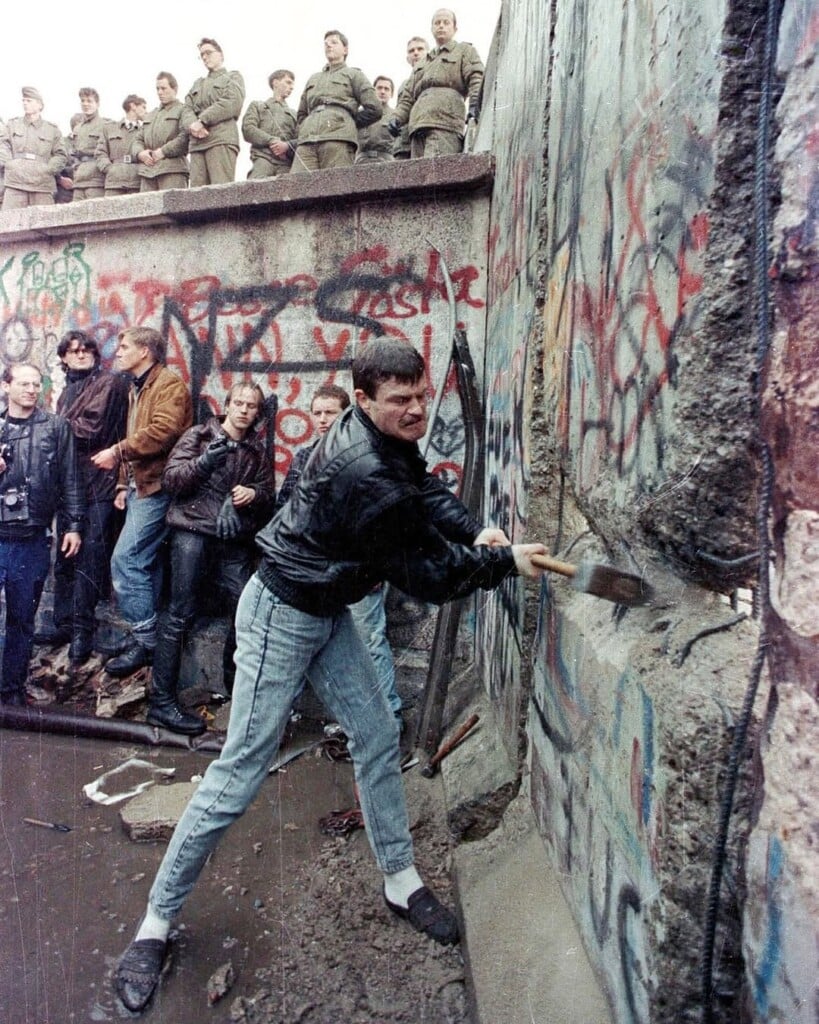
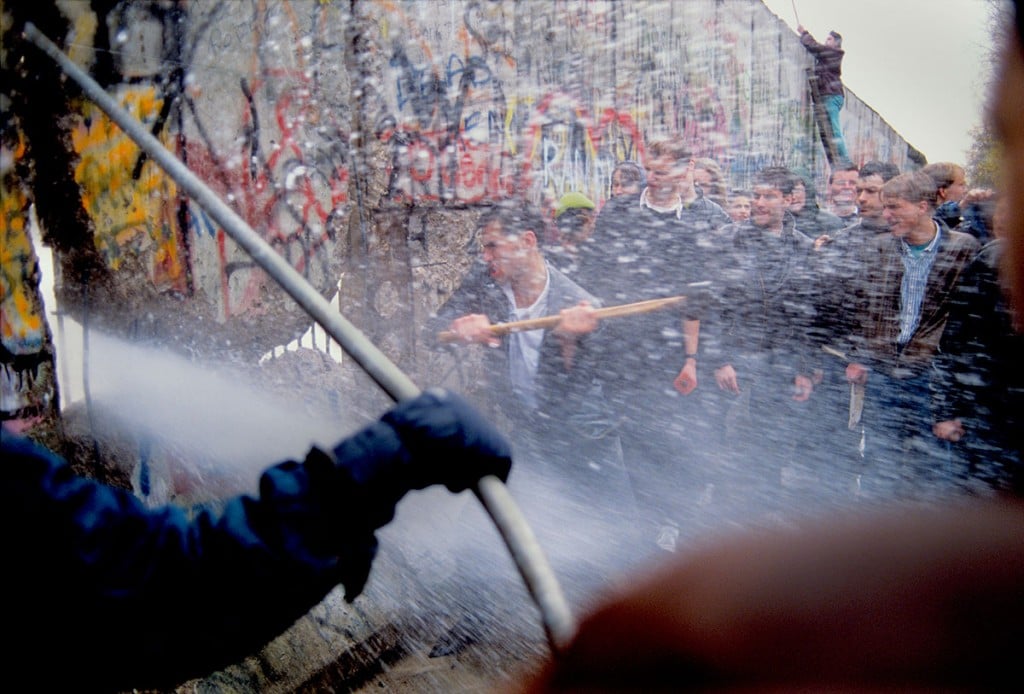
The concrete that for almost thirty years had represented a political border suddenly becomes something that can be touched, broken and taken home. The photographs, too, change distance. From the wide images of the crowd we move to details: hands gripping hammers, dust, shattered graffiti, fragments of concrete. The Wall stops appearing as an abstract, almost untouchable structure. It becomes matter again.
This is what makes the photographs of those days so powerful. They do not tell of a single moment, but of a gradual transformation:
First the Wall divides space.
Then it is occupied.
Then crossed.
Finally it is broken apart, piece by piece.
Germany will be reunified only on 3 October 1990, and the Wall does not physically disappear during the night of 9 November. But in the photographs the change is already evident.
The Wall does not fall in a single night.
First it loses its power, then it loses its pieces.
This article was produced in collaboration with @superottomag and written by Gabriel Pisano.