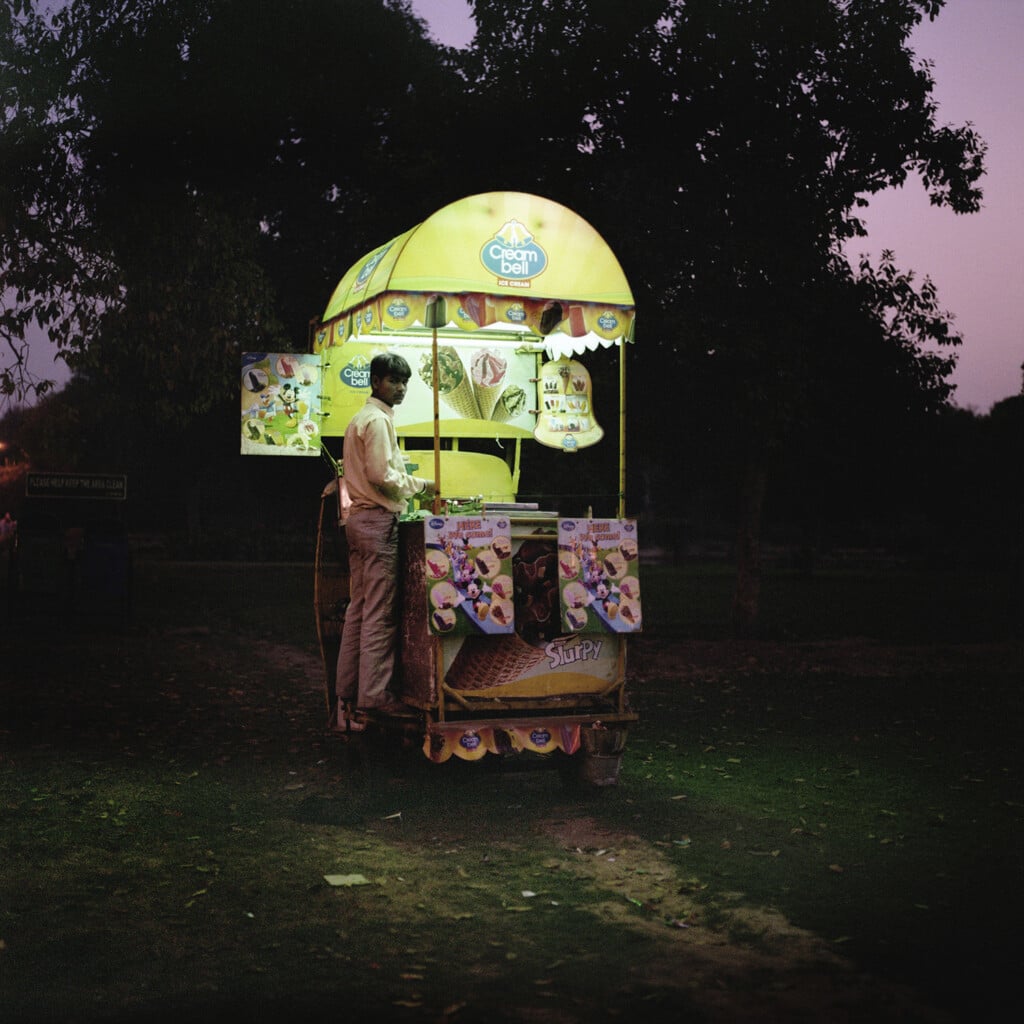
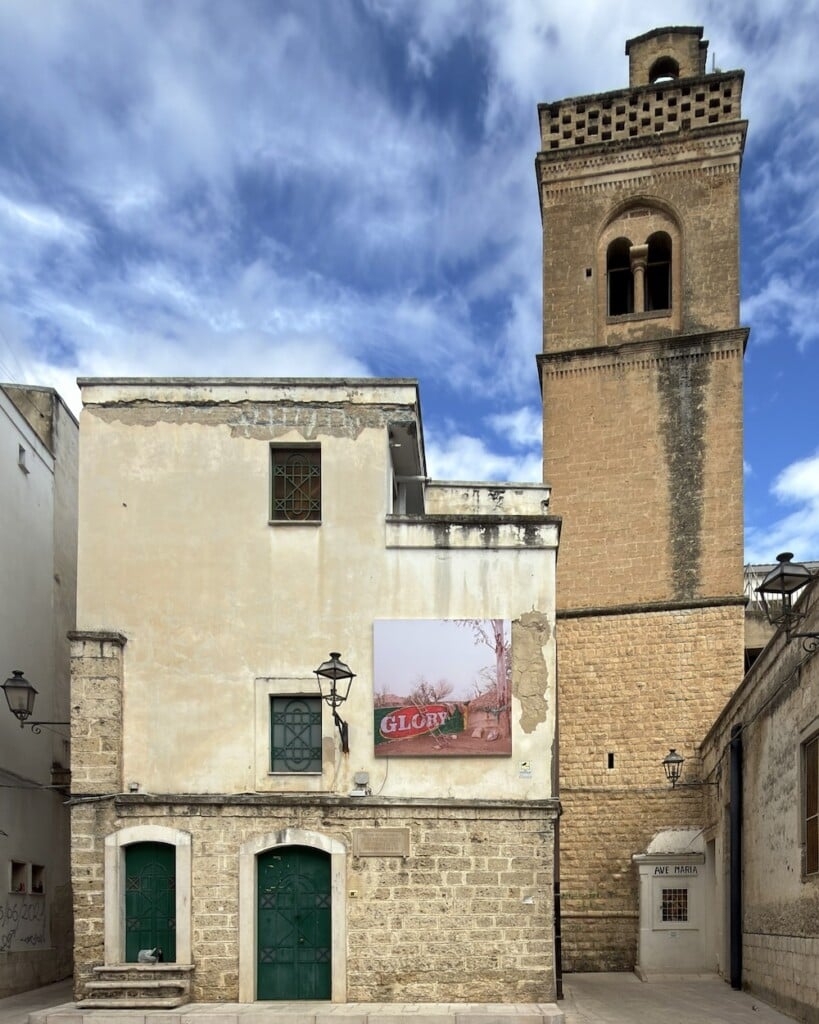
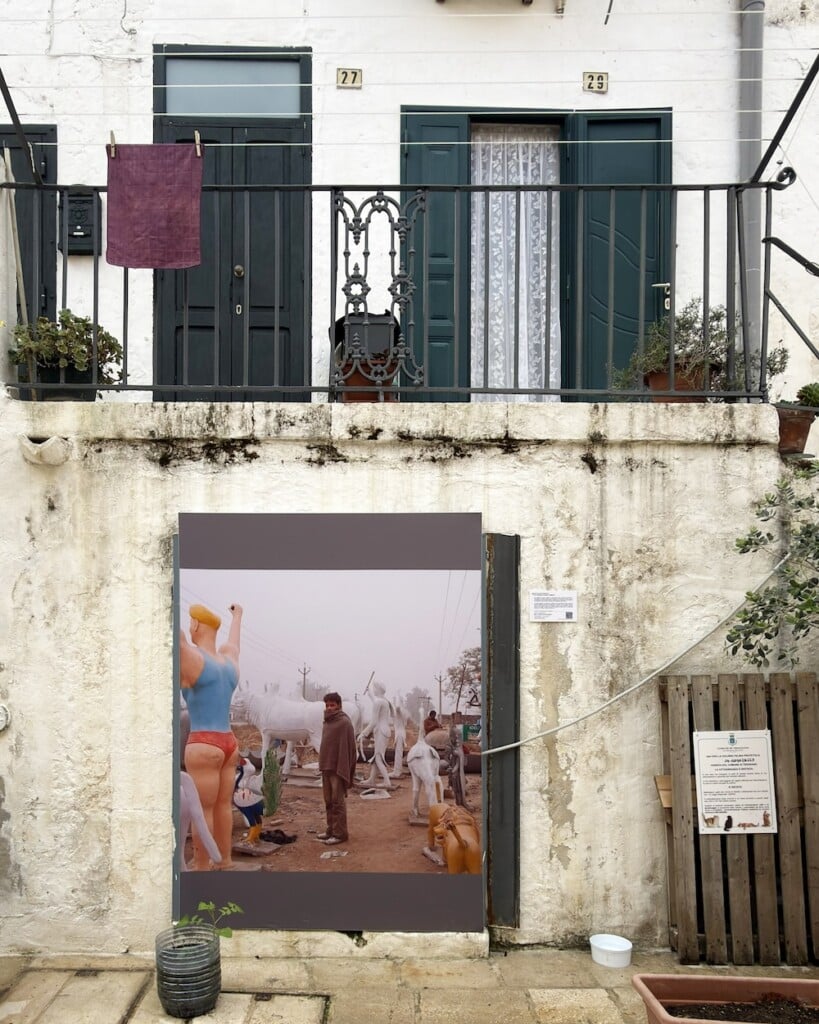
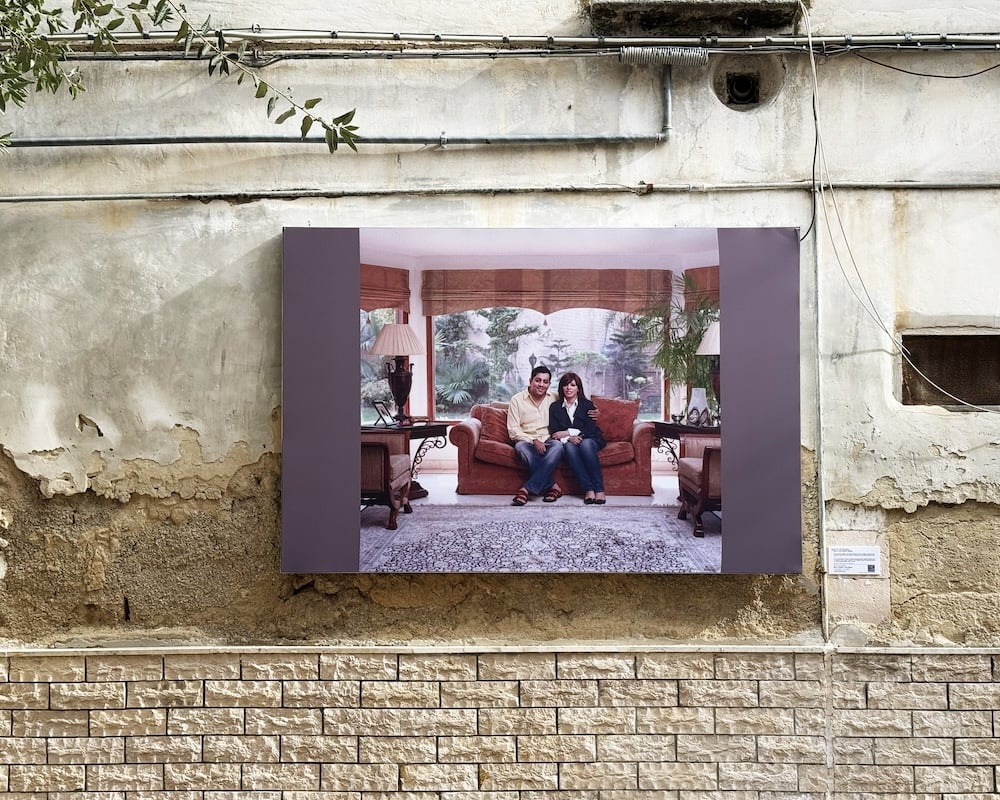
This is an India far removed from exotic stereotypes and postcard images, a country racing toward the future at double speed, driven by overwhelming urbanization, endless construction sites and infrastructure that redraws the landscape every year. This is the reality told in “MY INDIA | GLORY”, the photographic project that Rocco Rorandelli, one of the founders of the TerraProject collective, has been pursuing since 2008 and which in recent months has landed in Puglia, slipping into and merging with the historic center of Triggiano until January.
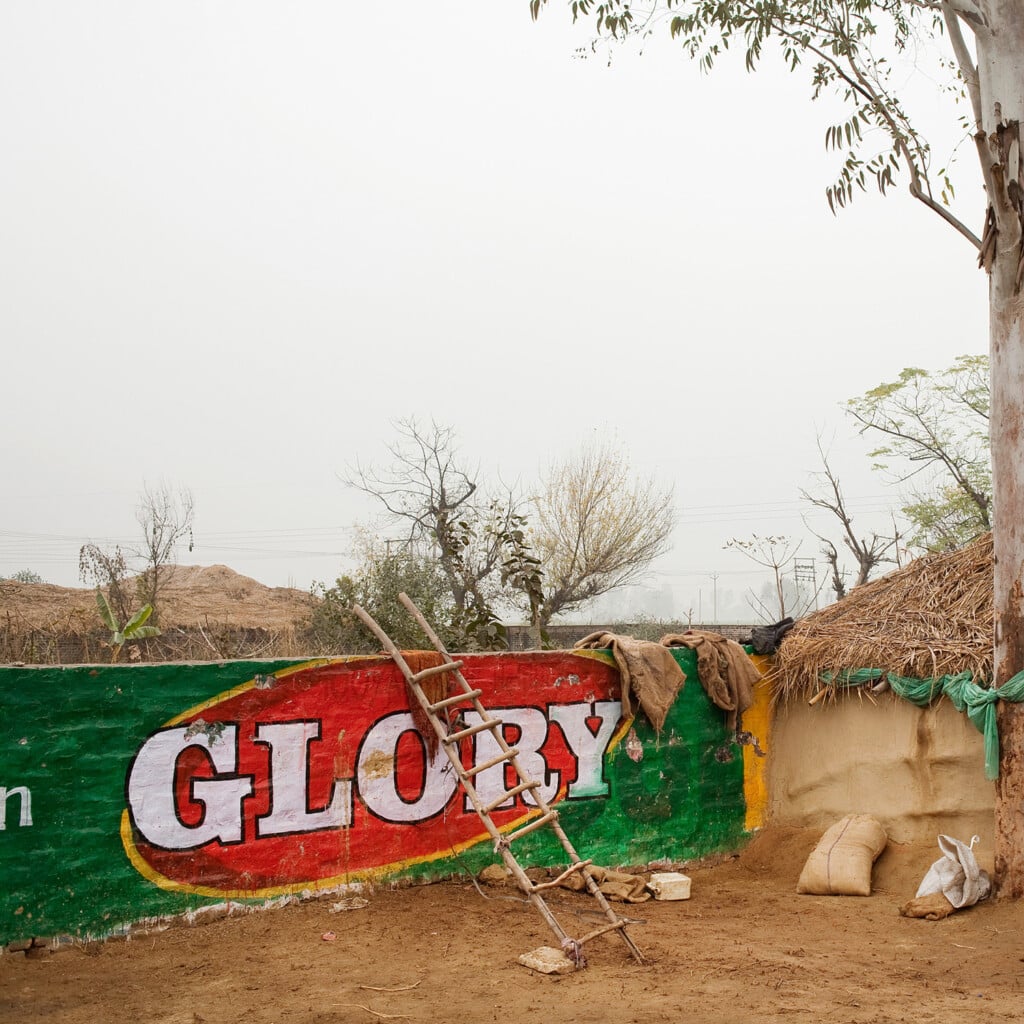
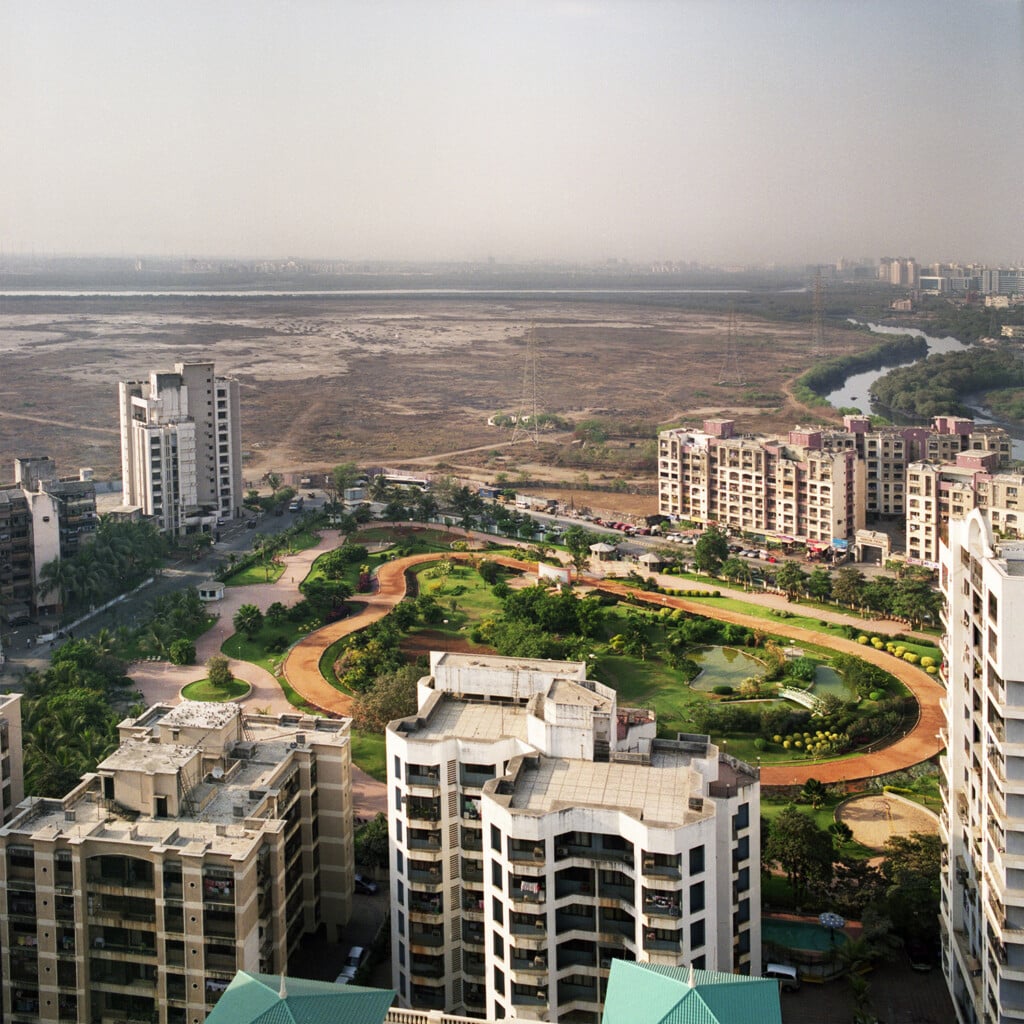
The series, focused in particular on the “Glory” section, explores the trajectory of a development that seems to move in a single direction. Rocco Rorandelli does not photograph only megacities like Delhi and Mumbai, but pushes his gaze toward the outskirts of Jaipur, the villages of Punjab and the urban grids of Chandigarh. His format is square, frontal, consistent over time. Through colossal construction sites, luxury complexes and half-finished buildings, the photographer documents the lives of millions of people chasing economic growth, highlighting its environmental and social costs.
But the real discovery of the exhibition is physical, and concerns light and space.
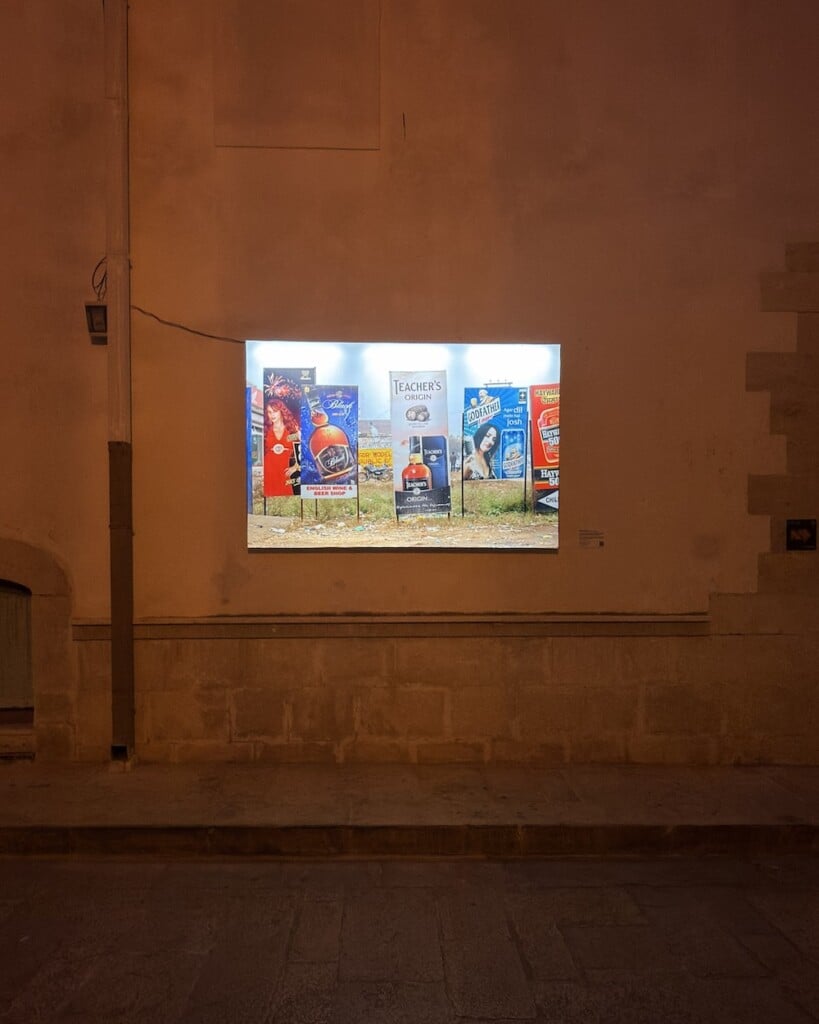
The images are mounted on backlit supports that, after sunset, become, together with the street lamps, the only surfaces emitting their own light in the alleys. The chromatic difference is sharp and violent. The stone of the historic buildings sits in the warm yellow of public lighting, while the photographs have a luminosity that cuts through the space. Walking along, the town seems the switched-off container and India the lit-up content.
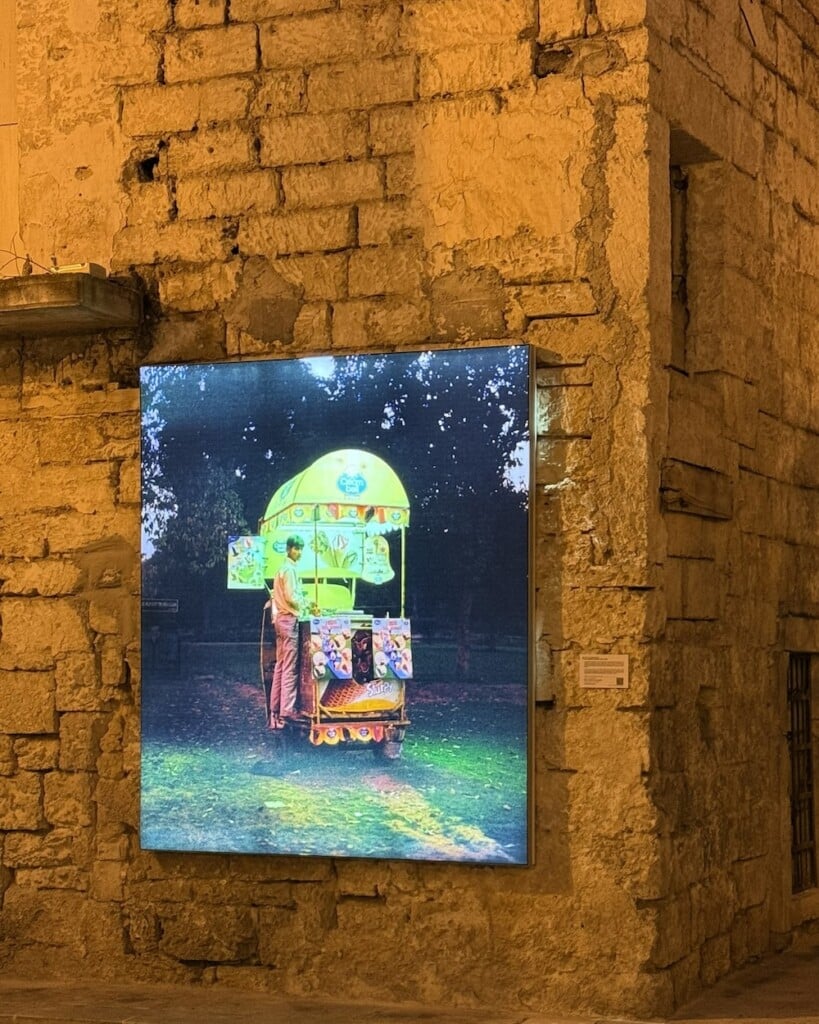
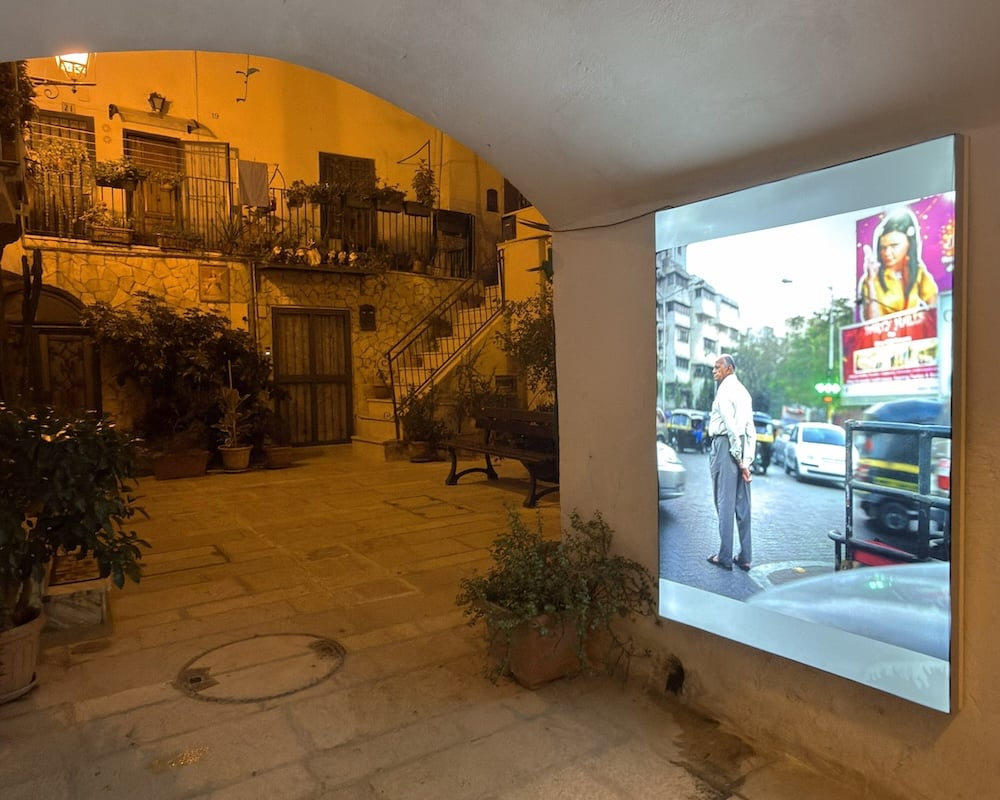
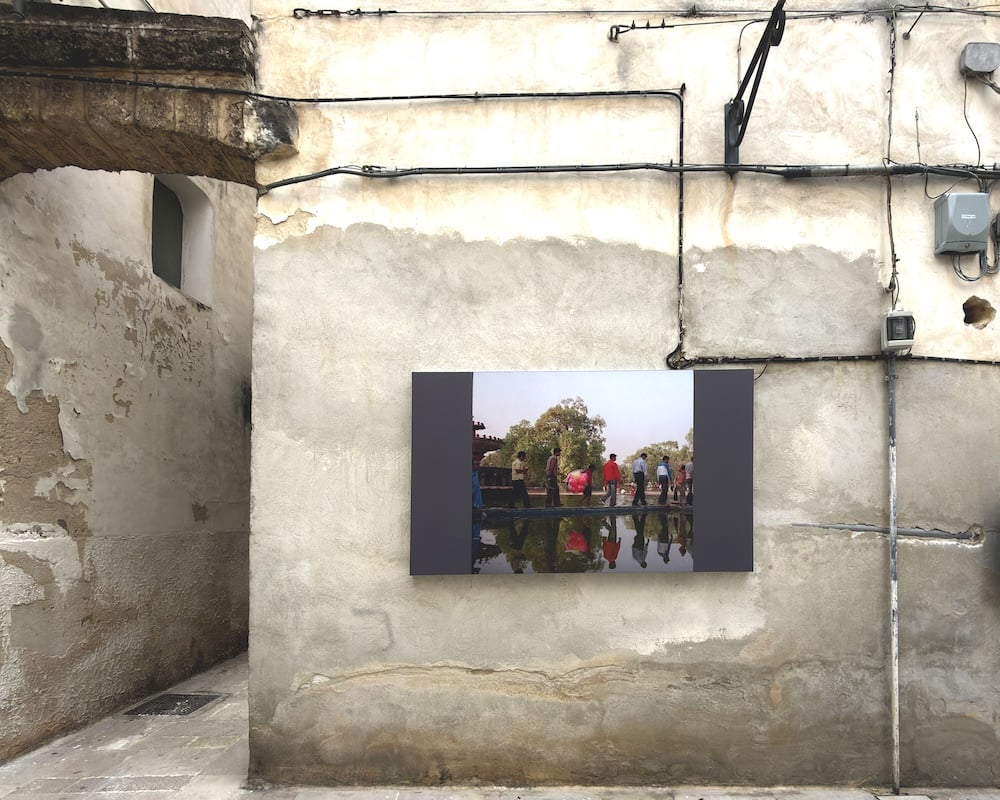
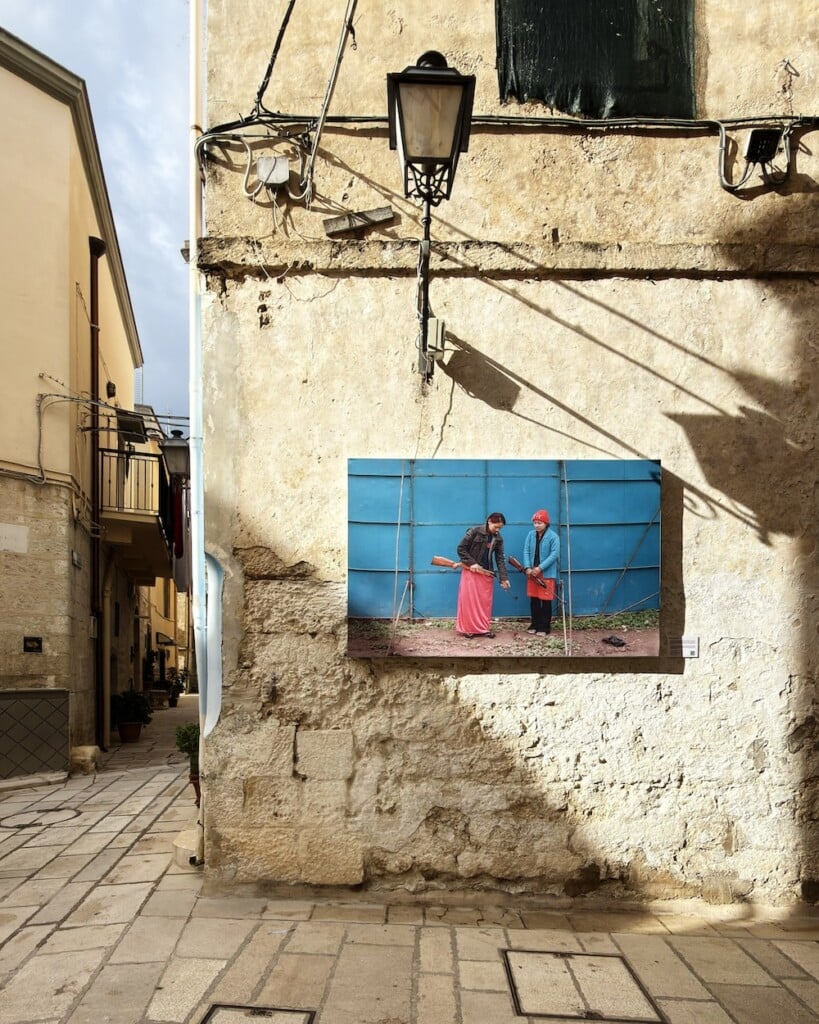
The relationship of scale does the rest, turning the experience into a genuine close encounter. If in the white cube of a gallery or museum the gaze freely manages distances, here the possibility of stepping back is denied by the very shape of Apulian vernacular architecture. The alleys are barely two or three meters wide, so one looks at boundless urban expansion from a meter away, unable to take its measure. Rocco Rorandelli’s photographs show open horizons and sprawling outskirts, which here are seen from inside a funnel of stone. The unlimited expansion of Asia is forced into an alley, and the feeling is that of watching a storm from inside a crack.
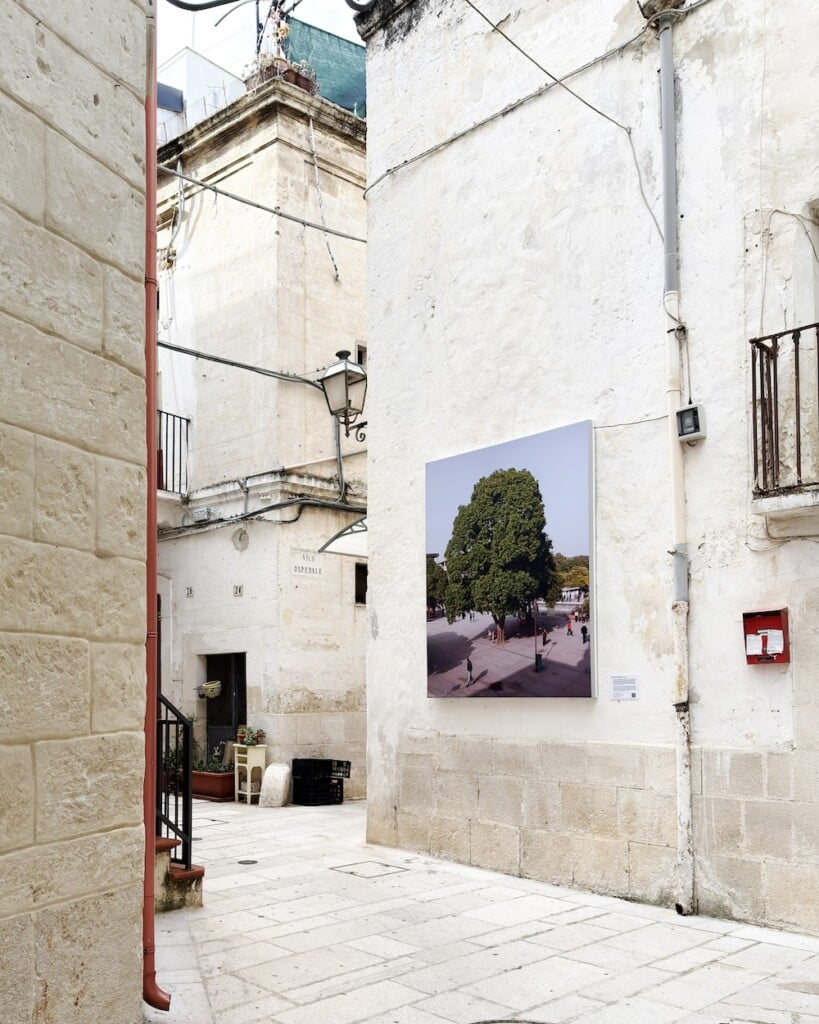
The densest core of the route is without doubt Chandigarh. It is the city Le Corbusier designed in the 1950s as the capital of Punjab, a unitary, functionalist plan conceived in rigid sectors and born entirely on the drawing board. Rorandelli does not photograph the monumental architecture of the Capitol Complex or the master’s symbols, but moves to the margins where the plan frays and gives way, with liquor billboards, improvised entrances to English schools, shantytowns and temporary dwellings. It is the twentieth century’s claim to harness existence in a geometric grid, overwhelmed by India’s demographic and social reality.
In Triggiano these images sit inside their mirror opposite, an urban fabric born without a demiurgic plan, grown by stratification and settled over centuries of history within a ring of walls. A city drawn in a single stroke and one grown through spontaneous accumulation, brought into contact, end up revealing both their own cracks, the first unable to contain the life that overflows, the second busy managing the emptiness and transformation of its spaces.
A question remains that the exhibition does not close, and rightly so. By erasing the classic exotic distance with which the West looks at the Global South, the installation forces an ethical and aesthetic short circuit. Someone, in the evening, steps out of their home and walks past a shantytown in Chandigarh or a construction site in Mumbai lit up as bright as day on the wall next to their front door. What do they see? A distant, elusive elsewhere, or a mirror?
Article by Roberta Ruggieri
Read also: