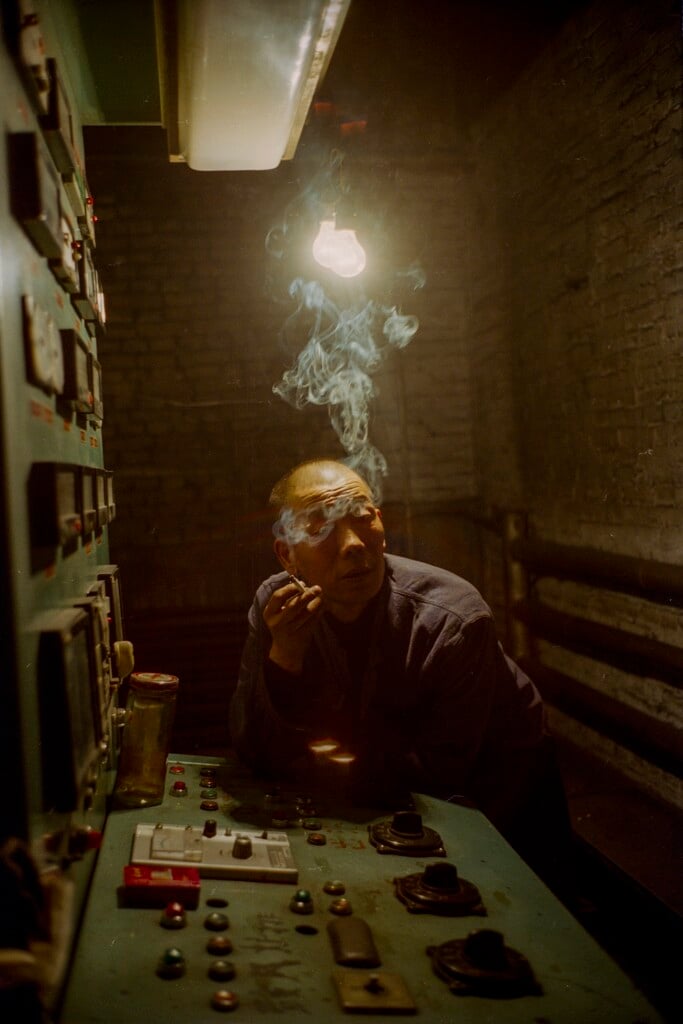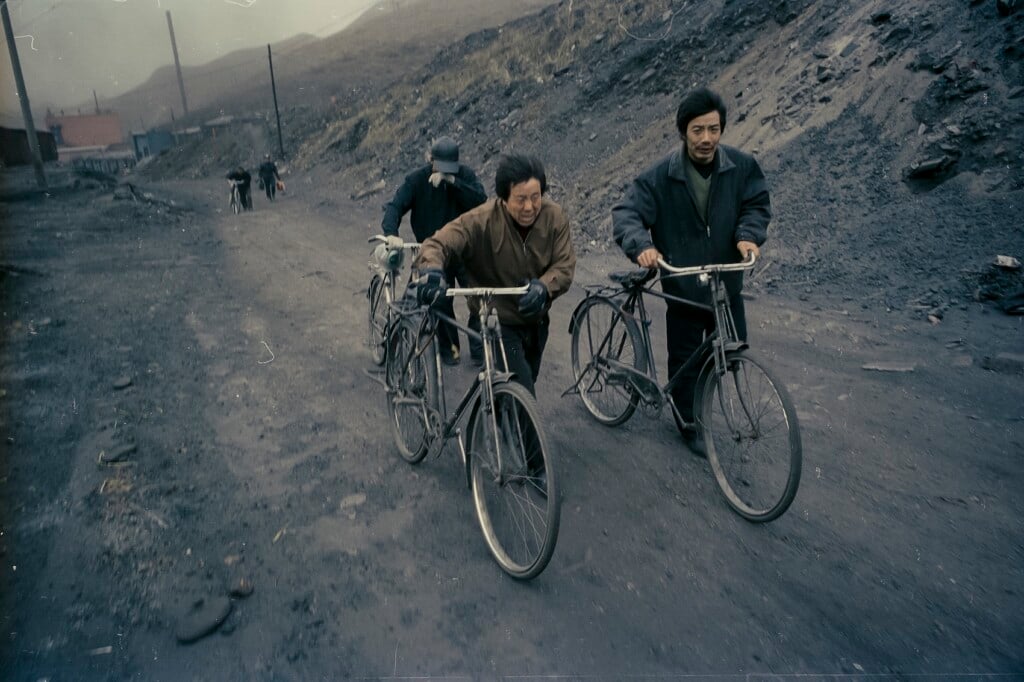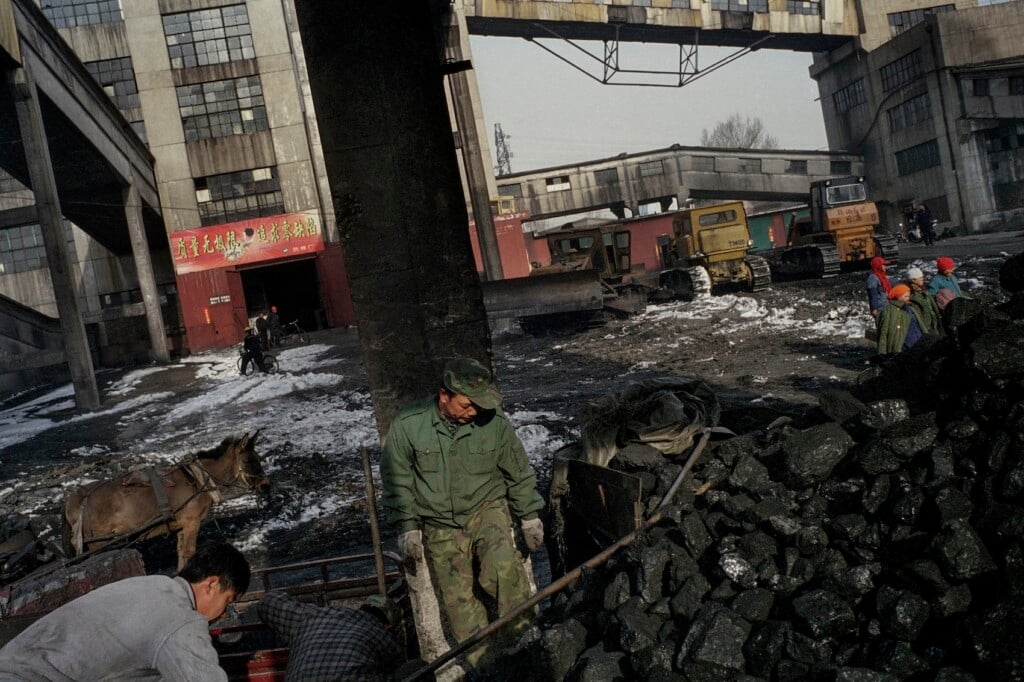
The construction of a dam, vast expanses of coal, expanding cities and people crossing changing landscapes. In the book Undercurrents – Reframed: China 1999–2008, photographer Ian Teh returns to almost ten years of work in China to take a closer look at the consequences, both visible and less obvious, of a period of growth that profoundly changed the country.
Some transformations can be measured in kilometres of roads, buildings constructed and tonnes of coal extracted. But there are also those that escape the numbers: habits that disappear, places that lose their identity, communities forced to move to make room for a future designed elsewhere. It is in this space, between the monumental scale of progress and the individual experiences of those who live through it, that Ian Teh’s photography unfolds.
With Undercurrents – Reframed: China 1999–2008, the British-Malaysian photographer brings together and reorganises the projects he carried out in China between 1999 and 2008, giving rise to a new reading of an archive built over almost a decade. Published in collaboration with Eyeshot, the book picks up the thread of his first volume, Undercurrents, released in 2008, and expands it with previously unpublished images from the author’s archive. It is not merely a return to an earlier body of work, but an effort to connect different photographs in order to build a broader narrative about the contradictions of economic development.
When the landscape becomes the measure of change
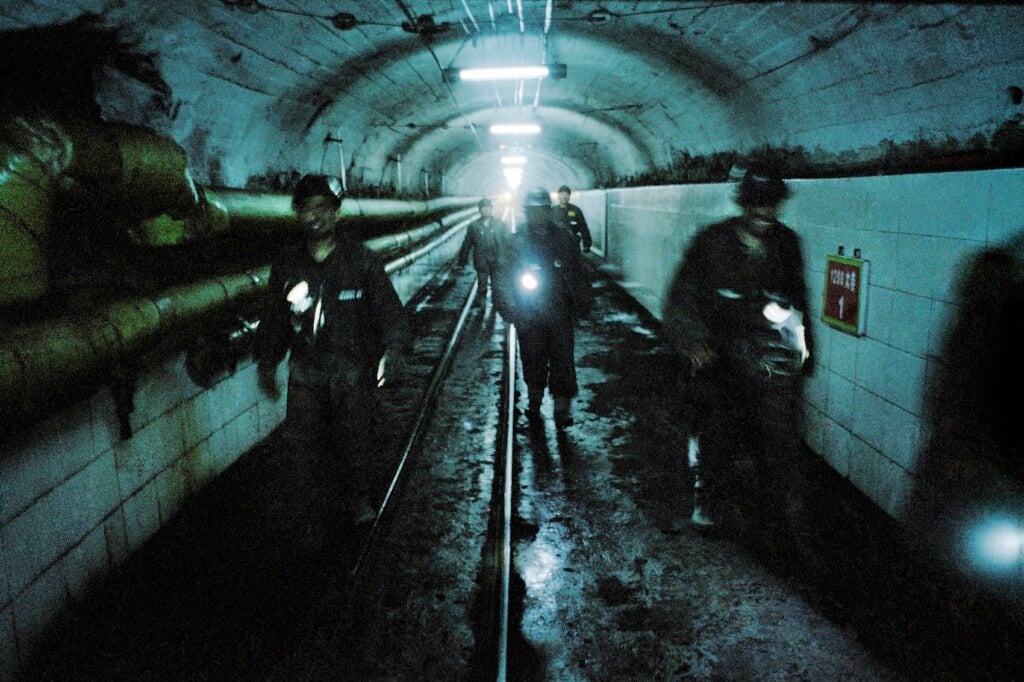
In the late 1990s, China was going through a phase of profound economic and territorial transformation. In this context, Teh turned his gaze to some of the places where the consequences of growth were becoming most evident: the construction of the Three Gorges Dam on the Yangtze River, the coal mining industry, urban expansion and the internal migrations linked to new job opportunities.
The project on the dam, documented starting in 1999, shows the human cost of a structure designed to radically alter the territory. Building the infrastructure led to the displacement of around 1.4 million people and the submersion of numerous towns and villages. In these images, the landscape is not a neutral backdrop: it is something that is altered, erased and rebuilt according to the needs of a project larger than the individual lives it involves.
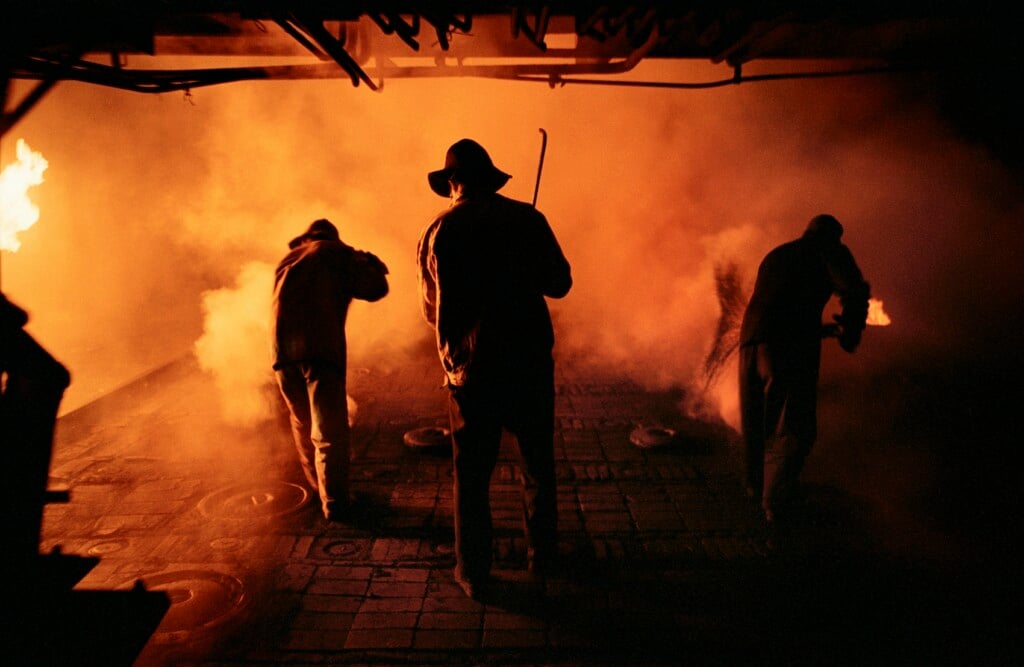
This perspective also returns in the photographs dedicated to industry and expanding suburbs. Industrial structures, devastated land and settlements swept up in economic transformation often seem to occupy all the available space. Human beings, by contrast, appear as tiny presences, almost absorbed by the vastness of the environment around them.
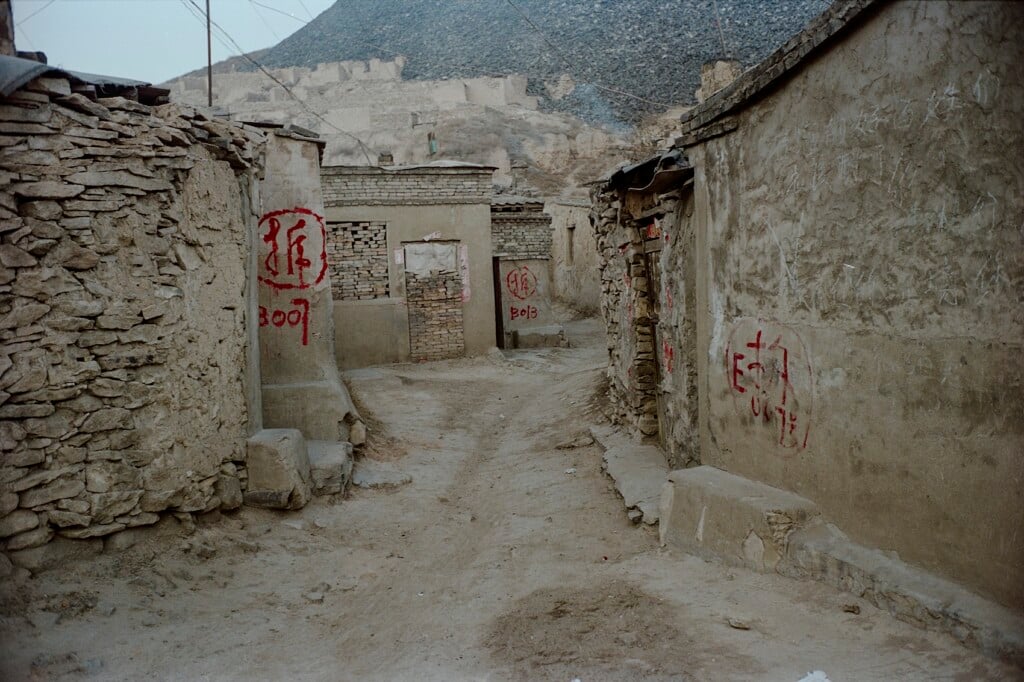
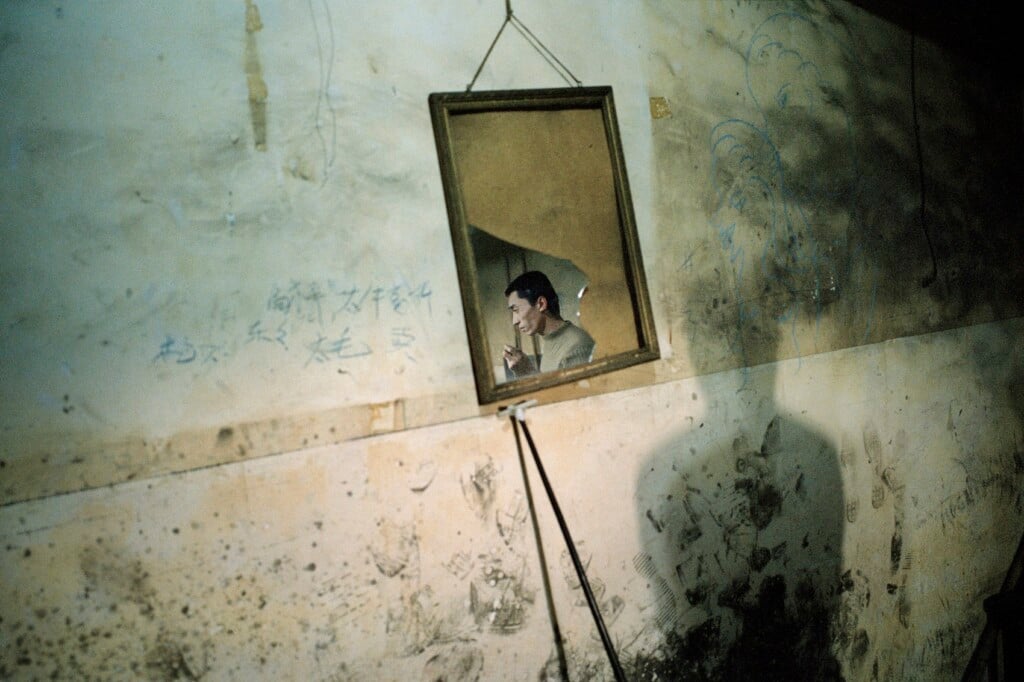
This compositional choice has a precise meaning: instead of isolating the individual worker or resident as the absolute protagonist of the image, Teh places them in relation to the scale of the system in which they live. The human body thus becomes a measure through which to perceive the scale of infrastructure and economic forces. What in a traditional photograph might be considered context takes on narrative centrality: the territory tells as much as the people who inhabit it.
Photographing what progress leaves at the margins
One of the most interesting qualities of Ian Teh’s work is his ability to address social and environmental issues without reducing the images to mere illustrations of a problem. His photographs do not simply show the effects of industrialisation, nor do they set up an immediate opposition between an idealised past and a present to be condemned. Rather, they invite us to observe what happens when a collective transformation reaches such proportions that it becomes difficult to distinguish its benefits from its costs.
The human presence, in this sense, is essential even when it occupies only a small portion of the frame. In the images of Undercurrents, people are not always portrayed in the foreground or through expressions that make their emotions immediately legible. We often encounter them as they cross a space, work or move within an environment that seems to prevail over them. Their condition emerges from their relationship with their surroundings, more than from an explicit narrative.
It is a way of understanding documentary photography that leaves the viewer with a responsibility: to look beyond the most obvious subject and try to understand the relationships that hold an image together. A dirt road, a hill altered by mining or a structure dominating the horizon can tell far more than a single event. They make perceptible processes that, because of their duration and complexity, can hardly be contained in a single photographic moment. At the same time, Ian Teh’s images remind us that a photograph alone cannot convey the voice of a community, the reasons behind a political decision or the entire experience of those forced to leave their homes. It can, however, build an access point to these stories, making visible the tensions that would otherwise risk remaining hidden behind the rhetoric of growth.
The complexity of a nation in transformation
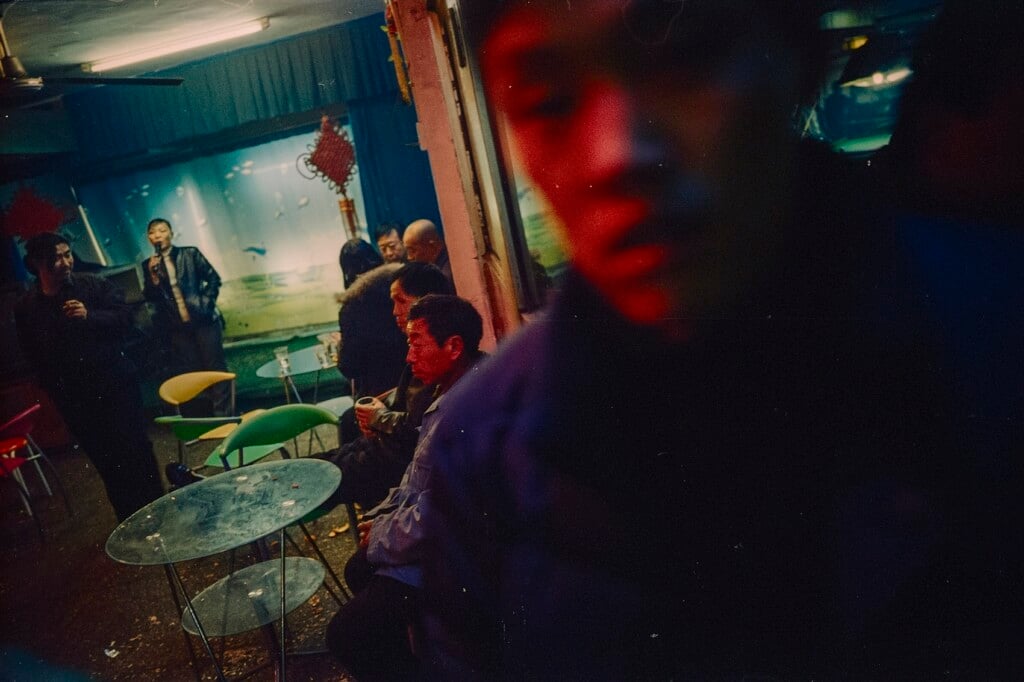
The title Undercurrents precisely suggests the existence of forces operating beneath the surface of events. The reference concerns not only the less obvious effects of development, but also the individual experiences that run through and complicate the official narrative of progress.
The book in fact maintains a tension between loss and possibility. On the one hand, it documents the displacement of communities, the alteration of ecosystems and the consequences of an economy fuelled by large-scale infrastructure and heavy industry. On the other, it conveys the climate of hope and optimism that accompanied a phase of change also perceived as an opportunity to improve living conditions. Holding these dimensions together means recognising that transformation is never a uniform process: what represents a new opportunity for some can mean, for others, the loss of a place or a way of life.
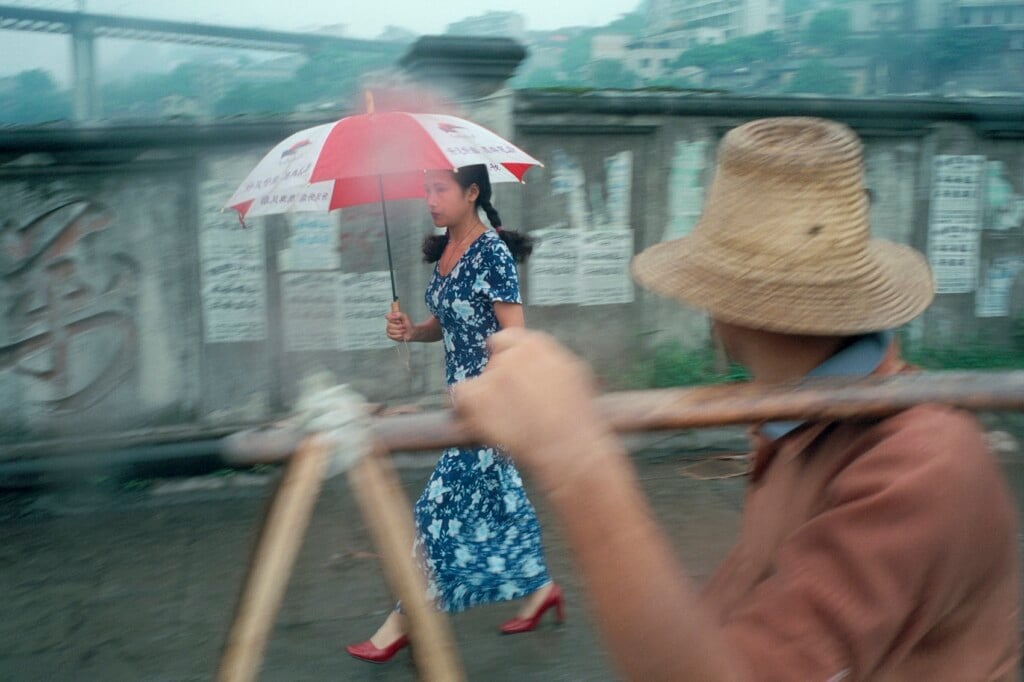
It is precisely this ambivalence that makes Teh’s work more interesting than a simple documentation of change. The images do not ask us to choose between a positive and a negative judgement, but to question how progress is distributed, who bears its weight and which consequences become visible only when the process is already under way.
An archive that changes meaning over time
Returning today to photographs taken between 1999 and 2008 also means confronting the distance between the moment of the shot and that of its rereading. In Undercurrents – Reframed, the archival material is recomposed into a unified narrative, bringing into dialogue projects that address different aspects of the same transformation. The new images further broaden this perspective, offering a more articulated view of the work Teh carried out in those years.
Rereading a photographic archive is never an entirely neutral operation. Changing the sequence of images, placing different locations and situations side by side or recovering photographs that remained unpublished alters the way a story is perceived. Meaning lies not only in the individual shot, but also in the relationships that form between images and in the spaces that open up between one photograph and the next.
The book is not just a visual testimony of an important period for China. It is also an opportunity to reflect on how documentary photography itself works: on how much an image can tell, on what it inevitably leaves out and on how time can transform the way we read it. Because observing progress also means looking beneath its surface, where the promises of a better future coexist with the traces of what was sacrificed to achieve it.