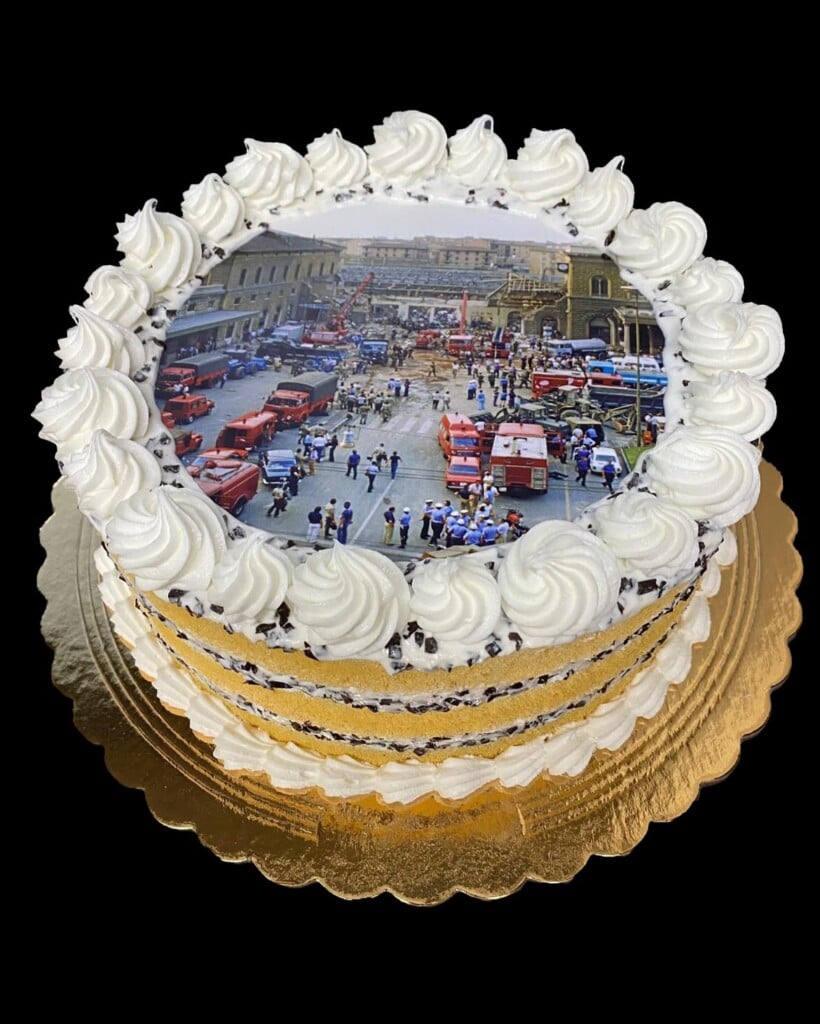
There will always be an irreconcilable line of fracture and, probably, the most treacherous current of an impassable underground river, dividing the searing memory of a tragic event, unbearable to the soul, from the ordinariness and small gestures of what existed only an hour, two hours, an instant before a massacre unfolded. On the fortieth anniversary of the explosion at Bologna’s train station on August 2, 1980, journalist Gianni Leoni of the Resto del Carlino (who passed away on April 26 of this year) chose to honor the memory of those frantic hours by offering the most fragmentary recollections of his own steps on a day that had seemed like any other.
With a still-trembling pen, Leoni chose, in 2020, to bring back into focus the phantasmagoric and suffering ‘ordinary feat’ of a man, Agide Melloni, who, as an ordinary city bus driver, had to improvise in great haste to give the wounded passengers and the murdered bodies as much help, due dignity and rescue as possible on a scorching midsummer day. As if on a journey at the very limits of the human, bus line 37 was transformed, in a single beat, into the unstoppable funeral shuttle of long compartments filled with corpses laid out on white sheets or makeshift ones, placed between the seats and every remaining available space. On an impossible, wretched and devastating day, a good man, fond of the comings and goings of his Bologna’s train station, found himself having to lead the most painful ‘journey of the dead’, bearing an unsought helm that, by a tradition from beyond time, carries the face of the mythological Charon.
In the journalist’s eyes the flames still live on, along with the suffocating traces of dust and, with them, the pain and the desperation of victims and survivors, fathers and mothers, sons and grandchildren left alone with the screams and the desperate search for survivors. At 10:25 an attack of neo-fascist origin ended the lives of 85 people, wounding another 200.

How can a massacre be conveyed? How can its atrocities be rendered, the crime and the total absence of that tacit and sacred bond of humanity that lives on in the respect of man for man?
Without rhetoric or technicalities, Gianni Leoni chose to tear that memory from life and pry it loose from the pompous grip of an anniversary reduced to ceremonial gestures and stock phrases. Immersing himself in what he had observed with the most ordinary attention to detail on a day meant to feel like any other, the journalist noted in the columns of his editorial: «The murderous bomb shattered a city resting in the lazy quiet of every summer, with “closed for holidays” signs, tourists […] and smiles for photos and cameras, […] vacation plans […] [and the] local news [that] reported on Bologna’s friendly match against Asiago, 4 to 0, Morandi’s concert […] and the well-earned rest of Commendator Camillo Calderoni, well-known pastry chef, after 72 years of cakes […]».
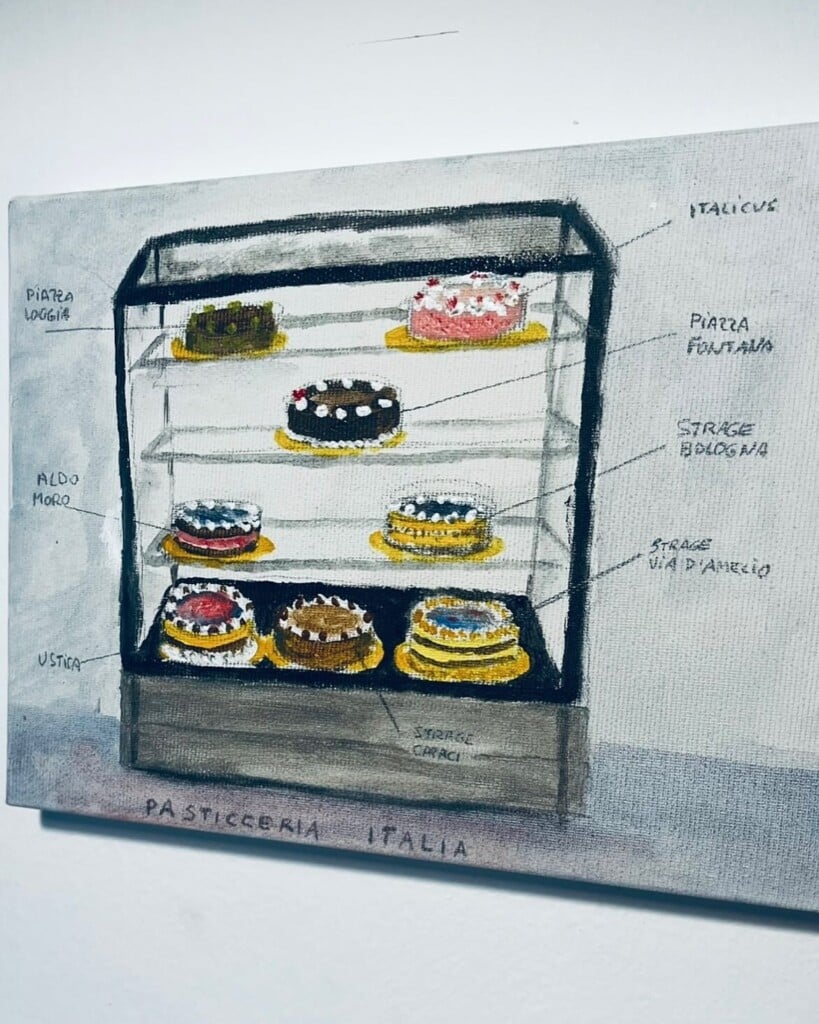
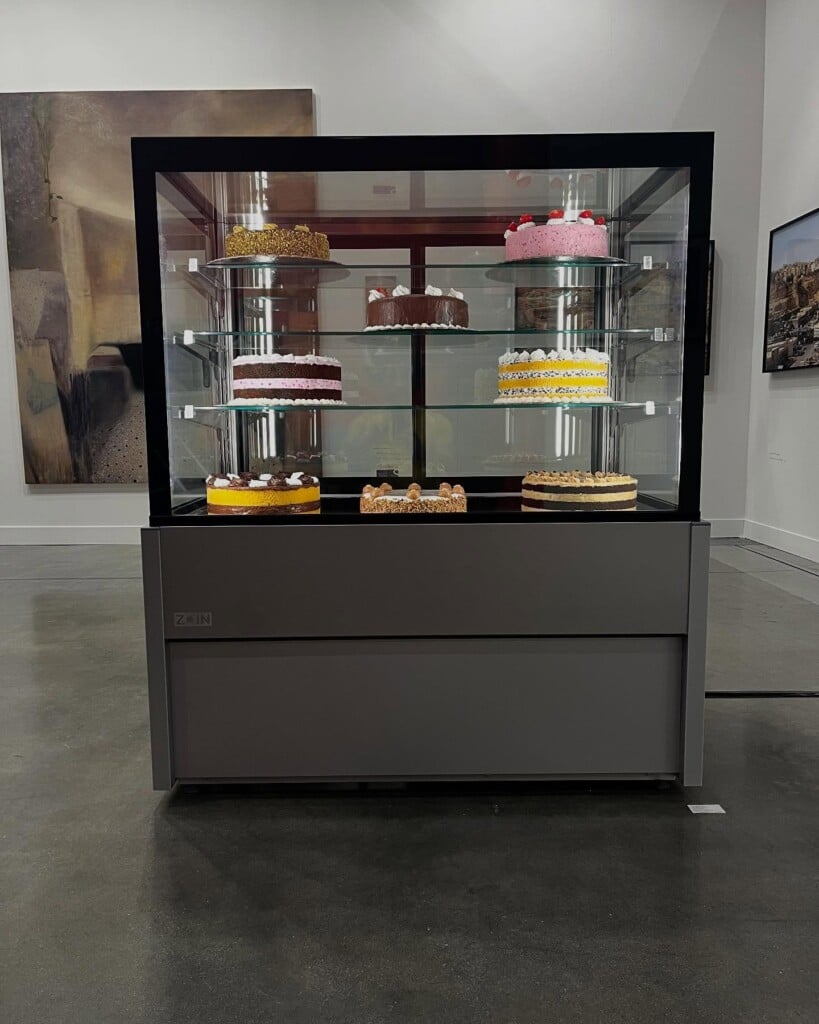
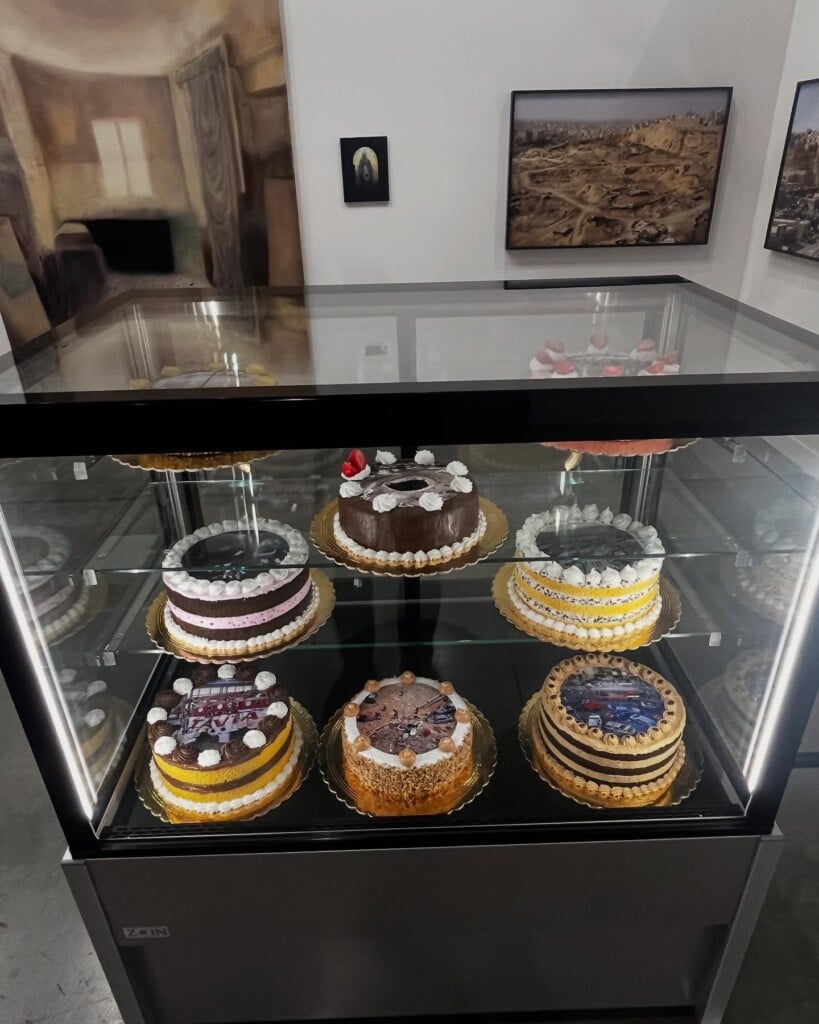
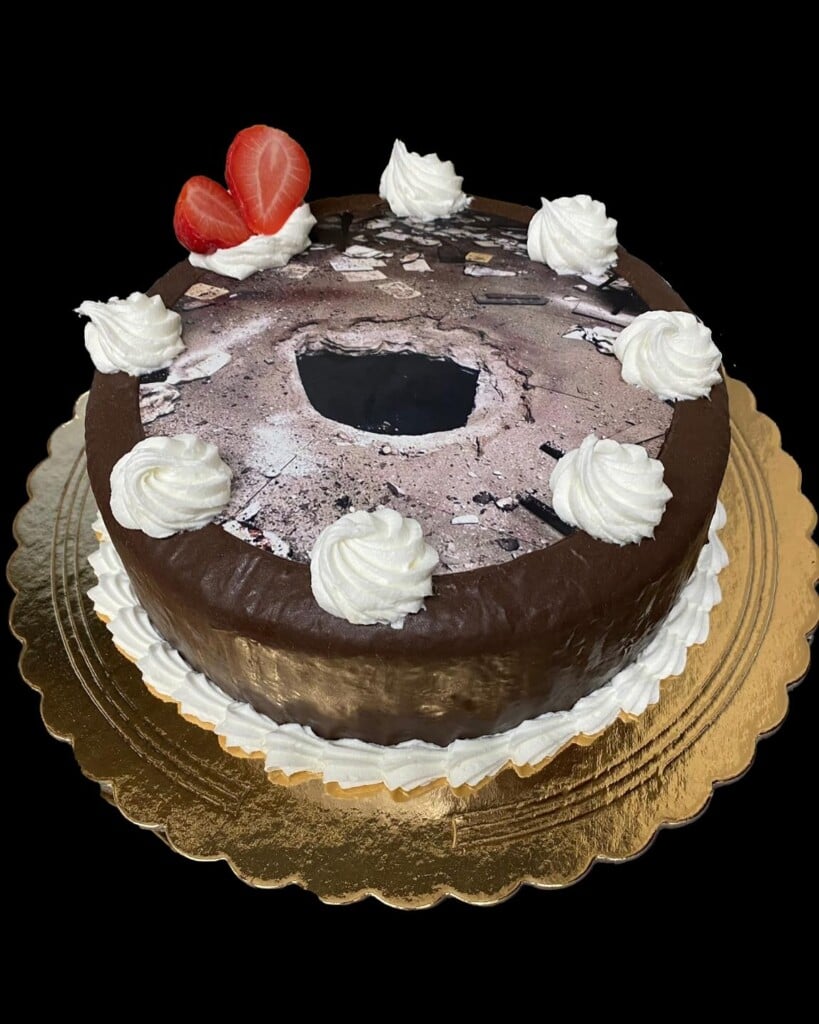
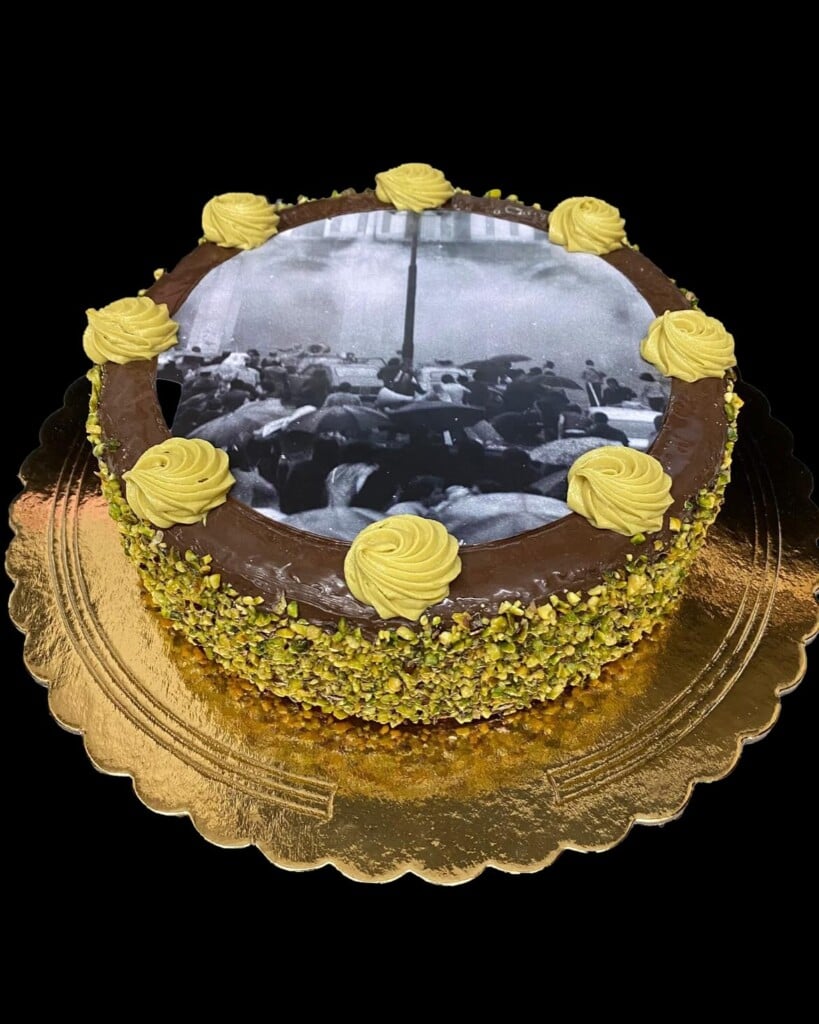
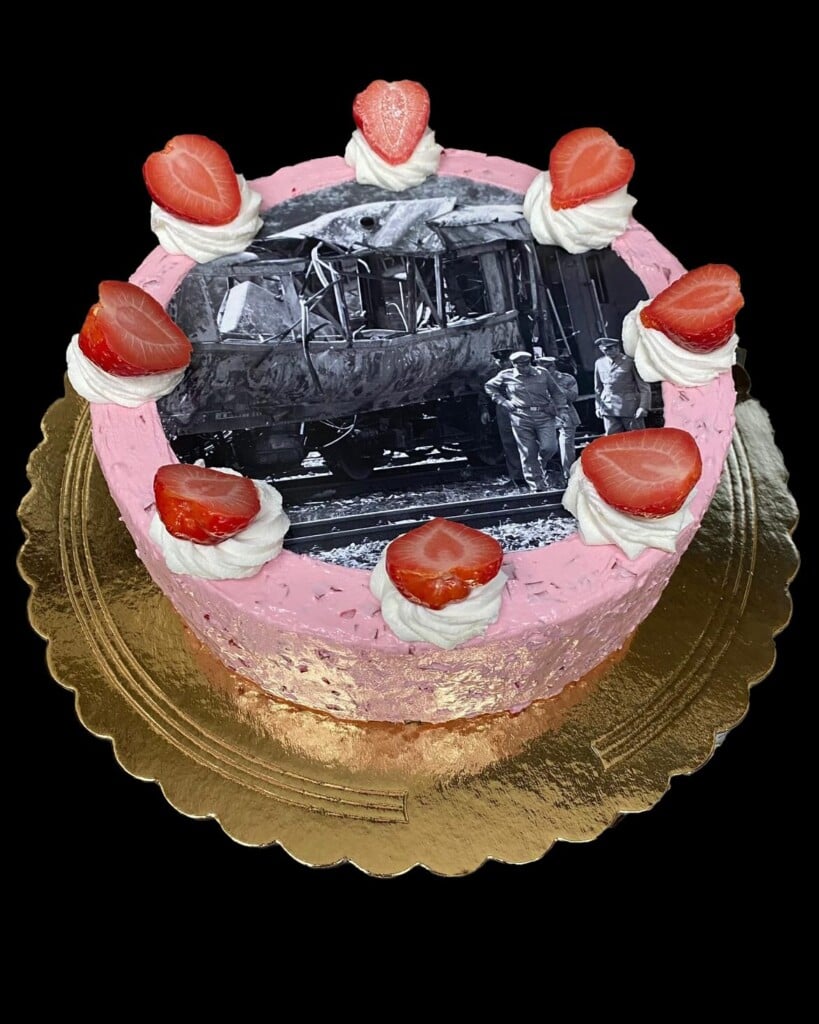
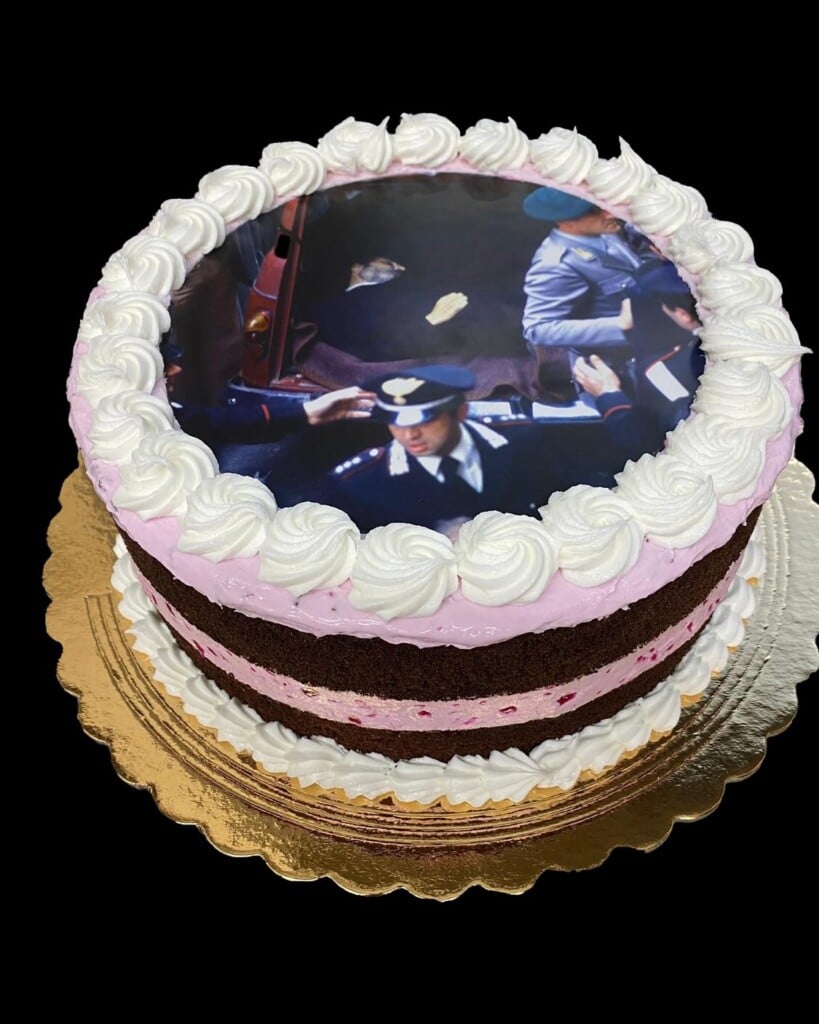
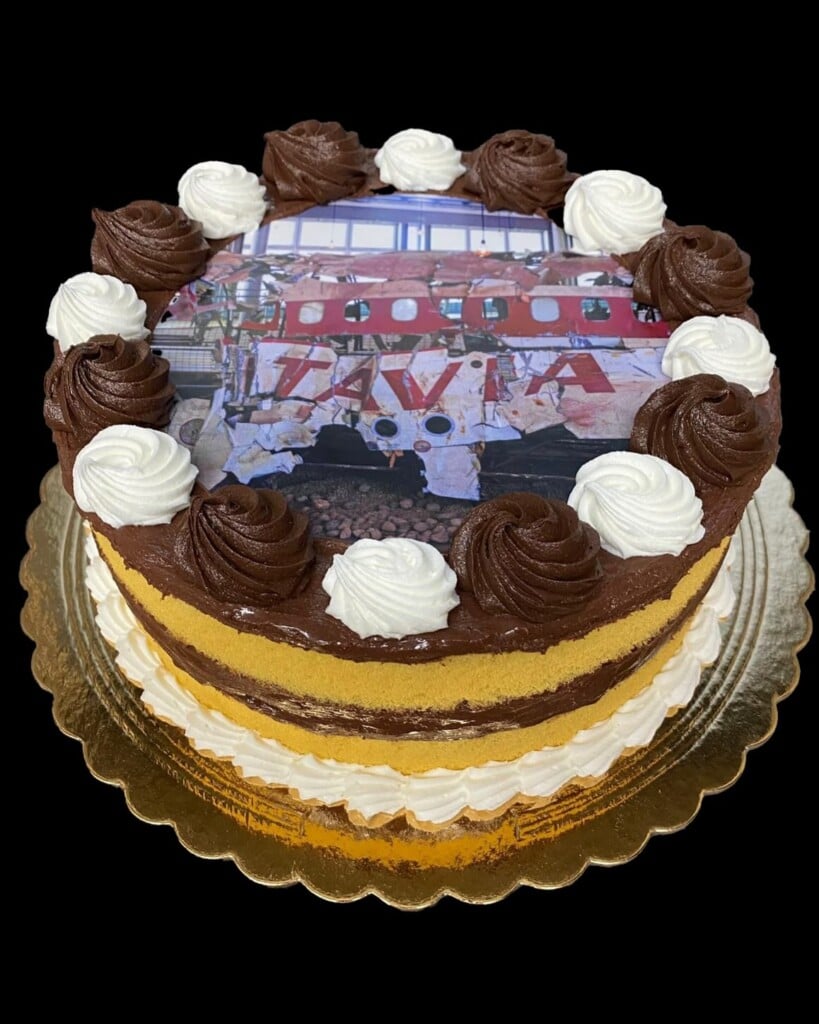
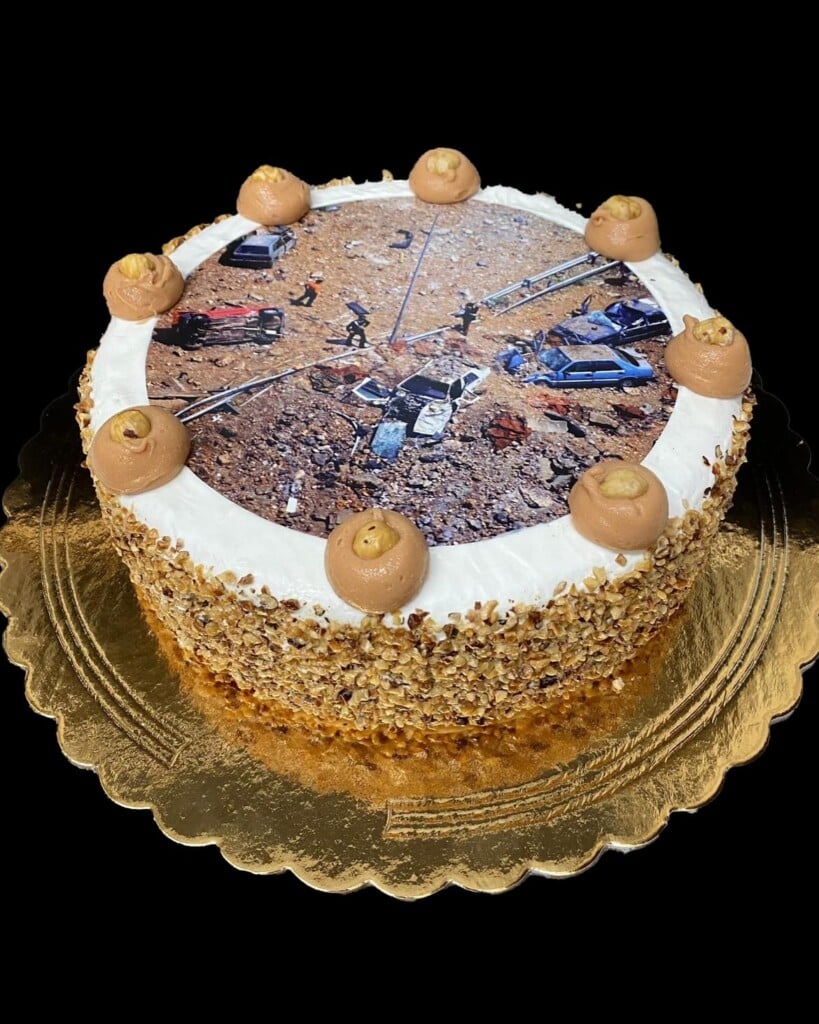
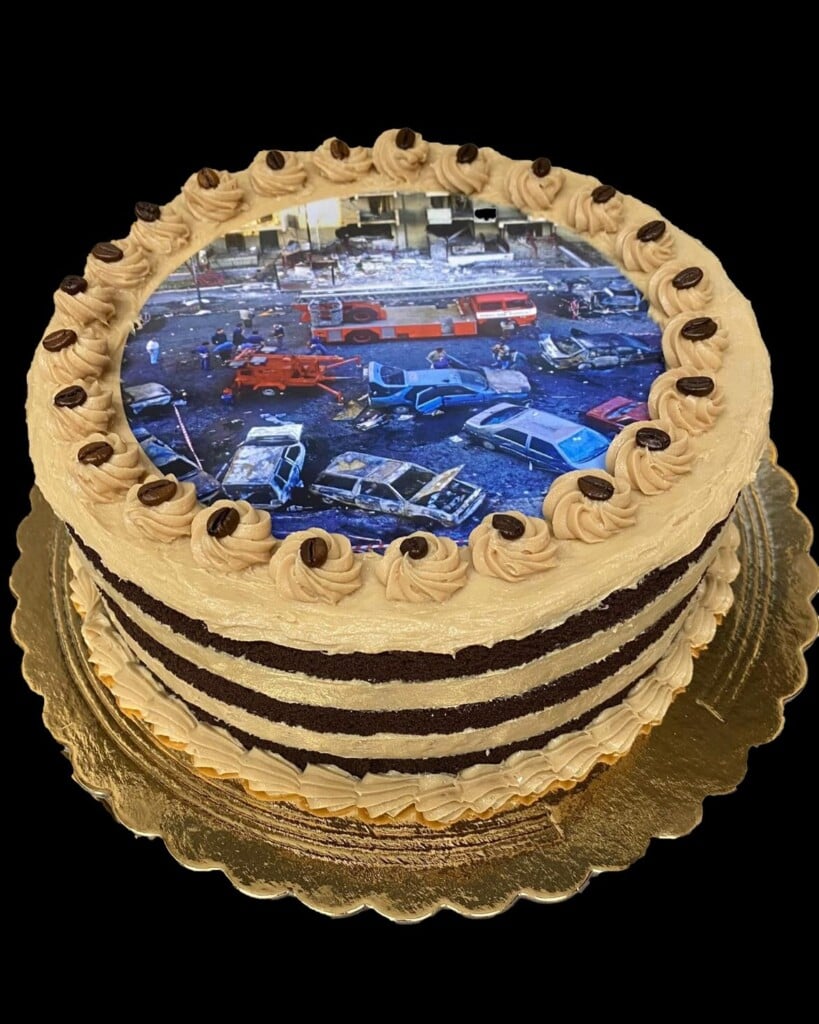
In the guise of a cake, forty-five years after that massacre, writer and visual artist Gabriele Picco (Brescia, 1974) turns the Bologna explosion, the criminal hand behind Piazza della Loggia and the attacks on judges Falcone and Borsellino into the wretched, criminal and lethal ingredients of a Pasticceria Italia (2025), balanced on the edge of disgust and of an indefensible conduct. Within the perimeter of a refrigerated display case, as untouchable and glacial as only the perfidy of those who never seek truth and justice can be, the beautiful, indulgent silicone cakes, shown during the well-known Miart fair, deceived the sight and the appetite of the most unsuspecting and carefree onlookers. Once the wall of unawareness and visual distance had fallen, the terrifying images of the massacres imprinted on fake wafer paper – together with the stainless steel that serves as a common thread between a refrigerator, a morgue and a forensic medicine lab – dismantled on their own the abyss of a gaping, still genuinely missing, national reckoning that to this day remains sorely lacking…
Article by Floriana Savino