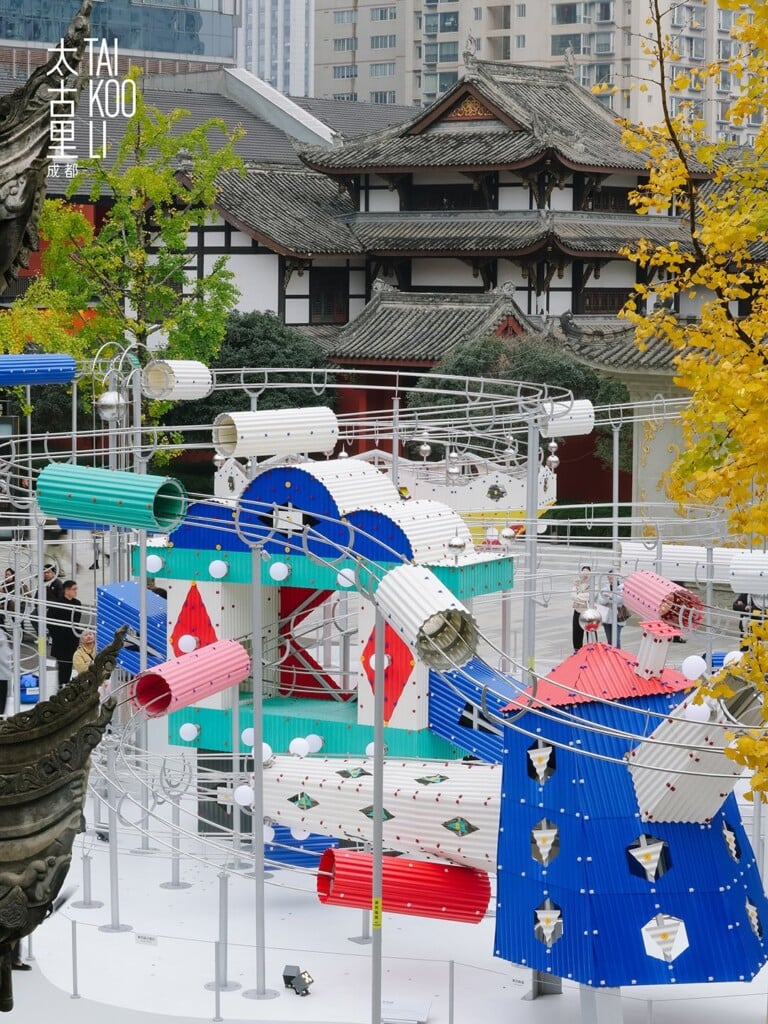
Fun Palace, an ambitious project by Drawing Architecture Studio, transforms the urban space of the Chinese city of Chengdu into a playground. An echo that directly recalls Luna Luna, the legendary 1987 art amusement park we have already talked about. Here too, as back then, the idea of the “artwork” becomes a collective, accessible, and openly playful experience.
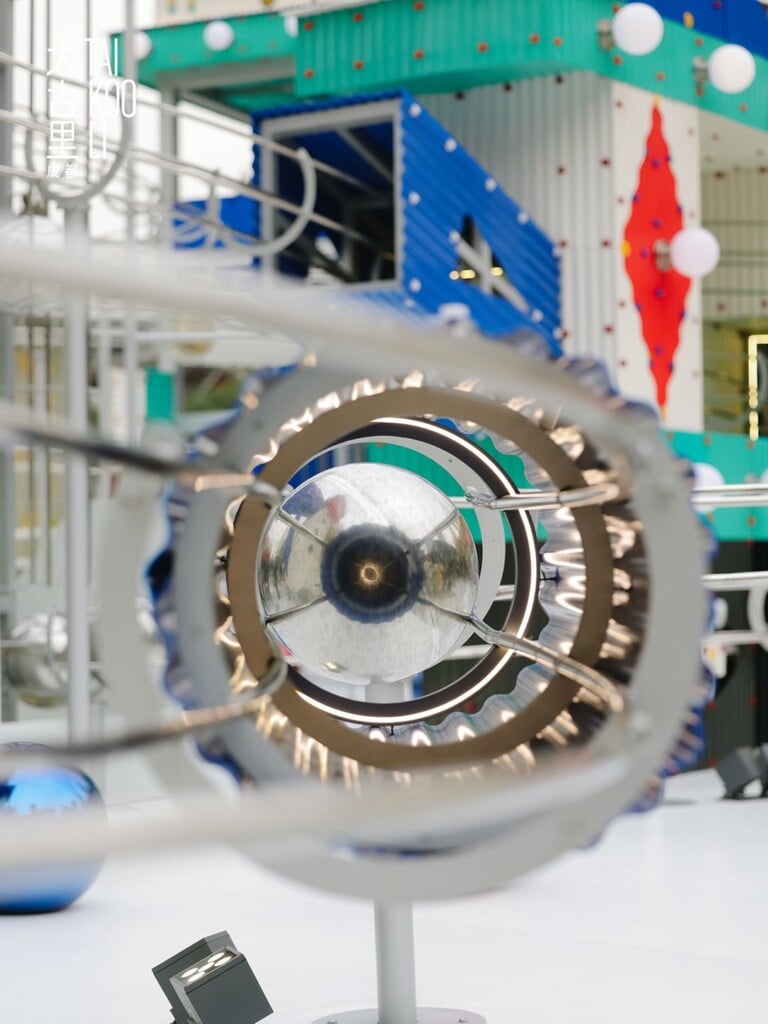
Set within Taikoo Li Chengdu, the installation takes the form of a large mechanical playground: an intricate network of tracks along which colorful spheres roll through a series of micro-architectures, turning the plaza into a dynamic, pulsating landscape. It is the largest installation ever realized by the collective, an intervention that occupies space without imposing itself, inviting the public to stop, look, and play.
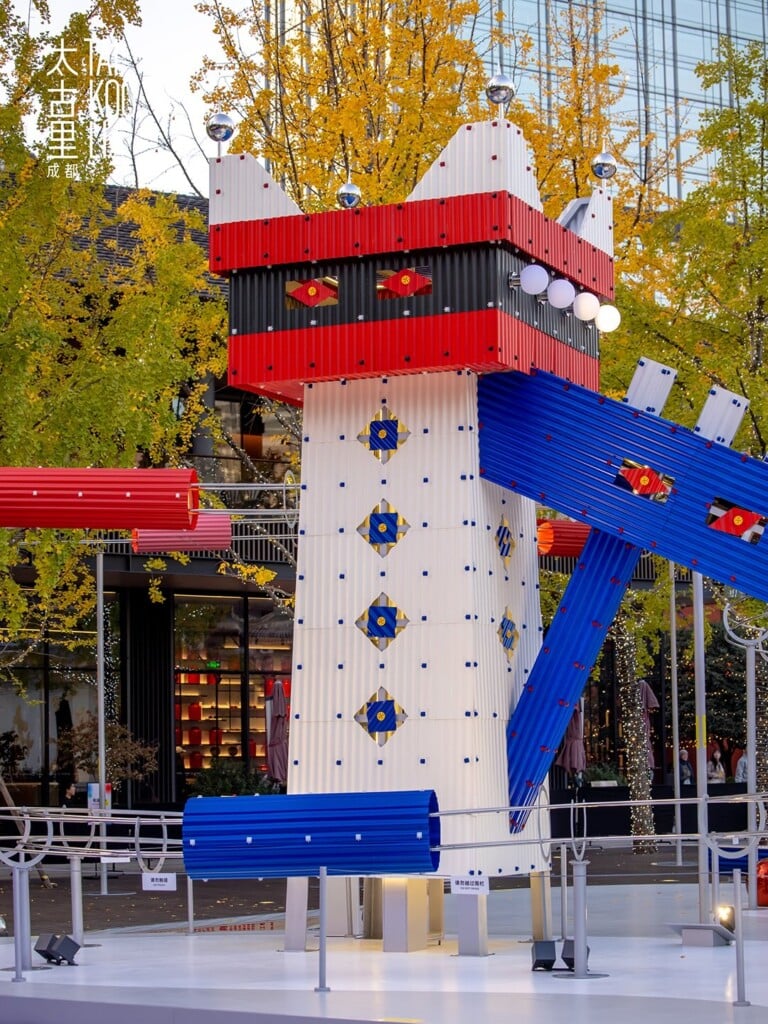
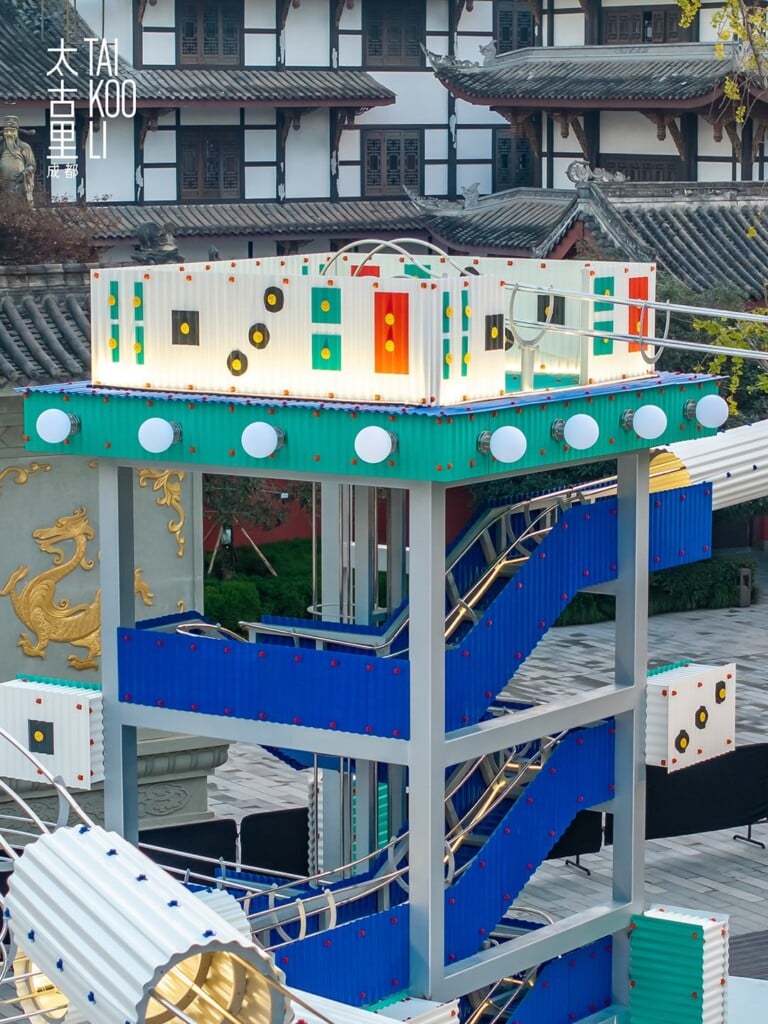
The five main structures are built from corrugated metal sheets and function as small narrative devices, each dedicated to an iconic ritual of life in Chengdu: hot pot as a social experience, mahjong as a daily gesture, tea as suspended time, Sichuan opera as a performative tradition, and even skiing, introduced as a deliberately dissonant element. Everything is connected by a system of trajectories that binds the volumes into a single, continuous flow, turning the installation into a unified organism in constant motion.


Behind its apparent formal simplicity, the project openly engages with a specific architectural tradition. The mini-architectures reference the experiments of John Hejduk, particularly his way of conceiving architecture as symbolic storytelling—structures capable of evoking behaviors, imaginaries, and states of mind rather than rigid functions.
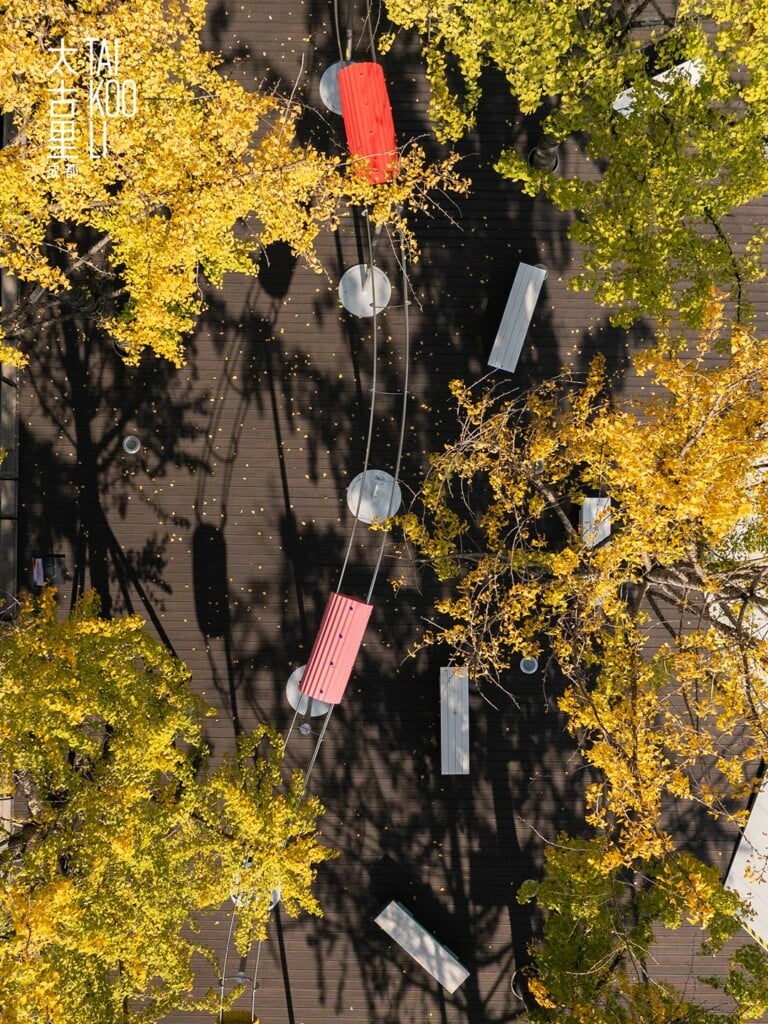

Fun Palace will remain on view in Chengdu until January 4, 2026, with UNIQ Energy collaborating on the design of the track structures. A temporary intervention that reminds us that architecture, too, can be an experience to move through with curiosity—without taking itself too seriously.