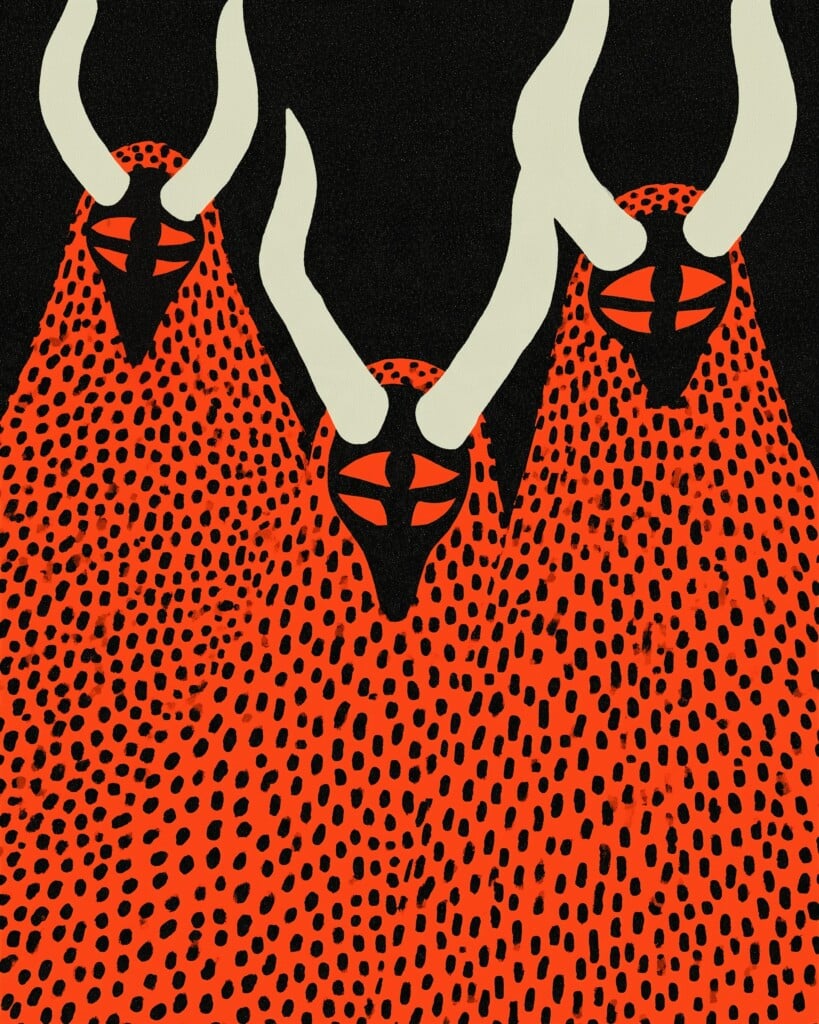
Computer Darren is an illustrator and programmer who works at the meeting point of image, technology and digital experimentation. He describes himself as an artist + computer programmer and says he works with neural networks, an interest that has become an integral part of his visual research.
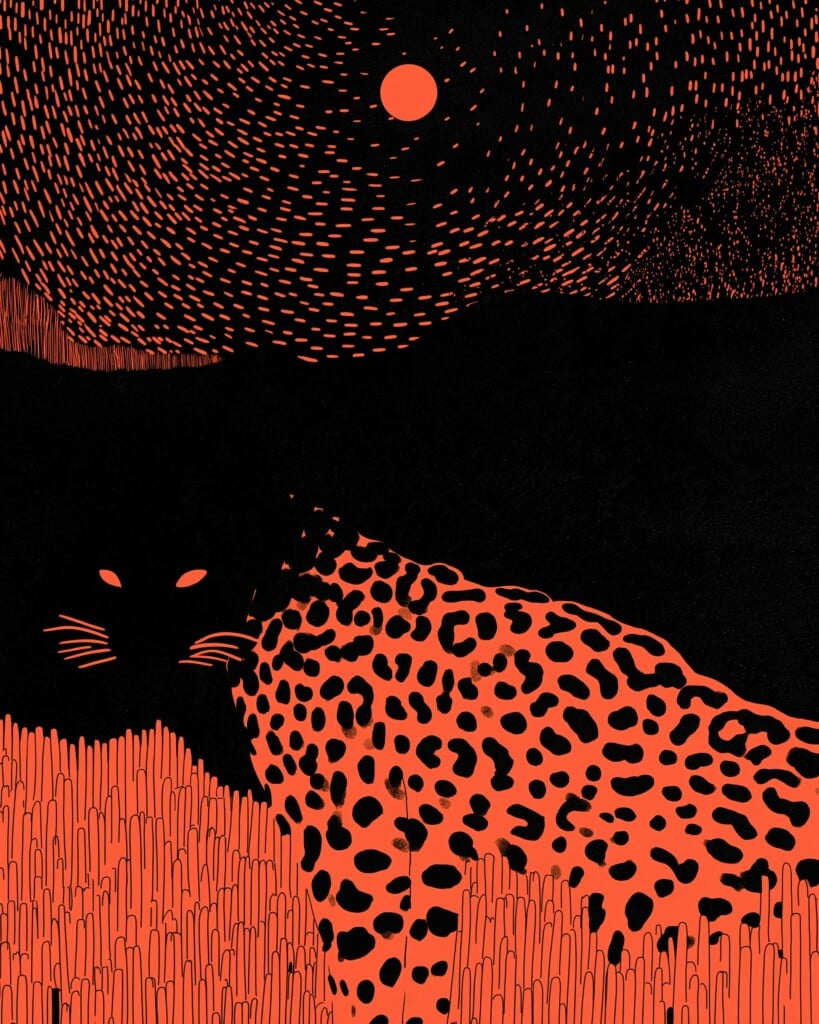
His work moves through a territory in which drawing is not only the result of a manual gesture, but also the product of a dialogue with computational tools. The images he produces are characterized by sharp contrasts, organic figures and dense compositions, in which black and bright colors, especially red and orange, build an almost hypnotic imagery.
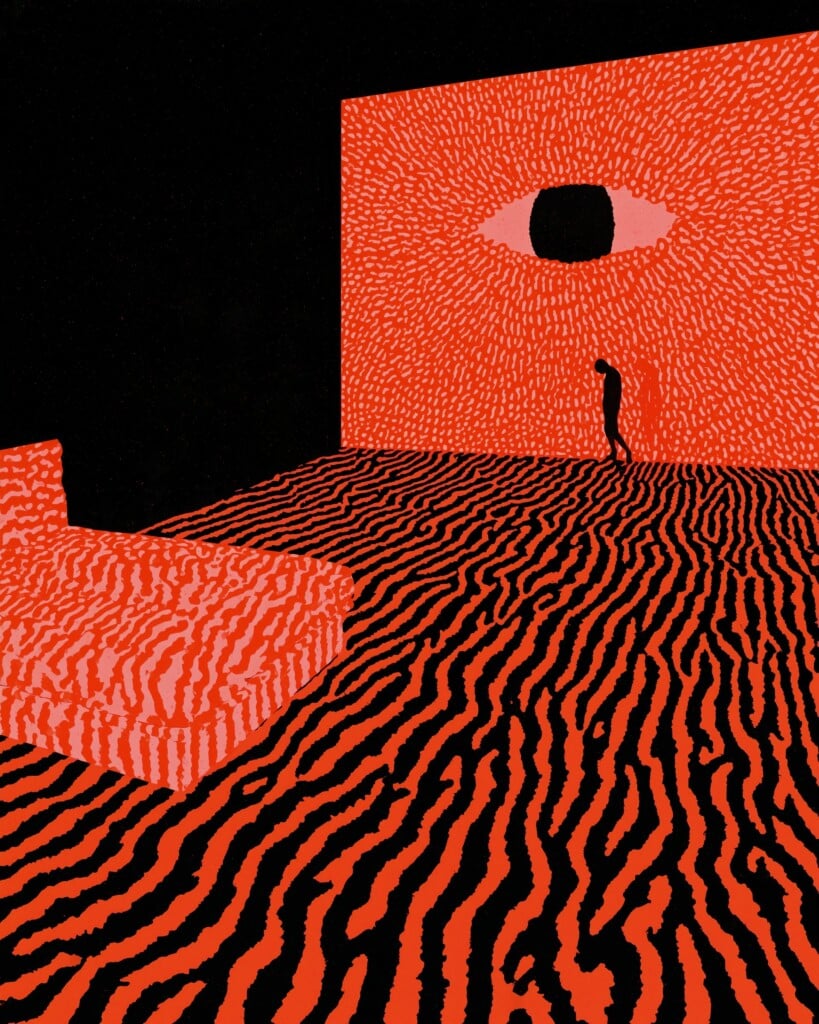
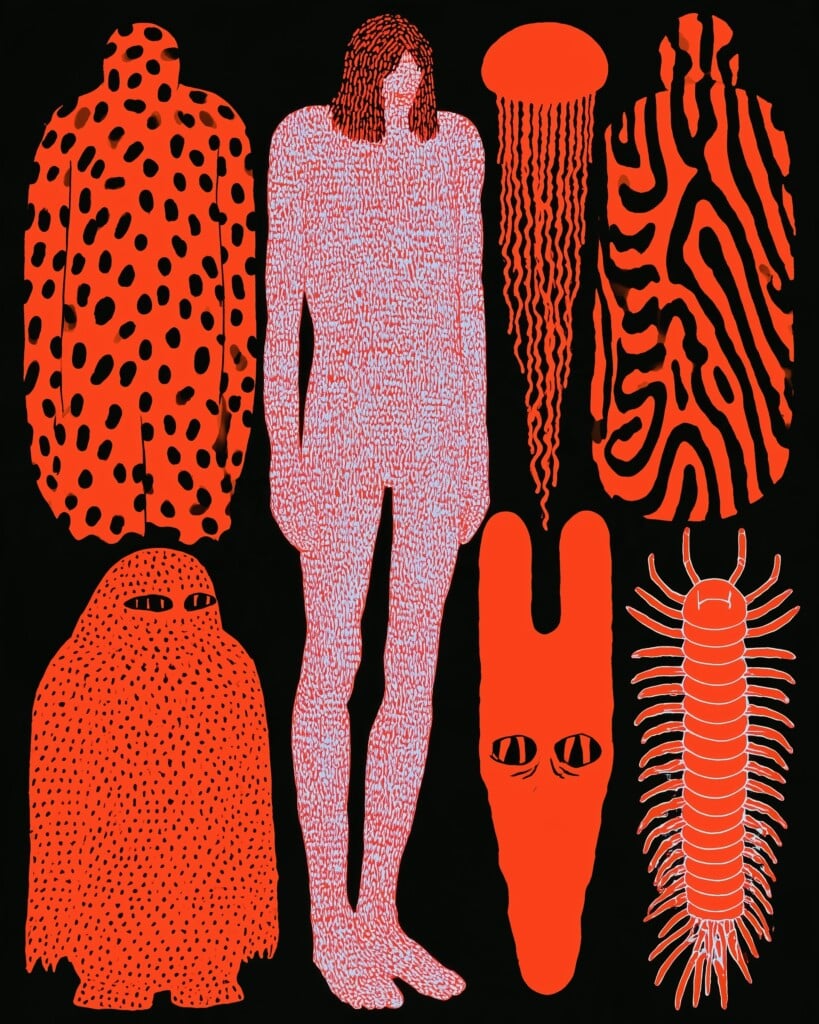
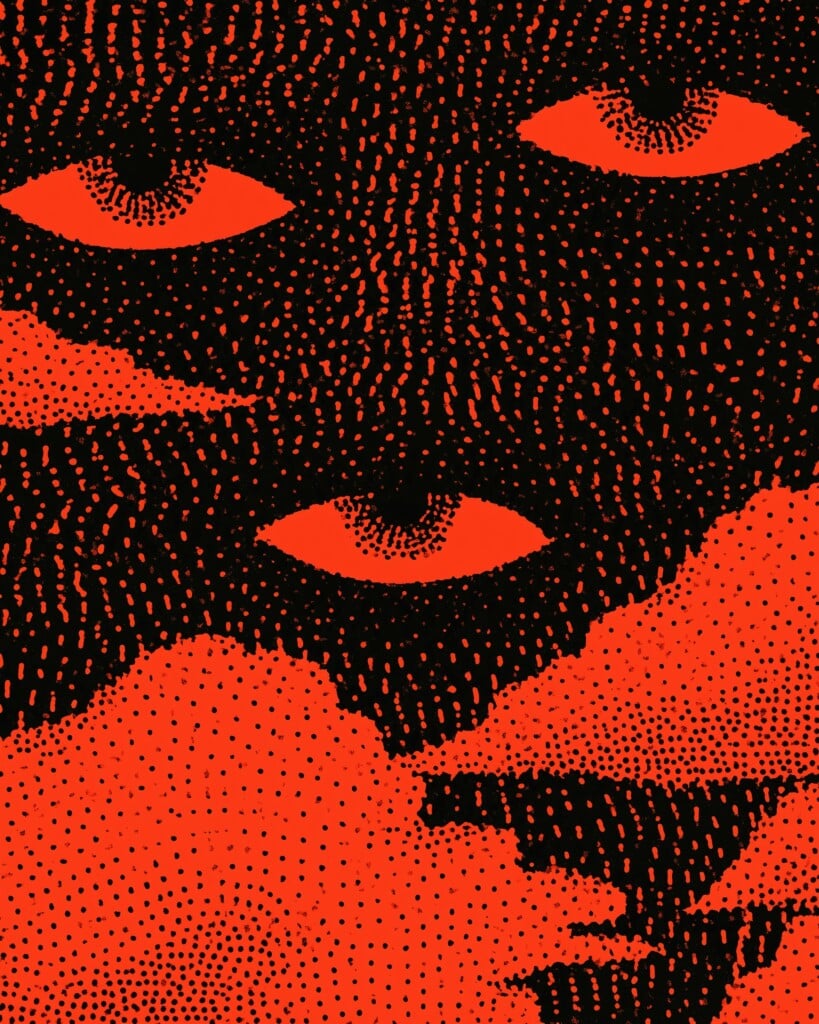
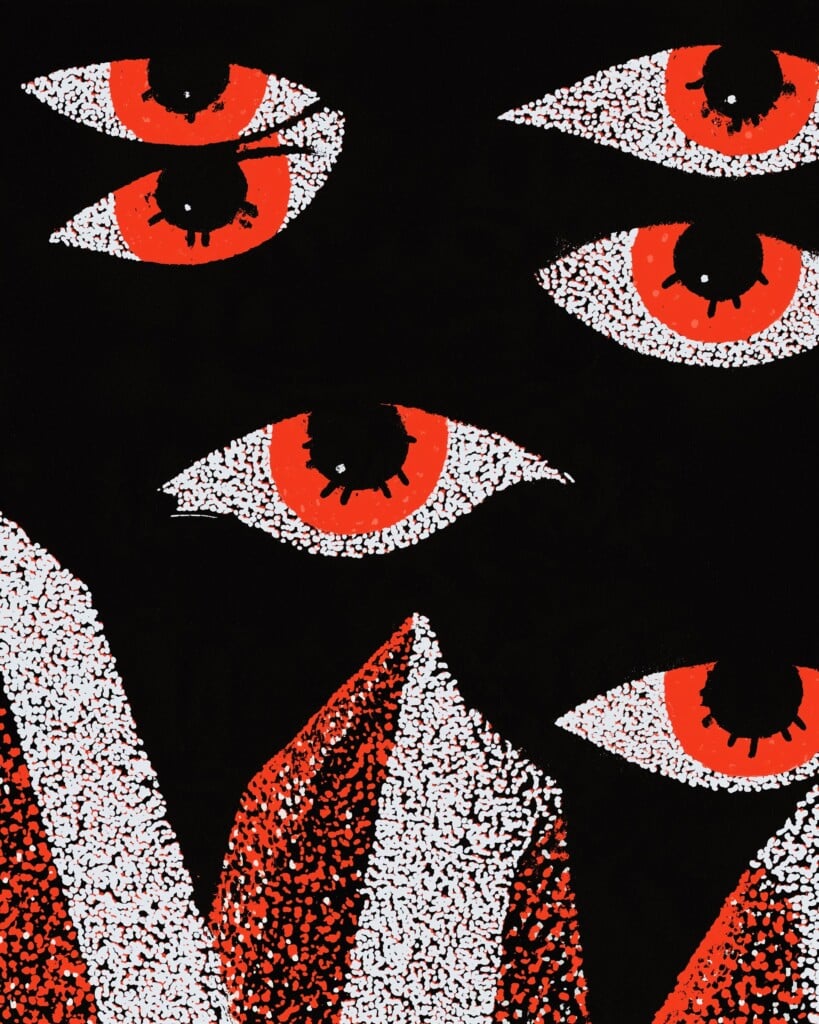
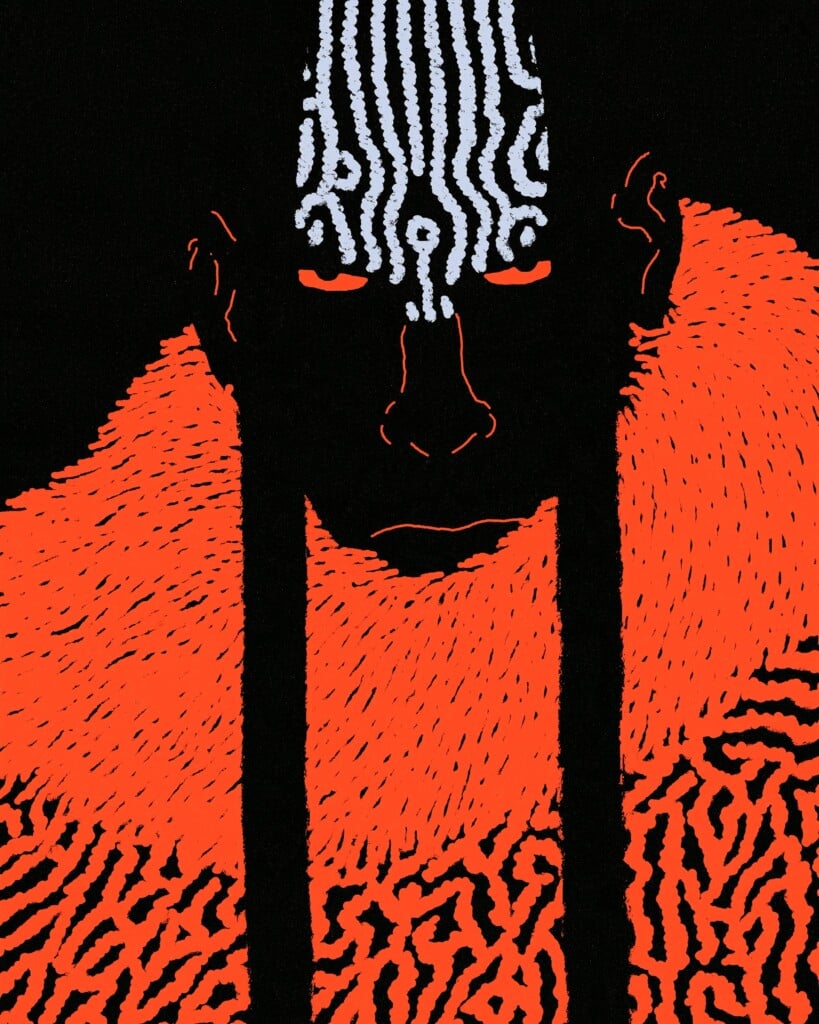
There is something deliberately ambiguous about his images. Some seem to be observed under a microscope, others recall unknown organisms, human silhouettes emerging from the dark, or details of a natural world blown out of scale. Not everything is immediately recognizable, and perhaps this very uncertainty is what makes them interesting. Darren does not seem interested in offering images to be deciphered at a single glance, but rather in building small visual universes in which to get lost.
What stands out most is the way he uses color. Bright red and orange seem to light the figures from within, while black becomes a space in which forms can appear, dissolve or blur together. In some compositions, a multitude of small marks is arranged around a central silhouette, creating a radial movement reminiscent of an explosion or an expanding organism. In others, it is eyes, textures and dotted surfaces that suggest presences that are hard to identify.
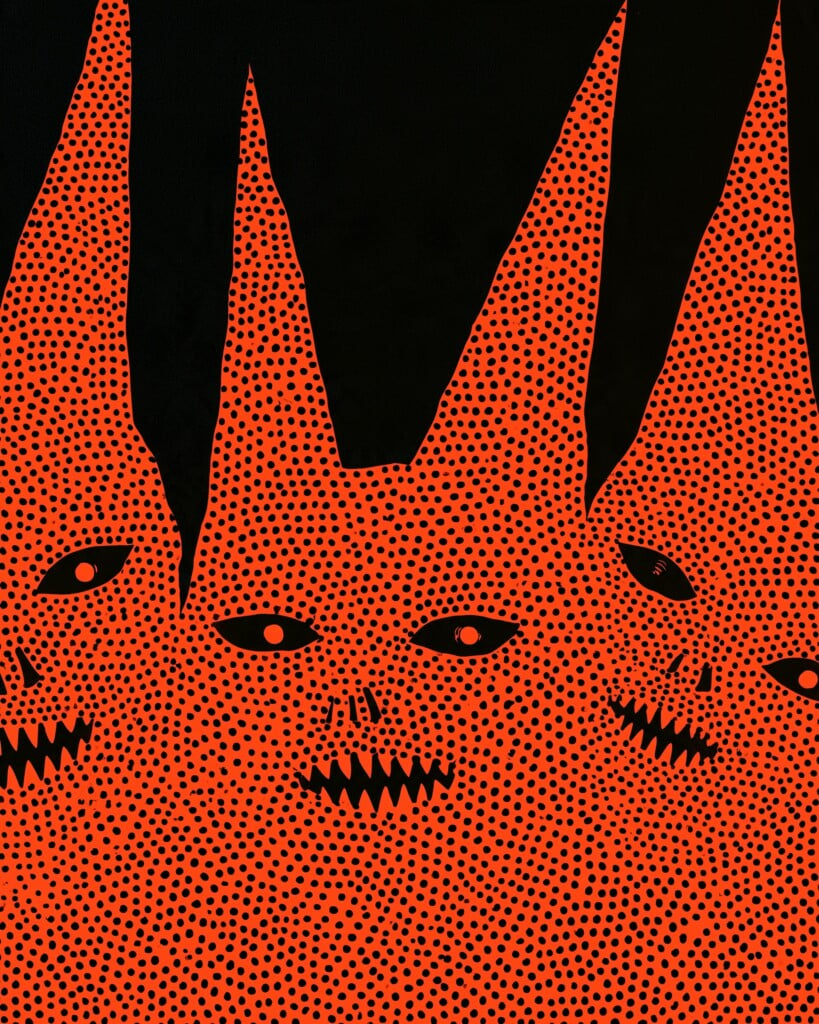
The result is a visual language that oscillates between abstraction and figuration, between something familiar and something that seems to belong to a completely different dimension. His illustrations do not necessarily tell a story through recognizable characters or settings: they work instead through suggestion, accumulation and contrast, letting the eye find its own connections and interpretations.
The most interesting part of Computer Darren’s research emerges precisely from his double professional identity. He presents himself not only as an artist but also as a programmer, and openly declares his interest in neural networks. It is a combination that makes his profile particularly interesting at a time when the relationship between creativity and technology is at the center of many discussions. His research sits in a border space: on one side, the sensibility of someone who builds images; on the other, the curiosity of someone who works with computational systems and explores their possibilities. It is not simply a matter of using a computer as a drawing tool, but of considering technology as a territory of visual experimentation.
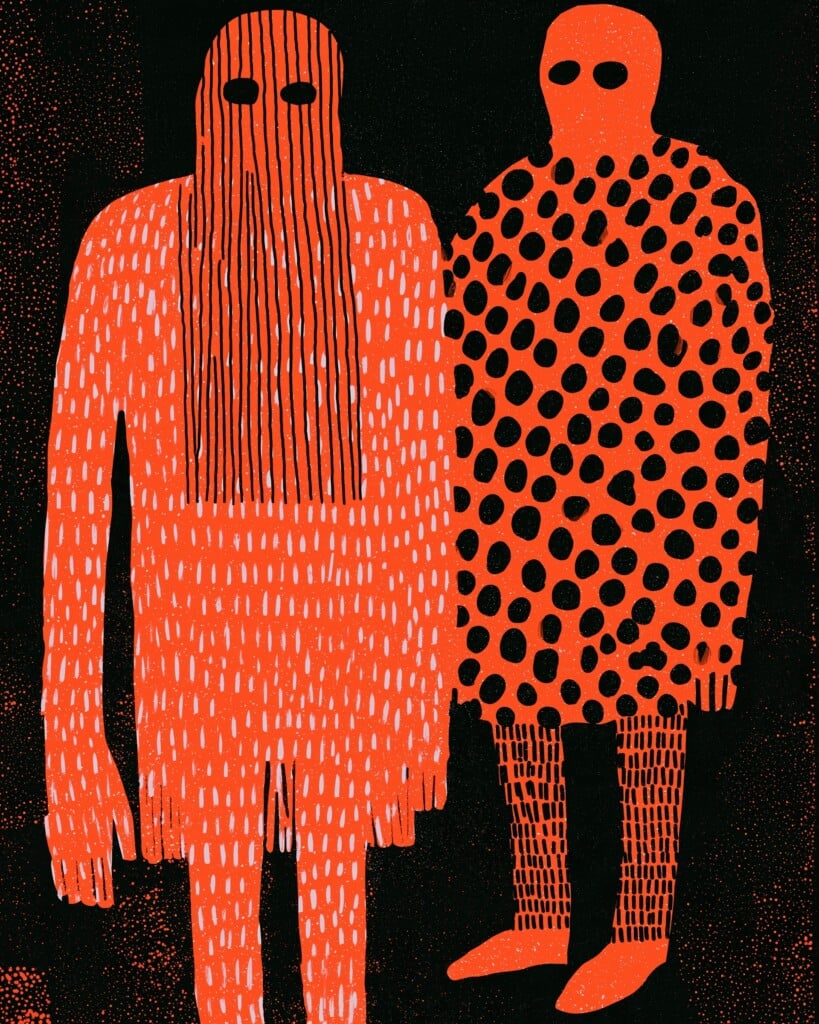
His bio also contains a rather evocative line: “how small a thought it takes to fill a whole life”. How small a thought can be and still fill an entire life. Set beside his images, this reflection takes on a particular meaning: even a tiny mark, repeated hundreds of times, can become a complex figure; even an almost imperceptible detail can turn into the center of an entire universe. Computer Darren seems to move in exactly this direction, between systems, forms and intuitions, showing how illustration can find new possibilities when it meets computational thinking.