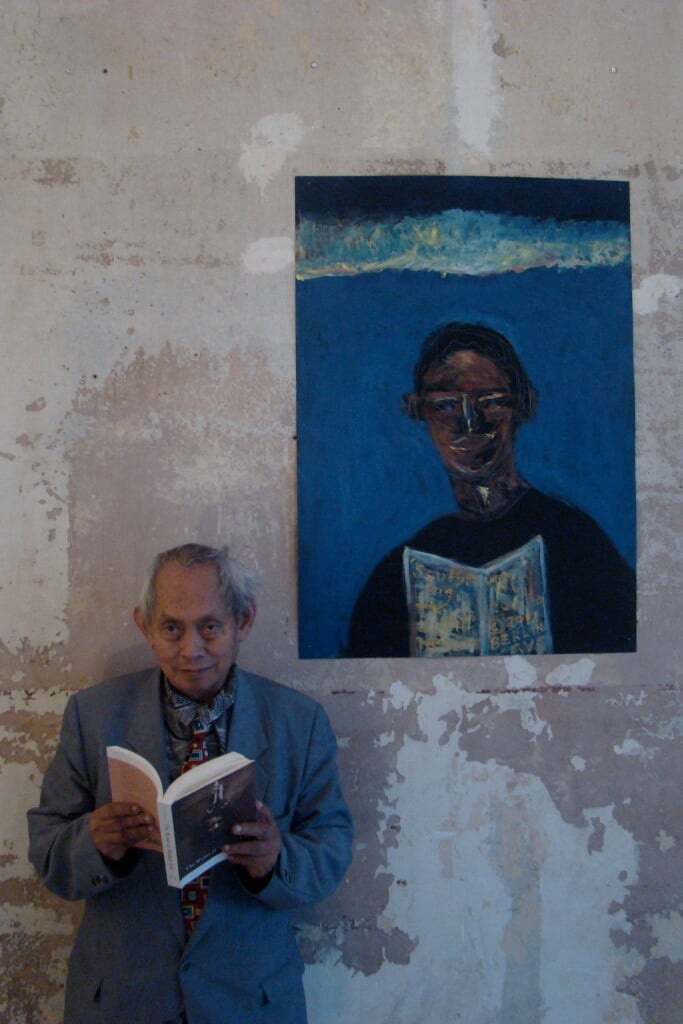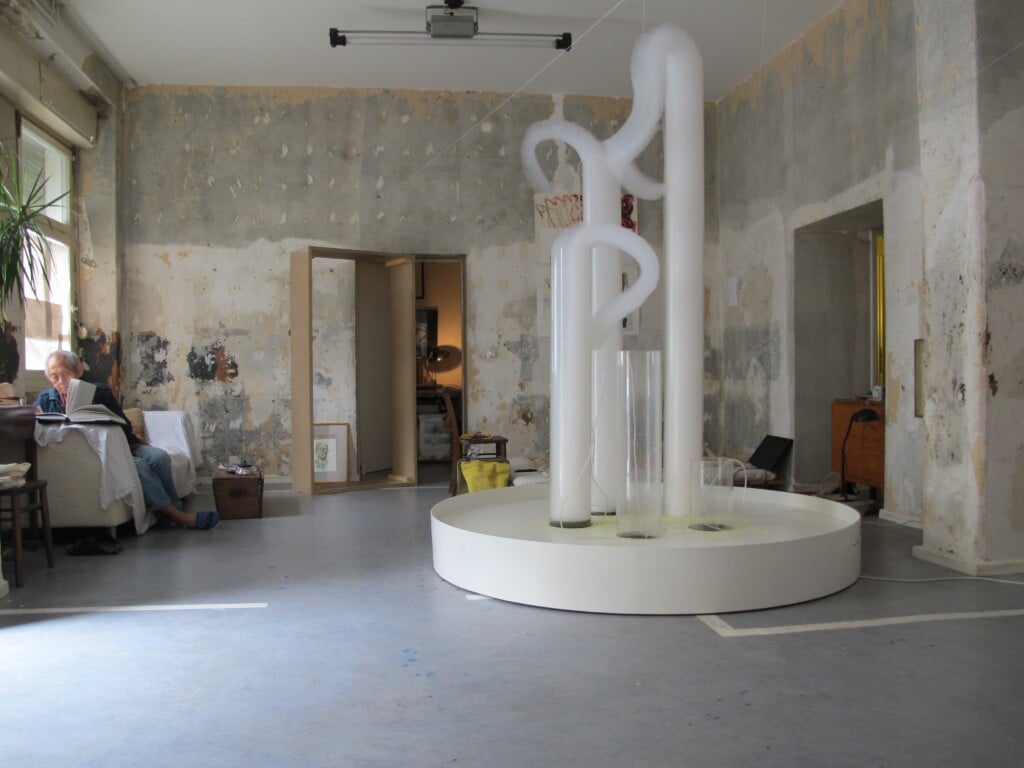
David Medalla. Le Désir Cinétique was hosted last month at Barò Galeria in Paris and brought together six decades of projects and dreams come true by one of the most important artists of kinetic and participatory art. The retrospective was curated by Rolando J. Carmona in collaboration with Mountains in Berlin.
In 1964 David Medalla (born in Manila in 1938 and died in 2020) founded Signals London, which was at once an exhibition space, an editorial project and a magazine. From then on his work revolved around one precise thing: direct contact with the public, an audience that was attentive, engaged and curious to find out what the time and space of art can do.
Providing the counterpoint was Gustav Metzger, fellow artist and colleague, the one who showed up in the square wearing a nuclear hell mask to hit nylon sheets with acid, in a symbolic protest against war. Metzger called Medalla’s kinetic machines “autocreative”, the opposite of the disillusioned destruction he himself had chosen as his aesthetic signature.
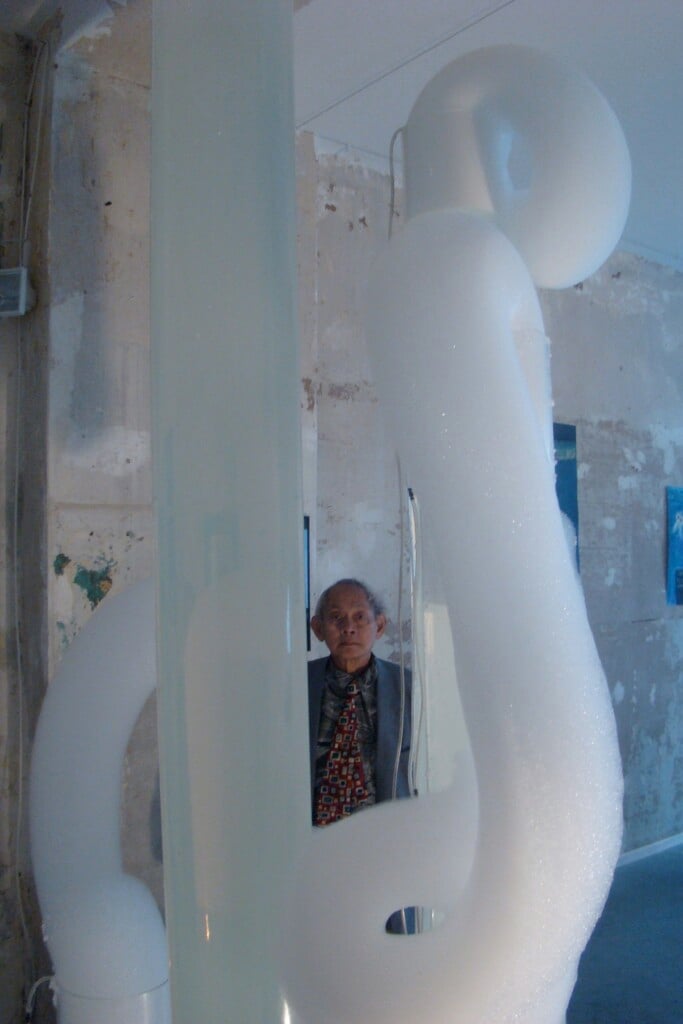
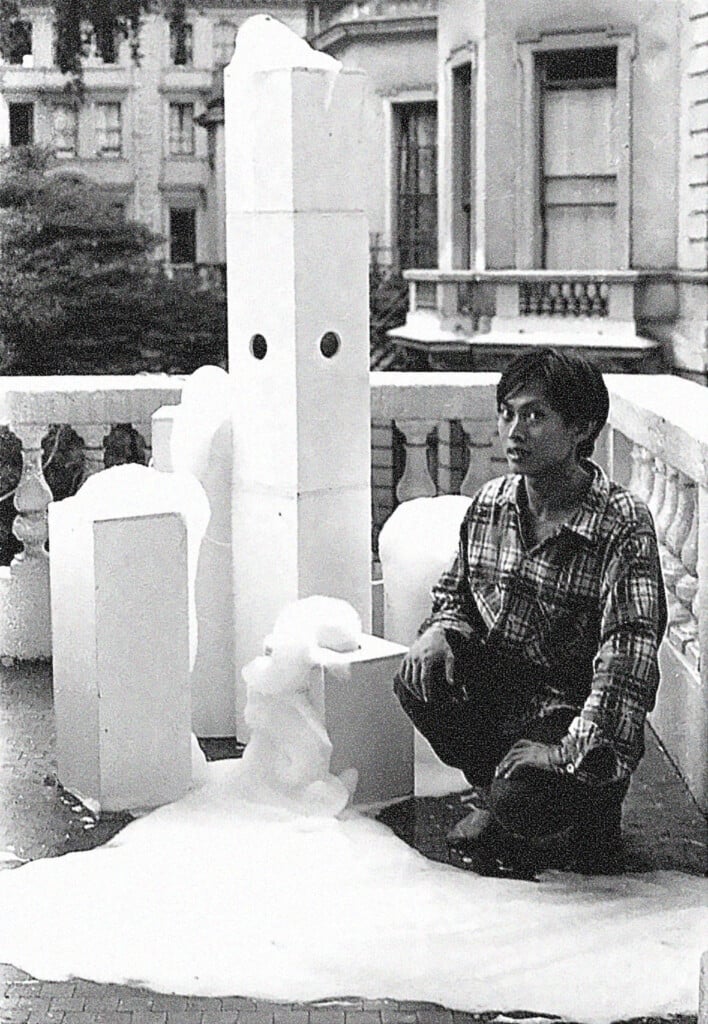
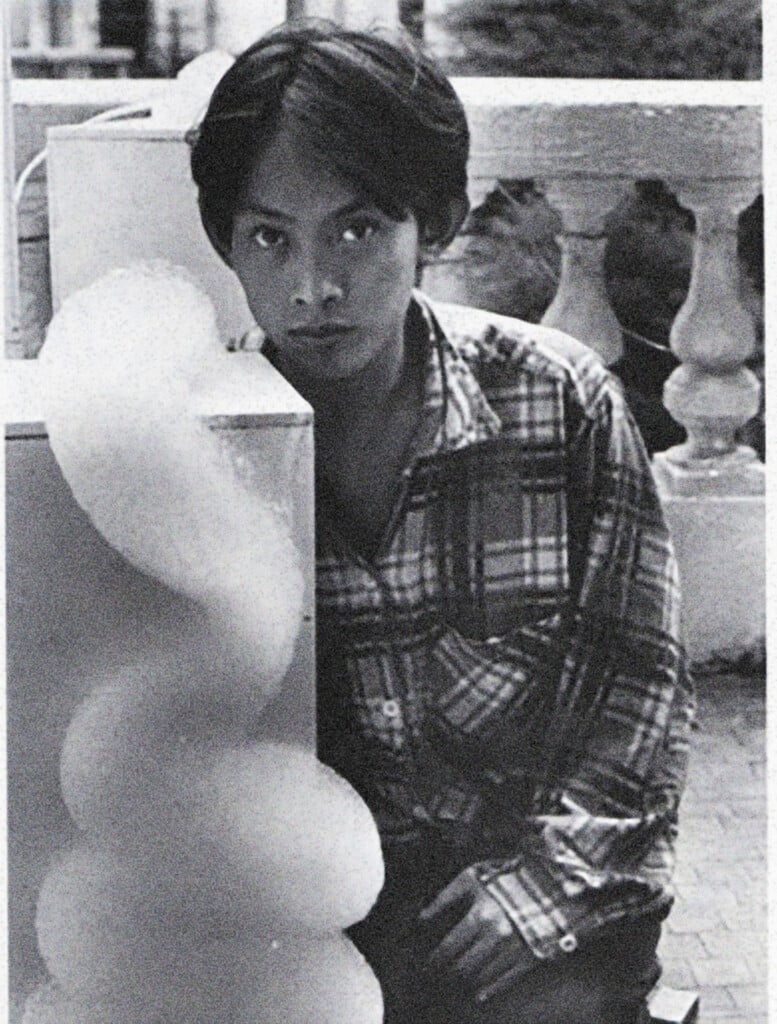
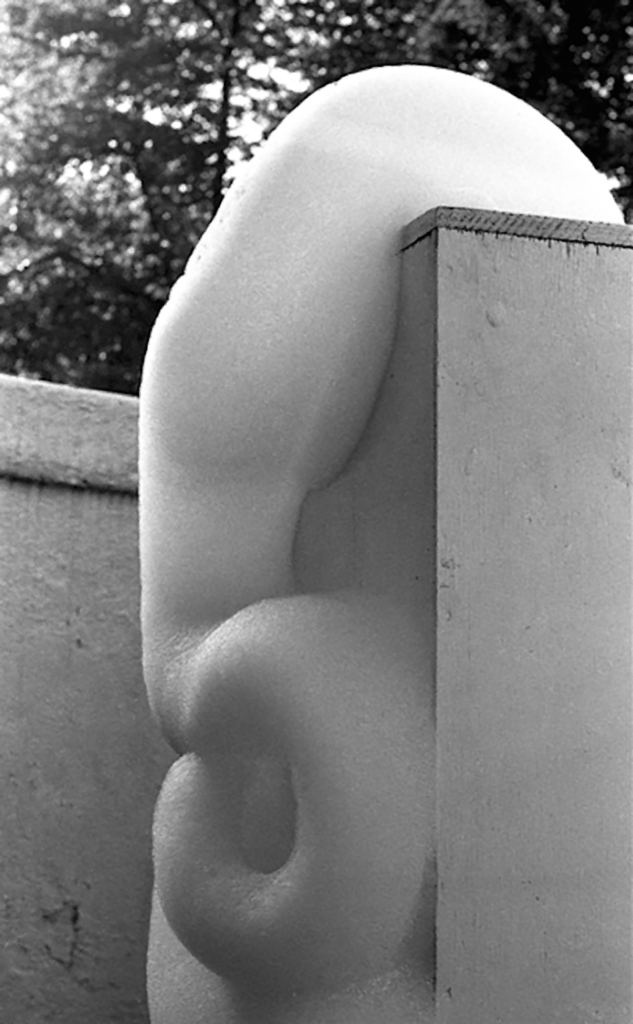
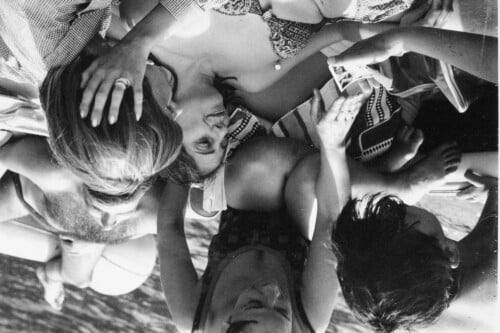
On show once again were the famous Cloud Canyons, also known in art history as Bubble Machines. The exhibition told a long story of participatory art built on fun and, precisely for that reason, one that upended the context of the middle of the 1960s, when a new sensibility was starting to emerge, with student demands already on the horizon.
In his Mmmmmmm Manifesto of 1965, Medalla wrote that his sculptures «would breathe, sweat, cough, laugh, yawn, smile, wink, pant, dance, walk, crawl». Right, exactly: works with a life of their own.
The bubble machine was conceived at the start of the 1960s. Several tanks filled with water and soap were connected to tubes, from which the foam flowed out and spread through the space, taking on the most absurd and unpredictable shapes. The chosen material was about as ethereal as it gets: it dissolved and changed state in an instant, so impossible to catch, and the time to enjoy or appropriate it was very short.
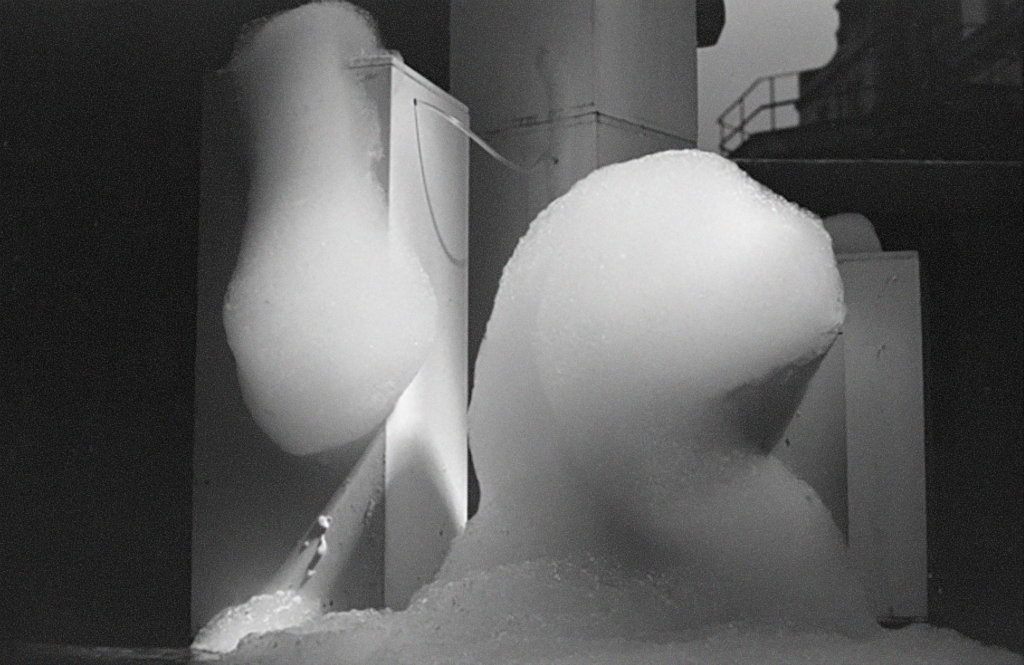
Behind Medalla stood a tradition of play that goes back to the early twentieth century and to Dada, whose irreverent spirit the Filipino artist seemed to draw on, that of an era curious about the future and about new, subversive visions of modernity.
From his encounters with figures of Surrealism, among them the poet Louis Aragon and the performer Raymond Duncan, brother of Isadora, to his collaborations with critics who took part in many of his exhibitions, Medalla left us performances, artworks and projects that still feed an art made of surprise, of endless possibilities of experience and of active participation by the public.