Our present was once someone’s future. There was a time when many of the things we use every day today simply didn’t exist. What will come next — the unknown — can be frightening, and many people prefer not to think about it. But then there are visionaries who let their imagination run free (mixed with a good dose of logic) and try to predict the future — sometimes getting it right.
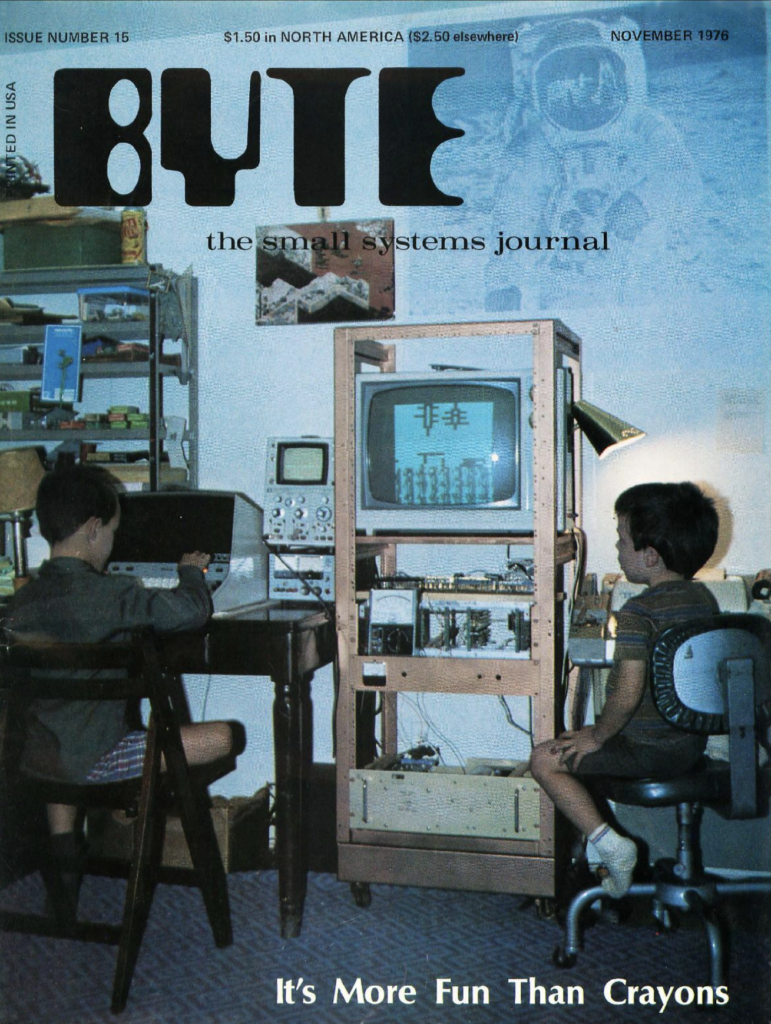
This is what happened with Carl Helmers and Wayne Greene, respectively a technology consultant and an amateur radio magazine publisher, who in 1975 combined their skills and knowledge to create Byte, which from its very first issue until its closure in 1998 became the most important computer magazine in circulation.
Now, we are not going to analyze the content of over 300 computer magazines — we wouldn’t have the technical expertise — but here we want to talk about one specific element that undoubtedly helped Byte become so popular: its covers.


Carl Helmers and Wayne Greene knew exactly what their mission was: they had to explain and simplify complex, unfamiliar concepts to a skeptical audience — one that was perhaps intimidated by new technologies. For this reason, the covers of Byte, especially between 1975 and 1990, were entrusted to Robert Tinney. A U.S. Army veteran with a degree in Advertising Design, Tinney began painting and illustrating for magazines in the early 1970s. His style, blending surrealism and retro-futurism, made him the perfect fit for Byte right from the start, beginning with the Christmas issue of ’75.

The idea was to draw from the world of games to explain microchips, software, personal computers, and bold ideas like home robots or wrist computers.
In the 1980s, thousands of people eagerly awaited each new issue of Byte — both to discover the next innovation ready to revolutionize the world and to see how Robert Tinney would summarize in a single image all their doubts, fears, and the excitement of discovery.
His illustrations soon became a must-have for enthusiasts, to the point where the artist himself began reproducing them as posters or on t-shirts.


Looking at them now, they might make you smile: on the one hand they feel anchored to a distant past, but on the other it’s impossible not to notice how the questions and uncertainties of that time are the same ones we have today. Fifty years ago people didn’t understand computers, and now we don’t understand Artificial Intelligence — perhaps because the world hasn’t changed as much as we think, and deep down we still need a drawing to explain things, or at least to humanize them.