A garment can be much more than what we wear: it can be tied to a place, a person, a specific day, and it can become part of a moment that, even long afterwards, we are still able to remember. This is precisely the idea behind Gascoigne, the London-based brand founded and run by Jack Collins, which is developing a new strategy in which product, place and experience become part of the same story.
“Release experiences = moments. Moments = memories. Memories = feeling.” This is how Collins sums up the principle behind the brand’s new direction: a launch shouldn’t be just the occasion on which something new is presented, but a moment capable of leaving a trace.
It’s an approach that also changes the way campaigns are built. Instead of creating a neutral environment around the clothes, Gascoigne chooses places that already have an identity and a memory of their own, and then inserts something unexpected into them.
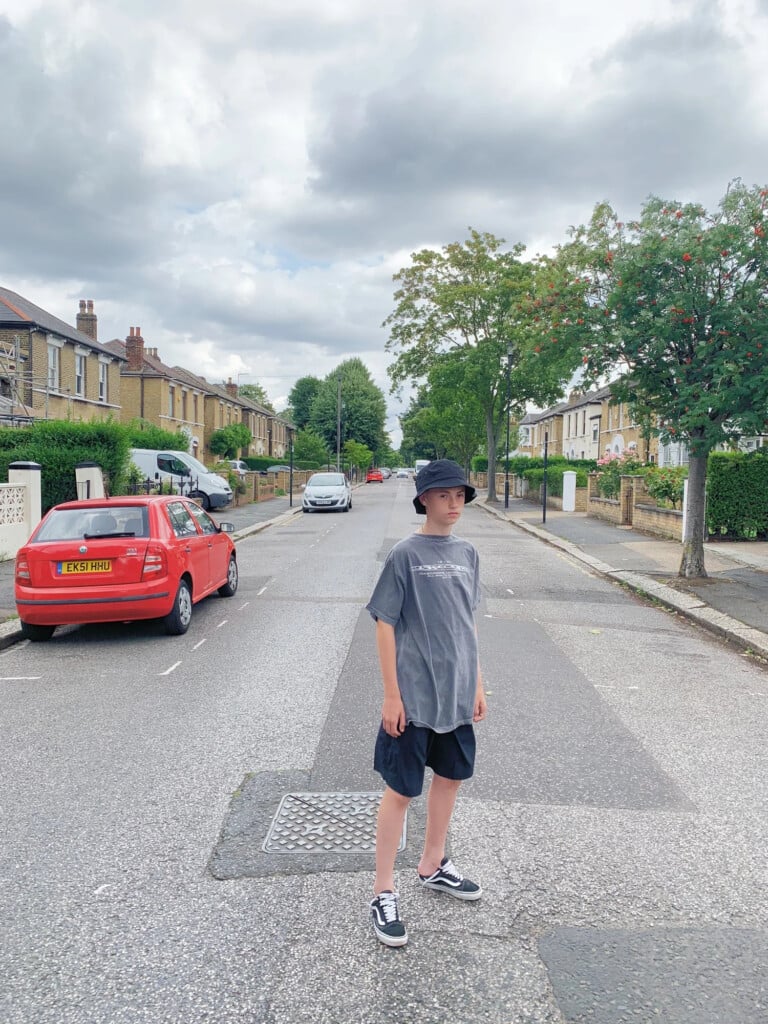
Gascoigne was born in East London and carries with it Collins’s personal relationship with the city, its codes and the subcultures that helped shape his imagination. The brand looks in particular at British culture of the Nineties and Noughties, but without turning it into an archive to be faithfully reproduced. The past, for Collins, can be reopened and observed from another perspective.
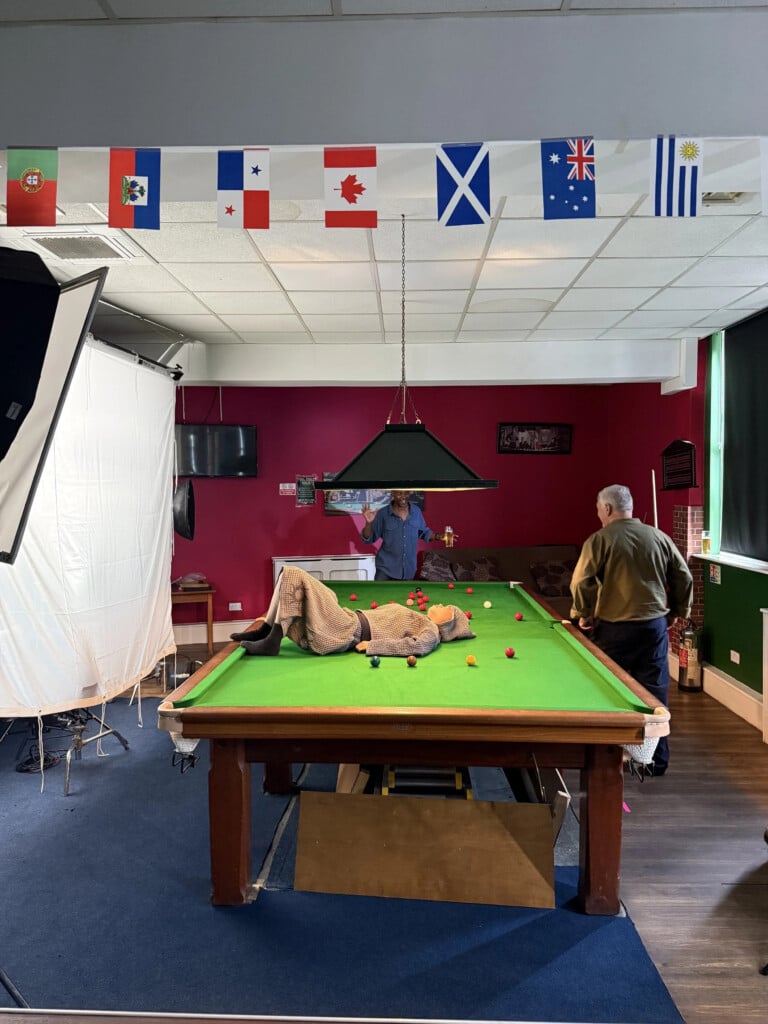
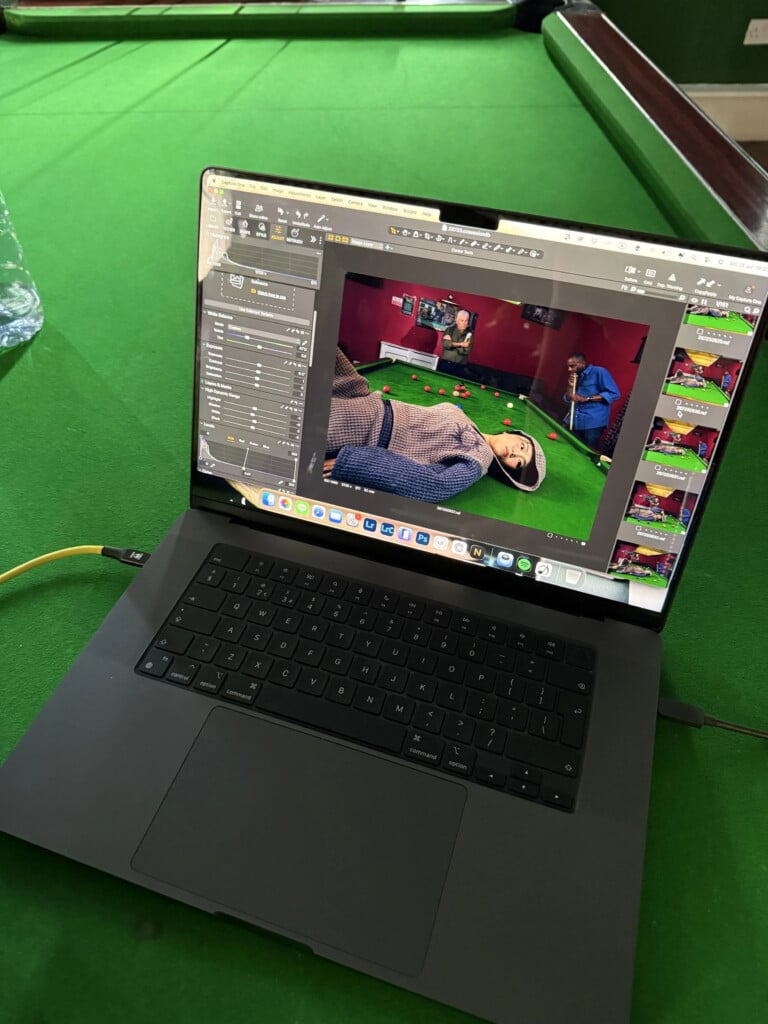
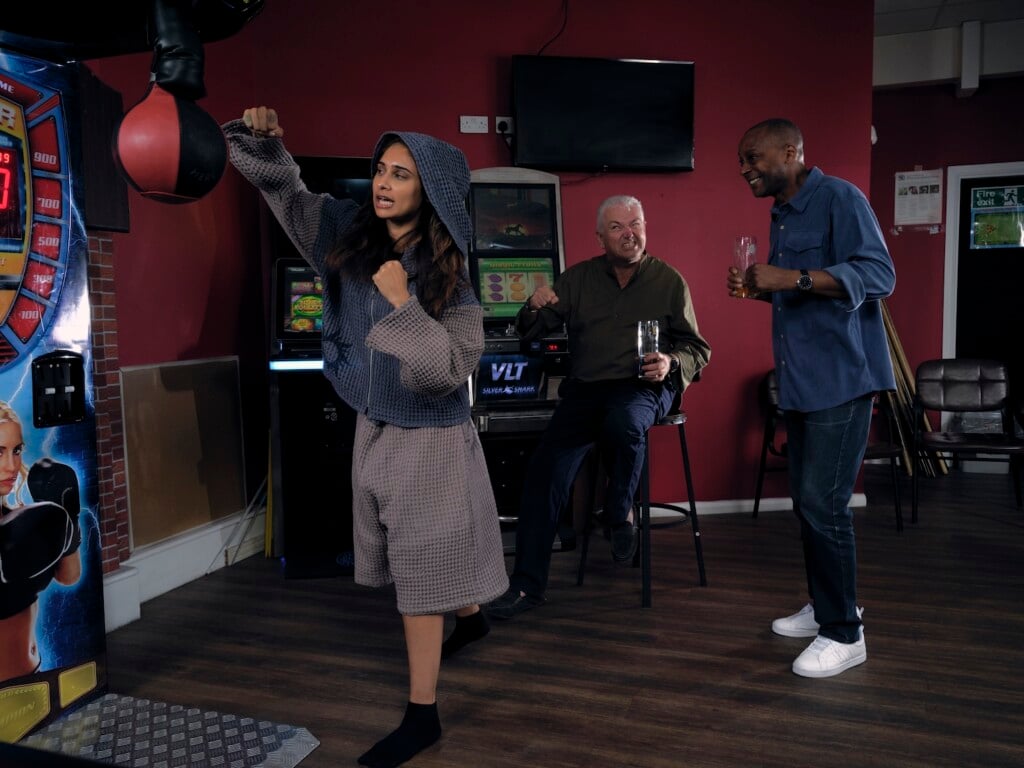
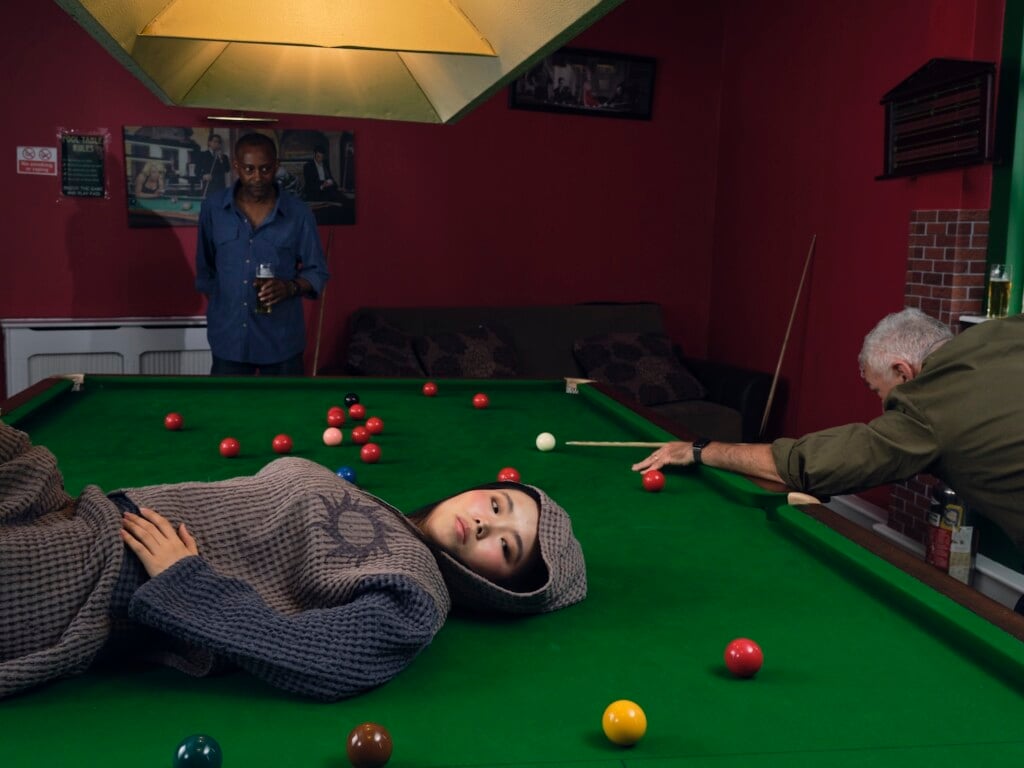
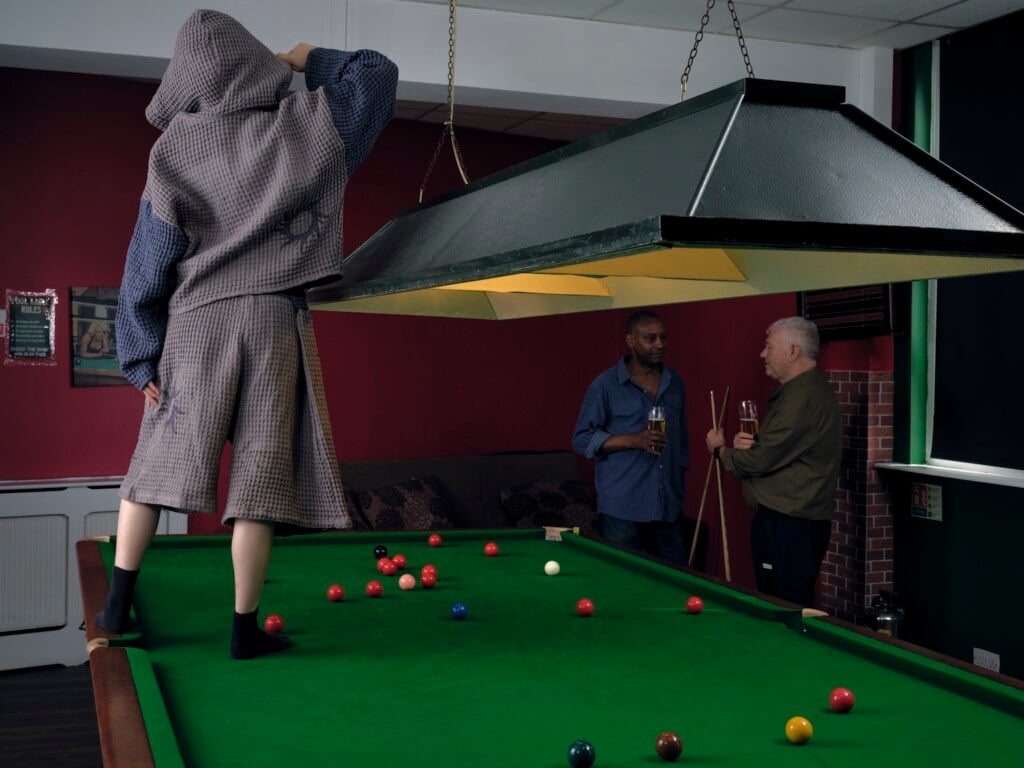
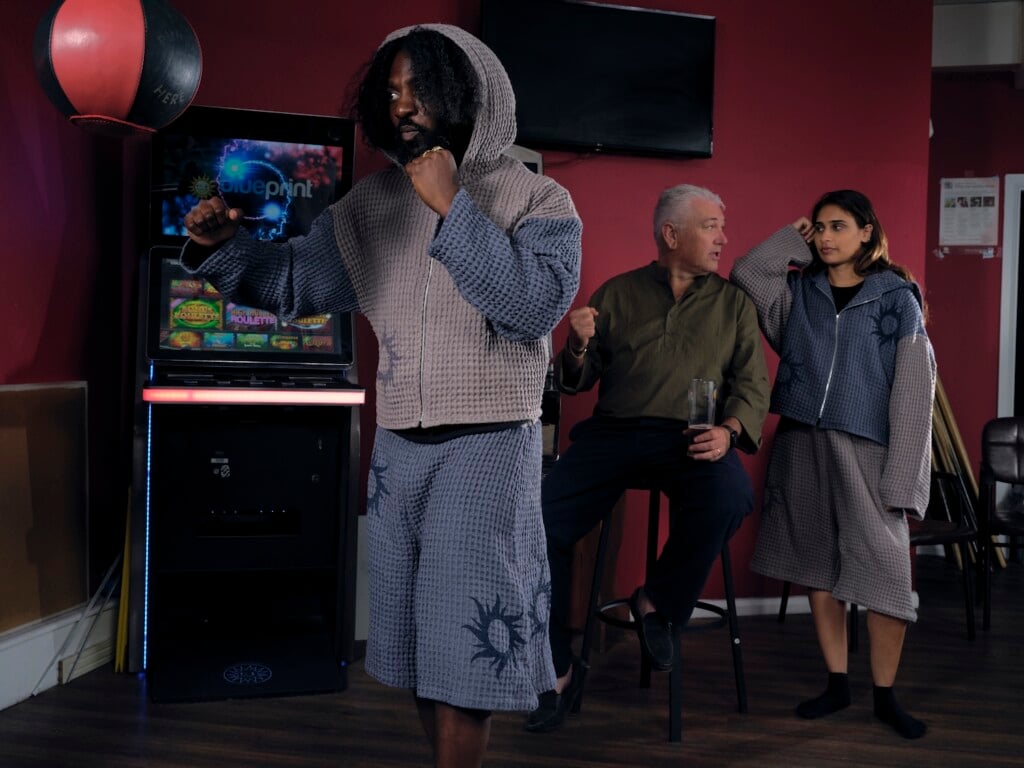
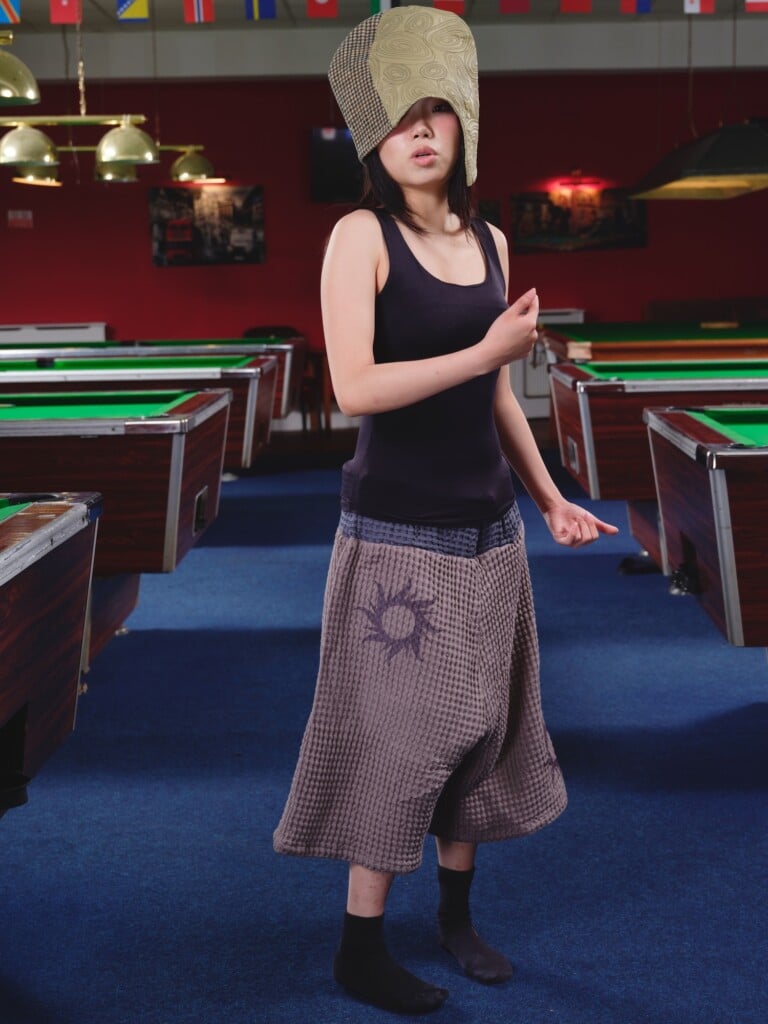
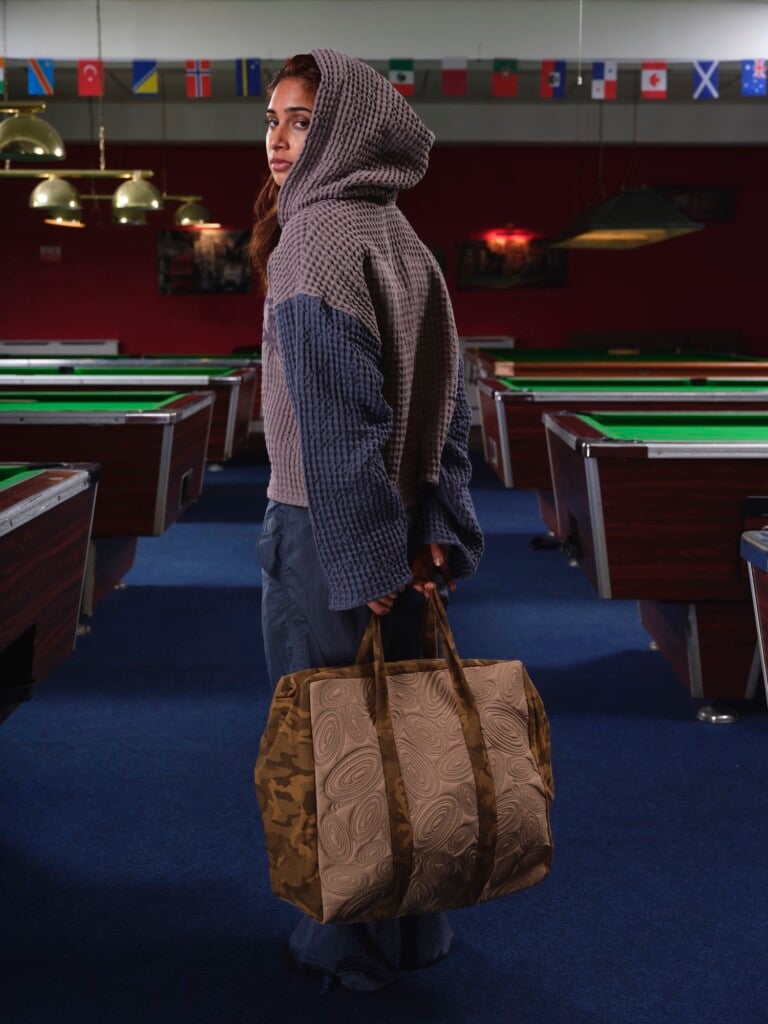
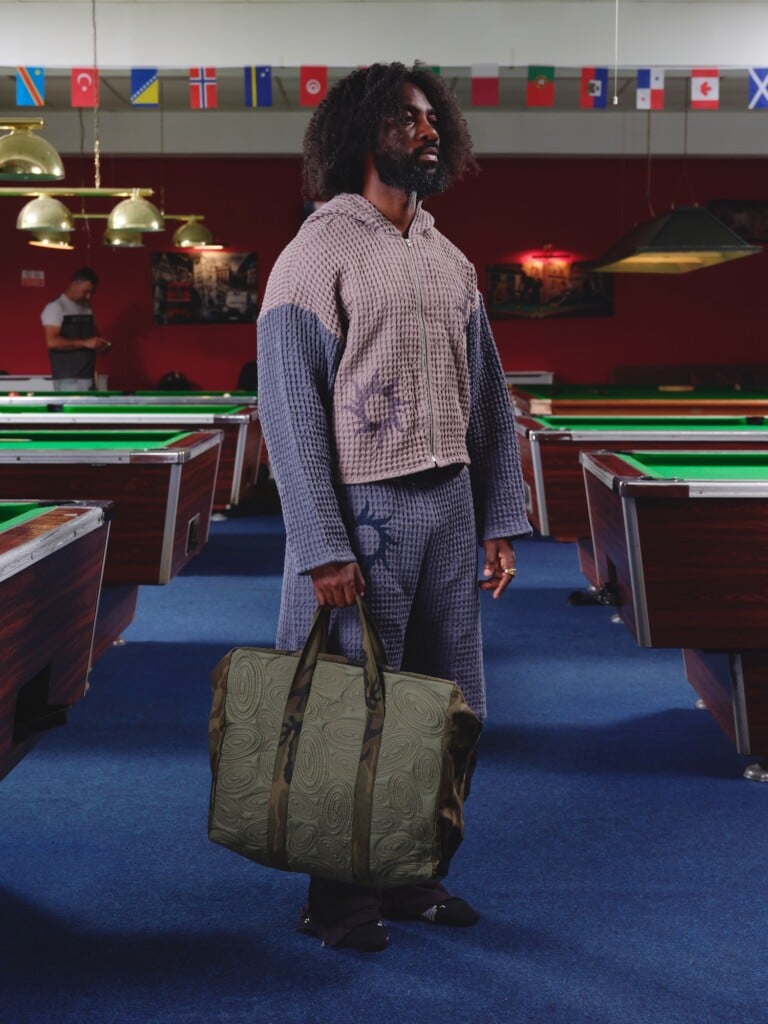
This is also what happens in the first campaign tied to the new release strategy, set in a traditional London snooker hall. An instantly recognizable place, with a very specific history and identity, which becomes the context in which to place Gascoigne’s contemporary vision.
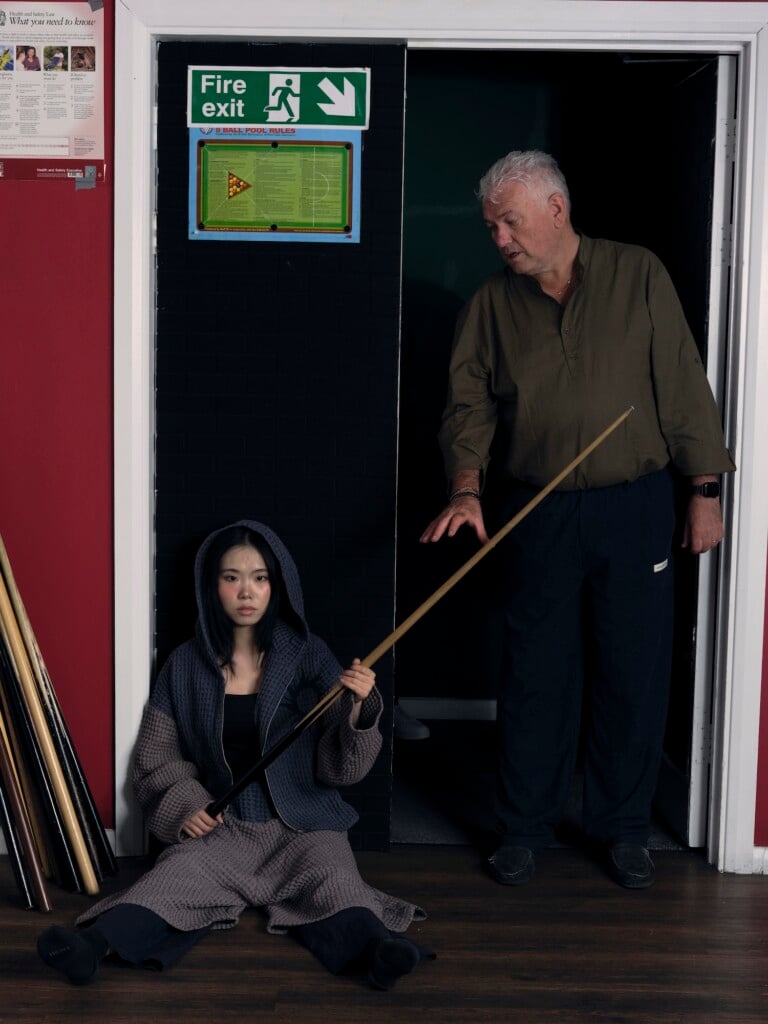
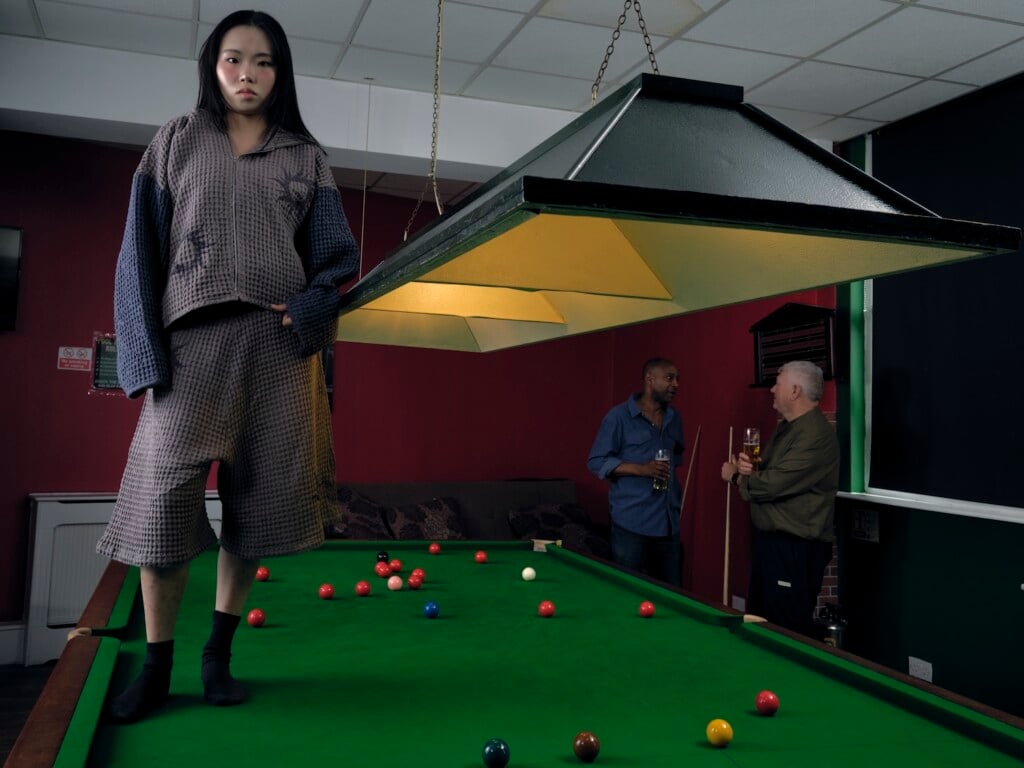
“Contrast = questions. Questions = intrigue. Intrigue = feeling,” Collins explains.
Contrast, then, is not just an aesthetic choice. It is a tool for creating curiosity: putting something new inside an environment that belongs to an established imaginary creates a small friction, strong enough to make the viewer wonder what is going on.
There’s a word that comes up often in Collins’s account: heritage. But Gascoigne’s British heritage is not treated as something to be preserved under glass. The chosen places keep their authenticity, while the brand’s presence introduces a new element. Collins describes this encounter as a sort of “new nostalgia”: the past remains recognizable, but is crossed by a contemporary sensibility.
It’s a concept that also helps explain why the choice of locations matters so much. A snooker hall, a farm or another setting tied to British culture are not simply backdrops against which to photograph a collection. They are part of the story and carry a meaning that already exists before Gascoigne arrives.
Collins is aware that giving something a context can help in understanding it, but can also strip away some of its mystery. “Context provides clarity but can destroy mystery,” he says. For this reason, Gascoigne doesn’t seem to want to hand the public a single reading of its campaigns. If the place suggests one story and the clothes introduce another, the viewer can build their own interpretation. The meaning is not fully explained, but left open.
It’s a way of approaching communication that moves away from the need to say everything. In an environment where images and campaigns are often accompanied by ever more detailed explanations, Gascoigne chooses to leave some empty space. The new strategy involves smaller releases, each accompanied by an experience and the presentation of a limited number of new products. The goal, therefore, is not simply to increase the moments in which Gascoigne shows something, but to make each release recognizable through its context. A garment is associated with a place, an atmosphere, people.
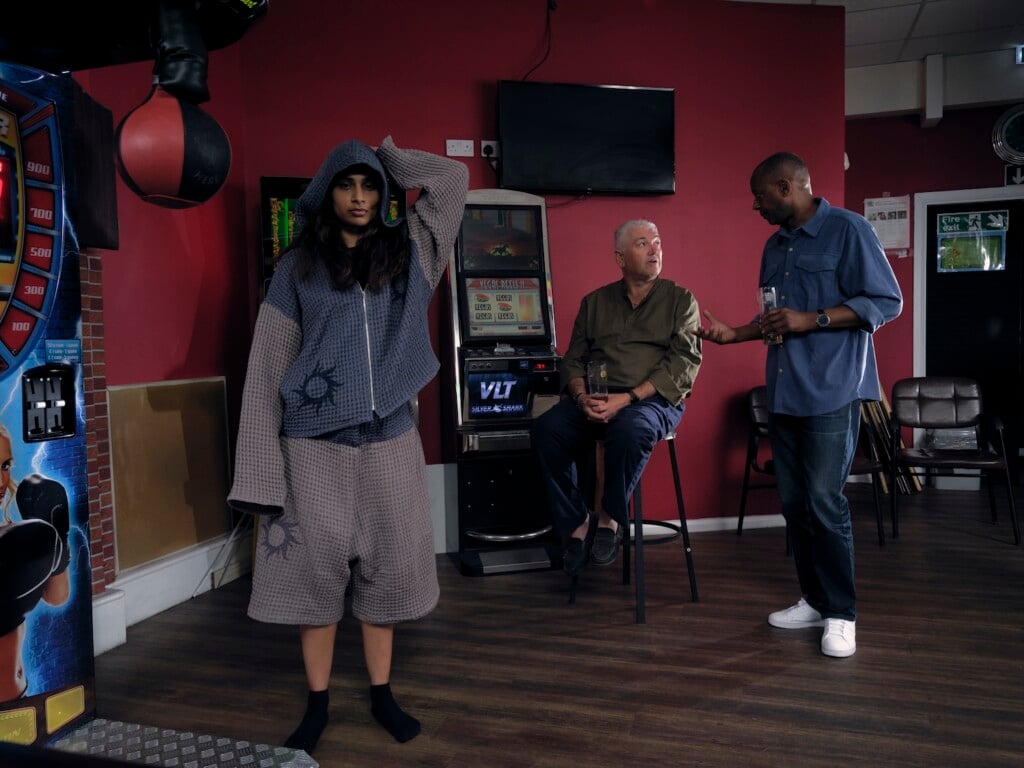
In this way the collection doesn’t live only on the pages of a website or in the campaign photographs. Before it is even purchased, it can be encountered and experienced. This is an important part, especially for a brand that considers its relationship with people an essential part of its journey. The physical experience becomes a way of bringing the public closer to Gascoigne’s world without necessarily going through the traditional logic of the launch.
This way of approaching the brand also helps explain why Collins is looking at Italy as the next territory to explore. The project is still strongly tied to London, but the intention is to start building relationships in Milan through stores, stylists, creatives and people able to understand and develop Gascoigne’s language.
Collins sees a possible affinity precisely in the Italian relationship with cultural heritage. “Italy have a deep deep love for heritage,” he says, also underlining the attention to art, the passion for detail and the care for small things that he considers close to the brand’s values.
It is therefore not only a matter of entering a new market, but of an interest that seems above all to be about understanding what can happen when a deeply London story meets another way of looking at culture, art and design. For this reason, the arrival in Milan is not imagined merely as a commercial expansion. Before even seeking a new audience, Gascoigne wants to build connections with stores, stylists and creatives, coming into contact with a scene that can engage with its language. The aim is not simply to bring London elsewhere, but to understand what can happen when that vision meets a new context.
Gascoigne starts from clothing, but Collins’s project is also interested in what happens around a garment. A place can change the way we see it. A person can alter the meaning of an image. An event can turn a product into a memory.
This is why the new strategy can’t be reduced simply to the word immersive. The aim doesn’t seem to be making every release more spectacular, but making it more memorable. And perhaps this is exactly where Collins’s phrase finds its full meaning: “Moments = memories = feeling.” For Gascoigne, the garment is only one part of the story, and the rest happens the moment someone encounters it.