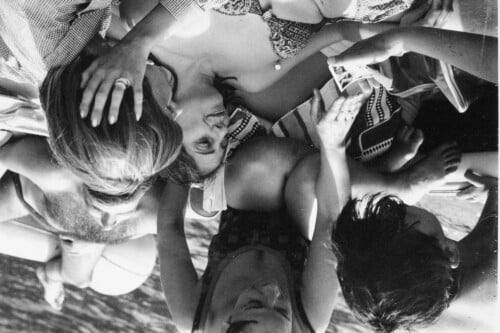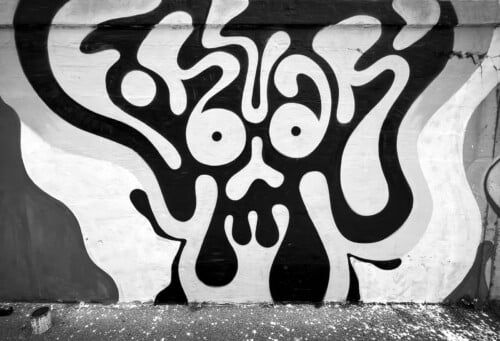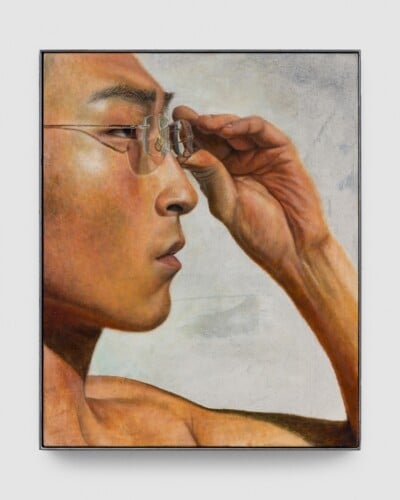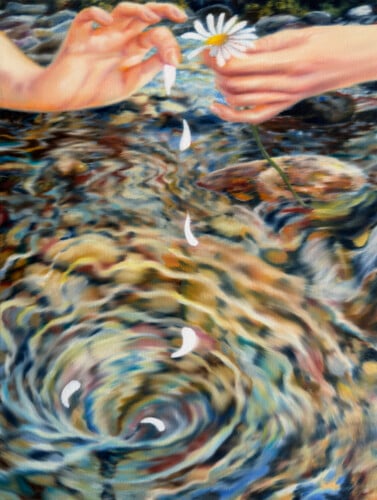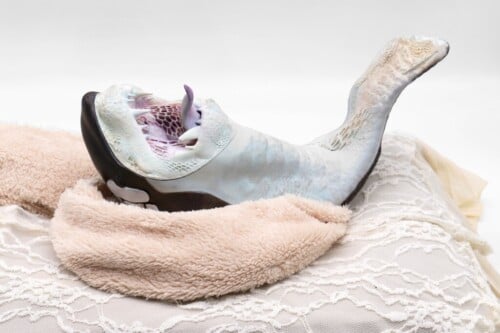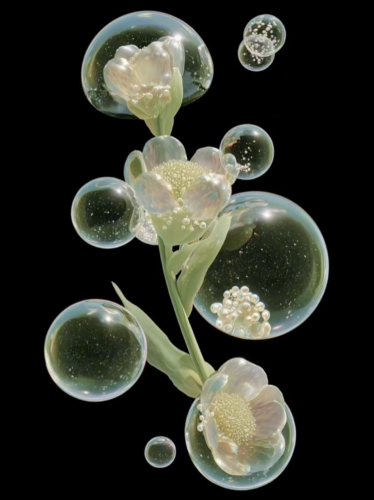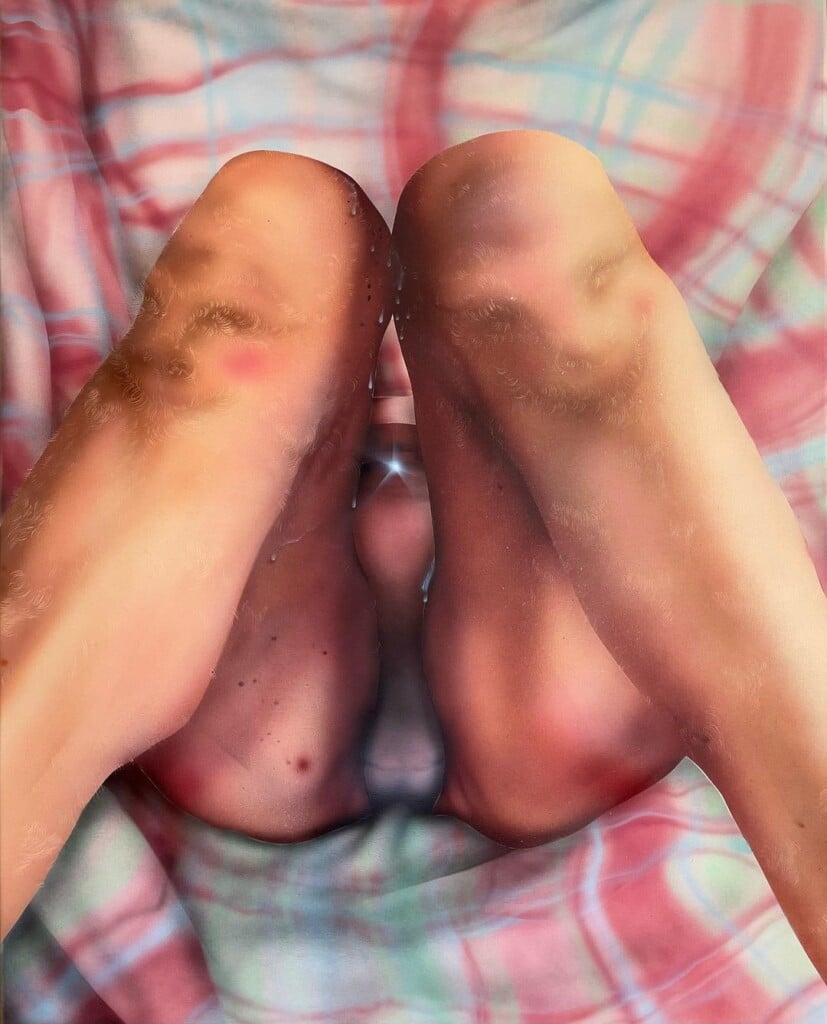
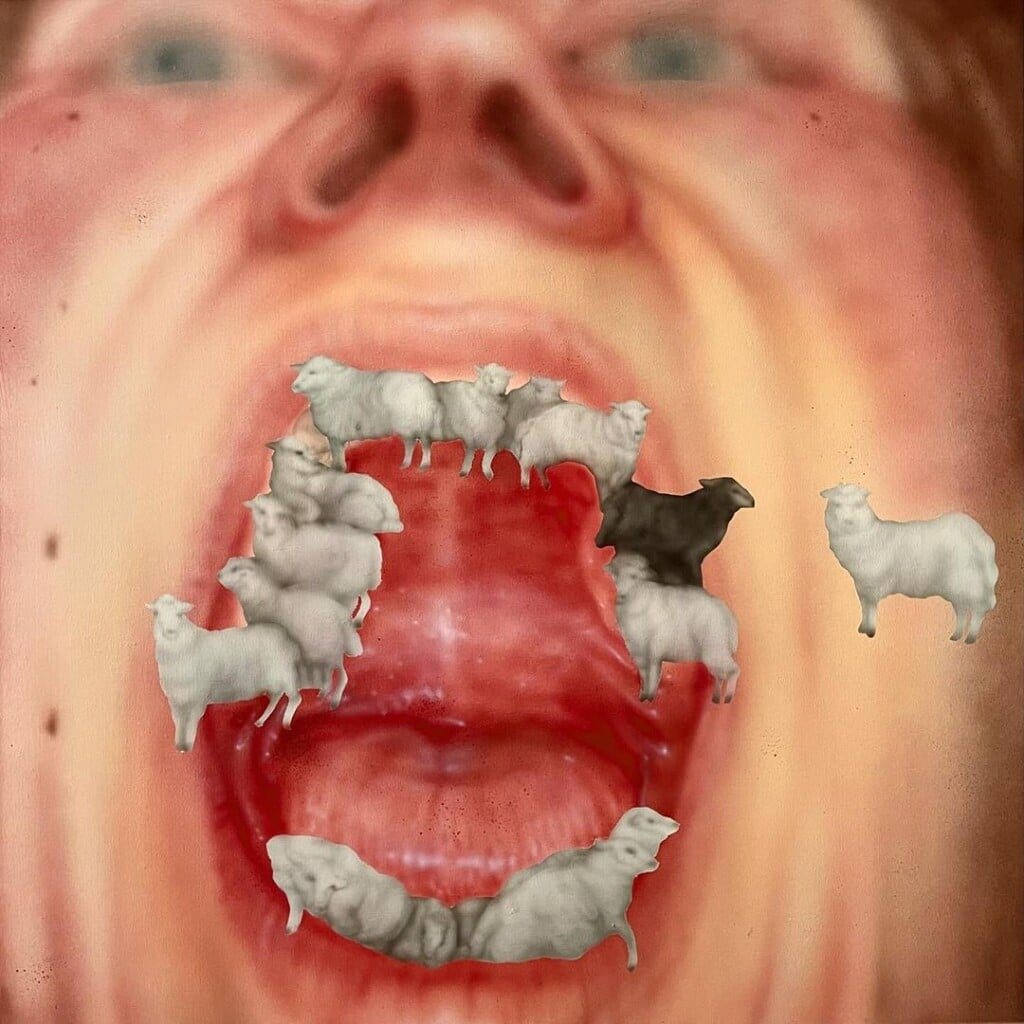
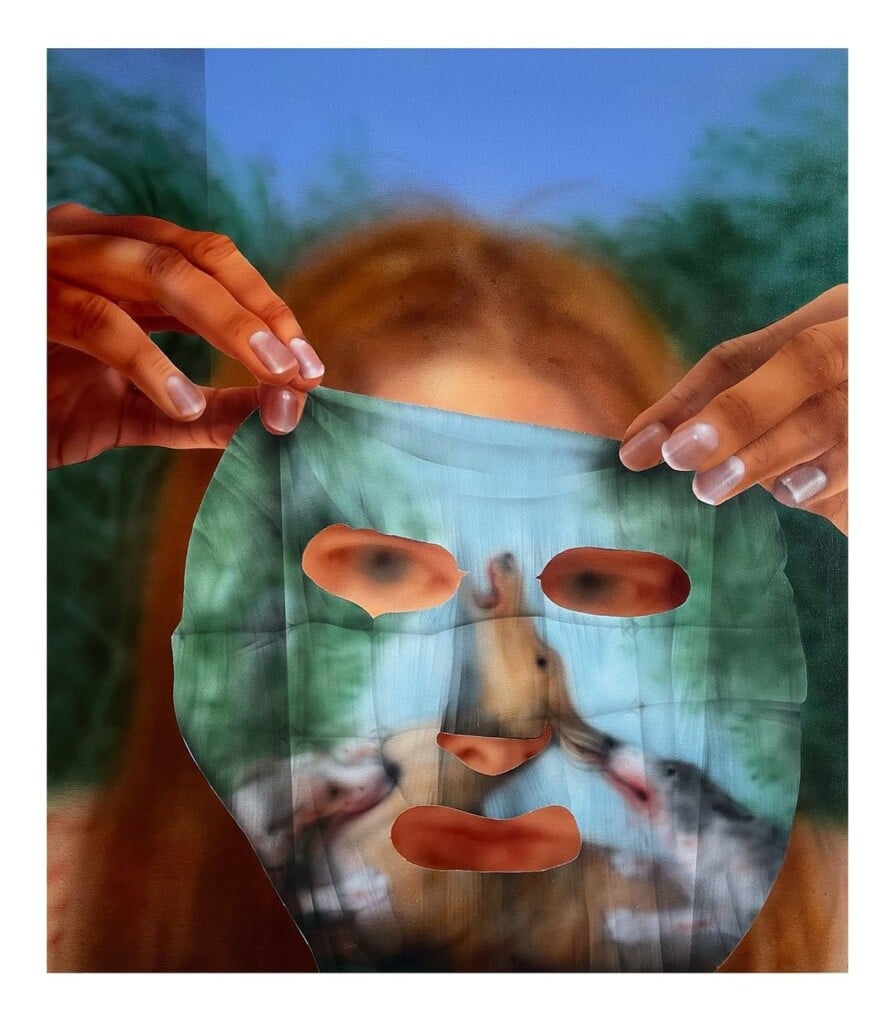
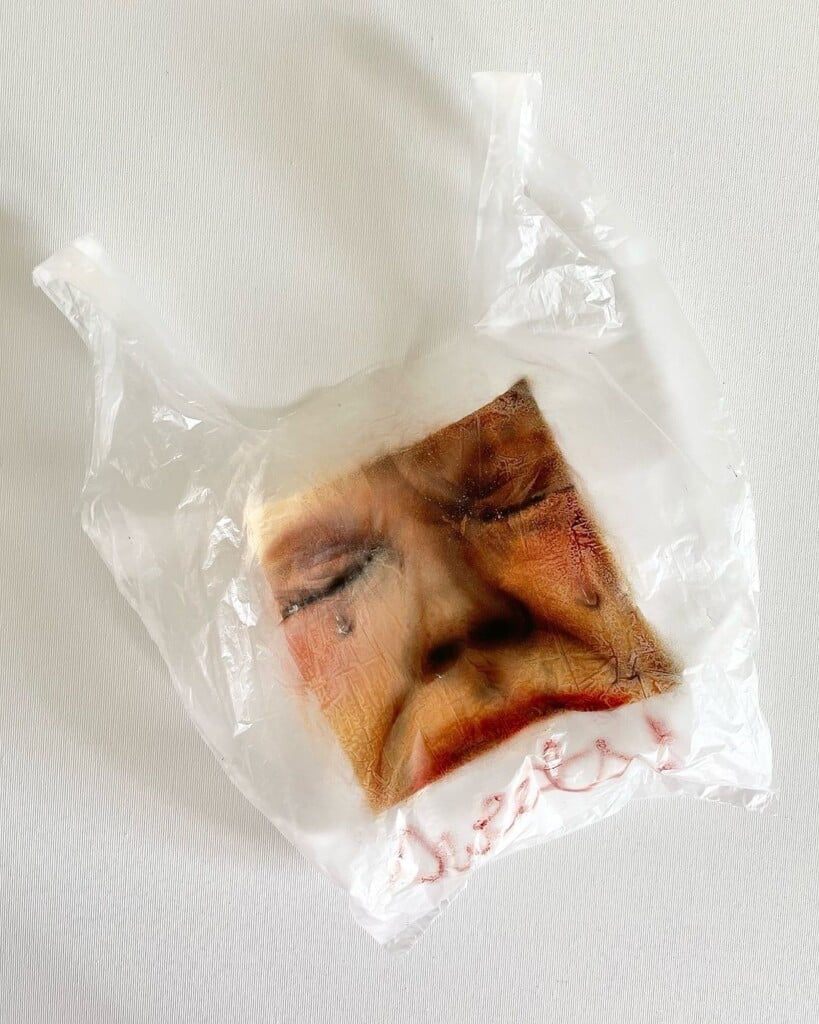
The works of artist Helena Minginowicz (1984, Poznań), at first glance, are not easy to decipher. The unsettling element creates a filter that interacts with the unconscious area of the viewer’s mind. This part houses traumas, sometimes coinciding with specific iconographies that our brains draw from popular culture. I think of that screaming mouth whose teeth are hidden by a flock of sheep taking flight – referring to the artwork titled YOUR TEETH ARE LIKE A FLOCK OF SHEEP… – which undoubtedly conveys something disturbing. Minginowicz herself, when discussing her works, mentions this “filter,” what in philosophy is called the “veil of Maya.” This layer between reality and perception changes from subject to subject. Minginowicz is always in search of a new one, interested in understanding the commonalities among our filters. «I use the impression of a visual mirage—an illusion—as a tool to explore the boundaries between what is visible and what is perceived,» explains the artist, who focuses on relationships with others and the self.
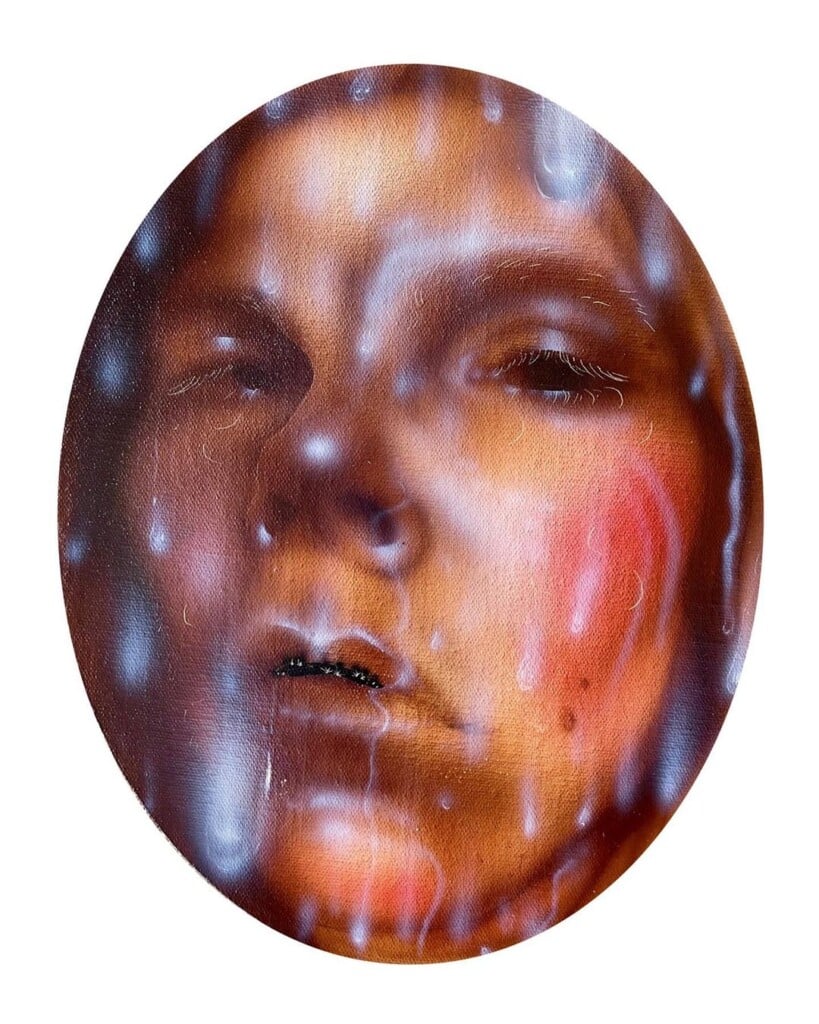
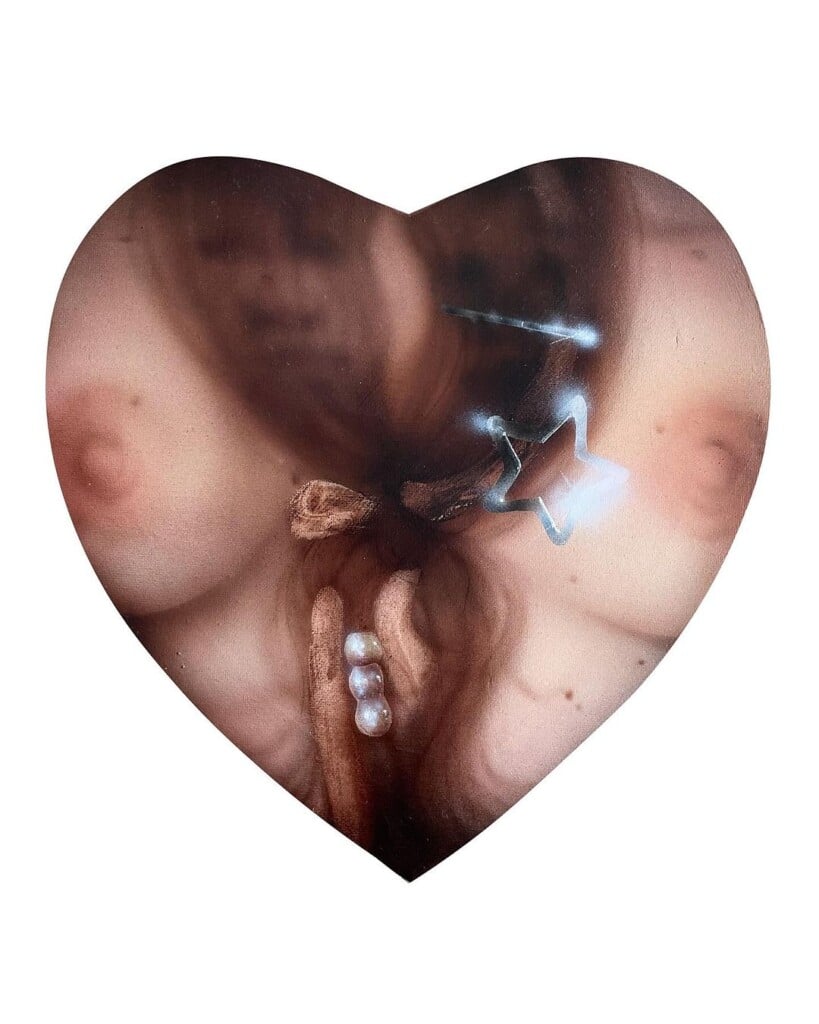
Another intriguing aspect of Helena Minginowicz’s works is her technique. The evident layers might appear as a sort of collage, but the artist reveals her use of the airbrush, a medium that allows her to construct perspective planes. «The airbrush enables me to create smooth tonal transitions and subtle contours, as well as sharp, almost surgically ‘cut’ edges, giving the images visual depth and layered complexity, in contrast with an aesthetic effect reminiscent of advertising banners, GIFs, and filters that saturate contemporary reality.» Here, the image of contemporaneity becomes encoded. A visual device that attempts to engage a wide audience who, despite being afflicted by different traumas and built from equally diverse stories, finds themselves children of the same society, one that is deviant and inconsistent. Thus, perhaps, the common points so sought after by the artist become clear in the references to pop culture, in those symbols conveyed by mass media that, in various ways, we all make our own.
Animal symbolism is immortal and is the voice of truth
Fragility and weaknesses, carefully hidden behind a veil of shame, emerge, in my opinion, in the animals—often farm animals—that Helena Minginowicz paints in a similarly concealed manner. Intrigued by this detail, I wanted to know more, and when I asked her about the choice of these animals, Helena explained that it actually stems from tradition, particularly painting tradition. «I like the idea of delving into animal symbolism, which has always accompanied the history of art, from cave paintings to the present day,» the artist elaborates. «Animal symbolism is absolutely timeless; it’s like a silent whisper of nature’s truth about ourselves, while also connecting to the works of the old masters and the history of painting as a whole. All these creatures, appearing symbolically here, reveal what we often don’t want to reveal, bringing to light everything that is falsified and hidden. They are the voice of truth, completing the landscape of the depicted situations. Moreover, animal figures are very close to me, in a very personal way. I have always had a deep sensitivity towards them and a close connection with them.»




Courtesy Helena Minginowicz