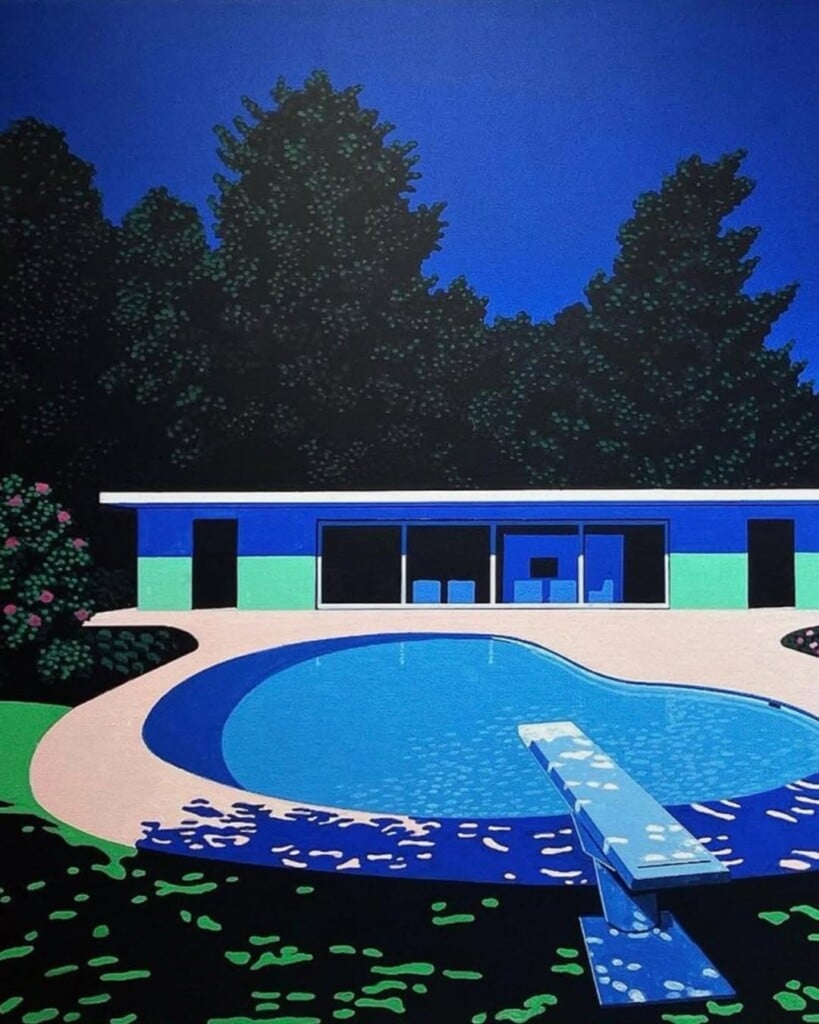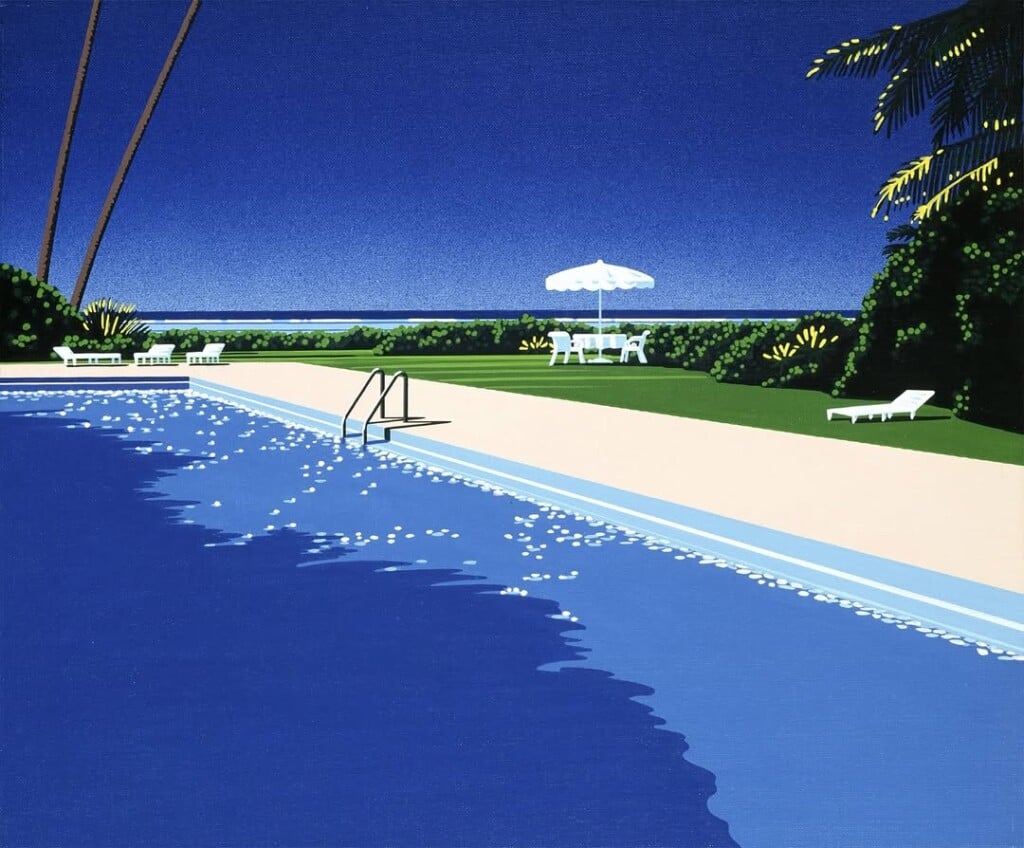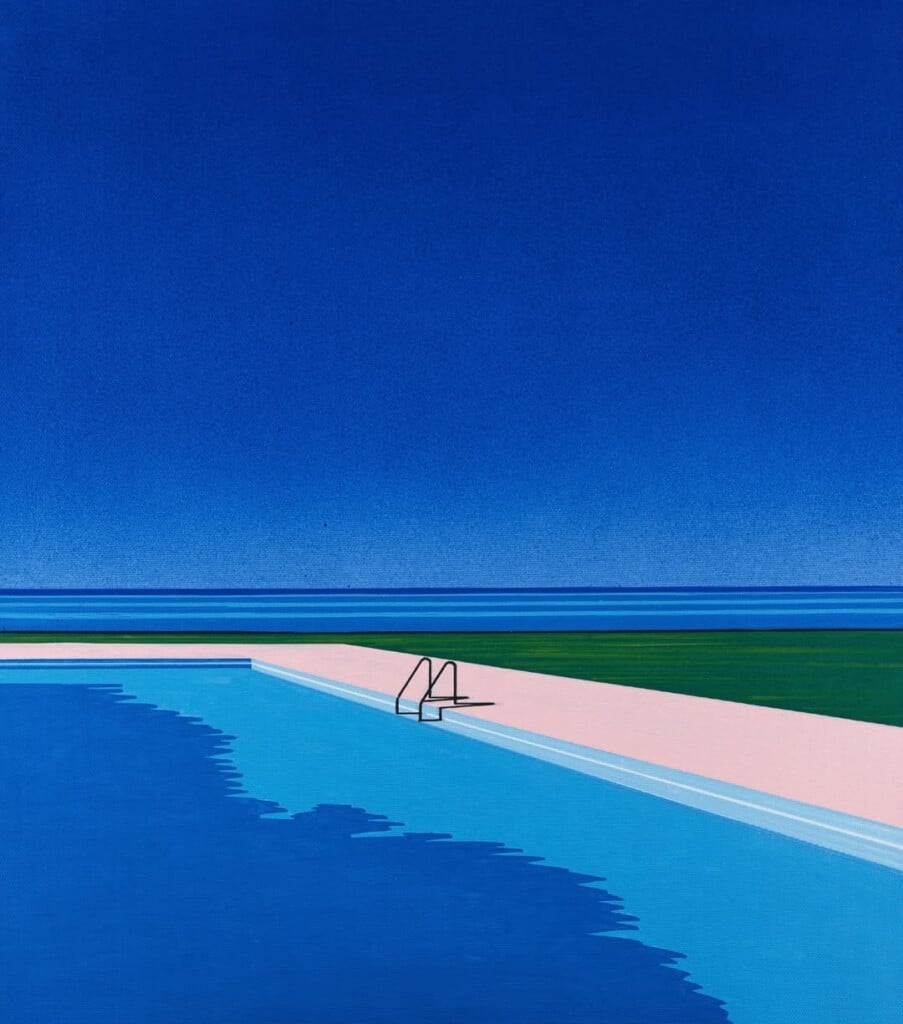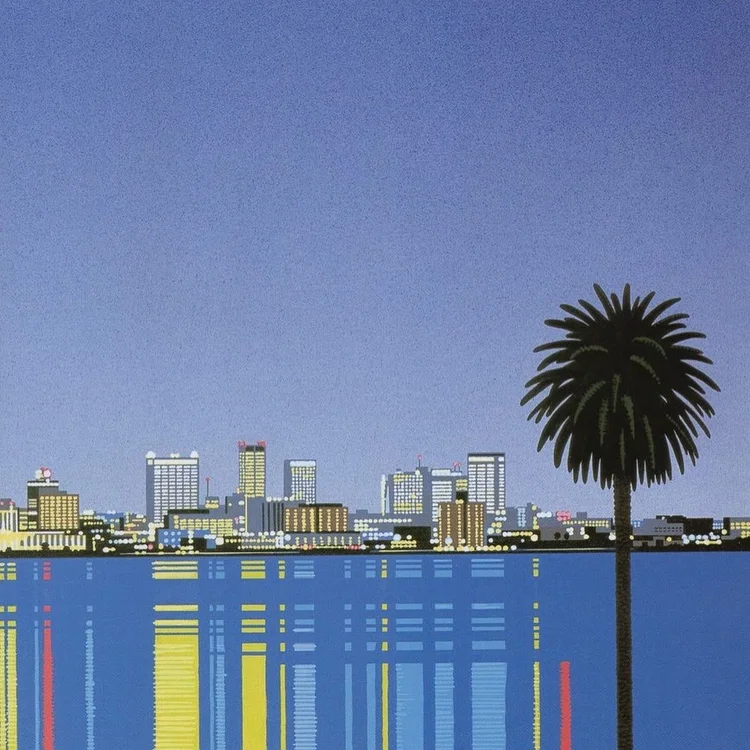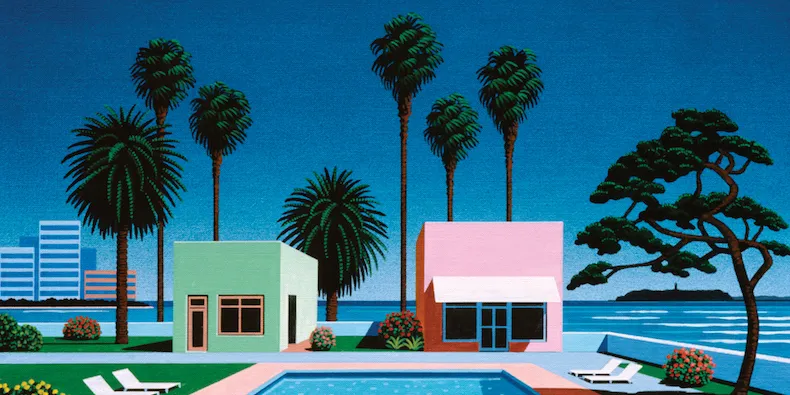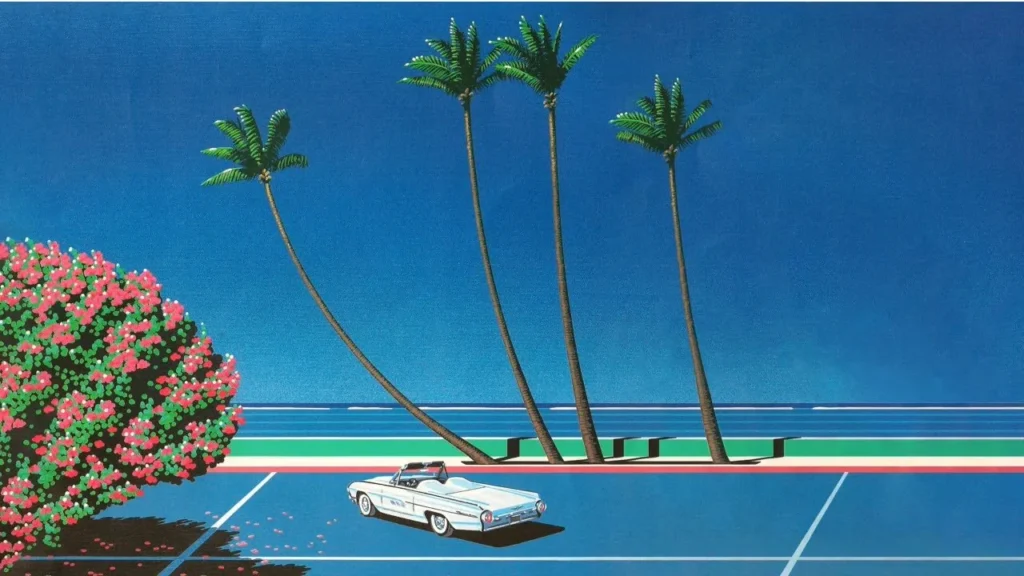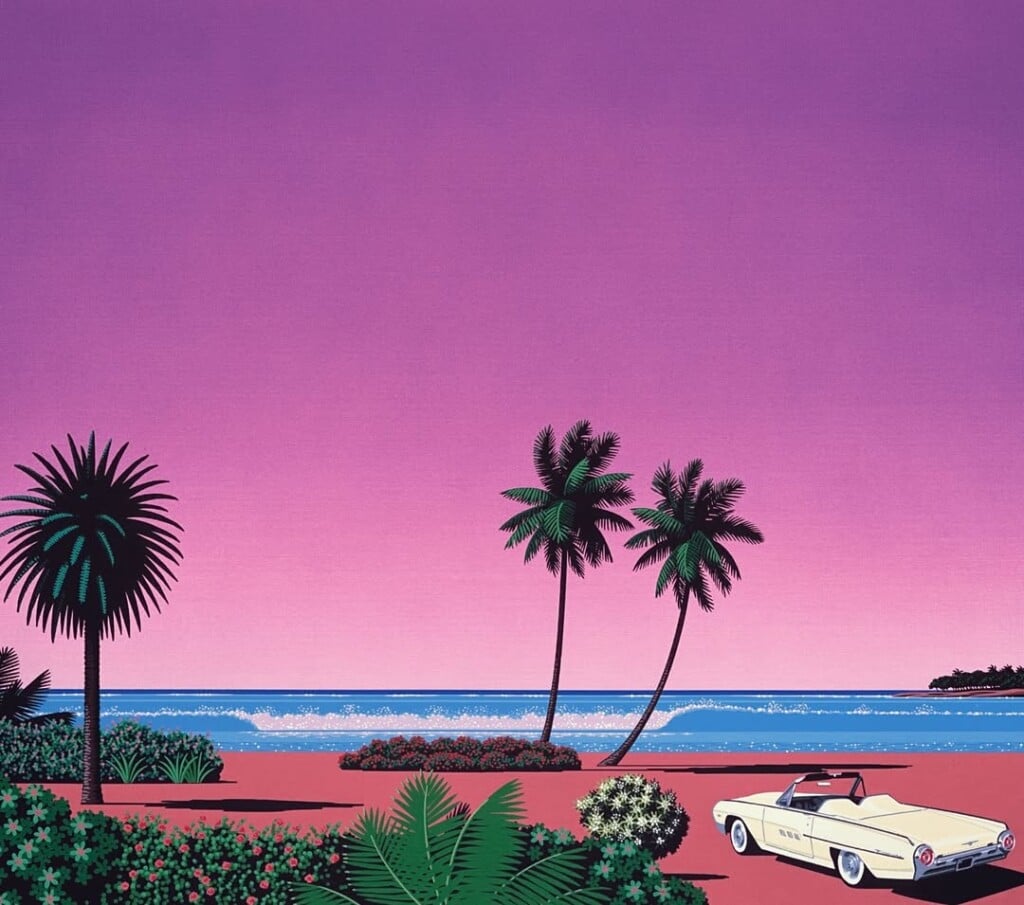
The still water of an empty pool. The colors of the sky fading from blue to pink. A Californian house facing the street. All elements that point to a single name: Hiroshi Nagai.
Born in 1947 in Tokushima, Hiroshi Nagai has spent his entire career painting the same place: a location he has never stopped dreaming about and, in a way, never stopped inventing. Self-taught, between 1973 and 1975 he traveled through the United States and Guam. What he saw there — the warm light on the asphalt, motel swimming pools, palm trees lining the streets — became the raw material for building an entire imaginary world. Nagai paints the American dream from afar, assembling images taken from magazines and catalogs to create timeless, idealized visions.
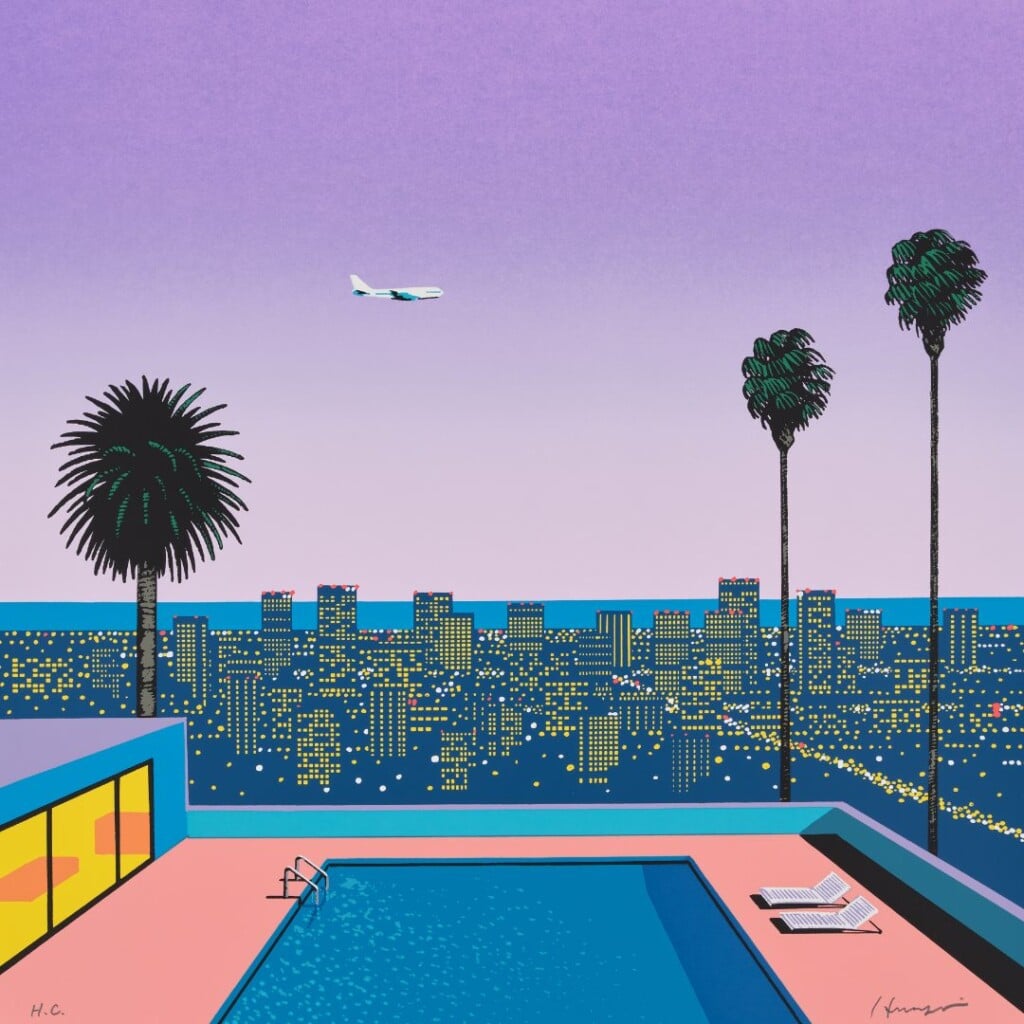
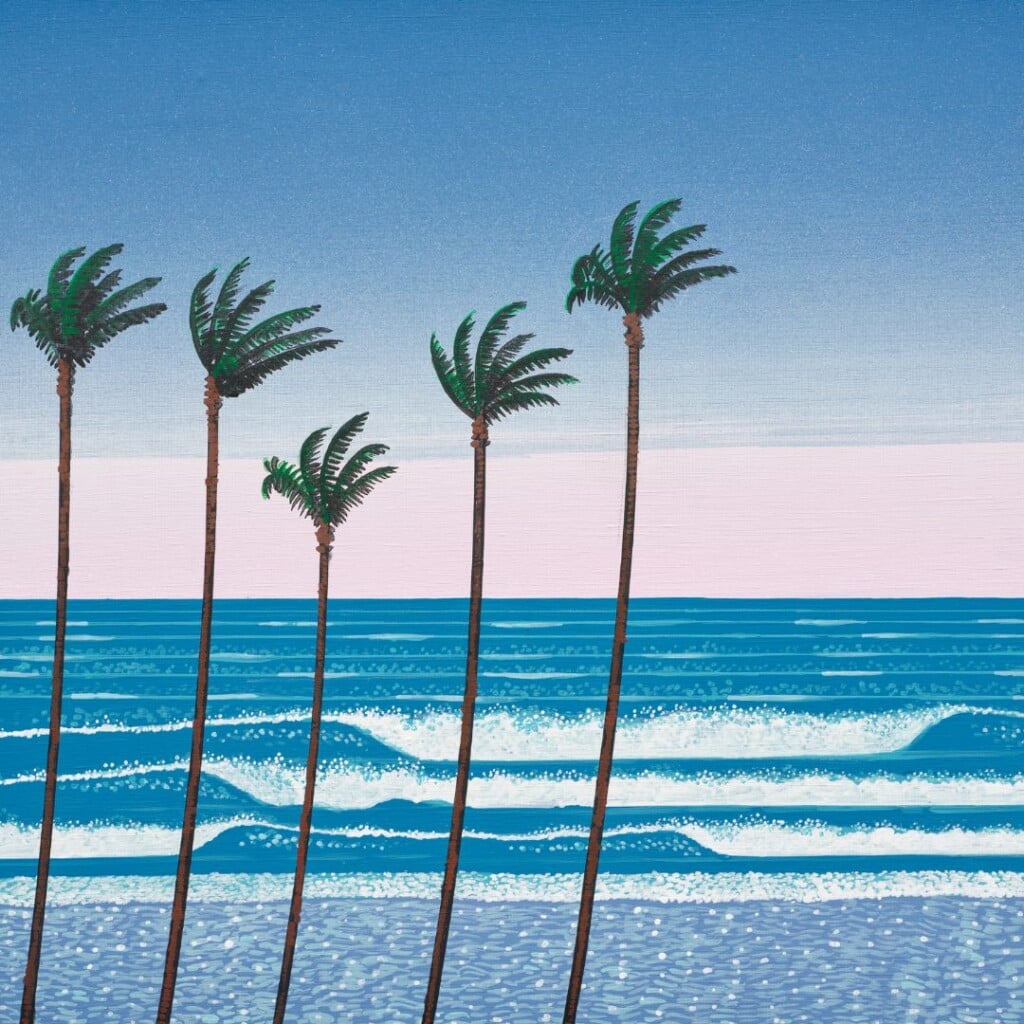
The most distinctive trait of his work is the deliberate absence of people. Nagai’s pools have no swimmers. The terraces have no guests. The streets have no passersby. These places exist in their purest form precisely because no one lives in them — or because whoever once did has just left, or hasn’t arrived yet. Everything is suspended between what has been and what is still to come.
The comparison with David Hockney is inevitable. The influences are Western, but Nagai reworks them through a Japanese sensibility, with a calm and a nostalgia that belong to him alone.
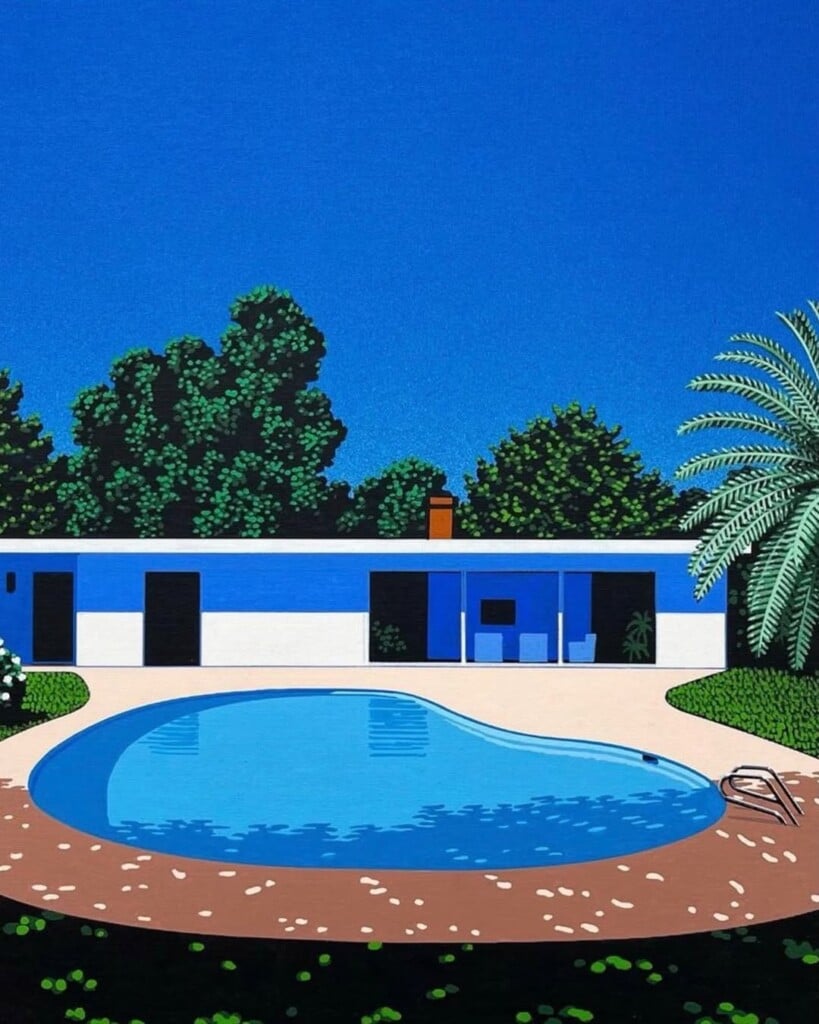
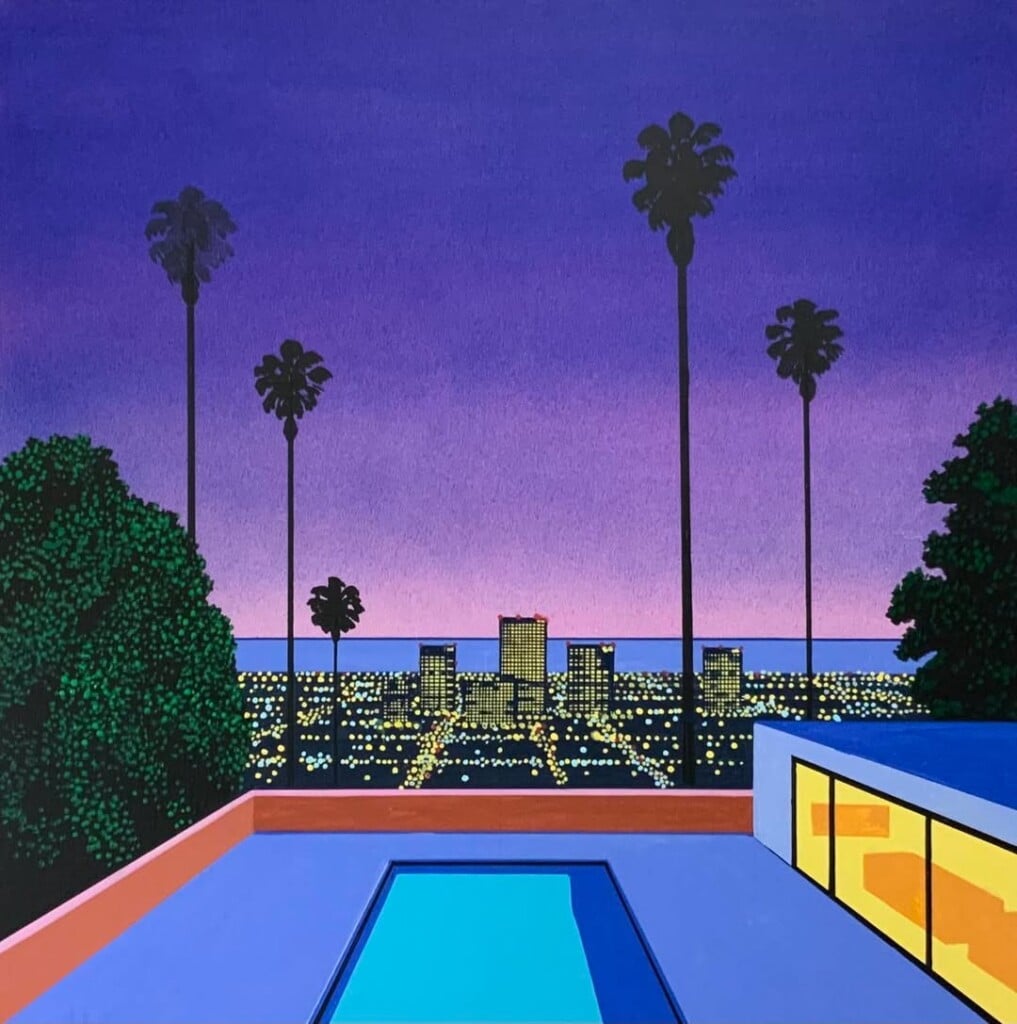
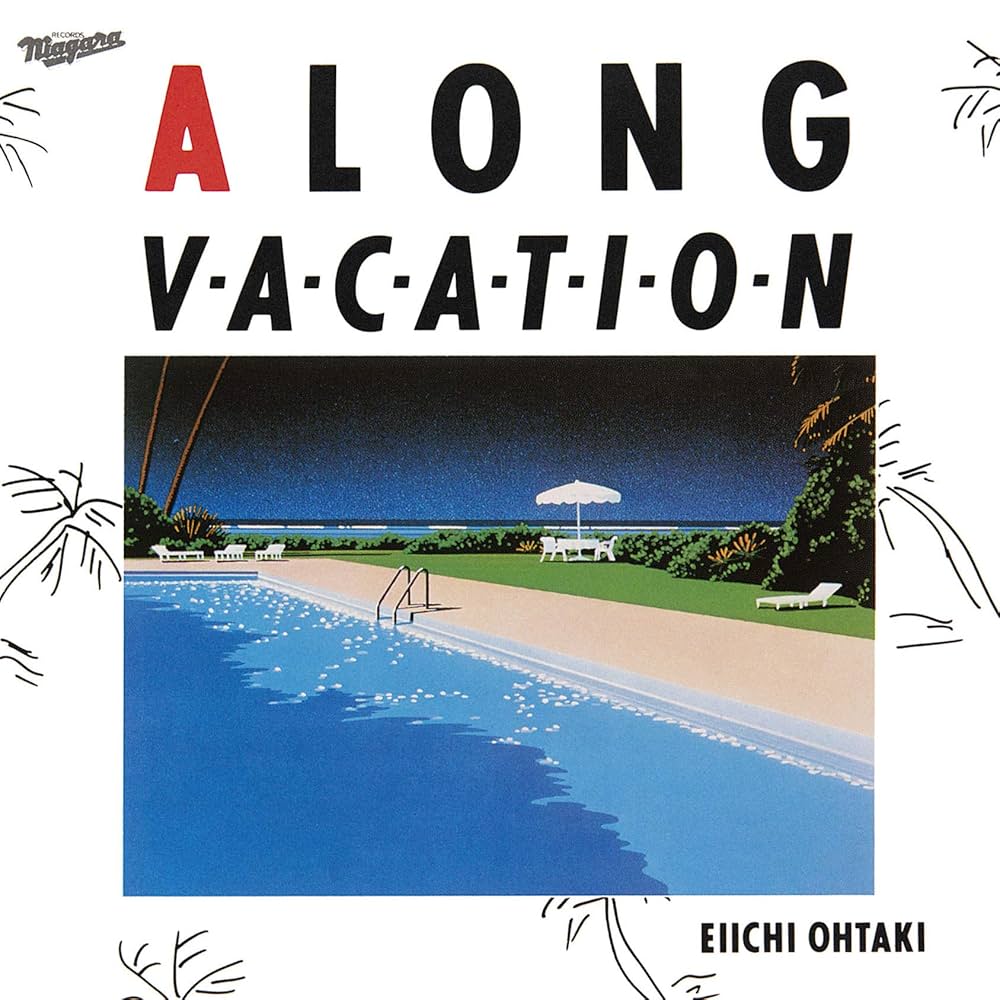
Nagai’s style pairs perfectly with city pop, which exploded in the 1970s, leading him to create the cover art for Eiichi Ohtaki’s album A Long Vacation in 1981. Despite the passing years and the shifting of styles and artistic trends, Hiroshi Nagai has never lost his appeal, and he continues to this day to make us dream with new work.
Looking at his work, a hint of nostalgia creeps in, like when summer ends and the magic goes with it.