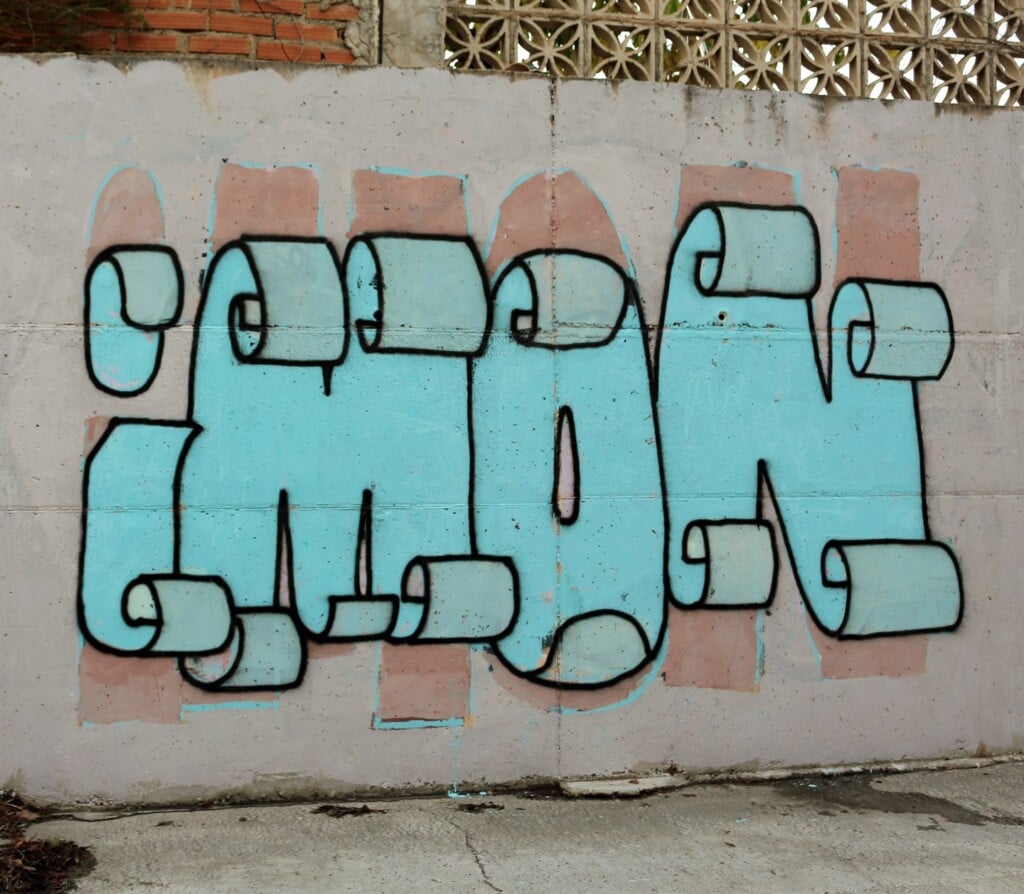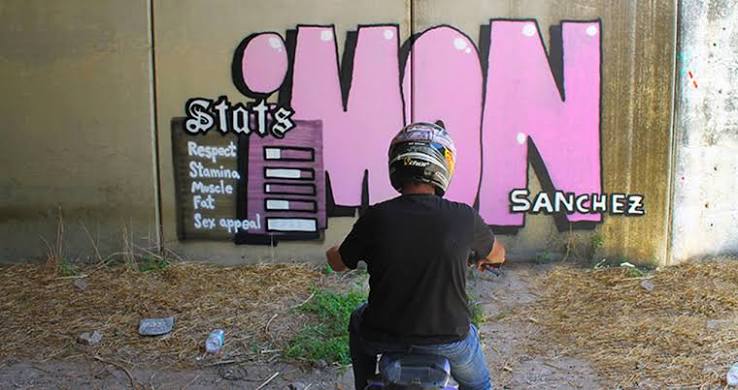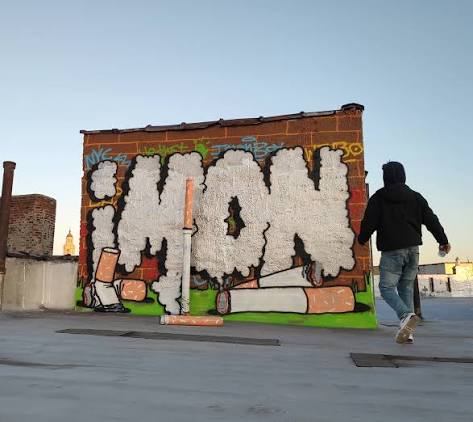
Beaches, sunsets, friends, video games, music, travel, the internet, everyday situations, images that seem to belong to everyday life and that, passing through his gaze, become fragments of a visual diary. The artist started painting graffiti at thirteen, building over time a language that today lives as much on walls as in galleries.
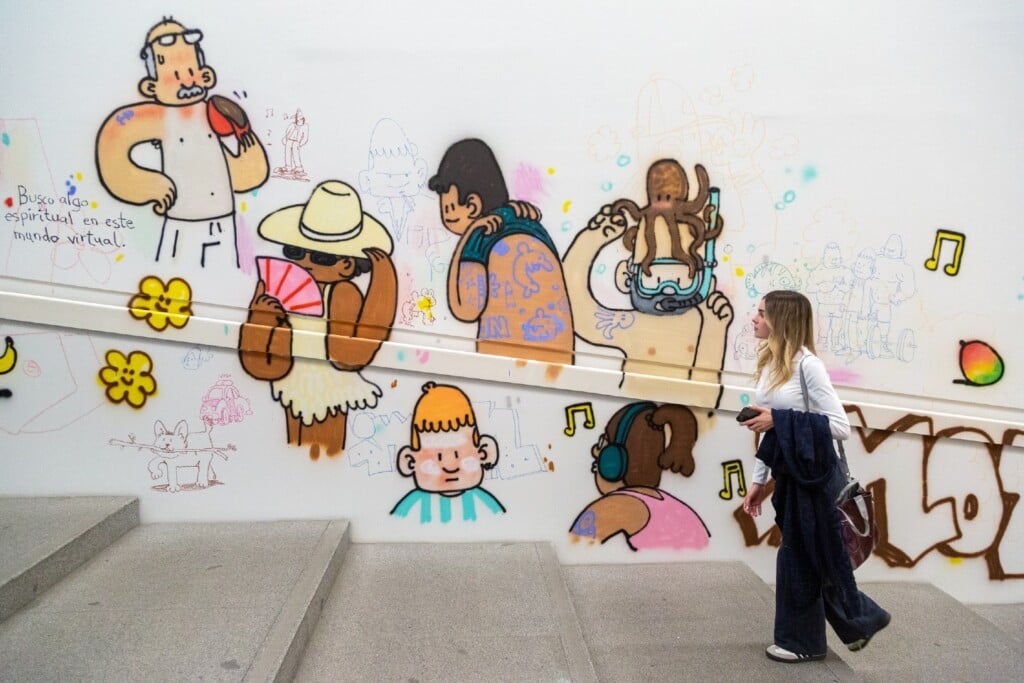
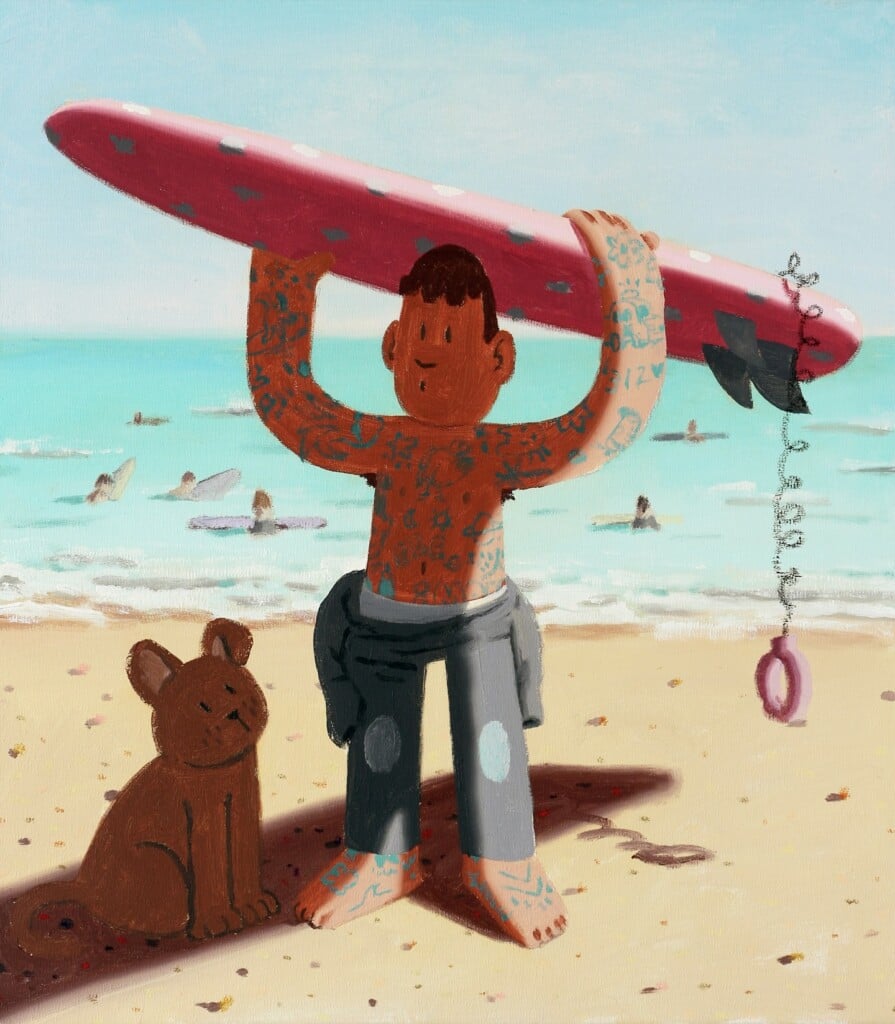
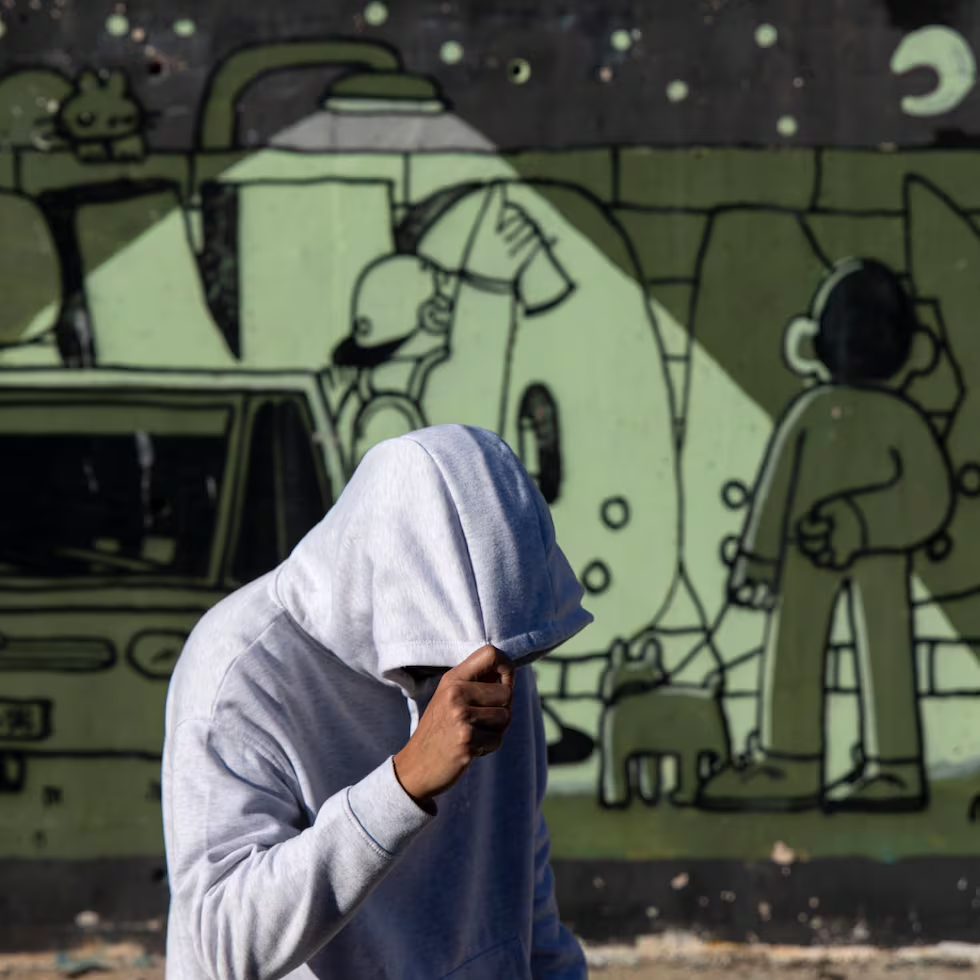
The first thing that strikes you about Imon Boy, however, isn’t necessarily what he paints, but what he chooses not to show. His identity remains anonymous, and the name he signs his works with has become a kind of character. There’s no artist’s face to serve as a key to interpretation, and the images, characters and stories he builds remain at the center.
Imon Boy doesn’t seem interested in building a universe separate from reality, but in transforming the one he already knows. References to 90s and 2000s culture blend with scenes of lived experience: video games, cinema, the internet and memes coexist with the sea of the Costa del Sol, with friends and with episodes tied to his experience in graffiti. His works thus function as small windows onto a personal world, without ever closing in on pure autobiography.
Even the recurring presence of the police takes on a particular tone: rather than turning the conflict between writer and authority into an exclusively aggressive gesture, Imon Boy often tells it with irony, almost as an absurd situation of everyday life. This is one of the traits that sets his approach apart — the world of graffiti remains tied to clandestinity, but is observed with lightness, humor and a certain tenderness.
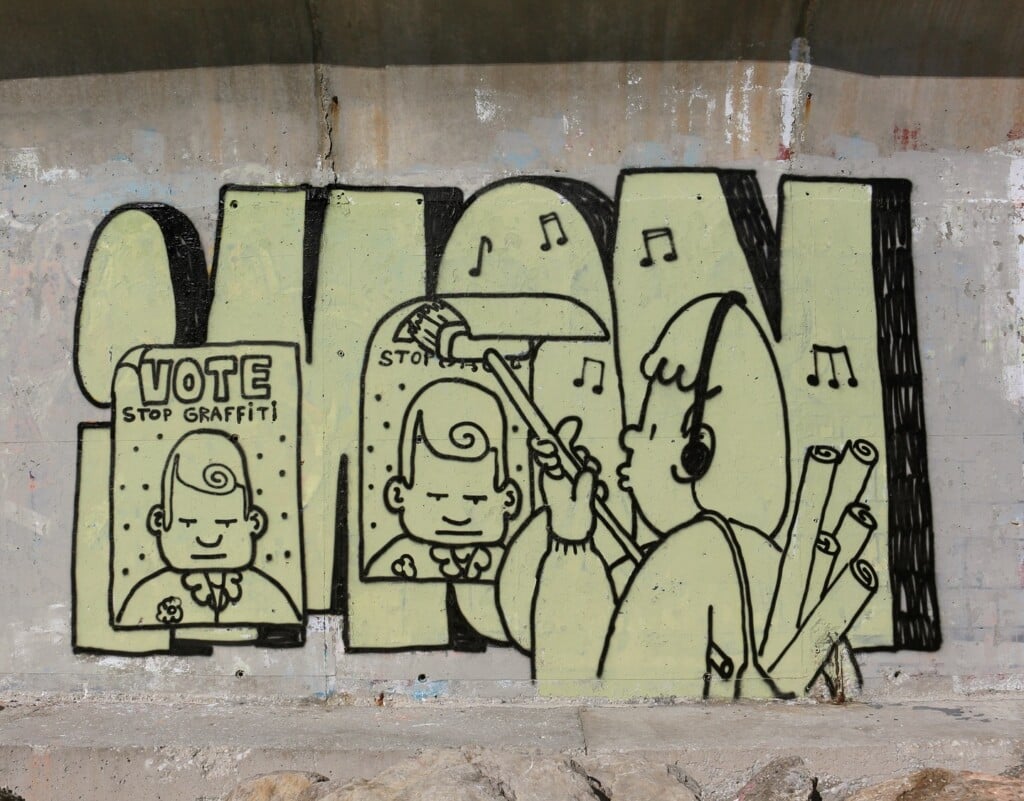
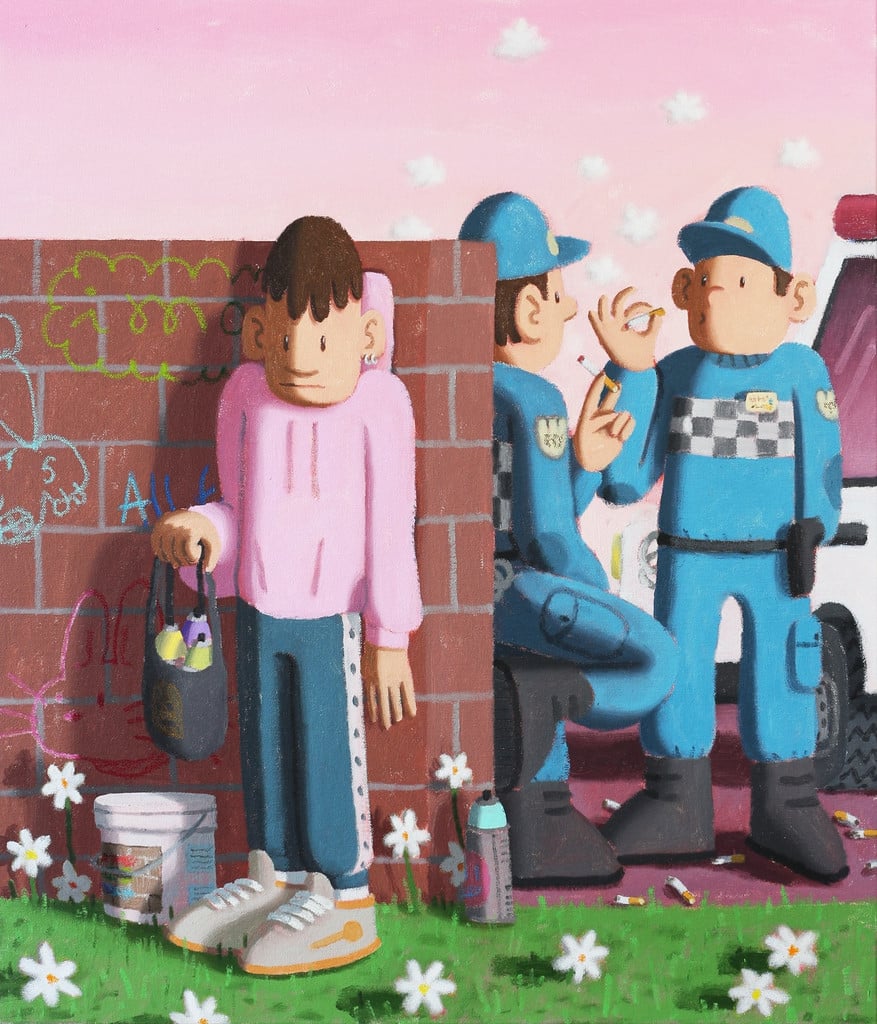
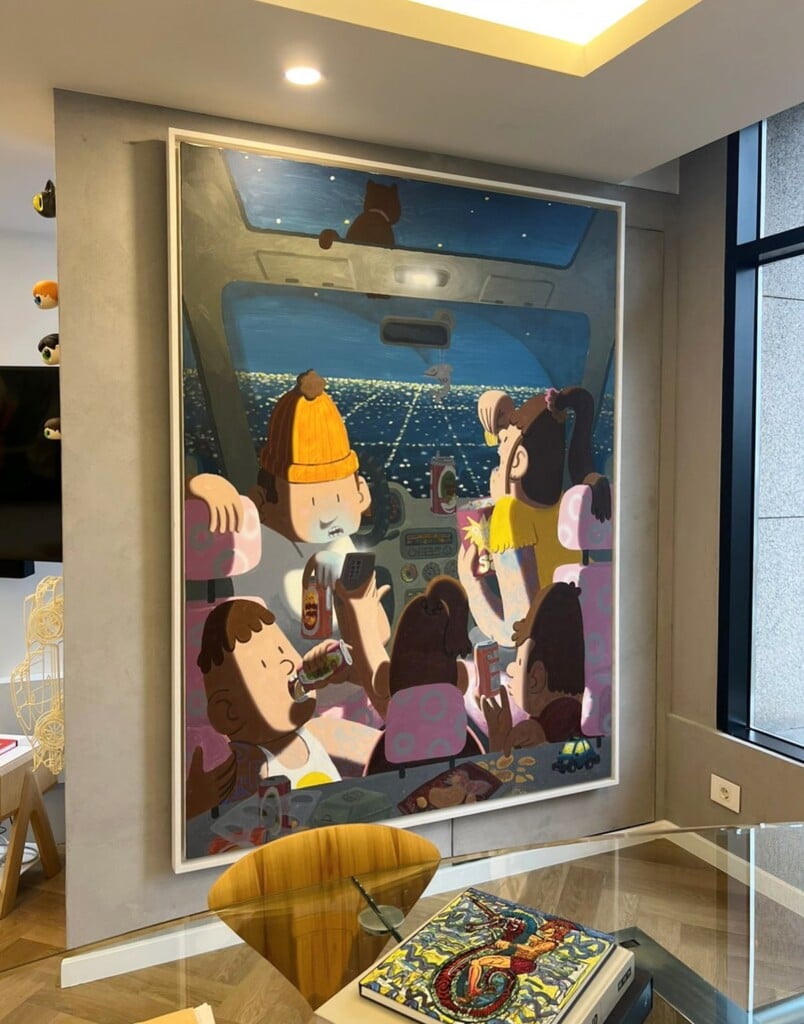
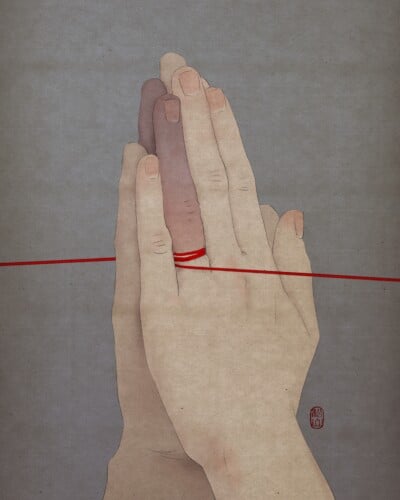
Over the years, the move from the street to the studio hasn’t meant abandoning graffiti. The two dimensions keep contaminating each other. The walls, the sketches and the experiences gathered outside become material for paintings and sculptures, while the work in the studio makes it possible to slow down and turn those same situations into more intimate images. The result is a language that isn’t necessarily trying to prove how “technical” graffiti can be, but how personal it can be.
From Málaga to Los Angeles, London, New York and Hong Kong, Imon Boy’s work has progressively left the street to enter international galleries, without entirely losing that sense of immediacy of a wall found by chance. In 2026 his path continues too, through new exhibition projects and a collaboration with the Lyle O. Reitzel gallery, announced in July.
Perhaps this is precisely the most interesting part of his research, namely that Imon Boy doesn’t use the street just as a surface, but as a way of looking at the world. He takes what he encounters, mixes it with the visual memory of his generation and gives it back in the form of colorful, ironic and seemingly simple images. Behind those characters and everyday scenes, though, a more subtle question remains: how much of our identity do we tell through what we choose to show, and how much instead through what we decide to keep hidden?