The logo, which for decades functioned as a symbol of belonging and recognizability, is today increasingly perceived as outdated—if not openly cringe. Logomania, built on repeated monograms and loud branding, seems to have lost its grip on a generation that grew up in a new era marked by economic uncertainty. Luxury keeps getting more expensive while purchasing power continues to decline. And yet, the logo never truly disappears. It steps back, returns, and continues to fascinate us in alternating cycles.

On TikTok and other social platforms, the conversation is straightforward: more and more young people say they see no point in spending disproportionate sums on the original, especially when the visual gap between authentic and replica is minimal. It’s not just a matter of price, but a cultural stance. The logo no longer guarantees taste or distinction—if anything, it often produces the opposite effect. In an ecosystem saturated with images and constructed identities, hyper-recognizability becomes a limitation rather than an advantage.
This tension between logo, authenticity, and value is not a recent invention. Between the late 1980s and early 1990s, in Harlem, Dapper Dan had already turned the brand into a cultural battleground. His custom creations, made by reworking monograms and materials from major fashion houses, were not simple counterfeits but radical rewritings of a language designed to exclude. In that context, the logo did not promise status, but affirmation: it became visibility, identity, and symbolic power.
Lawsuits, police raids, and in 1992 the forced closure of Dapper Dan’s atelier followed as a consequence. Only in 2018, after an accusation of cultural appropriation directed at Gucci, was Dapper Dan’s work officially reabsorbed into the luxury system through collaborations, capsule collections, and institutional celebrations. A delayed recognition that makes clear how the boundary between fake and original has always been more political than aesthetic.
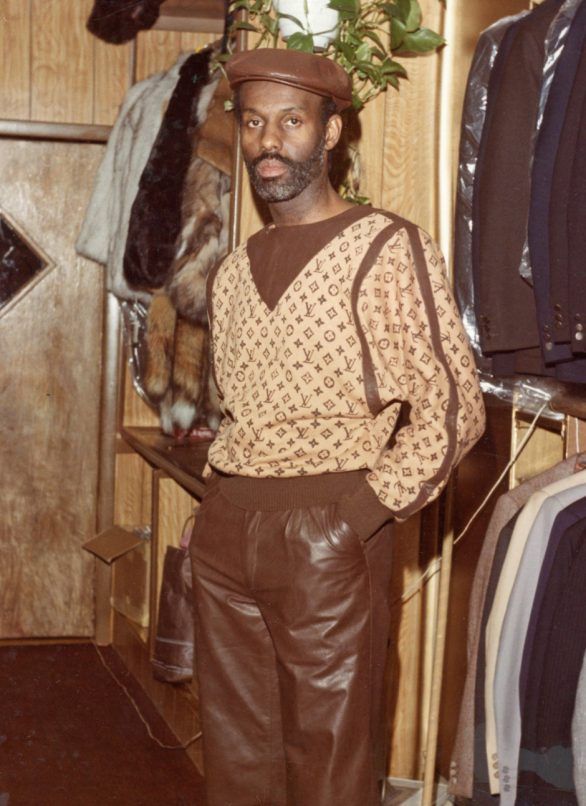
Read today, Dapper Dan’s trajectory speaks directly to our current relationship with logomania. If back then the logo was pushed to excess until it became a declaration, today it is often rejected because it has been emptied of meaning. In both cases, what is being questioned is the idea that value resides in the brand itself, as if it were enough to guarantee distinction.

It is within this ambiguous space that so-called silent luxury, or quiet luxury, has also emerged—an aesthetic based on subtraction, material quality, tailoring, and longevity.
Visualizza questo post su Instagram
At the same time, the fake market is losing part of the stigma that once surrounded it. If the logo is no longer automatically desirable, the distinction between real and fake is no longer as relevant as it once was. The replica is not necessarily an attempt at ostentation, but a pragmatic—or even ironic—choice that challenges the entire system of traditional luxury.
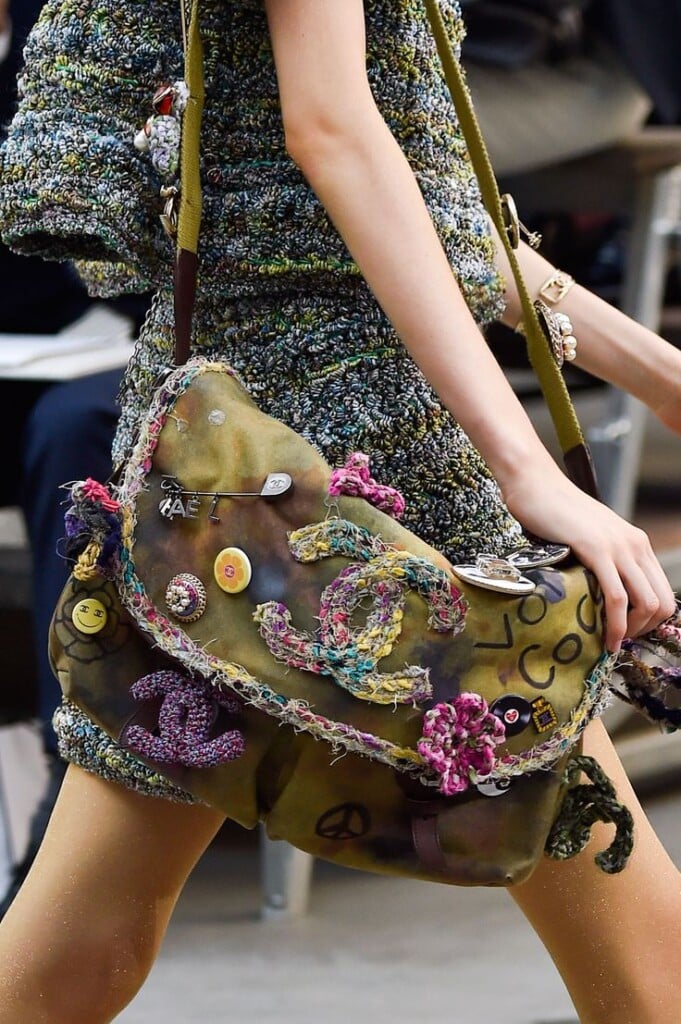
All of this, however, does not mark the definitive end of logomania. Rather, it confirms its cyclical nature. The logo tends to return precisely when it seems to have lost relevance, reactivated as a conscious sign—sometimes provocative, sometimes ambiguous.


If Dapper Dan once reused the logo to enter a system that excluded him, today we are faced with an even more complex scenario where quiet luxury and exaggerated logos coexist. And if in contemporary culture everything is visible and replicable, luxury now exists within a new reality—one defined by its historical, political, and cultural complexity.