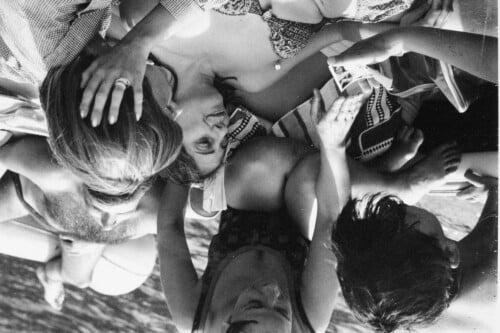
A coffee made slowly. A walk with no destination. Laundry drying in the sun outside the window. These are not just daily gestures, but also signs of a shift in how we experience the city. In recent years, we’ve started to rediscover slowness. In the kitchen we talk about slow food, in travel about slow tourism, and even on social media, under the concept of “slow living”, photos and videos depict a clear departure from performance obsession. Today, this slower outlook also applies to urban space. This transformation raises a question: what if the city were designed not just for moving, but also for stopping?
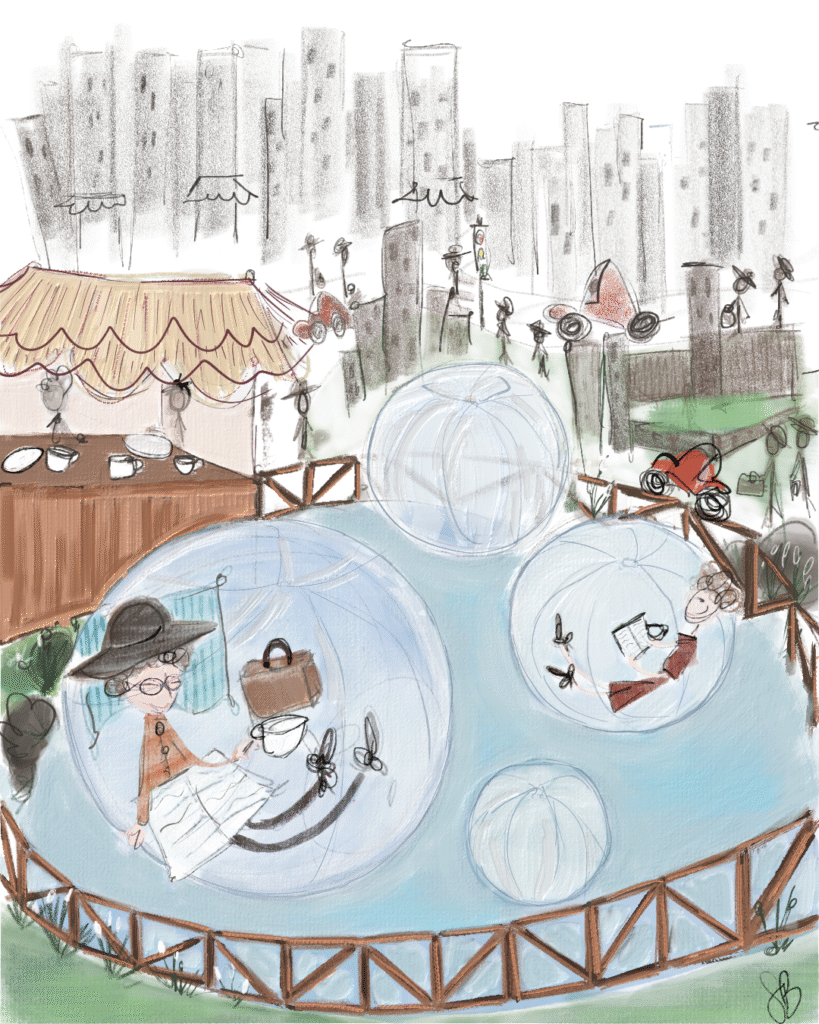
In the fourth episode of Cantiere Scandurra, the new podcast by Scandurra Studio for Collater.al, architect Alessandro Scandurra explores a seemingly paradoxical tension: that between slowness and activism. Because in a time when everything accelerates, slowing down can be a revolutionary act.
Visualizza questo post su Instagram
The 15-Minute City: a Realistic Utopia
Scandurra refers to a theory currently influential in Western urban planning: the 15-minute city model, theorized by Carlos Moreno and already adopted in cities like Paris, Barcelona, and Milan. The idea is simple: living in a neighborhood where everything you need—schools, parks, clinics, shops—is accessible on foot or by bike in under fifteen minutes.
The result? Less traffic, less stress, but also something more subtle: a new sense of proximity. When services are part of your routine, a place-based identity emerges. And with it, a community—or multiple communities that brush past each other, intertwine, and coexist.

Slowness Is Not Inertia
But, the architect warns, slowing down doesn’t necessarily mean stopping everything. Listening to him brings to mind the recent blackout that hit Spain, Portugal, and parts of France. A forced halt to urban life that seemed to realize a dream many of us share: if the city stops, we can reclaim our time. But behind this collective and somewhat romantic idea lies a disruption that impacted the economy, transportation, and daily life. A functioning city, Scandurra argues, is a dynamic organism that adapts and transforms. This is where architecture becomes an active gesture, capable of activating new relationships, new practices.
For Scandurra, designing a public space is never a neutral act. It is a political choice. Creating flexible, multifunctional, and accessible places means leaving space open for something to happen. Even something unexpected.
This is what urbanists like Teddy Cruz and Fonna Forman do, who talk about urban space as civic infrastructure, as a social engine. Space is not just a container, but an activator.
Dark Ecology: Inhabiting the Fractures
Scandurra pairs this vision with that of philosopher Timothy Morton, and his concept of Dark Ecology. A perspective that rejects the idea of nature as a harmonious, untouched place and instead embraces shadow, friction, and disorder.
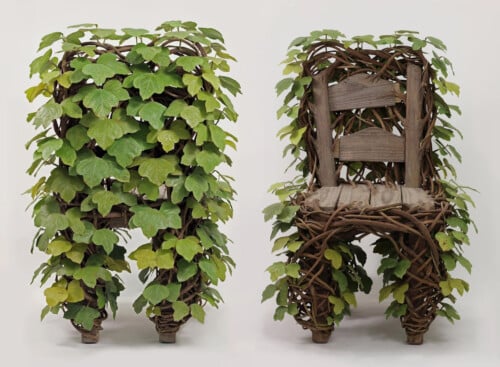
For Morton, ecology is also full of contradictions: we long for connection with the natural world, but we pursue it through consumption. Sustainable objects, recycled clothing, green interior design — these are often sincere attempts to feel part of it, but they carry a fracture between us and the world we inhabit: we respond with consumption to a desire for reconnection with reality. A fracture that also runs through urban spaces and that, for Scandurra, architecture can no longer ignore.

From Order to Complexity
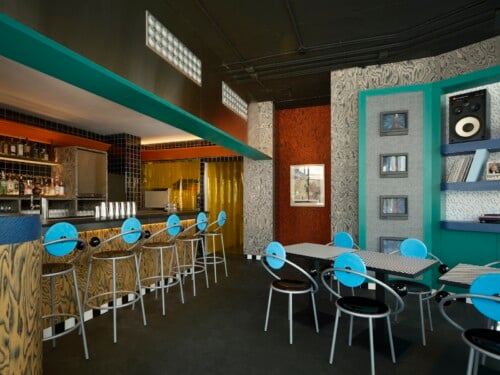
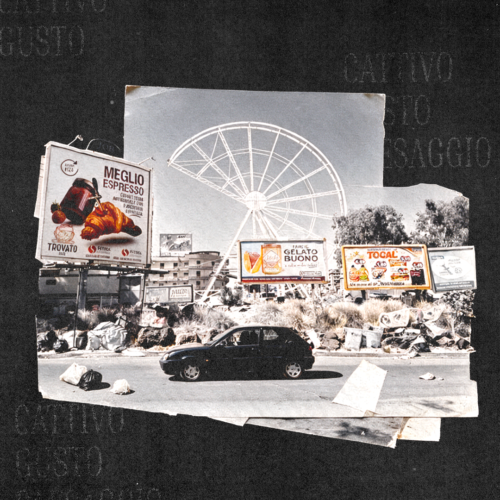
According to Scandurra, architecture can do something very simple, yet anything but trivial: stop pursuing perfection. Instead, embrace complexity, transformation, and ambiguity. Design imperfect, incomplete spaces that don’t hide fractures, but expose them and make them traversable. It could be an open portico on the street, a bench in a courtyard, a rough space. These are not mistakes, but opportunities. Places where something can still happen—even something we didn’t foresee.
Activating the City
For Scandurra, architecture has an urgent task: to open up possibilities. That’s why the internal research team at Backstage Studio dedicates its work to exploring and proposing architecture as a tool for participation, open to a variety of actors—from designers to institutions to academia—to build spaces that connect different aspects of urban life. In a cityscape marked by environmental fragility, social loneliness, and new needs, the city can no longer be just a beautiful design. It must become a sensitive organism, capable of responding—and anticipating.
And maybe, in the time we take to slow down, to really look at what surrounds us, there is already the beginning of a new way of inhabiting.