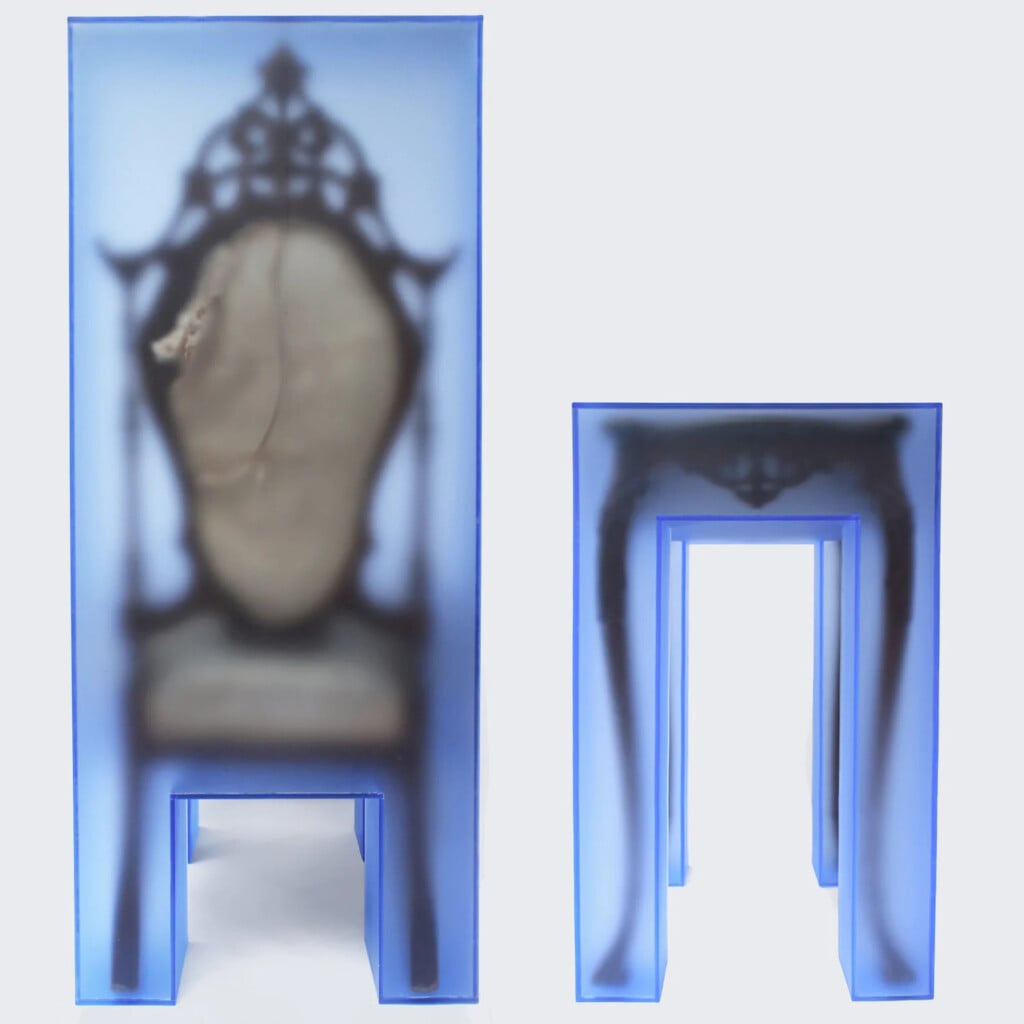
What if protecting an antique piece of furniture meant making it impossible to touch? This paradox is the starting point of For Now We See Through a Glass Darkly, the project created in 2019 by Joyce Lin together with Emeric Tchatchoua, founder and creative director of 3.PARADIS. Chairs, tables, lamps and other furnishings are enclosed within a translucent light-blue acrylic surface that, at first glance, looks like glass. The objects remain visible, but their presence is altered: what could once be used becomes something to be observed from a distance.
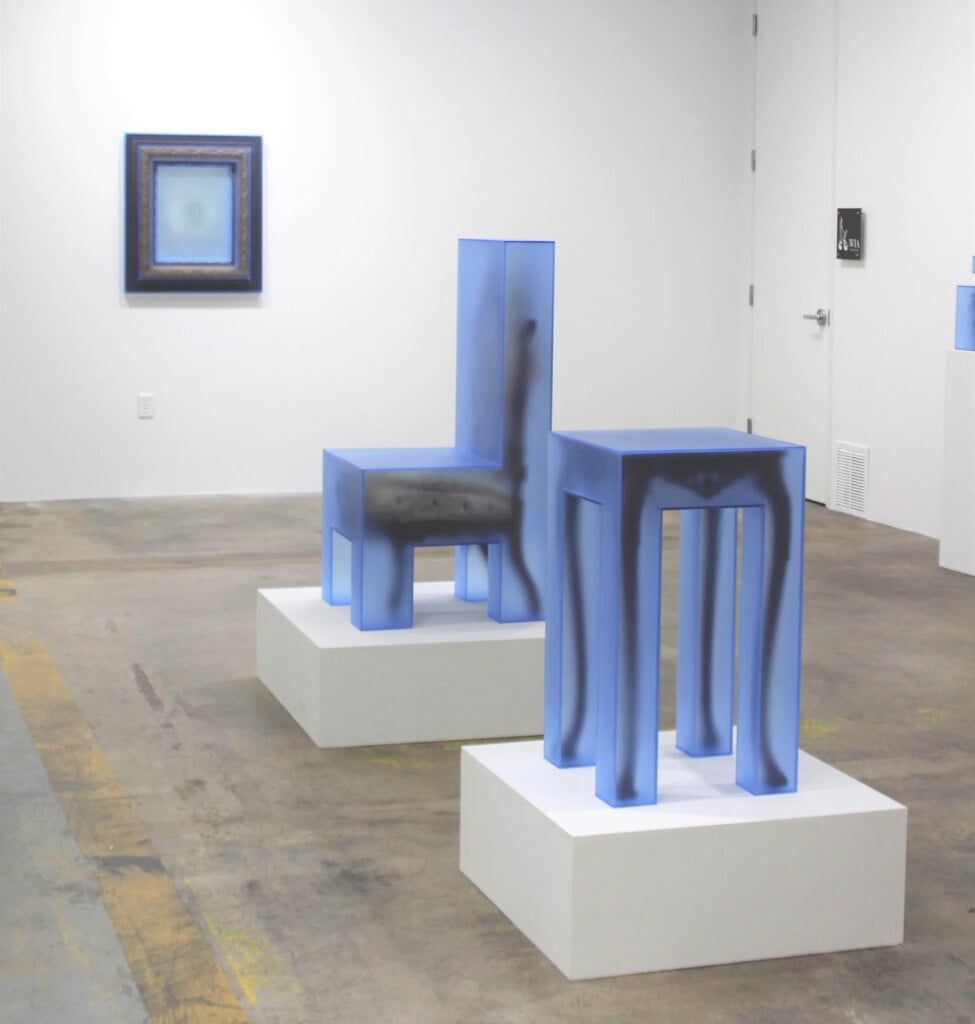
The series, presented at Sabine Street Studios in Houston, grew out of the meeting between Joyce Lin’s work on furniture and Tchatchoua’s research, bringing together history, memory, surrealism and a certain idea of transforming the everyday object.
The first thing that strikes you is the color: that pale blue doesn’t merely cover the furniture, it separates it from the world around it, as if a slab of fog had solidified around its forms. The decorations of the European-style furniture remain legible, but not completely. Carvings, legs, surfaces and ornamental details seem to surface and disappear at the same time behind the shell. The acrylic makes the object present and unreachable at the same moment.
It’s a transformation that also changes the relationship with function, because a chair still looks like a chair, but can no longer be used. A table keeps its structure, but is no longer available as a surface on which to put something down. The object retains its identity while losing the behavior we would expect of it.
Artist and furniture maker based in Houston, Joyce Lin works precisely on the relationship between surface and structure, questioning the boundary between what an object shows and what it hides. Her practice combines craftsmanship and experimentation with different materials, from wood to found materials to fiberglass. Chairs, tables and other familiar forms become for her tools for studying transformation, reconstruction and imitation.
Her training helps explain this hybrid position: Lin studied Furniture Design at the Rhode Island School of Design and Geology-Biology at Brown University through the Brown|RISD dual degree program. Two seemingly distant fields that in her work end up meeting in matter, structure and processes of transformation.
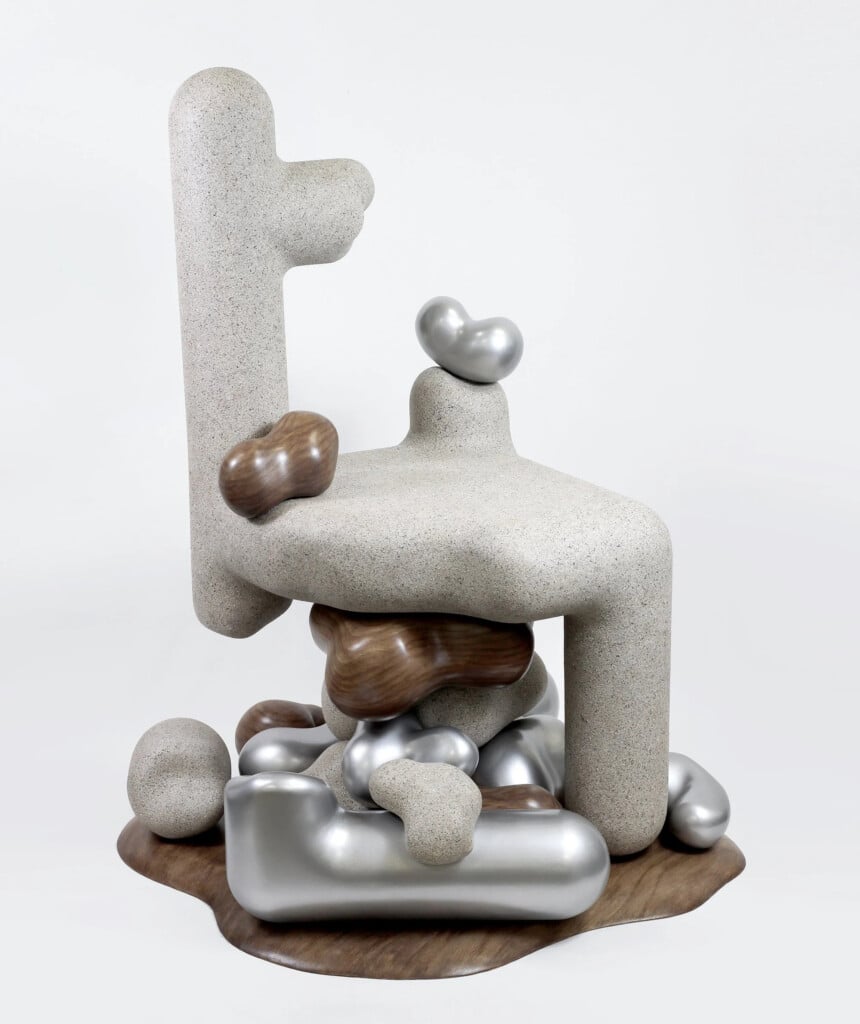
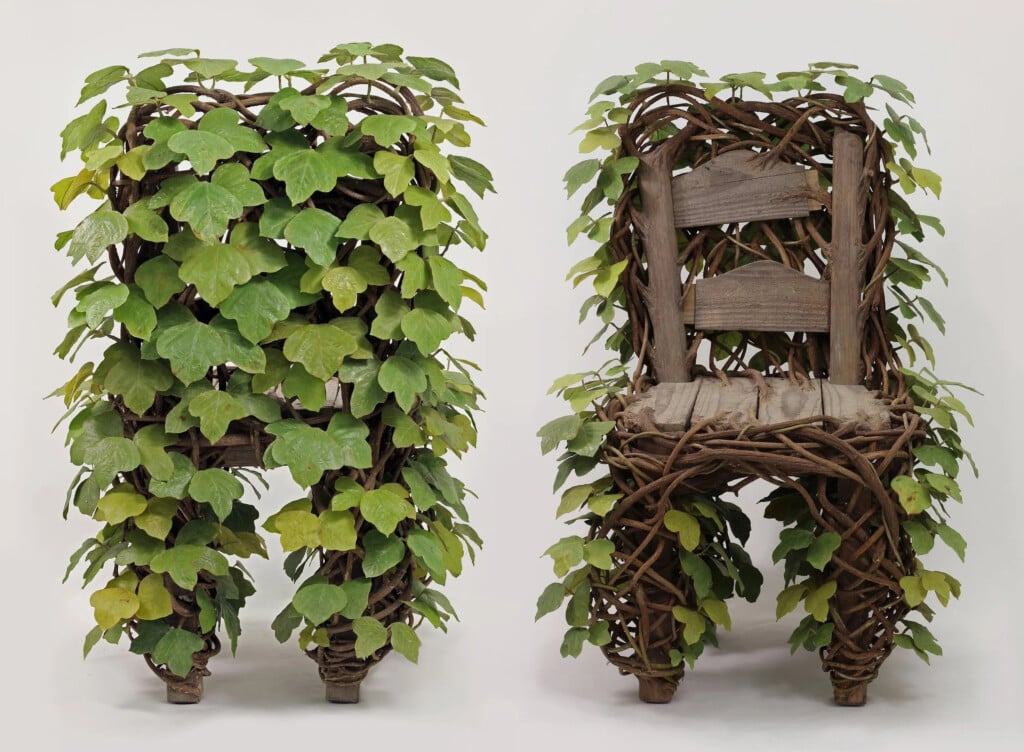
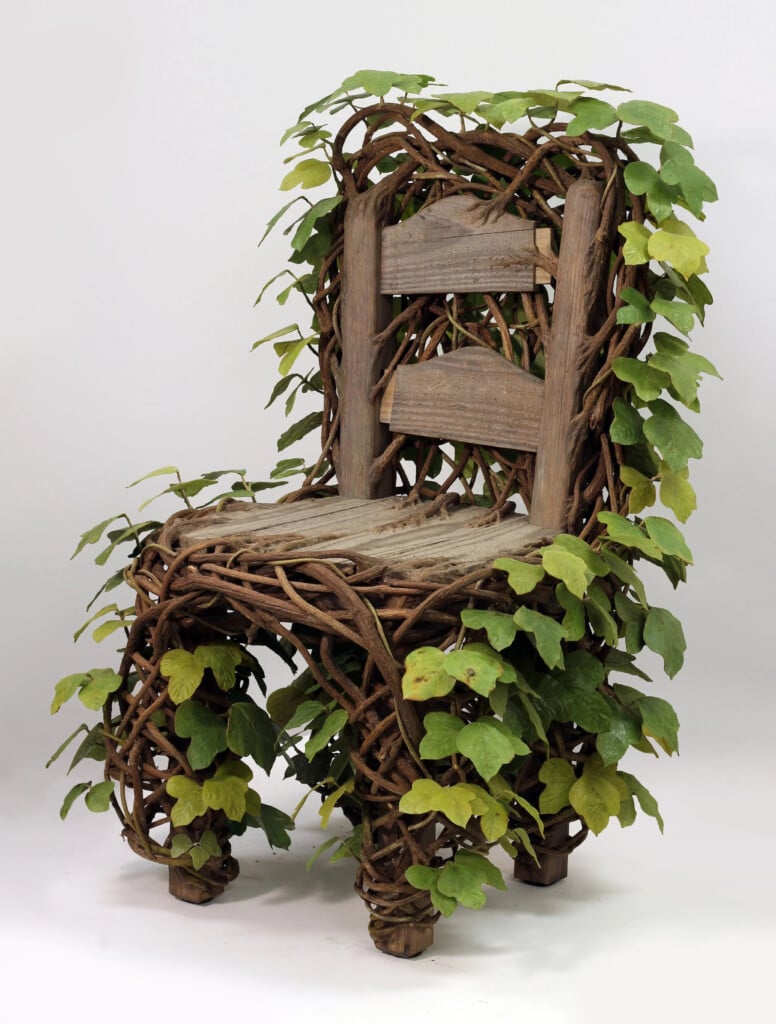
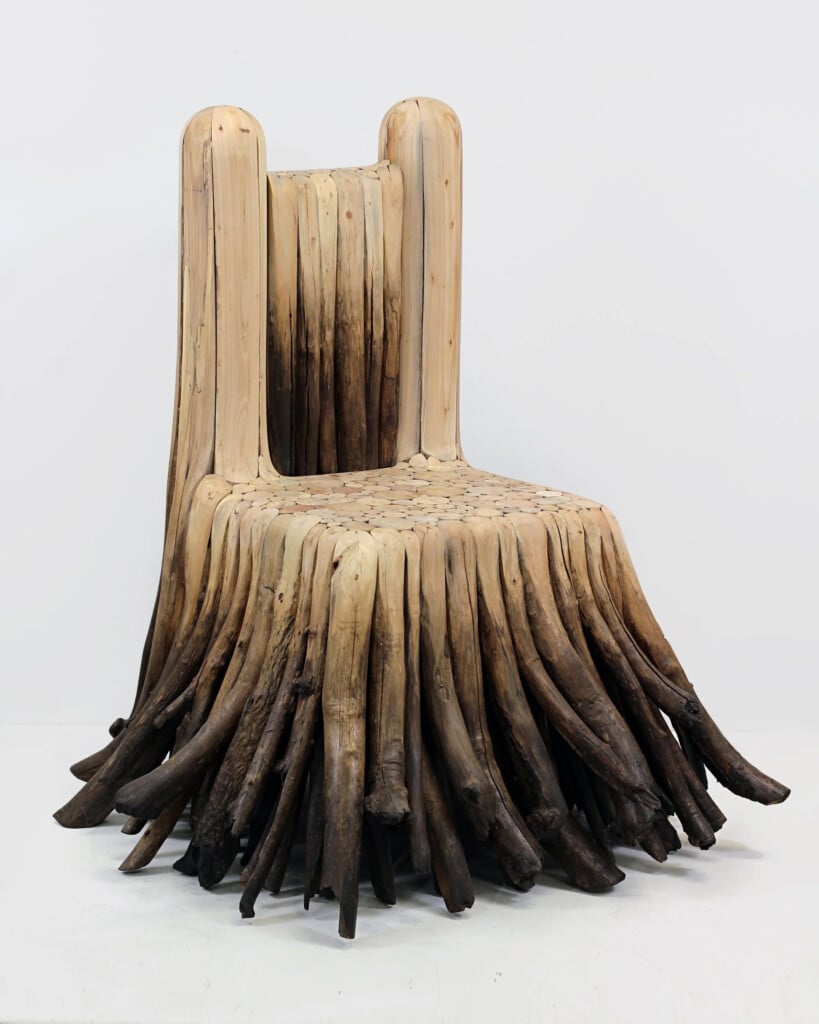
Chairs built from reclaimed wood and kudzu vines, small tables that look like impossible assemblages of granite, resin and everyday objects, furniture made from driftwood shaped by water and then blackened by fire. In Lin‘s work, design often starts from something recognizable in order to take it elsewhere. The Houston-based designer and artist works on the relationship between surface and structure, but also on the ever-thinner boundary between what is natural and what is man-made. Her path includes series such as Kudzu, Ghostwood, Wood Chair and Table Works, as well as projects in which chairs and furniture are taken apart, reassembled or literally transformed.
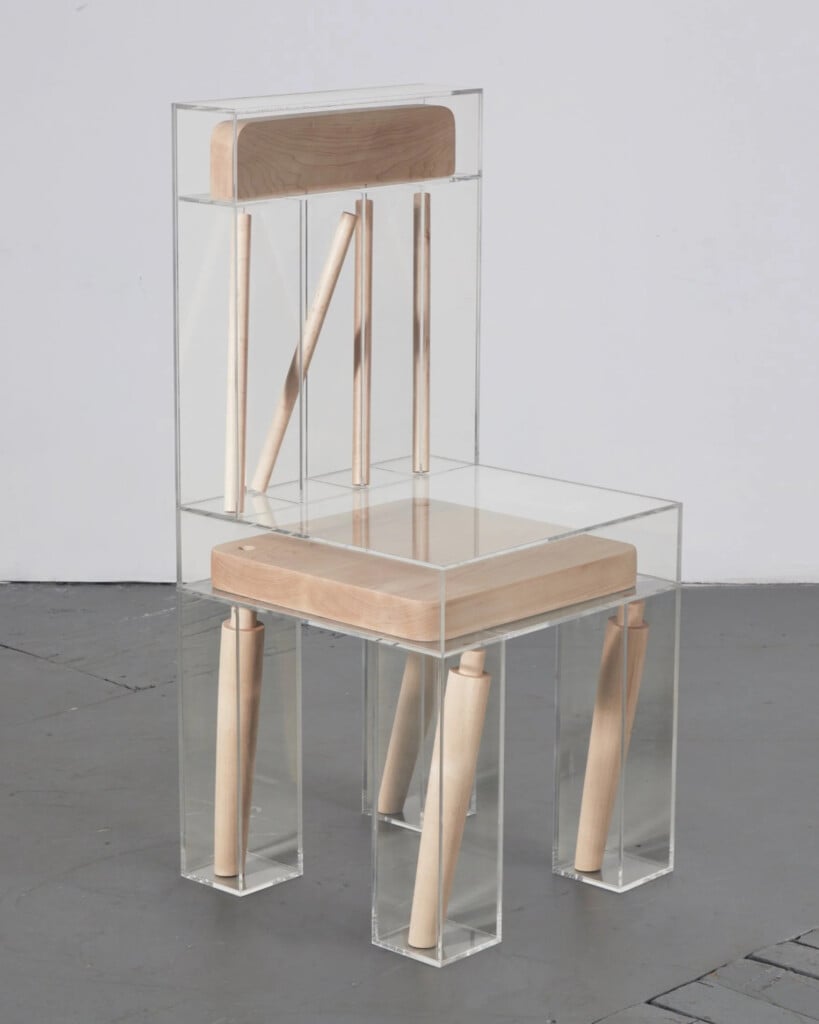
It’s a body of research that makes it hard to say where the furniture ends and the sculpture begins. Lin in fact starts from familiar archetypes, a chair, a table, a lamp, to modify their structure, materials or meaning. In Exploded Chair, made between 2017 and 2019, a maple and acrylic chair seems to have been opened from the inside, as if its structure had exploded while keeping the original silhouette recognizable. In Negative Chair, by contrast, emptiness becomes the protagonist: the piece is transformed through thermoformed PETG and monofilament. And with Fused Chair, five found chairs are fused into a new configuration, bringing out how much an object’s function also depends on the form we attribute to it.
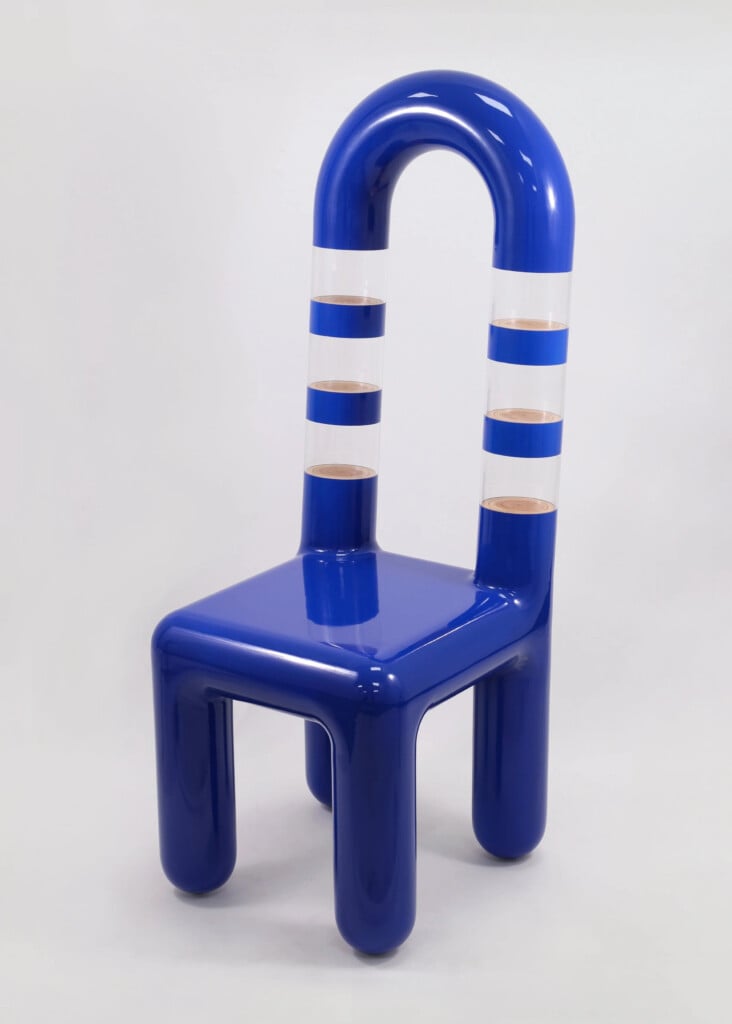
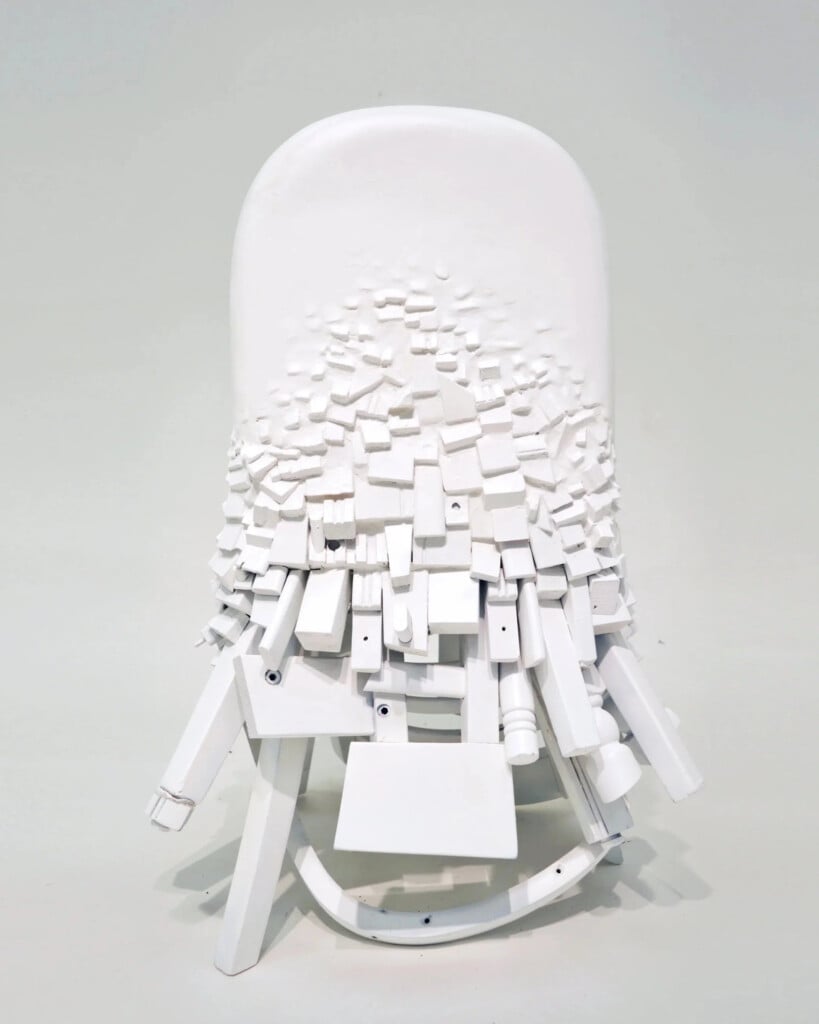
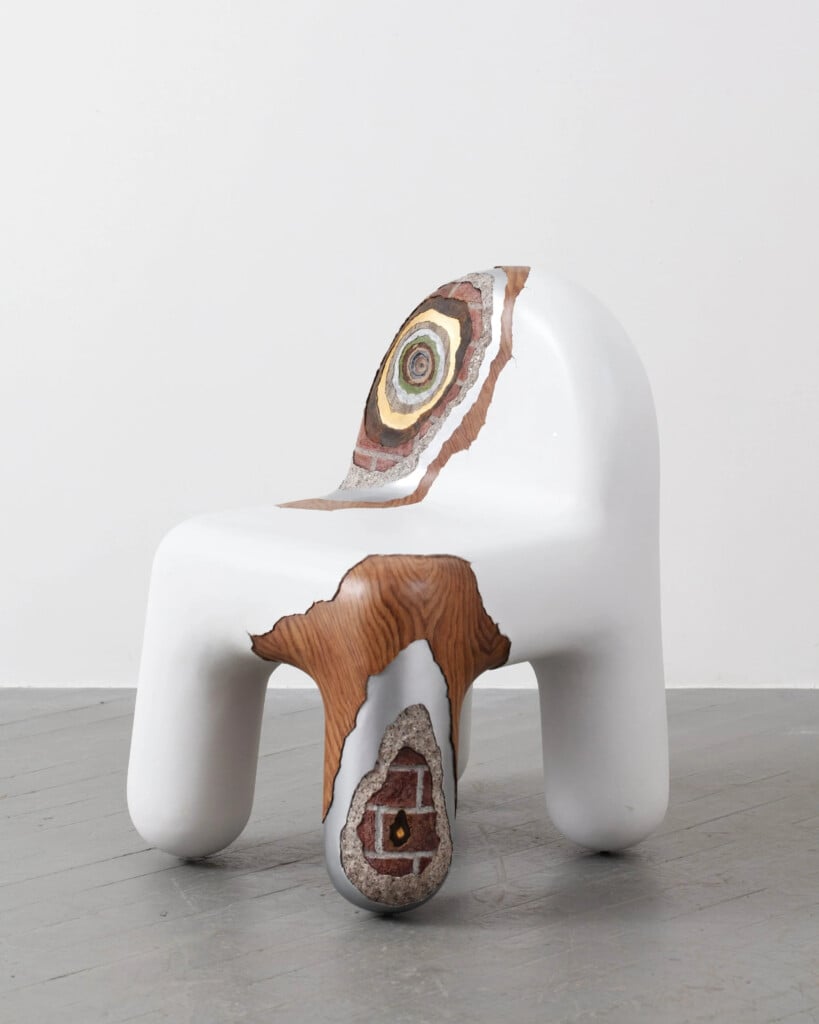
This ambiguity runs through Lin’s other works as well. Her interest doesn’t seem to be making furniture more functional, but asking what happens when its function is modified, suspended or completely called into question. Joyce Lin’s research thus moves between design, craft and sculpture without having to choose a single category. Her works start from objects we know, but subject them to processes of dissection, reconstruction, imitation and transformation, as the artist herself explains when presenting her practice.
This is the thread that links a chair wrapped in kudzu, a trunk shaped by water, five chairs fused together and an antique piece of furniture hidden behind a blue shell. In all these cases Lin isn’t simply trying to change the object’s appearance. She changes the way we are forced to look at it. Design stops being only a matter of function and becomes a question about matter, memory and things that, even when they seem motionless, keep transforming.