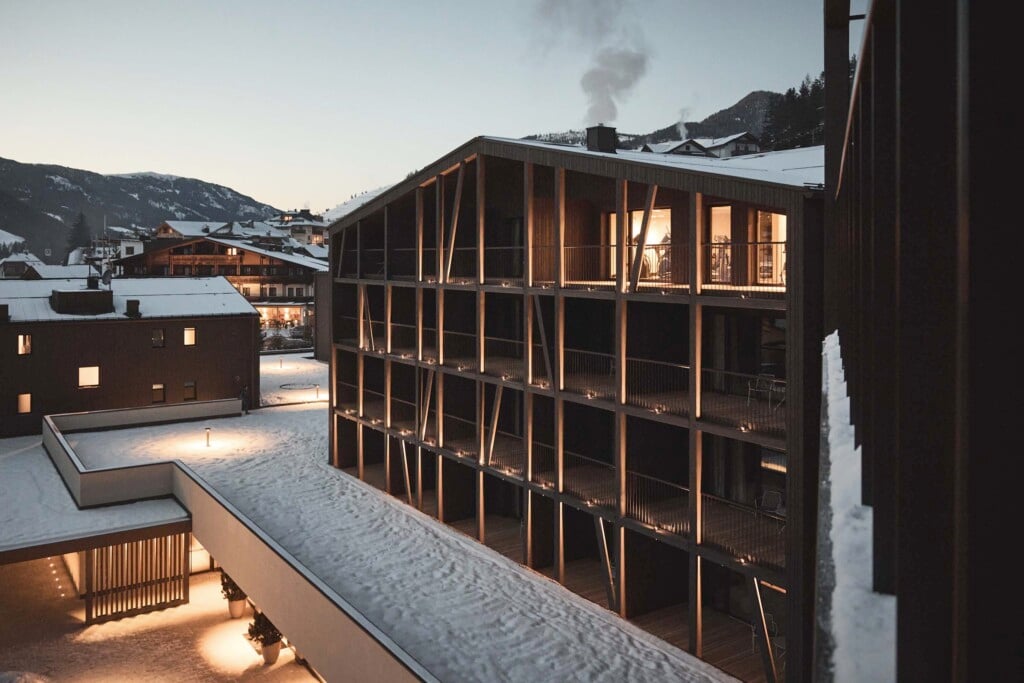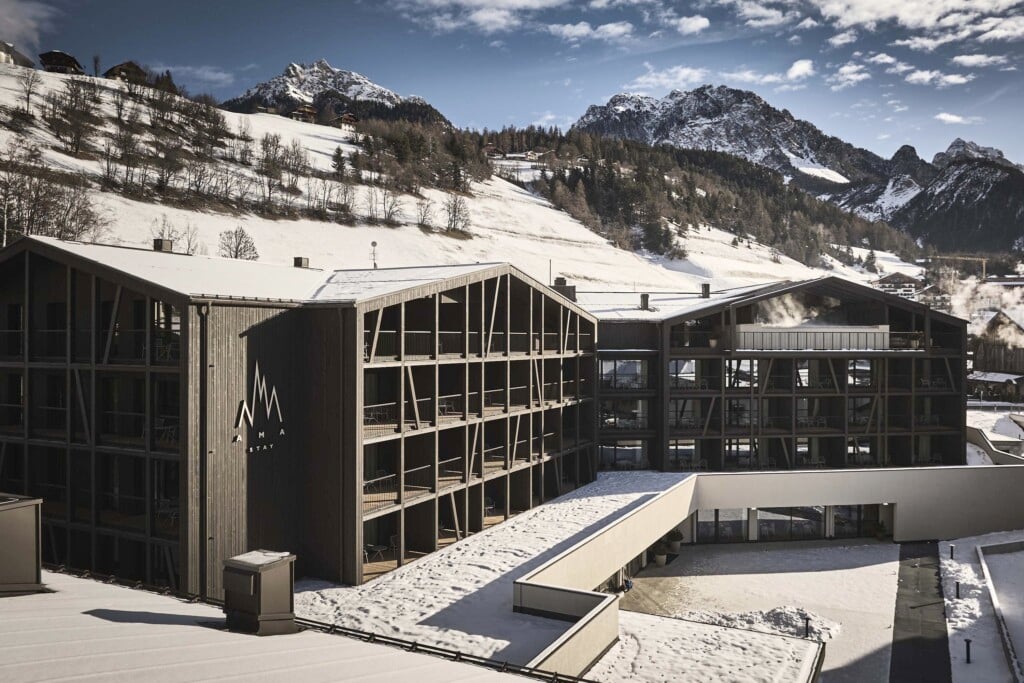
In the mountains, architecture cannot be limited to serving as a backdrop to the landscape: it must engage with a specific environment, with its identity and with a way of life marked by the changing of the seasons. In recent years, some hospitality projects have begun to interpret this relationship in less predictable ways: it is no longer just a matter of borrowing the codes of the traditional chalet, with its wood, stone and large windows, but of understanding how to transform them into spaces capable of meeting contemporary needs. Two examples in the Dolomites tell the story of this search from different perspectives: AMA Stay in San Vigilio di Marebbe and Hotel Granbaita in Selva di Val Gardena.
AMA Stay: the mountains as a space to live, work and share
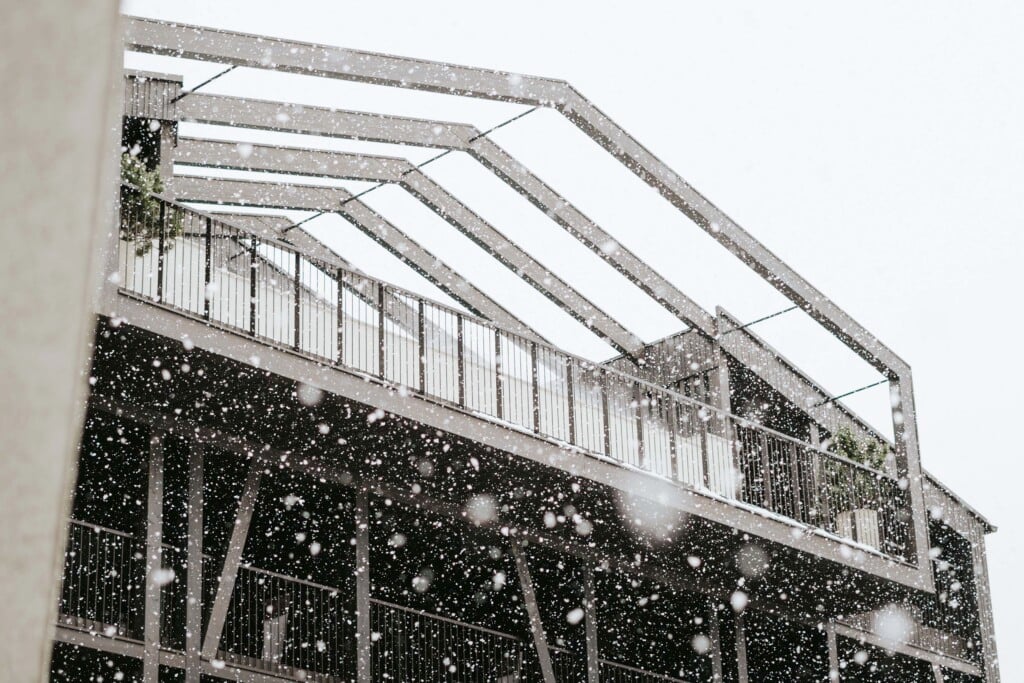
At the foot of Plan de Corones, in San Vigilio di Marebbe, AMA Stay is born from an idea of hospitality that tries to overcome the distinction between travel, work and everyday life. The architectural project, designed by studio BERGUNDTAL and completed in 2022, is built precisely around this flexibility: not a hotel conceived exclusively for those arriving on holiday, but a place where travelers, remote professionals and people interested in a longer stay can coexist.
This approach is reflected in the layout of the spaces. Rooms and apartments are joined by coworking areas, meeting rooms, lounges and places devoted to socializing. Work is not confined to a room separate from the rest of the experience, but becomes one of the possible activities within the property. The bistro and the restaurant also contribute to this collective dimension, offering opportunities to meet that go beyond the simple moment of the meal.
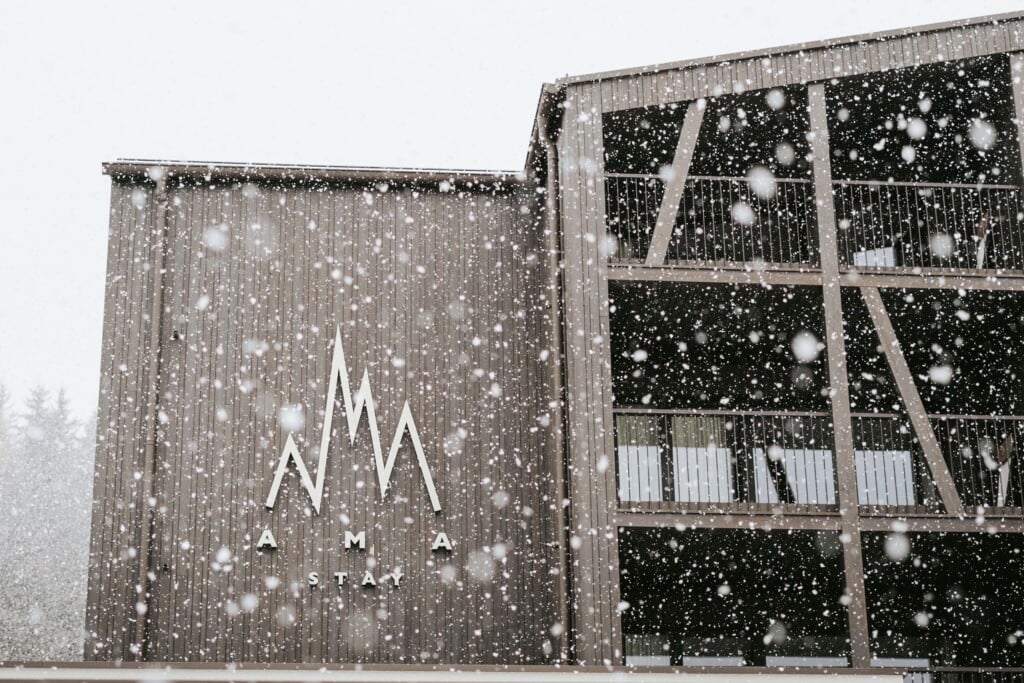
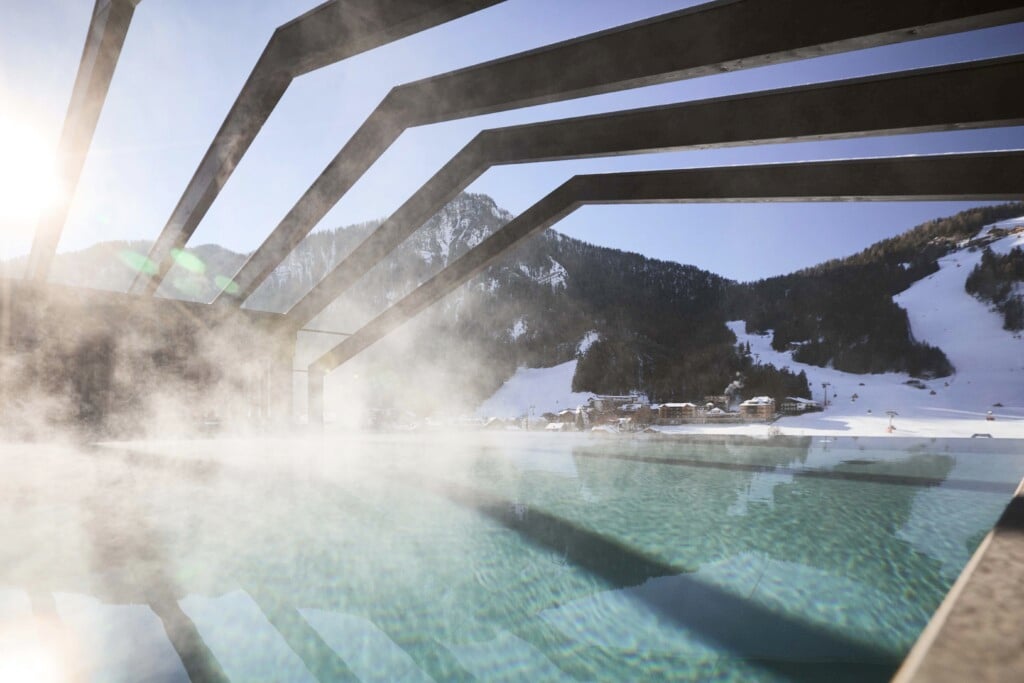
The project stands out for its contemporary, informal language, with open spaces and an essential design that seeks a balance between comfort and functionality. The relationship with the landscape also comes through natural light and openings toward the outdoors, while the choice of materials and tones helps maintain a link with the Alpine context without resorting to a literal reproduction of traditional aesthetics.
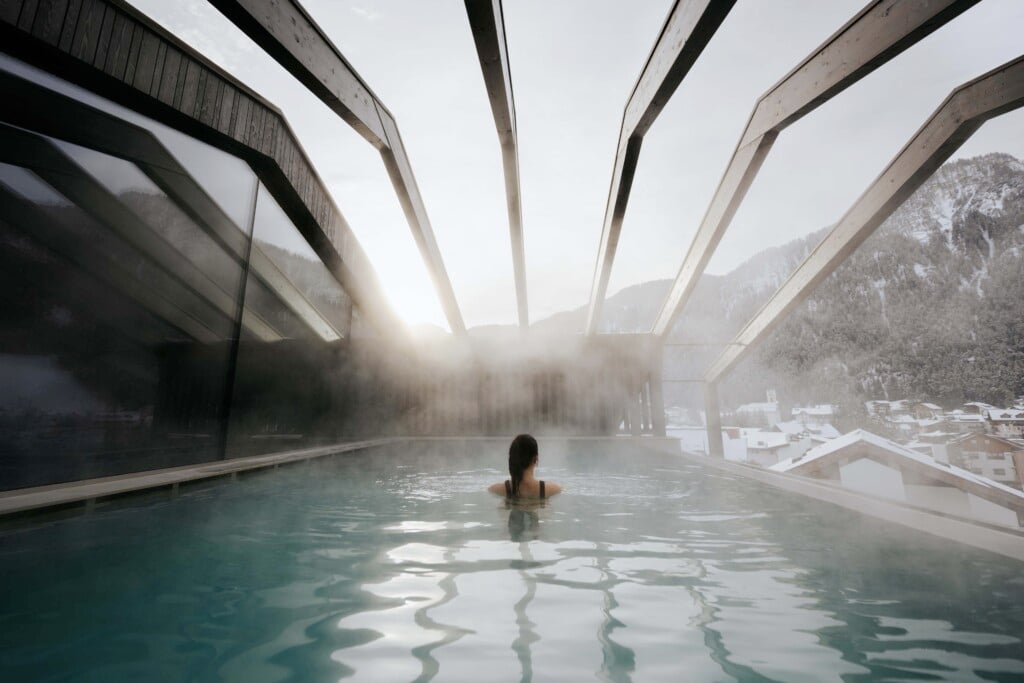
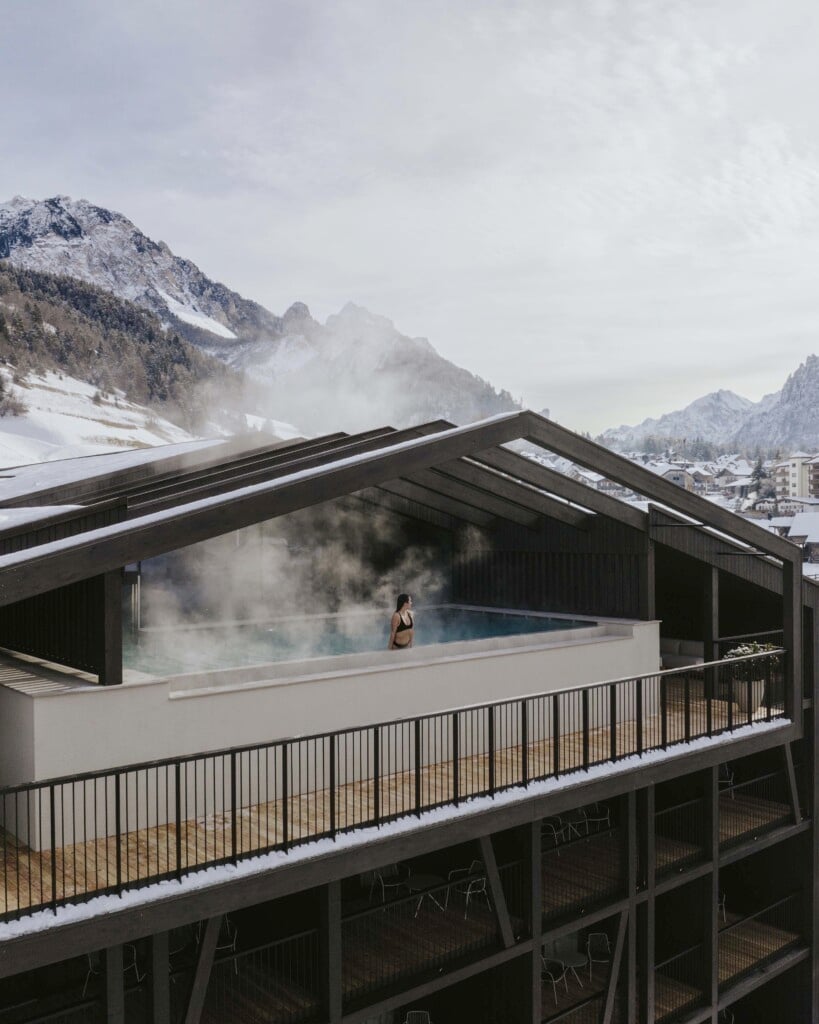
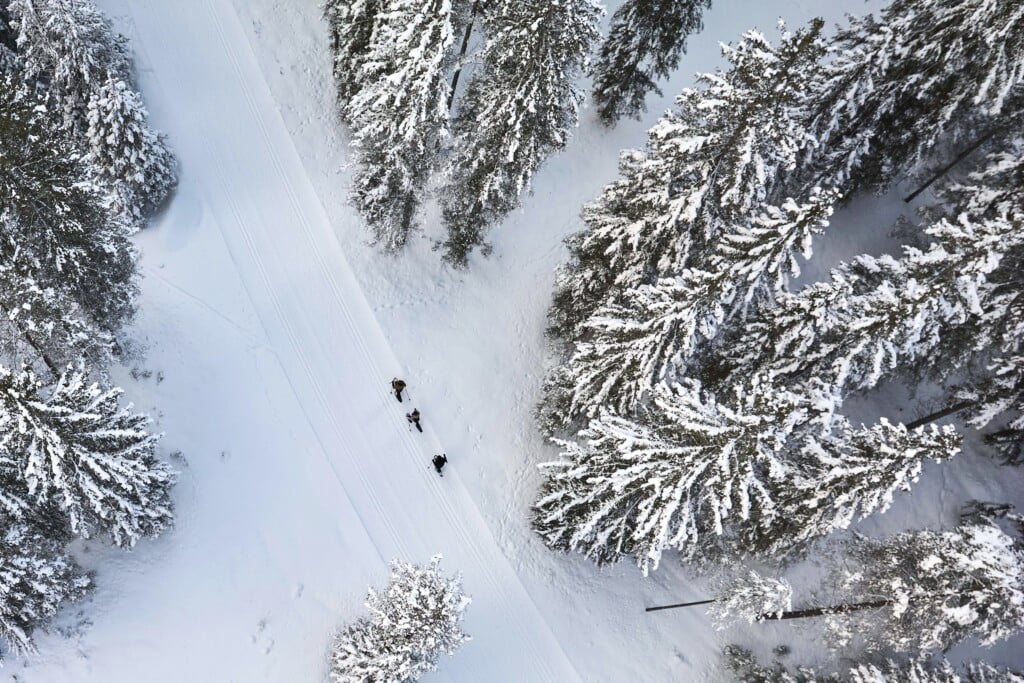
The same idea of flexibility continues in the winter offerings. The proximity to the slopes of Plan de Corones makes it easy to reach the ski area, while the surrounding area offers routes for snowshoeing and trekking on snow. Back at the hotel, the AMA Spa and the panoramic pool become spaces in which to change pace. The stay is thus built around different activities, without any one of them defining the identity of the hotel.
Hotel Granbaita: rereading Alpine tradition through design
In Selva di Val Gardena, Hotel Granbaita tells of another possibility: intervening on a historic building without erasing its relationship with the place. The building, run by the same family for three generations, has undergone a renovation that involved the common areas, the wellness area and the rooms. The project by Perathoner Architects sought a unified language, capable of updating the hotel’s image while maintaining a recognizable dialogue with the Dolomites.
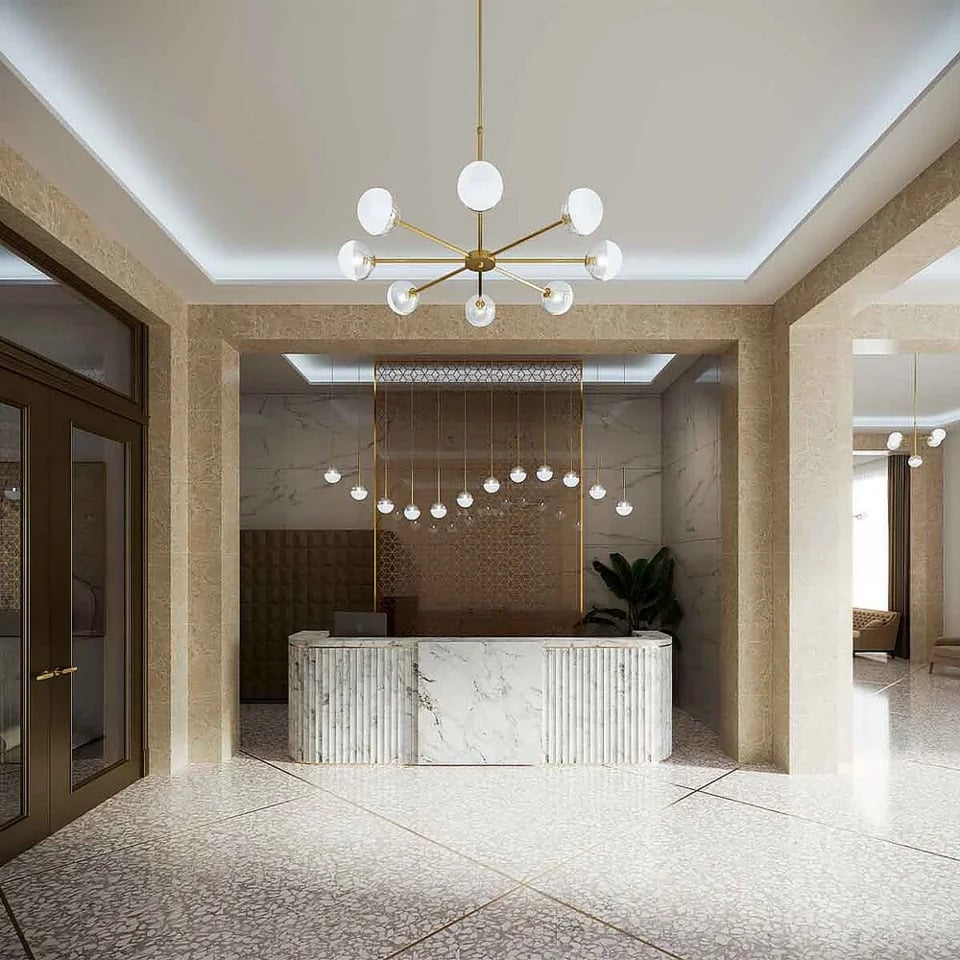
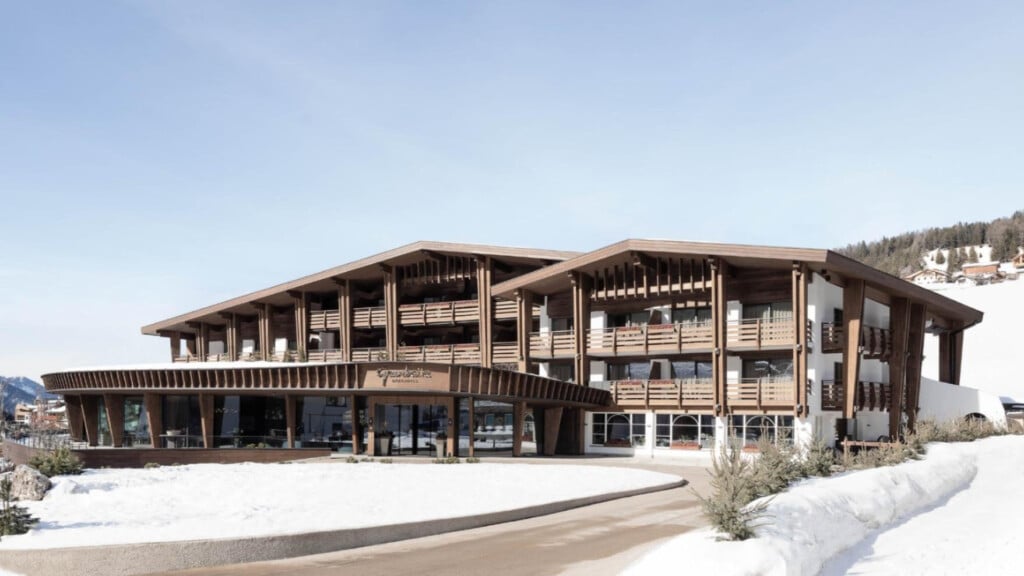
The intervention works above all on the relationship between volumes, materials and transparencies. Dark larch wood characterizes the façade, while a new curved structure, developed on a single floor and featuring large windows, connects the main areas: reception, bar, lounge and restaurant. It is an architectural element that changes the perception of the building and becomes one of its distinctive features, opening the common spaces toward the landscape.
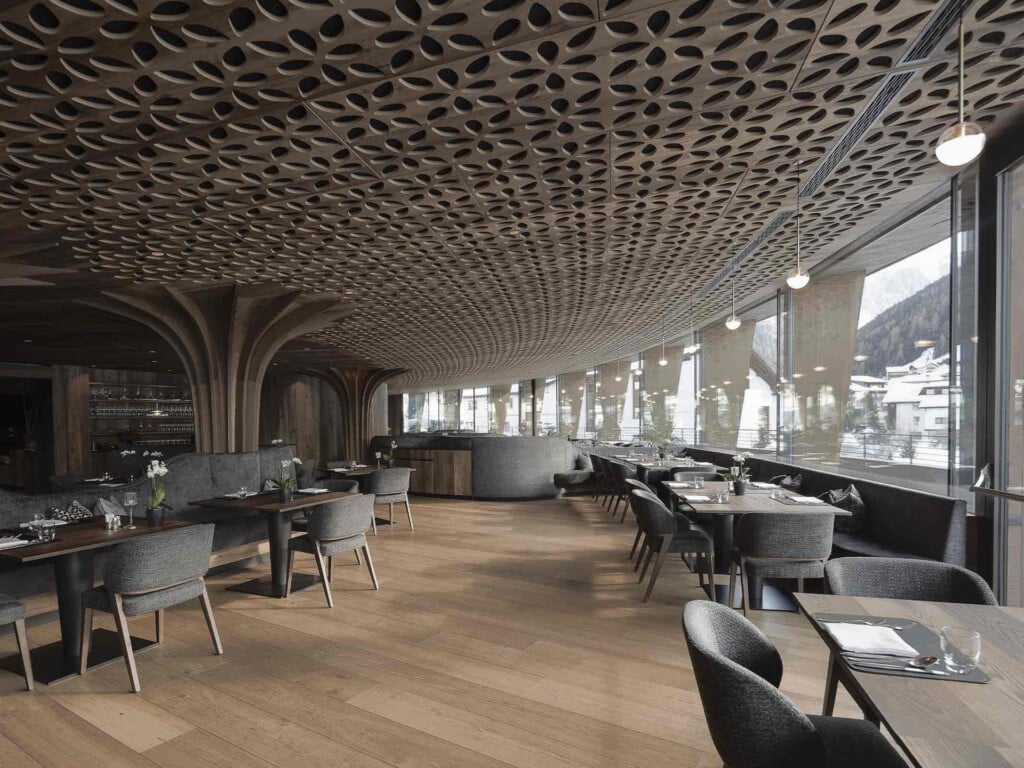
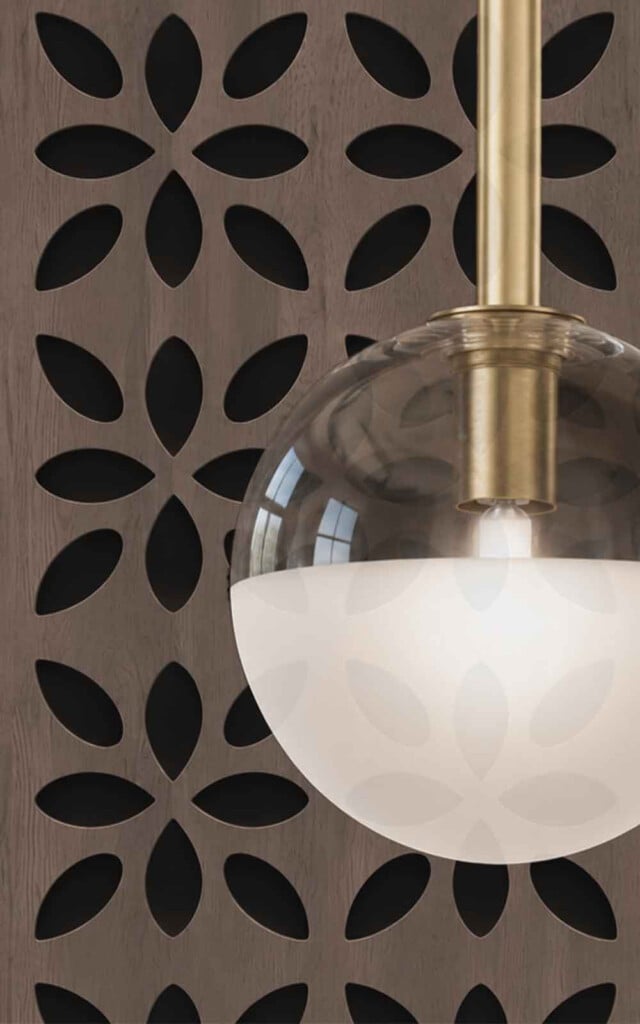
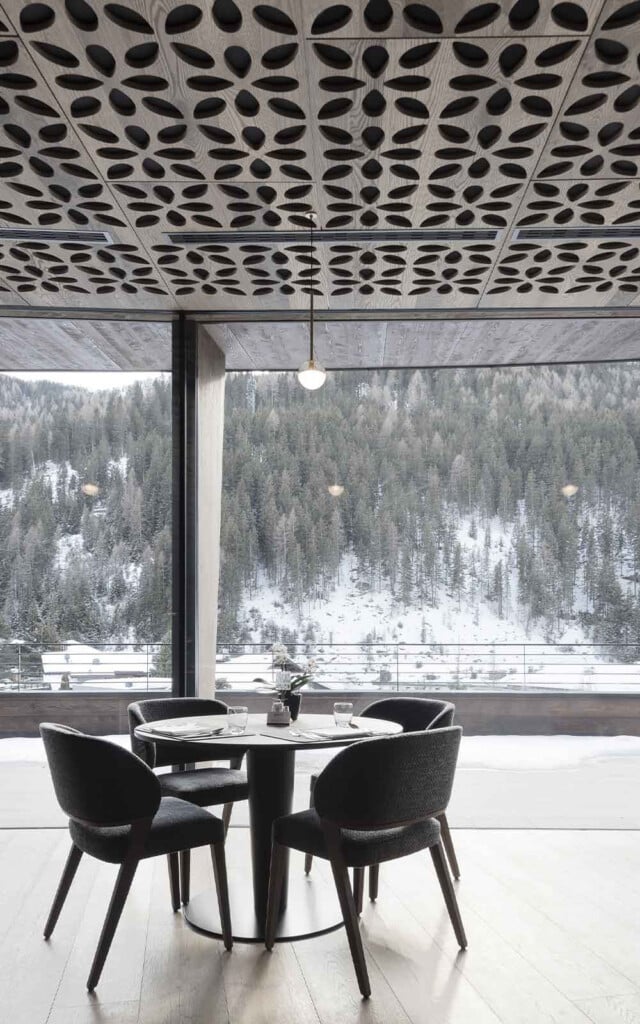
Inside, the project continues through a selection of materials that alternates smoked oak, gray natural stone and textile coverings. It is not so much the presence of individual elements that evokes the mountains, but the way surfaces, textures and colors build an atmosphere consistent with the territory. Lighting also helps define this identity. In the areas devoted to socializing, you will find the Molecola pendant lamps by Il Fanale: made of natural brass and transparent glass, they recall Art Deco through essential spherical forms. Arranged above the tables, they introduce a visual rhythm that dialogues with the decorative motifs of the ceiling and with the materiality of the interiors.
Behind products like this lies a precise way of working. Il Fanale, an Italian lighting company, has built its identity around a network of designers with whom it develops its collections. The designers page on the brand’s website speaks of a constant search for professionals who enjoy playing with light, experimenting and challenging themselves, engaging with a well-defined identity in which design enhances, rather than alters, the company’s artisanal soul and the value of handcrafted materials. The roster of names involved is diverse: alongside figures such as Cristina Celestino and Matteo Cibic, there are studios such as Brogliato Traverso, Studio Klass, DT Studio, Studio Zazi and Pierattelli Architetture, as well as designers such as Mirta Lando, Paolo Dell’Elce and many others. It is a plurality of viewpoints that finds a fixed point in artisanal craftsmanship, and that can also be seen in a project like Granbaita, where light becomes part of the material story of the spaces.
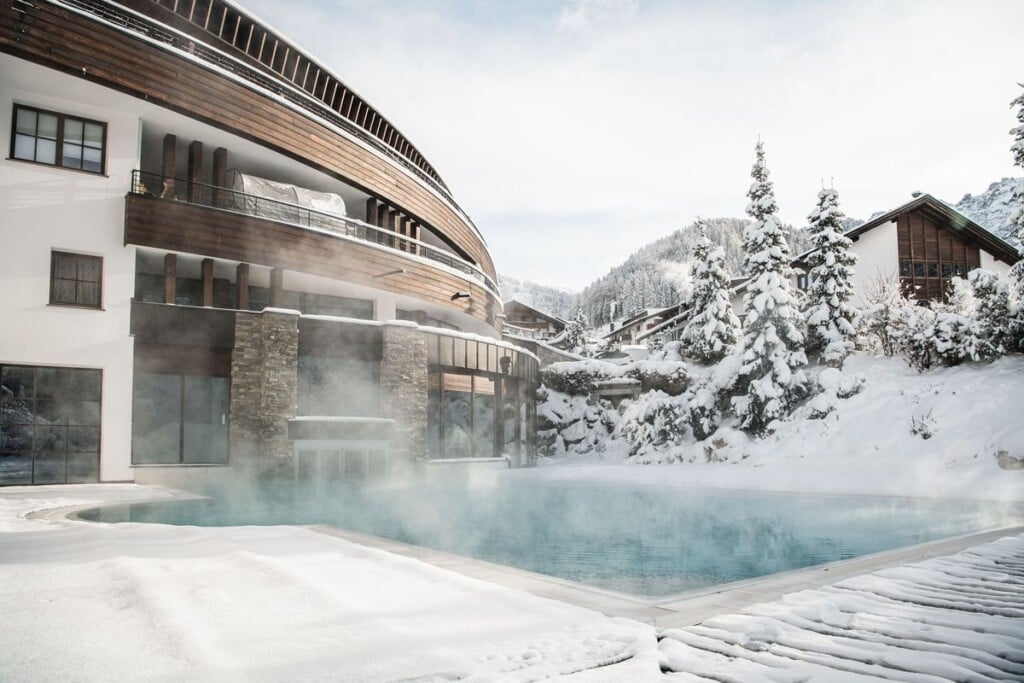
The same attention to detail can be found in the rooms and suites, redesigned to continue the project of the common spaces, and in the wellness area, where well-being becomes an integral part of the architectural experience. Here, the hotel’s offering is not limited to access to Val Gardena’s activities: it also invites guests to experience the interior spaces, from the lounge to the restaurant, as places in which to pause and rediscover a more intimate dimension.
Two ways of interpreting Alpine hospitality
AMA Stay and Hotel Granbaita do not propose the same model, and that is precisely why the comparison is interesting. The former looks to a more fluid way of traveling, in which the boundary between leisure and work becomes less clear-cut and spaces are designed to welcome different habits. The latter intervenes on an established hotel identity, entrusting architecture and attention to detail with the task of renewing the relationship between tradition and contemporaneity.
In both cases, design is not a mere aesthetic coating applied to the tourist experience. It is what organizes the possibilities of experiencing a place: working with a view of the mountains, gathering around a table, crossing a bright space or taking a break after a day outdoors. The mountains, then, do not remain simply outside the windows. They enter the project, guide its choices and help define an idea of hospitality that goes well beyond the stay.