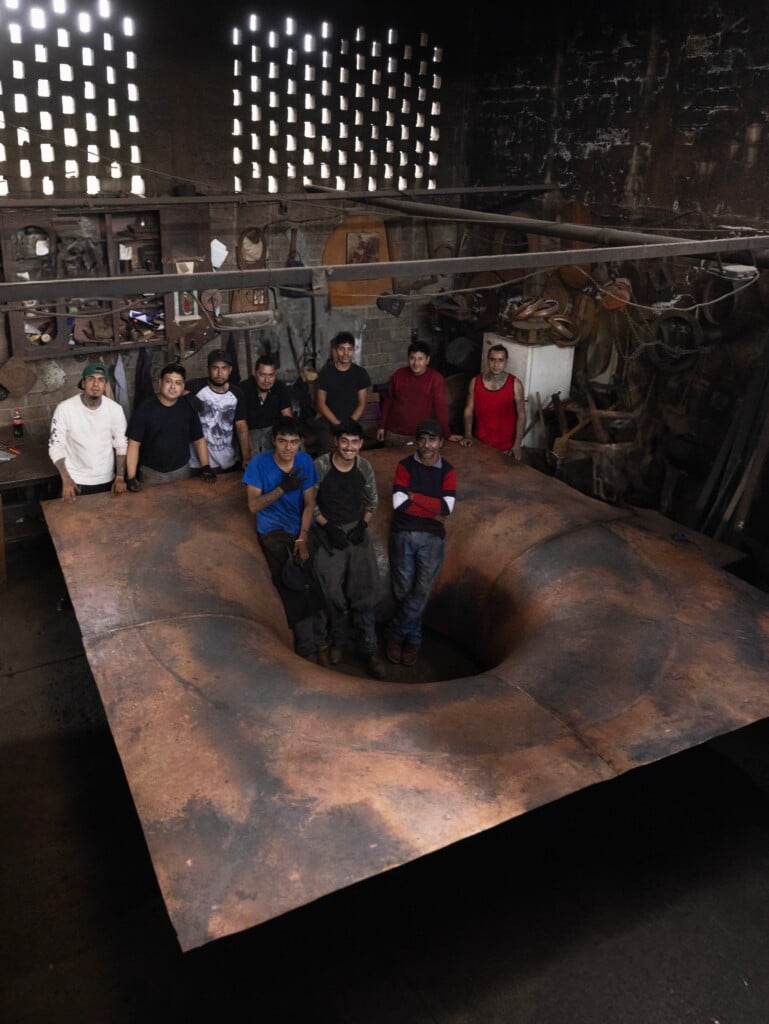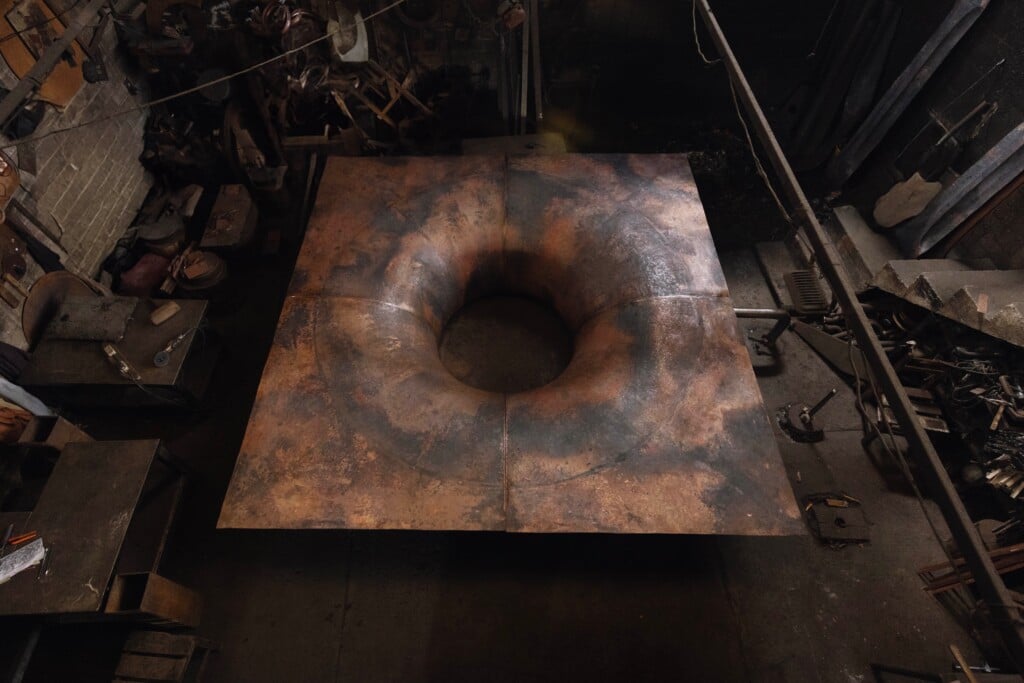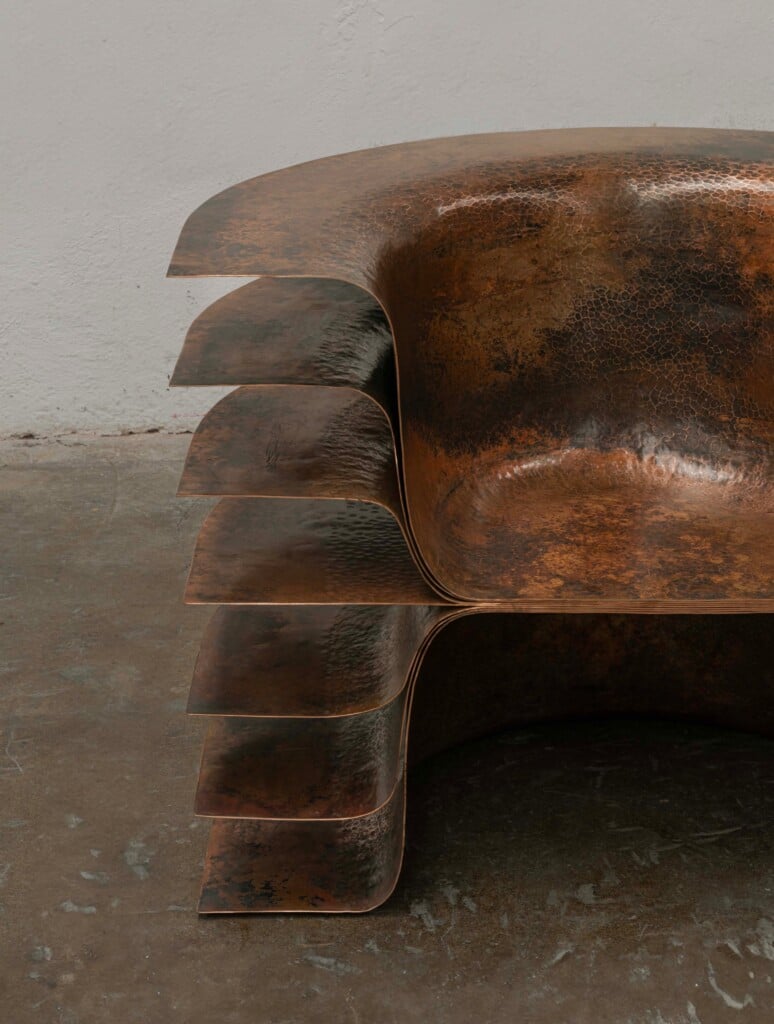
For Manuel Bañó, designing means first of all understanding how materials behave. Born in Valencia in 1990 and now based in Mexico City, the Spanish designer has built a body of research that moves along the border between collectible design, craftsmanship and sculpture. His work often starts from apparently simple elements, such as sheets of copper, brass and steel, in order to investigate their expressive possibilities and turn them into objects that seem to have an architectural presence of their own.
The son of an artist and a designer, Bañó grew up in an environment in which creativity and experimentation were part of everyday life. After studying Design Engineering and earning a master’s degree in Furniture and Lighting, in 2012 he moved to London, where he worked with Magnus Long Studio, before arriving in Mexico in 2013. It is here that his professional path took a precise direction: in 2016 he founded EWE Studio together with Héctor Esrawe and Age Salajoe, a venture dedicated to research across design, art and Mexican manufacturing traditions. In parallel, he develops a personal practice in which he can freely explore the relationship between form, function and matter.
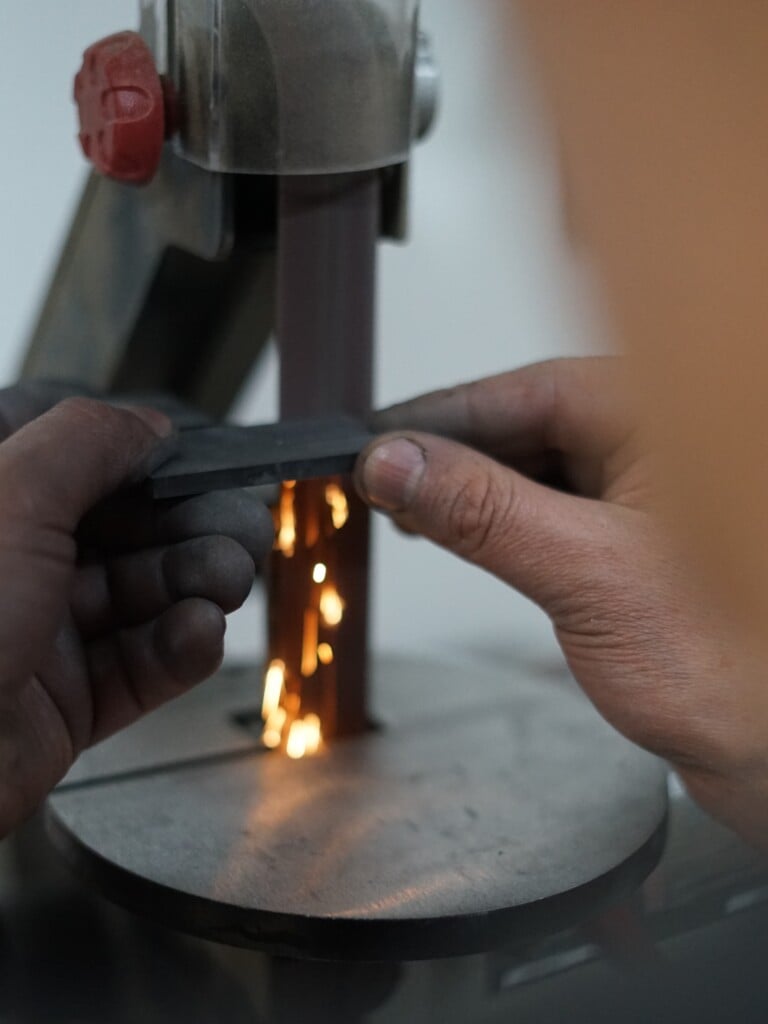
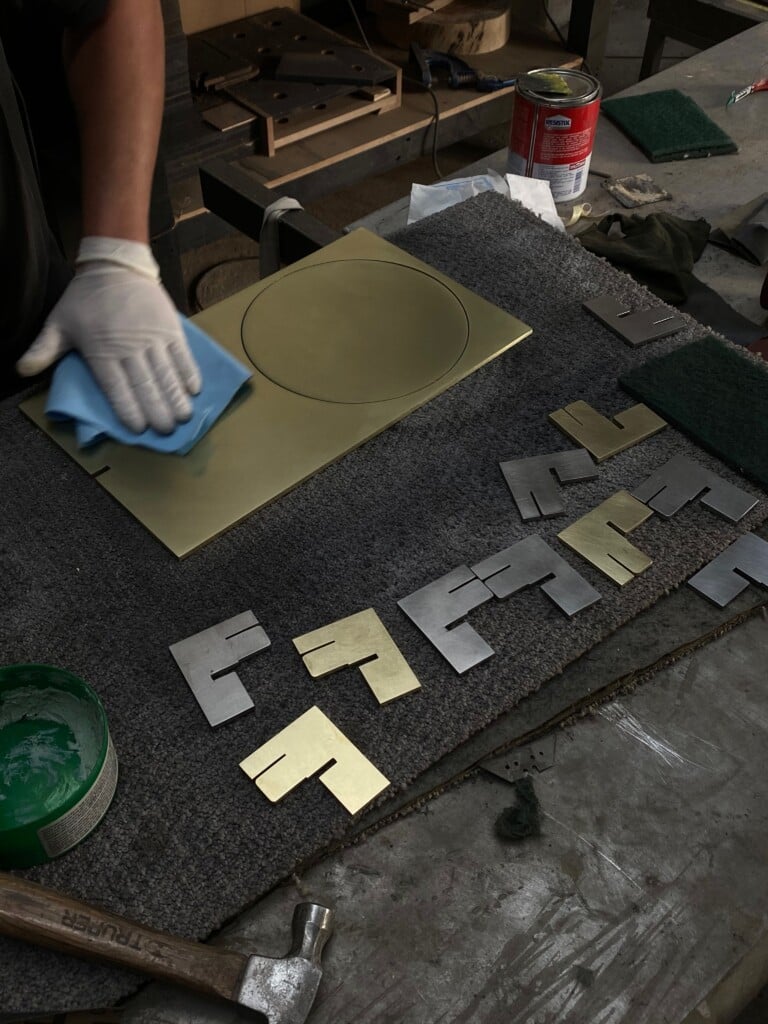
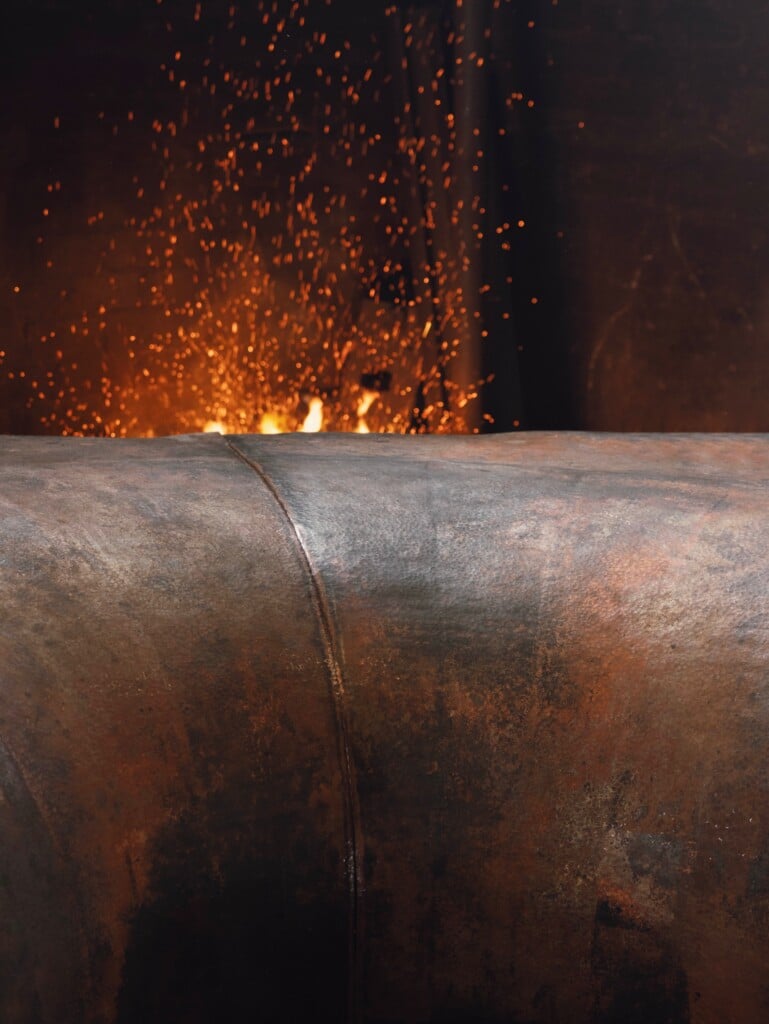
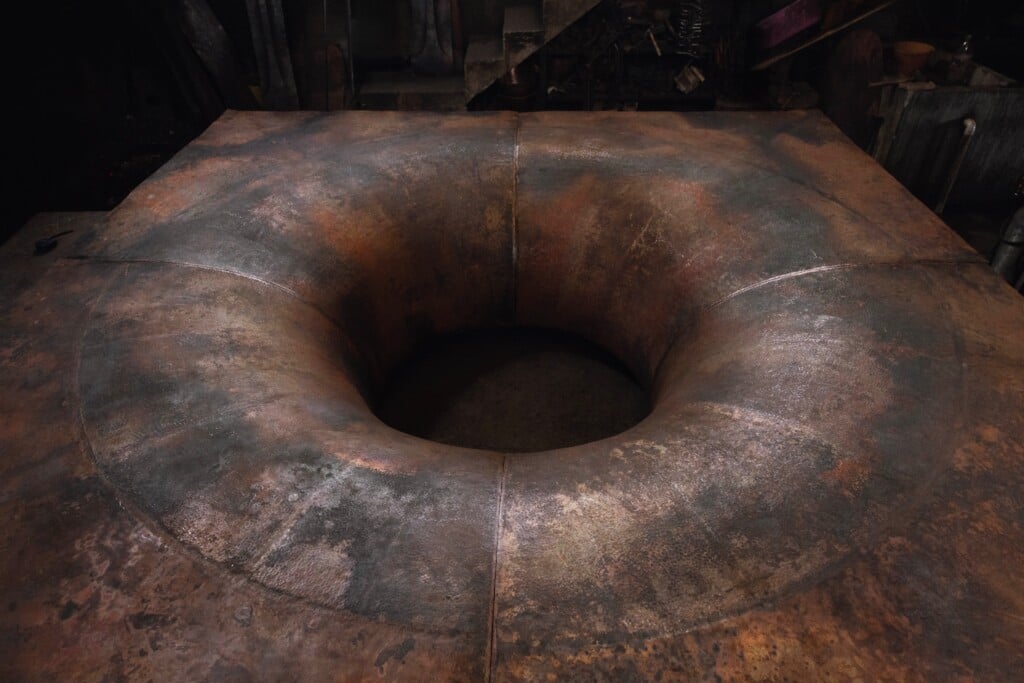
One of the most recognizable aspects of his language is precisely the way he treats metal. In his hands, copper, brass and steel lose the rigidity we normally associate with these materials and take on an almost organic character. Surfaces are not necessarily polished to achieve a uniform perfection: folds, tool marks and small irregularities become an integral part of the result. The production process is not hidden, but allowed to emerge through the very form of the objects.
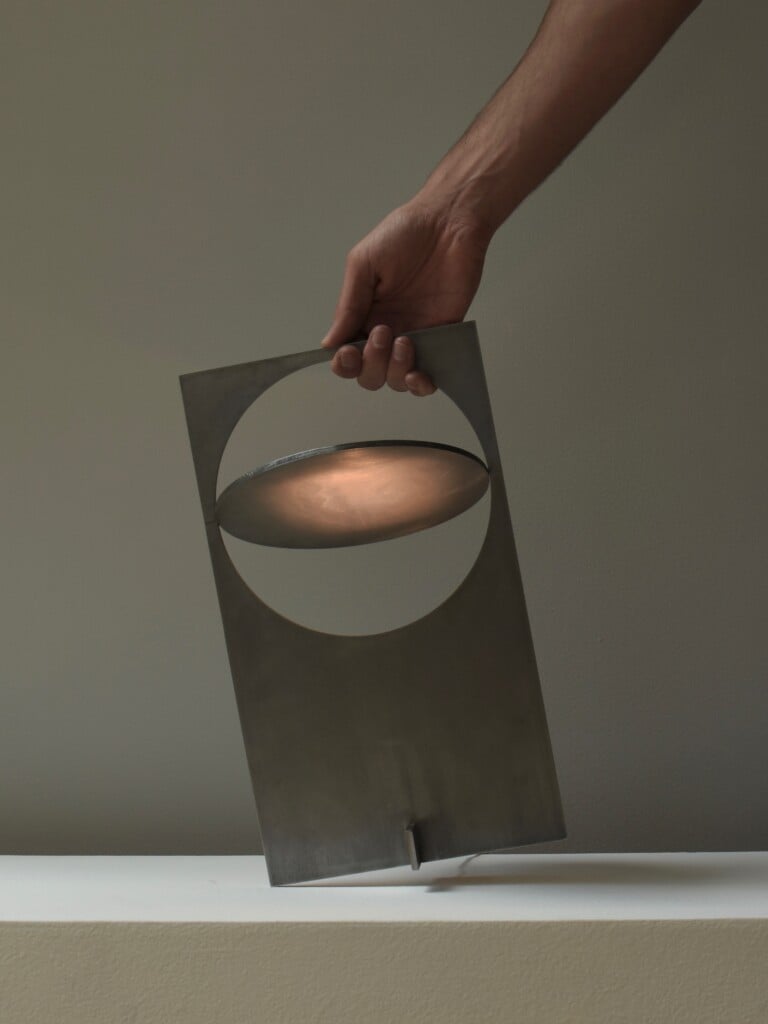
His independent production takes shape mainly through the OBJ series, begun in 2021. An ever-evolving collection that includes lamps, seating, tables, mirrors and furnishing accessories, all united by an essential aesthetic and a particular attention to production processes. The first chapter, OBJ-01, was born during the pandemic: a lamp made from a single sheet of metal, laser-cut and assembled by hand, without welding. Available in steel, stainless steel and brass, the project deliberately preserves the original look of the material, avoiding superfluous treatments and excessive polishing.
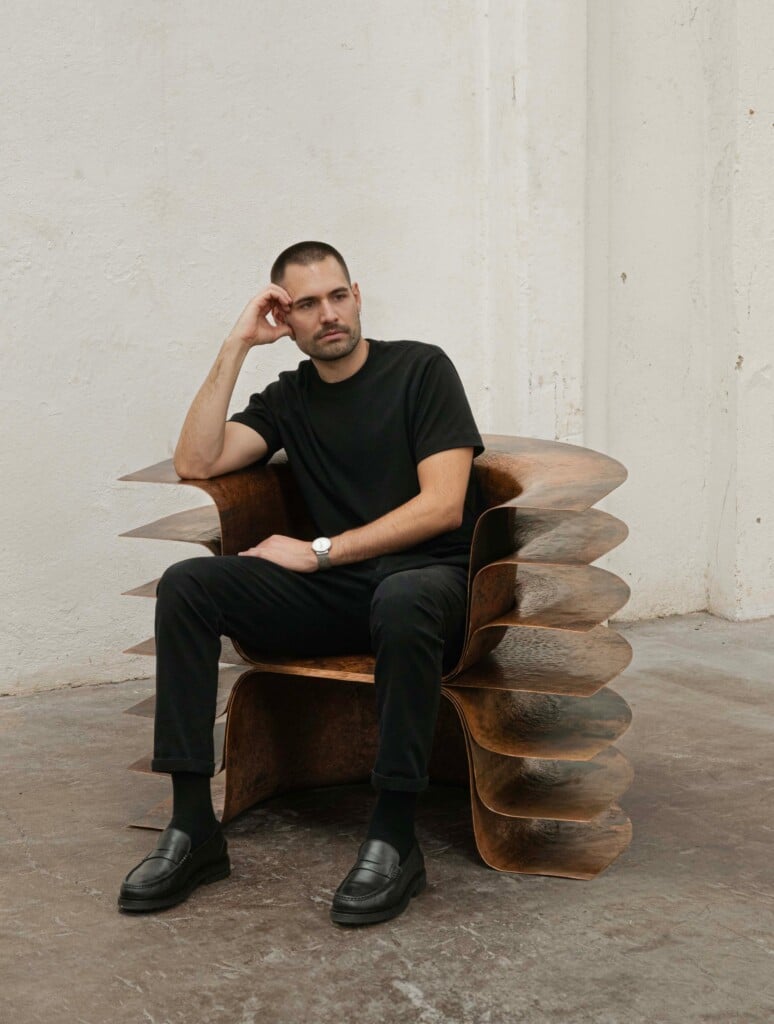
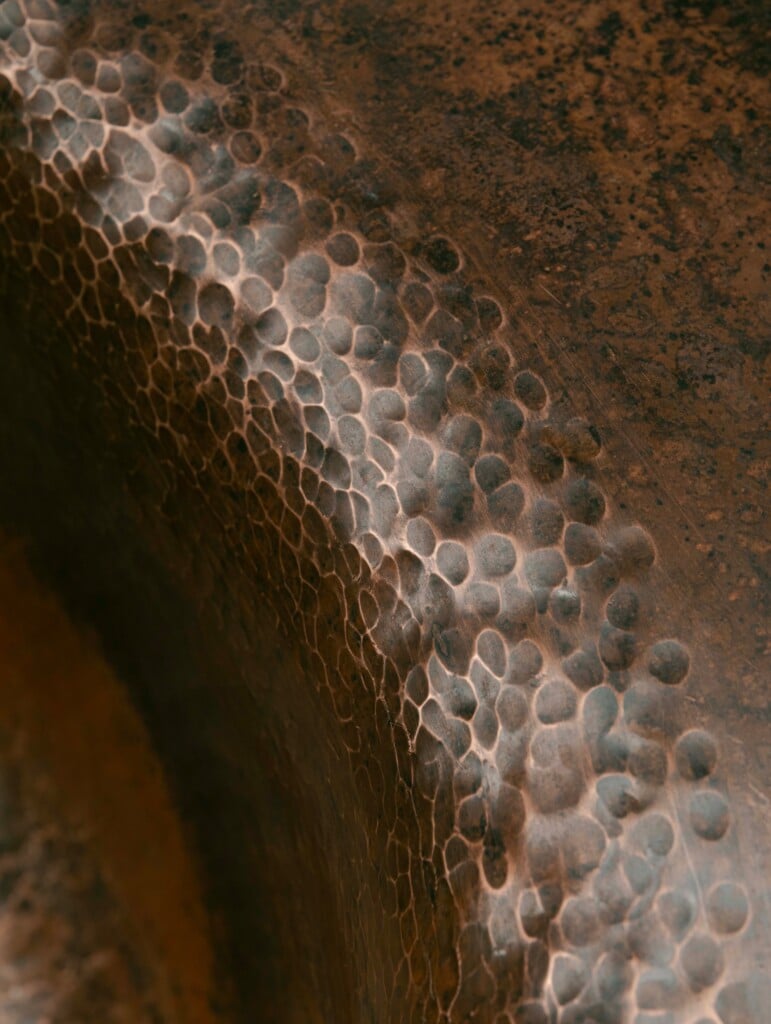
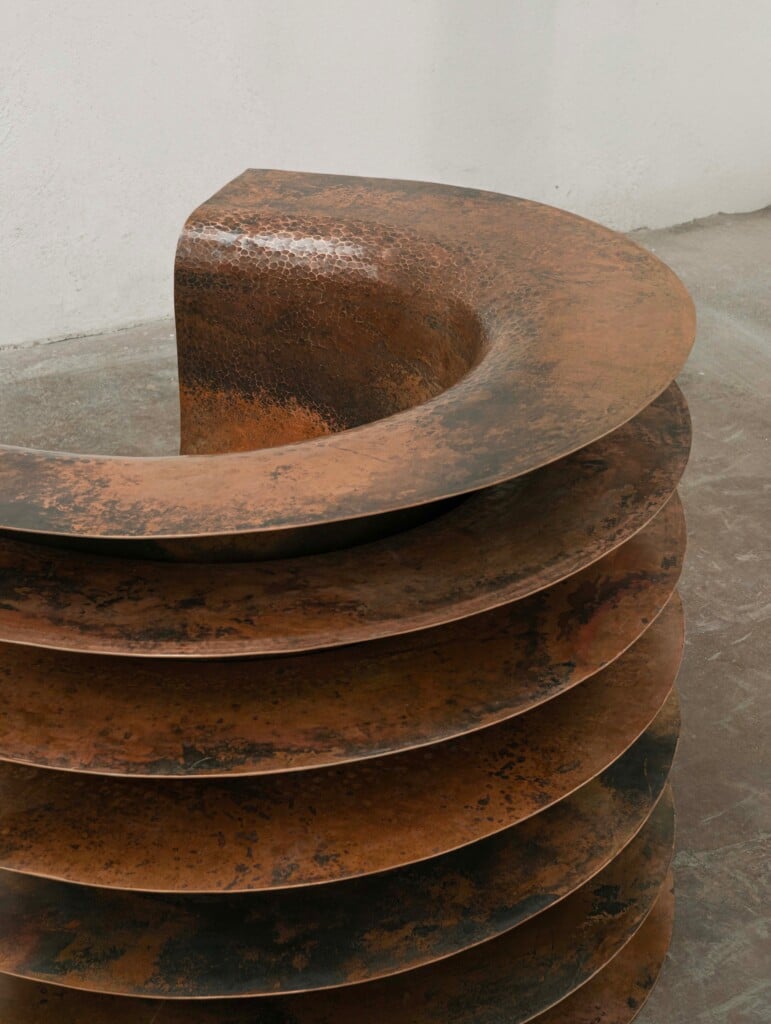
With the subsequent OBJ-02 and OBJ-03, the research extends to the worlds of seating and lighting respectively, while OBJ-06 introduces a family of side tables with essential shapes. More recently, OBJ-09, OBJ-10 and OBJ-12 further explore the possibilities of copper and metal through pendant lamps, storage units and tables. Despite the variety of types, the language remains consistent: recognizable geometries, clean volumes and surfaces that offer a glimpse of the work required to achieve the final form.
Alongside his personal production, the work developed with EWE Studio also reveals this attention to matter. This is the case of Copal Coffee Table, made in 2019, a marble coffee table composed of six hand-carved elements: three large hemispheres resting on as many smaller forms. The balance between the parts conceals considerable technical complexity, especially considering the weight of the whole structure and the small point of contact between the elements. An object that shows how visual simplicity can be the result of a process that is anything but immediate.
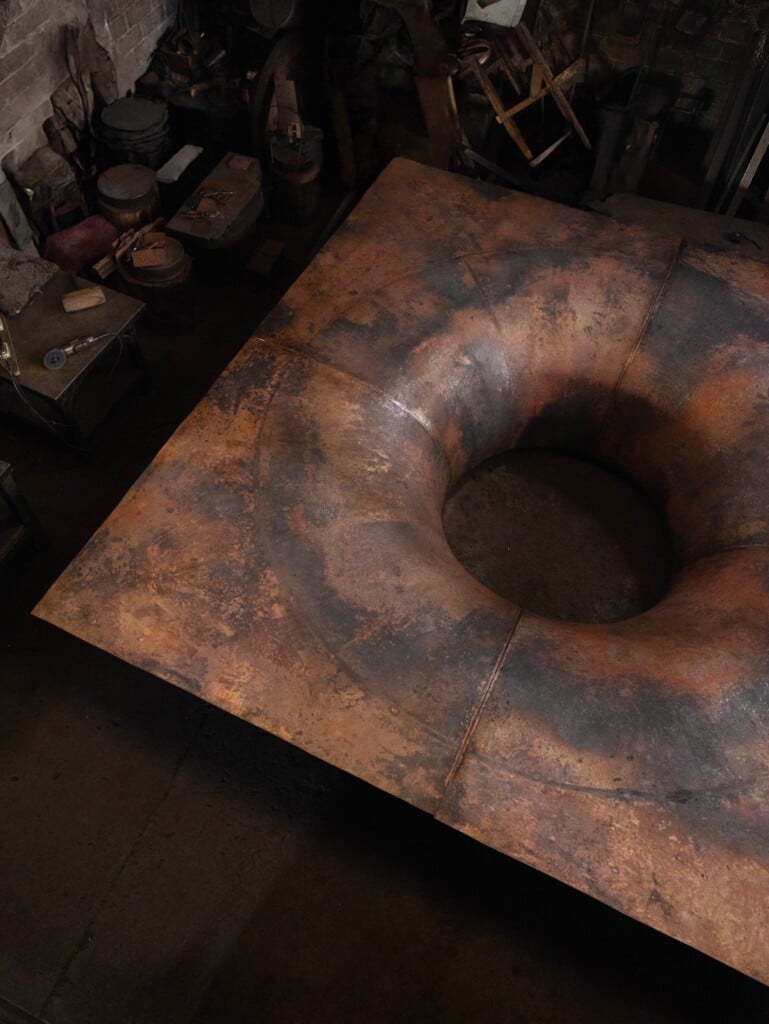
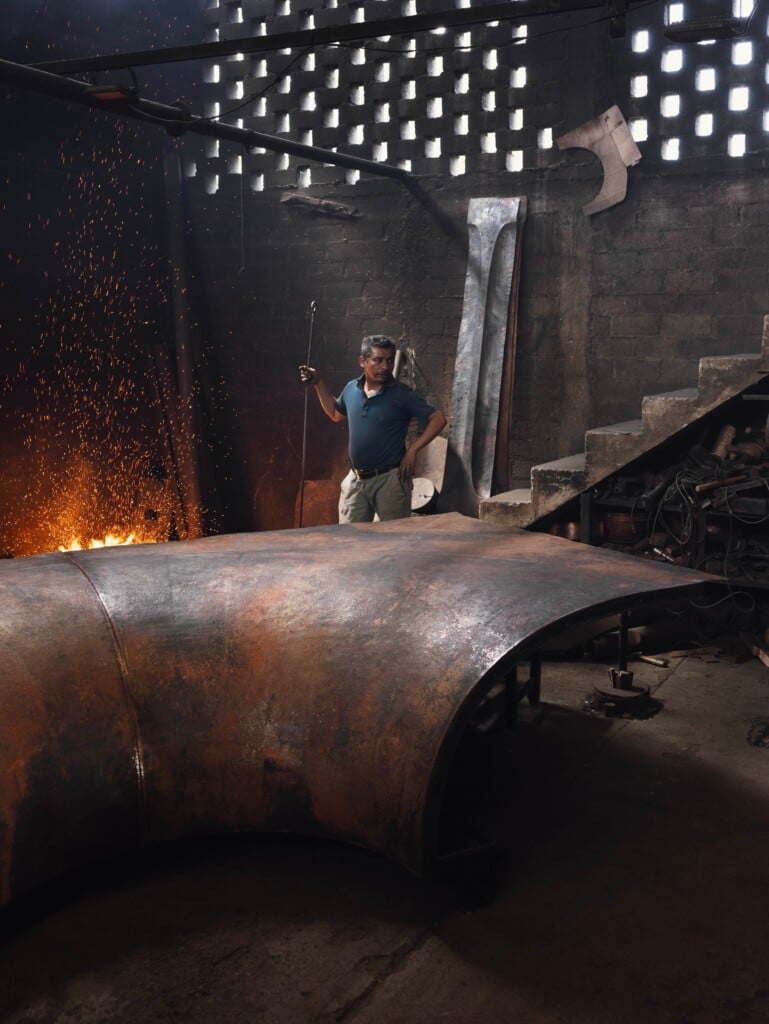
In Bañó’s work, design precision does not coincide with the pursuit of flawless surfaces. On the contrary, scratches, tool marks and color variations are often preserved because they tell the story of a material and the way it was transformed. Copper, brass and steel are not simply finishes to be chosen from a catalog: they become active elements of the creative process, capable of influencing the form and character of each object.
This is also why collaboration with artisans plays a central role in his practice. Through engagement with manual techniques and skills handed down over time, Bañó questions the distance between industrial production and traditional manufacturing. His works do not try to hide the process behind a perfectly controlled aesthetic, but preserve its traces, making them an integral part of the project.