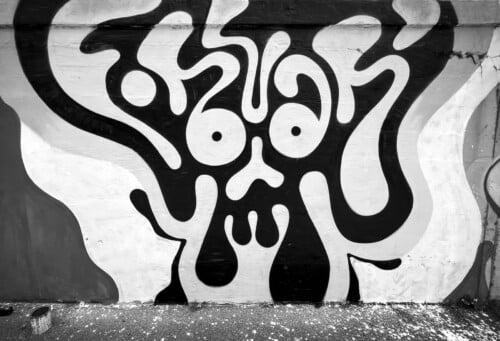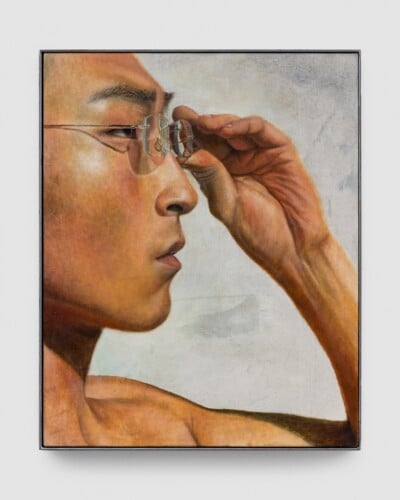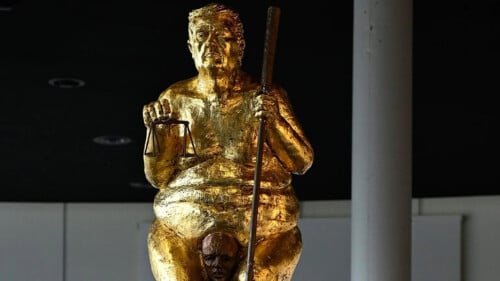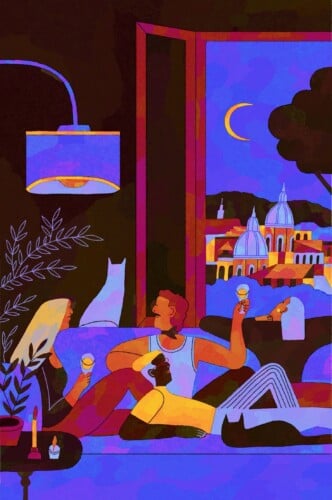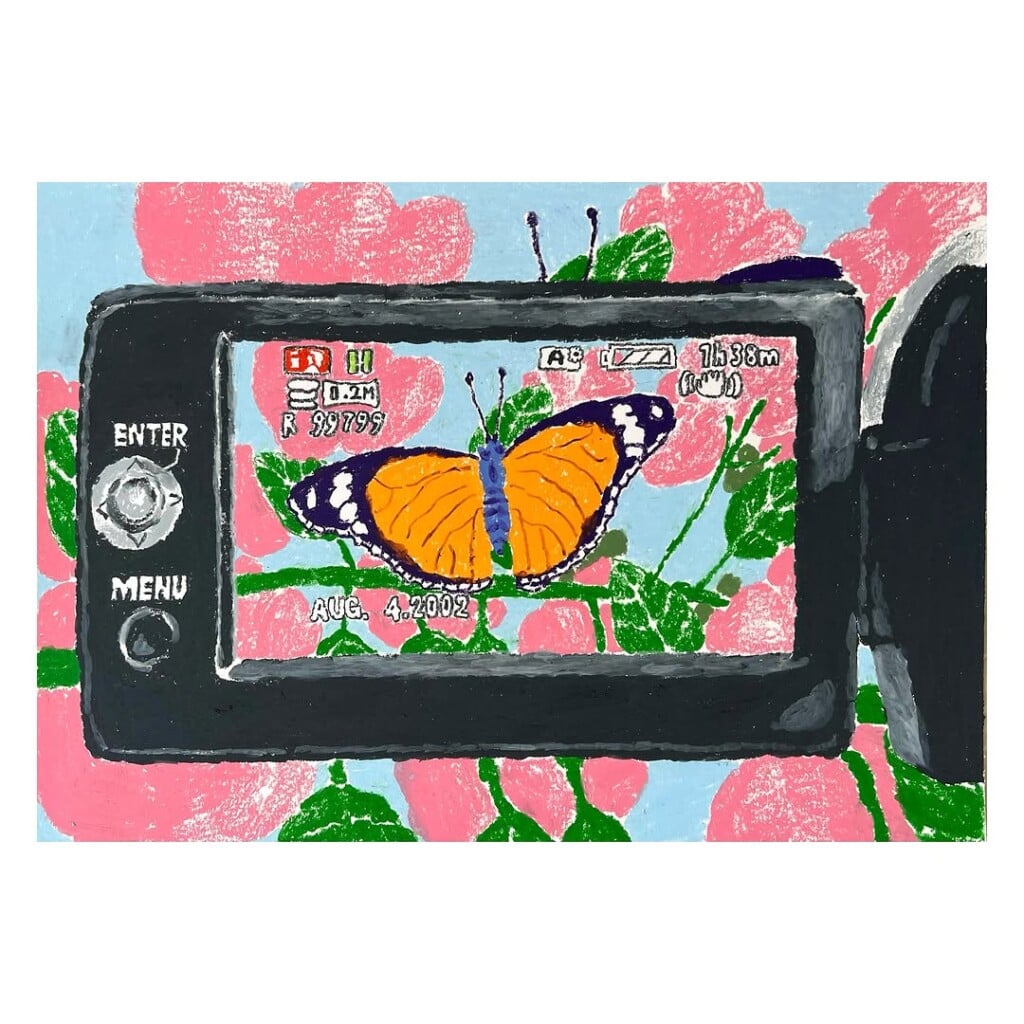
There’s something strangely familiar about the art of Luca Bjørnsten like flipping through an old sticker album by chance or stumbling upon an abandoned forum from the early internet. Born in Copenhagen, with Irish and Italian roots, Bjørnsten – on Instagram, @nugget_brain – transforms the visual landscape of our shared childhood into something hypnotic, glossy, and perfectly out of scale. His paintings feel like they come from a parallel world made of badly synced cartoons, neon supermarkets, mascot characters, and TV channel loops gone haywire.
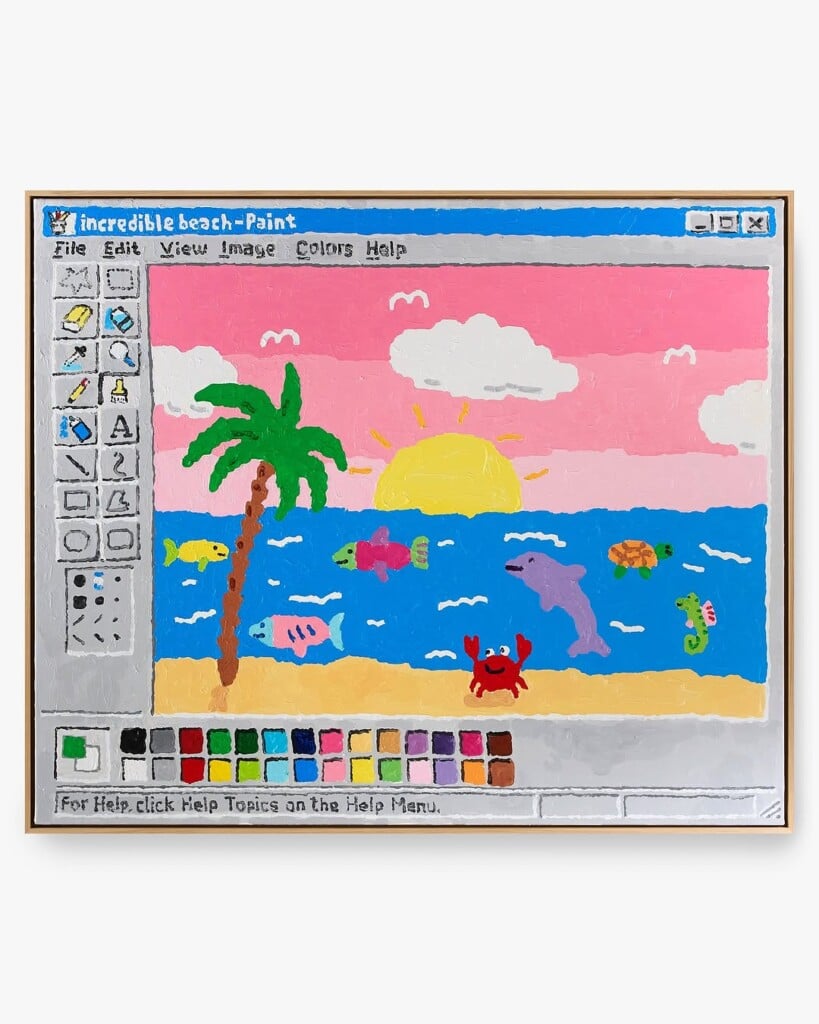
As he shares in this interview with Overstandard, his creative process starts from afar. Every morning is dedicated to research—a constant exploration through old websites, postcards, magazines, and forgotten digital archives. “I have a huge image collection – found, photographed, cut out – that works as anchors to build visions,” he says. “I often have a vague idea in my head, but until I find the right image, nothing really starts.”


The Style of Luca Bjørnsten
Behind each color choice – often dictated by a self-imposed logic of limitations and absences, like in old 16-bit video games – lies a visual strategy that blends nostalgia and irony. If the sky is blue, then the sea must be pink: not for provocation, but simply because that’s the only color available at the time. “I need a system, a dogma. It’s a guide, but also a way to free myself,” he explains in the same interview. This is how his images take on a synthetic, essential structure, yet one that is incredibly dense with stimuli.


His style – which someone has compared to a PG-rated cartoon directed by Harmony Korine – didn’t appear overnight. As a kid, Luca was obsessed with comics, video games, skateboarding, and anything that could be turned into visual imagination. Today, his art has become a solid and deeply personal practice, rooted in pop culture but also in classic painting, from Giorgio Morandi to Philip Guston.


In short, Luca Bjørnsten’s visual and creative universe is a living archive of everything we’ve learned to ignore: forgotten logos, wrong packaging, glitched icons, expired aesthetics that still carry emotional weight. In a world where we scroll past any image in seconds, Luca invites us to pause, to look more closely—and maybe even to smile.