Within the system of codes that defines Maison Margiela, gesture has always mattered more than the object itself. With Bianchetto: Atelier Experience, presented in Shenzhen as part of the MaisonMargiela/folders project, the house turns one of its most recognizable visual languages into a participatory experience, bringing the creative process out of the atelier and into the public space.
First introduced in 1989, Bianchetto is a white overpainting technique that covers garments and accessories while leaving the brushstrokes visible, like traces of a gesture that does not want to hide itself. Rather than erasing, this white surface resets and rewrites, transforming each object into an open canvas ready to hold new stories.
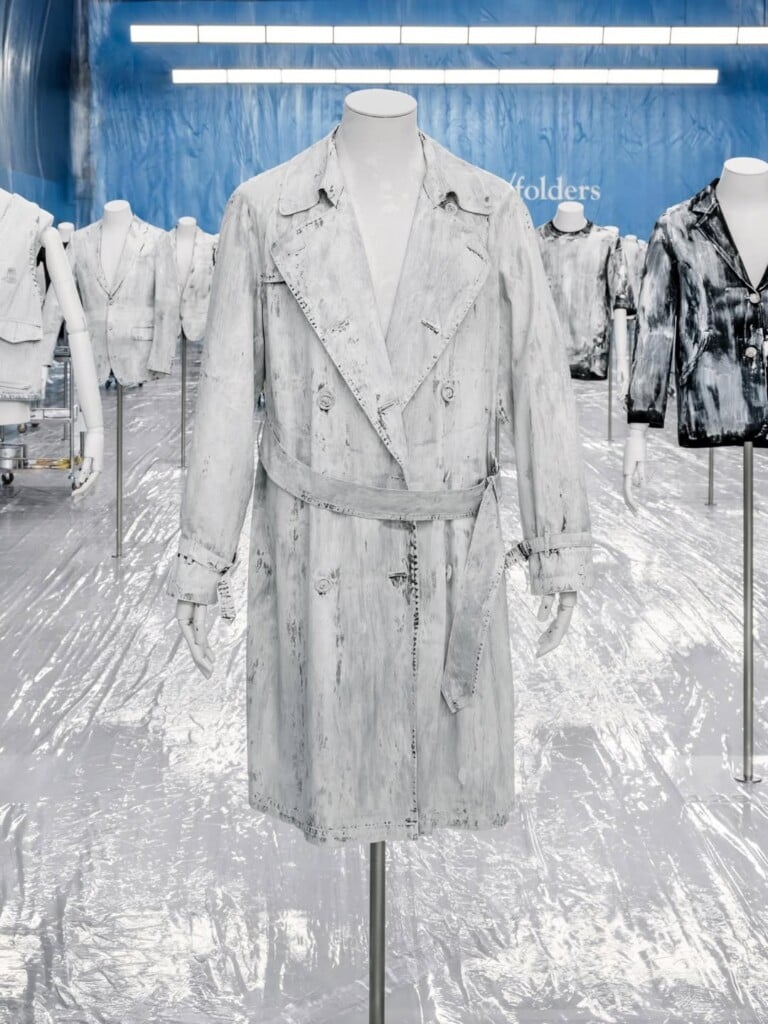
In Shenzhen, this practice becomes a direct experience: participants are invited to bring a piece from their own wardrobe and reinterpret it together with the Paris Atelier team. The process is as simple as it is radical: covering, leveling, and suspending the garment’s original identity so that it can enter the Margiela language, completed by the house’s iconic four white stitches.
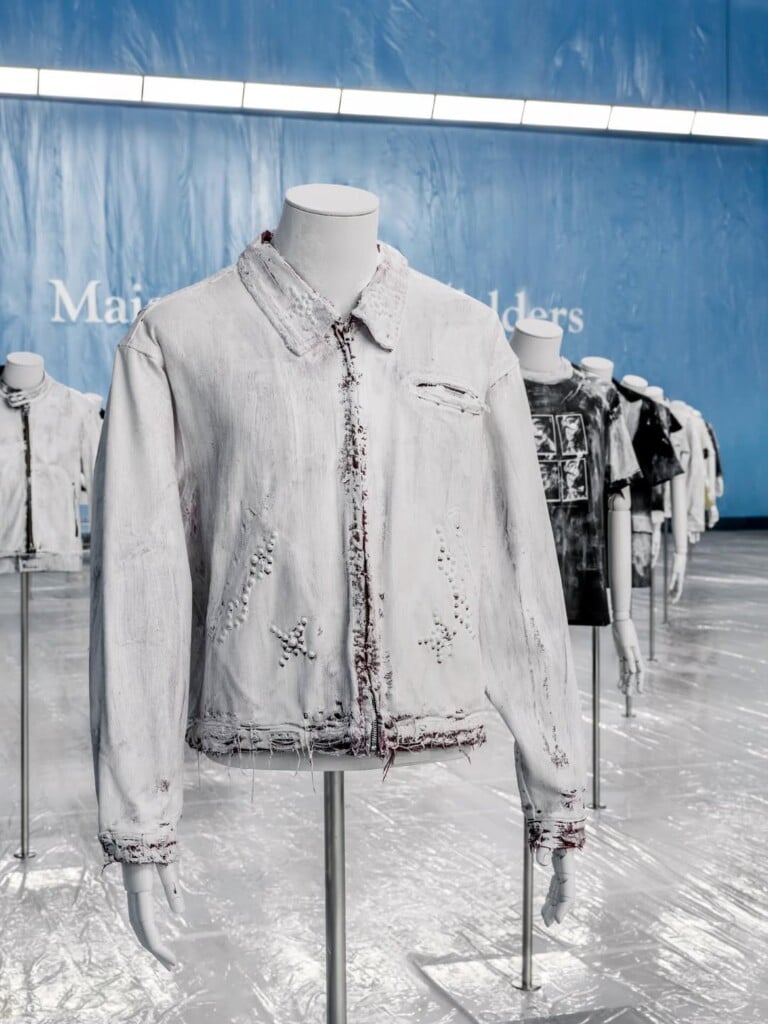
For Maison Margiela, this is not simply a matter of customization, but a reversal of the relationship between author and audience. Here, the creative gesture is shared, almost democratized, in line with the house’s long-standing approach of challenging ideas of authorship and originality. The final garment is no longer just a fashion object, but a personal archive destined to transform over time: the paint cracks, wears away, and records the life and use of the person wearing it.
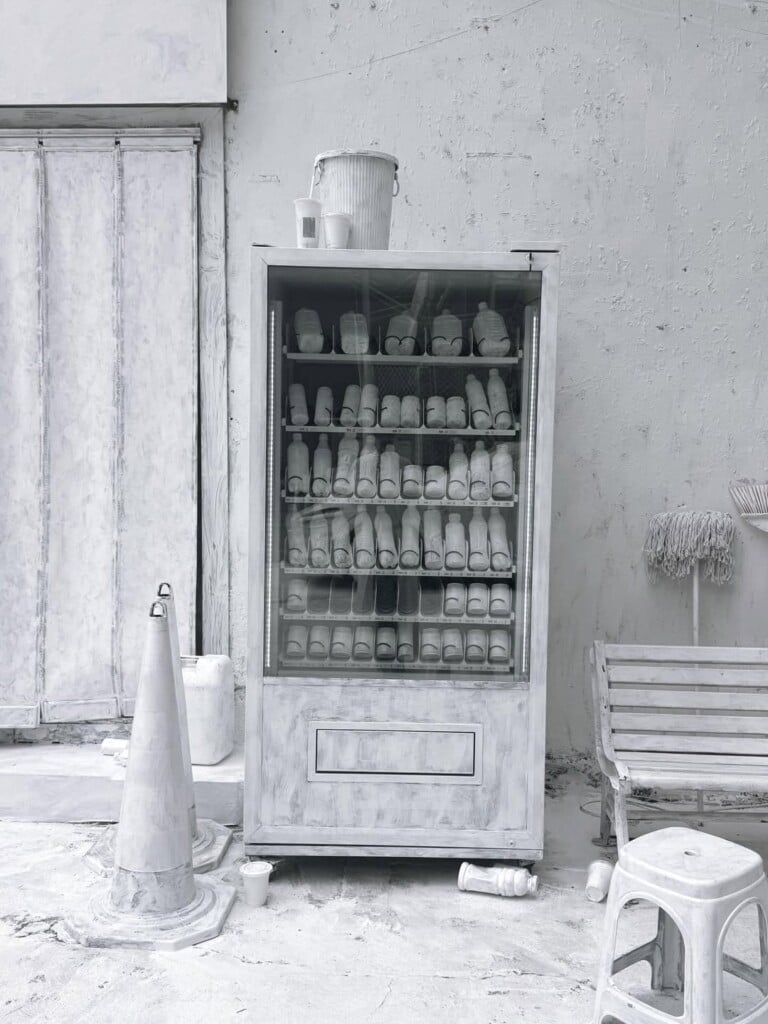
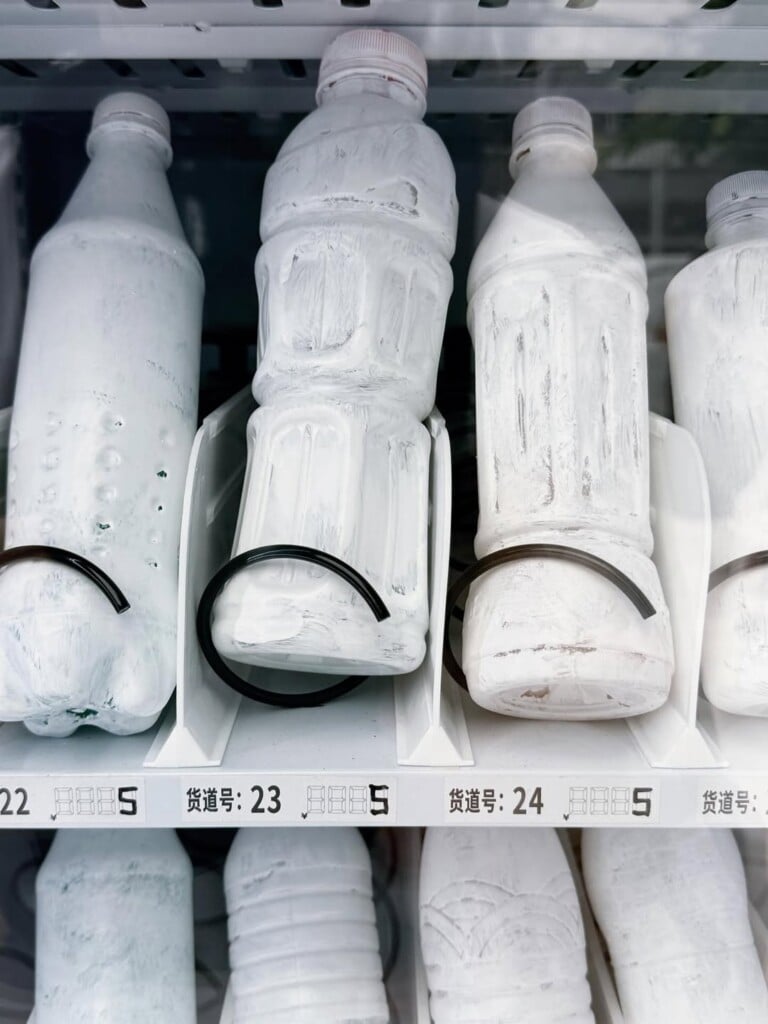
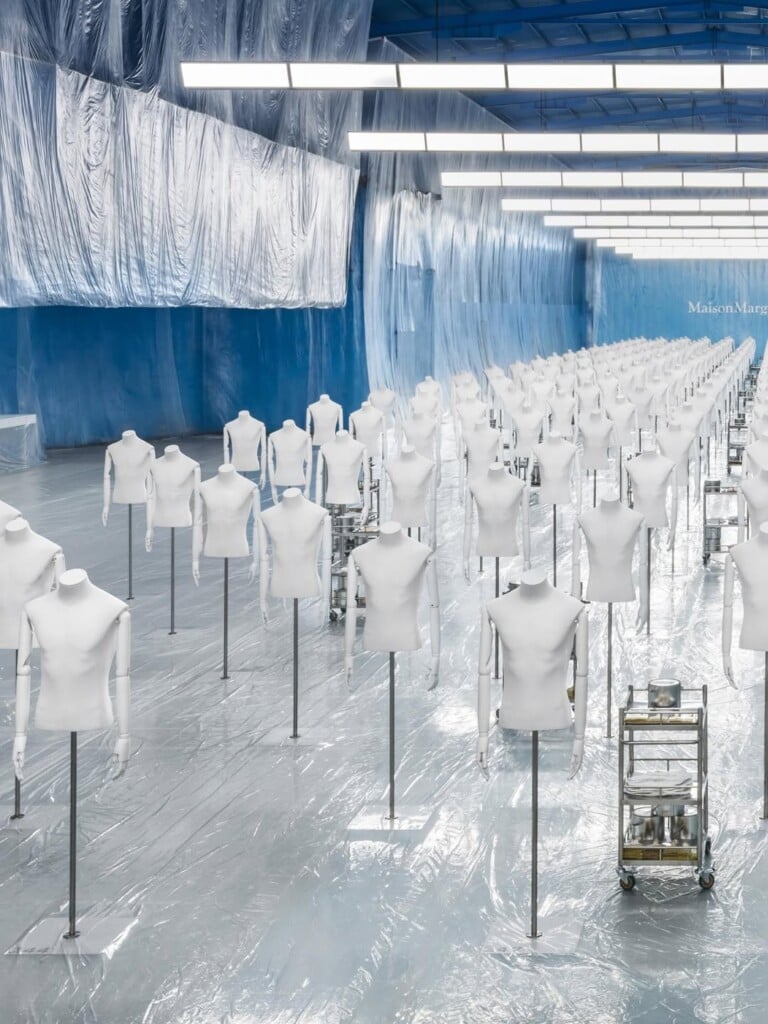
Space also plays a fundamental role. The scenography designed by OMA transforms a badminton court into a collective laboratory, suspended between installation and performance, where the painterly gesture becomes a shared action. Here, the atelier is no longer a closed and specialized place, but an open device that makes visible what usually remains hidden.
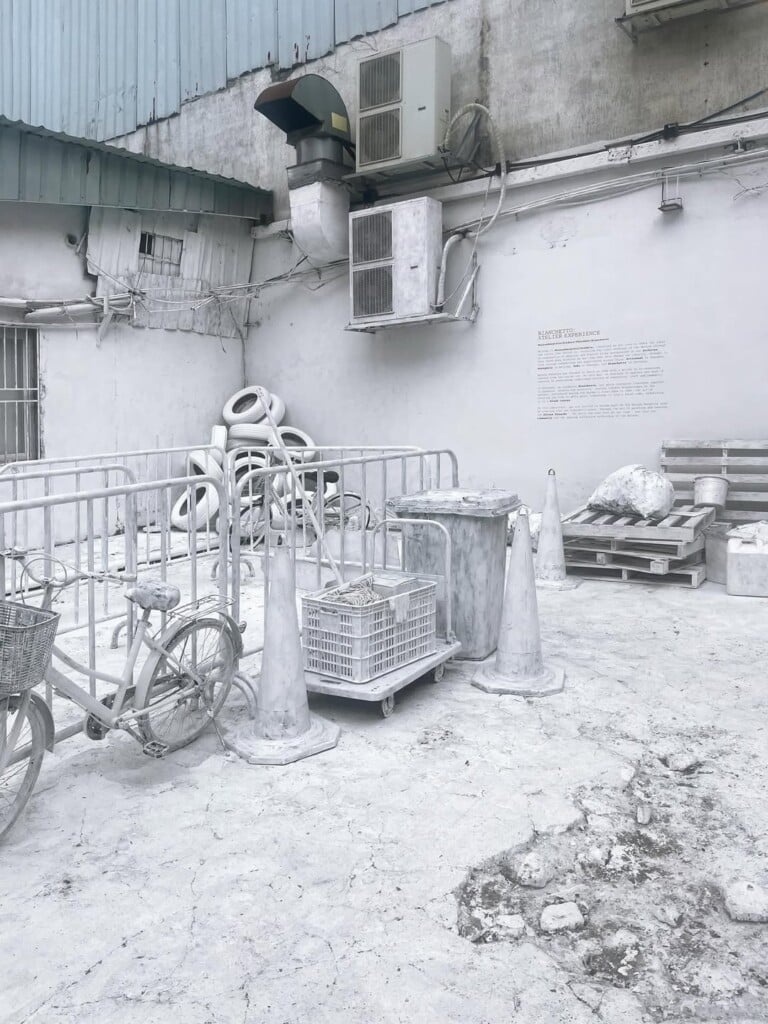
Included within the broader MaisonMargiela/folders program, the Shenzhen experience represents one of four chapters through which the house narrates its core codes, balancing archive and contemporary activation.
With Bianchetto: Atelier Experience, Margiela does not simply show its language, but invites people to practice it. A simple gesture like covering a garment in white becomes a radical act: erasing in order to begin again.
Read also: Nike’s strange (and funny) campaign by Pablo Rochat