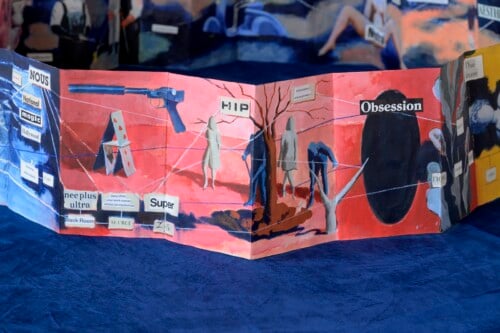
Artist Tom Sachs, best known for his reinterpretations of modern icons and for his series of films available on YouTube, makes the news in occasion of his latest film release: Paradox Bullet. Following 10 Bullets, the film series explaining the code of conduct according to which he and his fellow studio collaborators live and die, his new film is about a man who loses his keys in the Mojave Desert during an important delivery.
Paradox refers to the contradiction, the complexity and the fealty of rules. Many are the contradictions like “Do the easy thing first. Do the hard thing first” or “Never freak out. The virtues of a freak-out”. The paradox consists in the rigidity associated to rules: the more rigid are the rules we live by, less are the probabilities for them to function under different circumstances. Functionality seems to be a prominent, recurring characteristic in Sachs work and is also applied to his last project with Nike: The Mars Yard Overshoe, which will be released this Thursday at Dover Street Market after the premiere of his new film at London’s Frieze Festival.

Sachs’ collaboration with Matt Parker (Nike CEO) started about ten years ago and was marked by a challenge. After receiving Sachs critics regarding the resistance and endurance of Nike shoes in an interview for Interview Magazine, Nike challenges Sachs to do better. The terms and conditions of this challenge were to realize something none of them could have done without each other and the rule is still valid. What will come out on October 11th is the third evolution step of a product initially launched in 2012: the Mars Yard Shoe, updated in materials five years later with the Mars Yard Shoe 2.0.
According to Sachs’ philosophy, nothing is ever finished, everything can be stripped down, redesigned and improved. The first Mars Yard Shoe didn’t meet his expectations and in the second release materials were updated from Vectran to Polyester.
The Mars Yard Overshoe is an extension of this project. The shoe is made to walk on the cold, wet streets of NYC during the month of March, or on the icy moon of Jupiter Europa, as the designer declares.
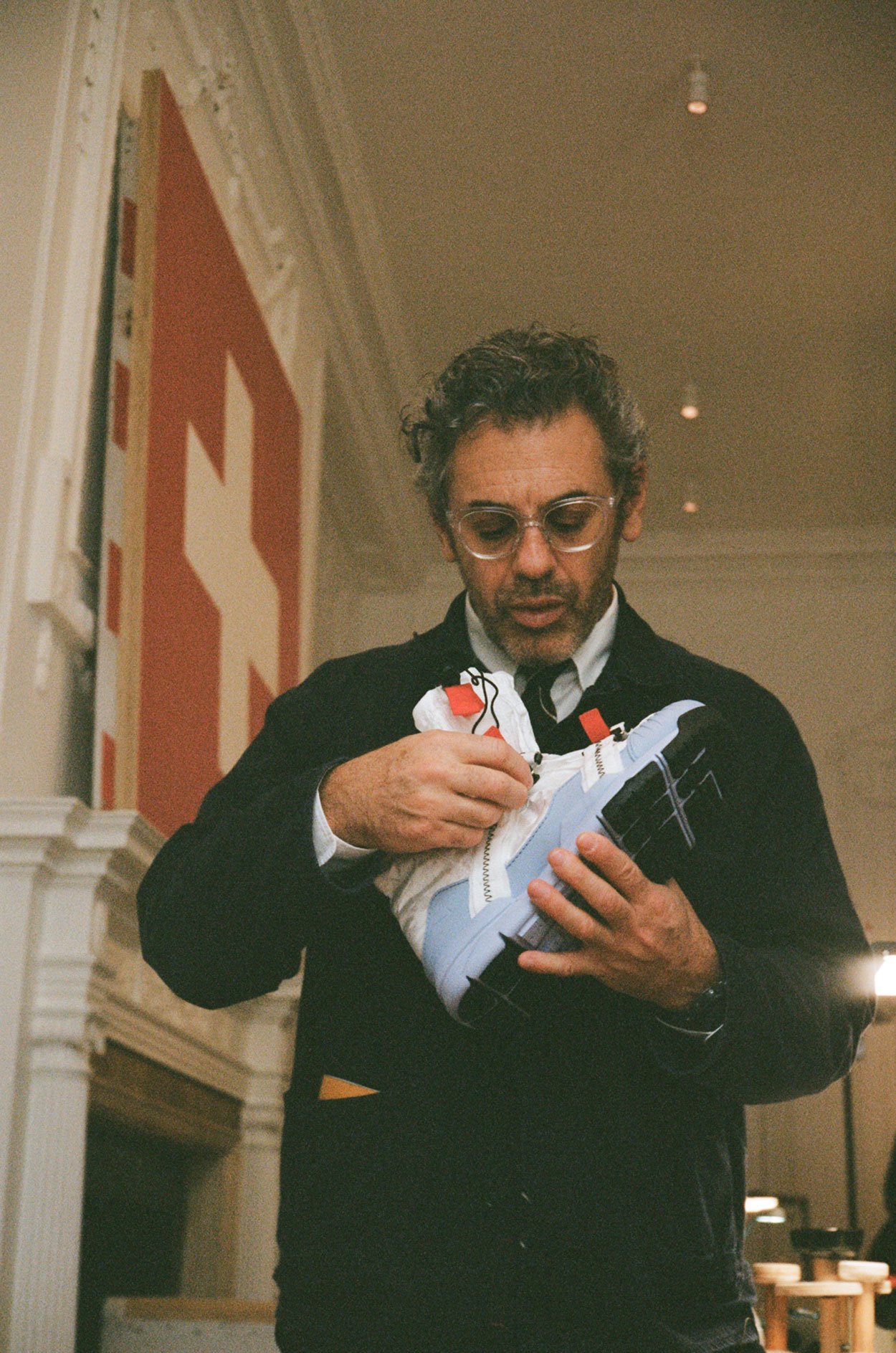
If Sachs creative-destructive process, which consists in putting into test his works under various conditions enjoys the advance of producing one thing at a time, this doesn’t apply to Nike given the brand’s larger and faster production modes. What the artist has learned from this collaboration is a new working method, and what the two parties have in common is not so much the value of the final product but the journey to get there: making and working.
“The reward for good work is more work” (Tom Sachs).


Text by: Enrica Miller