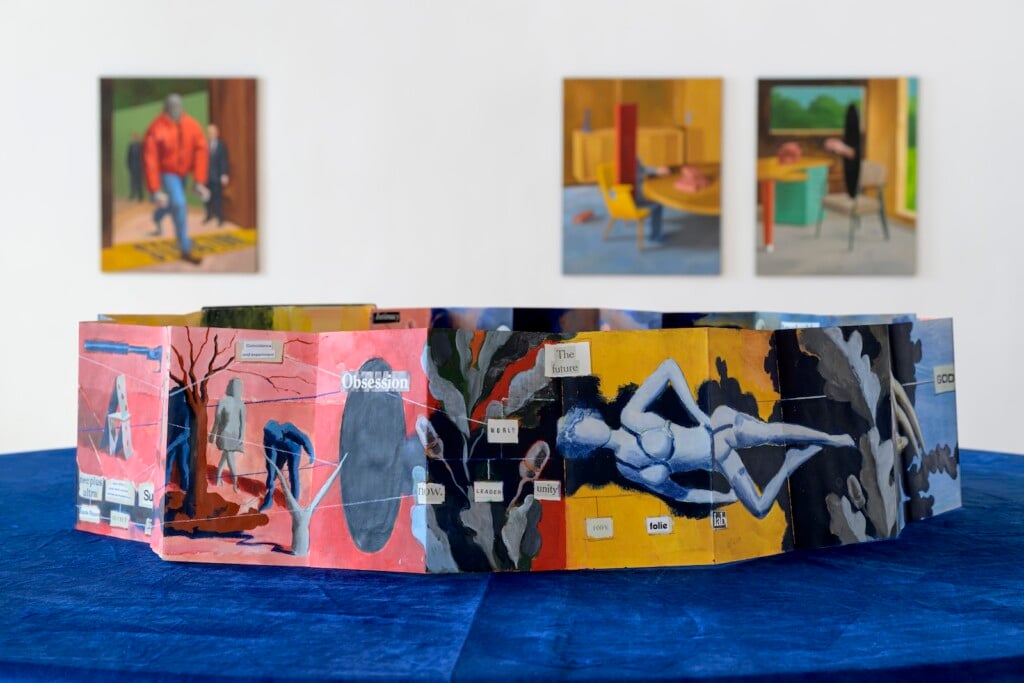
In the works of the artist Mihael Milunović, what should convey authority and confidence suddenly becomes ambiguous. A single crack in the image is enough for certainties to waver and for what seemed familiar to take on a different meaning. With The Costume Has a Crack in It, at Steinhauser Gallery in Bratislava, the artist explores the masks we wear and the systems of power that we often help sustain without realizing it.
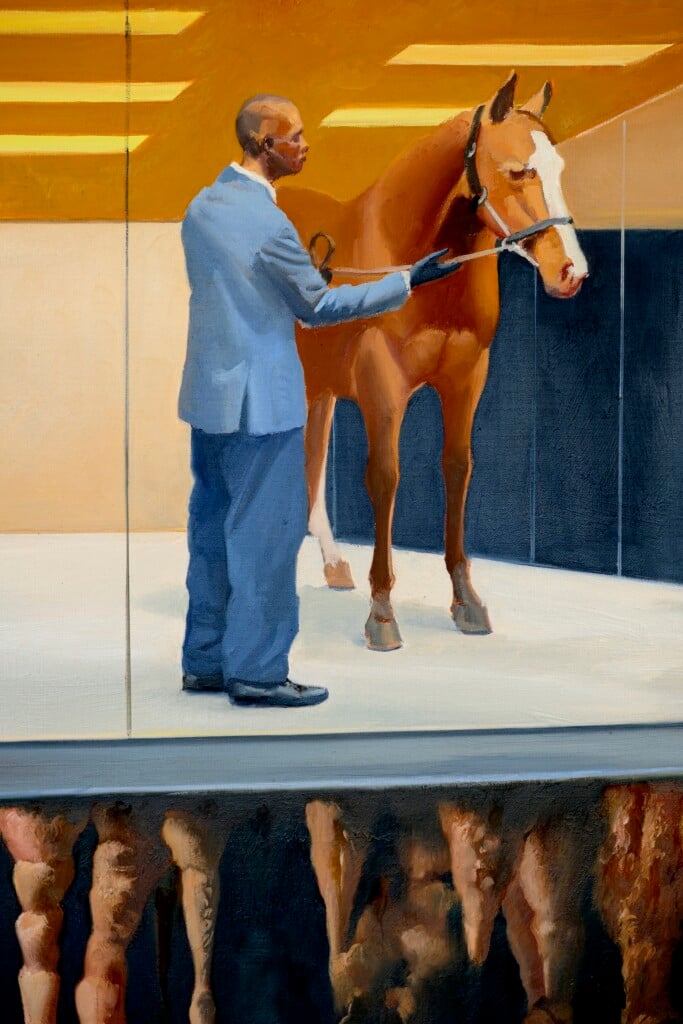
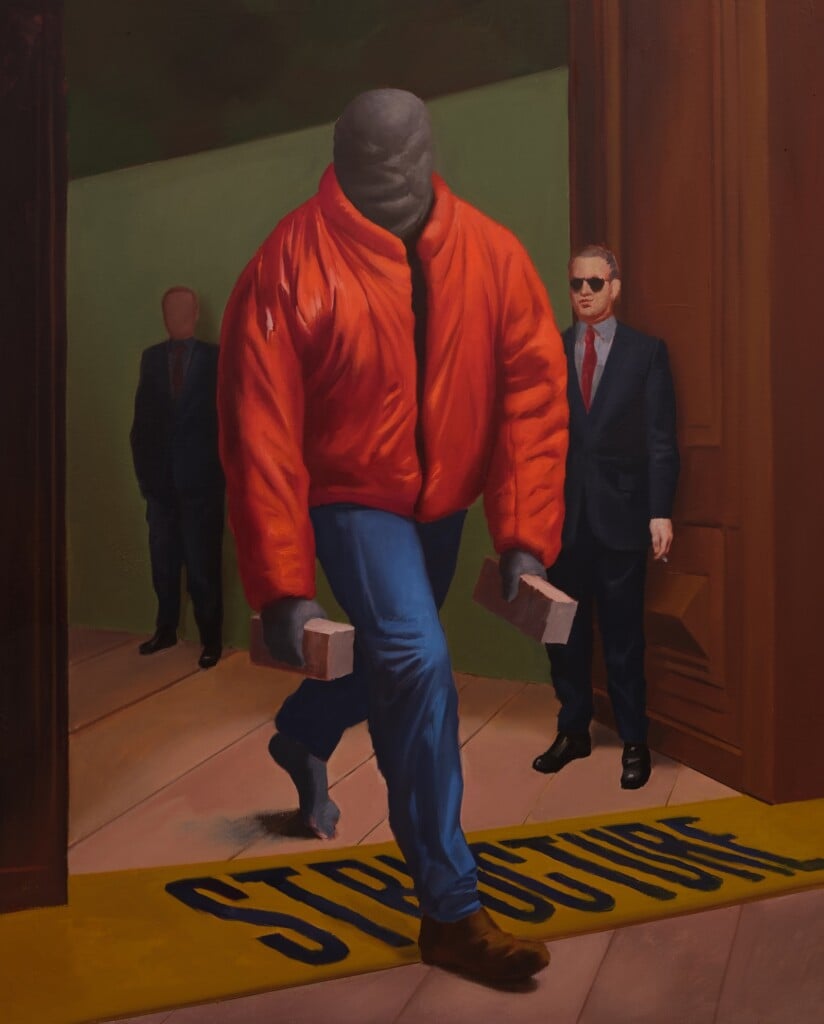
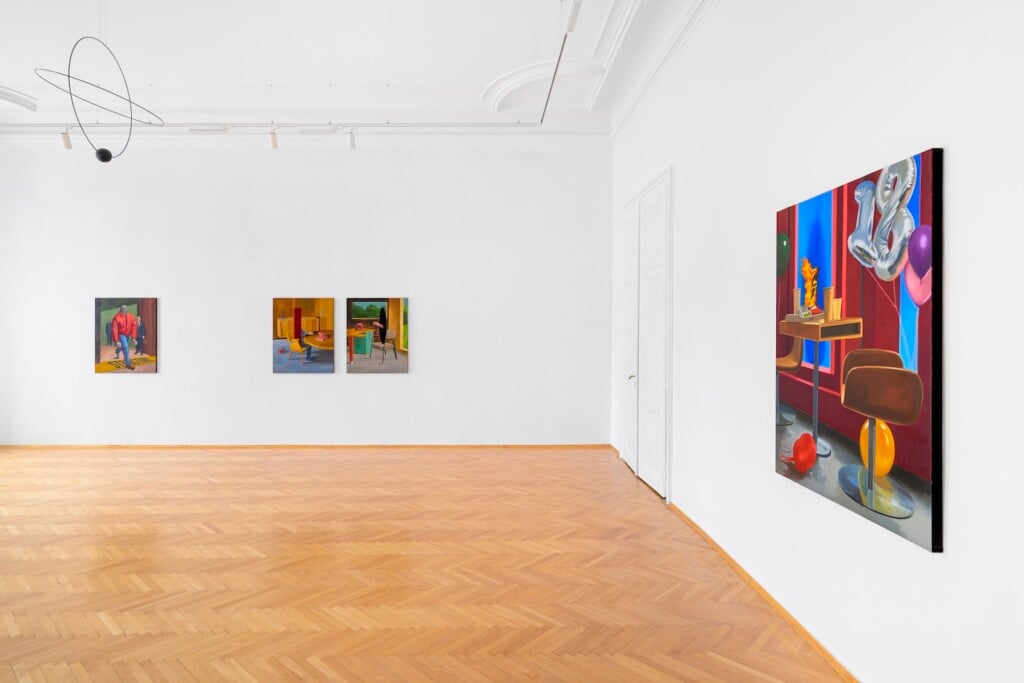
An elegant suit, a desk, a uniform: just a few elements are enough to recognize an authoritative figure. But what happens when, beneath that appearance, we find no one? It is from this unease that The Costume Has a Crack in It takes shape, the solo exhibition by Mihael Milunović at Steinhauser Gallery in Bratislava, from September 10 to October 31, 2026. Curated by Jovana Ilić, the gallery’s 59th solo exhibition brings together paintings that question the relationship between identity, social role and perception.
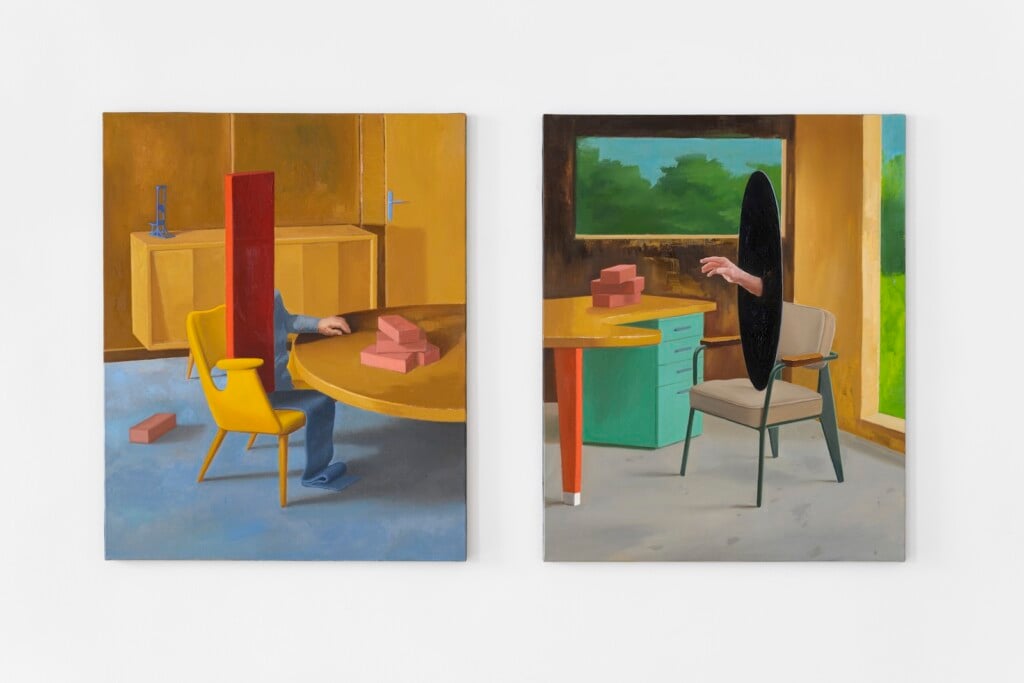
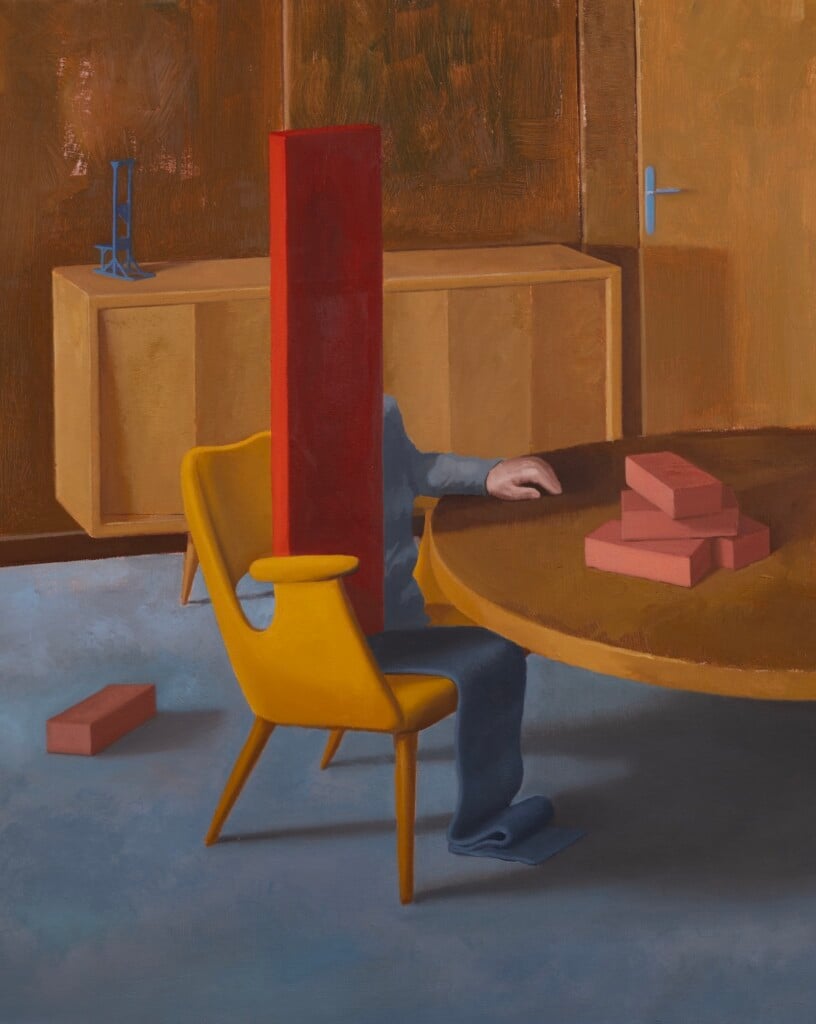
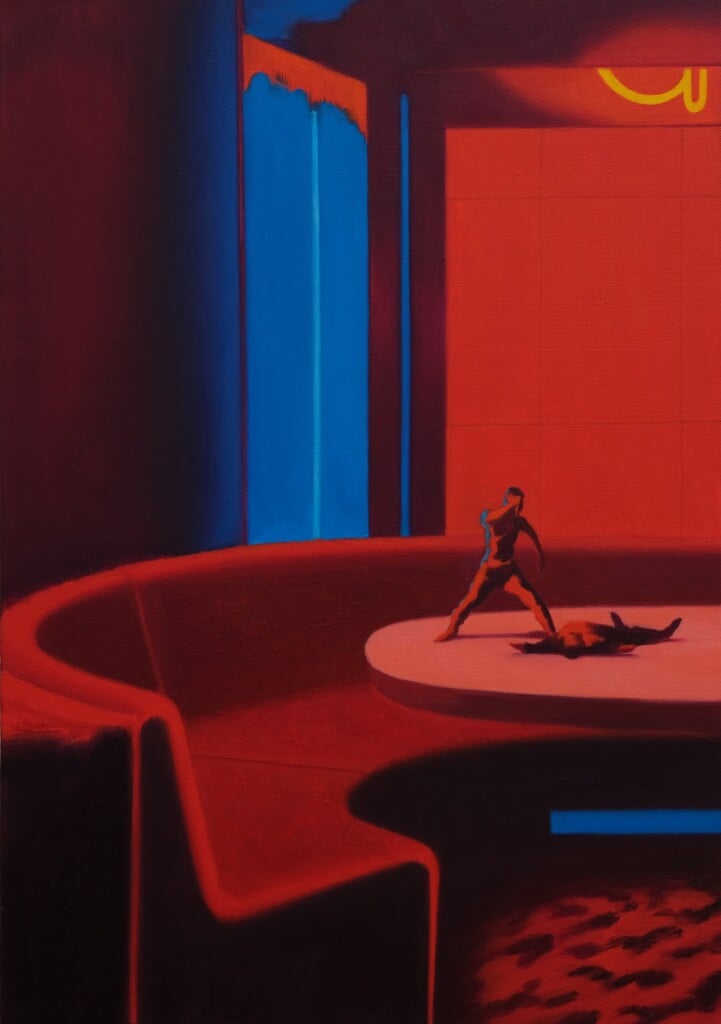
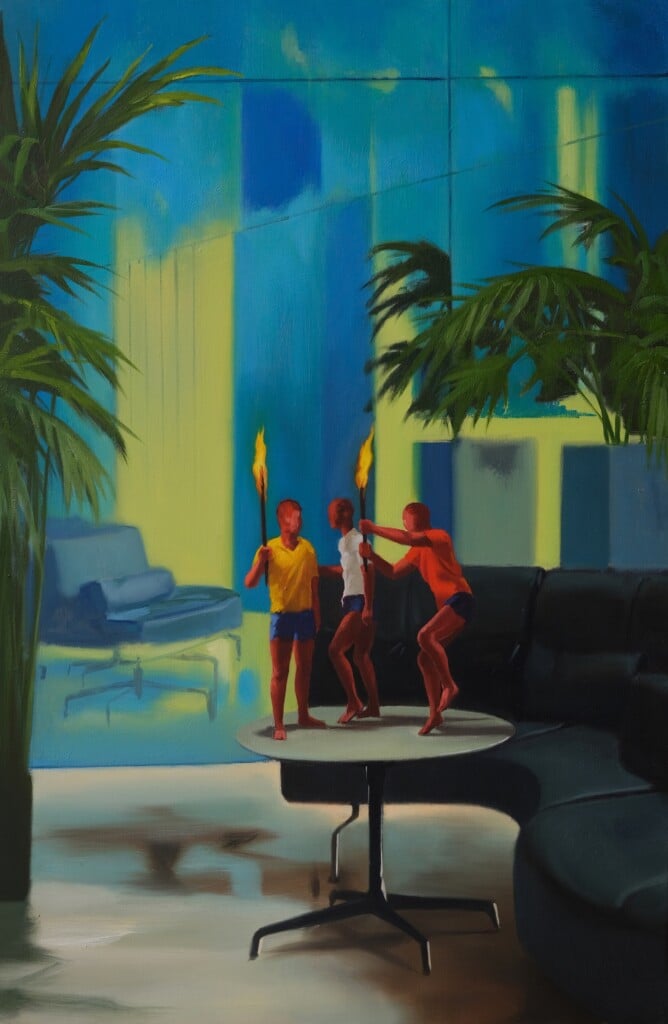
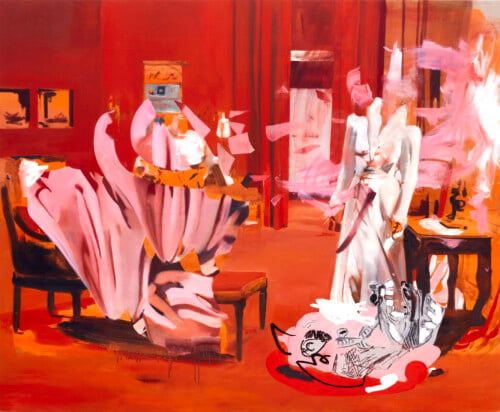
In Milunović’s canvases, people often seem to disappear, leaving in their place the objects that are supposed to represent them. A suit without a body, a face withheld from view, a chair occupied by a dark shape: these are images that disorient because they keep all the outward signs of a presence while erasing its content. Offices and institutional furnishings also become ambiguous stage sets, in which authority continues to be exercised almost out of habit. The artist does not merely denounce the emptiness of power, however: he suggests how much social conventions depend on our willingness to recognize and go along with them.
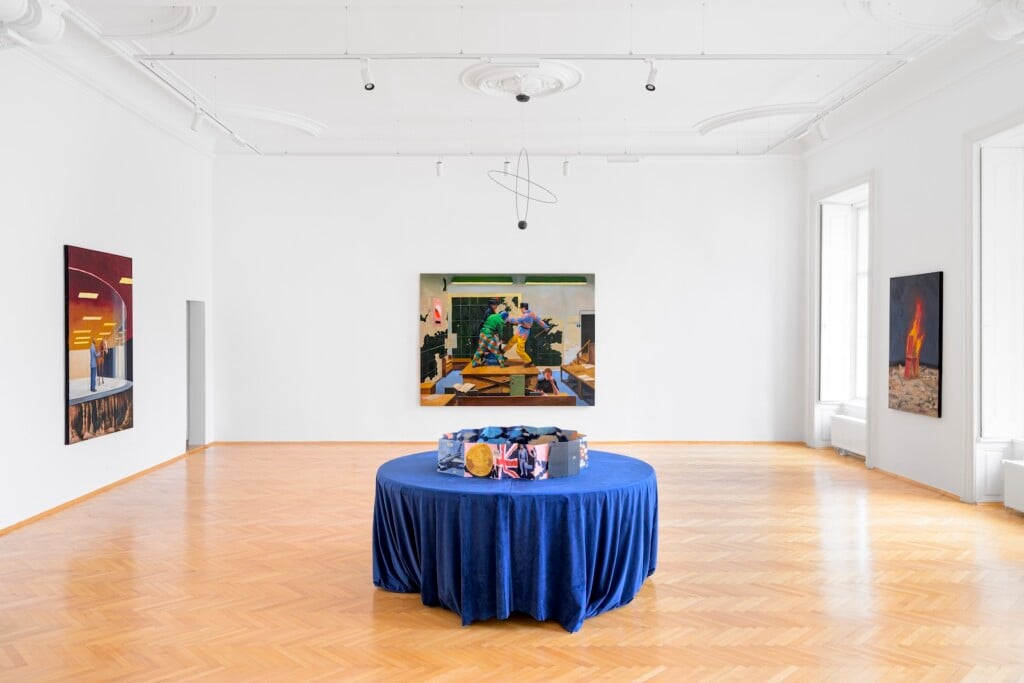
Born in Belgrade in 1967, Milunović studied painting at the Faculty of Fine Arts in the city and at the École nationale supérieure des Beaux-Arts in Paris. Over the course of his career he has developed a practice that includes painting, drawing, photography, video, sculpture and installation, often drawing on familiar objects and situations to turn them into something estranging. His works sit in a borderland between what we recognize and what we cannot fully explain: an image may seem ordinary at first, only to reveal details that alter its meaning.
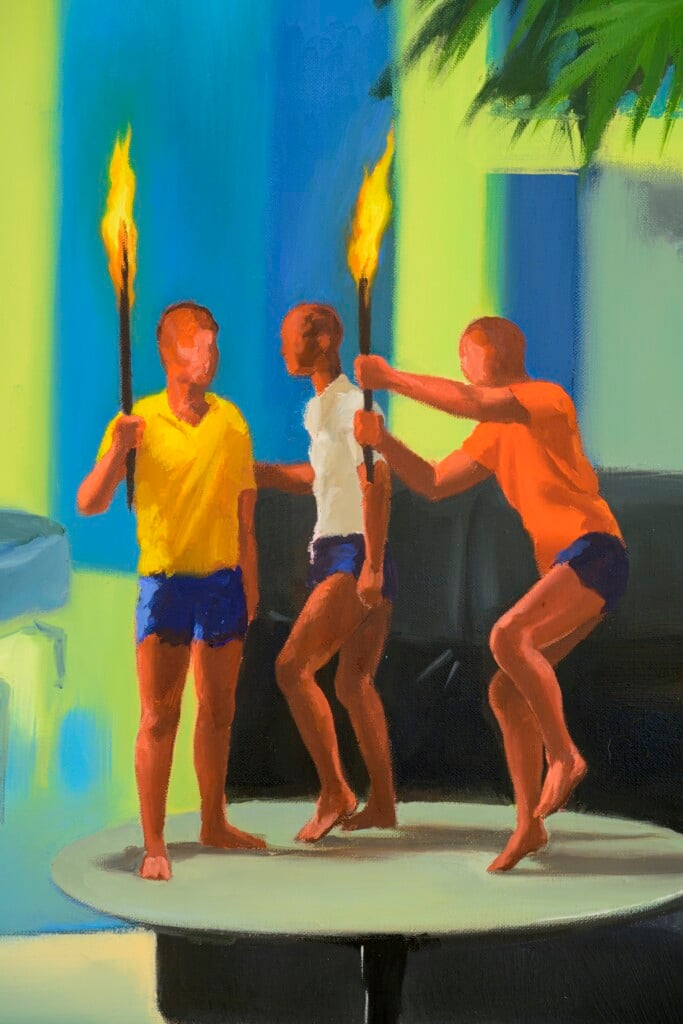
The title of the exhibition suggests that no mask can completely hide what lies behind it. In the paintings, in fact, something keeps emerging: a hand reaching out from a black cavity, a figure continuing to work while chaos unfolds around them, tiny characters inside oversized architecture. These are details that keep the scenes from closing in on a single interpretation. In a present in which images and appearances circulate faster than our ability to verify them, Milunović invites us to slow down and look more carefully. His painting offers no definitive answers, but opens a crack in our certainties: one through which we can begin to ask how much of what we consider real depends, ultimately, on the way we have learned to look at it.