There are materials we’re used to recognizing immediately: wood for its warmth, metal for its rigidity, ceramic for its smooth surface. Matisse Di Maggio works instead precisely at the moment when these associations start to break down. A designer and performer based in Paris, her research focuses mainly on rubber and latex, materials she treats through manual processes to transform their texture, appearance and function. Her work has also been featured within the collections of Rick Owens and Jean Paul Gaultier.
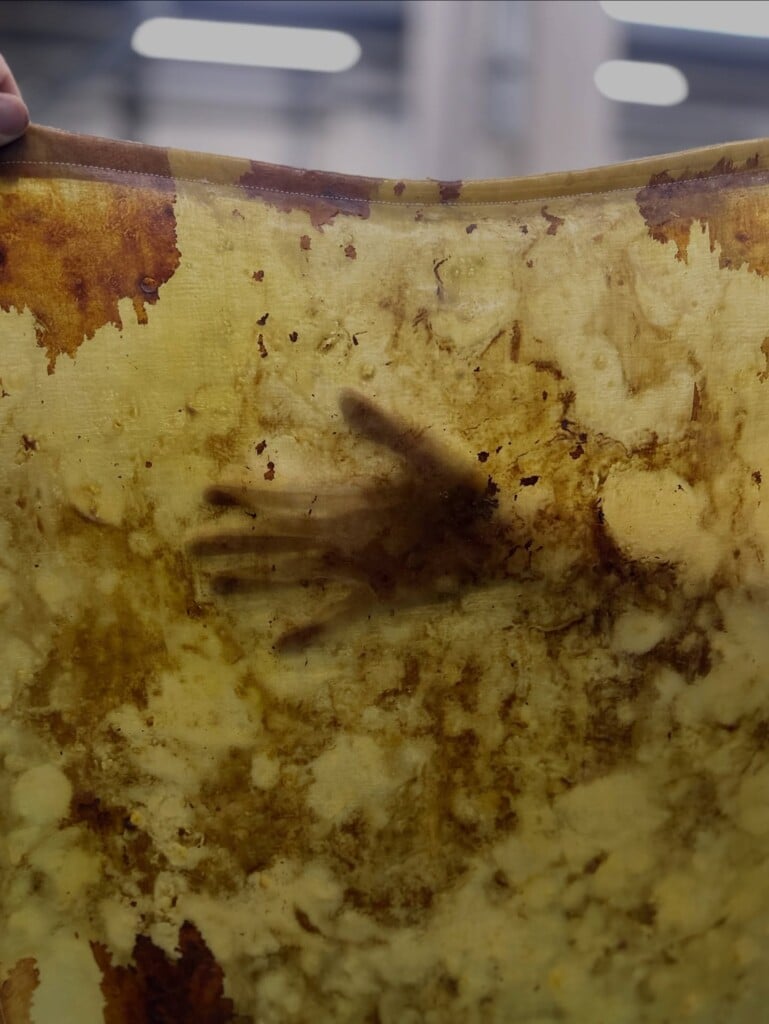
In her work, latex isn’t just a material with a particular visual quality. It’s something to be manipulated, layered, molded and pushed beyond its usual use. A practice that moves between design, textile research and fetish culture, fields that Di Maggio puts into relation without separating the material’s aesthetic dimension from its physical one.
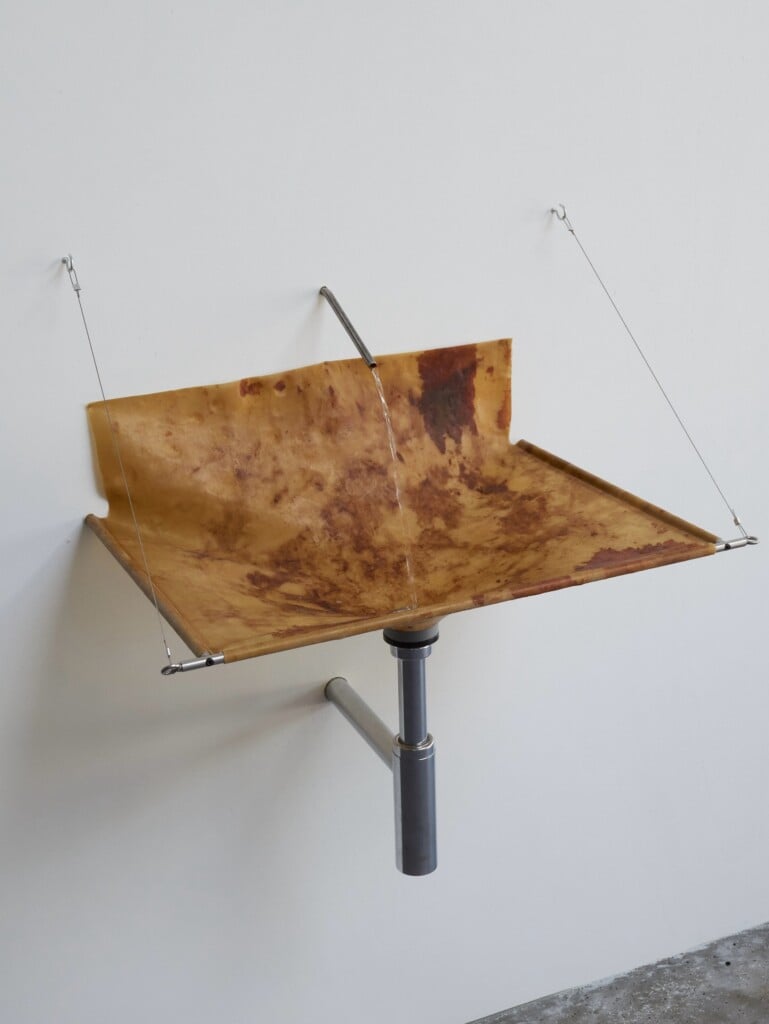
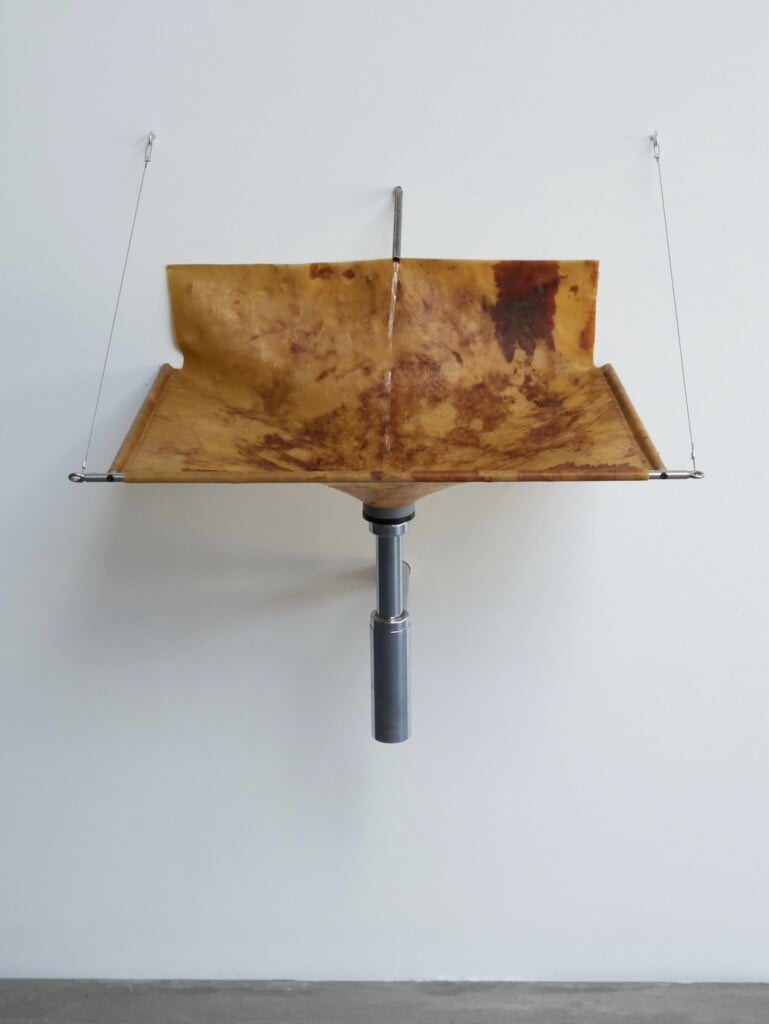
It’s precisely this attention to matter that emerges in the sink made in collaboration with Malo Espercieux. At first glance it almost looks like a surface of ancient stone or oxidized metal, but its skin tells a completely different story. The panel is in fact made of hand-painted natural latex, then subjected to an oxidation treatment and subsequently brushed, until an irregular, marbled texture is achieved.
The result is interesting because it doesn’t try to hide the process. On the contrary, it makes it the most visible part of the object. Stains, variations, marks and imperfections aren’t corrected to achieve a uniform surface: they become what defines the sink’s character. Even the relationship with water, an inevitable element for an object of this kind, enters into the experimentation. According to the project’s description, the technique used allows the color and texture obtained through oxidation to remain stable even after prolonged contact with water.
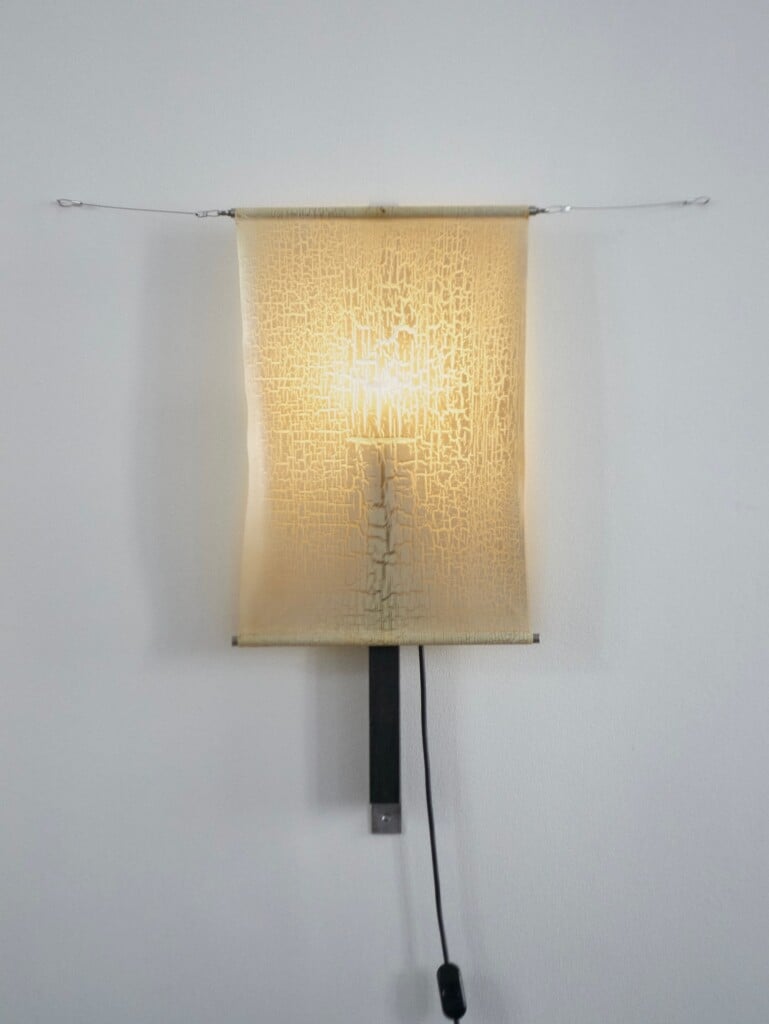
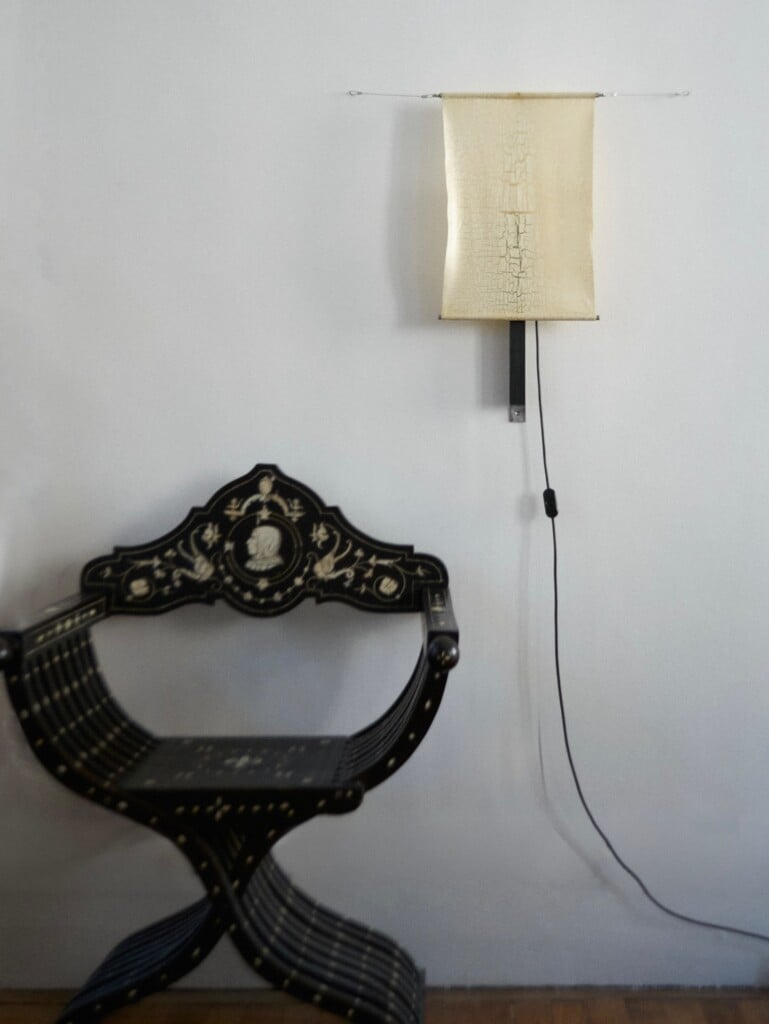
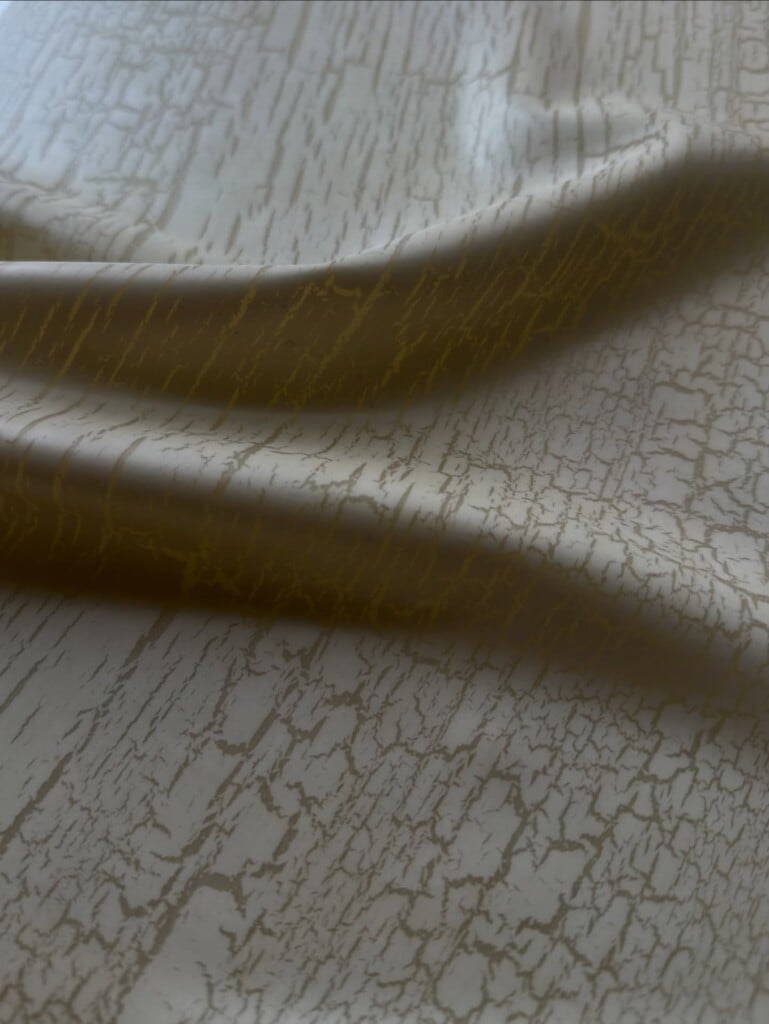
It’s an approach that helps explain why Di Maggio’s work can’t simply be reduced to an aesthetic exploration of latex. The material becomes a way of calling the object’s function into question. A sink continues to be a sink, but its surface moves it away from the conventional image of an industrial object and closer to something more tactile, almost organic.
The same attention to process emerges in the work she has done for fashion. For Rick Owens, Di Maggio developed several elements in natural rubber, including tops and hoodies marked by a rippled, three-dimensional finish. The press release for the Fall/Winter 2025 collection describes a collaboration in which latex is used to build surfaces with strong relief, and Rick Owens has continued to involve her in subsequent seasons as well.
In 2026, for Owens’s Spring/Summer 2027 collection, her Paris atelier also worked on transparent tops in hand-applied latex, a process that requires many hours and a particularly precise manual construction. Vogue Runway identifies Di Maggio as the one responsible for this technique, while Rick Owens officially describes her practice as a research into the manipulation of rubber and latex through artisanal techniques.
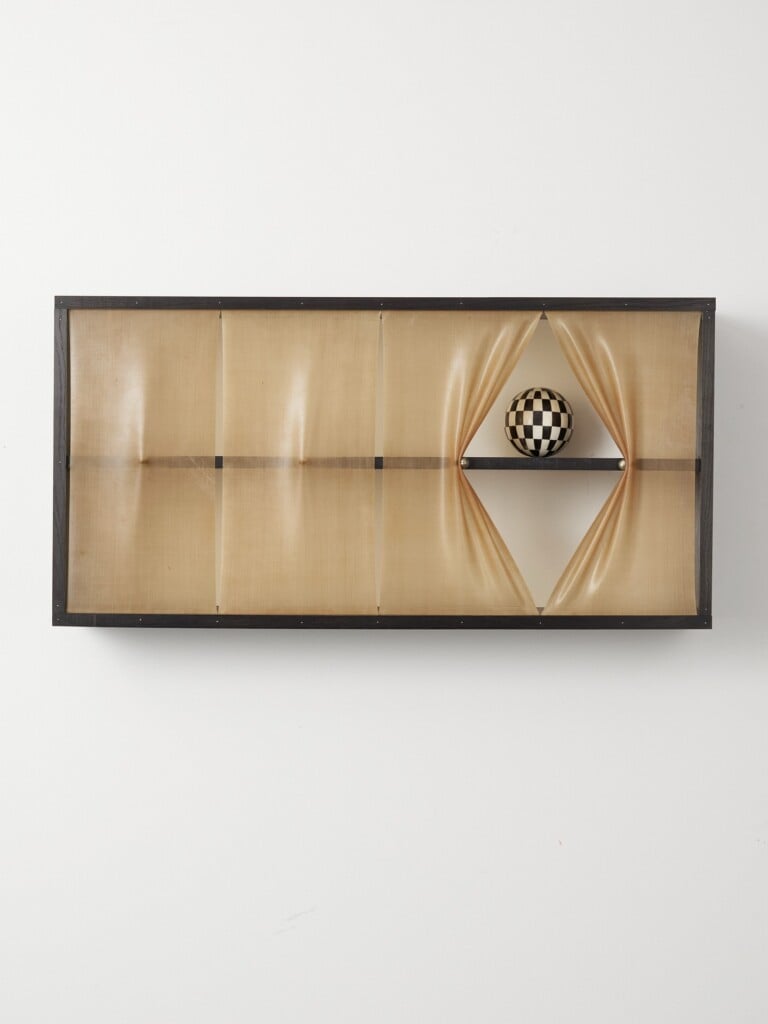
The collaboration with Jean Paul Gaultier also shows how much her work can move between technology and craftsmanship. For the Fall/Winter 2026 Haute Couture, her atelier received a bust made through 3D printing and transformed it through several baths of pigmented latex. The surface was then finished by hand, adding details such as hand-painted freckles and moles.
This is where Di Maggio’s research becomes especially interesting: technology doesn’t replace the hand, but becomes the starting point for a further manual intervention. 3D printing produces the structure, latex alters its skin; in the sink, on the other hand, a flexible material is transformed until it takes on the appearance of something seemingly hard and mineral. In both cases, what matters isn’t just the final result, but the transformation. Di Maggio works on the expectations we hold toward surfaces and materials: the soft can look hard, the transparent can become a second skin, an artificial surface can take on the appearance of something that seems to have formed naturally.
And this is perhaps precisely the key to her practice. Not making latex resemble something else, but pushing it until it reveals possibilities we don’t normally attribute to it. Between fashion, design and material research, Matisse Di Maggio thus builds objects and surfaces in which the process doesn’t disappear behind the form: it stays visible, tactile, almost physical.
The sink made with Malo Espercieux is, then, more than an aesthetic exercise. It’s an everyday object that becomes the testing ground for what can happen when a material is stripped of its usual function and left to speak through its own transformation.