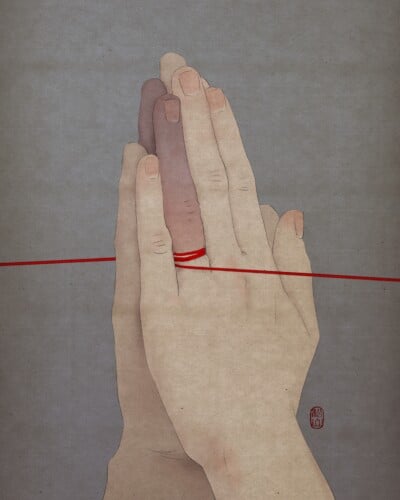
Maud Madsen builds a kind of painting that reflects on childhood as a moment of observation and perceptual distortion. As she explains in this interview, much of her imagery draws on a time in her childhood when she lived with her family in Pennsylvania, “always barefoot.”
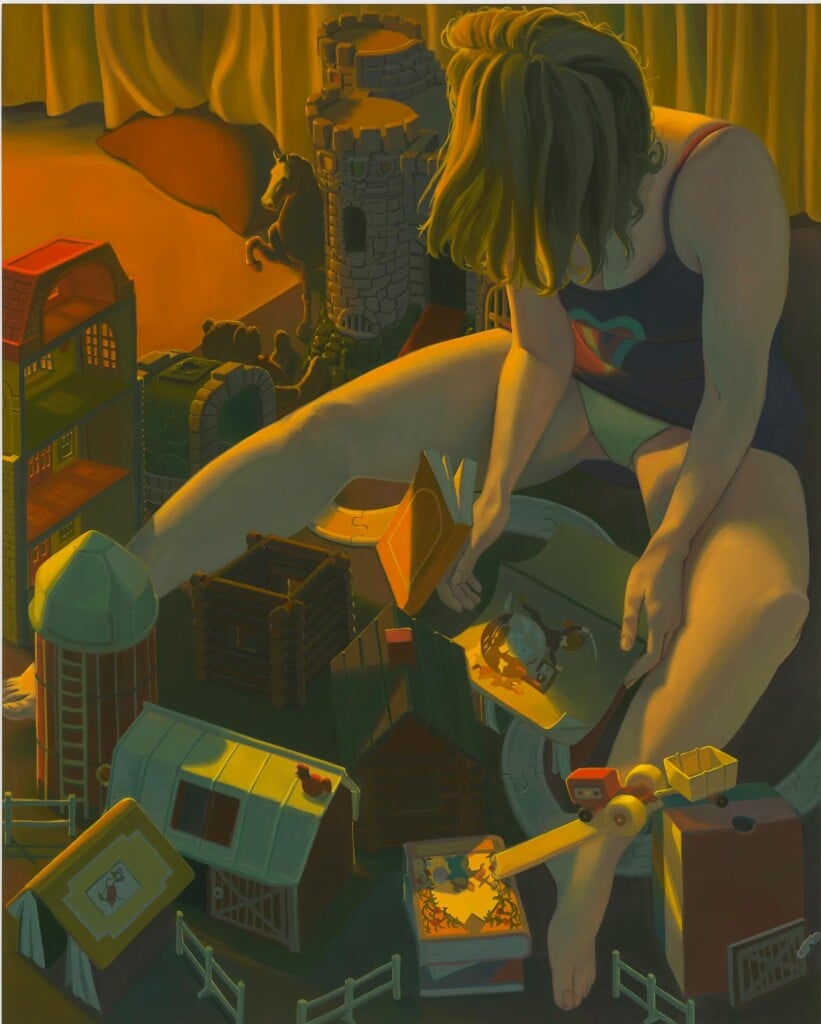
Her female figures, with deliberately disproportionate bodies and devoid of idealization, inhabit the canvas somewhere between daily gestures and suspended postures. The artist seems interested in exploring growth as a visual process, where memory and reality overlap without ever fully coinciding.
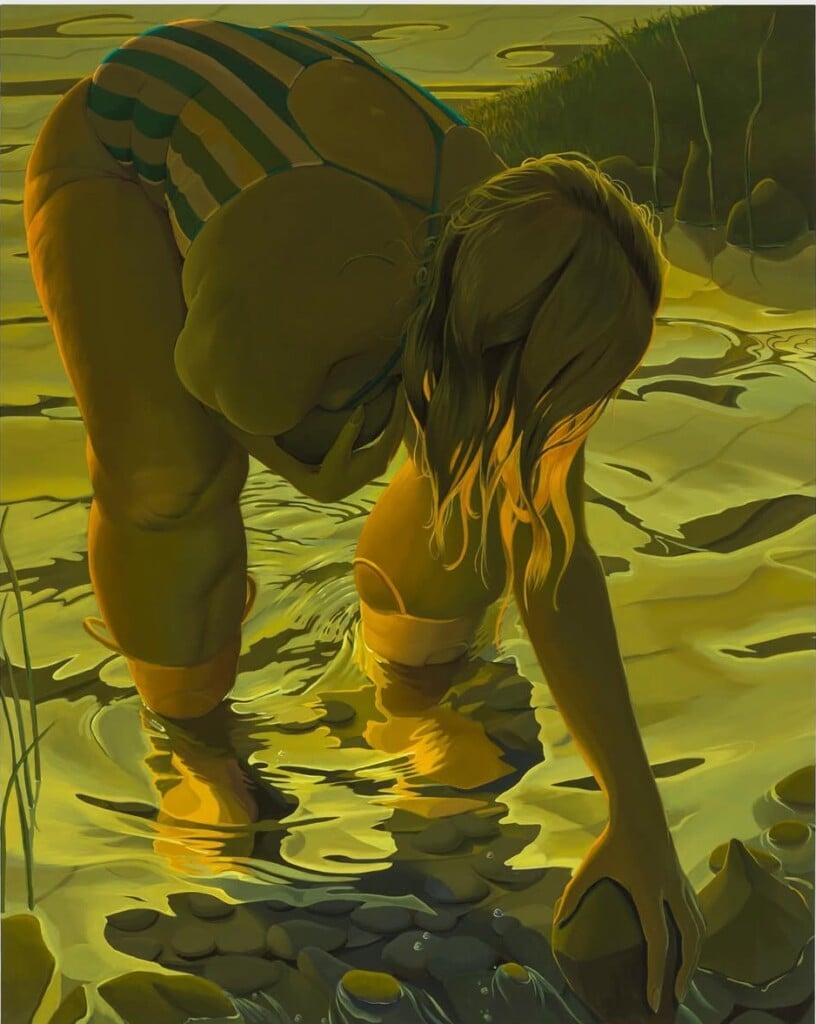
The recurring protagonist is a sort of alter ego — a girl moving through domestic scenes and small suburban adventures. She’s a figure that doesn’t seek beauty but authenticity: skin with visible textures, absorbed gazes, poses that suggest a natural imperfection. In these bodies, the idea of a personal realism takes shape, one made of tenderness and shared awkwardness.
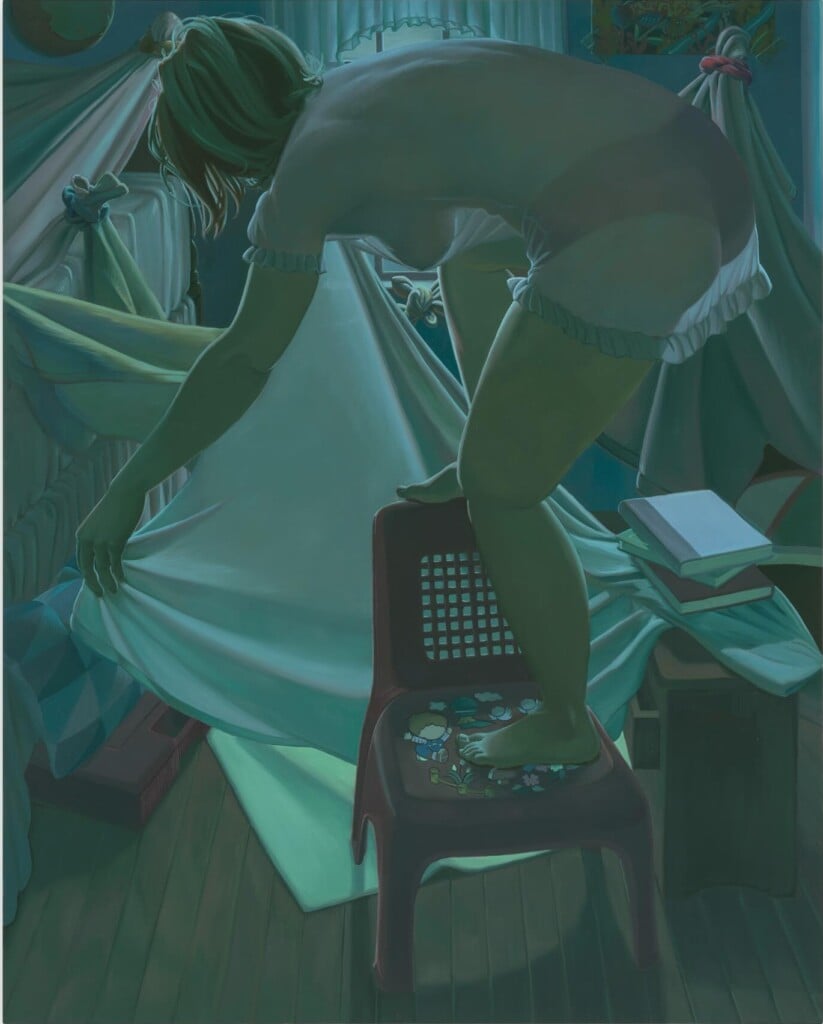
Water remains a constant element: inflatable pools, bathtubs, and ditches become reflective surfaces where memories ripple. Madsen uses milky blue as a mental, rather than physical, space — a way to convey sensations and fragments of experience. Each canvas captures the moment when an ordinary detail — a towel, a reflection, a distracted pose — turns into a story.
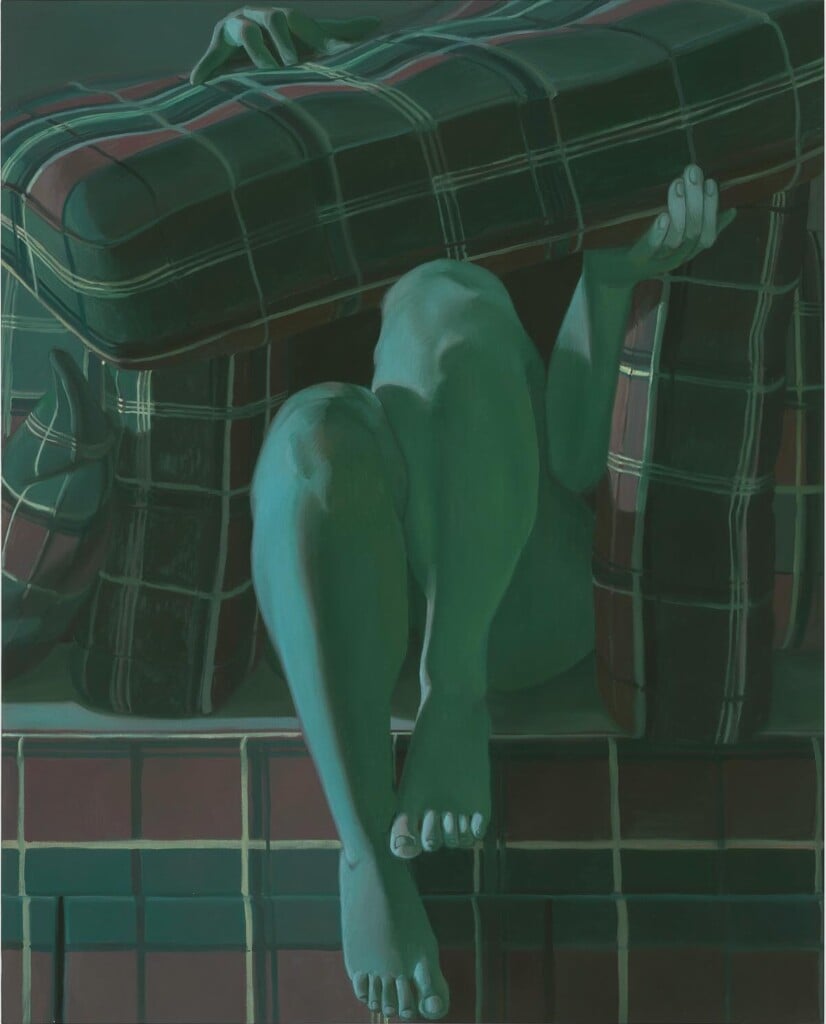
Her method is precise and meditative: numerous preparatory sketches, reference photographs, and acrylic layers that define the surfaces with clarity. It’s a kind of painting that balances observation and invention, where composition holds the same importance as subject.
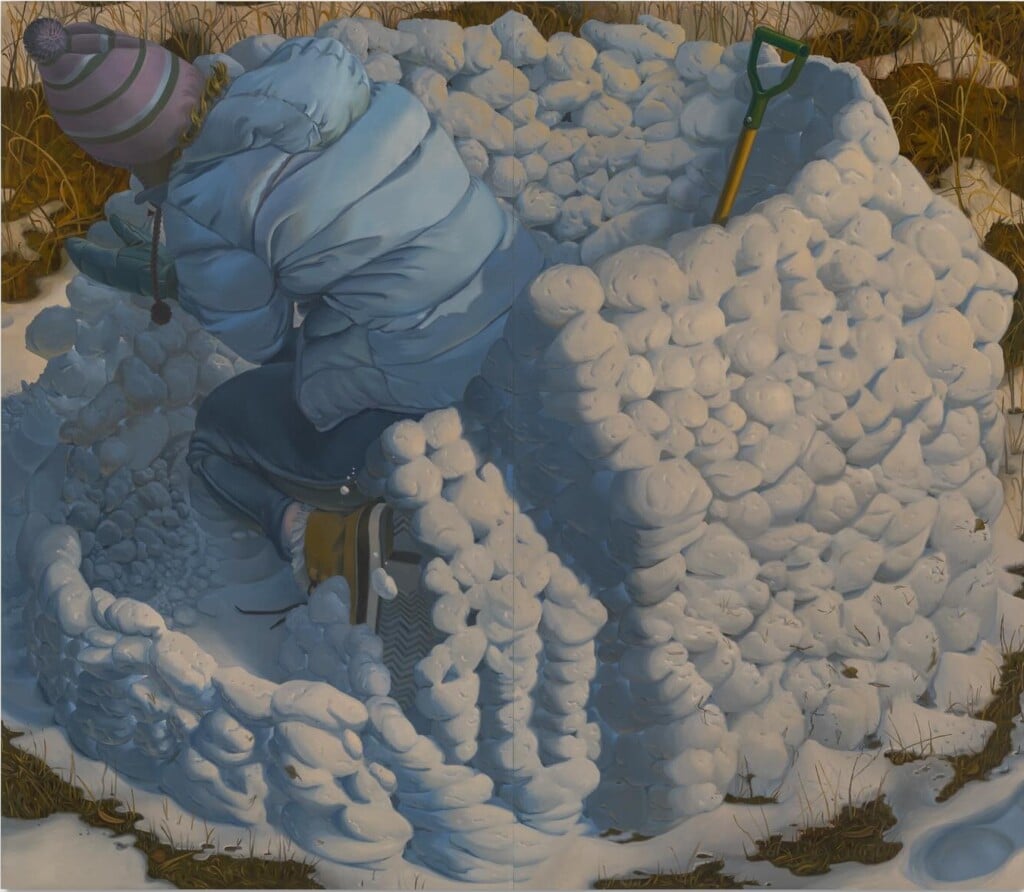
Warm colors and tactile textures meet in a sincere representation of the body, far from any idealization. Madsen seems interested in physicality as a language: skin, light, and fabric folds become narrative tools. Her works thus tell of the threshold between childhood and adolescence, when domestic space coincides with the entire world. More than nostalgic, the images are exercises in attention — attempts to capture that brief distance between experience and memory. In this minimal dimension, Maud Madsen finds an essential balance between reality and imagination.