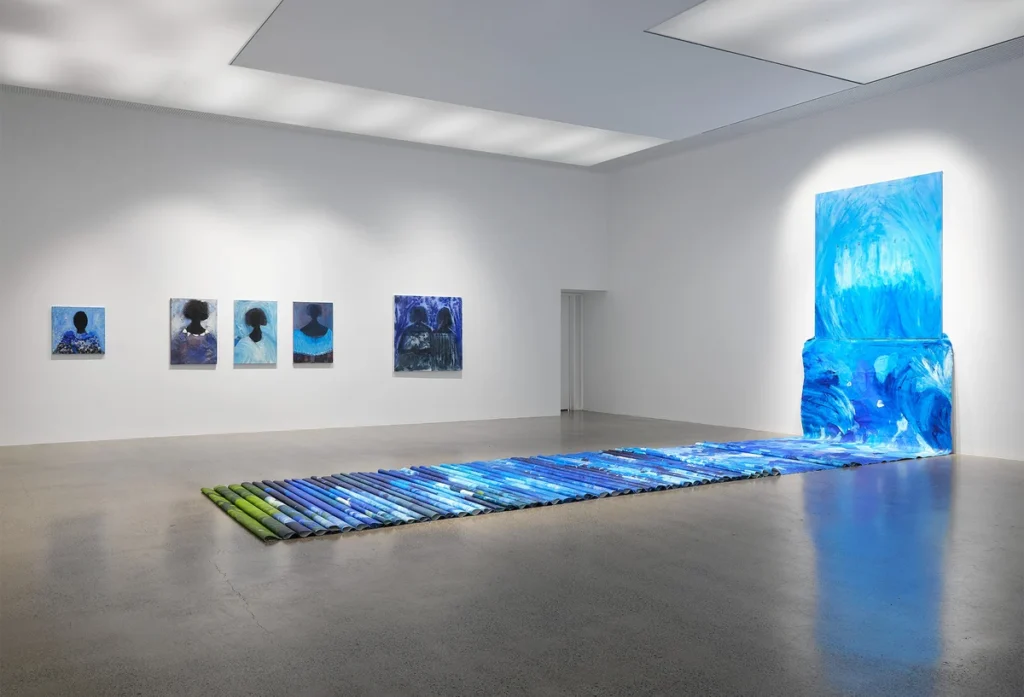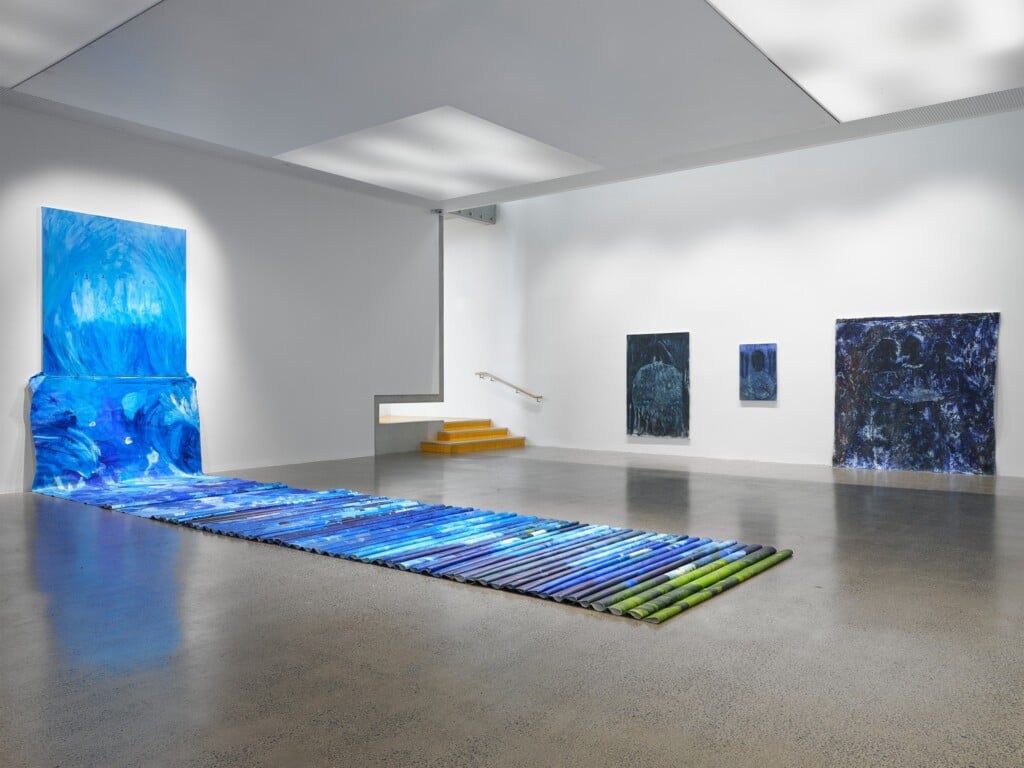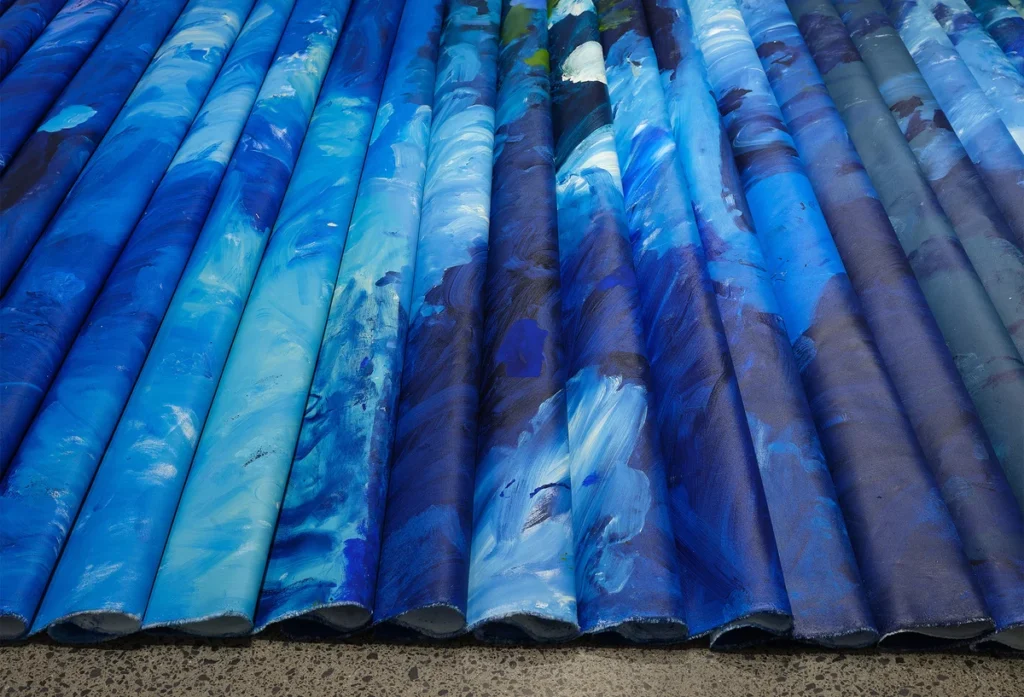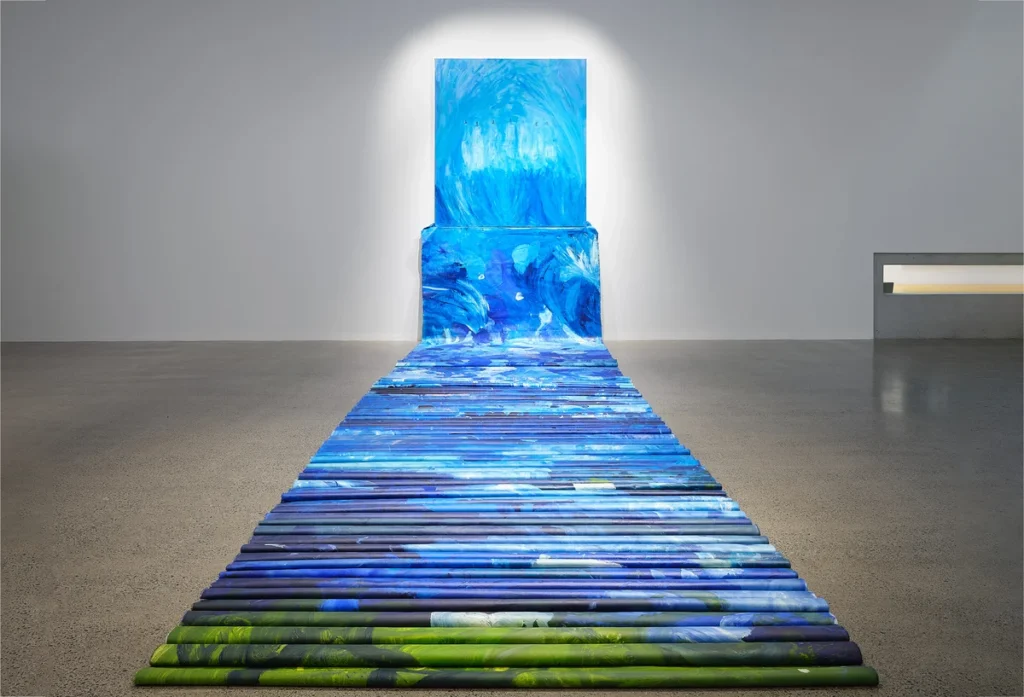
A monumental painting stretching a full 23 metres immediately catches the eye and opens the solo exhibition of Ruth Ige (Nigeria, 1992), titled The Evocation of Worlds. From 23 August to 15 November 2026, the Te Uru Waitākere Contemporary Gallery in Titirangi, New Zealand, presents a series of intense works, born from deep spirituality and the desire to give shape to dreams.
In her work, Ruth Ige interweaves the history of the African diaspora with her own origins, Yoruba on her father’s side and Igbo on her mother’s. The artist looks to the rich Nigerian tradition, drawing on the symbolism of animism and the energy held in the choice of ingredients and materials that accompany the creative process.
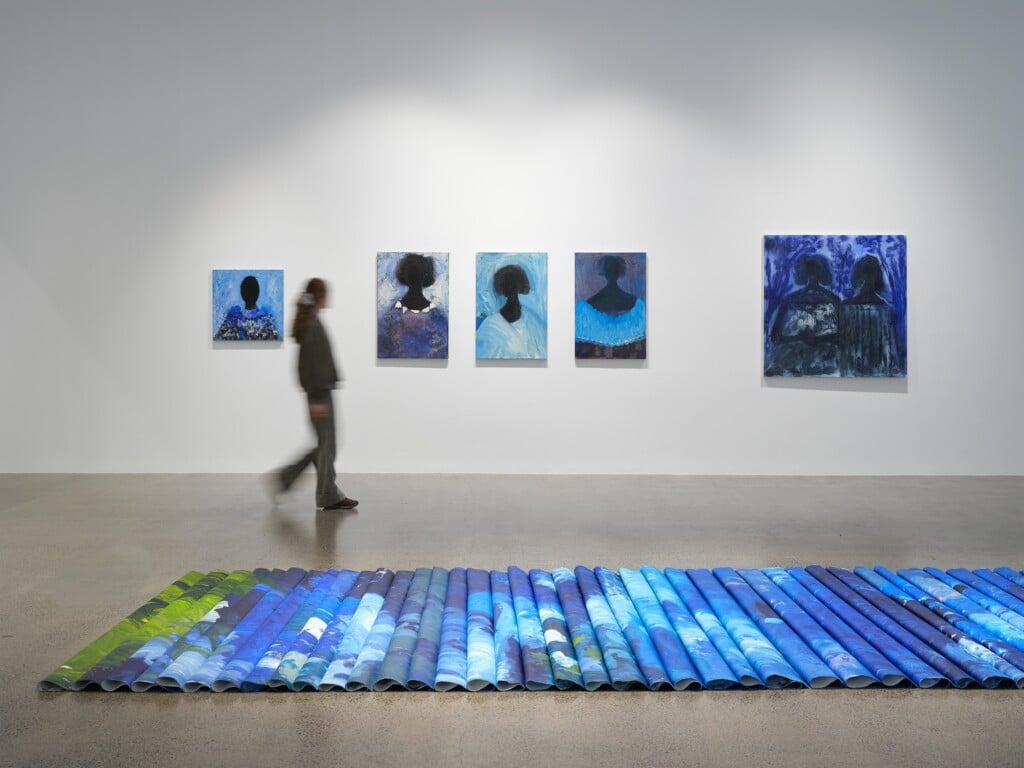
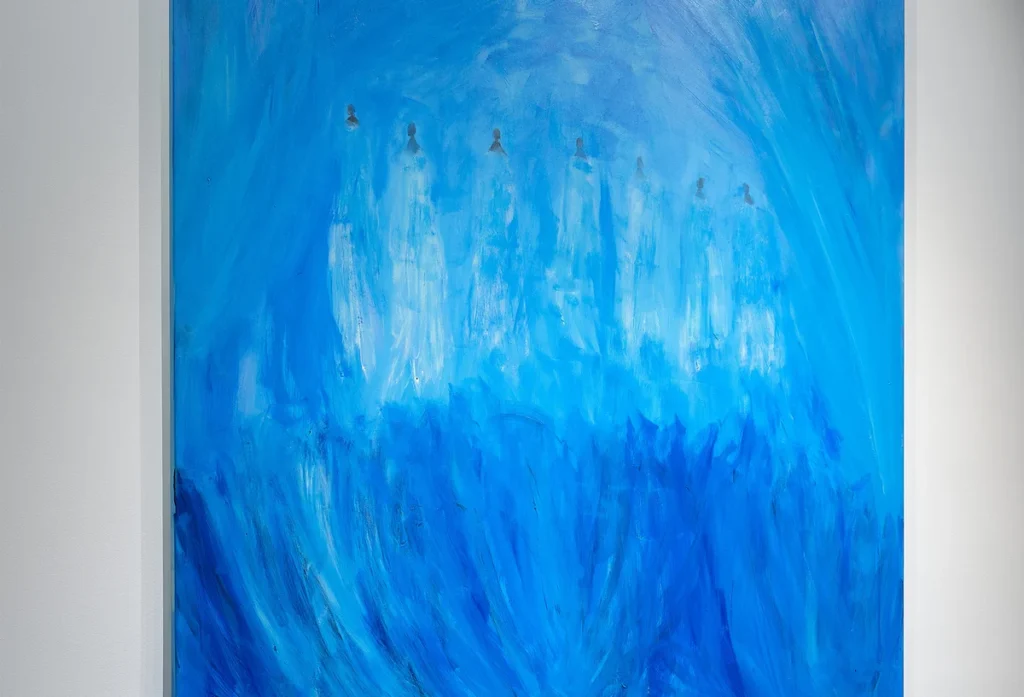
Roots, fruits and powders, tied to a deep knowledge of artisanal practices, go into the making of a painting that seeks to convey the heartbeat of living beings and of the world. Ruth Ige, long based in Tāmaki Makaurau Auckland, New Zealand, is also the author of luminous poems that dialogue with the images and figures of her large paintings.
The roots and powders she gathers, through gestures that recall a traditional manual skill, at times shamanic and healing, become part of a celebration of art that aims to tell of feelings, contradictions and different ways of being in the world, always listening to others. Colours such as the deep blue of indigo hold, for Ruth, energy and a profound bond with her land of origin, but also the strength of those who resist and do not forget their roots.
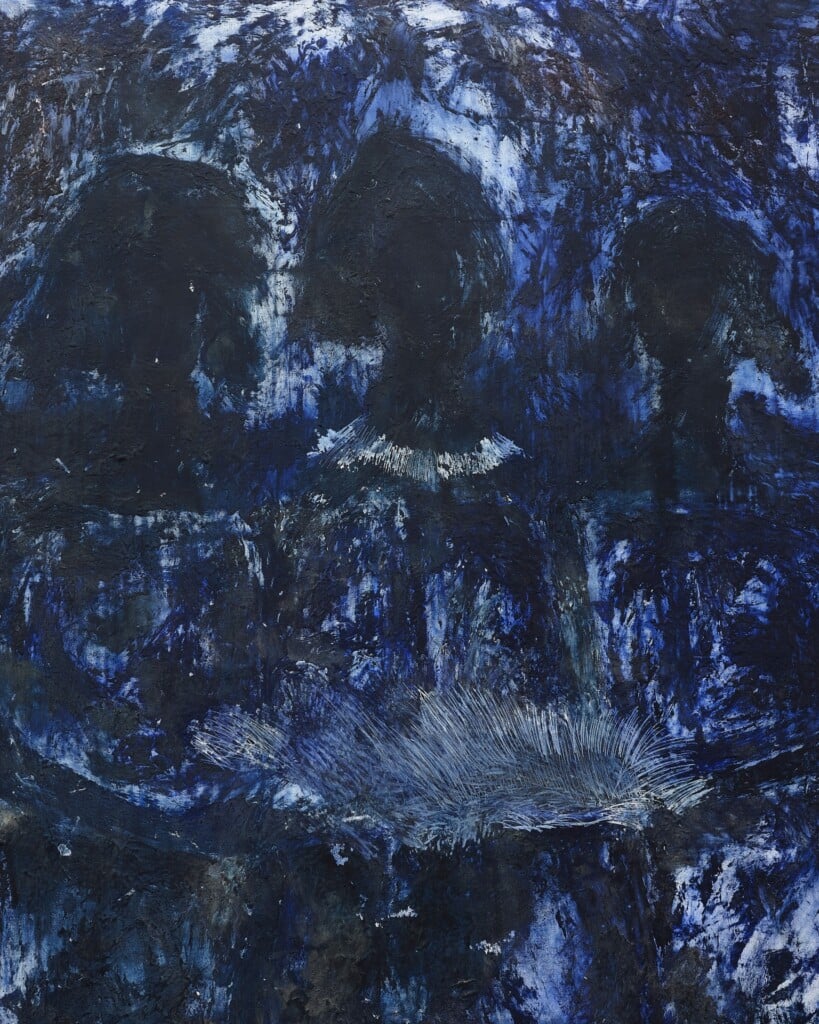
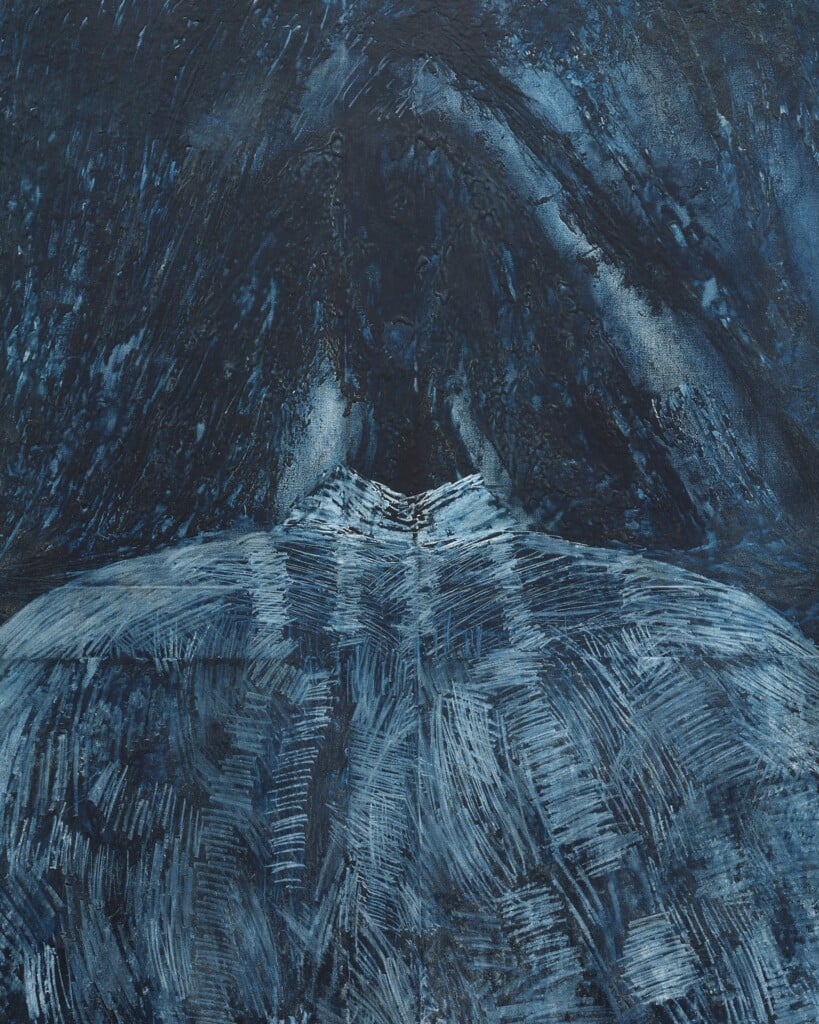
In Nigeria, indeed, indigo is tied to a craft tradition of great value, Adire, a prized textile used both in everyday life and during important events and celebrations. Its making, entrusted mainly to the hands of women, is a practice handed down over time, rich in meaning and knowledge. Divine energy, fertility and protection seem to accompany this hue, which evokes the figures of the gods and carries a multiplicity of symbols and meanings. Both Eshu, the messenger orisha, and Yemoja, lady of the waters and protector of womanhood, are linked to this chromatic universe, in which colour becomes the expression of a powerful energy.
As the poetic titles Ruth gives to each work suggest (Daughter of motherhood; And the water carried her songs; Safe travels… and you had the ability to travel through dimensions, times and realms), her painting expresses a desire to make room for deep feelings and restore dignity to the experiences of those who, in the diaspora, have faced violence, discrimination and indifference.
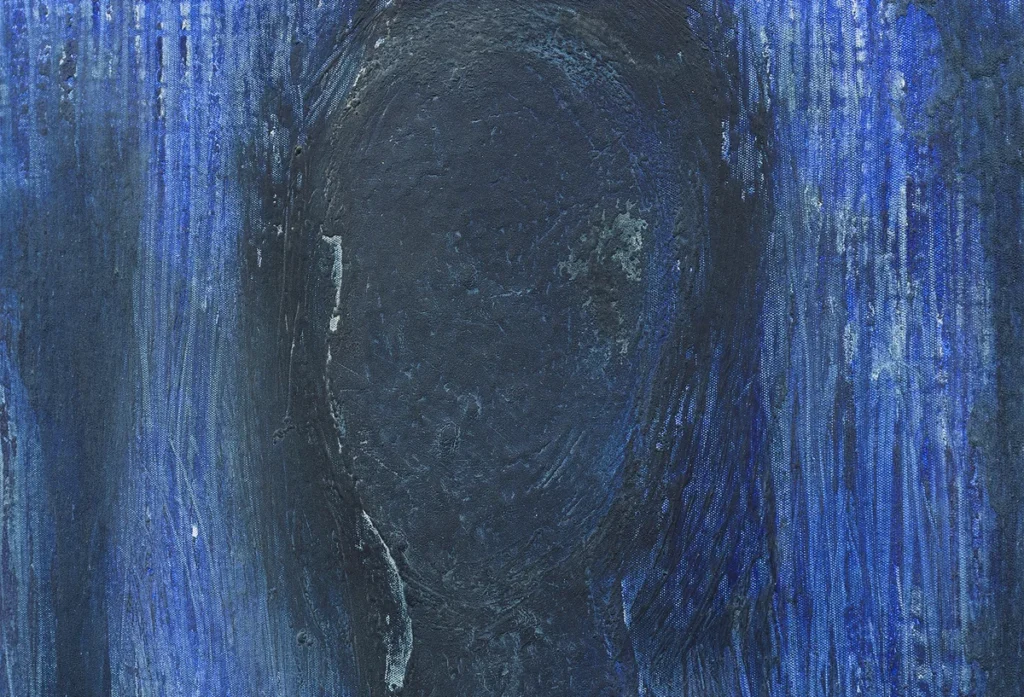
The mystery emerging from the painted black faces, lacking defined physiognomic features and therefore impossible to trace back to a precise identity, opens up the possibility of evoking a spiritual force able to act on the world, its dynamics and its contradictions. For Ruth Ige, in fact, to create also means to take a stand and intervene in reality, through an aesthetic that does not renounce an ethical dimension. Every pigment and material in the exhibition speaks of a desire for encounter, which also passes through the choice to surprise the viewer with enigmatic faces, of mixed and never fully defined identities.
A mysterious, generous and powerful presence like that of the Great Mother then embraces figures who, just like the canvases on display, are crossed by feelings, generosity and a strong sense of community. A surface with watery reflections, brilliant and delicate like a finely worked veil, receives the reverberation of an almost magical hand, like the Yoruba Àse, and gives back all its life force.