Many images do not try to reassure those who look at them, nor to offer an answer to what they depict. On the contrary, they seem to want to challenge the very certainties with which we are used to looking at the world. It is a feeling that runs through the work of Michele Petrelli, painter who uses the precision of the image to address questions that go far beyond visual representation: truth, consciousness, the nature of the universe and the place of human beings within it.
In his work, technique is not an end point, but a tool through which to give shape to a thought. Painting thus becomes a means of recording what the artist observes and imagines, without necessarily turning it into something pleasant or immediately understandable. There is no desire to build images that work only through their aesthetic impact: behind every subject there seems to be a question, a stance, sometimes even a provocation.
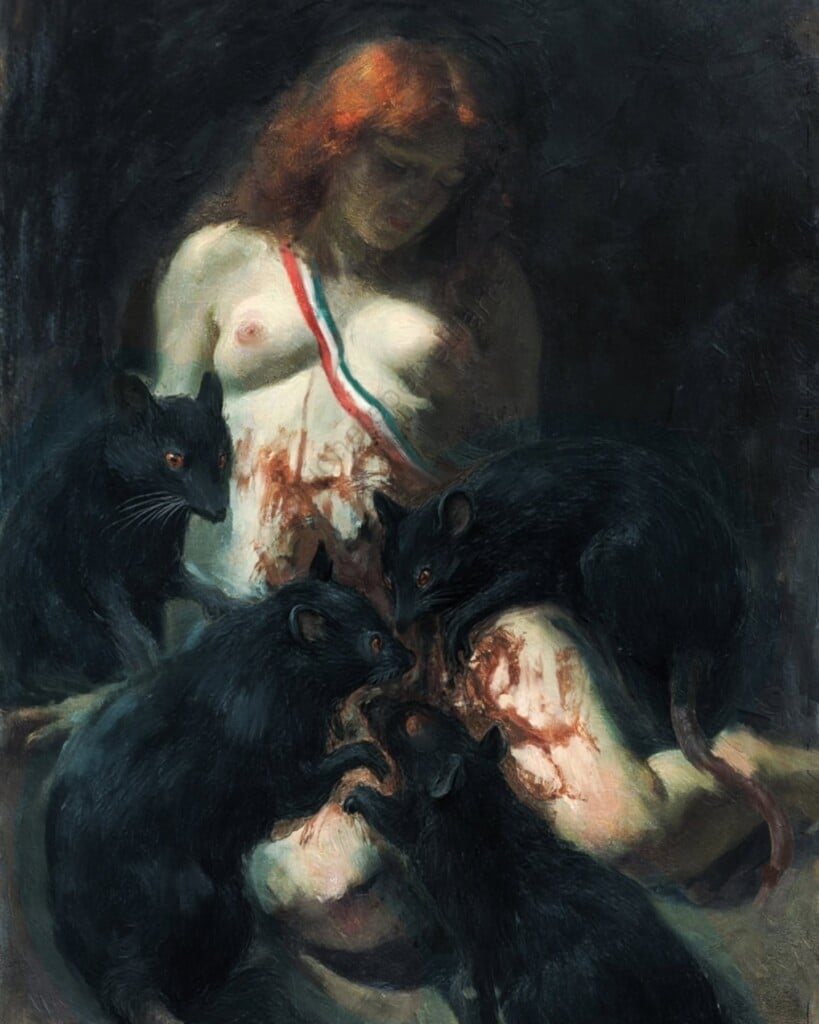
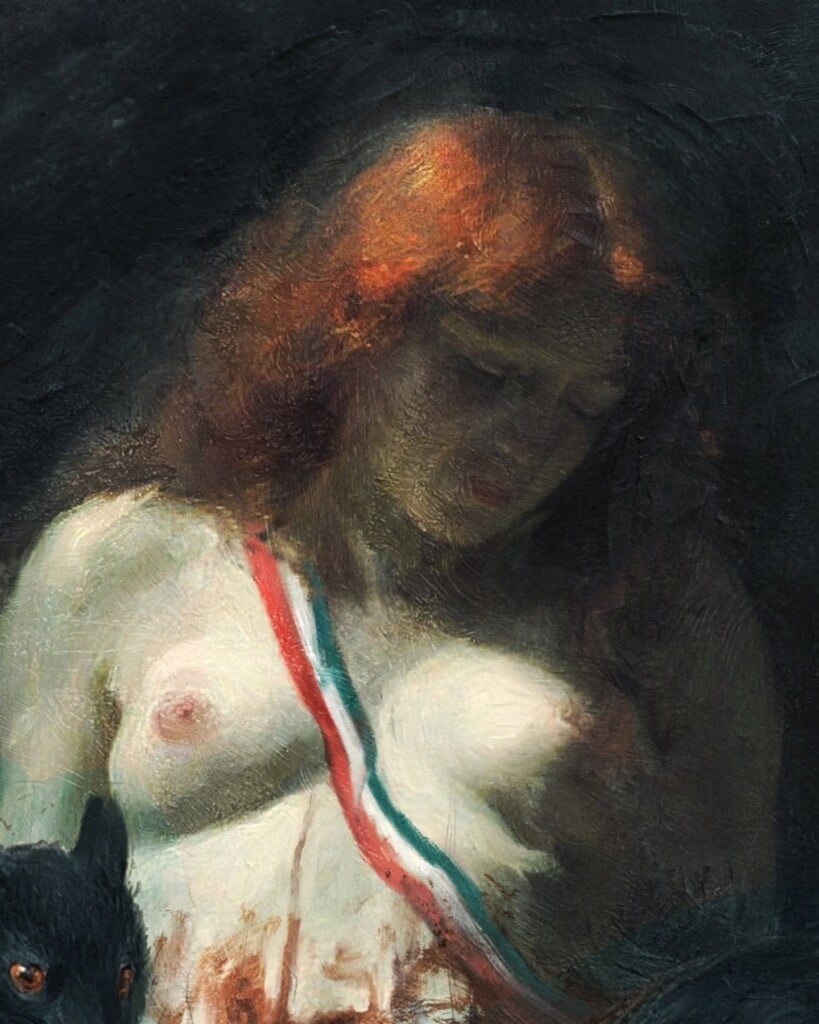
It is a direction that Petrelli openly declares in the presentation of his work: he considers technical mastery a precious resource, but not an end. For him, a work acquires meaning when executive skill is put at the service of content. An important distinction, especially at a time when formal perfection often risks becoming a self-sufficient value, detached from what an image actually has to communicate.
Figures suspended between dream and unease
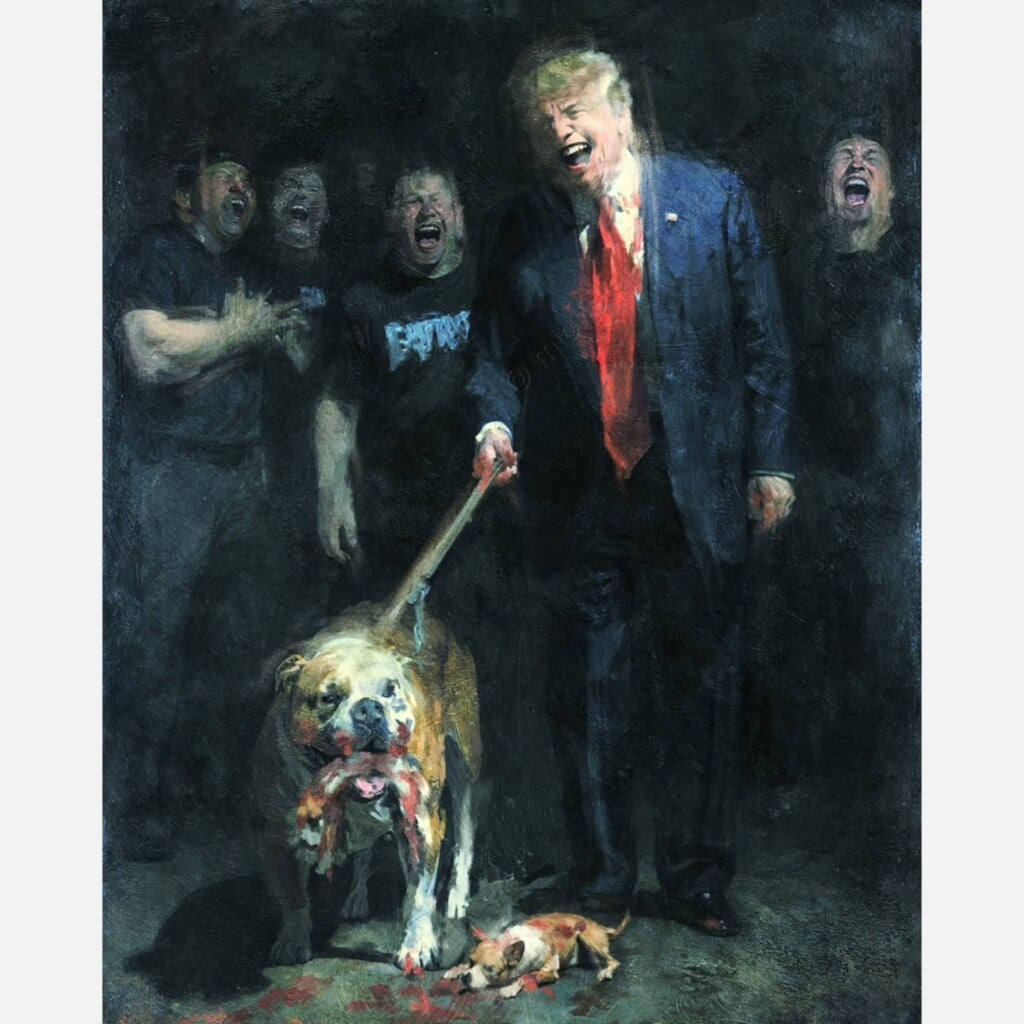
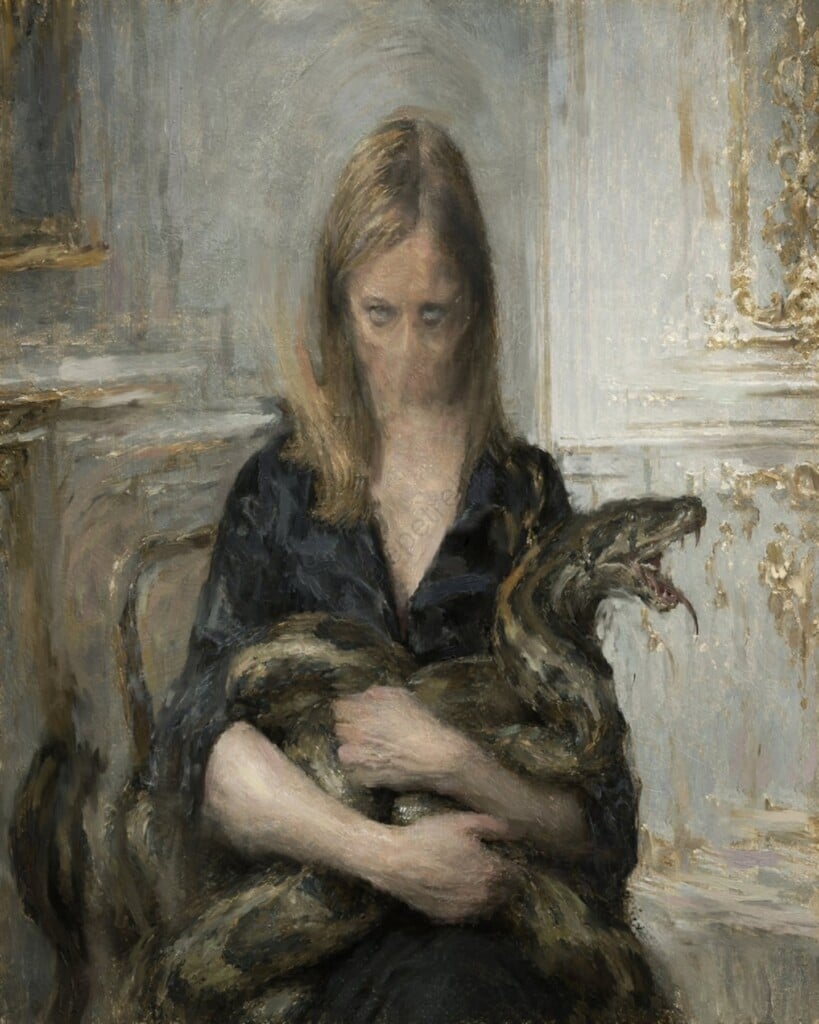
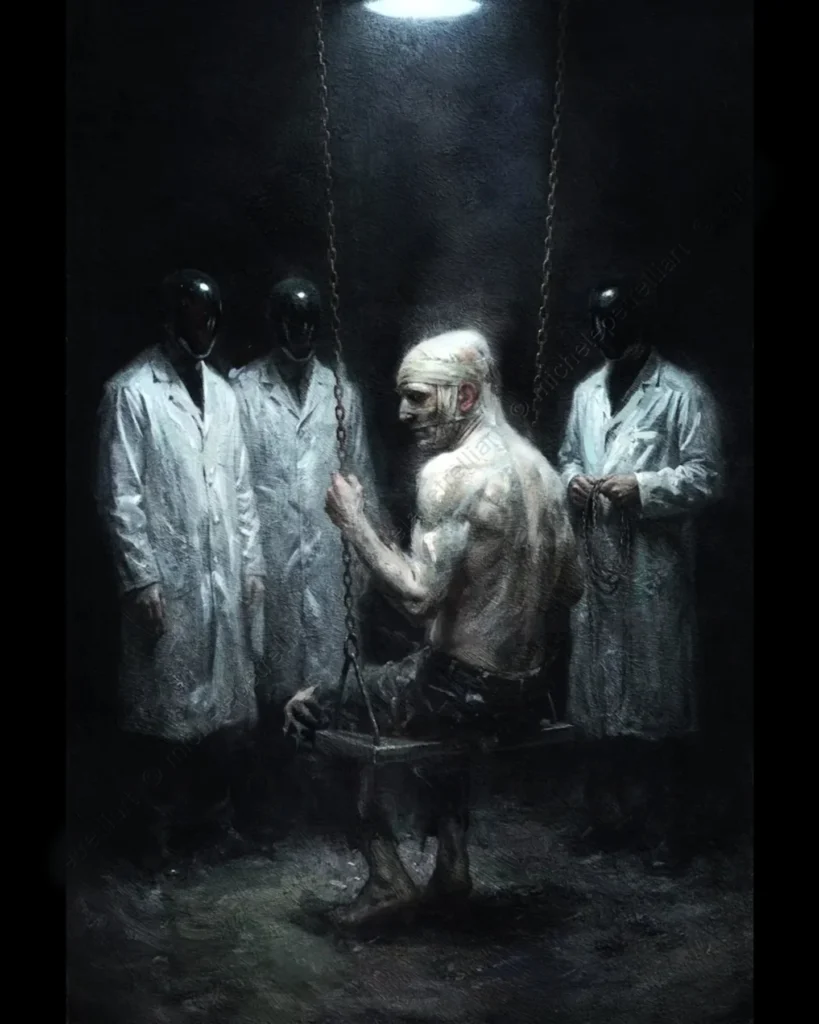
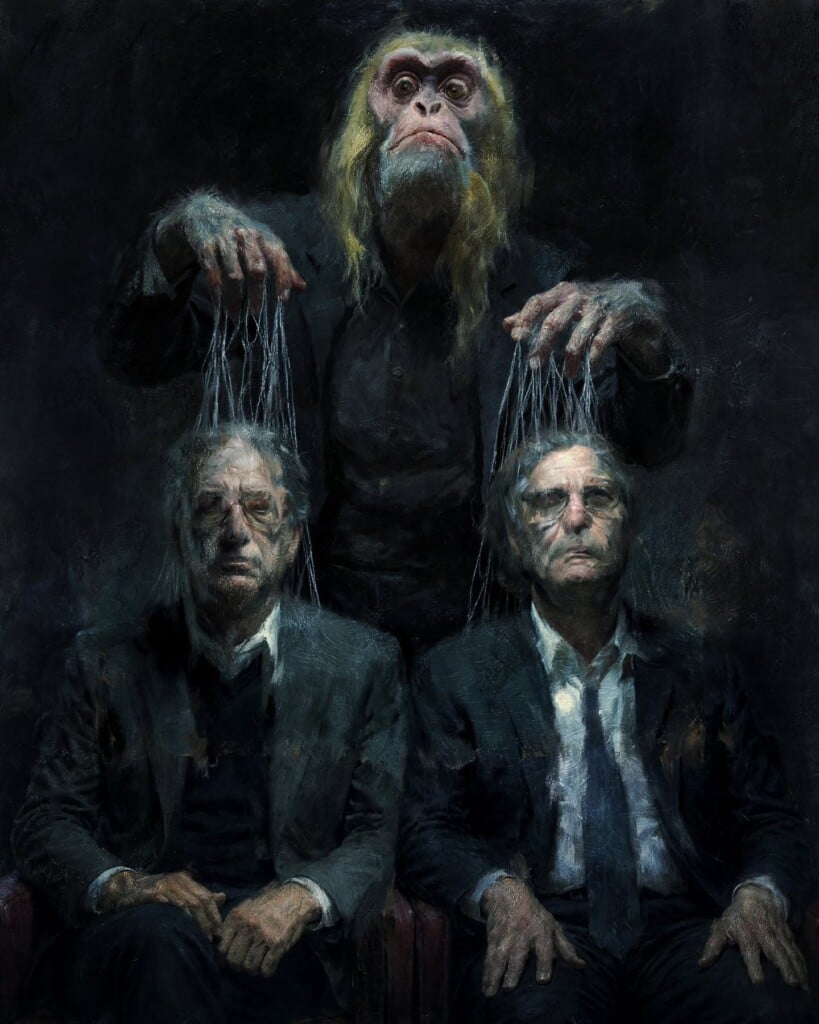
What stands out, when looking at Michele Petrelli’s works, is first of all the way he treats the human figure. His subjects seem to inhabit an unstable dimension, halfway between the real world and a psychological space that is harder to define. They are not simply portrayed characters, but appear as presences run through by something, suspended between awareness and bewilderment, closeness and isolation.
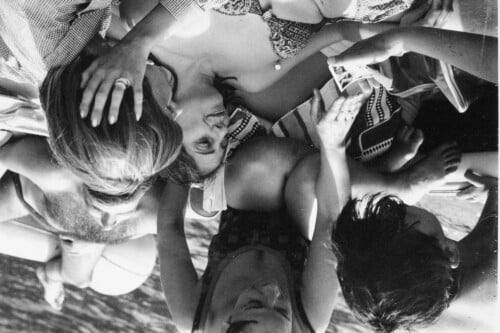
The painting moves in a territory where the figurative meets dreamlike suggestions and dark atmospheres. Bodies come close, intertwine or seem to pull away, building relationships that are never fully explained. Even when two figures share the same composition, it is not certain that they can truly meet. In their gazes, often intense or elusive, one senses a tension that hints at a story without telling it explicitly.
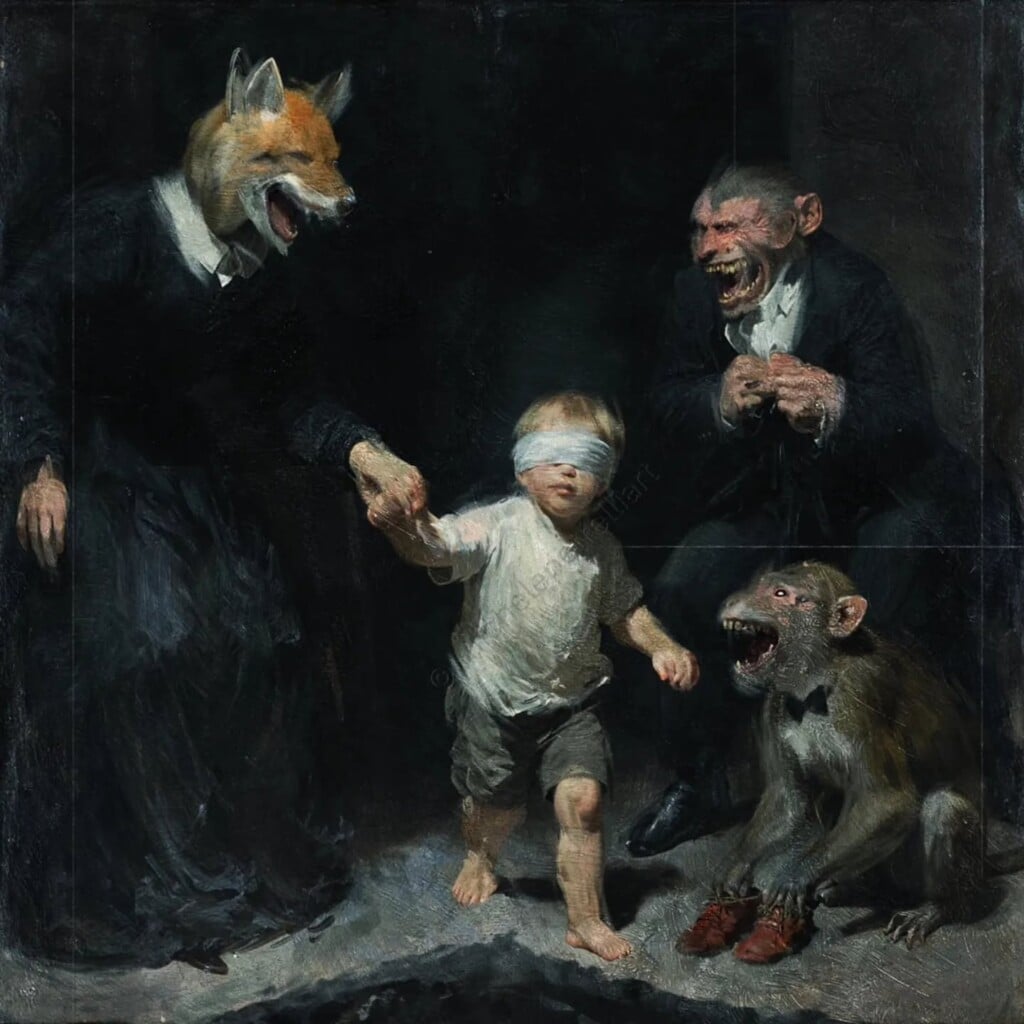
The palette helps define this imagery: deep greens, dark tones and murky yellows build ambiguous settings, while sudden flashes of red interrupt the composition like signals of danger, wounds or desire. Colour does not serve only to give volume to the figures or to organise space: it becomes an integral part of the emotional dimension of the work. There is something deliberately uncomfortable about these images. Not because they seek shock through extreme subjects, but because they seem to deprive viewers of the possibility of keeping a completely reassuring distance. Petrelli’s characters do not offer themselves to an immediate reading and do not seem interested in being fully understood. They remain there, with their vulnerability, leaving open an area of uncertainty between what we see and what we imagine.
Painting as necessity, not as exercise
Painting thus takes on a precise function: not to illustrate a thought that has already been formulated, but to make it visible, to give it a form that can exist even outside the mind of the person who conceived it. This position is also reflected in his refusal to consider technique as an autonomous goal. The ability to paint, however important, is not enough to make a work necessary. There must be something to communicate, a reason that justifies the very existence of the image. It is a statement that allows us to read his work beyond its figurative quality, shifting attention from how a painting is made to what compels us to look.
Beyond the figure: the illusion of identity
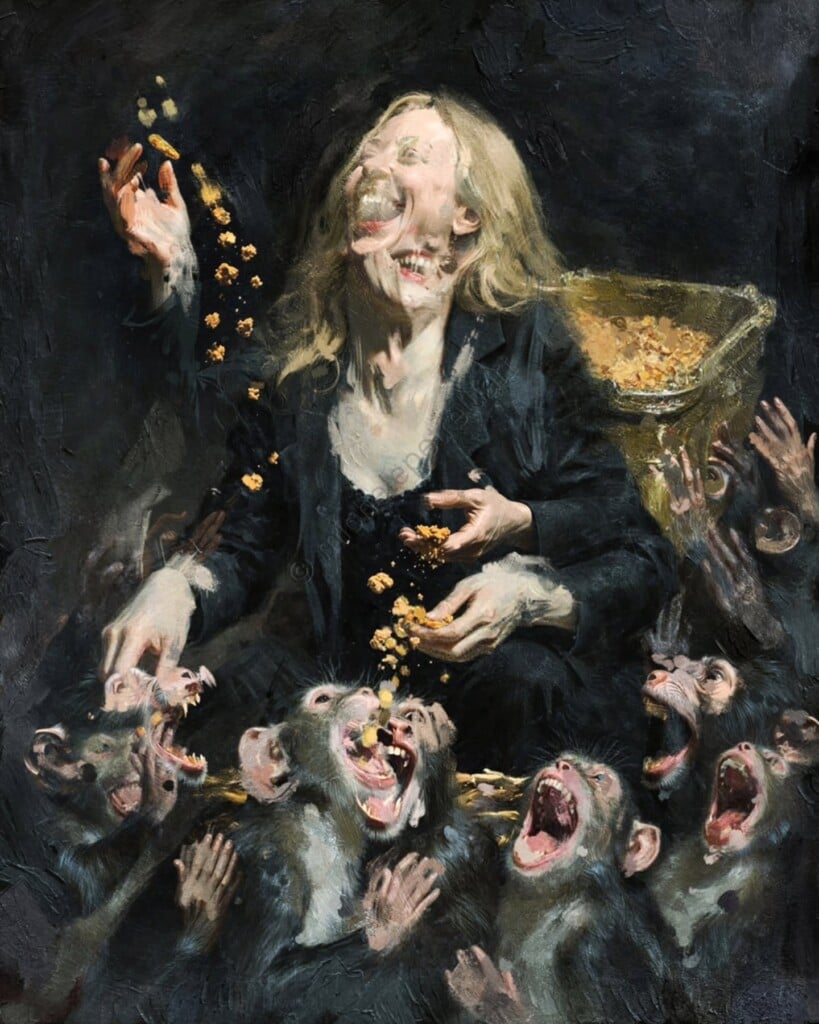
There is also a more philosophical level that runs through Petrelli’s work and that finds space in his personal research, called Radical Non-Dual Determinism (RNDD). It is an inquiry into the illusion of the self as a separate and autonomous entity. The artist questions the idea that a stable individual identity exists, distinct from the rest of the world, and proposes looking at existence as a set of interdependent processes and configurations.
It is a line of thought that should not be confused with a recognised scientific theory: Petrelli himself presents his research as a personal inquiry, which also includes speculative components and unverified interpretations. It is interesting, however, to consider how this reflection can dialogue with his images. The figures he paints seem in fact to inhabit a condition in which the boundaries of identity become uncertain, in which the body is not necessarily a safe place or a definitive definition of the self. The titles of some works in his online gallery also suggest this direction. Truth, Universe, Field and Mirror are accompanied by brief statements that address the relationship between truth, consciousness and perception. They are not mere captions, but indications of a thought that accompanies the construction of the images and broadens their possible interpretations.
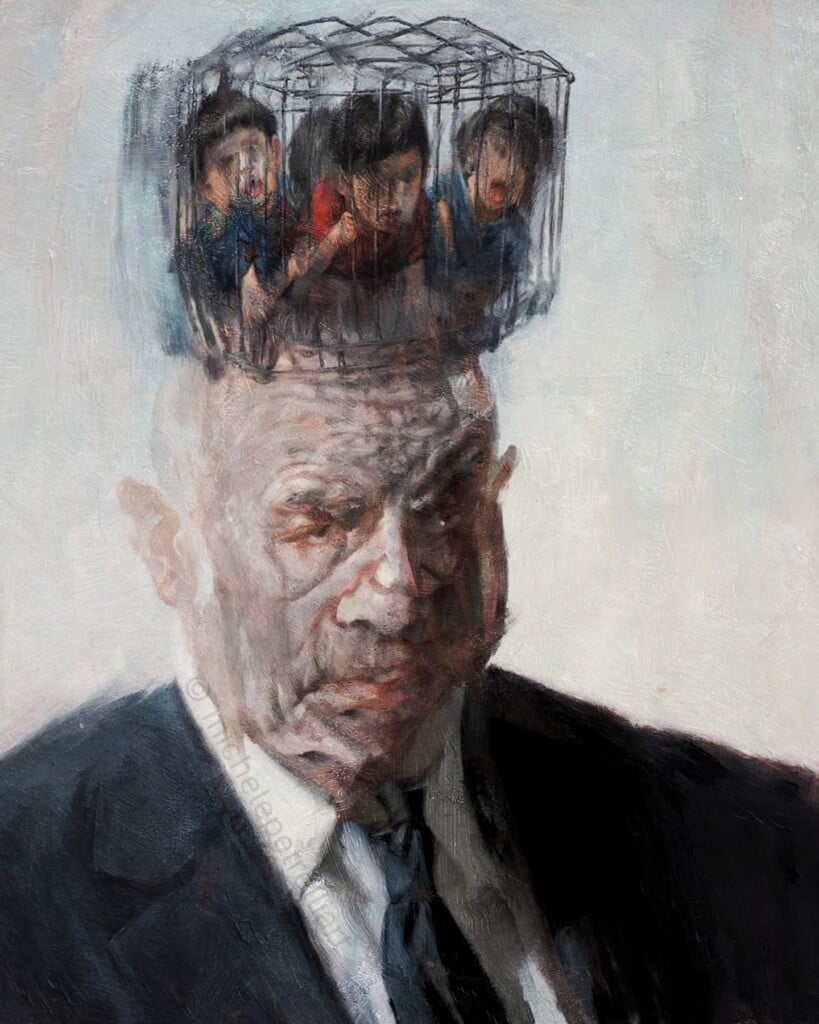
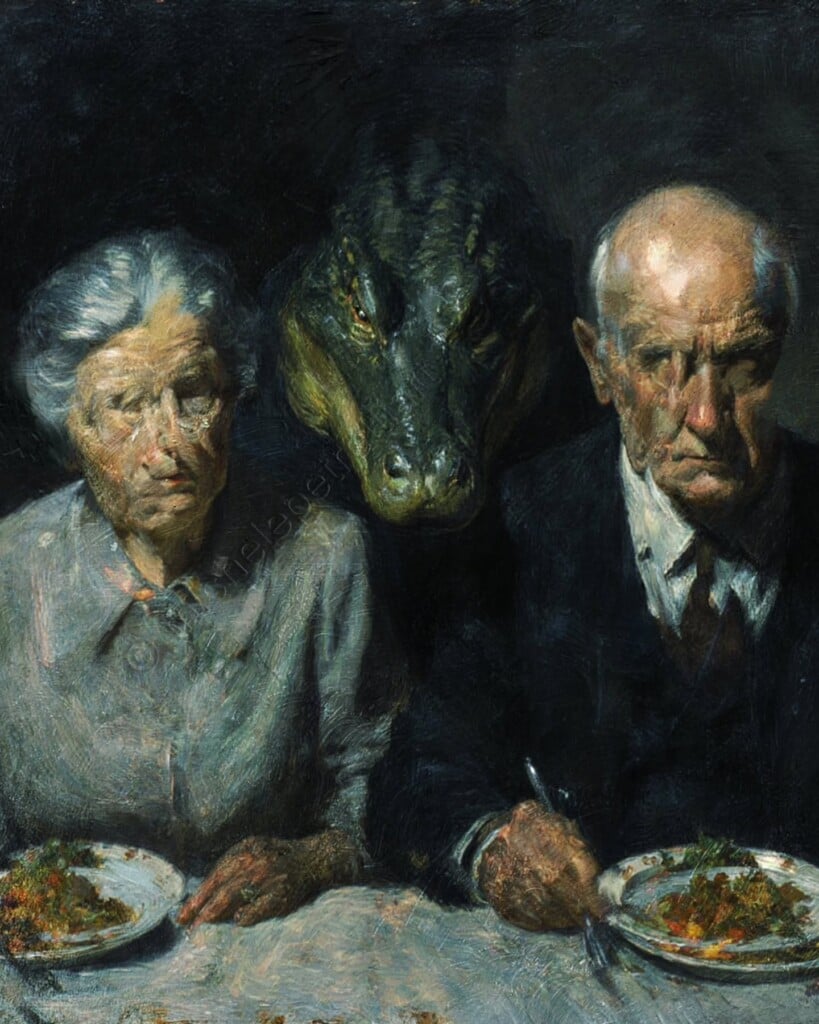
Ultimately, what I find most interesting in Michele Petrelli’s work is precisely the distance between the precision of the painting and the uncertainty of what it stages. On one side there is technical control, the careful construction of figures and atmospheres; on the other, an emotional universe that seems to continually escape any attempt at order. It is as if the artist used an extremely concrete tool, painting, to approach something that is not concrete: the contradictions of human experience, the fragility of identity and everything we cannot explain about ourselves. His works do not seem to ask to be interpreted in a single direction. Rather, they leave it to the viewer to confront images that may be disturbing, familiar or even hard to bear. And it is precisely here that painting finds its most interesting reason: not in the ability to provide answers, but in making it impossible to ignore certain questions.