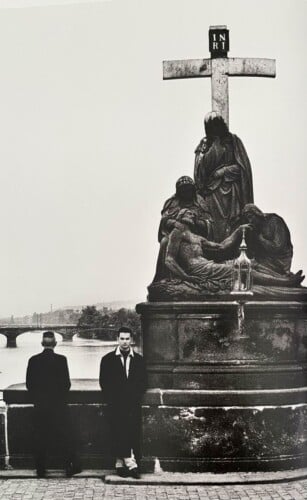
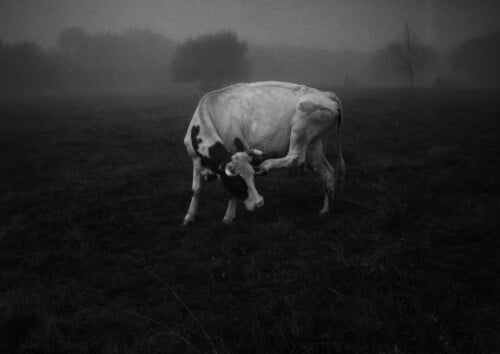
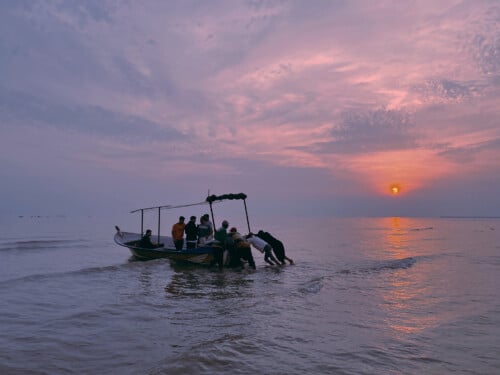
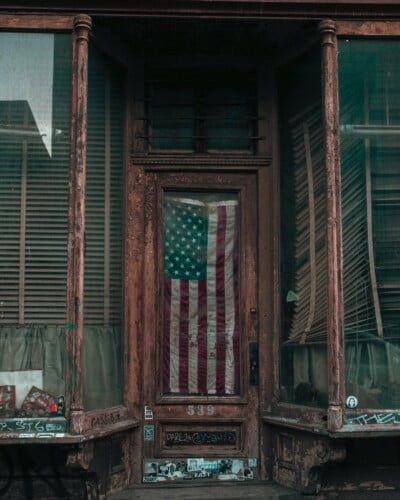
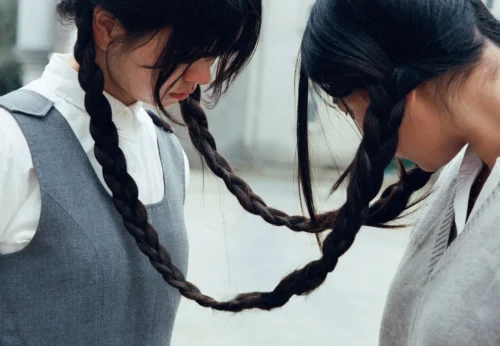
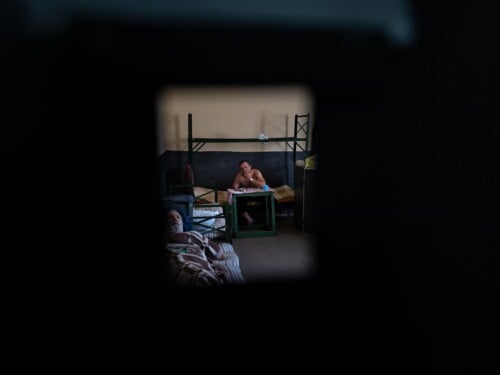
Another Time, Another Place is a photobook featuring the images of photographer Bethany Eden Jacobson, returning to downtown New York in the 1980s. Before it was normalized, capitalized, and ultimately hollowed out; when urban space was still a zone of risk and possibility, rather than a resource to be monetized. The project, supported by a Kickstarter campaign running until February 14 and published by Damiani Books, brings together Jacobson’s black-and-white and color photographs, accompanied by original texts by Jeffrey Deitch, Hugo Vitrani, and Carlo McCormick.

Bethany Eden Jacobson was not documenting that scene from the outside: she was living inside it. “I photographed from a position of immersion, not observation,” she says. “These weren’t assignments approached at a distance: they were my friends, my collaborators, my lovers, my neighbors, and sometimes the people my survival depended on.” By the late 1970s, Tribeca was still a marginal territory—deserted at night and lacking basic services. “The neighborhood had not yet been rebranded, nor occupied by celebrities. It was raw, quiet, and often intimidating.”

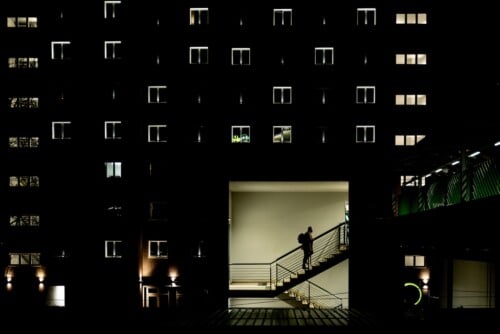
The lofts were vast, unrenovated commercial spaces, with rough wooden floors and unreliable heating. From her building, wedged between Art Deco and Beaux-Arts architecture, Jacobson watched the city pulse at night. “The lights of the offices and the green reflections of the Twin Towers gave New York a magnetic glow.” Just a few blocks away were places that have since become mythologized: the Fun Gallery, Area, Franklin Furnace, Artists Space, Group Material, Exit Art, the Clocktower. “They were non-profit and experimental spaces, shaped by necessity and collaboration. Collective artistic actions were common, made possible by low rents, before the art world became fully commercialized.”

In that context, photography was not a career but an instinctive practice. “I didn’t think of photography as a future profession. It was a tool, a way of responding physically and emotionally to the people and places around me.” Intimacy with her subjects shaped her gaze: “I wasn’t interested in monumentalizing anyone or turning them into an icon. I responded to presence, gesture, trust.” Whether it was artists illegally working in subway tunnels or Iggy Pop casually lying on the edge of a five-story rooftop, “the camera became part of the exchange, not a barrier.” Even spaces were not mere backdrops: “Rooftops, piers, and abandoned buildings were active collaborators, charged with danger, freedom, and possibility.”

Looking back today at images of places like the Fun Gallery, Area, or the West Side piers, Jacobson is clear about what was truly lost. “The loss is not only architectural; it’s psychological and social.” Those spaces existed because they enabled autonomy. “I had a two-thousand-square-foot loft; I was the last tenant left. There I loved, wrote, filmed, warmed my body with a rickety gas heater, photographed artists on rooftops, and threw parties until dawn.” What’s missing today is the condition that made all of this possible: “The freedom to take risks, to fail, to live outside fixed hierarchies. When those spaces disappeared, the freedom they allowed disappeared with them.”

The book includes figures who are now central to the canon, such as Jean-Michel Basquiat and David Wojnarowicz, but it rejects a narrative built around isolated icons. “Downtown didn’t function around stars,” Jacobson explains. “It was sustained by networks of artists, musicians, writers, filmmakers, and workers who shared space, labor, tools, and ideas.” Many protagonists of that scene never became famous. “Often because they were women, queer, poor, artists of color, or simply uninterested in the commercial art system.”

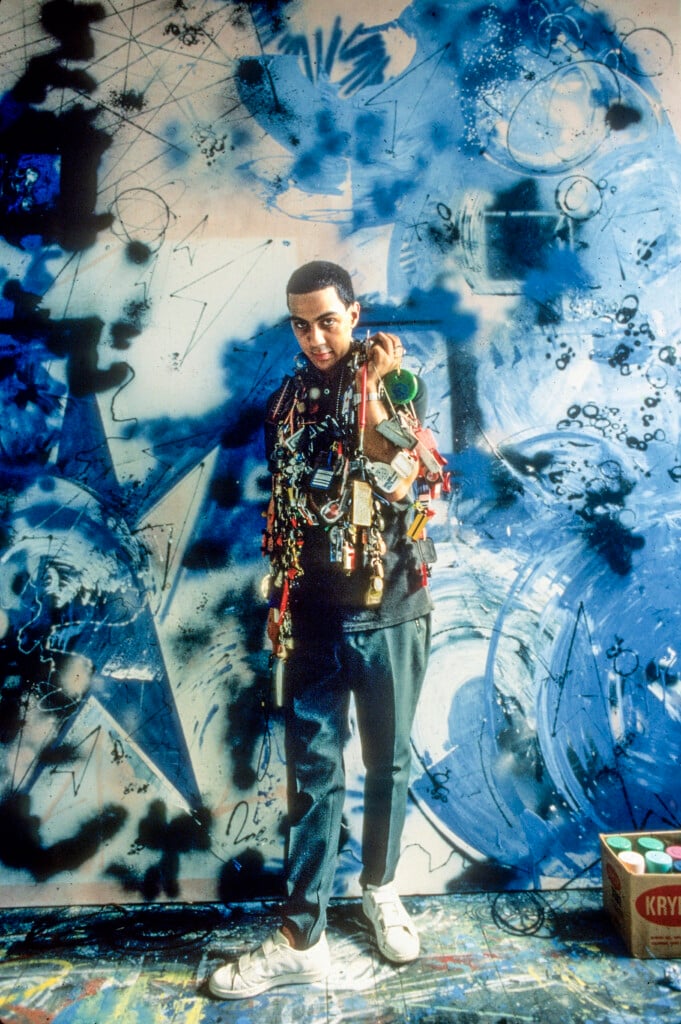
Graffiti and hip-hop culture were an integral part of that fabric. “Writers like Futura 2000, Rammellzee, Phase 2, Lady Pink, Daze, and Crash were central. I photographed them in subway tunnels while they worked with incredible speed and audacity.” Spaces like Fashion Moda in the South Bronx and the Fun Gallery in the East Village were crucial points of contact between different communities. “Showing the collective was a way to resist the myth that reduces history to a handful of market-compatible names.”
Another Time, Another Place speaks openly about erasure. “What is romanticized today was born out of necessity, not choice.” Alongside creative energy there was constant precarity. “Gentrification didn’t just erase buildings; it erased the conditions that made cultural production possible: accessibility, improvisation, sharing. The aesthetic remained, the freedom did not.”

Revisiting this archive today has changed the artist’s relationship with the images. “When I took them, I wasn’t thinking about legacy.” Many photographs had never been published; many of the people portrayed are no longer alive. “Memory fills what the image cannot contain: hunger, fear, euphoria, the sense that time was unstable.” The images haven’t changed, but their weight has. “Now I feel more clearly everything they carry with them—and everything that, in the meantime, has been erased.”

Supporting this project today means supporting a collective memory that speaks directly to the present: who has the right to space, who is remembered, and what is lost when culture becomes exclusively commerce.