In Ceuta, a Spanish enclave in Moroccan territory, the border is not just a geographical line but an existential condition. It is from this suspended space that Inshallah emerges, the project by photographerNicolas Brunetti, a visual narrative that moves through layered identities, desires for change, and an everyday life marked by deep contrasts.
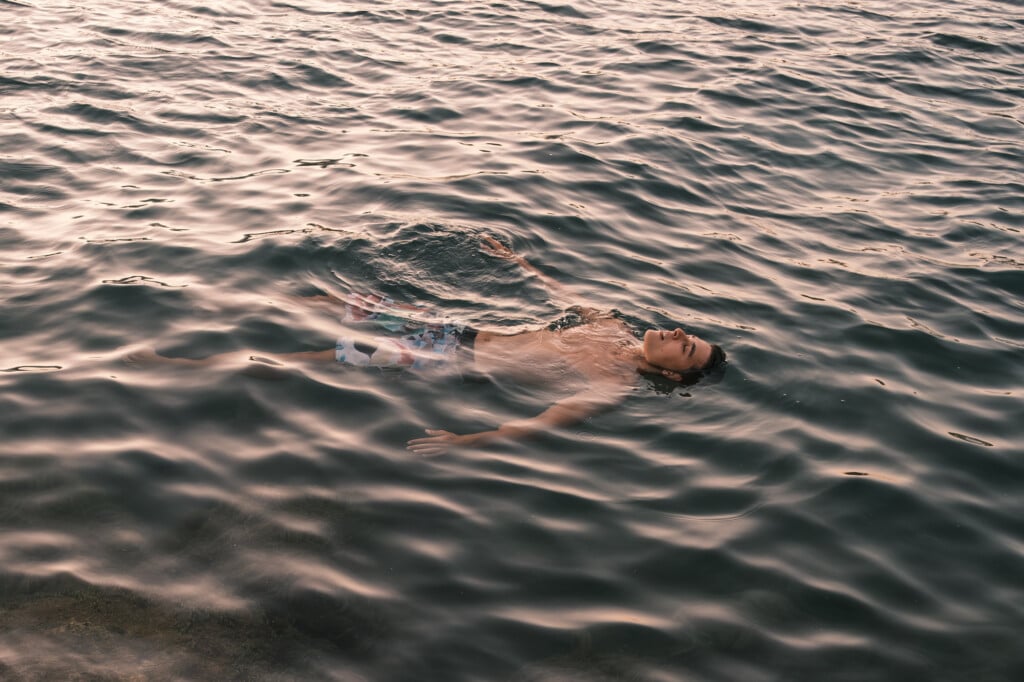
Aissa Rouk El Masoudi (22 years old) was born in Morocco but grew up in Ceuta, in the barrio of Príncipe Alfonso. At sunset, he decides to carve out a moment for himself and immerse himself in the sea. His body floats, carried by the gentle ripples on the water’s surface. Aissa studies Computer Engineering at the University of Granada’s Ceuta campus, and his dream is to design an application that can improve people’s lives.
Ceuta is a city of passage and waiting, one of the territories with the highest unemployment rates in Europe, where a generation of young people grows up in a precarious balance between limited opportunities and the need to imagine a different future. The title of the series, Inshallah, an Arabic expression meaning “God willing,” encapsulates this tension: a hope directed toward tomorrow, suspended between faith and uncertainty.
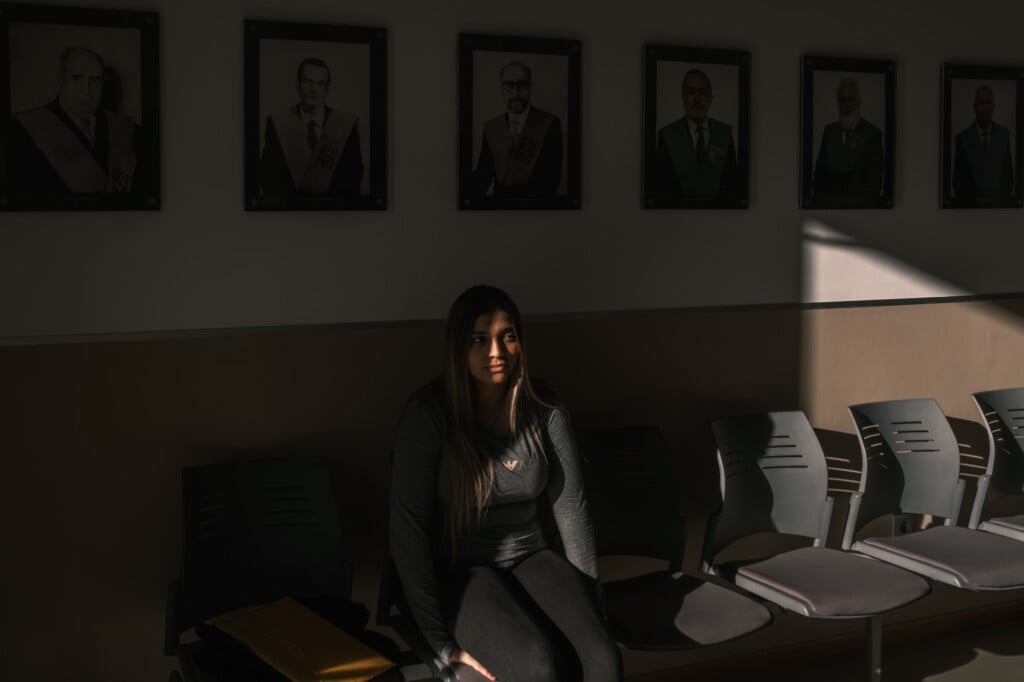
Mariam Mohamed Mohamed (20) sits outside a university lecture hall. Behind her, an austere sequence of portraits of professors — all men — emphasizes the contrast between male authority and her solitary presence as she waits for her turn to take the exam. Mariam lives on the most dangerous street in the Príncipe Alfonso neighborhood, often the scene of shootings, but she dreams of contributing to the future of her city. She wants to become an English teacher and build a family.
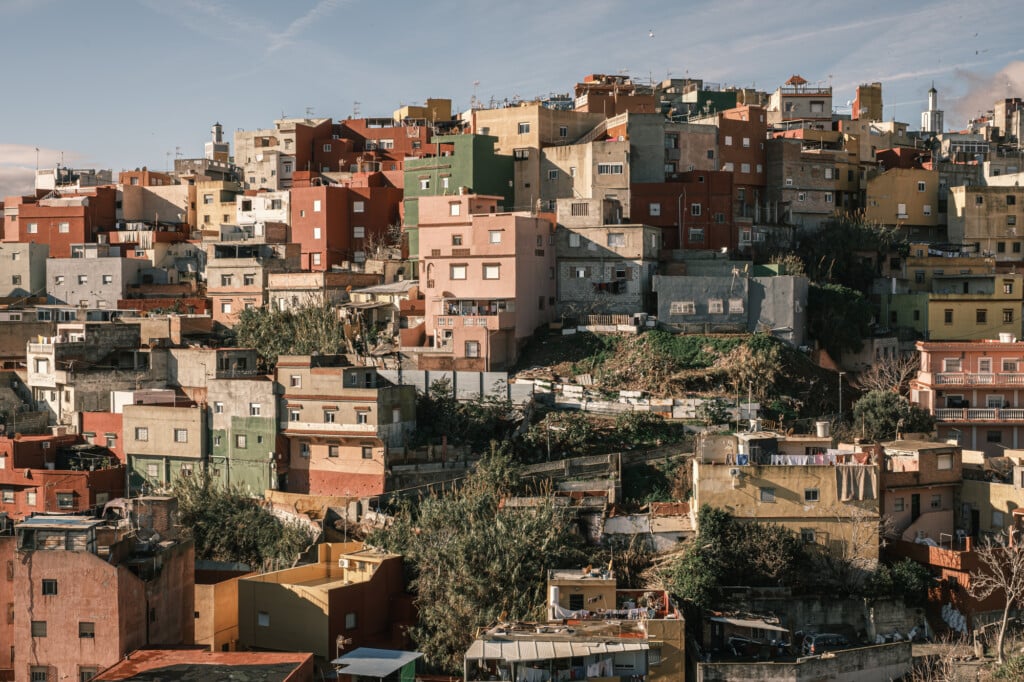
The project focuses on the neighborhood of Príncipe Alfonso, a peripheral area isolated from the rest of the city, inhabited mainly by a community of Moroccan origin. Here, young people move within a reality marked by social exclusion and a lack of opportunities, but also by a strong search for belonging and a constant desire for elsewhere. In Inshallah, Nicolas Brunetti avoids any stereotypical approach, choosing instead to give his subjects an active and self-aware gaze. The young people portrayed do not become symbols of a difficult condition, but individuals capable of imagining and building their own path.
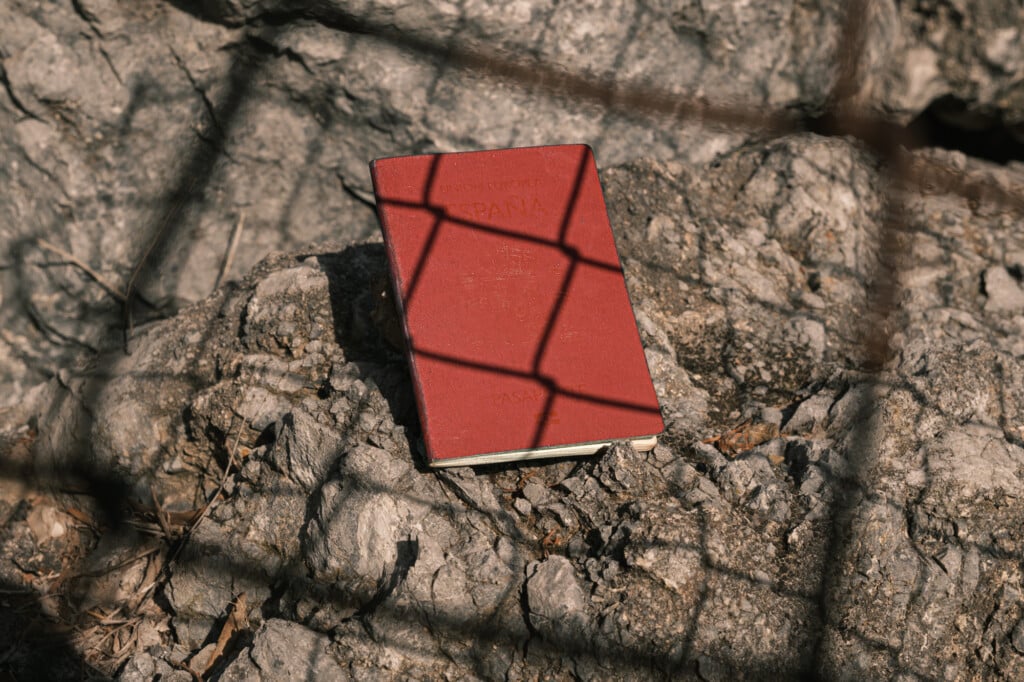
Hadil Ahmed Hossain’s Spanish passport. The country name, worn out and almost illegible, conveys the condition of suspension experienced by the inhabitants of the barrio of Príncipe Alfonso: they are Spanish but Muslim in culture, European but on Moroccan territory. Their sense of identity escapes any single definition.
The suspension that runs through their lives is also reflected in the physical space. On one side, the neighborhood, closed off and controlled; on the other, the sea, which becomes a metaphor for openness and possibility. Marking this unstable balance is the “Valla,” the barrier that physically separates Spain and Morocco, a concrete symbol of a border that is at once geographical, cultural, and mental.
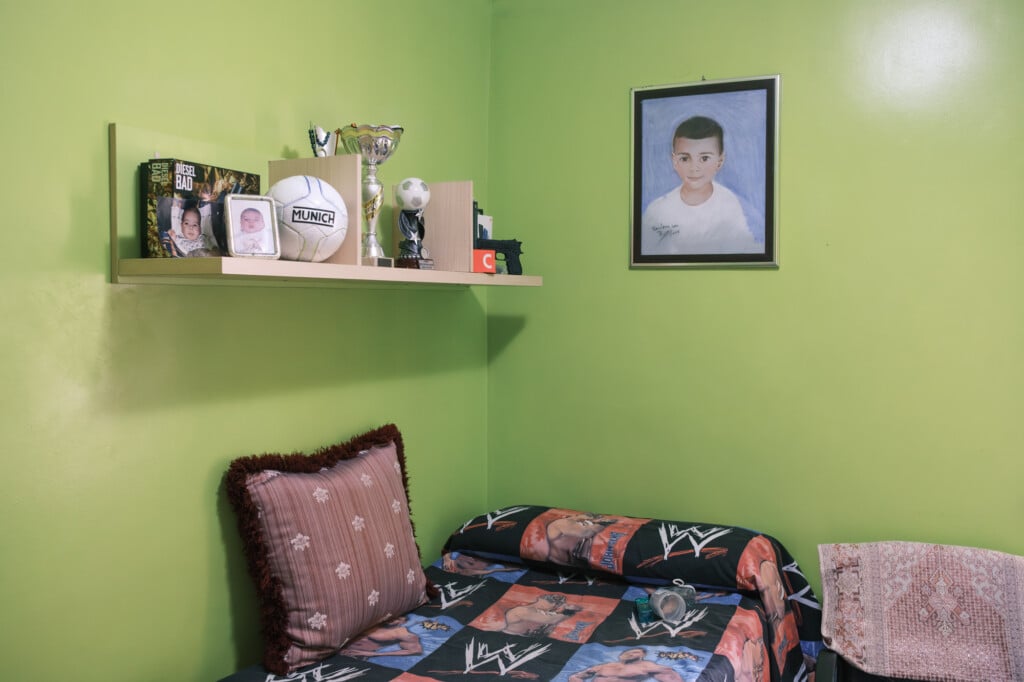
Hadil Ahmed Hossain’s room is empty, yet everything speaks of him. The objects neatly arranged on the shelf or hanging on the wall, and the details of the décor, tell us who he is, expressing his passions and his love for football — not only played on the field, but also passed on through his work as a coach. On the wall, a drawing depicts him as a child with a calm and innocent smile. Green is his favorite color.
Alongside the portraits, the landscape becomes an integral part of the narrative. Ceuta emerges as a complex place, where different identities coexist and overlap: young people of Moroccan origin with Spanish passports, European citizens on African soil, Muslim communities engaging daily with other cultures and religions. This interweaving creates a layered visual dimension, in which each image helps build a broader story.
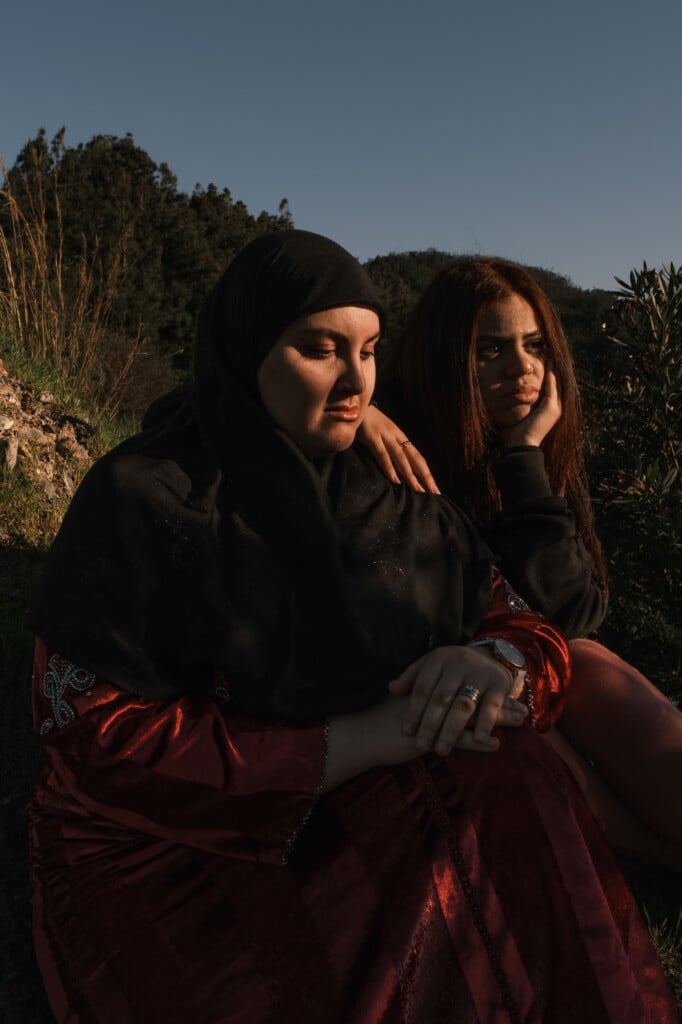
Rauia Harrous Chairi Kachaf (22 years old) and Yasmina Fadal Sebti (18 years old) wait for sunset near Benzù. It is the only portrait featuring two figures. The two young women, bound by a deep friendship, support one another, sharing dreams, desires, and fears projected toward the future. Rauia (on the left) knows she wants to become a mother and have a family, while Yasmina (on the right) dreams instead of becoming an actress.
Inshallah thus unfolds as an intimate and direct investigation, capable of conveying the complexity of a border territory without simplifications. Nicolas Brunetti’s project becomes an invitation to look beyond reductive narratives, recognizing in the individual stories of these young people a universal dimension made of waiting, possibility, and futures yet to be imagined.
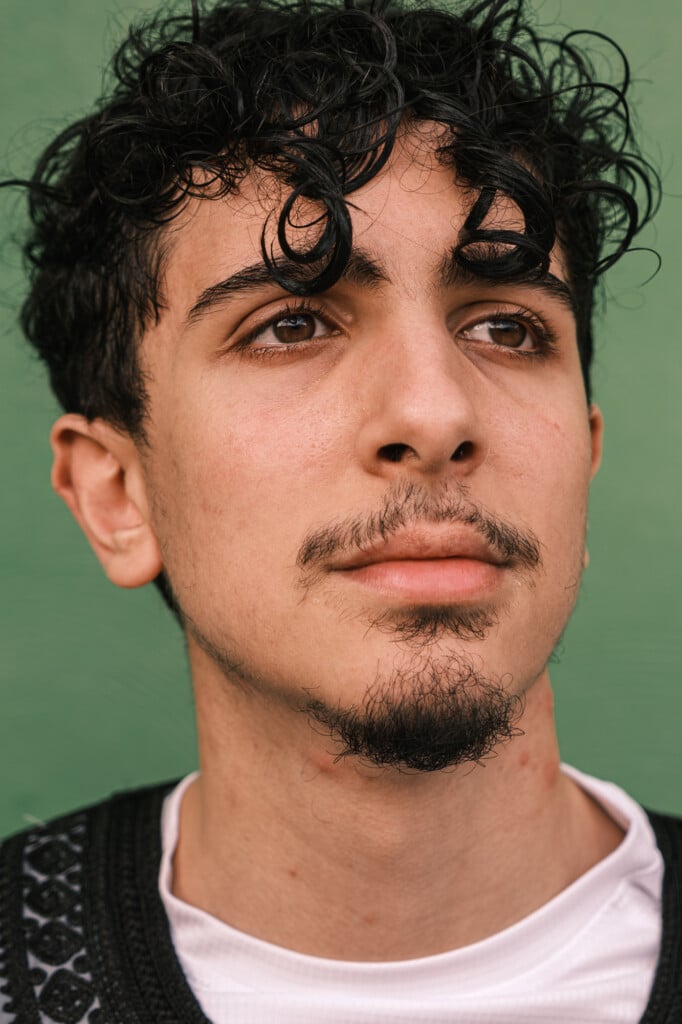
Abdelmoemen Chakrani Bouad (19 years old) is portrayed in a moment of contemplation outside the mosque, just after the Eid al-Fitr prayer, the celebration marking the end of Ramadan. He dreams of becoming a singer: in his songs one can sense rhythm and tension, a reflection of the context surrounding him. In the barrio, young people are confronted with dangerous and violent circuits. Carving out one’s own path with determination, amid obstacles and contradictions, is not easy.
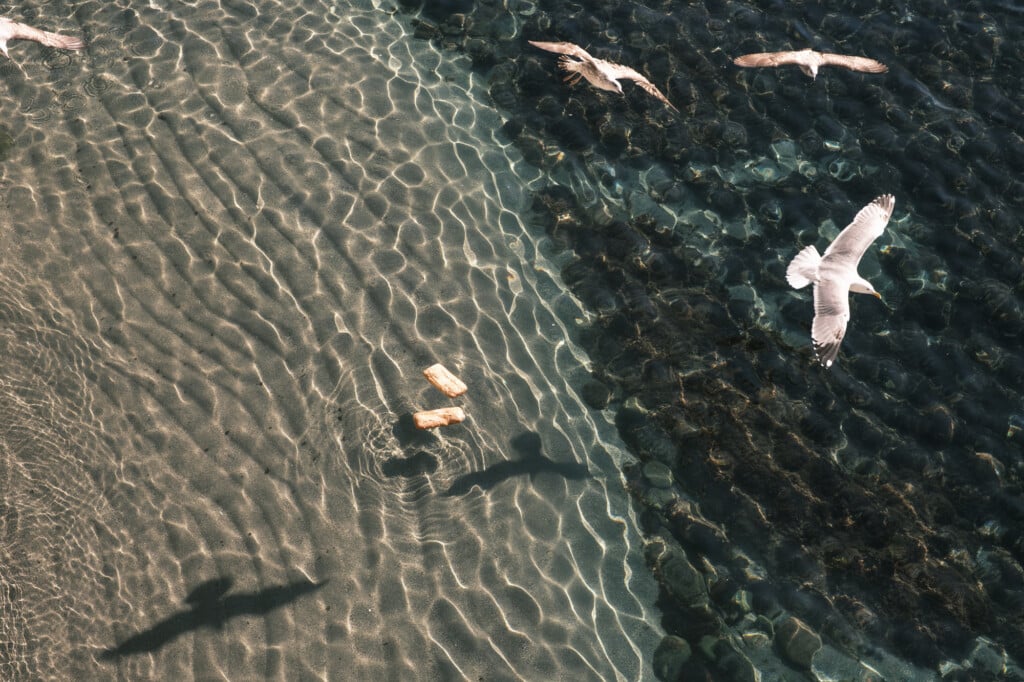
Two pieces of bread drift at sea, carried away by the current. Above them, a group of seagulls circles, ready to dive down and seize them. The image conveys two contrasting feelings: on the one hand, the lightness of flight and the enchantment of the sea’s crystal-clear water; on the other, the tension of waiting, the forewarning of something about to happen. In this way, the future of the barrio’s young people is also suspended, exposed to uncontrollable forces. View of the barrio of Príncipe Alfonso from the parking lot of Ceuta’s hospital. The neighborhood, the protagonist of the photographic series, rises on a hill at the border with Morocco. The small colorful houses, pressed up against one another, recall the precariousness of other poor and densely populated neighborhoods around the world.
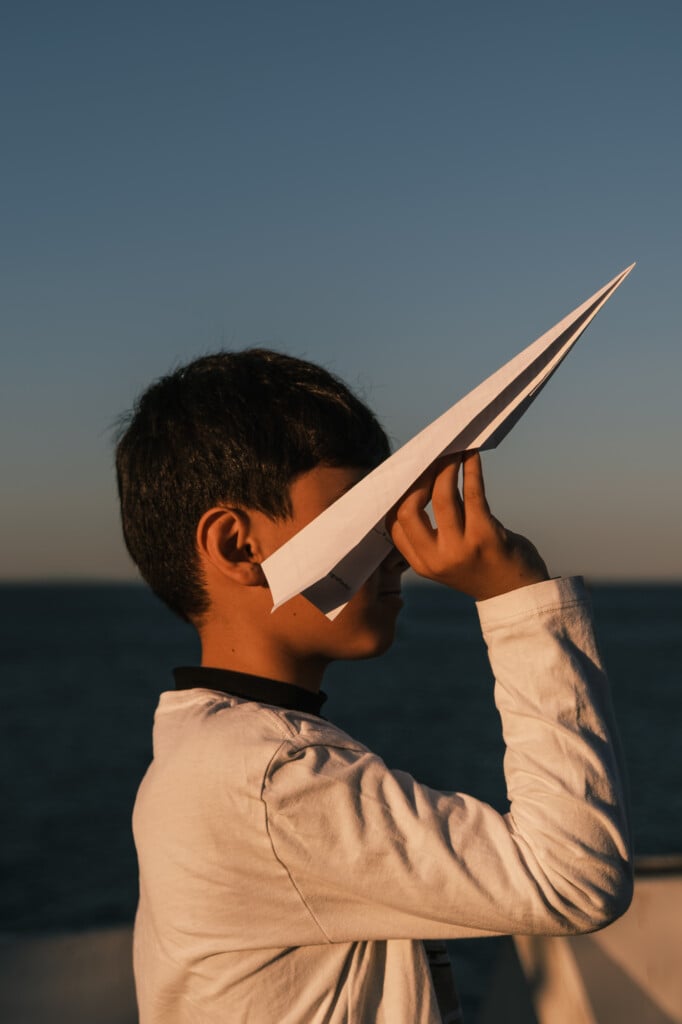
in cover: Yusef Ahmed Hossain (10 years old) plays with a paper airplane at sunset, near Benzù beach. Wrapped in golden light, his gesture evokes the possibility of a better future for the young people of the barrio of Príncipe Alfonso. His hidden gaze, turned toward the horizon over the sea, knows neither barriers nor borders.