It’s one of the most widespread chairs in the world, as simple as it is comfortable and functional. We’re talking about the so-called director’s chair, famous for being used on movie sets, but currently experiencing a resurgence, often becoming the first choice for both indoor and outdoor decor.
A History That Goes Back Far
Per ricercare l’antenata della sedia da regista dobbiamo andare molto indietro nel tempo – ma proprio tanto -, tra il 3000 e il 2000 a.C. in Egitto. Risalgono a questo periodo le testimonianze delle prime sedie pieghevoli utilizzate dagli ufficiali dell’esercito. Per avere invece dei veri e propri esempi sopravvissuti fino ai giorni nostri bisogna andare un po’ più avanti sulla linea del tempo, arrivando alla Roma Imperiale, è di quel periodo la sedia curule, una sorta di sgabello pieghevole destinato all’utilizzo esclusivo di dignitari romani e considerato simbolo del potere. Un altro esempio che possiamo trovare nel corso della storia è la sedia Savonarola risalente al XV secolo e usata dalla Chiesa.
Una cosa è certa, come minimo comune denominatore di tutte queste sedie troviamo il fatto di essere leggere, pieghevoli e facilmente trasportabili.
To find the ancestor of the director’s chair, we need to go far back in time—really far—between 3000 and 2000 B.C. in Egypt. From this period, there are records of the first folding chairs used by army officers. However, for actual surviving examples, we have to move further forward in time, reaching Imperial Rome. The sella curulis, a kind of folding stool reserved exclusively for Roman dignitaries and considered a symbol of power, dates to this period. Another historical example is the Savonarola chair from the 15th century, used by the Church. One thing is certain: the common denominator of all these chairs is that they are light, foldable, and easily transportable.
The Modern Director’s Chair
To discuss the director’s chair we know today, we must wait until 1893, when the Gold Medal Camp Furniture Company, a Wisconsin-based company still in operation, introduced it for the first time at that year’s World’s Fair in Chicago, describing it as a porch and camping chair.

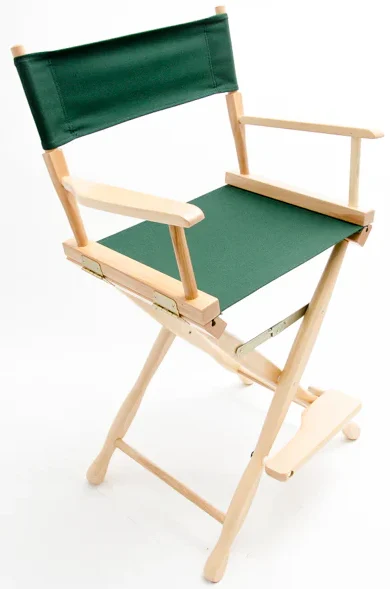
It was a lightweight chair with a wooden frame, foldable sideways thanks to its “X-shaped” (or scissor-shaped) structure. The seat and the backrest, positioned slightly lower than other chairs, are made of canvas or durable fabric that can support the full weight of the user. From the beginning, armrests were included, while the footrest was added later, especially when taller models started being produced.
Hollywood and the Link to Cinema
Its lightness, foldability, and ease of transport quickly made it the perfect chair for the emerging film industry, cementing it as an essential part of film sets and intended especially for the film director, hence the name “director’s chair.”
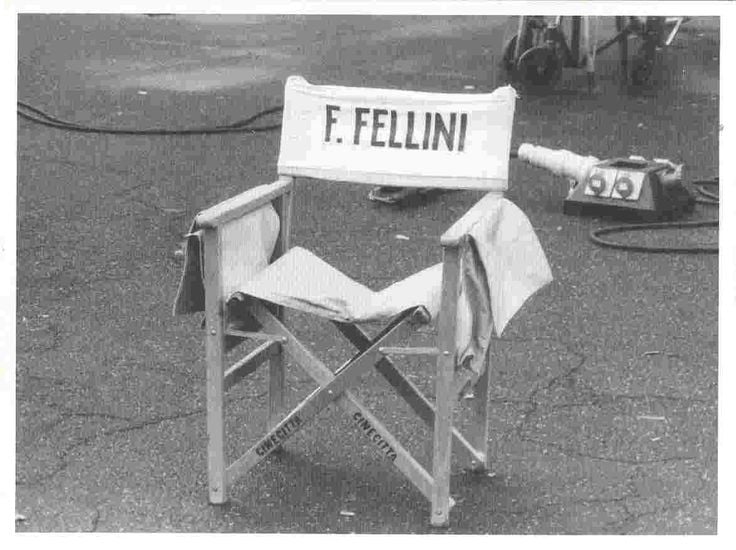
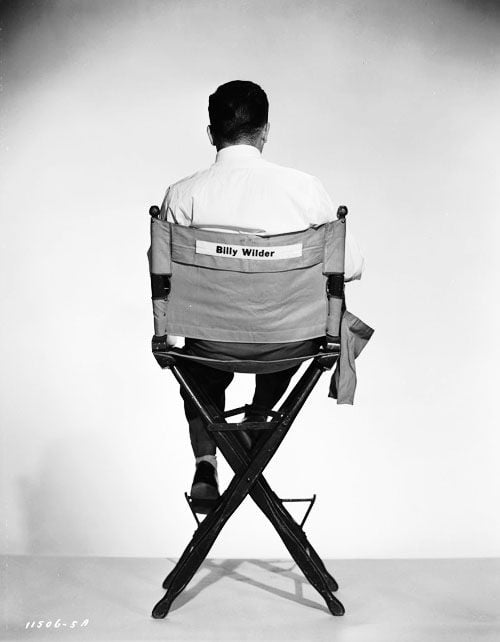
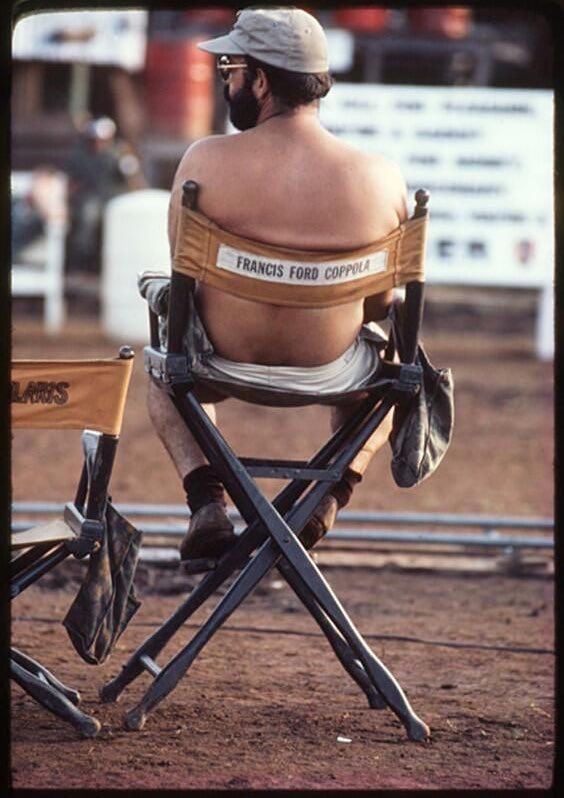
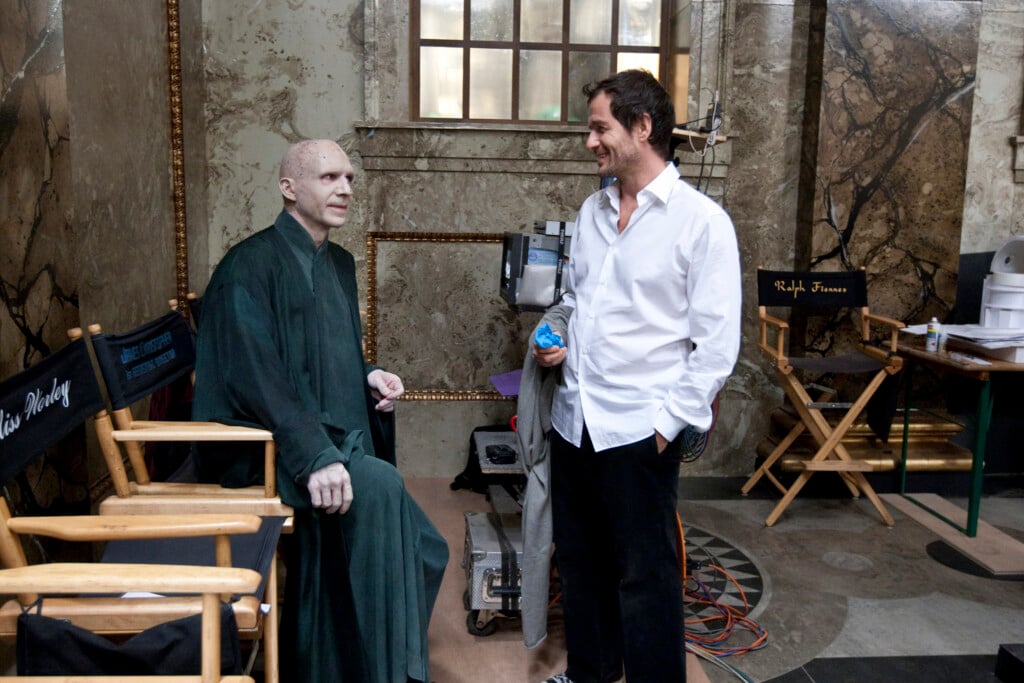
The iconic status of the director’s chair has been solidified through numerous cinematic representations, where directors and film stars were often depicted in their personalized chairs bearing their names: from Fellini to Orson Welles, from Francis Ford Coppola to Steven Spielberg.
La sua immagine è così legata al mondo del cinema che è spesso utilizzata nei set di film che raccontano la realizzazione di altri film come The Artist, Once Upon a Time in… Hollywood di Tarantino, La La Land, La Ricotta di Pasolini e tanti altri.
Its image is so linked to the world of cinema that it is often used in film sets portraying the making of other movies, like The Artist, Tarantino’s Once Upon a Time in… Hollywood, La La Land, Pasolini’s La Ricotta, and many others.
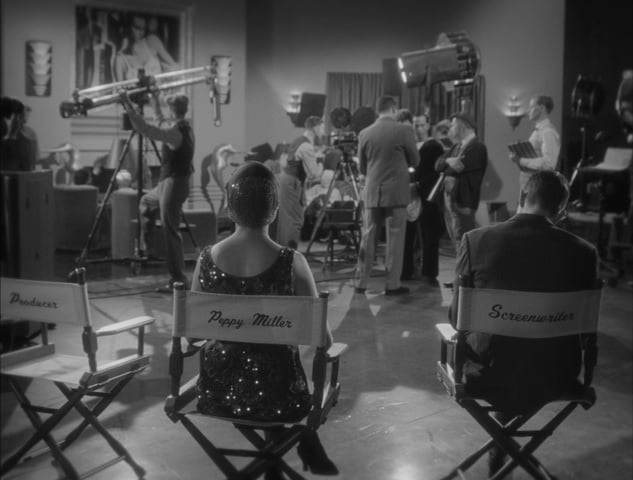
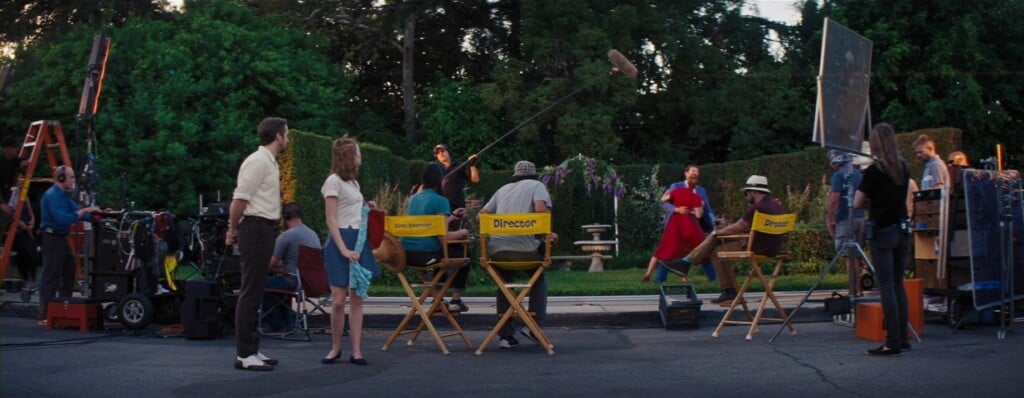
We are also used to seeing it in behind-the-scenes videos and photos, becoming a place where actors step away from their characters and return to being themselves.
Contemporary Interpretations
Today, the director’s chair is no longer limited to movie sets. Its minimal design makes it perfect for modern and multifunctional spaces. It has become popular in home environments such as living rooms, home offices, or even outdoor spaces like terraces and gardens. Its portability and ability to be customized with logos or names also make it an ideal choice for events or commercial activities.
In recent years, many designers have decided to take on this design piece.
Philippe Starck’s Stanley for Magis features a structure made of fiberglass-reinforced polypropylene, while Talenti, in addition to the Riviera Sedia Regista, has also designed a lower, wider version called the Riviera Poltrona Regista Lounge.
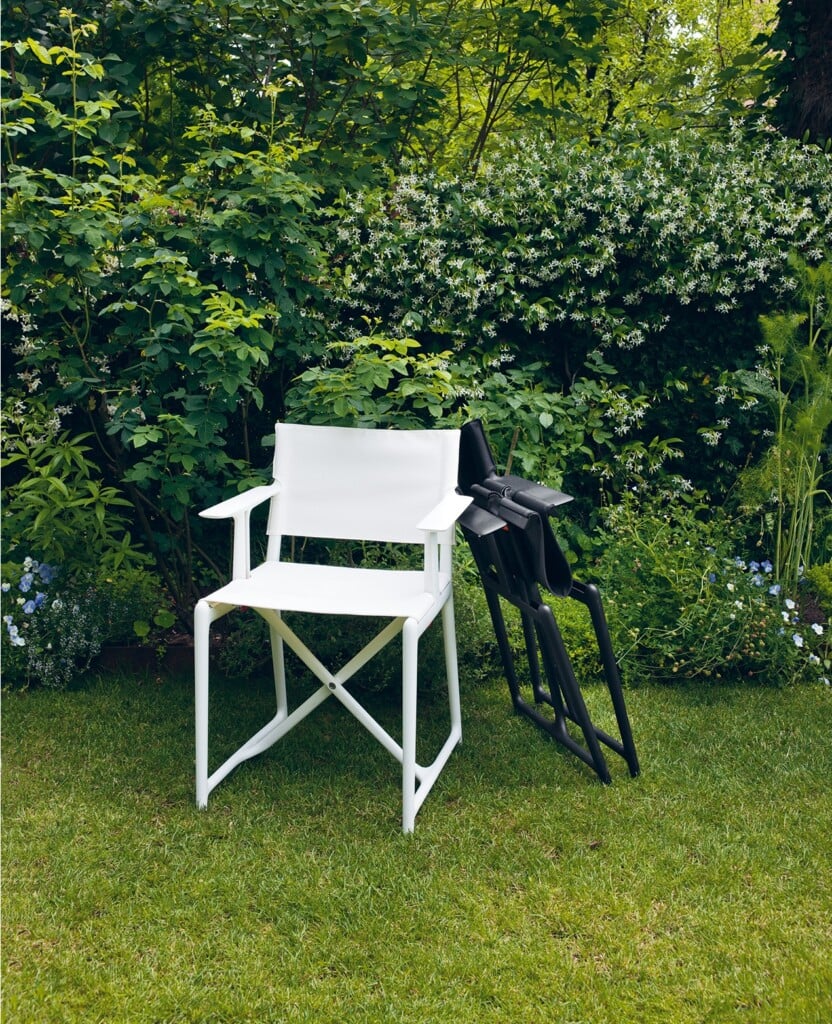

A few years ago, Ethimo introduced its outdoor version with an all-aluminum structure, and designer Stefano Diez also chose aluminum for his Ciak chair designed for EMU.

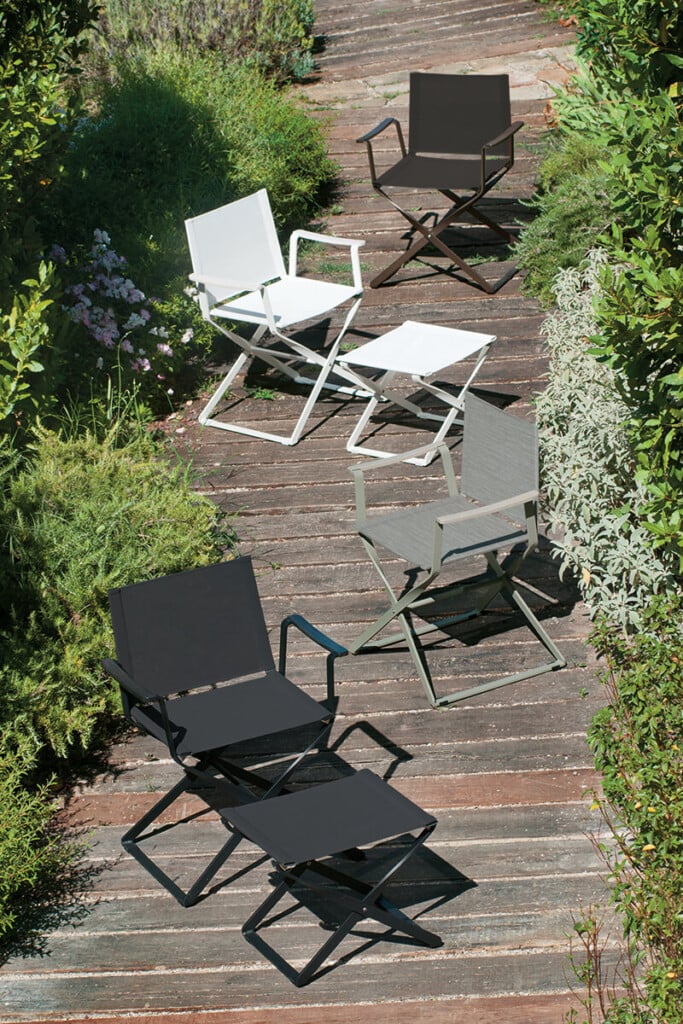
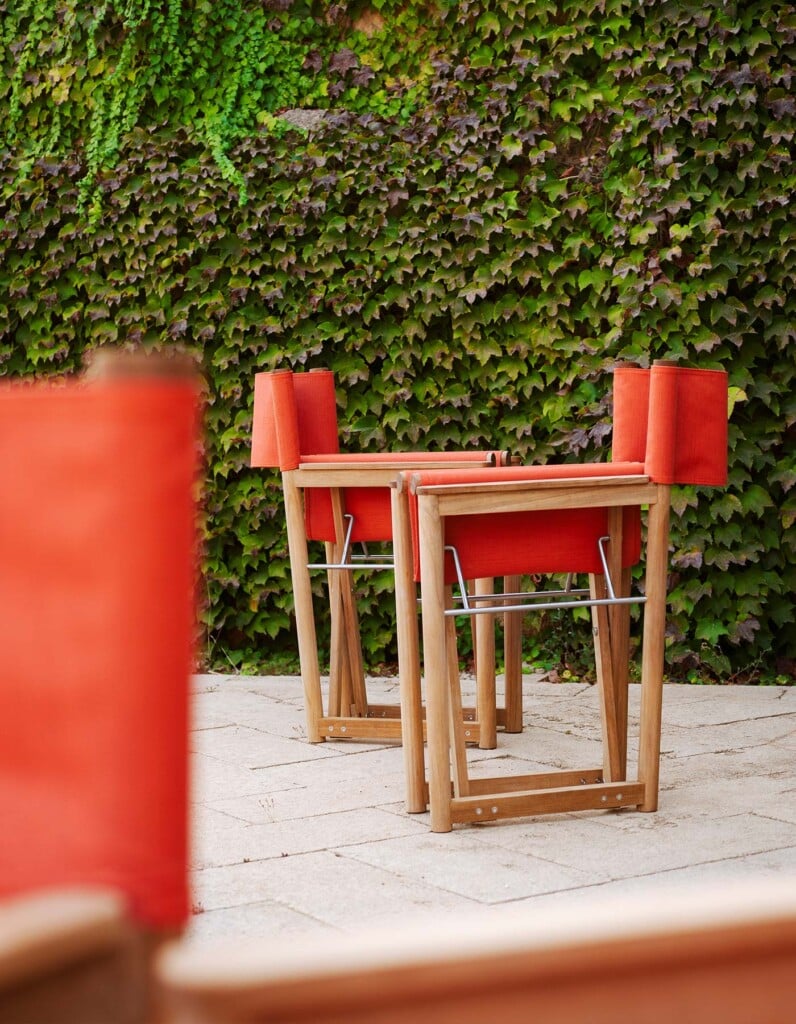
Meanwhile, RODA stuck to the classic wood and fabric combination with its Orson collection, but without forgoing a pop of color.
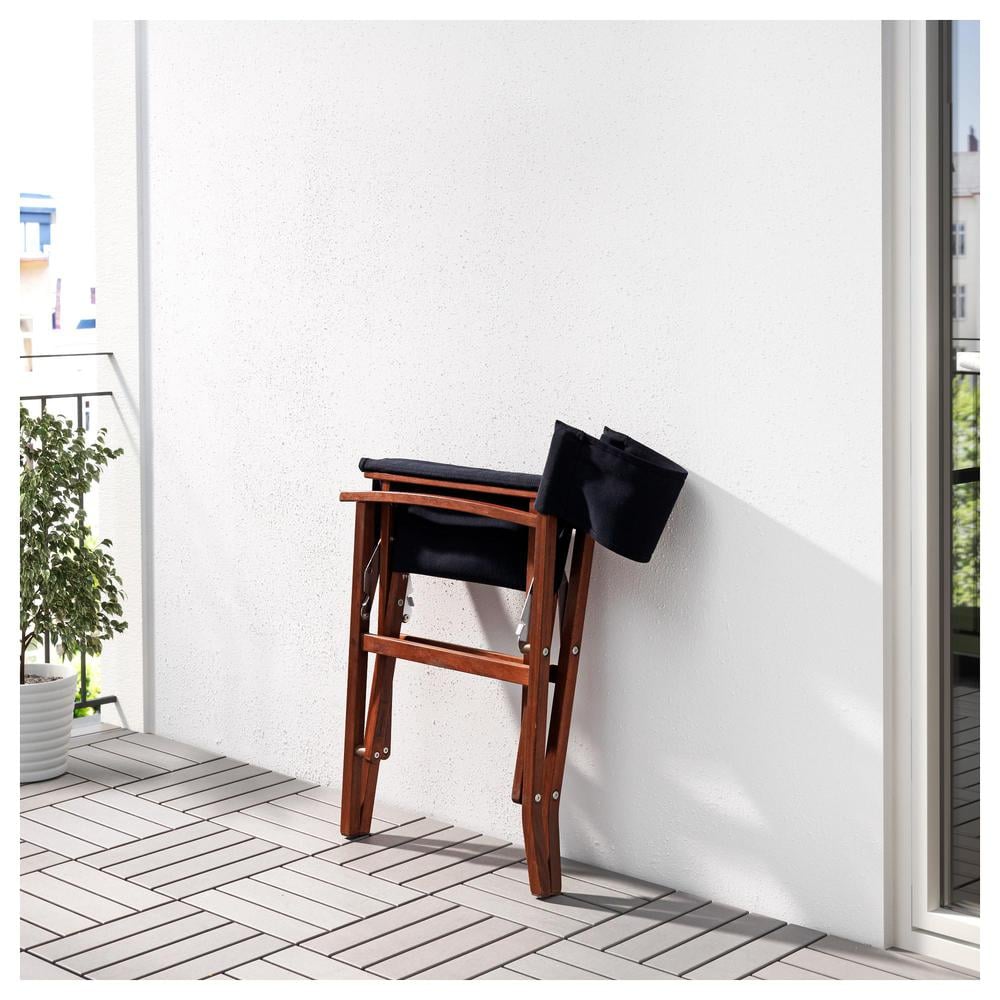
Of course, the director’s chair did not go unnoticed by IKEA, which, though it is no longer in production, included its version called SIARÖ in its catalog for many years. It also caught the attention of fashion brands, which sometimes blurred the lines between fashion and design, producing their own director’s chair, as Supreme did.

Perhaps it’s a comeback, or maybe the truth is that the director’s chair has never gone out of style, and its blend of history, style, and functionality continues to win us over!