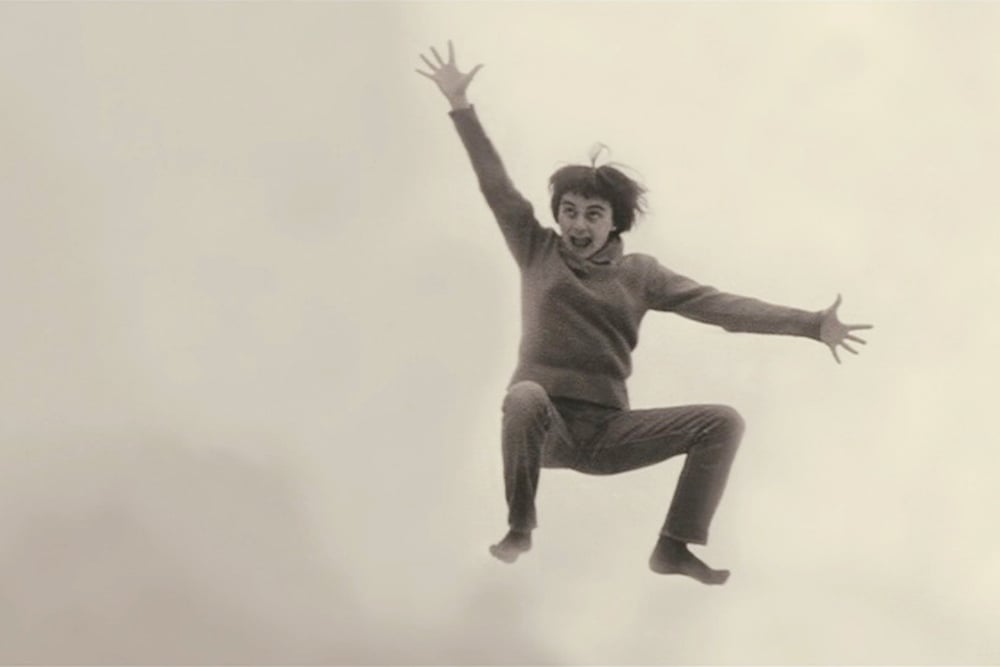
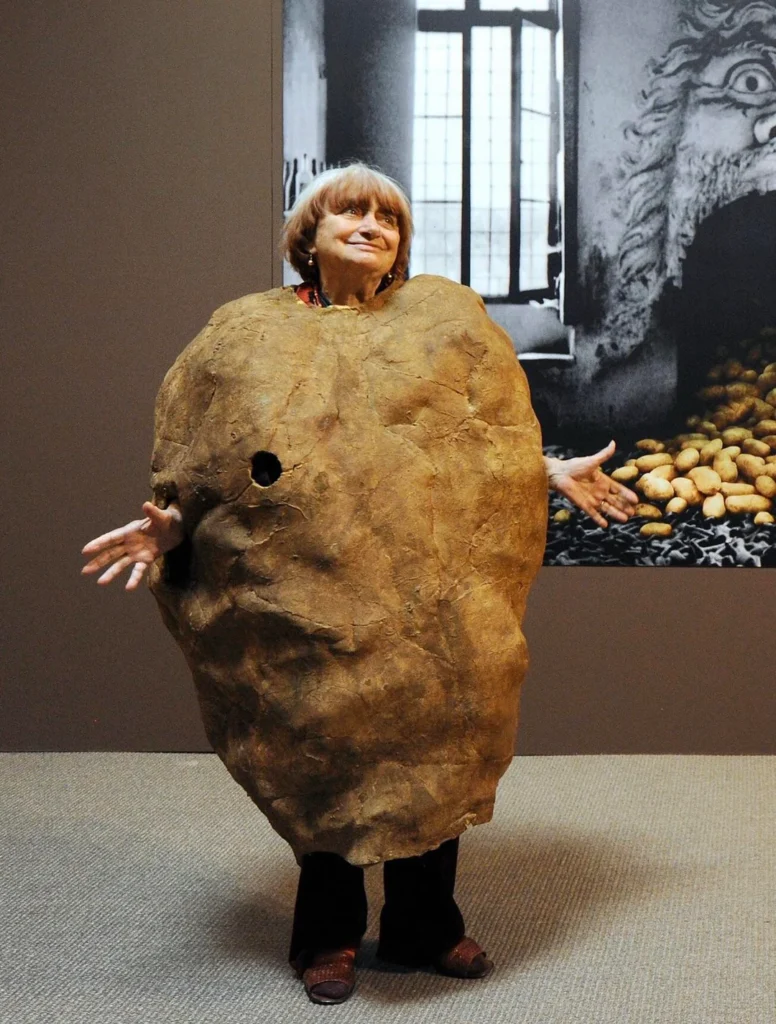
There is a photograph that tells you everything about Agnès Varda. It dates back to 2003, at the Venice Biennale. A 75-year-old woman wanders through the exhibition halls dressed as a potato. Not just any potato: a “sound potato,” fitted with built-in speakers that recite the names of potato varieties as she walks among installations made of 700 kilos of real sprouting potatoes. Visitors laugh, are moved, and are unsure whether it is art or madness. It is both. It is Agnès Varda.
Filmmaker, photographer, visual artist, performer. The first woman of the Nouvelle Vague, who anticipated Godard and Truffaut by five years with La Pointe Courte (1954), and the first female director to receive an Academy Honorary Award. For seventy years, Varda collapsed the boundaries between cinema, photography, sculpture, and everyday life, turning each medium into an extension of the others. And now, six years after her death (March 29, 2019), Rome pays tribute to her with a retrospective arriving at the perfect moment.
The exhibition at Villa Medici: Qui e là, tra Parigi e Roma
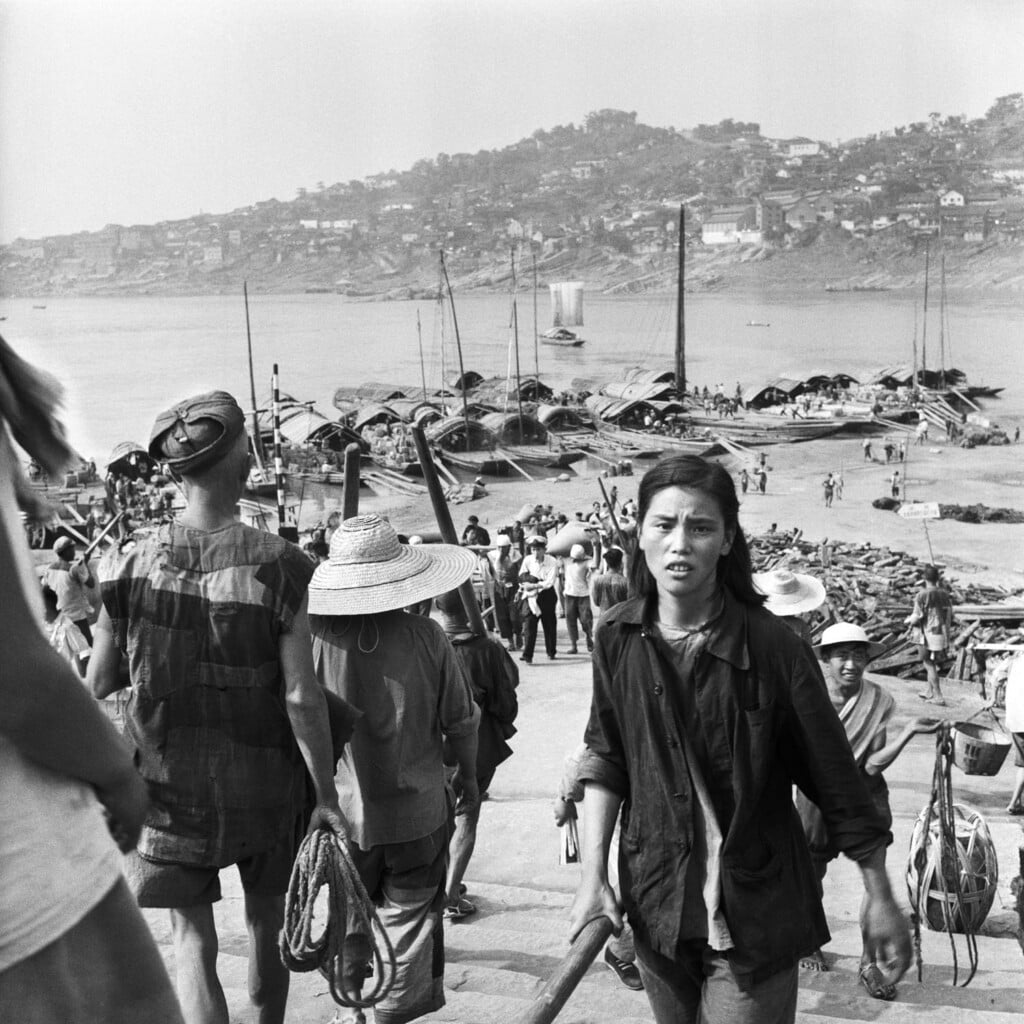
From February 25 to May 25, 2026, the French Academy in Rome – Villa Medici – hosts the first major photographic retrospective of Agnès Varda in Italy, marking the seventieth anniversary of the twinning between Paris and Rome. The title, Here and There, Between Paris and Rome, perfectly captures the artist’s nomadic spirit, constantly moving between places, languages, and artistic forms.
The exhibition at Villa Medici presents around 130 original prints, film excerpts, publications, documents, posters, set photographs, and personal objects by the artist, drawn from the archives of Ciné-Tamaris (the production company she founded, now run by her children Rosalie Varda and Mathieu Demy) and from the photographic collection deposited at the Institut pour la photographie des Hauts-de-France. The exhibition brings the work of the photographer into dialogue with that of the filmmaker, showing how, for Varda, these two languages were never truly separate.
At the same time, the Cineteca di Bologna will dedicate to the director the exhibition Viva Varda (March 6, 2026 – February 7, 2027), created in collaboration with the Cinémathèque française, retracing the entire body of work of the first female filmmaker to receive an Honorary Oscar for Lifetime Achievement (2017).
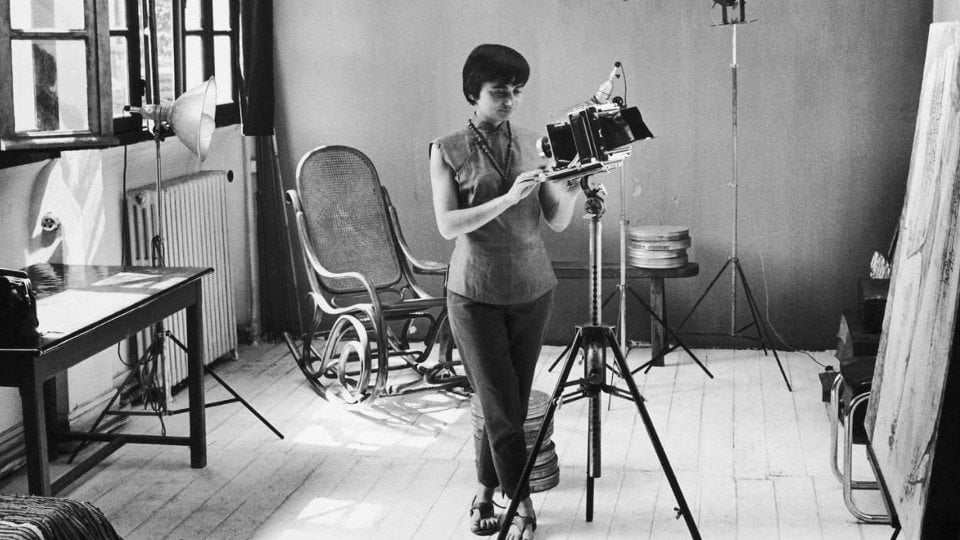
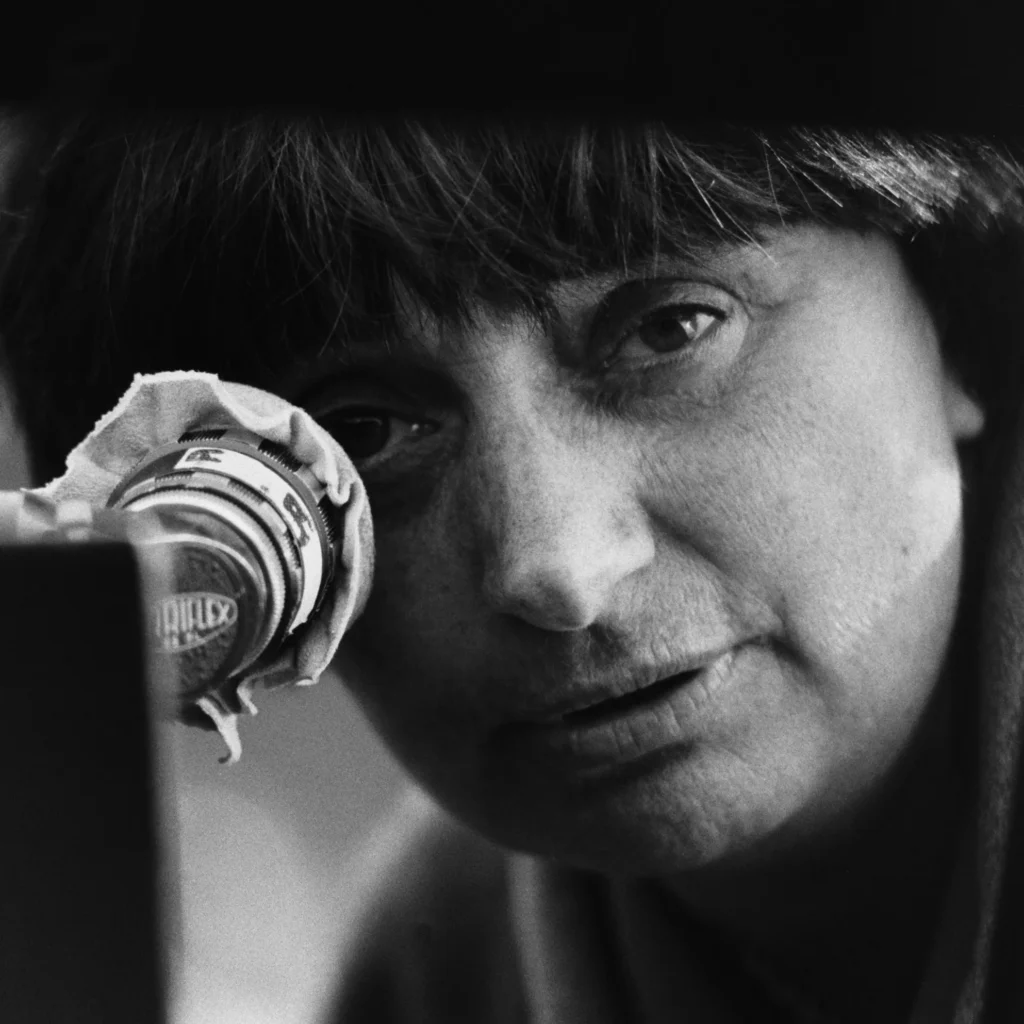
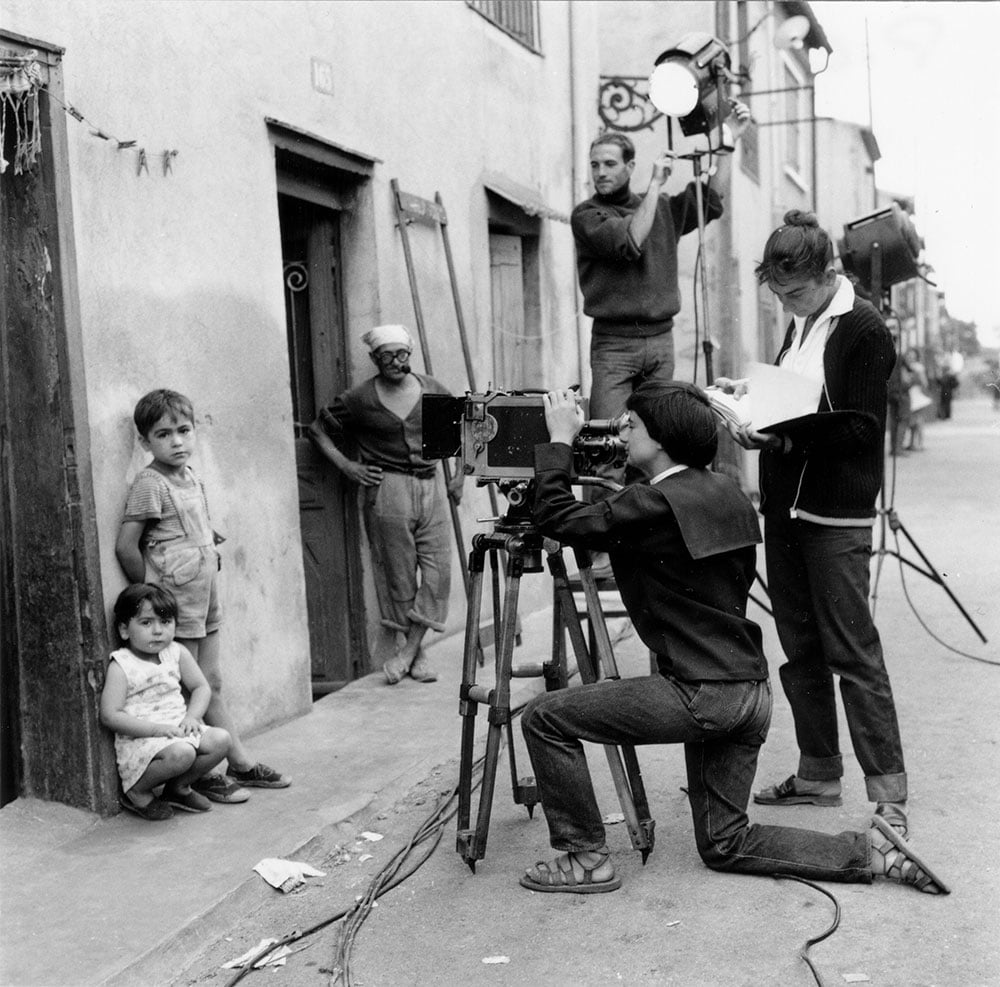
A Photographer Before Being a Filmmaker (and a Filmmaker Because She Was a Photographer)
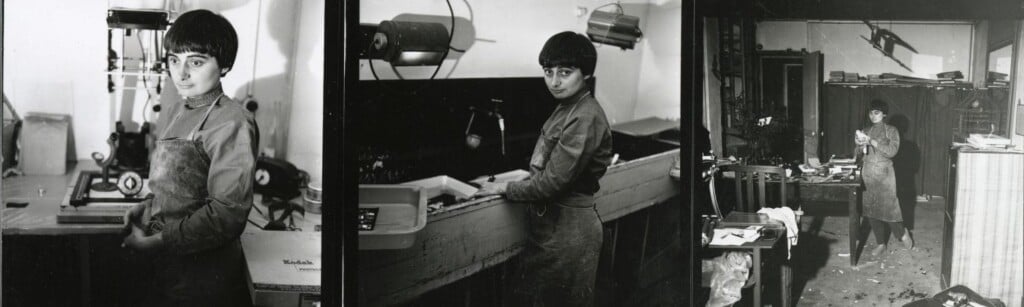
Born Arlette Varda in 1928 in Ixelles, Belgium, she began her career as a theatrical photographer at the Théâtre National Populaire in Paris in the early 1950s. She documented Jean Vilar’s productions, captured actors on stage and backstage, and learned how to seize movement, dramatic light, and performers’ expressions. This training would shape her cinema forever. At eighteen, she legally changed her name from Arlette to Agnès.
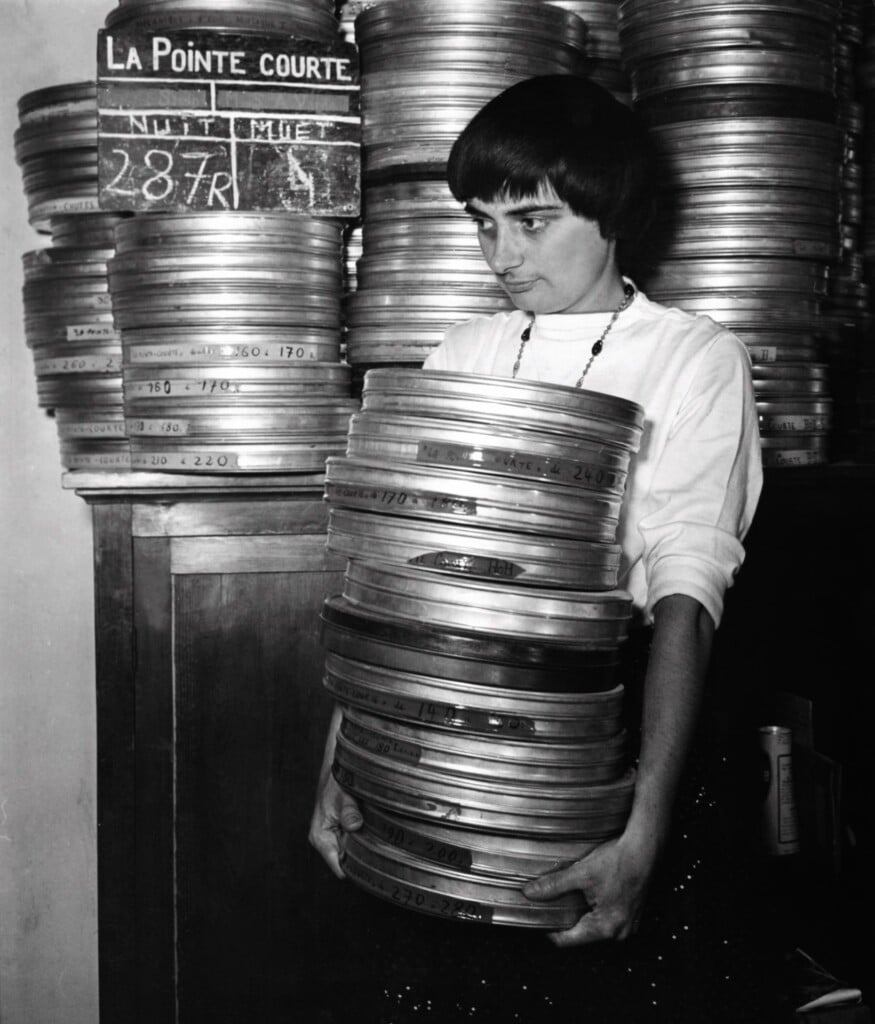
In 1955 she directed La Pointe Courte, her first feature film, edited by Alain Resnais. The film anticipated the Nouvelle Vague by five years, but critics ignored it. Too experimental, too free, too unlike anything seen before. Varda had never studied cinema and did not know its rules—which is precisely why she reinvented them from scratch, with the eye of a photographer who thinks in still frames, pictorial compositions, and perfect shots.
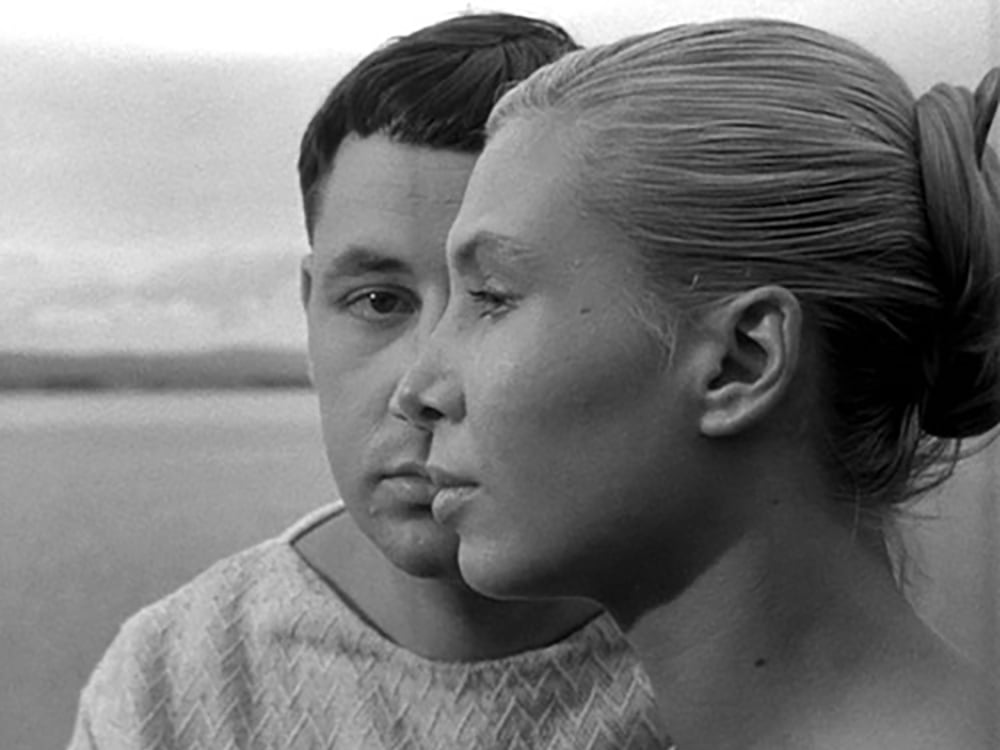
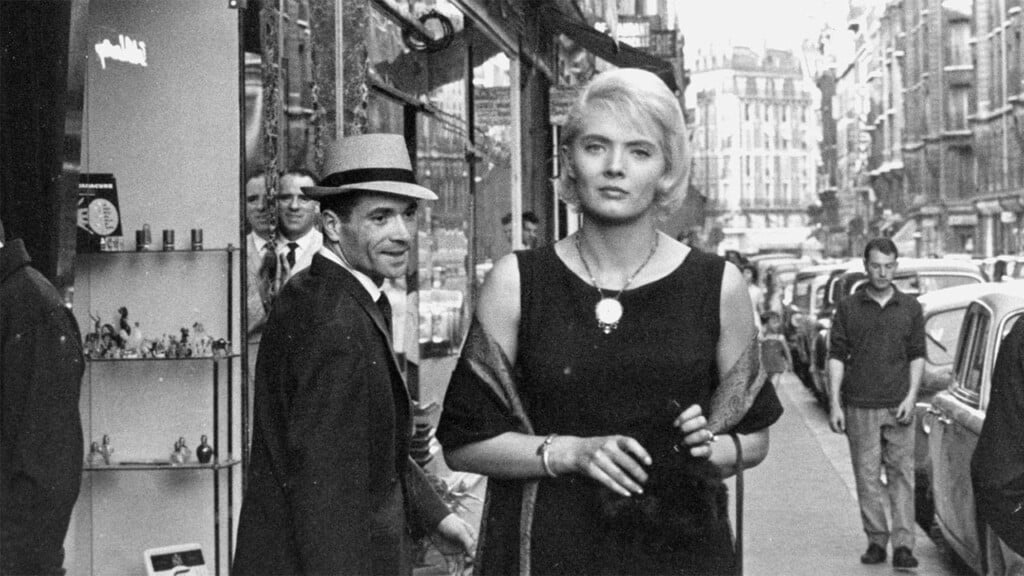
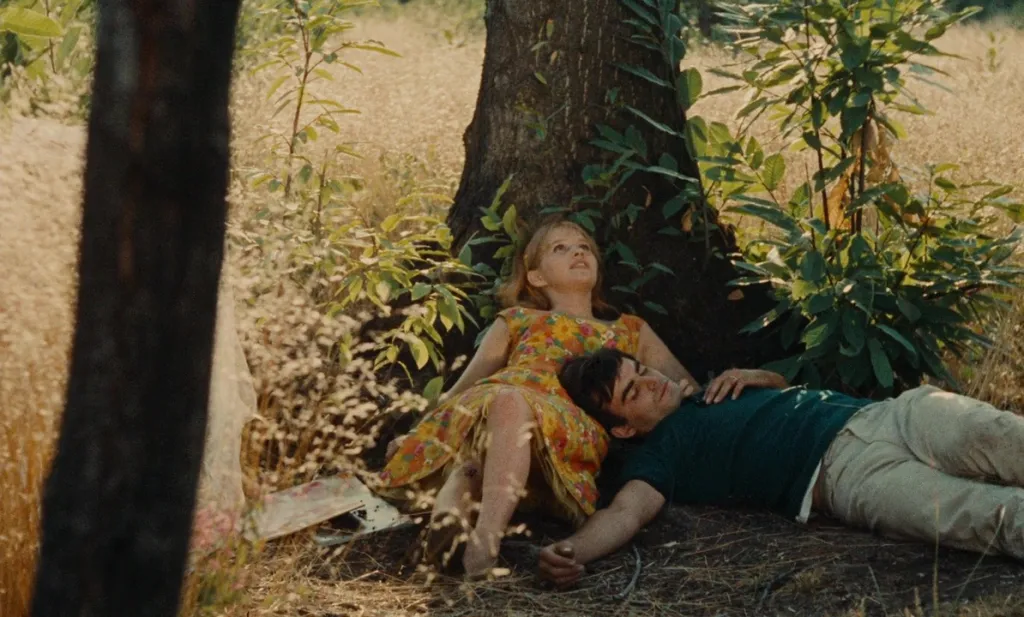
“Born a photographer,” she used to say. And the photographic gaze runs through her entire filmography: Cléo from 5 to 7 (1962), an almost real-time portrait of a woman awaiting the result of a biopsy; Le Bonheur (1965), whose saturated colors recall Impressionist painting; Vagabond (1985, Golden Lion in Venice), built as a succession of thirteen equidistant tracking shots, a mathematical structure turned into narrative; Daguerréotypes (1975), a documentary about the shopkeepers of Rue Daguerre, filmed just a few meters from her home.
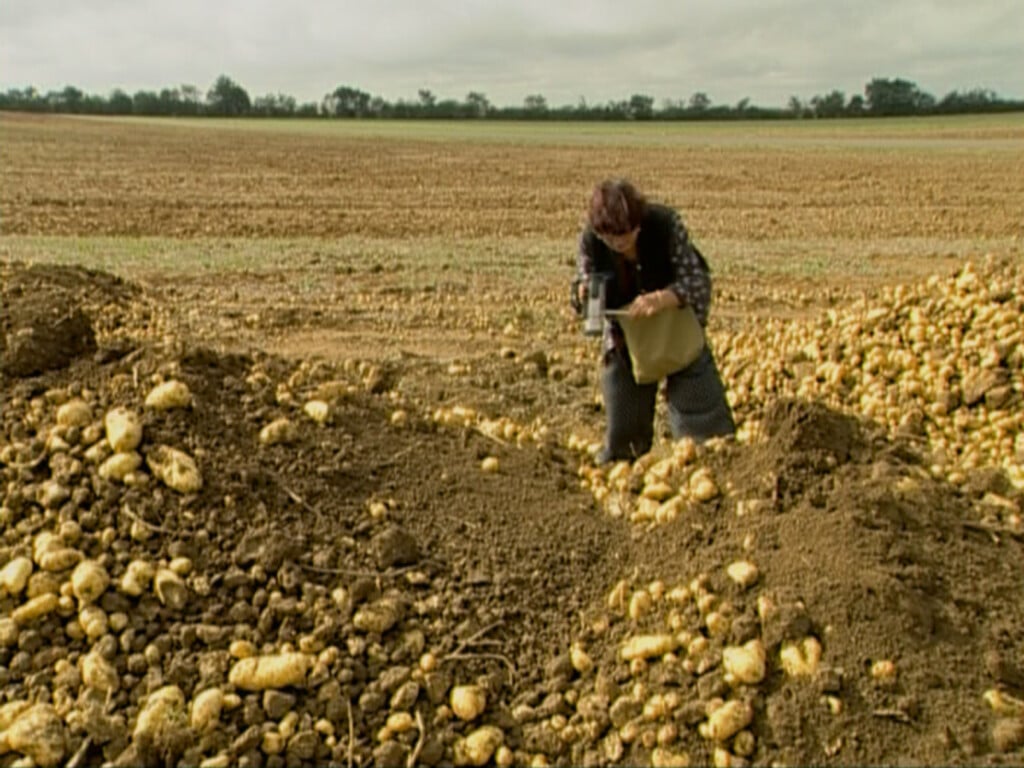
But it is with The Gleaners and I (2000) that Varda stages a true revolution. At seventy-two, she discovers the digital video camera—light, handy, intimate—and uses it as an extension of her hand, just as she had done with photography fifty years earlier. The film documents women and men who gather abandoned potatoes in fields, discarded fruit from markets, and objects thrown away. Varda films, but she also gleans: collecting images the way others collect food. During filming, she falls in love with heart-shaped potatoes, takes them home, lets them sprout, and photographs them as they age.
The Installations: When Cinema Becomes Sculpture
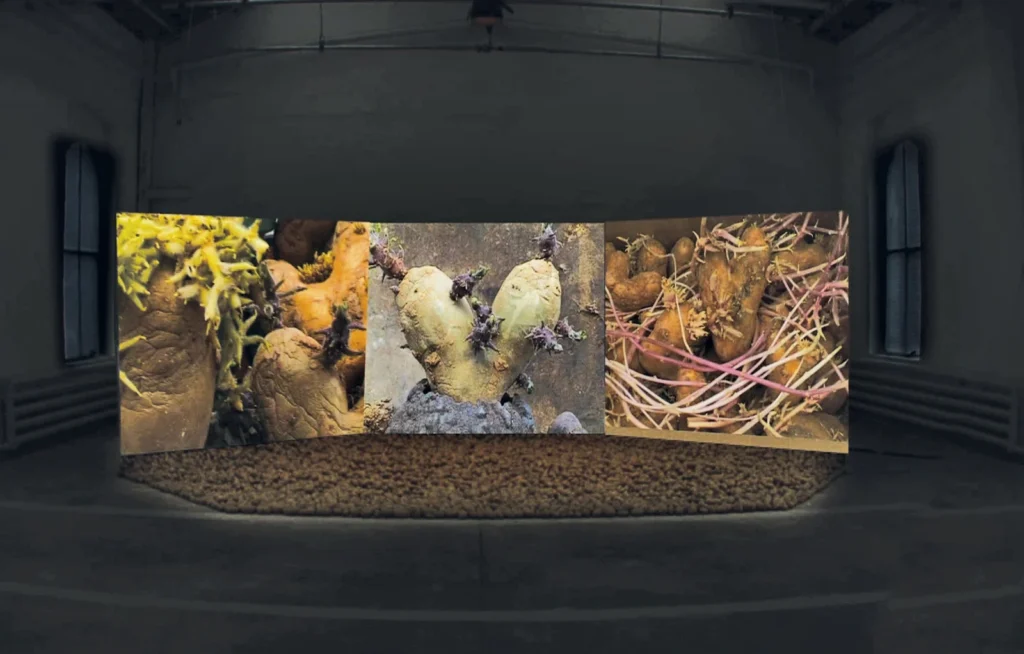
At 75, when most filmmakers have already retired, Varda begins a second career. Or rather, a third: visual artist. In 2003, at the Venice Biennale, she presents Patatutopia, an installation conceived as a direct extension of The Gleaners and I. Three giant screens show sprouting potatoes in hypnotic video loops, while 700 kilos of real potatoes are scattered across the floor. The audience walks among real and virtual tubers, between cinema and organic matter. Varda dresses up as a “sound potato” and becomes part of the artwork herself.
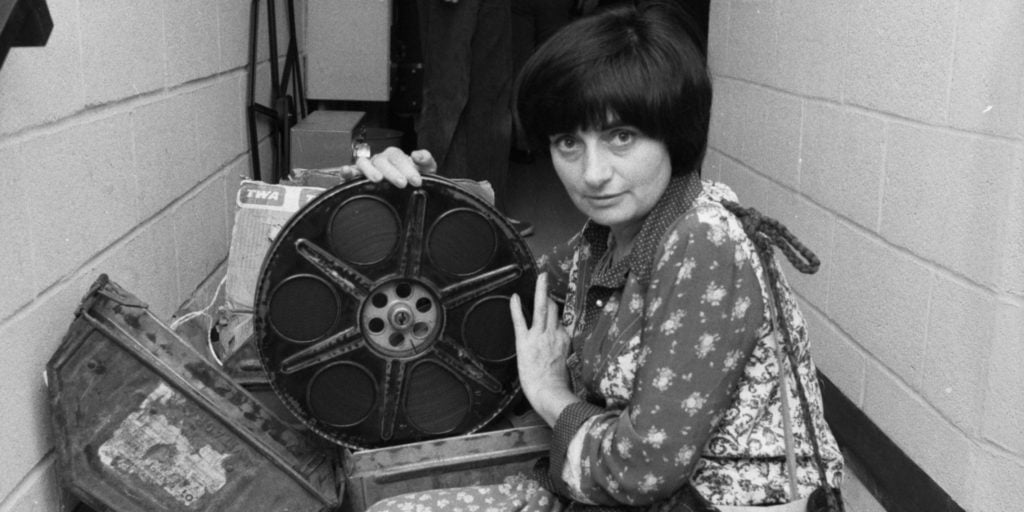
But her most extraordinary installations are the Cabanes de cinéma (Cinema Shacks), literally built out of her own films. In 2006 she creates La Cabane de l’échec, constructed using abandoned 35mm prints of Les Créatures (1965), a commercial failure at the time of its release. The walls and roof are made of vertical strips of film, held together by a steel and plexiglass structure. Visitors can enter, walk among the images, and see the film through the light filtering through the celluloid. It is a cinematic temple that can be physically inhabited.
In 2018 comes La Serre du Bonheur (The Greenhouse of Happiness), a cabane built using the entire 35mm film of Le Bonheur (1965), wooden planks, and artificial sunflowers (fake, but eternal—like cinema). Inside, a 27-frame enlargement from the film and an arch made from the metal canisters that Varda and Jacques Demy used to transport their film reels. “Like a true gleaner, I recovered the abandoned prints of this film and we unspooled the reels,” she explains. “For me, nostalgia for 35mm cinema turned into a desire for recycling.”
The cabanes are emotional architectures, spaces of memory where cinema ceases to be projection and becomes tangible matter. They are neither preparation for a film nor documentation of a film: they are the film itself changing form, transforming into inhabitable sculpture.


Faces Places: When Cinema Leaves Museums and Goes to the Villages
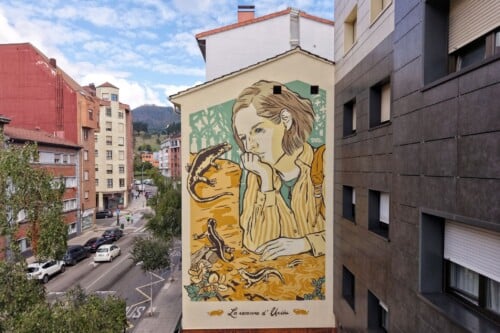
In 2017, at 89, Agnès Varda embarks on her final great journey. Together with artist JR—a thirty-four-year-old street photographer who pastes giant portraits onto walls, barns, and trains—she travels across rural France in a van transformed into a mobile photographic studio. The documentary that emerges, Faces Places (Visages, Villages), is a road movie, a collaborative artwork, a meditation on intergenerational friendship, and a political manifesto.
JR and Varda photograph factory workers, miners, farmers, waitresses—anonymous people from “deep France”—and transform their faces into monumental murals pasted onto the walls of their homes, the warehouses where they work, and the ruins of abandoned mining villages. Each portrait is an act of dignity, a way of saying: “You exist. You matter.” The film wins the L’Œil d’Or award at Cannes 2017 and receives an Academy Award nomination for Best Documentary Feature. With that nomination, Varda becomes the oldest person ever nominated for a competitive Oscar.

But Faces Places is also a film about fading sight. Varda is losing her eyesight due to macular degeneration, and the documentary openly addresses her fear. JR, who never removes his sunglasses, becomes a mirror of Godard—the friend who, at the end of the film, cruelly refuses to receive her in Switzerland, making her cry. To console her, JR takes off his glasses and shows her his face, but she can now see only a blurred patch. The scene is heartbreaking: the visual artist who devoted her life to looking can no longer see.
“The goal is to put oneself at the service of the people being filmed, turning them into silent heroes,” Varda once said. “To change what doesn’t work in the world, you first have to change the way you look at the world.” Faces Places is public art, participatory cinema, social photography, and human document all at once. It is everything Varda always was: an artist who refused categories.
The Final Work: Varda by Agnès
In 2019, just a few months before her death, Varda presents her final film: Varda by Agnès (Varda par Agnès). It is a self-portrait in the form of a masterclass, filmed during public lectures held in theaters and cinemas. The project is declared from the outset: “To provide the keys to my work. I give my keys, my thoughts—nothing pretentious, just the keys.”
The film is divided into two parts, one for each century. The twentieth century spans from her first feature La Pointe Courte (1954) to One Hundred and One Nights (1996), moving through masterpieces and failures alike. The second part begins in the twenty-first century, when small digital cameras transform her approach to documentary filmmaking, from The Gleaners and I (2000) to Faces Places (2017). During this period, however, Varda primarily creates art installations: Patatutopia, the Triptyques atypiques, and the Cabanes de Cinéma.

Varda by Agnès is a lucid and generous artistic testament, in which the filmmaker reveals the secrets of composition, narrative structure, and editing. She explains the binary structure of Cléo from 5 to 7, the thirteen tracking shots of Vagabond, and the genesis of Daguerréotypes. But it is also a film about loss: of sight, of memory, of loved ones. Sandrine Bonnaire, the protagonist of Vagabond, appears to confront her present-day image with that of the wild seventeen-year-old she once was in the film. Jacques Demy is present through photographs and memories.
A few months after the film’s release, on March 29, 2019, Agnès Varda dies in Paris at the age of ninety. But her cinema, her installations, and her photographs continue to live on—exactly as she had planned.
The Total Artist Who Tore Down Walls
For seventy years, Varda dismantled hierarchies between artistic languages. She showed that a filmmaker could also be a photographer, an installation artist, a performer, a writer. That cinema could leave movie theaters and become architecture. That potatoes could be art just as much as a reel of Fellini.
She was an anarchic visionary who built one of the most coherent and personal filmographies in European cinema, while remaining radically faithful to herself. A feminist without dogma, an artist without labels, a tireless gleaner of stories and images. “I don’t make films about extraordinary things,” she used to say. “I make films about ordinary things filmed in an extraordinary way.”
The Villa Medici exhibition arrives at the perfect moment to rediscover this colossal artist. Because Varda is not only to be seen: she is to be inhabited, like her cabanes. She is to be gathered, like her heart-shaped potatoes. She is to be shared, like the giant portraits of Faces Places. Varda’s cinema never ends, because it was never only cinema. It was life, transformed into art.