The premature passing of Oliver “Power” Grant reminds us that the Wu-Tang Clan myth was never just about music, but a true masterpiece of cultural architecture. Grant was one of the key architects of that empire—the man who understood before most that a musical collective could become a point of reference not only in music, but in streetwear too.
We are saddened to announce the passing of Oliver “Power” Grant, visionary entrepreneur and co-founder of the legendary Wu-Tang Clan.
A driving force behind one of hip-hop’s most influential movements, Power helped build a global legacy rooted in independence, ownership, and… pic.twitter.com/TC2vt4MMfx
— Okayplayer (@okayplayer) February 24, 2026
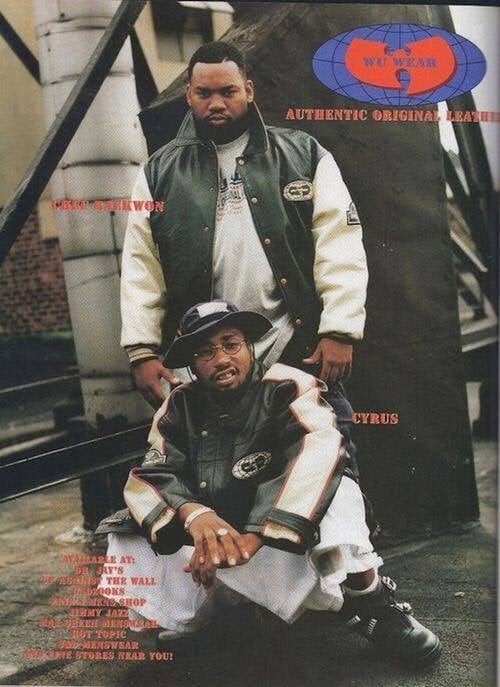
Within the Wu-Tang universe, Grant played a strategic role, establishing himself as a true entrepreneurial visionary. The decisive turning point came in 1995, when he oversaw the launch of Wu Wear. It wasn’t simple merchandising, but a clothing line structured as an independent brand: a coherent and instantly recognizable extension of the Wu-Tang Clan’s aesthetic.
Visualizza questo post su Instagram
Wu Wear didn’t chase fashion—it anticipated it. Oversized hoodies, varsity jackets, caps, and T-shirts became true symbols of belonging. And at the center of it all was the “W” logo. Grant understood that the Wu-Tang identity wasn’t meant to be explained, but worn. Above all, he grasped that controlling the narrative also meant controlling distribution—and the shelves of major department stores.

At a time when streetwear had not yet become central to the luxury universe and hip hop was treated as a passing subculture, Wu Wear entered the mainstream without compromise. No strategic sanitizing, no visual adaptation: Shaolin, Staten Island, kung fu, and Five Percent culture became commercial language—cultural capital transformed into business.
Grant’s contribution went beyond revenue, proving that a musical collective like the Wu-Tang could build value without surrendering creative control. He showed that culture can generate capital while remaining true to itself. Today, many of the dynamics between music and fashion—from capsule collections to artist-entrepreneurs—follow a path that Wu Wear had already mapped out.
Various speculations surround the brand’s final chapter. According to some, Method Man did not fully support the project’s vision, and the launch of his own label Johnny Blaze may have signaled that shift. With the arrival of the 2000s, streetwear began to change shape: brands like Rocawear by Jay-Z and Sean John by Diddy emerged as structured competitors, following similar trajectories. Distribution required increasingly complex investments, and maintaining a presence in department stores became more challenging.
In 2008, counterfeiting also became a serious issue, and Power decided to rename the Wu-Tang brand in an attempt to relaunch it. The move failed to reverse its trajectory, leading instead to a quiet dissolution. Yet Wu Wear remains a foundational blueprint for ventures like Billionaire Boys Club, OVO, Yeezy, and for the entire contemporary celebrity-brand model.

The death of Oliver “Power” Grant does not represent only the loss of one of the founders of the Wu-Tang Clan, but that of a cultural engineer. With him, rap began to structure itself as a vertical industry. Wu Wear entered American department stores, opened four standalone stores across the United States, and at its peak reached annual revenues of 25 million dollars. Figures that seem ordinary today, but in the mid-1990s were an anomaly. Grant proved that rappers could control not only their music, but the entire imaginary surrounding it—opening the door to new forms of commercial and cultural expansion.