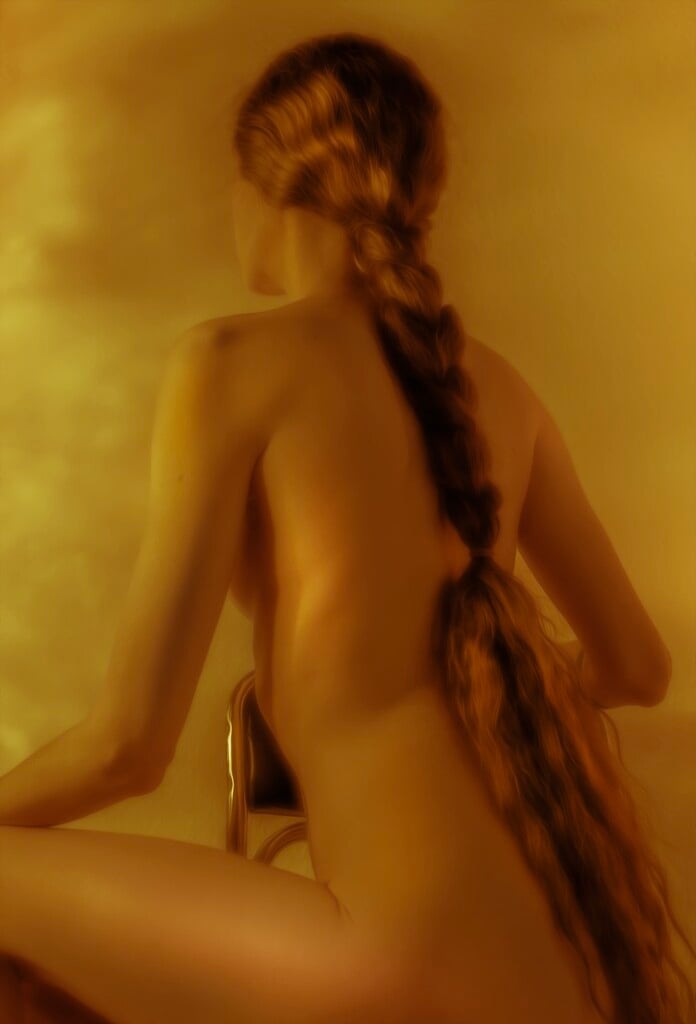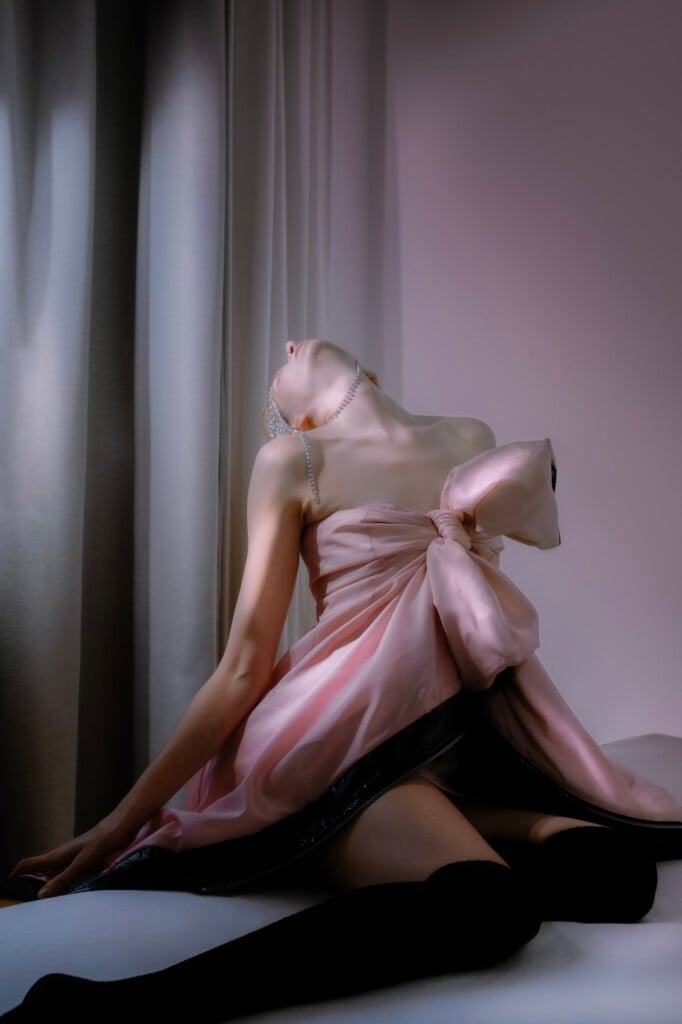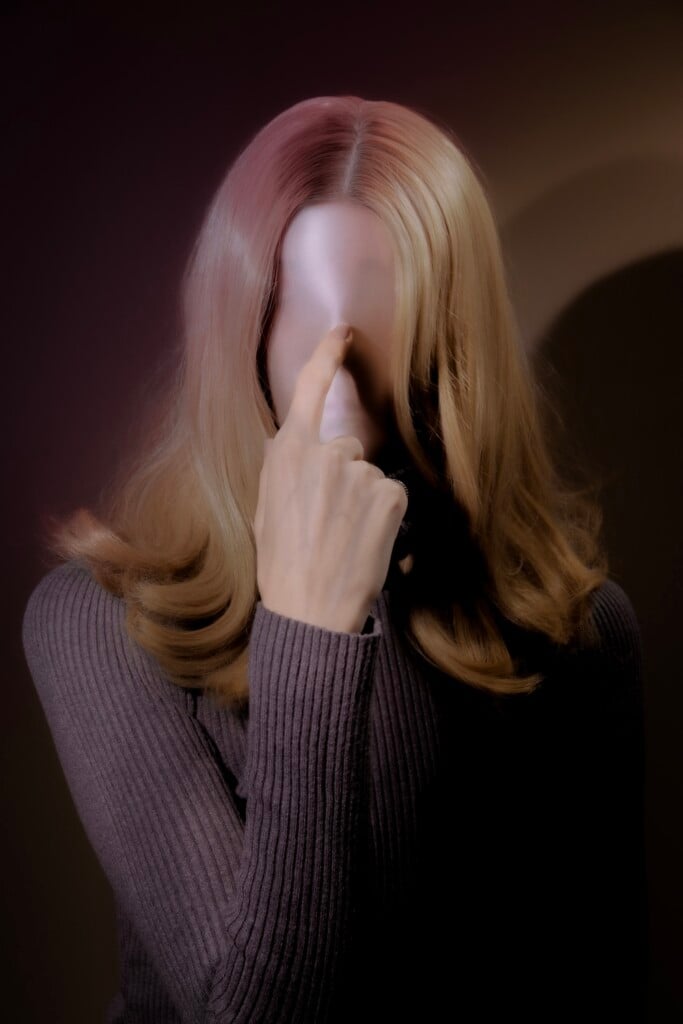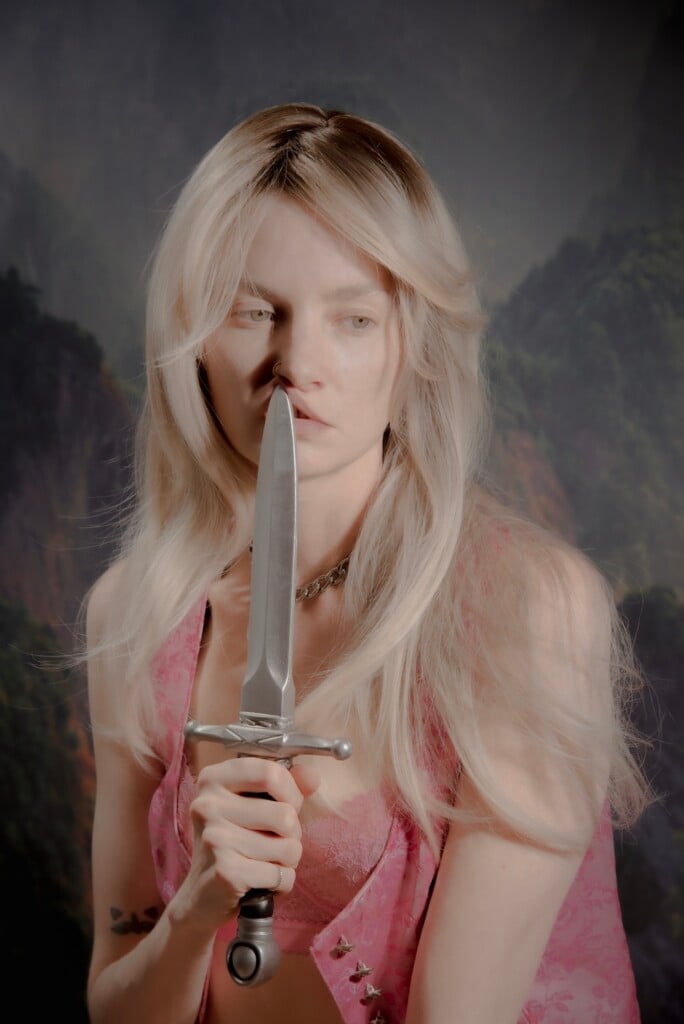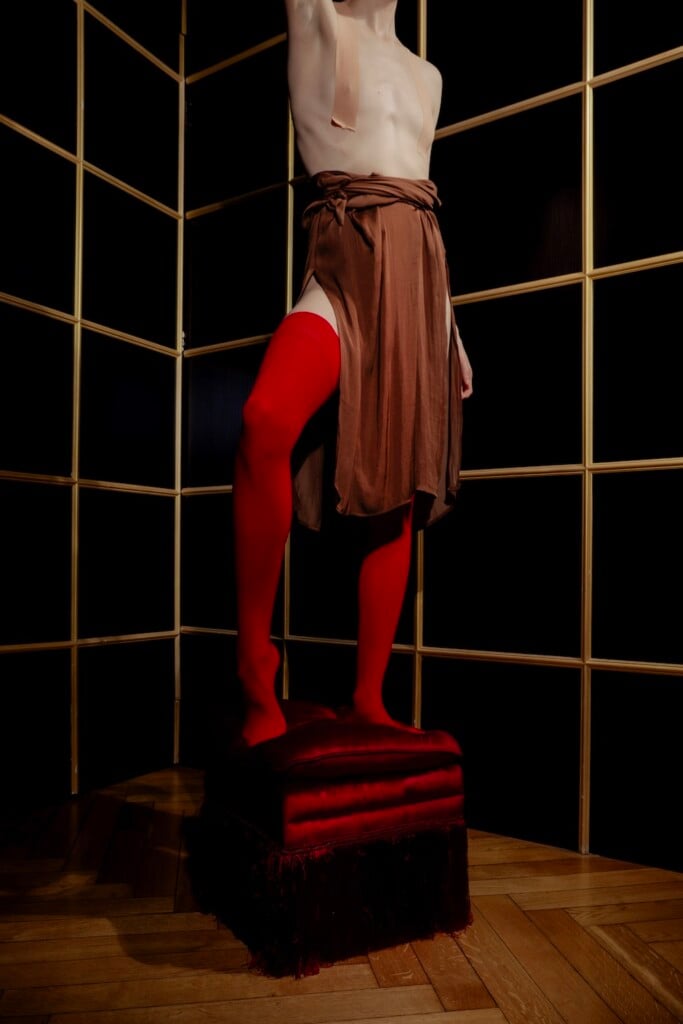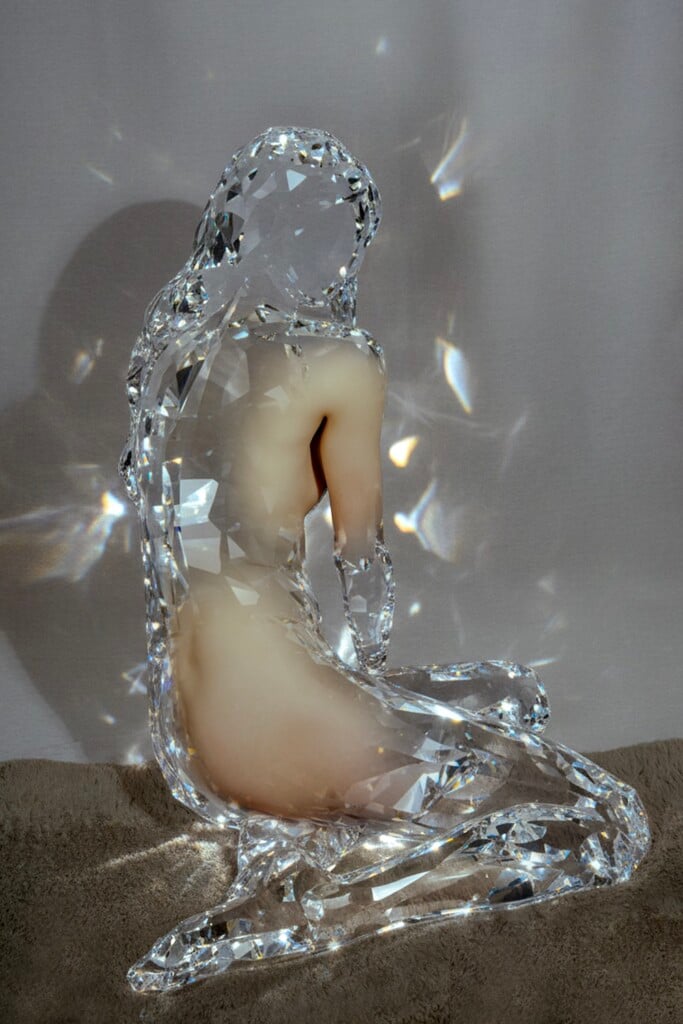
Olga Urbanek was born near Warsaw in 1987 and works almost exclusively with digital images that move through the uncertain space between reality and fiction, between the familiar and the unsettling. Her self-portraits, built with near-hallucinatory colours, elaborate costumes and settings curated down to the smallest detail, produce bright worlds that nonetheless hide a darker component, almost never stated outright but always felt.
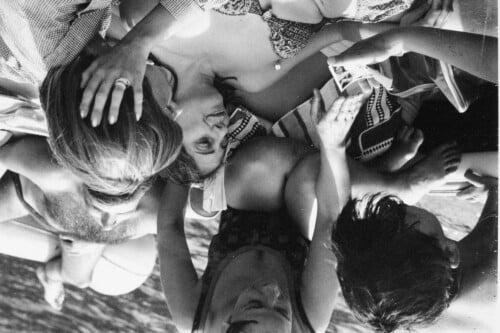
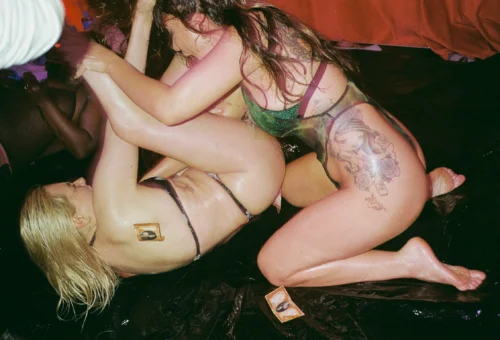
In the work of the Polish photographer there’s a subtle, faintly perverse humour, running through bodies that look serene yet unnaturally contorted. The body, in her photographs, is never just a body, and eroticism becomes a tool to break the traditional gaze on the female figure rather than indulge it. The most intimate moments are often told through hidden or turned-away faces, private gestures, as if the camera weren’t even present in the room.
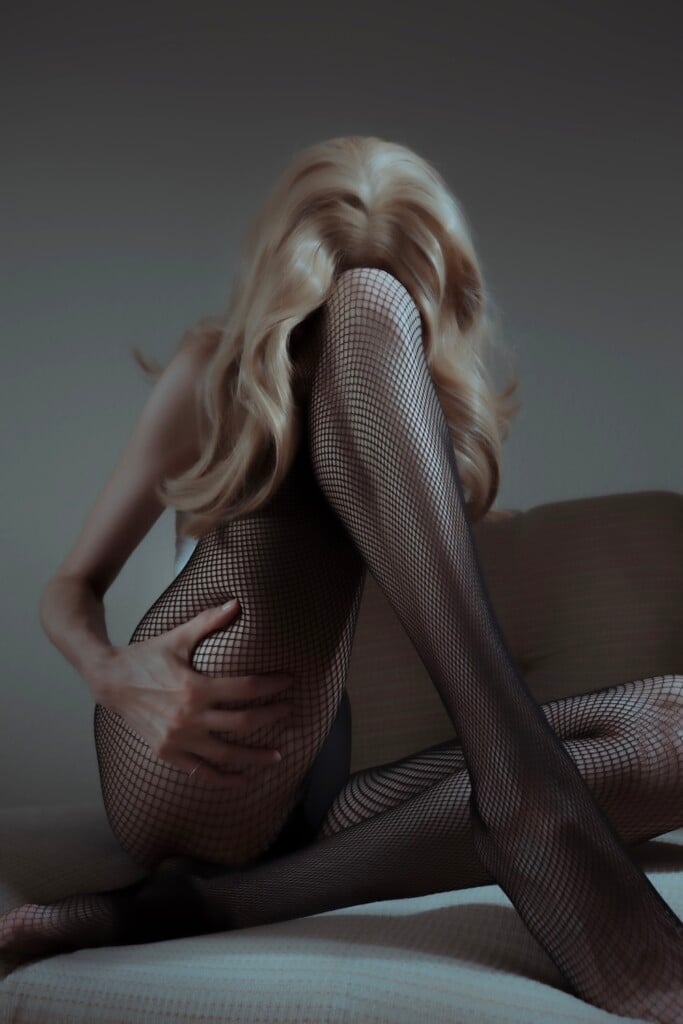

Olga Urbanek doesn’t hide the technology she works with, she exposes it, placing it at the centre of her process instead of concealing it behind an aesthetic of false naturalness, making her post-production choices layered and deliberate.
It’s a body of work built on constant contradictions, intensity meeting calm, soft grace colliding with sudden sharp cuts. Even when the surface appears exposed and direct, the positioning of the bodies often suggests the opposite need, that of self-protection, of vulnerability. Within this precarious balance, Urbanek’s work keeps asking a question that never finds a single answer, namely what freedom actually looks like.
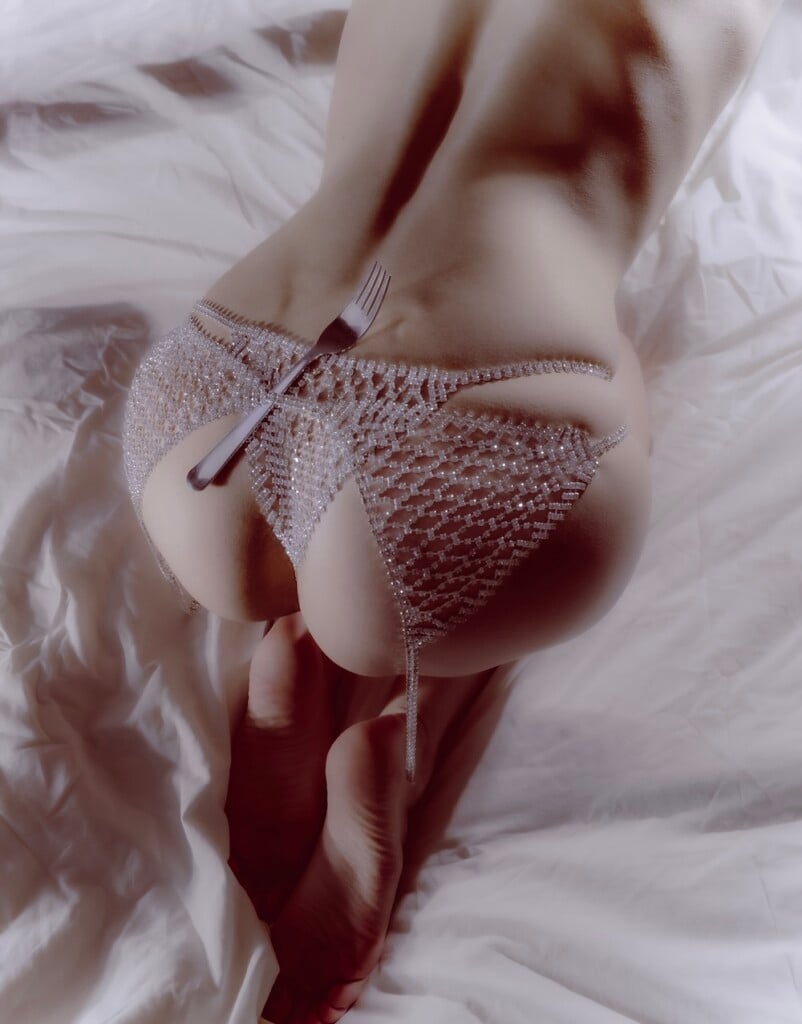
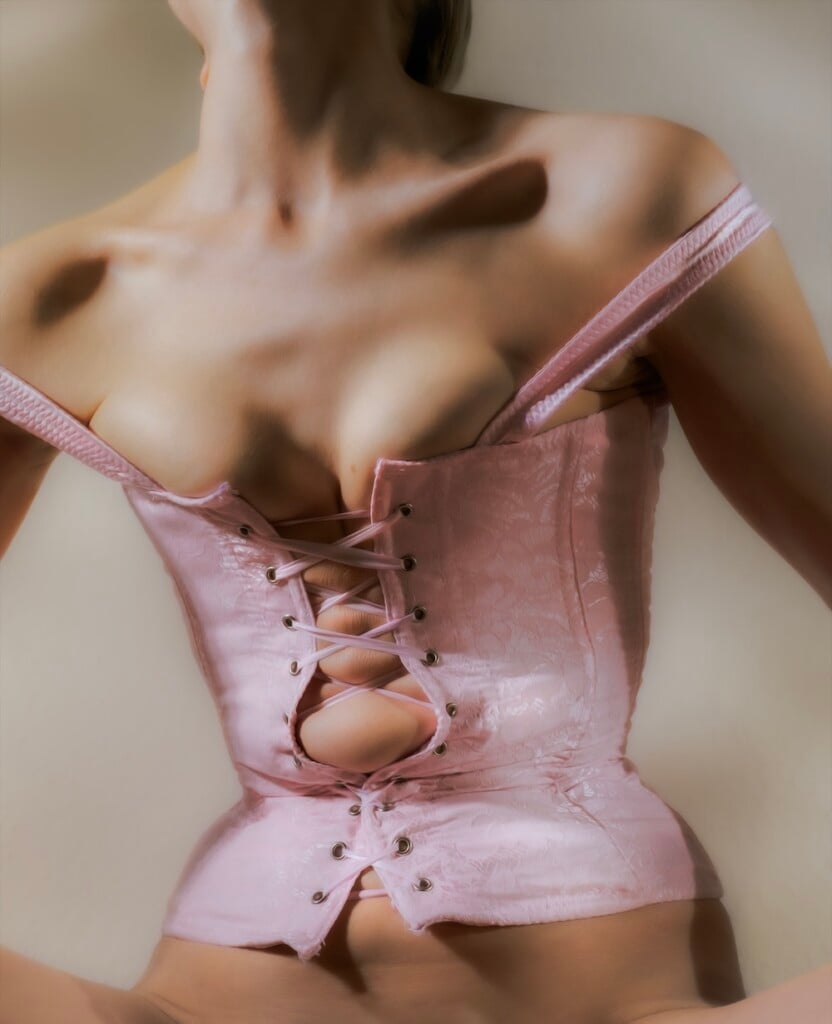
The fact that the artist chooses almost exclusively female subjects, often herself, reinforces this reading, a narrative thread running through her whole body of work that speaks of a powerful femininity, able to hold strength and tenderness together without contradiction. Olga Urbanek manages to borrow the visual language of digital images, of avatars, and turn it on its head, using masks and disguises not to escape the human but to dig deeper into it.