Article by Floriana Savino
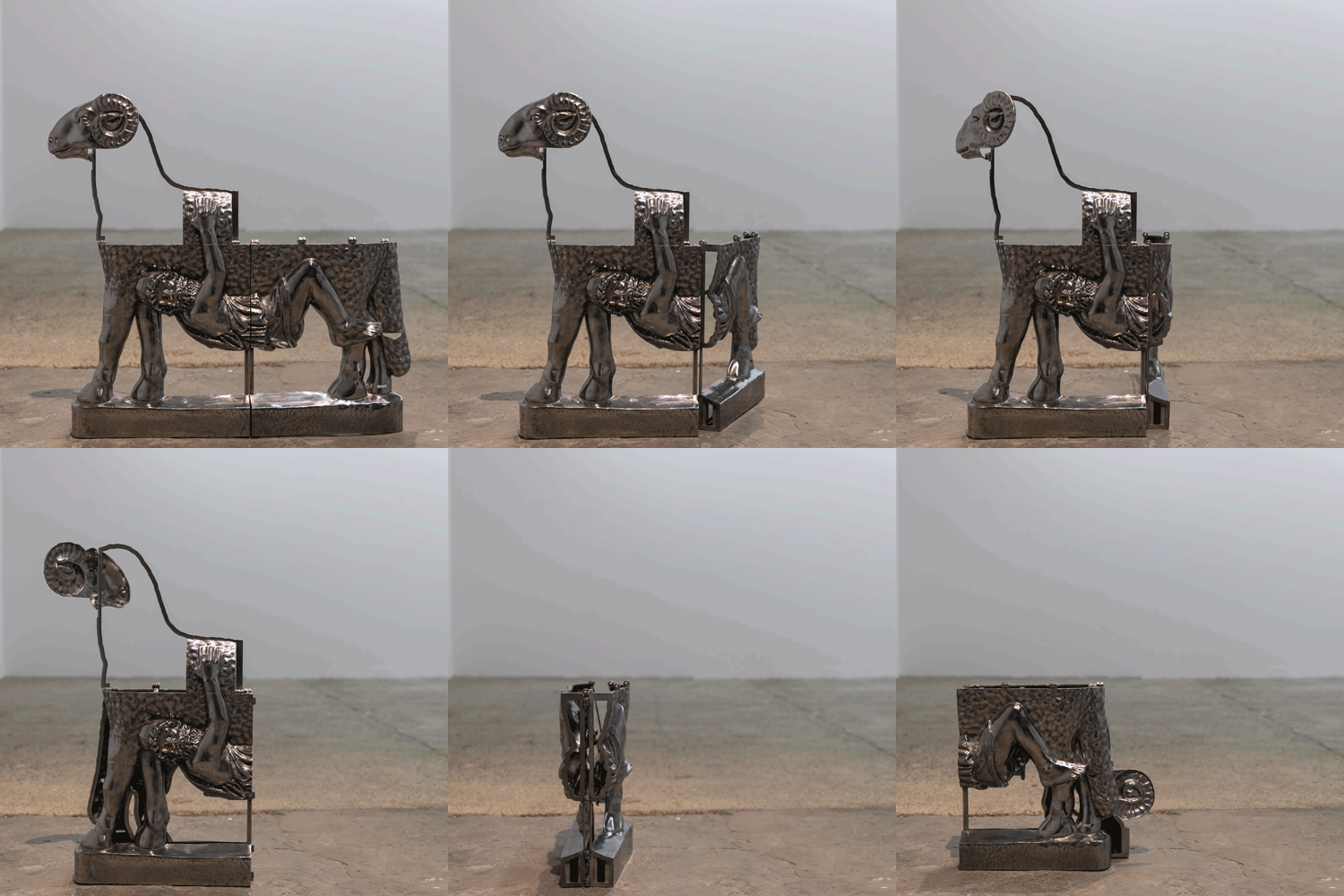
The dynamic relief of a man embracing a ram surveys the interior of Galerie Brugger, in the small Austrian town of Klaus, where Supported Files, the solo exhibition by Oliver Laric (Innsbruck, 1981), is on view until 23 May 2026. The image immediately evokes the sculptural group from Villa Albani: a white marble sculpture depicting Odysseus, the Greek hero imported into the heart of Rome along with the riches of classical antiquity.
So reads the ancient Homeric poem: […] There was a ram, the finest of all the flock, I seized him by the back and slid beneath his belly, and lay there, grasping the wondrous fleece with both hands, clinging with patient heart. (Odyssey, IX, 431–435)
In the aesthetic scheme envisioned by its owner, Cardinal Albani, the sculpture adorned an artificial grotto — a space of wonder and astonishment. It is impossible not to think of the antra Cyclopis of imperial Rome, those environments that embodied the dream of an architecture devoted to leisure and pleasure. Conceived as nymphaea or summer dining rooms (coenationes), these spaces evoked myth and the gentle sound of water, and represented in antiquity the promise of a fulfilled world.
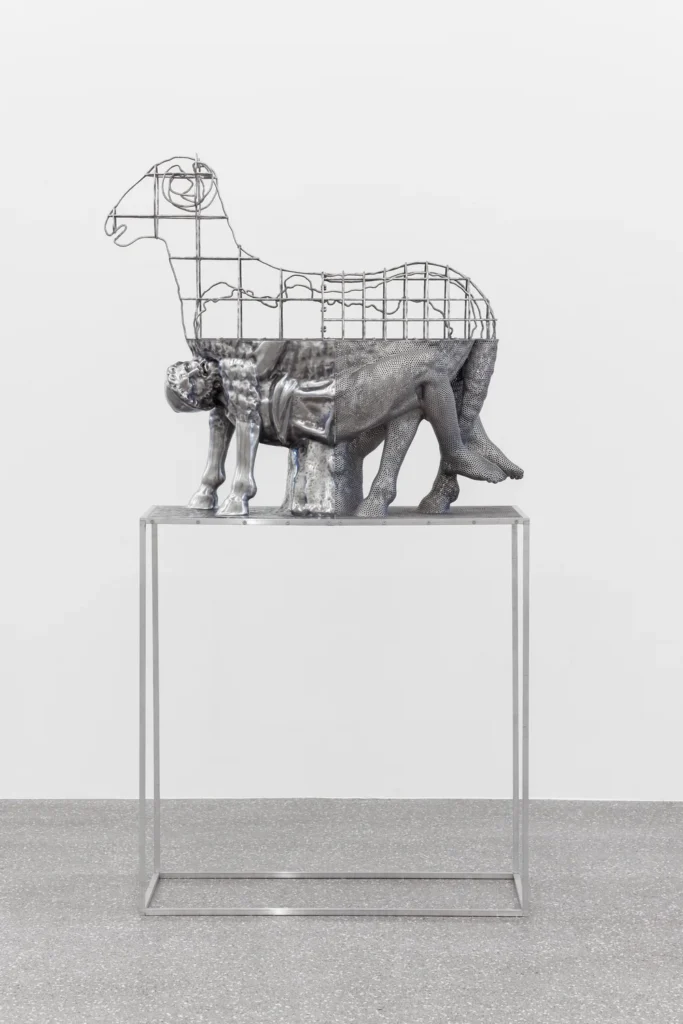
Within the framework of conservation — and of an aura of beauty and authenticity that demands to be questioned — the Austrian artist Oliver Laric has been experimenting for over a decade with a different approach to artistic practice. Trained in graphic design, Laric has long worked with the dynamism and natural fluidity of images that inhabit the online space. Working across multiple media (from video to sculpture), he foregrounds the urgent need to allow a broader public, beyond specialists, to engage with what constitutes the essence of the artistic object.
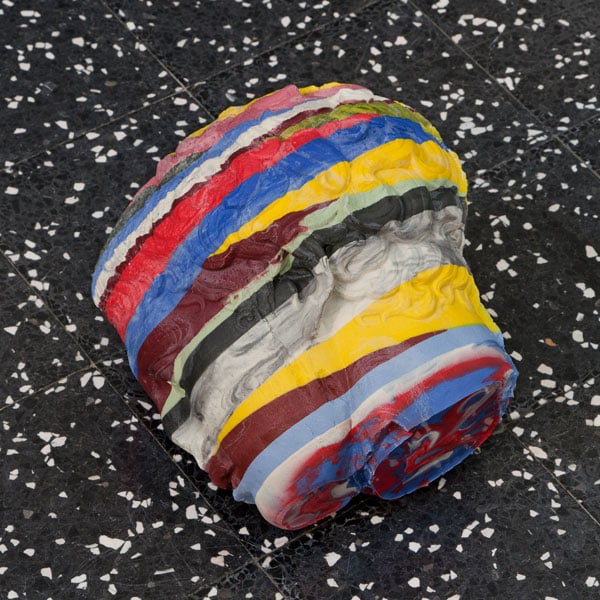
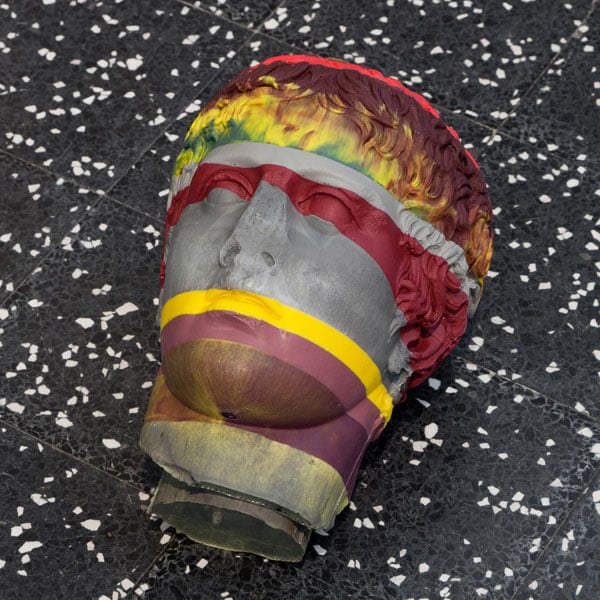
One of his best-known works, Kopienkritik, created in 2011 for the Kunsthalle Basel, had already reflected on the concept of uniqueness and the aura of art (in the Benjaminian sense) in relation to the Greco-Roman tradition of the copy of the copy. On that occasion, ruins and classicising reinterpretations rendered in coloured wax activated a critical reflection, accompanied by an endless stream of images and full-screen video.
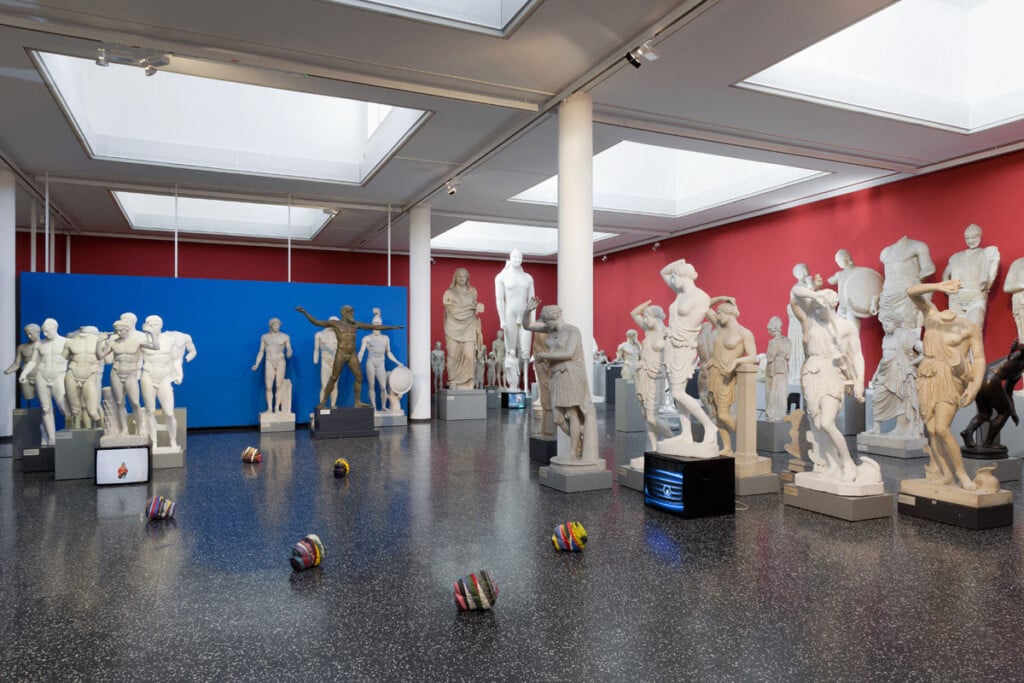
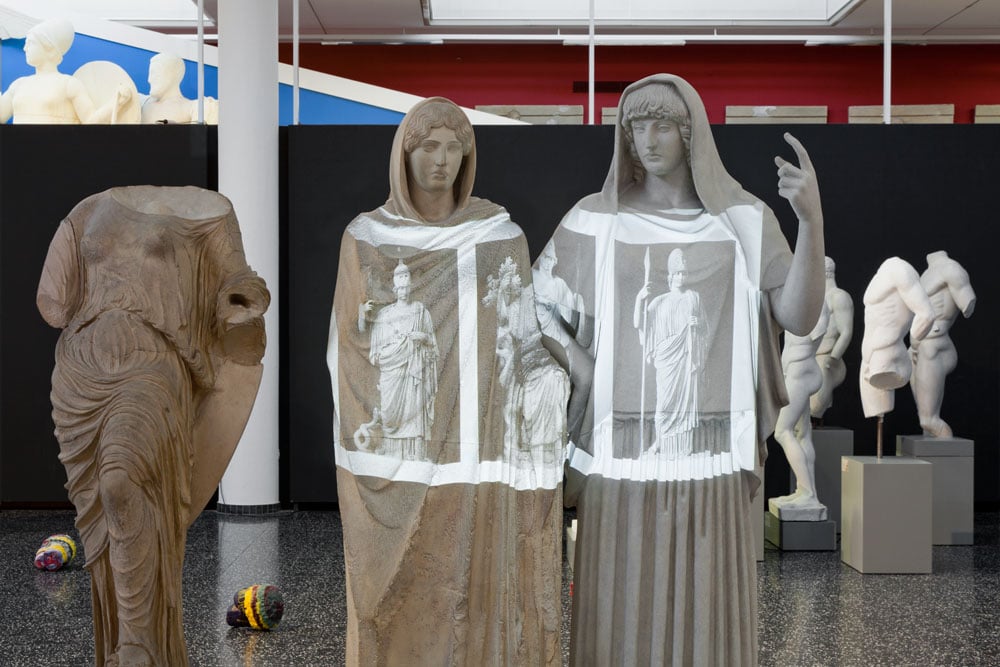
In the multiverse, the artist notes, «it’s more a question of “and” than “or”»: the emphasis falls on authenticities, in the plural, rather than on a single, singular definition. In a time marked by the advance of generative AI, Oliver Laric turns his attention to 3D models, firmly believing they can bring an ever-wider public closer to a heritage usually reserved for museums and a narrow elite of connoisseurs.
As he confided in an interview with Johannes Fricke Waldthausen: «I am fascinated by recursion, repetition and reinterpretation […] Detailed 3D models are expensive, due to the cost of high-quality scanners. Making these models freely available will hopefully be useful to a wider audience than the typical museum visitor. They could be used by video game developers and architects, not just art historians and academics.»
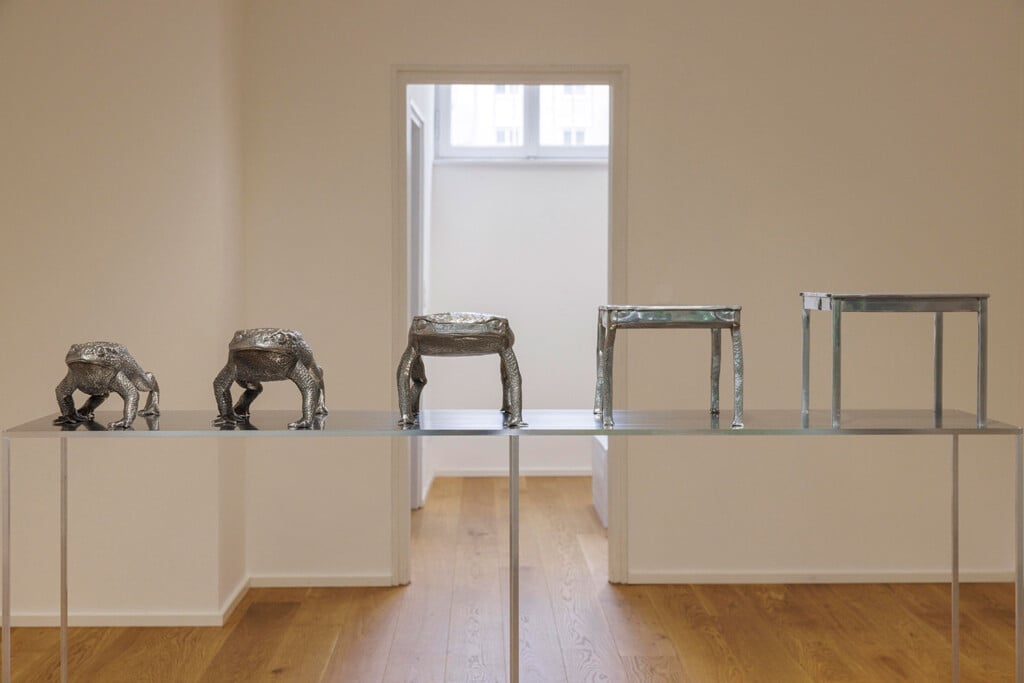
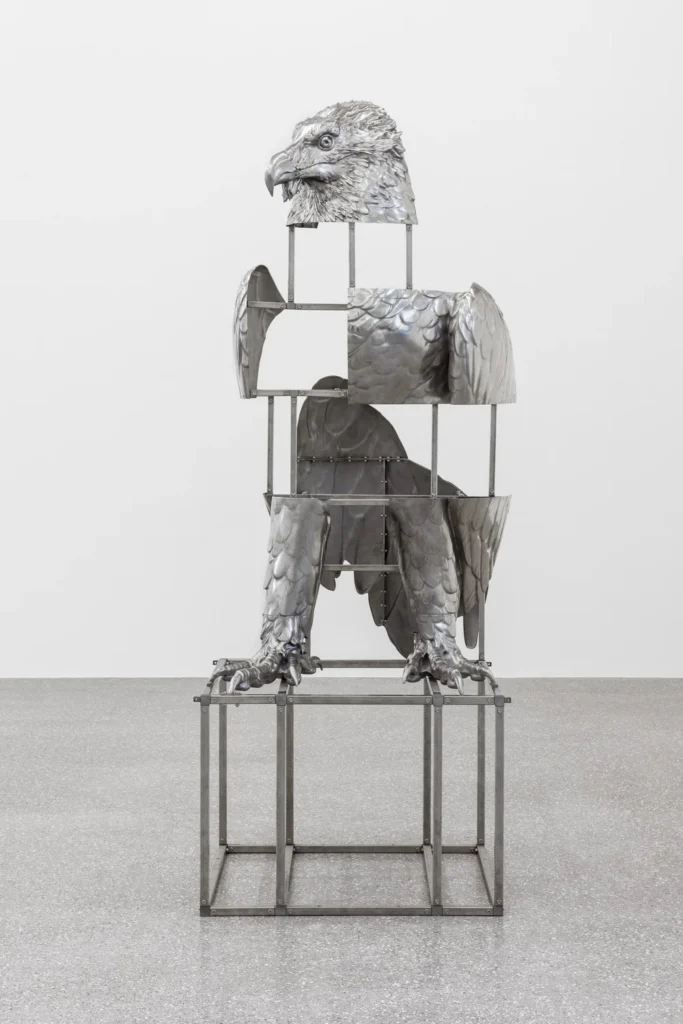
In an era where reproducibility often moves in the wake of a superficial social media culture and low-resolution sources, Oliver Laric’s exhibition sets out to explore a territory of the possible: fragments evoking the classical, worked through the apparent alchemical fusion of an originary model, restore the coordinates of a human history that deserves deep and attentive listening.
From the most primal archetypal pull to the figures that have shaped the collective imagination, the mechanical movements of opening and closing in the most timeless works offer the key to an ever-new, ever-other resolution.