Aurora and Maleficent, Peter Pan, Captain Hook, and the Lost Boys, Lady and the Tramp. We all know these characters well — their traits, their stories, and their adventures. One might think that these Disney animated films have nothing in common, yet that is not the case.
Their common denominator goes by the name of Eyvind Earle.
Eyvind Earle was an illustrator best known for his collaboration with Disney. Although it did not last many years, what he created during that time still fascinates millions of people, both young and old.
Born in New York on April 26, 1916, Eyvind Earle had a difficult life from the very beginning. His father, Ferdinand Pinney Earle, was a film director and a violent man. His mother, Charlotte, taught piano. After their divorce, Eyvind spent some time with his mother before following his father to Europe, where he studied art. He was only 14 years old when he held his first solo exhibition in Paris.
When he returned to the United States, he exhibited at the Charles Morgan Galleries in 1937, and two years later the Metropolitan Museum of Art purchased one of his works for its permanent collection.
At this stage, his style was highly realistic, though slowly evolving. Alongside personal projects, he made a living designing Christmas cards — until his big breakthrough arrived.
In 1951, he began working for Walt Disney Productions as an assistant background painter. In practice, he was responsible for creating all the backgrounds later used in animated films and populated by the characters we love.


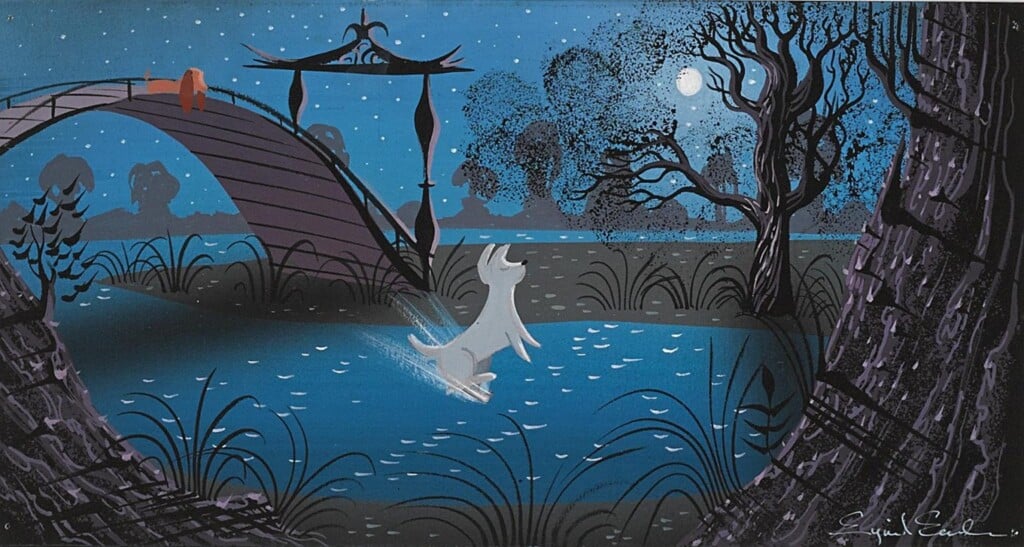
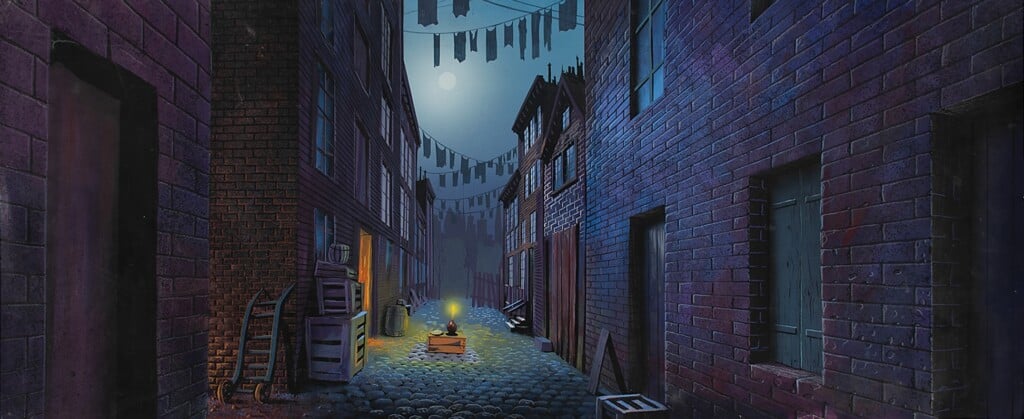
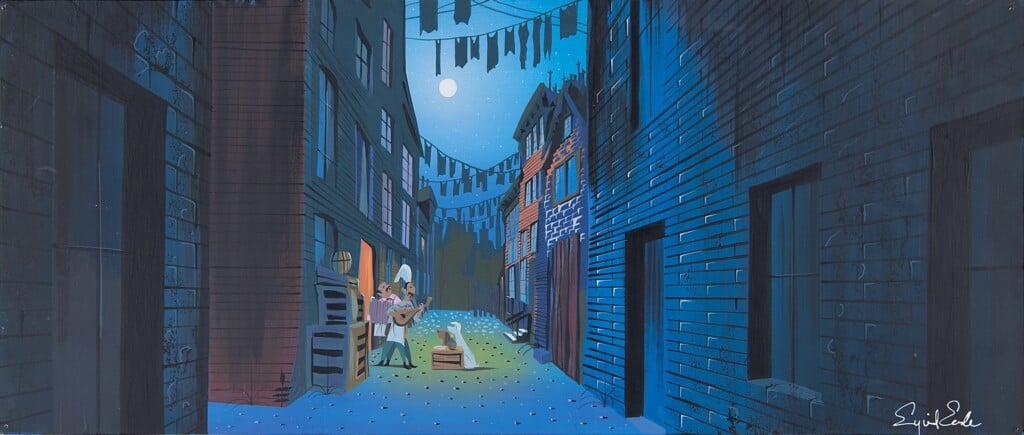
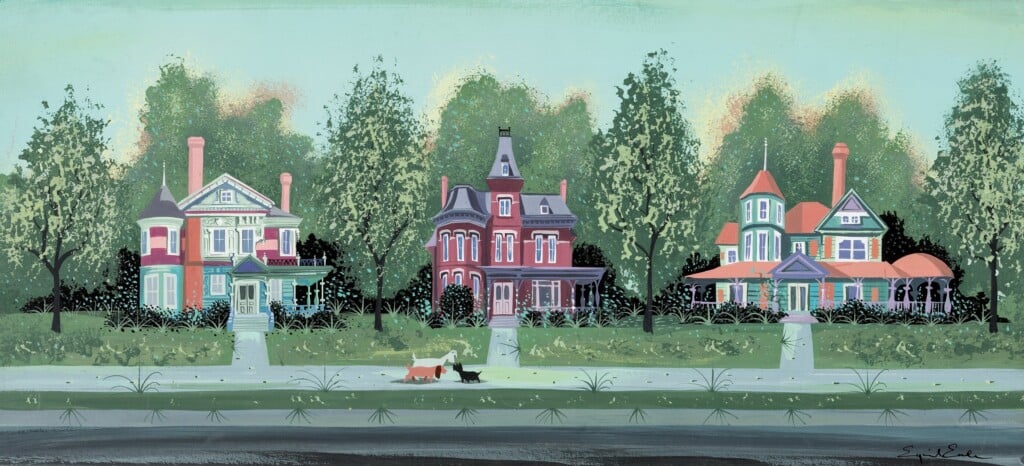
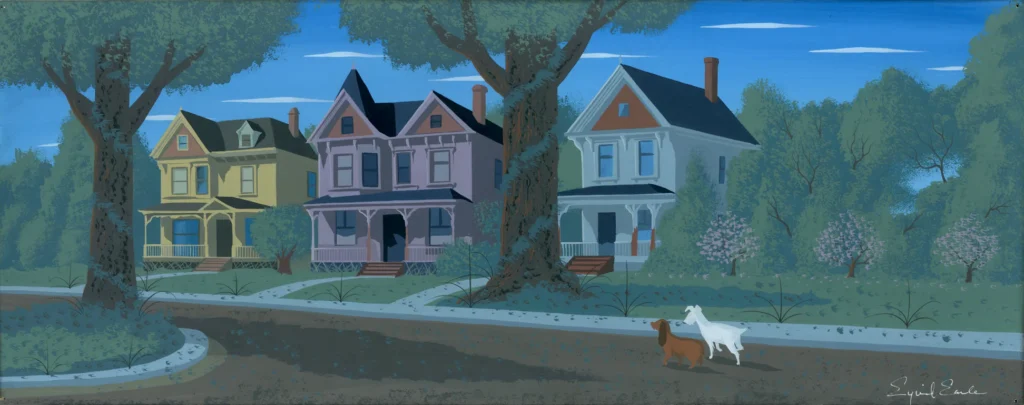
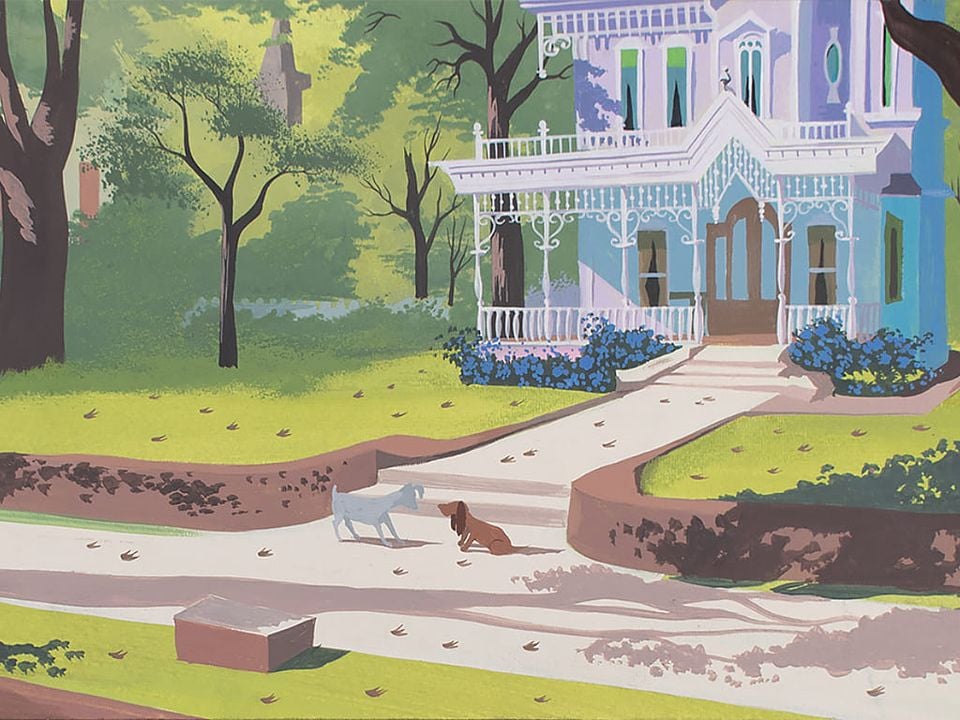
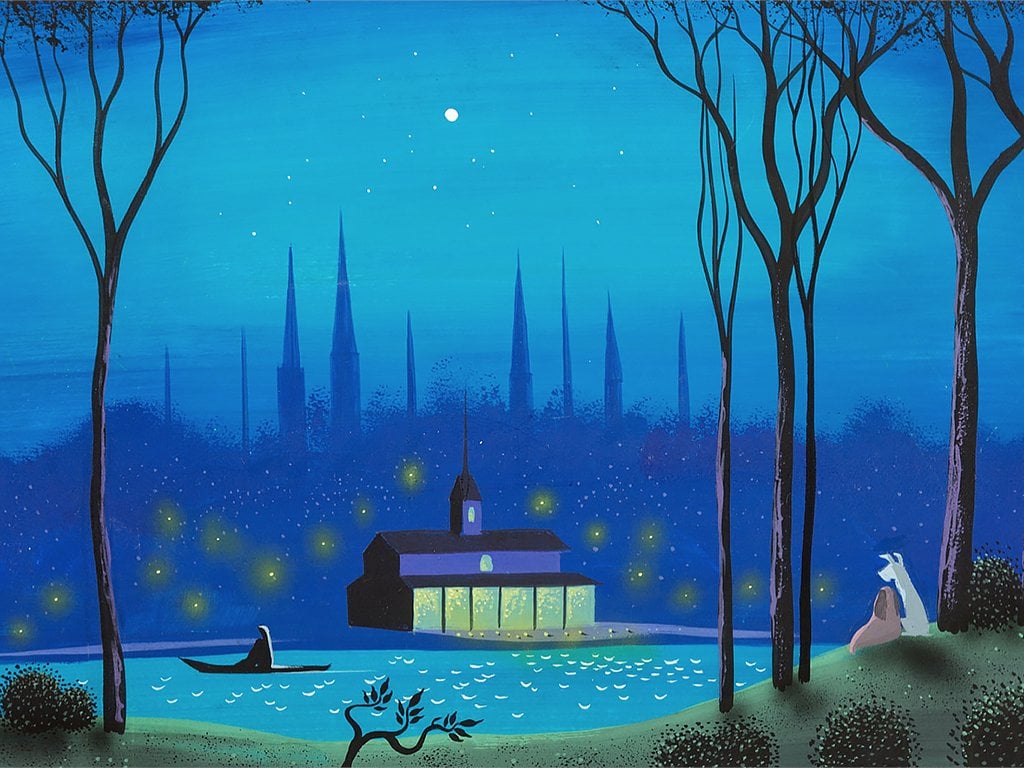
The first project he worked on was Peter Pan, and a couple of years later he unleashed his creativity on Lady and the Tramp. Two completely different worlds, yet both unmistakably shaped by the same hand.
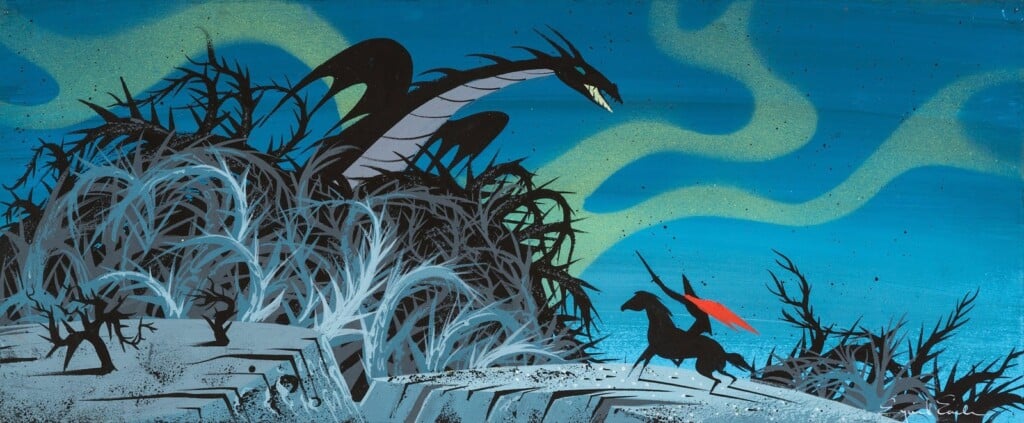
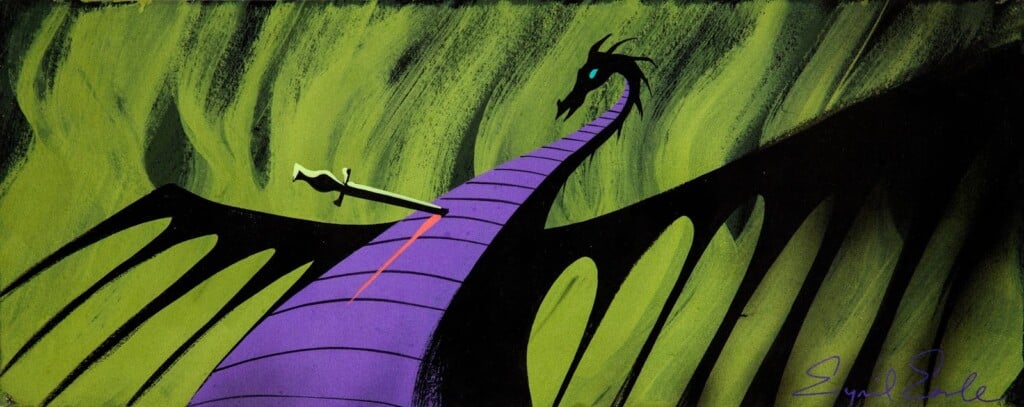
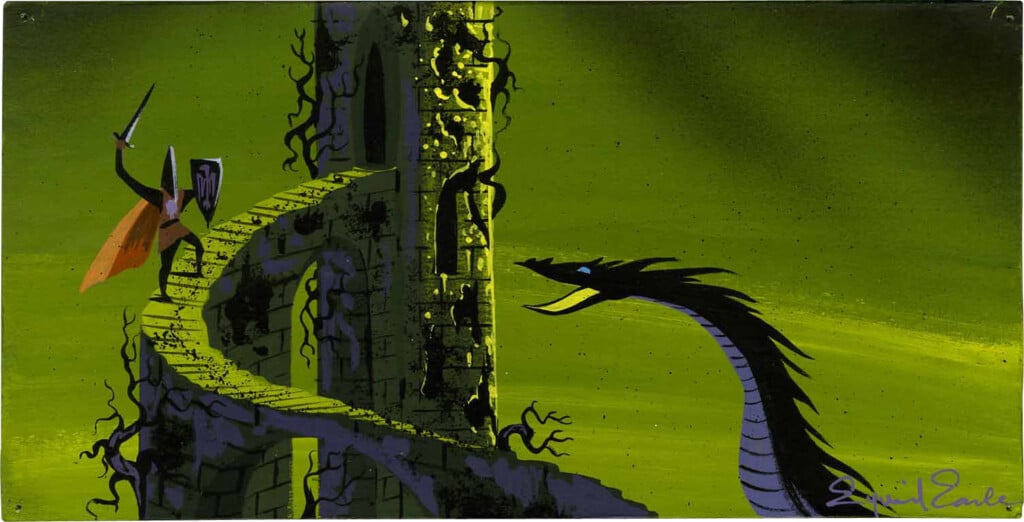
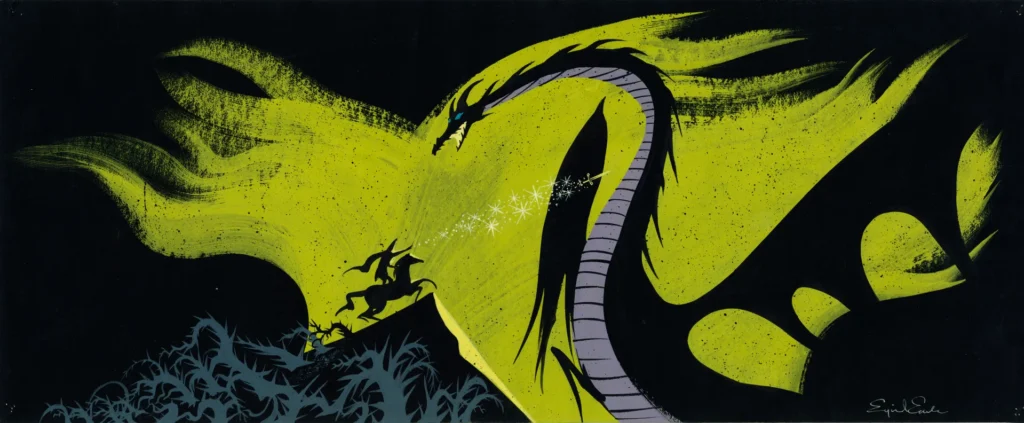
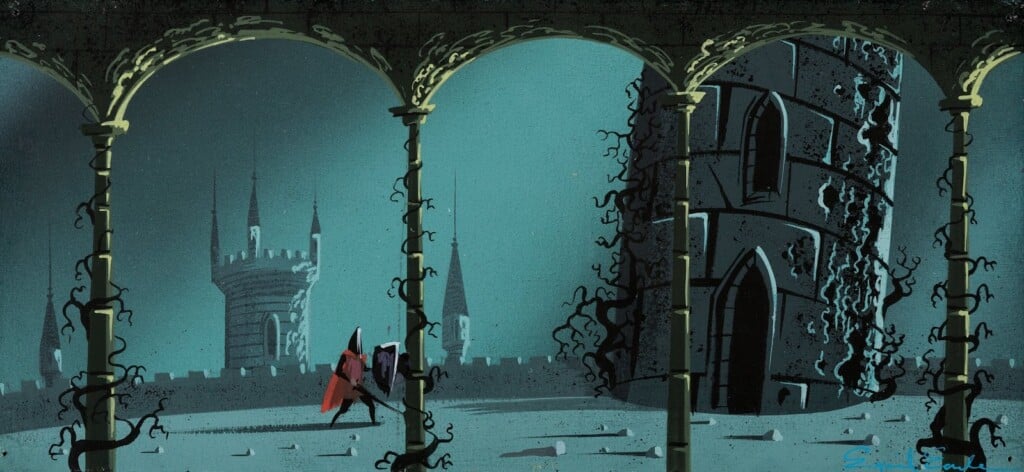
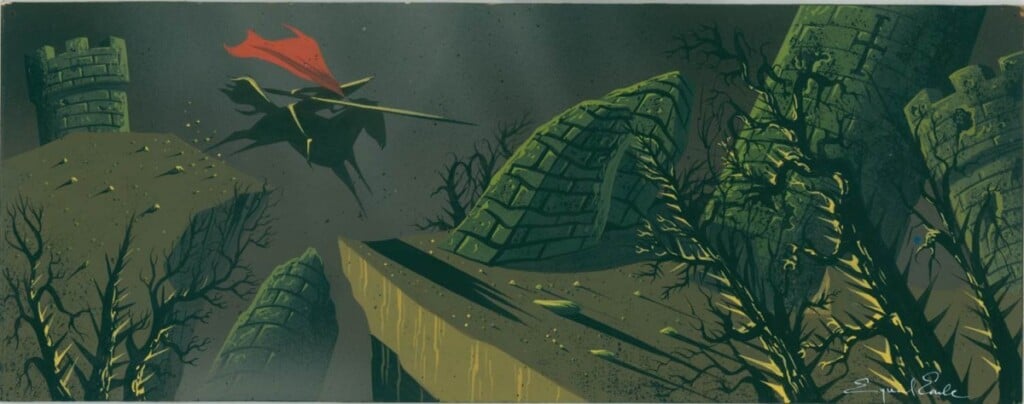
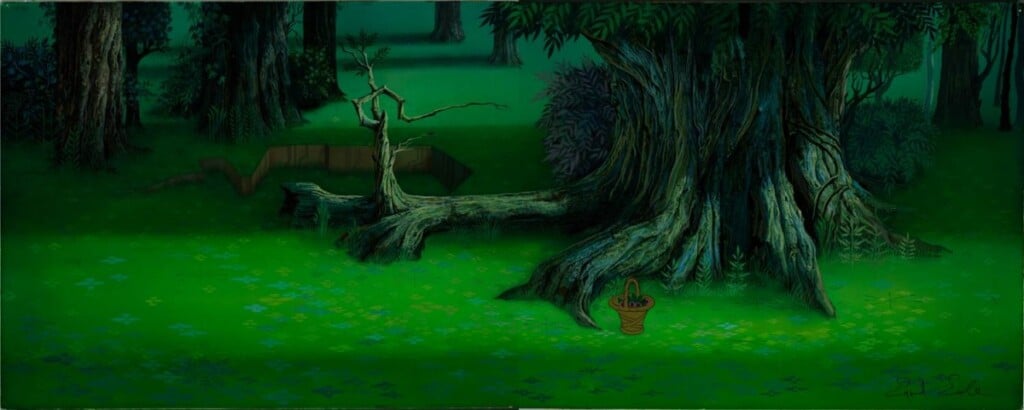
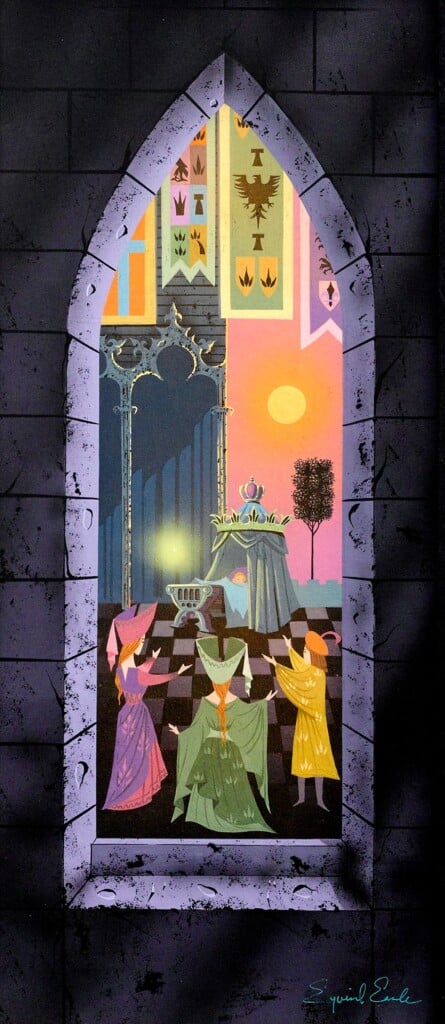
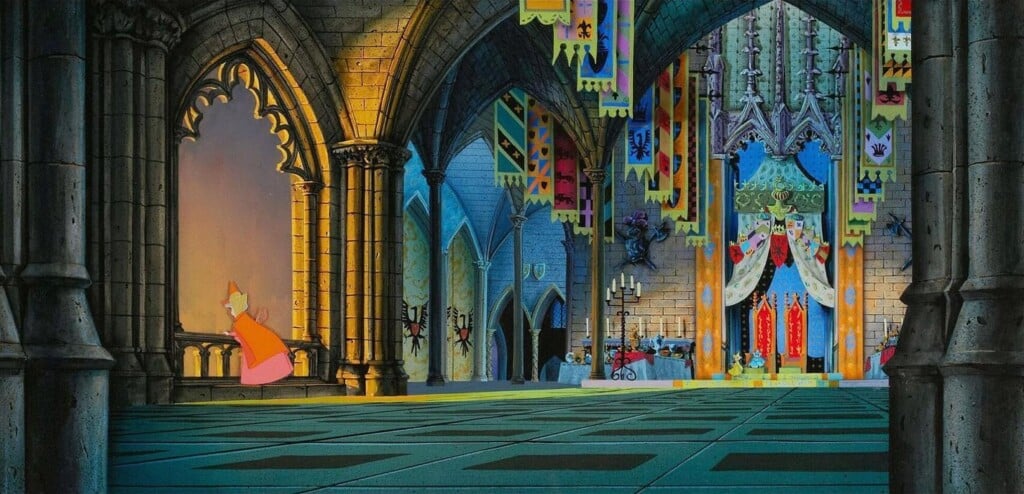
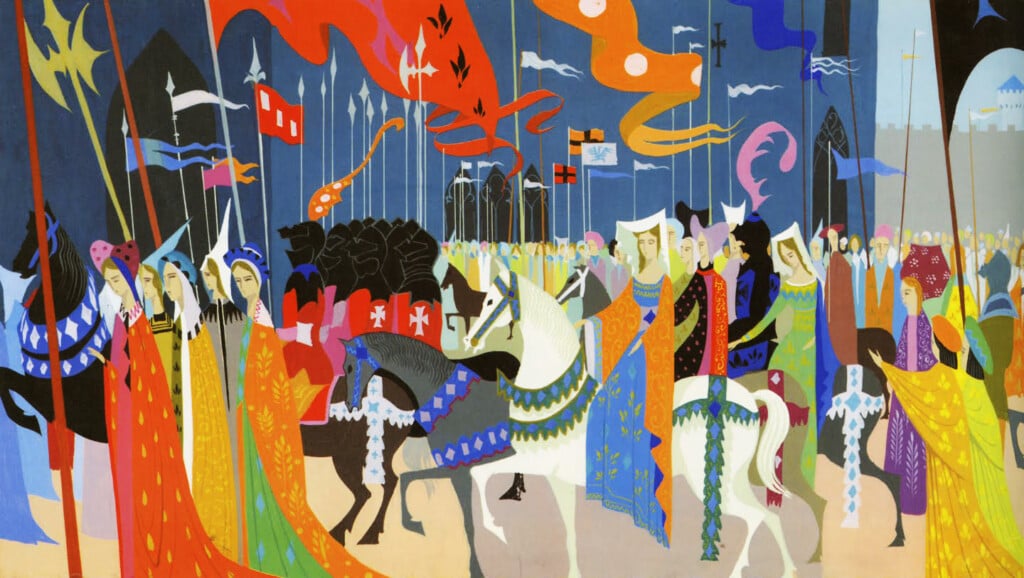
Once these two projects were completed came what is considered the crowning achievement of his career: Sleeping Beauty. It was here that Eyvind Earle perfected the style that would later become legendary. Realism gave way to compositions that emphasized two-dimensionality, with bold flat color fields and elements reduced to their essential forms.
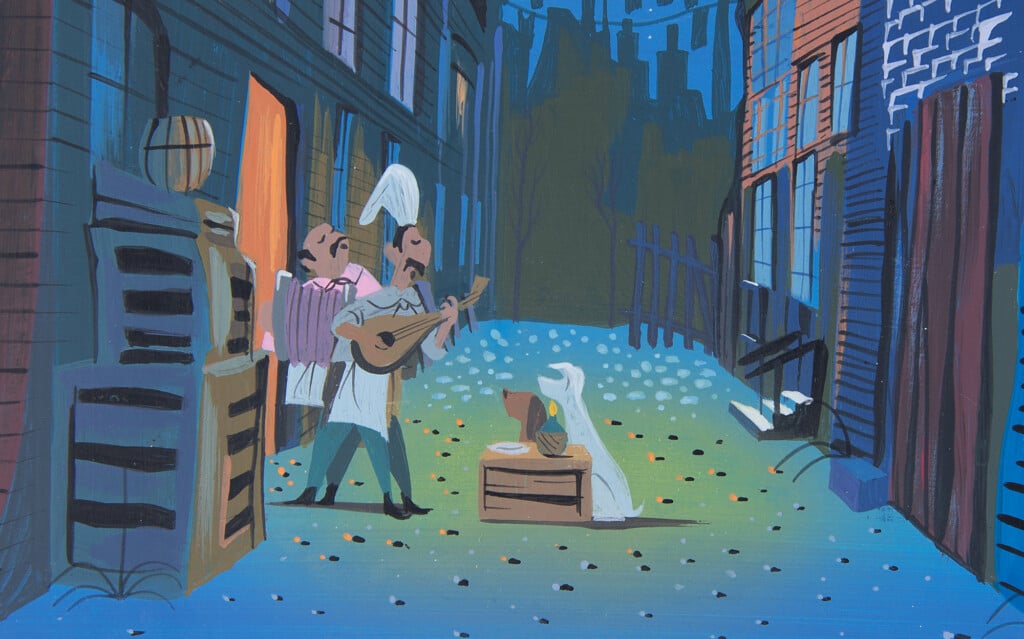
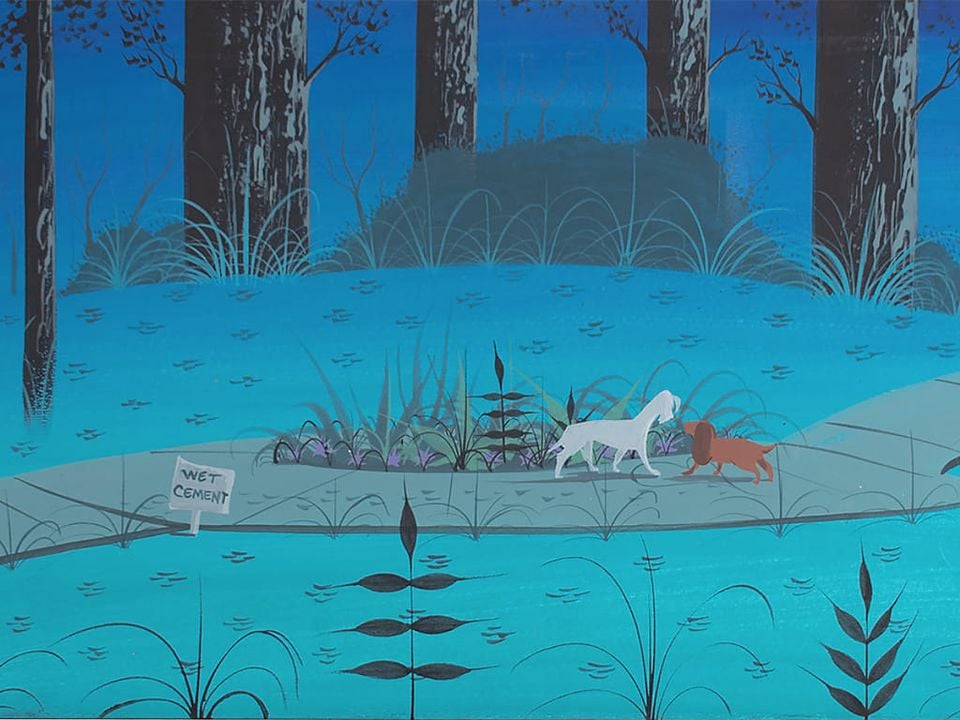
Trees became stylized silhouettes, skies turned into impossible shades of deep blue and gold, and the forest ceased to be a place and became an emotion. Depth was sacrificed in favor of compositions reminiscent of medieval tapestries and illuminated manuscripts.
It is no coincidence that, once his work with Disney ended, this style remained the defining feature of all his later works as well.
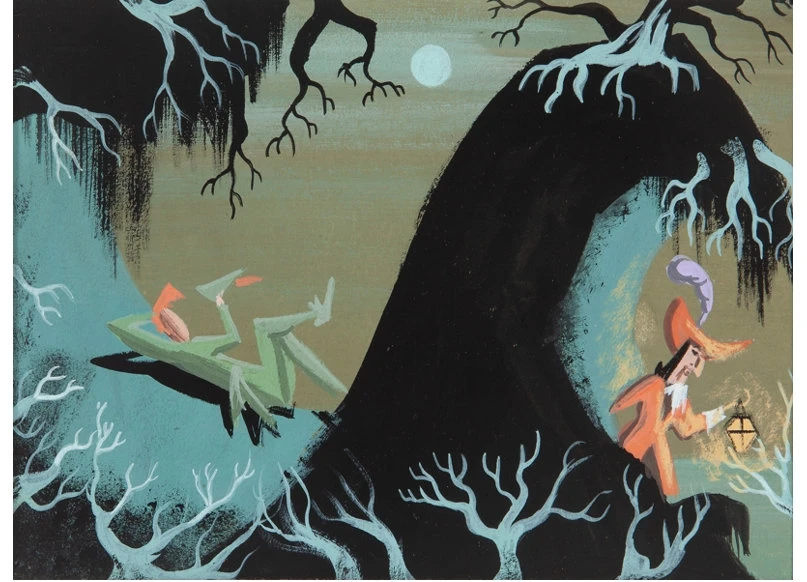
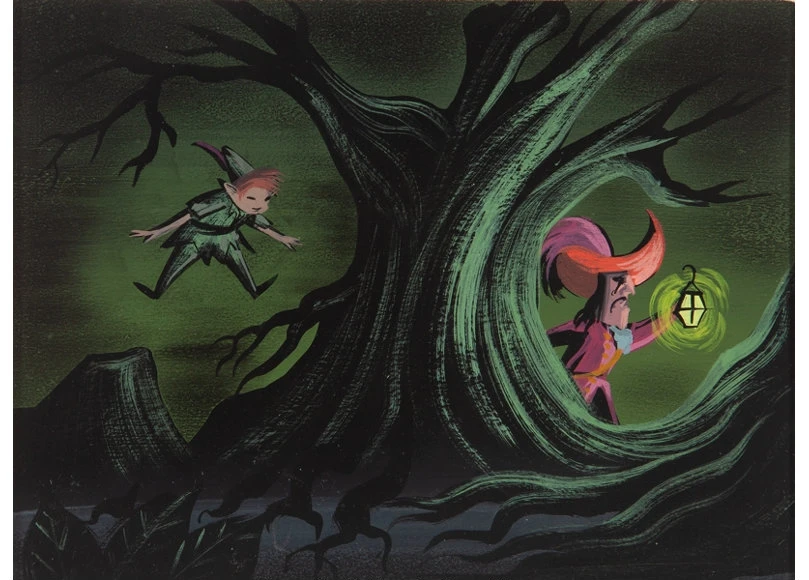
Thanks to his work, in 2015 — fifteen years after his death — Eyvind Earle was inducted into the Disney Legends Hall of Fame, and his legacy can still be seen everywhere. The visual styles of Pocahontas and Frozen bear his influence. The film Open Season was explicitly built upon his artistic approach. The video game The Banner Saga even features a character named Eyvind in his honor.