Fotografia Europea is an international cultural festival dedicated to contemporary photography. Founded in 2006, it is promoted by Fondazione Palazzo Magnani and the Municipality of Reggio Emilia. Its starting point is photography as a tool to reflect on the complexities of the contemporary world, following the legacy of Reggio Emilia photographer Luigi Ghirri, whose archive is preserved in the city.
The festival takes place in various public and private venues across Reggio Emilia, both formal and informal, and is built around a central core of exhibitions dedicated to a specific theme identified each year by the scientific committee. Alongside the exhibitions, the festival also features a rich program of events, conferences, screenings, workshops, portfolio reviews, and site-specific performances.
The program is further enriched by the OFF circuit: a selection of exhibitions and events spread throughout the city and independently promoted by galleries, associations, public institutions, and private entities.
In 2022, the festival was awarded Best Photo Festival of the Year at the Lucie Awards in Los Angeles, and here we talk about it with Matilde Barbieri, Project Manager of Fotografia Europea.

It often happens that photography festivals adopt very broad themes, more functional to communication than to a truly coherent curatorial framework. At Fotografia Europea, however, the theme is so central that it becomes a strong identity element and a tool for interpreting the present, rather than a simple narrative frame. How does the annual theme genuinely guide the festival’s choices, avoiding becoming a mere slogan under which heterogeneous projects coexist?
For Fotografia Europea, the theme has always been fundamental and represents the starting point of the curatorial work. Unlike many festivals, however, it is not chosen solely by the artistic direction, but jointly with the Foundation and the Municipality, as it serves as a lens to address issues considered important both for society and for the city. From the identification of the theme, a cohesive program is built that brings together different perspectives.
Unlike other festivals often perceived as “temporary events” imposed on a territory, Fotografia Europea was born and has grown in constant dialogue with Reggio Emilia, its stakeholders, cultural institutions, and a community that has learned over time to identify with the festival. How crucial is this bond with the city in shaping the festival’s identity? And what would happen if Fotografia Europea were uprooted from its original context? What would it lose?
The bond with Reggio Emilia is crucial because Fotografia Europea was created by the municipal administration for the city and has remained in continuous dialogue with it. If the festival were uprooted from its context, it would lose this relational dimension, which is an integral part of its meaning and its way of engaging with the present.

In many festivals, the Open Call has become a standard tool among many others, sometimes accessory, sometimes purely quantitative or promotional. At Fotografia Europea, however, the Open Call has historically been one of the main gateways into the official program. What role does the Open Call play today in the festival’s overall vision: a scouting tool, a political act of openness, or a way to renew the curatorial gaze?
The Open Call at Fotografia Europea has become a structural part of the project. It is certainly a scouting device, but also an act of openness that allows the curatorial perspective to expand. In this way, the festival remains permeable and able to intercept urgencies and languages that may emerge outside more consolidated circuits. Over the years, the FE+SK Book Award has also been added to the Open Call, collecting submissions to produce a photobook in collaboration with Skinnerboox. By funding this award, the festival supports independent photographic publishing and promotes editorial projects by emerging or mid-career artists.
In the selection of exhibition projects, the international festival landscape often oscillates between two extremes: programs dominated by big names or spaces almost exclusively dedicated to emerging artists. Fotografia Europea has long sought to bring together different stages of artistic careers. How do you build this balance between established and emerging authors so that the dialogue is real and not hierarchical?
There are no hierarchies within the festival program: all projects are presented on the same level, as they are part of a multiplicity of viewpoints not determined by the author’s status. This encourages exchange among artists who share spaces and moments of interaction, both formal and informal.

In many cities, the so-called “off” circuit lives on the margins of official programs, often considered a secondary filler schedule; in Reggio Emilia, however, the OFF Circuit has become over the years a recognized and structured component of the festival. How does the OFF Circuit contribute to defining the identity of Fotografia Europea, and what kind of freedom or risk does it introduce compared to the main program?
The OFF Circuit is a vital part of Fotografia Europea’s identity because it extends the festival into the urban space and its communities. The freedom it introduces makes it less bound to the codes of the official exhibition circuit, turning it into a place of experimentation and proximity. More than a risk, I would say it introduces an element of unpredictability that makes it a constant site of discovery.
Contemporary photography addresses complex themes—identity, memory, politics, social transformations—that are not always immediately accessible to a non-specialist audience. Fotografia Europea seems willing to take on this complexity. How do you maintain strong cultural ambition without oversimplifying, while still making the festival accessible to a broad audience?
We try not to reduce the complexity of the content, but instead work extensively on mediation tools. Our education team develops texts, audio contributions, and maps that accompany visitors by offering multiple levels of interpretation. At the same time, tailored pathways are organized for more vulnerable audiences. The goal is to create the conditions for everyone to find their own point of access.

More and more festivals are redefining the boundaries of photography, opening up to video, installations, archives, and hybrid practices. Fotografia Europea is no exception, while remaining strongly tied to the photographic medium. How does the festival position itself today with respect to photography as a specific language, in dialogue or tension with other visual media?
While remaining strongly linked to photography, Fotografia Europea has always encouraged dialogue with other media. Video, installations, and hybrid practices are ways to question what photography can be today and how its boundaries are transforming. The tension with other languages is a productive space for research and experimentation.
Long-standing festivals like yours face a delicate challenge: remaining recognizable without becoming predictable. Fotografia Europea has navigated changes in context, audiences, and artistic practices. What elements do you consider indispensable to the festival’s identity, and which have you consciously chosen to transform over time?
Indispensable elements are the centrality of the theme, attention to the present, and the bond with the territory. What we have chosen to transform over time is the format, which has had to adapt to changing conditions. For example, one of the cornerstones of Fotografia Europea was opening unconventional venues; with current safety regulations, this has become increasingly difficult, so we have reduced the number of locations, focusing on venues that are easier to manage while still maintaining a widespread presence throughout the territory.

In a context in which the term “European” is increasingly complex from multiple perspectives—political, cultural, geographical—the festival’s name continues to raise an open question. In what sense does Fotografia Europea define itself as “European” today: through the artists’ origins, the themes addressed, the cultural networks it activates, or the audience it speaks to?
Fotografia Europea owes its name to the municipal administration of twenty-one years ago. In these twenty-one years, both our perception of Europe and our perception of the world have changed. “European” was never merely a geographical adjective, but rather a way to position dialogue at a national and international level, seeking commonalities and differences in order to address a complex discourse on the present. I believe this vision has never been abandoned.
Beyond temporary exhibitions, a festival builds over time archives, relationships, imaginaries, and opportunities that continue to live on after each edition ends. What kind of cultural legacy do you think Fotografia Europea leaves, both for the city of Reggio Emilia and for the broader field of contemporary photography?
I believe Fotografia Europea’s legacy lies above all in processes rather than individual events: an archive of perspectives on the present, long-lasting relationships with artists and institutions, and a community that has strengthened its critical tools over time. For Reggio Emilia, this means shared cultural growth; for the contemporary photography landscape, a space for research and dialogue that continues to generate meaning beyond the festival itself.
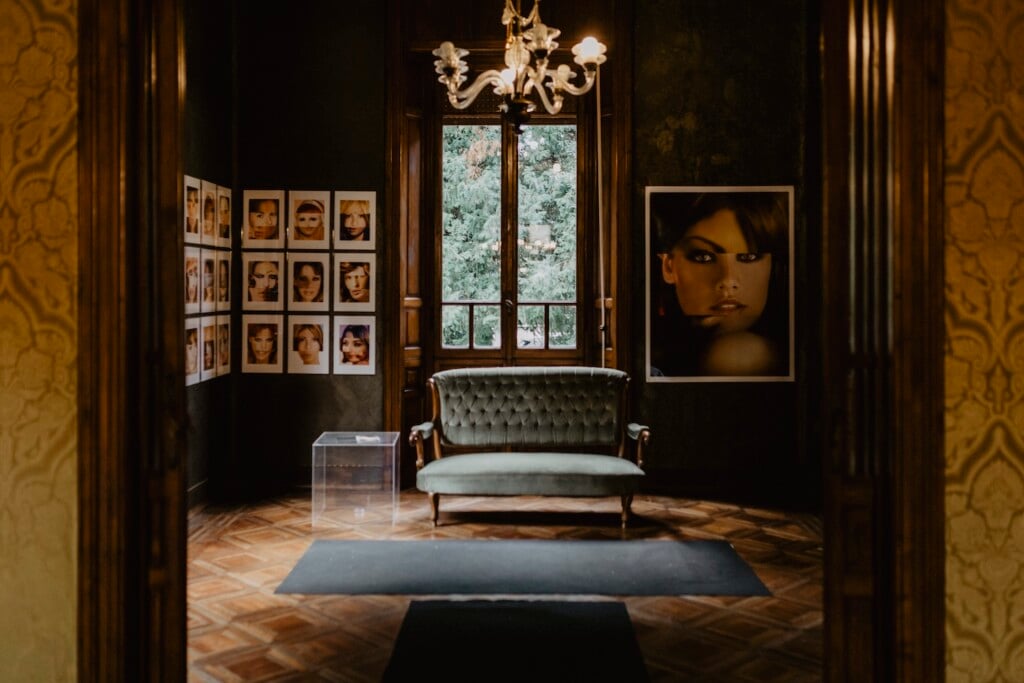
Over more than 20 years of activity, you have involved hundreds of national and international artists and animated dozens of different venues. In your experience as Exhibition Manager, which project did you find achieved the highest level of coherence between adherence to the annual theme, exhibition design choices, and dialogue with the chosen location?
It is difficult to choose just one, but one of the projects I felt was most coherent was THE ARCHIVE YOU DESERVE – T.A.Y.D, curated by Federica Chiocchetti, which presented the archive of artist Lorenzo Tricoli (Fotografia Europea 2017. Revolutions. Rebellions, changes, utopias). The curator masterfully integrated the archival materials with the location, a Liberty-style villa in the city (Villa Zironi). In this case, the location was not a neutral container but became an active part of the narrative, to the point that visitors could not always distinguish which materials belonged to the exhibition and which to the house.