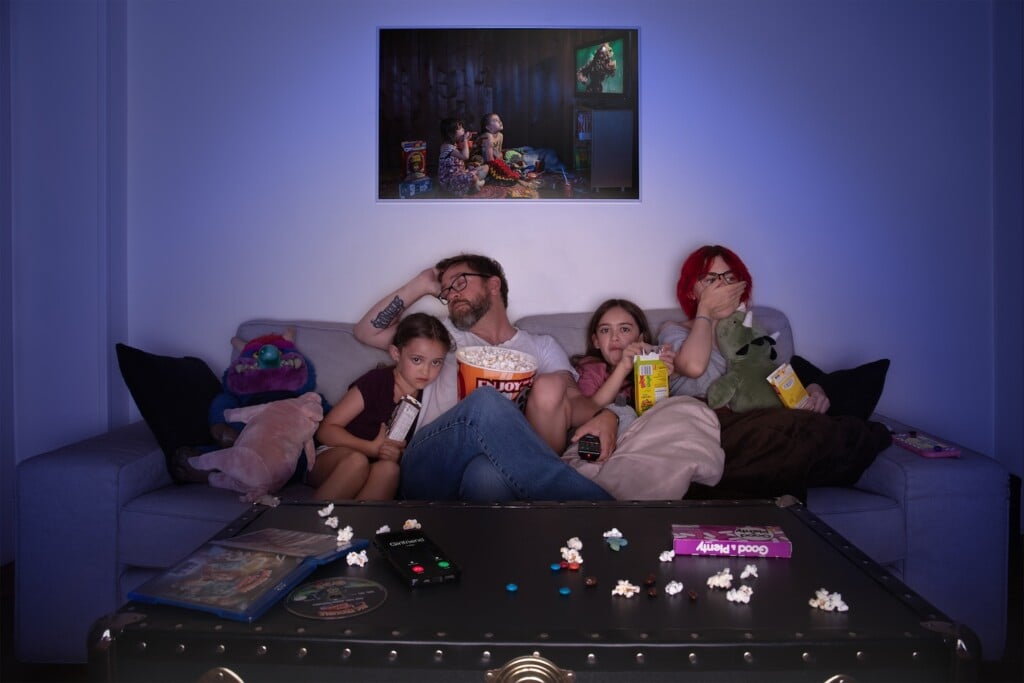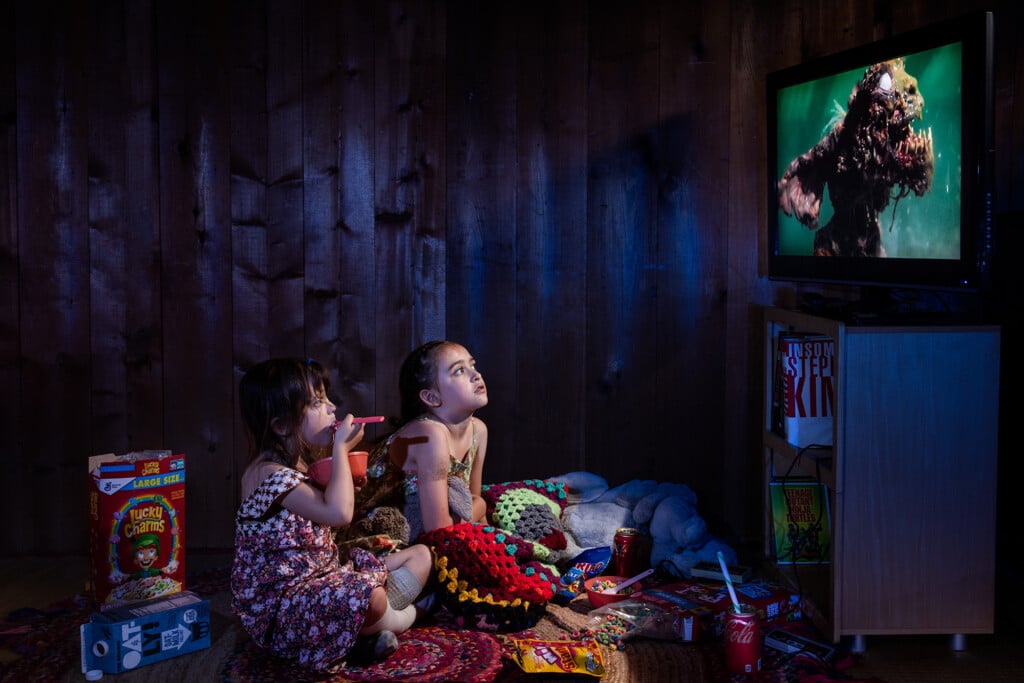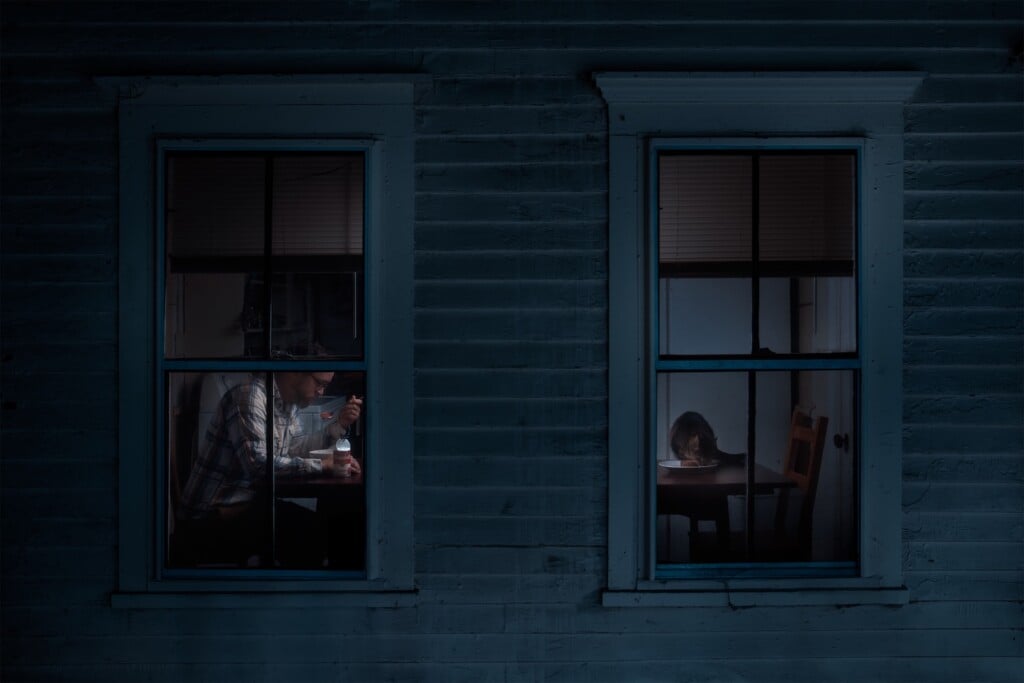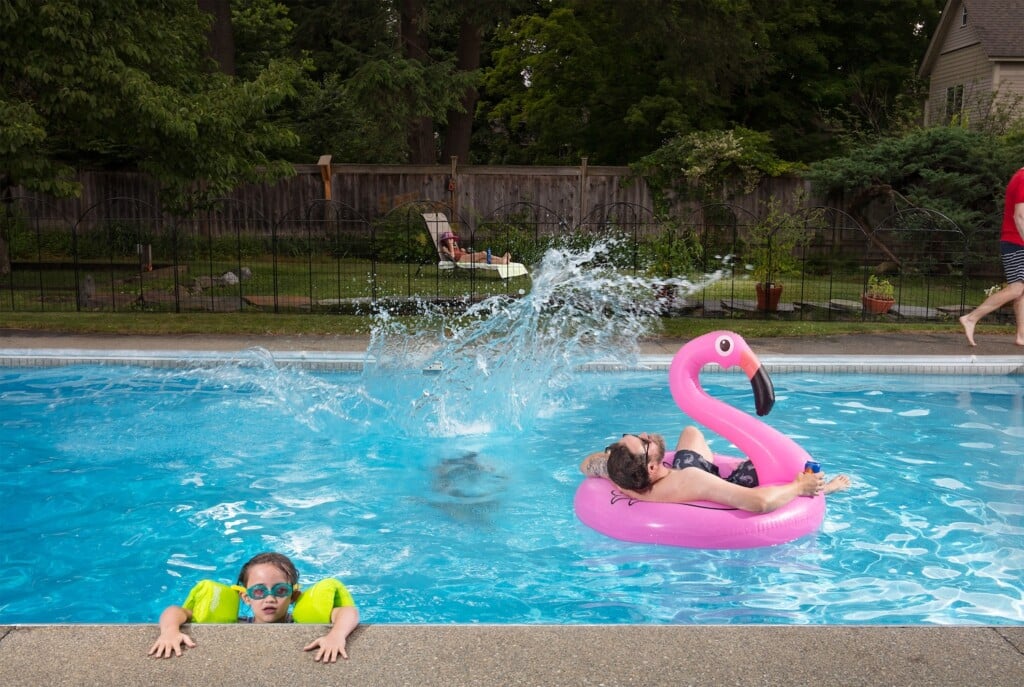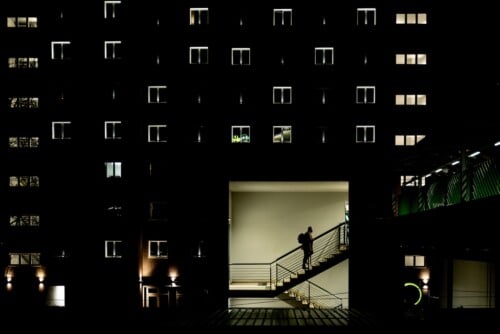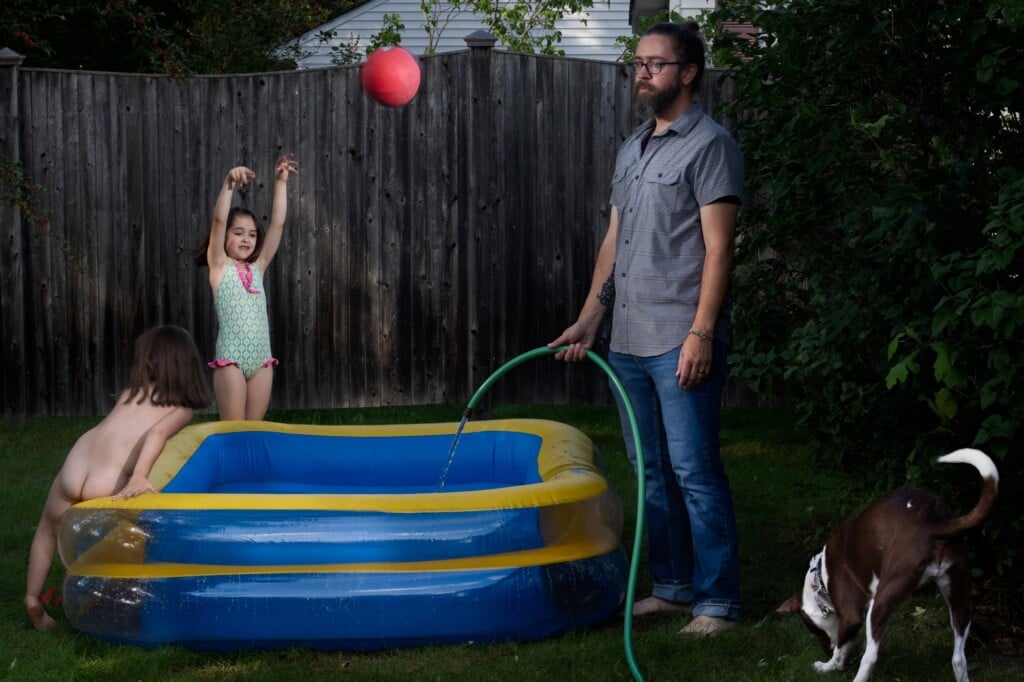
Some experiences belong to everyday life and, precisely for that reason, risk becoming hard to talk about. Being a parent, raising children, and getting through days made of small rituals, unexpected events, exhaustion and moments of closeness is one of them. For Zachary P. Stephens, however, photography becomes a way of making visible what normally remains hidden: the emotional and psychological dimension of fatherhood.
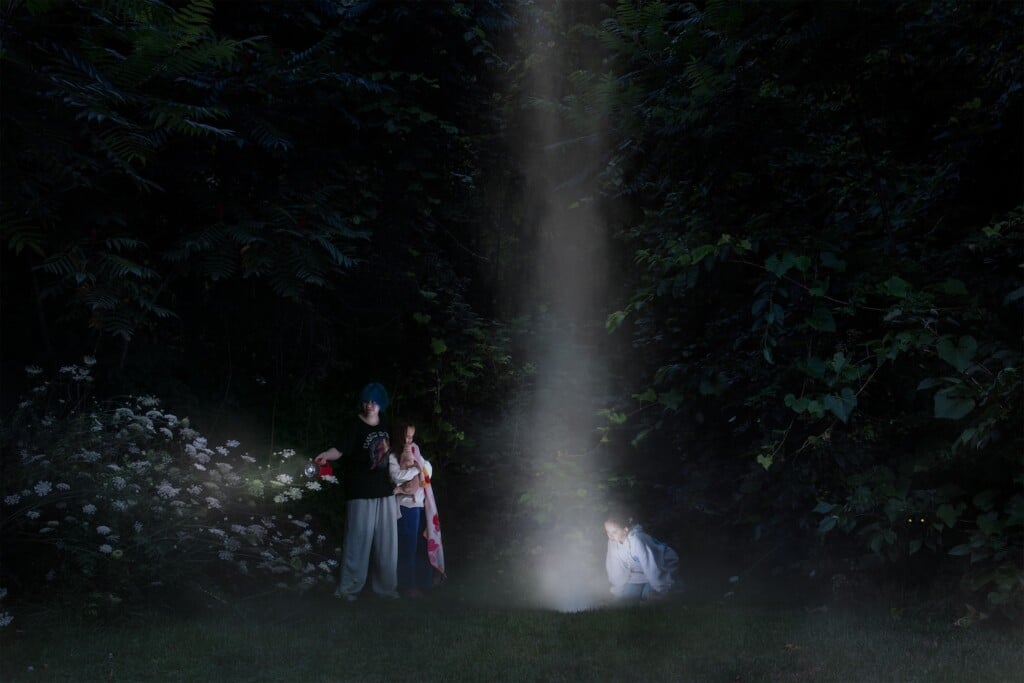
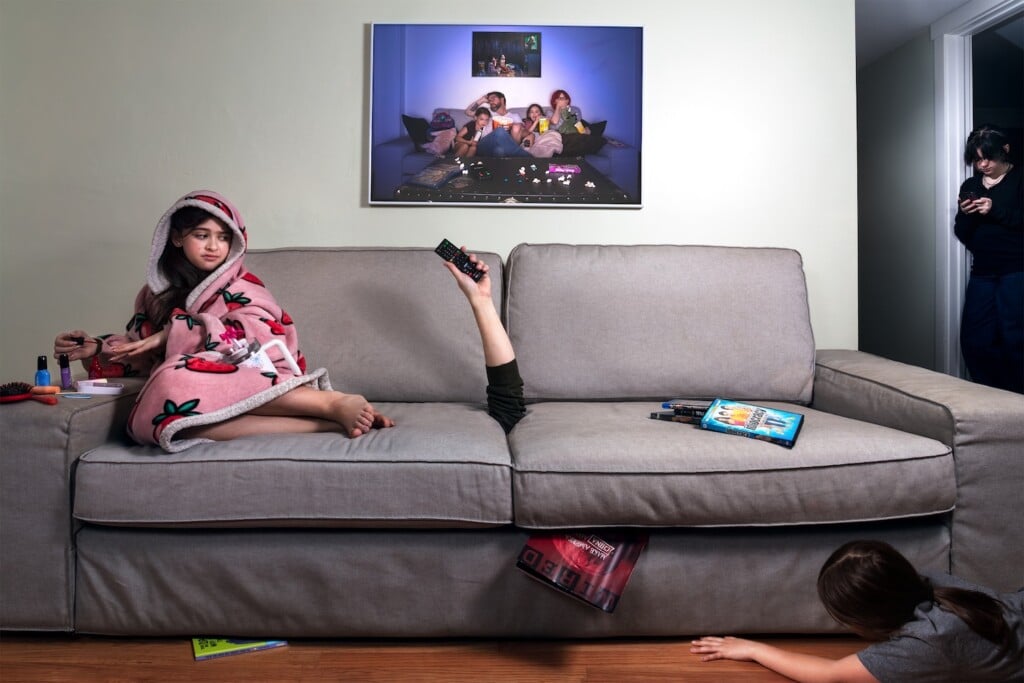
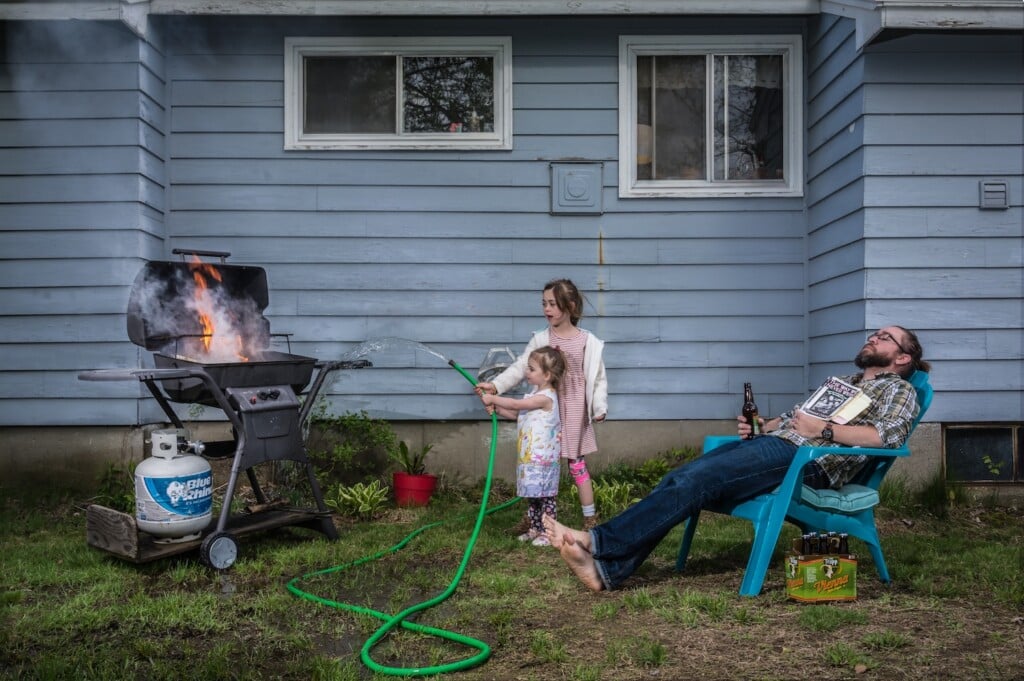
Artist and photographer, Zachary P. Stephens uses self-portraiture and the photographic tableau to build a universe in which family situations are pushed beyond their ordinary appearance. The result is carefully staged images, where what seems familiar slowly begins to lose its points of reference and turn into something strange and unsettling.
The starting point for his photographs is his experience as a single father of three daughters. But the photographs are not meant to be simply a visual diary of his family; they are rather a translation of what this experience means on the inside: the responsibilities, the fears, the vulnerability, the joy and that particular kind of chaos that comes with raising children. In Stephens’s photographs, nothing seems left entirely to chance, and every scene is built and composed with precision, turning everyday situations and fantastical moments into deliberately amplified images.
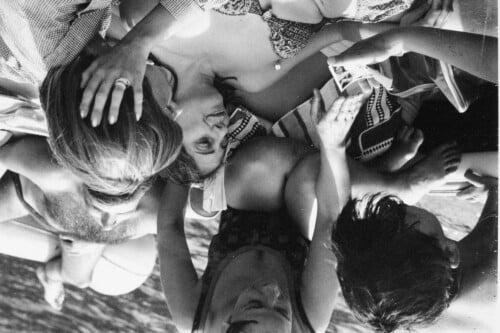
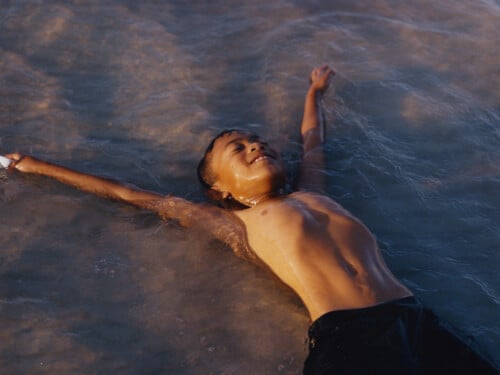
The light can become excessive, perspectives can warp, compositions can take on seemingly impossible configurations. It is precisely these alterations that shift the images away from a realistic depiction of family life and toward a more mental dimension.
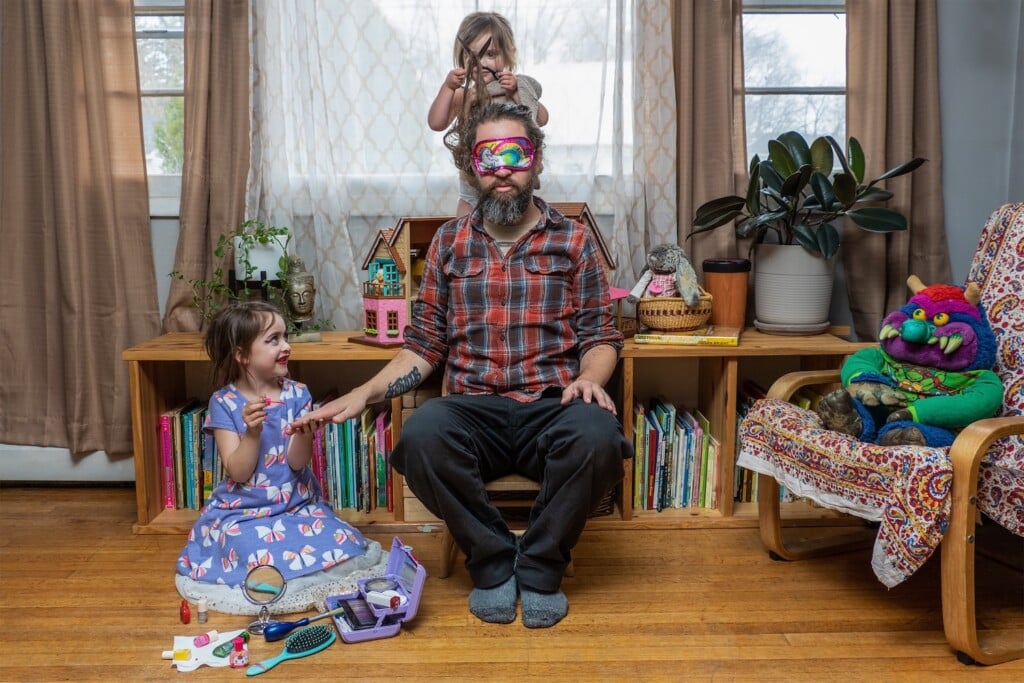
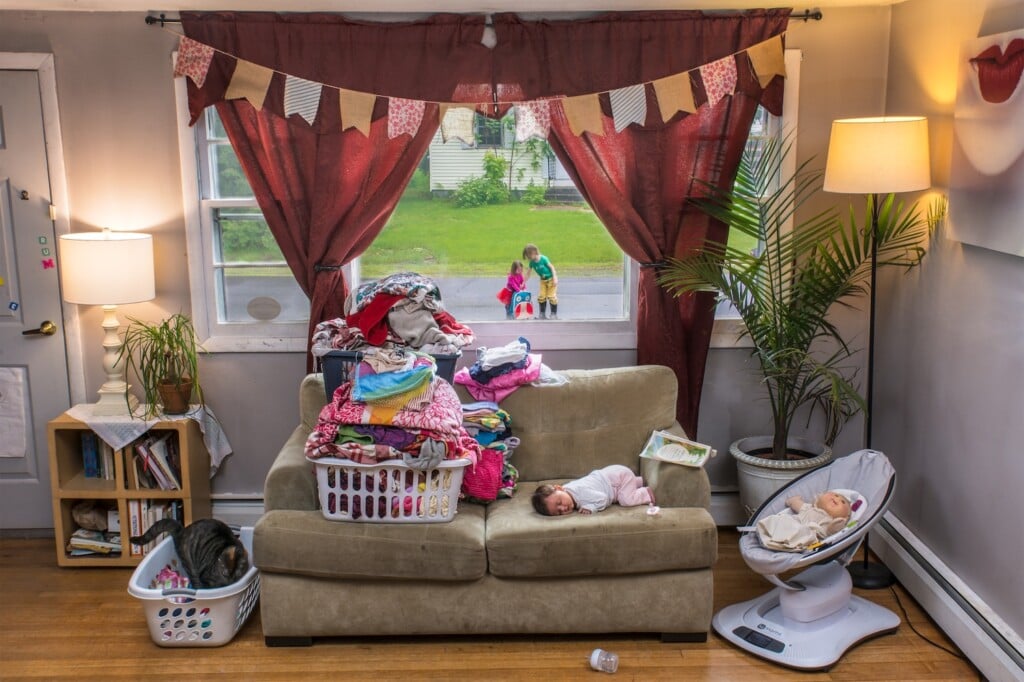
Stephens therefore does not seek to photograph fatherhood as it appears, but to depict how it can be felt. The difference is fundamental, because a photograph can show a father and his daughters, but it cannot, on its own, immediately make visible the weight of responsibility, the fear of getting it wrong, or the feeling of being, at the same time, inside moments of extreme calm and sudden disorder. The photographer then tries to turn these sensations into visual elements, and the situations he stages are at once real and imagined. They start from something recognizable and then alter it, until it becomes almost foreign.
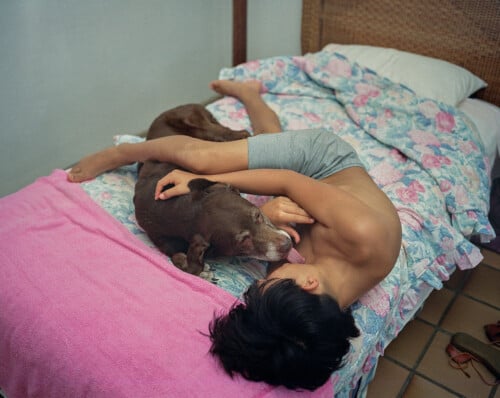
His photographs do not build a completely fantastical world: their starting point remains everyday life. What changes is the way this reality is observed. A domestic setting, a seemingly simple gesture or the presence of his children can become the occasion to build a suspended scene, in which something seems not to work according to the usual rules. Photography thus becomes an in-between space, between what really happens and what the photographer feels.
Surrealism becomes the language through which Stephens tries to describe an emotional state. The familiar becomes distorted, the reassuring can take on an unsettling quality, and what is normally considered ordinary acquires a new intensity. It is a feeling that runs through the entire project: that of recognizing what you are looking at while perceiving it, at the same time, as something different.
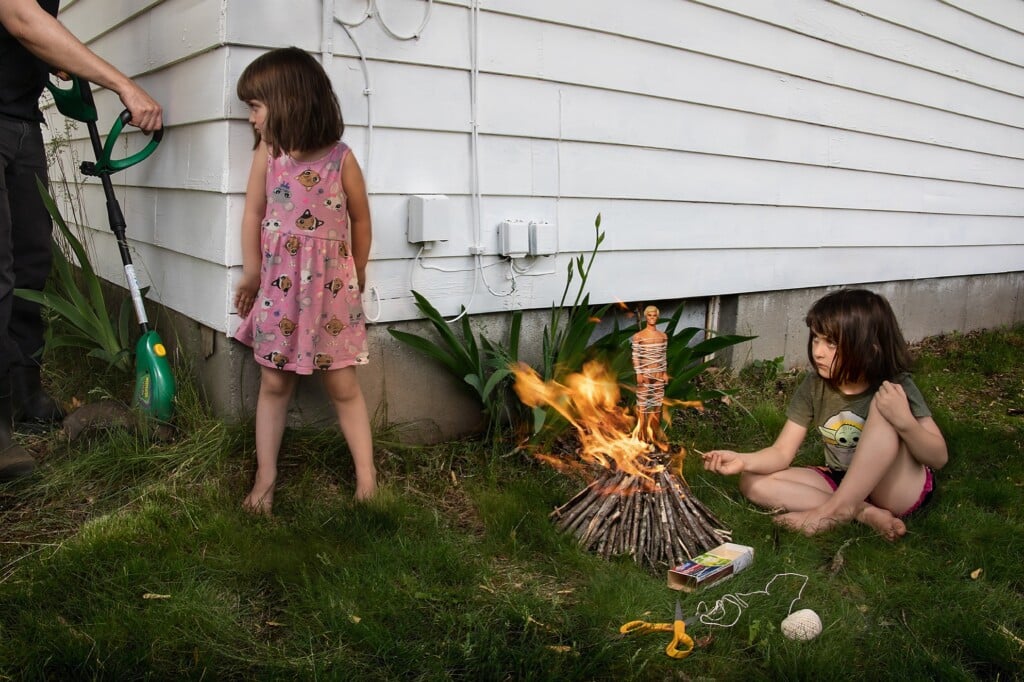
Stephens describes the images as expressions of his own experience, shaped by the demands, rewards and difficulties of being a parent. For this reason the photographs do not function merely as family portraits. They are self-portraits even when the photographer’s body is not necessarily the protagonist of the scene.
Through the construction of the image, Stephens stages a part of himself: his fears, his fragilities and the way he tries to find balance within family life. The camera thus becomes a tool for observing not only what happens in front of the lens, but also what happens inside him. His photographs speak of a very personal situation yet manage to touch a broader experience: the attempt to make sense of something that, in reality, is often impossible to fully control.
There is a constant tension in Zachary P. Stephens’s images: chaos on one side, stillness on the other. Being a parent means living with both conditions, often at the same moment. Serenity can be interrupted by the unexpected, while an apparently chaotic situation can contain moments of intimacy and connection. The photographer translates this oscillation through images that seem to belong to a world slightly altered from our own.
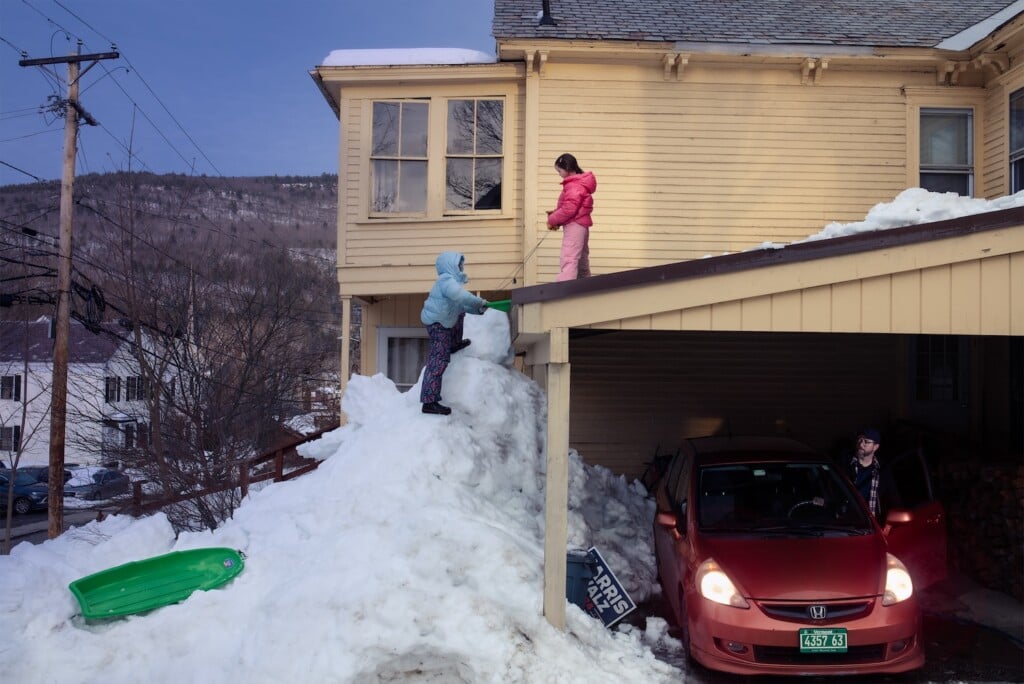
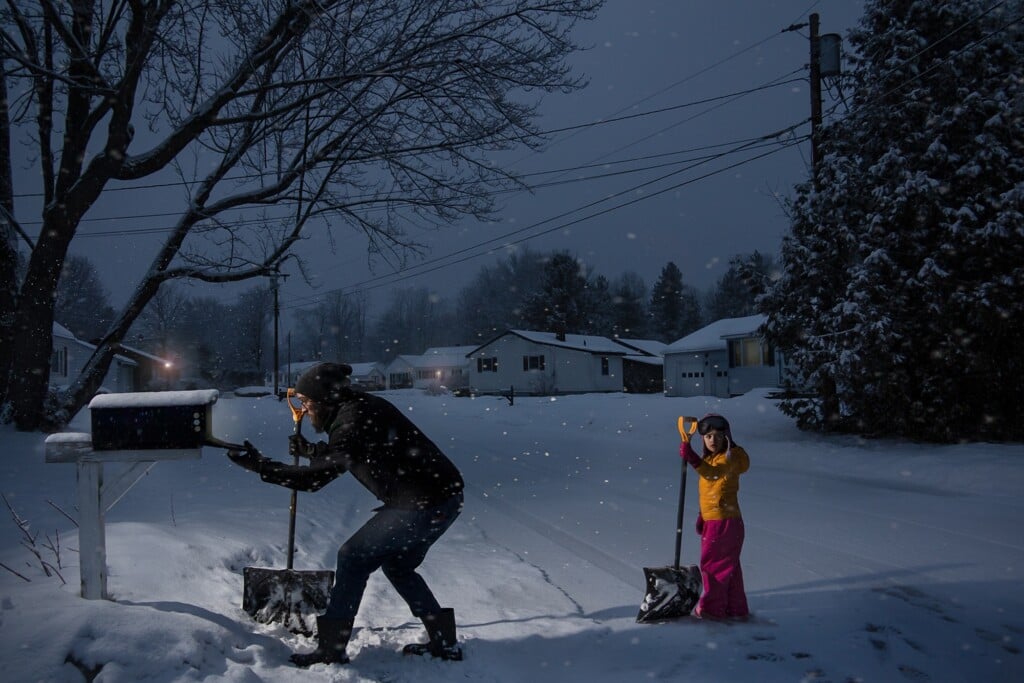
This is where the staged construction takes on its strongest meaning. The surreal elements do not serve to escape reality, but to make it more legible. The impossible becomes a metaphor for those invisible forces that shape the experience of parenthood and that could hardly be represented through a purely documentary photograph.
Zachary P. Stephens’s work thus arises from a contradiction: telling something extremely concrete through images that, at first glance, seem far from reality. In that suspended space between reality and fiction, Stephens finds a form for expressing what normally remains invisible. And so, behind an impossible scene, a warped perspective or an exaggerated light, something deeply real remains: a father’s attempt to understand his own role, as he grows together with the people he is trying to accompany into the world.