«Every photograph is a fiction with claims to truth. Despite all that has been instilled in us, everything we believe, photography always lies; it lies instinctively because its nature does not allow it to do anything else,» states the Spanish photographer, teacher, and writer Joan Fontcuberta. As an interpreter of contemporary photography, he defines it in his essays with the term post-photography, specifically referring to photography in the second digital revolution, the era of social networks, virtual reality, the internet, and, most notably, the ubiquity of images. What is primarily explored is the change that post-photography has brought about. Firstly, photography becomes accessible to everyone, resulting in a monumental transformation in its use. Secondly, the relationship between photography and truth changes, or rather mutates. According to Fontcuberta, photography has never been sincere. Since the invention of this medium, “photography has always been a Judas kiss” because it constantly betrays reality. The photographer’s perspective alone makes the image subjective rather than objective. But today, the equation “photography = reality” is even more unstable due to the advent of numerous tools that allow image manipulation and, more recently, the introduction of Artificial Intelligence, capable of generating any type of representation with a simple human command.

On one hand, we have always been accustomed to thinking that photography is the most faithful form of representing reality, but doubt always creeps in. Whether it’s a documentary, landscape, or portrait shot, we could never assert with certainty that what our eyes observe is actually concrete. Ambiguity is around the corner. The feeling of mistrust in the face of an image becomes the norm. The more sensational, aesthetically perfect, colorful, and grand an image is, the more we are filled with doubt, “could it be real?” Thus, we are led to believe that photography promises reality, but it has never been its prerogative. From this perspective, one could think of it as the greatest form of deception, capable of generating disillusionment and, at the same time, wonder. However, the mere fact that there is a human and subjective component between the medium and the subject automatically alters objectivity. The creative element is integrated into this process, as well as the freedom to express individual concepts and emotions, shifting photography to the artistic realm. «Photography begins as an informative medium and transforms into a work that people go to see in search of aesthetic and emotional values, as a way to participate in an artistic experience,» Joan Fontcuberta continues. In this sense, it is useful to analyze one of the emerging contemporary artists who best represents the concepts being investigated here.

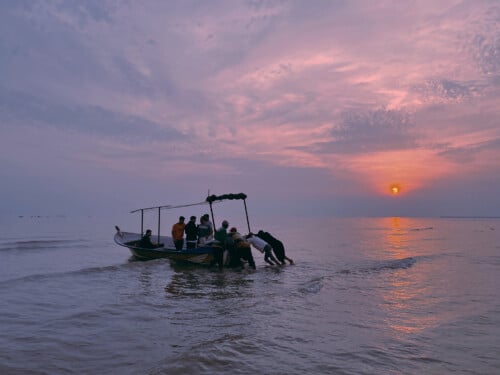
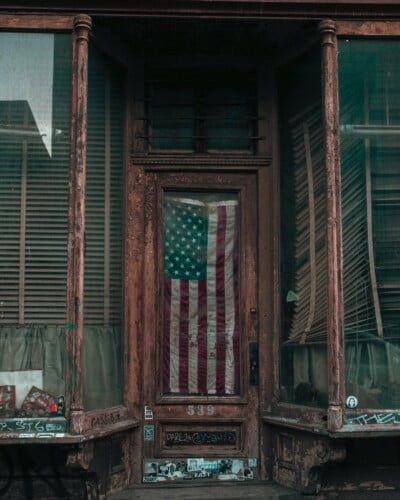
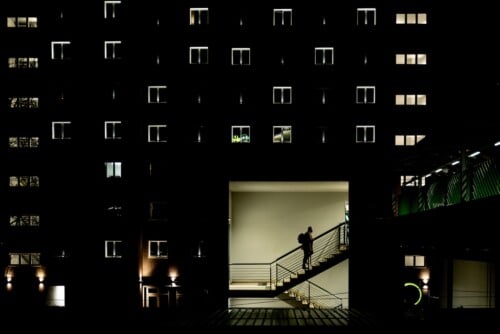
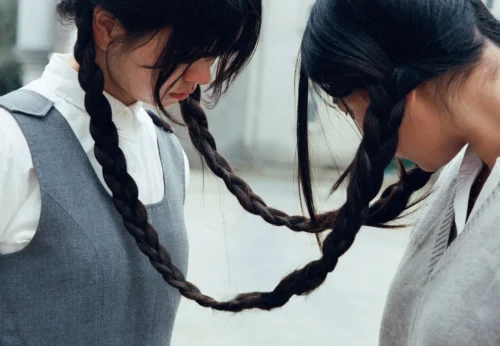
Andro Pang, an artist of Indonesian origin, fits perfectly into this complex and still new discourse. When looking at his works, the eye presents a stimulus to the mind, which the mind perceives as real. At first, there are no doubts: it appears to be a photograph. However, upon careful analysis of the images, their perfect lighting and occasionally surreal details, ambiguity creeps in. Could it be a misjudgment? Indeed, it is. Andro Pang creates digital works using photographic composition, cinematic references, and artistic inspirations. From the cypresses of Vincent Van Gogh to the staircases of The Truman Show, moving through Hopperian realism and elements borrowed from the surreal and Dadaist currents. His works can evoke a sense of familiarity in the viewer, conjuring up images they are not unfamiliar with, allowing for an immediate connection with the artworks. Andro Pang is closely tied to photography. His artistic career began as a photographer, but due to the pandemic and the resulting inability to venture outside, he found a solution for his art. Unable to shoot outdoors, Andro Pang dedicated himself to digital art, creating images that blend reality and fantasy. The boundary between reality and fiction wavers. At this point, the question arises again: “Is this perhaps a form of deception?” A clear, defined, and universal answer is impossible, but undoubtedly, an explanation can be found in the change. Quoting the photographer Fontcuberta once more: «The digital age inaugurates a new space between the real and the virtual where a new way of creating communities is established.» Thus, the methods of creation change, and fiction becomes a form of artistic expression. We can only wait to see what will happen at the end of this decade.