In case you are, like me, a fan of denim, it is almost certain that you have heard of the ancient and traditional Japanese sewing technique, the Sashiko. Born in Japan at the beginning of 1600 and used by the rural populations of the north until the middle of 1800, it immediately became one of the most well-known and used manual and tailoring techniques. The push came from the need to mend the old kimonos – called Boro Boro, from which the Boro Sashiko was born – worn and torn or the old futon blankets, with small pieces of waste fabric that Japanese families of the time kept because of the scarce cotton availability.
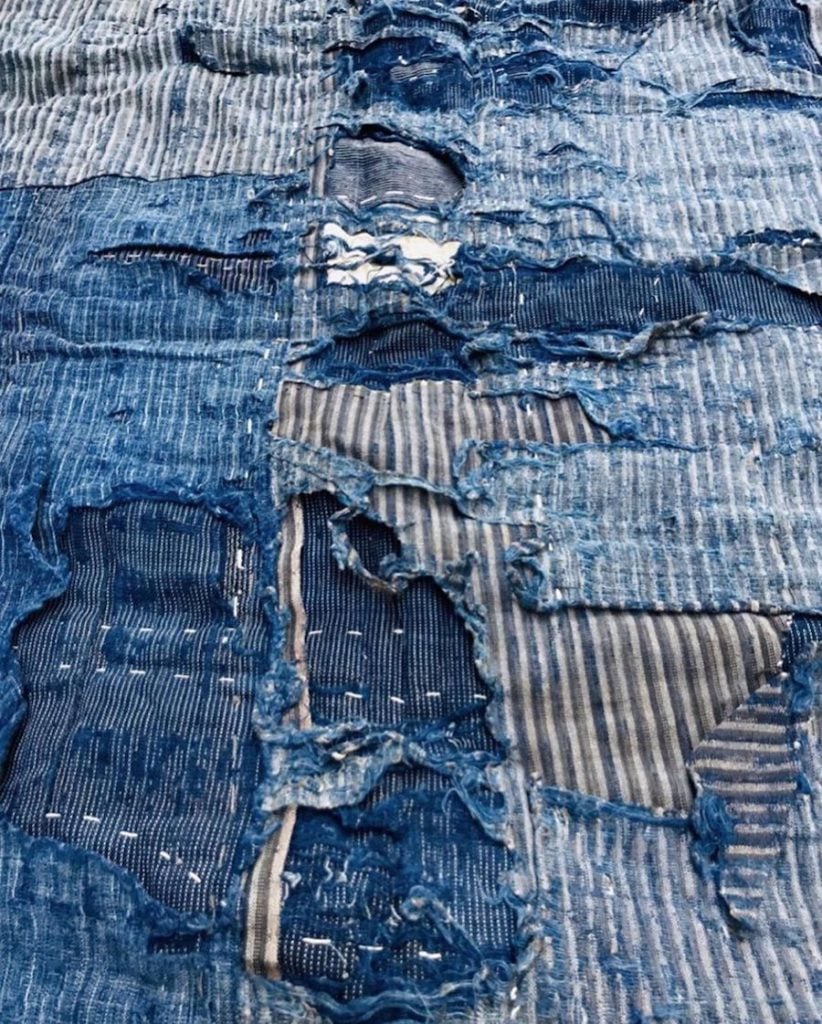
Thanks to this technique, over time the kimonos, blankets, etc. were filled more and more with patches to the point that the person observing the piece was no longer able to understand what the original fabric was. Patching and sewing together various pieces of fabric to preserve a blanket or kimono as long as possible was the symbol of a past made of poverty and scarcity of means and materials. Precisely for this reason after the end of the Second World War and with the slow but inexorable industrial and economic growth of Japan, Sashiko lost its popularity.


In this particular technique are kept all the aesthetic and ethical foundations of Japanese culture such as the beauty of imperfection, minimalism, simplicity, aversion to waste, attention to resources, reuse of objects and fabrics that represent the epitome of upcycling and that the Japanese hand down with the term “mottainai”, a sort of sense of regret for waste.

Over time, however, the incredible all-Japanese ability to maintain a very close link with the past has led to the revaluation of the garments reconstructed through this technique as true pieces of history of Japanese tailoring tradition, triggering an exponential return of the Sashiko. The modern and contemporary evolution of the Sashiko has generated new criteria and definitions, turning into a sophisticated and sophisticated needle-stitching technique that, at the same time, perfectly matches the ethical principle of sustainability. Today Sashiko is back in vogue in the world of fashion and art, brands such as KAPITAL for example, have managed to make this technique an integral part of the streetwear world, in a sort of contemporary contradiction between the concept that underlies the Sashiko, that of recycling and reuse, and that of “seasonality” that still dominates the streetwear world.