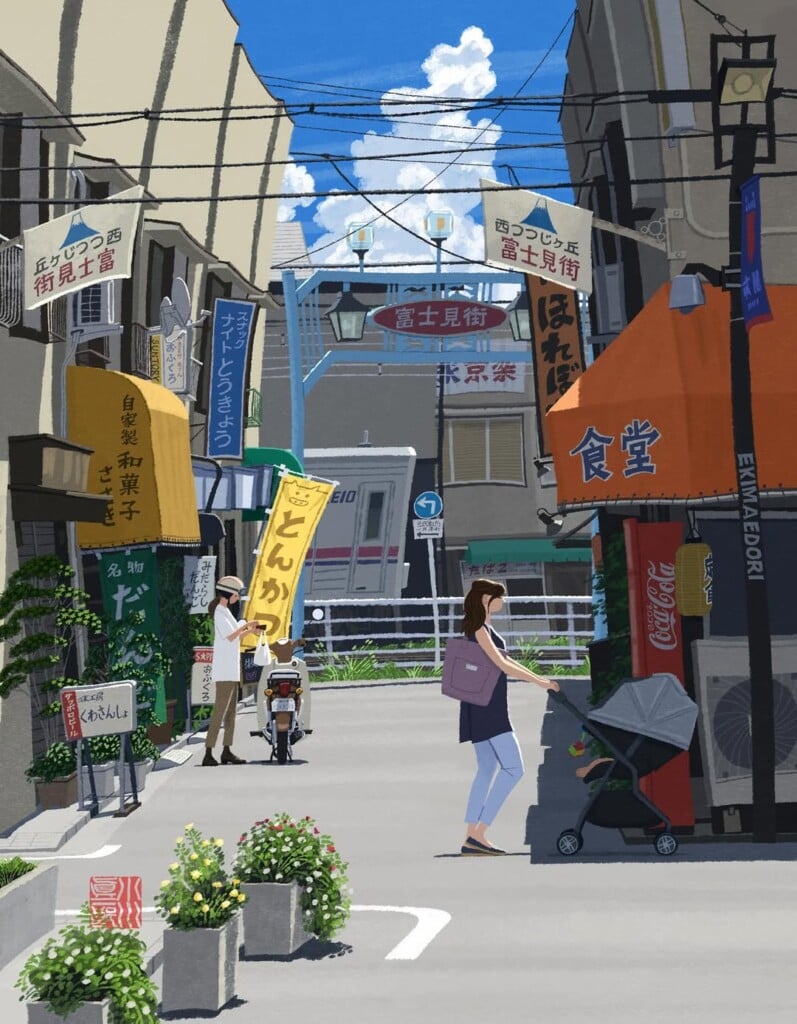
Shinjiro Ogawa illustrates urban silence—made of slow footsteps and side streets, of corners that seem insignificant but, under his gaze, suddenly become central. He describes himself as 街歩きイラストレーター, a “city-walking illustrator,” and this wandering dimension is the key to entering his imagination.

Born in Nagoya, in Aichi Prefecture, Ogawa followed a far-from-linear path. After earning a law degree at Nanzan University and studying at the Setsu Mode Seminar, he worked for an automotive company before choosing the freelance route. A detour that now shows in his methodical yet sensitive approach: his images have a solid structure, but they never lose that emotional vibration that belongs to memory.
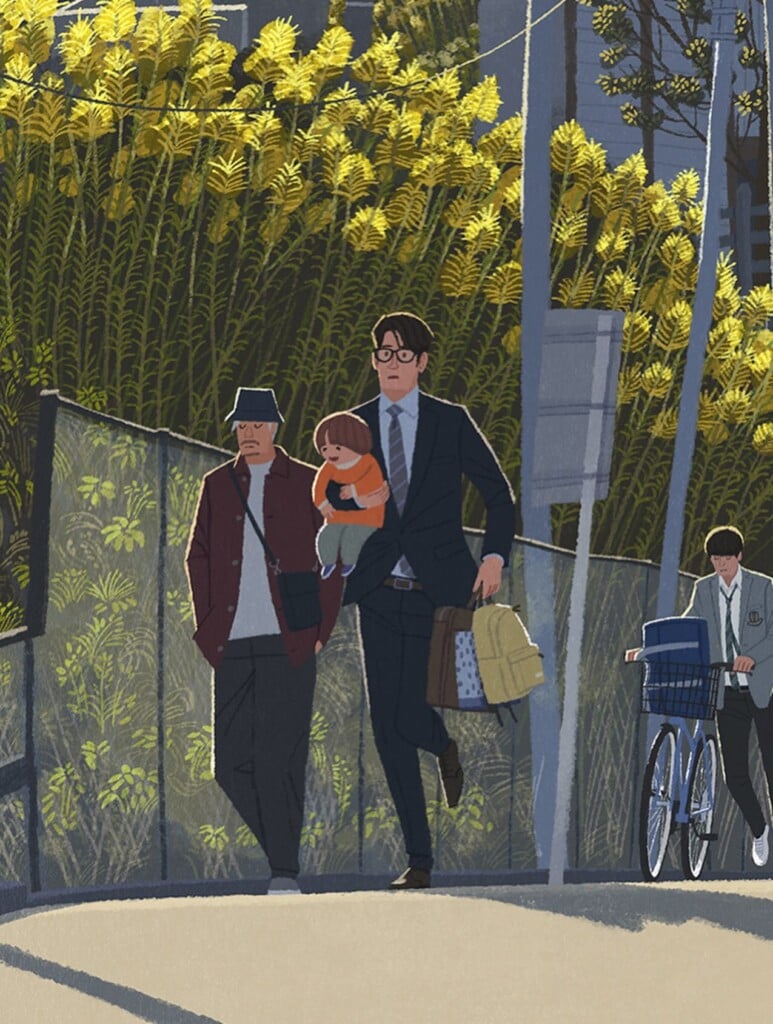
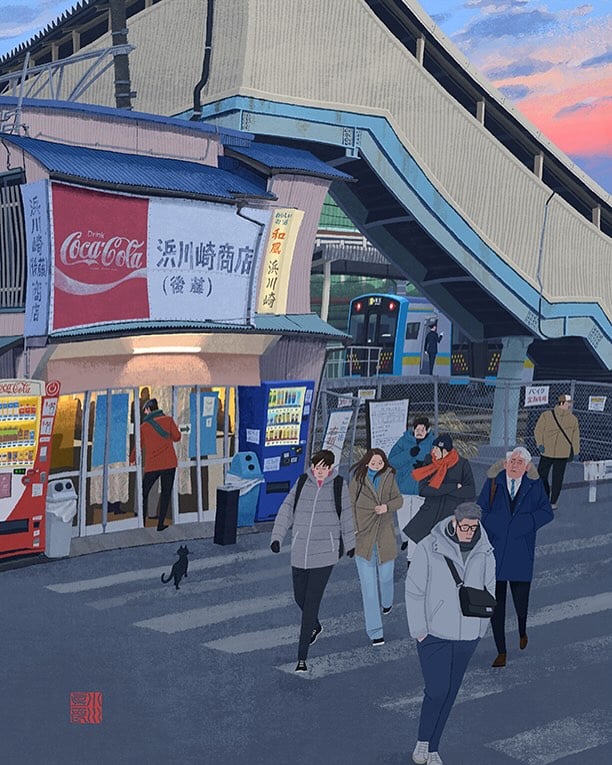
His illustrations tell fragments of everyday Japanese life: residential neighborhoods, faded signs, power lines cutting across the sky, bicycles parked outside small shops. There’s never narrative excess, no sensationalism. Ogawa works by subtraction, letting architecture and space do the talking. Human figures—when present—seem almost absorbed into the urban landscape.
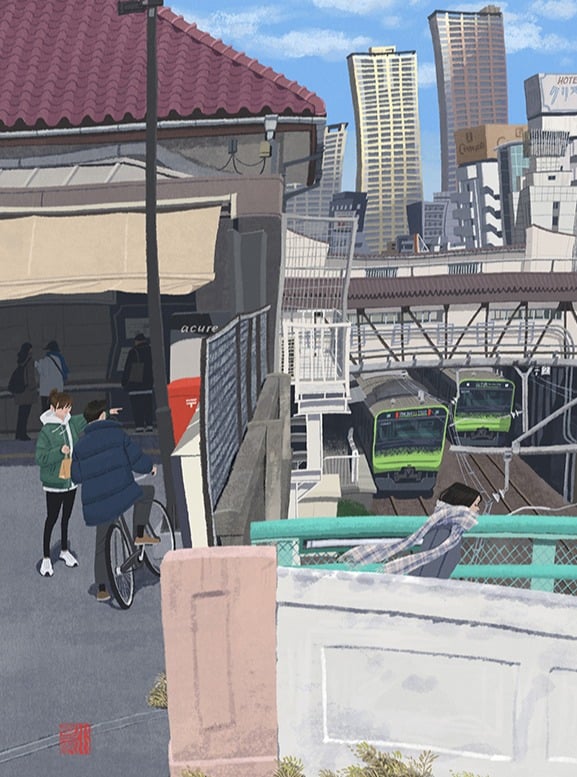
Created entirely digitally using Adobe Photoshop and a graphics tablet, his works still retain a surprisingly tactile quality. The textures are delicate, the colors tuned to soft—often dusty—tones that evoke a light suspended somewhere between afternoon and memory. It’s an aesthetic that speaks to the tradition of Japanese editorial illustration, while also tapping into a contemporary sensitivity for the urban landscape as an emotional space.
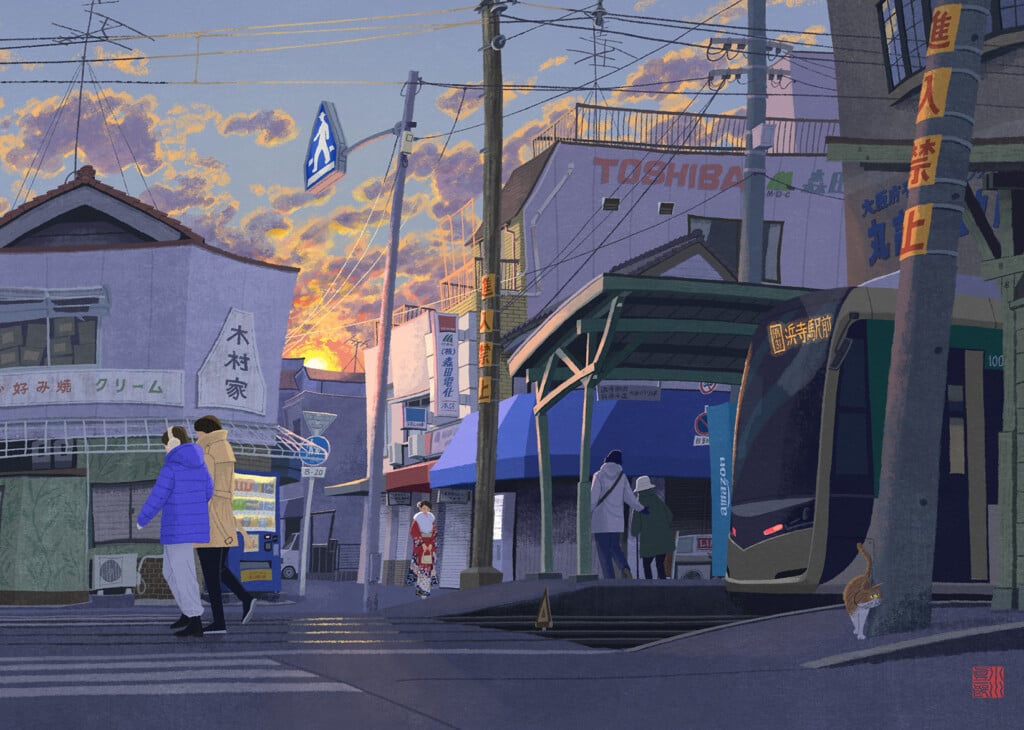
Over the years he has collaborated with brands, magazines, and publishers, producing covers, illustrations for books, and calendars. Yet at the heart of his work there is always the act of walking: observing, slowing down, recording details that usually go unnoticed. His images don’t chase plot twists; they build an affectionate archive of cities.
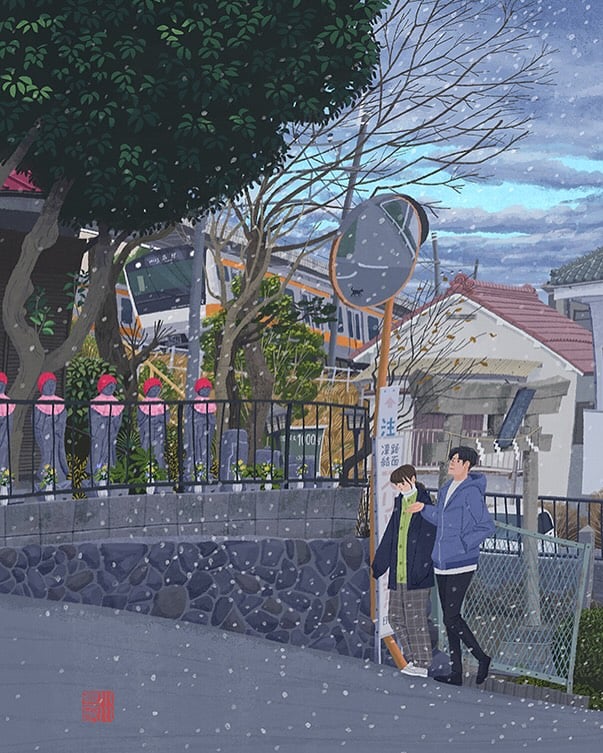
Today he lives in Kanagawa Prefecture, continuing to explore and reinterpret urban glimpses with a gaze that combines precision and melancholy. His illustrations don’t just depict places, but the time that moves through them. And in doing so, they turn every street into a narrative possibility.
Read also: In Con McHugh’s animations, simplicity is the key